
The Side Quest Book Club Podcast · Slava & Jonathan
One of us read all eight books. The other read one and isn't on the hype train yeWe break down what to know before you read DUNGEON CRAWLER CARL by Matt Dinniman — spoiler-free, with a marked spoiler gate for books two through eight. Slava gives book one an honest first-timer's grade, and Jonathan makes the case for the full series. We explain LitRPG for beginners, how the series started as a free web serial on Royal Road, and the cat-show job that inspired Princess Donut. We trace the death game genre from Stephen King's The Running Man and The Long Walk through The Hunger Games and Squid Game, and get into how Dinniman uses Patreon reader feedback to keep eight books moving. Stopped after book one? Tell us why in the comments. Kept going? Drop a line Slava won't understand yet. (00:00) - Intro: Is Dungeon Crawler Carl Worth It? (00:31) - Book One Review: A First-Timer's Take (03:56) - The Cat That Inspired Princess Donut (05:35) - What Is LitRPG? Explained for Beginners (06:54) - Royal Road Roots and the Game Show Layer (08:42) - Death Game Books: King to Hunger Games (13:22) - Spoilers: Why It Picks Up at Book Three (15:02) - Comedy With Real Darkness Underneath (16:15) - Why a Silly Premise Pulls You In (18:52) - How Dinniman Kept It Fresh for 8 Books (21:11) - Should You Keep Reading After Book One? — 📺 SUBSCRIBE Episodes Every Week🎧 LISTEN TO THE AUDIO VERSION All platforms: https://linktr.ee/asidequest 🌐 JOIN THE GUILD Official website / Quest Log: https://www.thesidequestpodcast.com/ 💬 FOLLOW OUR ADVENTURES Instagram: https://www.instagram.com/thesidequestpodcast TikTok: https://tiktok.com/@sidequestpodcast Discord: https://discord.gg/WAPRX9Hbq 🎬 CREDITS Hosts: Slava and Jonathan Editing: Wellerson Clemer — https://www.behance.net/wellersonclemer123 Distribution: Transistor.fm — https://transistor.fm/how-to-start-a-podcast/?via=slava Side Quest Book Club is a podcast about books, the people who write them, and the tangents in between. Some links above are referral links. If you sign up through them, we may earn a commission at no extra cost to you. #SideQuestBookClub #DungeonCrawlerCarl #LitRPG
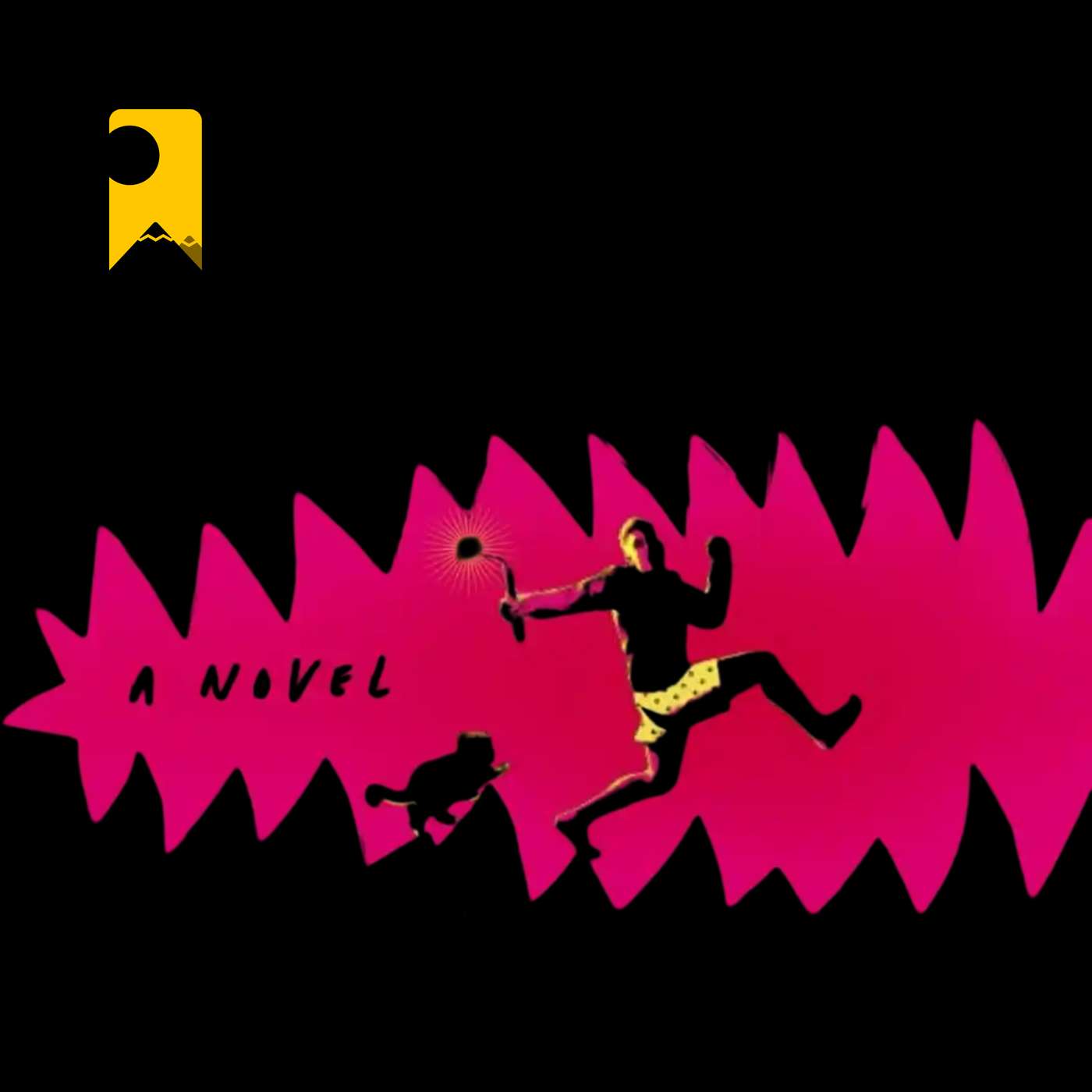
Slav and I are going to give you a few reasons to pull you into the galaxy's hottest new game show, Dungeon Crawler Karl. So you've heard the hype, you see everybody posting about this, but you're not sure about it. You're not even sure you want to read it. Because, frankly, you're better than them. And that's true. But hear me out. If you're questioning if you should read Dungeon Crawler Karl, Slava and I are going to give you a few reasons that might just pull you in. Well, laughing, but the whole time, it's a tragedy. But you keep coming back for more. Good satire does that to you. Now, I've read all eight books because I have a problem. But if you're a regular here, you already know that. Slava has read one book so far. So Slava, why don't you give us a breakdown of what it was like when you were going into book one, what was your expectation and what did you get delivered to you? Expectation was zilch, virtually nothing. You said, " Hey, you should read this. And I've seen book covers on thumbs and shorts as I peruse the interwebs. I knew nothing about it except that it was dystopian. And when I started the first few pages, it's 2 a.m., there's a guy in his underwear trying to coax a cat out of the tree, excuse me, back into his apartment. And then the world collapses. Like a collapsible book, all the buildings just go right into the earth. It's winter, he's cold, he has a cat, he starts walking. Only him and the cat seemingly survived, or presumably. Obviously, the reader can put two and two together context clues, it has to be other people. But those who get to survive have a choice. They either stay on the surface and freeze to death or die, whatever horrible death they might encounter in other parts of the world, or they go into a dungeon, and they fight to the death in front of millions and millions of intergalactic viewers. Who want to throw money down on them. Yeah. And that's what we got. So we got a little bit of Hunger Games, we got a little bit of Running Man. I think that's it. That was it. That was my first book. And I even put out a short saying, I liked it. I'm going to have to read the rest of them for the show. I'm okay with that. But that was my reaction. I was like, okay, this is good. There were funny parts in it. In the second episode, I think with Jules on, we talk about some of the commentary that Dinaman does, social commentary. I'm in agreement, but I walked into it blind, like a scared crawler into a dungeon. And I'm glad that I read it. I think it's a great book, but I am not on the hype train. I'm glad for Dinaman. Hey, make money, boy, make all the money. You got some from me I'm buying the books, but it's a decent book. I'm selling it really well. I know, but I can't hype myself up for something that I'm thinking. It's just a good, I'll give it an A. Good work, Dinaman. It's funny. The cultural references are hilarious. We also talked about this in the episode where the world was familiar because it had references to not only cultural references or pop references, but geographical and brand references. I think the Waffle House was mentioned. I can't say I'm a gamer. I've been gaming since I was a teen. You're a gaming enthusiast. Yeah, I'm a tourist in the gaming world, so I'm not a gamer, but I've played enough and watched enough Let's Plays and Watch Plays that I understand the references. I get the whole game mechanics and all that stuff. That was me walking in. I don't know. That's one book. By book four, I could be on the hype train with all of you. May change your tune. Yeah, but my lackluster review of it here or hype hook, whatever you want to call this, don't take that as you shouldn't read it. I'm glad I read it. At least read book one, guys. Let me ask you a poignant question. Was it entertaining? It was. Great. It was. That's it. It was entertaining. But did you know that Dinaman actually was inspired by this book because of one of his earlier jobs in his career? I heard something like that. Yeah. He was a cat. He drew portraits of cats at cat shows. I don't know how you apply for that job, but apparently it's a job. There was this one time where a cat was sitting next to him, a Persian cat, and it was just staring at him with its deadpan face. He had this thought. He said, I'm going to write a book about a cat one day. Now we have Princess Donut. Thank you to that angry cat for inspiring Matt Dinaman to write a book about it. I think that's what saved it for me was Princess Donut because when she's that decides to talk, she's a cat, she's a princess, and she's in charge because she has more charismas than him, more intelligence than him, according to game mechanics. She's in charge and he's her bodyguard. And that subversion, for lack of a better term, that little bit, that's what kept me in the book. I'm like, all right, this is going to be fun. Because at first when I went into it, I was like, all right, dystopian. The guy in his underwear, well, that's a good inciting incident. He'll probably find pants. I literally went into it without blind. He'll go into the dungeon. There'll be a game mechanics that he'll have to play with. He'll have to figure them out. There'll be bad guys. And that was it. But the cat starts talking. I was like, oh, this is going to be a little bit more of a fun ride. And you know me, off the beaten path, weird shit really gets me going. So I was like, okay, I'm going to finish this book then. And so the thing that I kept thinking about as I was reading it, now that I'm hooked, was the whole lit RPG aspect of it. Because I've, you know, like I said earlier, tourist in this world. I need you to kind of walk me through to help me understand. Maybe there's a deeper truth, a deeper layer of it I'm not understanding, or I didn't understand. That makes me go, eh. We'll tell somebody who doesn't know what lit RPG is. Like pretend I'm five and you're trying to explain to me lit RPG and why I should read this book for adults. So lit RPG is a genre built around video game mechanics, like you mentioned earlier. But the thing is, it's not just you, and I know it's a video game mechanic. The characters know it's a video game mechanic. Oftentimes though, with lit RPG, they are discovering like, why can I access these menus in my brain and like click the X and like open this window up and whatever, right? So lit RPG is where characters know that they're in the game and they have levels and stats and loot. They get message pop-ups telling them what they've earned, things like that. So there's a handful of these books that are growing in popularity. And I firmly believe that Dungeon Crawler Carl has paved the way for a genre that was a sapling prior to Dungeon Crawler Carl being picked up in popularity about a year and a half, two years ago, because a lot of people don't know this, but Dungeon Crawler Carl started as a web series that was free to read on Royal Road. Now the avid readers know exactly what Royal Road is, but most people don't. Royal Road is a place that authors can put their work out chapter by chapter or piece by piece and let the audience start to come around and experience this. I believe that Dinaman used that to create a feedback loop for himself and have like a public group of beta readers, if I can call it that, that ended up helping him make the story better, which is fantastic because now it's not just Dinaman's work, it's everyone's work. He said as much in an interview. It was a 30-second clip on Instagram, so I don't know the context, but that little bit he just said, that was it. He was like, he got feedback, he got beta readers, I think he actually even used that. He's like, by happenstance, I had all these beta readers now. So Royal Road. The final piece for LitRPG and the twist for Dungeon Crawl Carl is that this isn't just a video game book. It's a video game book that is also a game show. And that's where some of the tension rises because the book layers in intergalactic politics at multiple levels from the big corporations to middle management to the mobs that are just in the dungeon with them, some of whom are kind of aware of what's going on. Some of them aren't, but it feeds me the way that I love to read books is what does the character want? Not just the main character, the side characters and the NPCs too. What do they want? Boom. Hey, he told us if we get here, we can go down to level six where our families can frolic and play. That's me doing the goblins. Jeff Hayes does it a lot better in the audiobook. Nobody's frolicking, though. They never get to level six. They never get to level six, but we know what the characters want, right? So speaking of game shows, Slava, talk to me about the rise of death game shows in novels, right? We briefly talked about this before we hit record, where Harry Potter basically popularized magic schools, right? And there's like whole bookshelves of those now, but you and I have started to see this dystopian game show premise or genre expand and grow. And it started with Stephen King, as far as I know. Well, I think, yeah, we can say that. I don't know of anybody else that I can throw up there as an early pioneer of this kind of storytelling, but Running Man and The Long Walk, one's a novella, one's a short story. They have this as the core of the plot. In Running Man, you have a gauntlet that you can sign up to go through. It's an arena similar to The Hunger Games, where it's a world within a world. It's more than just a boxing ring, right? And if you survive 30 days, you get millions of dollars. And the guy in Running Man does it to make money for his daughter who's sick. In The Long Run, it's just a dystopian novel, a short story where kids, for reasons that I forget, are forced to go on this long walk. And whoever survives it wins. There's even a scene in The Long Walk where a guy has to take a dump as he's walking, because you're not allowed to stop. This dystopian death game thing, I think, really popped off, what, 10, 15 years ago with Hunger Games for our generation. Yeah, 2007. Because who there our age remembers The Long Walk. It was written before either one was born. Same thing for Running Man. I think it's an escapism thing. People, whether in good times or bad times, they want to read about something else outside of their immediate existence. That's why fantasy is so popular, has been for decades. But not everybody's a fantasy fan. Like me, I like horror; I like speculative fiction. So for guys like me, reading about a game show, like The Running Man, which exploits the people, which sets booby traps for the players, which is done for the entertainment of the masses who are placated by this, that's all real and true. And you can go back through history, and that happened with the Roman Games to an extent. That has happened in our world. Nobody's killing each other, but we like boxing matches. It's a violent sport. I like boxing matches. I'll watch boxing. But there's something about it that draws people. And for those who like stories and reading, they get pulled into this. And when it's done well, it's something that glues you to the screen or the page. And as an author, you can make commentary on society and culture. That's why these kinds of stories — dystopian, satire, speculative — all those genres are a ripe opportunity to comment on what's going on. Maybe we're not killing people in arenas, as it happens in Running Man or in The Hunger Games, but there are applications that can be made, right? Absolutely. To our current society, whatever we're living in. Yeah. So that's my long, very long answer on why death games are popular as entertainment, to read about them, to read about them. Not participate in, not play in. Well, we're not there yet, thankfully, but that would be an outworld commentary. I'm talking about in-world, like, well, why do we flock to these books? And the worlds that Deniman and King and Collins have built for us. Yeah. And that's not even mentioning the ones that we see on TV now, right? Squid Game, similar things like that, where it's like—yeah. Squid Game, Battle Royale, it's all similar premises where people are forced into violence to survive. And it's a game show. And it's somewhat of a game show. People are watching. Yeah. Yeah. At least people are watching. Yeah. Here it's a real game show because it's a game, as in you play a video game and you have to abide by certain rules. Like in Running Man, as far as I remember, there are no rules; just survive. Same thing with Hunger Games. There are only rules that limit what you can do in a real-world setting, though, right? So it's a little different, but the differences are so minute, they're not even worth exploring because people are forced into an arena and they have to fight. Yeah. Yeah, yeah. Spoiler gate, if you haven't read past book one, now is the time to go take a side quest because we're going to talk about a few things that happened beyond book one. If you have read past book one, stick around as we wrap up. So Slava, you finished book one and you shared your thoughts on that, but what you probably don't know from book one to book five, book one being like a man and his cat survive an alien game show, and then by book five, they declare war on the people running it. Oh, okay. Yeah. It's about to get real spicy. And so I tell people- It's a donuts idea? Please tell me it's a donuts idea. It's a joint effort for a variety of reasons. Okay. Okay. But I will tell you that it really picks up at book three. It doesn't mean book two's bad and it doesn't mean book three is bad. There's just some mechanics that take place. And if I can show you all eight books here real quick with a UV black light, this is my little spoiler for those who haven't read this far yet. Book three doesn't light up when you put a UV light on it, which actually is really cool because that applies in the show that the... Well, I can't say anymore, but it's relevant, and you'll figure it out when you get there, which is just a fun thing to take what's happening in the story and put it into the physical copy of the book at the same time, right? It's fun watching the watch through rage just drop off right after you said that. The spoiler part? And when you said, I can't tell you anymore, the thing of the... There's a you... Okay, I'm not saying anymore. I'm joking, I'm joking. I'm going to ruin it. I don't want to ruin it for people. The book feels like a comedy, but it has these one-liners where you're like, oh, Carl, that shouldn't have happened in your childhood. That's really bad for a kid to go through, right? These little real moments or, spoiler alert, with Donut having to come to terms with her owner, Beatrice, and the action she was taking against her that she wasn't aware of. So anyway, it gets real, real quick. Book one is just kind of the put your pedicured foot in the water, if you will, for the A.I.'s amusement. Okay. And then book three is what? You're in your dingy Crocs with your tootsies hanging out, haven't been trimmed in six months, bloodstained. Oh, no, no, no. You have to play the game. And so Donut absolutely presses Carl to keep his tootsies nice and fresh for the A.I. because the A.I. was trained on — Oh, yeah, that's right. The A.I. was trained on Earth, and so Dinaman figuratively and literally shot himself in the foot by giving the A.I. a foot fetish because now he has to write it out every time. Yeah. You mentioned something that intrigued me. The fact that you get backstories of Carl and some of it is dark or sad or whatever, that's intriguing to me, not because that happened, because in any book that should happen, any good book that should happen, you should be able to understand your character and their background and get glimpses of who they were before you entered their POV. But I'm reading a book called Warsafe by Lauren Smythe? Lauren Smythe. Might be Smith, but it seems like Smythe. I'm not sure yet. Probably Smythe. And there are video game elements to this book. I'm not even going to begin to explain it to you guys because I don't want to spoil anything. Going into this blind, I didn't read the book cover or the back cover or anything. I just went right into it. And I've sort of figured out what's going on. She hasn't given us a lot, but there were breadcrumbs. And so what I'm saying, video game elements in this book, the way that section of the world is talked about makes it more than just a thing that somebody from the outside is doing in a video game world. It is so well-rounded. It is so plump with world building and character development so early on. And that's what I think makes these books fly off the shelves. When the author can make the world and the characters in a silly situation, silly meaning like, well, who would read this, right? It's about a video game and a guy in his underwear. But everything around that is so well fleshed out. It makes it for me. Again, I wish I'm going to pull at you. I wish I could tell you the premise of this book, but it'll ruin the experience. You have to go into this book blind. I don't know. When Smythe comes on, I think we're having her on in a couple of weeks. I'm going to fanboy out. Dude, this is such a good book. And that to take away from Dungeon Caller Crawler, this book is just as well done. Besides me being so unenthused seemingly about Carl and me being over the moon about Hallie, both authors are doing the same thing and doing it well. And it's keeping us committed to the story. And this is the point. This is one book. It's a standalone as far as I know. This is eight books. So Dinaman has to, and you read all eight. So here's my question. Without too many spoilers, how has Dinaman kept you engaged for eight books? And different types of stories and new adventures don't answer it because we're reading a Cradle series. I love the Cradle series. We're three books away from finishing it. I just want Lyndon to win so I can finish the damn series. Yep. That's fair. So the way that you stay engaged with Dungeon Crawler Carl as it progresses through eight books is the beta readers. Dinaman calls himself a pantser. And if you're an author, you understand what that means, where he doesn't know where the plot's going. And so on his Patreon, he'll release chapters early and then the readers will vote on what should happen. And so they make sure that it's interesting because if they're bored, they're not going to keep paying him money on the Patreon. And so they go, hey, I want this to happen. And he'll take those ideas, and he'll implement them, from my understanding, before it's released for public consumption. So like right now he's working on book nine, and people are reading it and voting on it. And if you want to go support the Patreon, you'll get to see ahead as well. So that's how he keeps you engaged because the community has come around and said, hey, this thing that you wrote, that's boring. We want to see this. And he goes, okay. And so he'll take it and then he'll Rubik's Cube it to make it his own. But that's how you stay engaged. So you think you know what's going to happen. And then he goes, actually, it's not even a plot twist. It's just like, it's a different flavor of the thing that you were expecting. Not always. Sometimes there are plot twists, but that's what keeps you engaged for eight books. And so you're like, what is going on? You don't know what's going to happen next. Really. You have an idea because he's got to finish the quest or the thing to get to the next floor. But it takes a turn because he starts engaging with the storylines of the producers for the Intergalactic Game Show. So that adds another layer of complexity that he can tap into throughout the game, which is him experiencing it, him wanting to rebel against it, him then being like, you know what? I'm just going to break your game. That's what I'm going to do. And then he has his catchphrase: you will not break me. Which just keeps coming in. So it seems simple, but it's actually highly relevant. But as we wrap up here, Slava, if you read book one, it made you laugh, and then made you a little uncomfortable because you were laughing, you should probably keep going with the whole series. If you read book one and you were like, I don't get the hype. I would encourage you to keep going because it does take a few wild swings as it continues. But again, I think, and this speaks to things we talk about a lot of times, which is like authors as they continue to write year after year, like they refine their craft. Even Stephen King, like, keeps refining his craft, right? Chuck Palahniuk keeps refining his craft. So like, as they put out more and more books, they're like, oh, why don't I do something new here? Why don't I cut these types of words out to like really tighten up my writing? They get better. And so I think that Didymon really started to take off at book three in this series. Now it's partially because of the plot, but that's just my personal opinion. So if you stopped reading Don't Recall a Carl, I want to know why in the comments. And if you kept reading, share a line with us that Slava won't understand yet, but will understand later. Because I love these threads where you share a line that doesn't make sense to people before they get to those parts in the book. And so they're like, what the hell does that mean? So drop those in the comments for Slava. And for those who are like, what is this person even talking about? How does it go from a guy in a video game to, you know, Raul needing to find a dead baby seal to save everybody? Who knows? You'll have to keep reading to figure it out. Magical properties of dead baby seals. You know this? It's so much worse. And I thought you read all eight books and are so much more learned than I in the world of dungeon crawling. It's so much worse than that. I bet it is. Yeah. But if you enjoy this little cyclist, tune into the episodes where we actually break down the plot, the characters, and the world-building and adaptations, the three-part series that we've done on Dungeon Caller Karl. One of our interns joins us on that and a friend of the show, Jules Morn, indie author and creator of Thing.Pub. So hint, hint, authors, go check out Thing.Pub. It's an ARC beta reading platform that I think you guys will enjoy. She does a lot of good stuff on it. Still in the process of being built, but you can join it and then figure out what its possibilities are. Join us again for another side quest. See you later. If you like what we're doing, the simplest way to support the show is to hit that subscribe button. In return, we'll keep leveling up. We'll listen to your feedback and read the authors that you suggest. And of course, we'll take side quests along the way. Thank you for joining us, and we'll see you in the next one.