
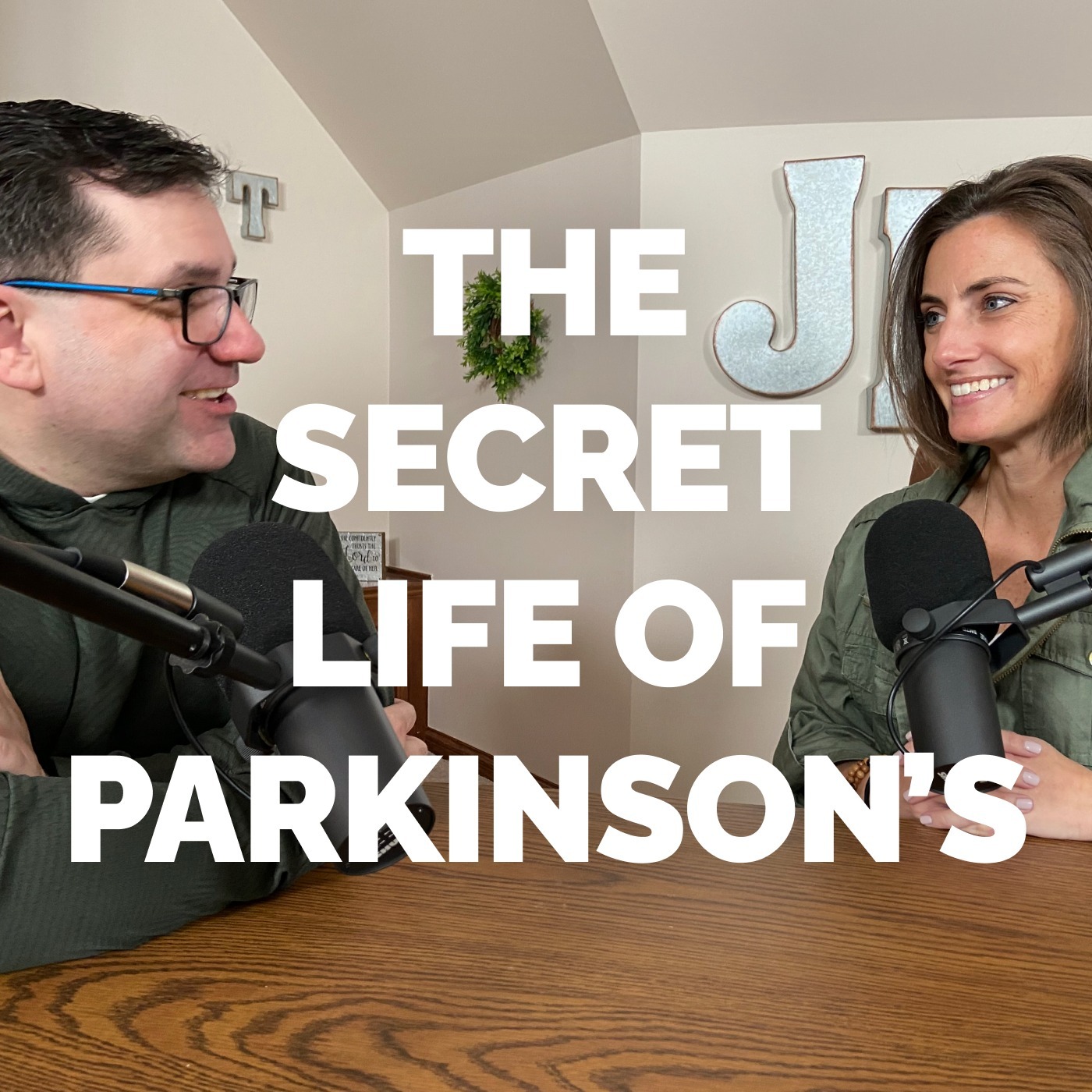
The Secret Life of Parkinson's · Jessica Krauser
One of the hardest parts of living with Parkinson's is that you don't always notice the changes happening in yourself—but the people around you often do. In this episode, we talk about why feedback from family, friends, care partners, and even healthcare providers can be one of the most valuable tools for living well with Parkinson's. Brian shares how learning to accept outside observations has helped him recognize subtle changes, adjust medications, improve posture and movement, and stay independent. We also discuss medication timing, exercise, community support, travel, planning for the future, and why conversations about palliative care and hospice shouldn't be feared—they're about living your best life for as long as possible. Whether you're living with Parkinson's or supporting someone who is, this conversation offers practical insights into seeing the disease from a different perspective. Chapters 00:00 Introduction 00:27 Seeing What Others See 03:13 Everyday Strategies 07:08 Medication & Movement 09:22 Travel Tips 11:43 Independence 13:05 Planning Ahead 15:55 Closing Thoughts
Steve: To go under Atari initially. And he wants to start me out. He wanted to start me out on stinging sediment powder pills. Why do you call them powder pills? Because they're powdery and the other ones are capsules. ⁓ And that's what Cruxon is, is a double layer of it, right? It's Yeah, so anyway. ⁓ so we're gonna put Melissa on the spot. ⁓ crap. Welcome to the Secret Life of Parkinsons, a podcast created by people living with Parkinson's. To help break the stigma of a disease no one likes to talk about. Now here are your hosts, Jessica Krauser and Brian Baker. So I notice I feel like I'm pretty self-aware, but I there are times when I think a lot of people are not self-aware. No, I'm not this guy over here. ⁓ no. But like you see all of us almost every single day. For speaking just to us specifically, since you don't need to talk about other people, but like what have you noticed since the time that we both have started into where we are now? And just like how how do you feel like with that progression? Because I'm viewing you as like a family member and what it's like from your standpoint to watch because like I know like I was like I was on vacation, I told my kids, I'm like, I'm fine, I'm just like I'm hunched over, I'm walking slow. Like I'm like I I'm not sick, I'm not whatever, like. It sucks, but I'm still I am who I am. But like how do you guys view that stuff? I say you guys like fam like a family. Yes, Melissa. I told you I put you on the spot. I know, you really did. Sorry. Yeah, no, you're not. ⁓ you're not. You're actually not at all. It's it I will say that's the the hardest part of being in this kind of position is seeing that progression. Watching people progress. Right. And just know and just deep down knowing like There'll be a time when, you know, probably that coming to class or, you know, coming and being a part of our group isn't gonna happen. And and that's hard, but I try to, you know, live in the moment, like our our what what are we calling that? Our new mantra. Mantra. Yeah. and and not so much focus. Of course, my first instinct is like Holy crap, like what's going on? You know, and it's something I guess I should start by saying, like it's something if I notice something immediate, like, Brian, you didn't look like that last like like like what's going on? You know? Like I'll call you out on everything. But you'll but yeah, I've seen you also call other people out and like, ⁓ I'm changing and I've done the same thing, like, hey, so and so kind of medication are you on? ⁓ I'm changing my cake. You see a difference in their their walking or even if they're things people are doing better, I'll be like, Hey, what's going on? You look great. Right. Or switch medications. I mean it's also you know, it's hard for me because some people don't want to know, you know, they don't wanna like if I would say to you, Jess, I noticed like I don't wanna know. Yeah. I do I don't I wanna know, so you can tell me. Yeah, like if I say like I noticed like your your shoulders. Yeah. Yeah. Yeah. That's probably the only thing lately that I've noticed with you. 'Cause I know I've asked you about like my my words and like when I'm speaking, like I can tell And I don't know if I maybe I just noticed before other people do. Mm-hmm. But it's like But you also call yourself out. Like you're like, I n I'm just not thinking, like I can't, you know. But it's like I'm the type of person that not that I need like it was helpful when I when on vacation, Derek was like, you know, what do you think it was? Was it your DBS you need to be like reprogrammed, which I probably need another program. And then or is it medication or whatever? So we talked about and he's like, Yeah, he's like, I don't know if you notice but you're you're like hunched over a lot. I was like, I know. But it's like it's helpful, like for me at least as a patient. I know, like standing up straight now. But it's like it's helpful for me to have that kind of feedback and maybe I don't know. And I know that everybody wants it. No, and that's the hard part. You sucking it in too. No, I I just so maybe I just but I can't say it. What? Say it again. Say it loud and proud. And y we can get you one of those ⁓ ⁓ those ones that pull your shoulders back? The exoskeleton. Yeah, the exoskeleton. Some people find it to be very ⁓ helpful. It's it is exactly like it sounds. It's like a hard brace that you put off. 'Cause look at you, you're sitting up tall now too. You grew a couple inches. You did. Well I was gonna say we just need Jeff's daughter to sit over there. ⁓ what was her name? My dog? No, Jeff. ⁓ Taryn. Yeah, when she was on here, the most perfect posture. She was like I know. She needs to come with us and I know. But even my posture. is bad too. So ⁓ but going back to that, like again, it's it's it's hard to see, but also I feel like I'm in a position where I can help guide people. Like that's why I continue to remind people in class, like keep your eyes off the floor and stuff like all those habits can be retrained. You know, like the it's just a matter of like being aware and in practicing. I mean, sometimes people say, Why do we do this? Like I had someone say to me a couple of weeks ago, like, I feel like we're doing the same thing over and over again. I'm like, Well, we are. There's a lot of benefit to, you know, repetition and stuff. But ⁓ it's just it's yeah, it can be challenging. I mean it it is hard. But I I Do you ever find yourself from a non Parkinson's point of view, do you ever find yourself like you know, when you see somebody you don't realize they're progressing and then They're then you ⁓ then they're gone for a week or two on the you know, they come back and you're like, ⁓ they'd be like I guess I didn't notice that before. ⁓ all the time. ⁓ really? ⁓ all the time. All the time. 'Cause I would think on a day to day basis, if you're seeing somebody three or four days a week, right you may not notice it. Yeah, yeah. You know, 'cause slow it's the progression is slow. But then but then when they come but then when they when you don't see them for a while, you know they come in, then you're like, ⁓ I didn't even notice that. Yeah. And I think that a lot of people will say, like what you said after coming back from vacation, like you noticed, you knew your body needed. Yeah. Yeah. So people will come up to me and be like, ⁓ I really need to be back here. Or ⁓ I really felt XYZ ⁓ during vacation. But I noticed and there are some people that are just like, It's the way it is. You know, I don't want you to call me out. I don't want to know I'm just I'm happy with the way, you know, I am and You know, it's got there's a little bit of intrinsic stuff that has to occur. You have to wanna be there. Yeah. You gotta wanna put the work in. But we've had ⁓ a couple people, this is like a fun story and kind of flipping to the other side of it. ⁓ I don't know if you were there. No, I was. ⁓ when they were talking about their UP DRS, UP UP D R S, something like that. Unified Parkinson's disease rating scale, I think it's called. Which some neurologists do and some don't. But ⁓ the two people are newer members within the past year and they've all gone from like high numbers to very low numbers. And they're you know, I mean, they're very dedicated. They're in fact the one girl has had an Achilles tear and is still coming every almost every day. What I also want to say though to that for her, 'cause I asked her separately, I was like, Do you also take your medication at the same time every day? And she said she's very very diligent about it. She's like she's like, even when I was in the hospital with her Achilles, she's like, I was telling those nurses, I don't care what you have to do, I don't need anything else. I just need this medication at this time, this time, this time, this time. So she was very advocating for herself, which is great. ⁓ but I think it's the combination of taking your taking the right medication at the right time every single day. Exercising on top of that and then diet comes in at some point, but we'll get to that later. Yeah. But it's like I think those two pieces together, and you know, and having the community. Community, it's huge. So you're not isolating yourself, you're taking your medication and you're exercising, moving your body. I think are like the three biggest things. Well, and also back to the progression just a little bit. ⁓ we have two two newer members that young on said or were diagnosed young. ⁓ they ⁓ one specifically said. It's so great because I would go to my Pilates class and my leg would be up in the air and I'd be working so hard to keep it still like a you know, regular regular person. Yeah. That's okay. We say it all the time. It's a regular people. Normal, but like regular people. and she's like, I would completely lose all the other benefits of the class. She's like, Here, I can do whatever and I'm like, I feel like I'm so much more into my body and I'm so much I'm working so much harder because I'm able to just relax. And not worry about it. So to share it like that was really interesting. Yeah, because the thing is you don't want like when it's situations like that, you all it all it begs is especially if it's people that you don't know, it just begs the question like, Are you okay? Like I went through ⁓ I forgot to tell you this when I went when I was on vacation, I went through security and so I every time I had to tell them like I have I have a device, I have a device. And I I didn't even say D V S because it's like not everybody knows what that is. And so we were in Do they even care? Mine whenever I travel, they don't even care. They care. No, I have to show I I have the car and they don't care. Literally, but you can see mine coming out of my chest. So it's not like it's there's no secret there. Like I said, you go to the one though. You go to the one where you put your arms up and turn off or something. So I think we were in Greece at this point, and I told the guy, you know, I I pointed at that point 'cause there there was not a lot of English speaking and I was like It's like have a device and he's like a like a heart what's a heart pacemaker. He's pacemaker and I just say yes, you know. Yeah. And then he I went through, but this is one of my off days, so I was like I was shaking, like pretty bad, especially 'cause you're just going through security and trying to get all your crap together and whatnot. Did they make you run through the airport? No, but I told the kids about that. I like, This is fun. 'Cause we saw people running, we're like, You should see Brian running in the airport, it's so fun. Yeah, my bag and things flying. But But I was so I was shaking and he goes, It's okay, ma'am, it's okay. I'm like, ⁓ I'm like, this is that would be a good reason to say, like it's DBS, but again, not not speaking the same language. But he thought I was nervous. Because I had to get patted down because they don't have the other thing, but yeah. All the fun things. All the fun things. No, but I gave you a compliment this past week, right? Wait, what? I told you that there is a method to your madness of the verbal cues and the visual cues of the big steps and the big things because every time you say like big step, I'm like, ⁓ she saw me even if you were looking yep, she saw me or look don't look at the floor, I'm like, ⁓ she saw me look yo, you you're talking to thirty of us in the class, but I think ⁓ she she caught me. And did you st and you refrain from saying something back? That's so odd. hand in a cookie jar. Yeah. Yes. Or the animal cracker. Animal cracker jar. Yeah. No, that's yeah. We we have a lot of people and and that's the thing too that's hard too, because we have a lot of people that travel. And that, you know, my goal is to keep and I got all like not weepy, but like sentimental on ⁓ the fourth of July because we were talking about independence. And I'm like, Independence Day is you know, of course, you know, God bless the USA. We're very fortunate to to live in the United States. But also like my goal is to keep you all independent for as long as possible. You know, and a lot of people are like, ⁓ I never thought about that. But that's, you know, no matter what the disease looks like or the path it takes, I mean, our goal is always to keep you where you can take care of yourself and do all that kind of stuff for as long as we can. So that's actually really good to think about because we've had I've had a few viewers Right in or just ⁓ all like along the few years of like, you know, I'm I live alone. Mhm. So what does my future look like? Yeah. and so it's like having to think about that and that's where that pal palliative palliative care. Yeah. It's like even just learning about stuff like that. Like again, I didn't know about it. You everybody else seemed to be aware of it. Do you know what it is? No Yeah, and it's just like we need we need to bring awareness to that too, because that can be well tell them what it is. It's kind of like it's not comfort care. I mean, everybody has their own definition of it, but it's the step before hospice, which also what I found out with going through all that with my mom ⁓ pa this past year that hospice isn't what it used to be. So everybody thinks like, ⁓ my gosh, hospice, you only have six months to live. Well, it's not that way anymore. So ⁓ And that's why I'm trying to educate more and more people about that. Instead of being reactive, like, ⁓ gosh, things have changed. We had a fall. So you know, we're stuck at home now. I need help. Blah blah blah. Reacting to that, being proactive and have things, okay. Well, if this happens, then we can call this person, this person, this person, you know, like a you know, and they have like independent services that come out and you know they work with your care team. So palliative care like You know, you just need that extra support. It's almost like supporting the caregivers through this, but it's also it's for you, the patient. But they work with your your care group. They're like an added benefit to it. And then even, you know, the next step would be hospice. And hospice, the way I was you know, the way we went through it is you can qualify with certain things. I mean, it doesn't have to be Again, you've got six to twelve months to live, but you have conditions that need assistance, you know, and sometimes pretty quick assistance. But it can also be, you know, they check in with you one time a week that you have a k ⁓ prov ⁓ some sort of care provider that comes and does vitals. But also all your medications are monitored and you can get a bath if you have trouble. You know, that's a big thing too, is a lot of times our people get to a point where it's hard to get in and out of the shower safely. So they have people that can come and help with the shower and stuff. And all that is like free. Yeah. You know, because every we interview we interviewed three different hospice companies and they're like, you guys, sh you've paid for this all along, you know, this is part of all the benefit or all the social security you've paid into. So why not? And then they reevaluate you in 90 days. And if you still, if you no longer qualify, they they can boot you out, but that's not a one and done. So like once you have hospice, it's not like, okay, well you had your ninety days you know, and when you get to that end of life when you really need it, you can still get it back. So yeah. It was it was what, you know, it was eye opening and I I feel like people need to be educated more on that. Like use, you know, ask. Use your resources. Use your resources 'cause there's stuff out there that are included and can really help. And it doesn't have to be as scary as it I mean when We went through it with my mom, I was like, Thank you. You know, it was like such a gift. Yeah. I kept saying, Are you sure this isn't costing you anything? Are you sure this is included? And and even like counseling services, which I think is fantastic. I mean, the chaplain is still reaching out to me, you know, they have support groups and stuff. So I mean, there's so many benefits. So there's help out there. Yeah. You just gotta find we went all around on that one, didn't we? But yet I still get to look over at Brian. So in our last thirty seconds, I'll leave you with this. yeah, not not everybody's gonna be self aware. Not everybody wants to hear about how they might be progressing. But if you are one of those people, make sure you ask. And if you're one of those people that doesn't wanna know, make sure you tell people that you don't wanna know. Yeah. ⁓ for me it's always very helpful just to have a gauge, I guess. But you do you at the end of the day. We'll see you next time.