
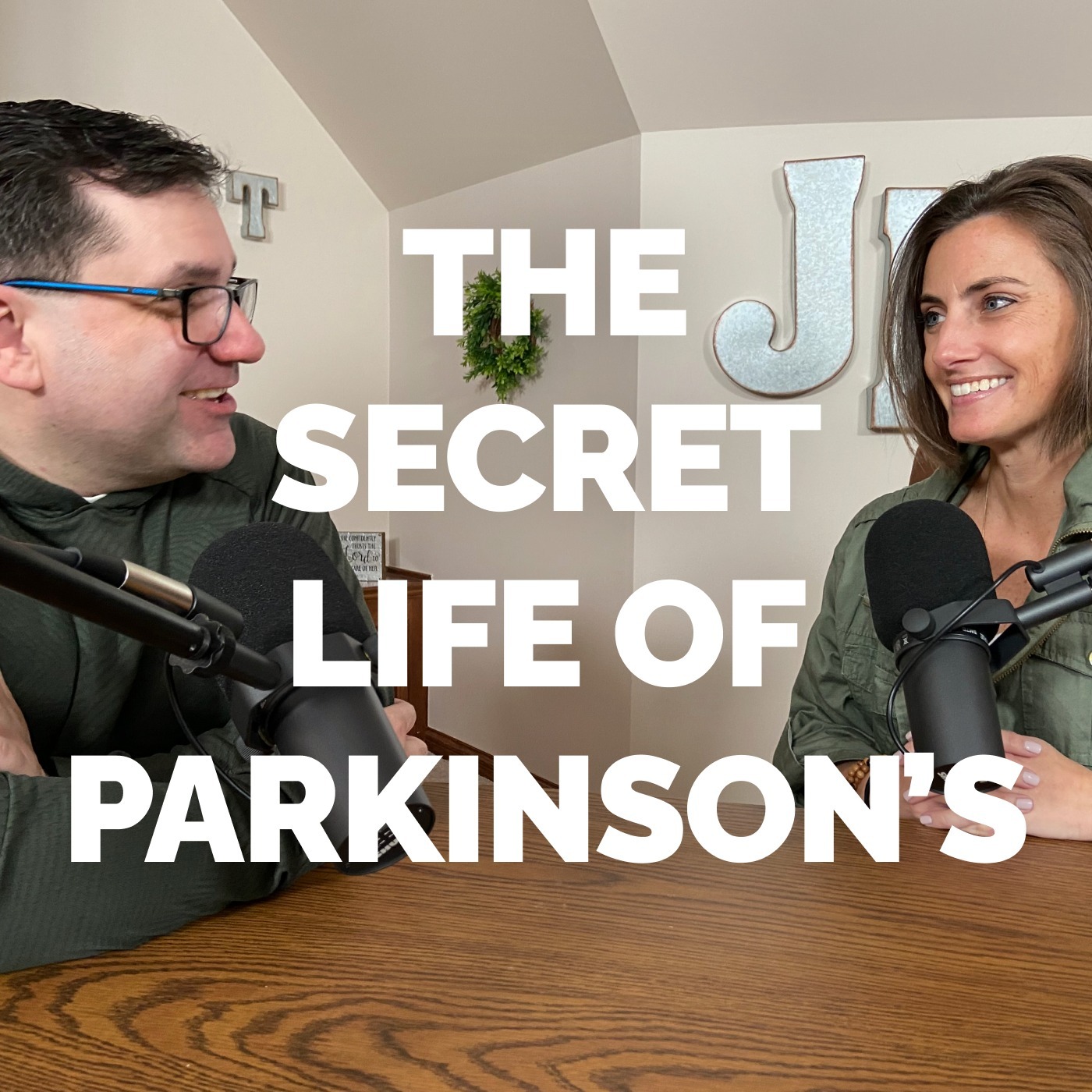
The Secret Life of Parkinson's · Jessica Krauser
In this episode, we dig into how Parkinson's care has shifted from inpatient long-term care to community-based outpatient programs — and why getting connected early helps people stay independent longer. CHAPTERS 00:00 Introduction to Parkinson's care evolution 01:47 The history of Parkinson's programs in long-term care 04:10 Growth of community awareness and support events 06:08 Shift from inpatient to outpatient Parkinson's support 08:04 Impact of healthcare policy on nursing home care 09:34 Importance of early supportive services for Parkinson's 11:02 Community engagement and the Parkinson's walk 12:29 Personal stories of resilience and community support 13:54 Resources and encouragement for Parkinson's patients and families This episode was brought to you by Changing Parkinson's. If this podcast has meant something to you, consider making a gift to help keep it going. And join our PDNextSteps Home Workout Series with over 100 custom workouts delivered to your living room. Visit http://changingparkinsons.org to give, get moving, or join our newsletter.
Steve: My sitting okay? You're sitting just fine. I'm not comfortable at all. Why? I don't know. You look awkward. I kinda feel awkward too. So, Brian, I'm gonna let you handle the show most of it. Yeah. And there's a good reason. Stop it. Yes, we are gonna post it. It's gonna be great. I'll blame it all on you, Brian, if it sucks. I know, you're the one I came in here today to do too. I wouldn't kinda I wasn't gonna shoot today it's got too much shiff or work to do and whoops is the shit word. It's okay. Too much stuff to do for work, and then they call the Dr. Rudder's on, you have to be here, so Yeah, get to it. Welcome to the Secret Life of Parkinsons, a podcast created by people living with Parkinsons to help break the stigma of a disease no one likes to talk about. And here are your hosts, Jessica Krauser and Brian Baker. So who is who is he to you? I wanna we wanna hear this backstory. So Jeremy Rudder, or I know him as Jake Rudder. And I served in the Coast Guard together. Nice. I reported directly to him. So you knew a ⁓ you you reported to him? Yeah, but he was my boss. ⁓ God bless ya. So you knew a young Brian. I did, yes. Young and wild. So he's still the same. Yeah. So how did you guys get connected again? We kinda stayed in touch. ⁓ and then he is now got his ⁓ your PhD in the healthcare administration. Yeah, in gerontology. So he became a doctor of gerontology. Nice for yeah, w which is what? It's the study of aging. ⁓ great. I was gonna say it's like is that a nice word for old people? It actually is a word for old people, but yeah, I think we say it's the study of aging. So that's interesting that so and then I know you guys said you were connected, but then you went up to speak at something, right? Yeah, so he ⁓ so I guess he could introduce himself. Yeah, go ahead. Give us your background. Tell us a little bit more about Brian too. ⁓ I certainly will. So I am the CEO of Community Wellness Partners and we're a provider of long term care support and services in Oneida County, which is in central New York. We operate nursing homes, assisted livings, adult homes, home and community based services and and a variety of other services, mainly for the elderly, but we tend to serve a lot of ⁓ underserved communities, homeless communities and and various ⁓ certain disease processes. I've been there about five years and ⁓ prior to that I served in a similar ⁓ organization. I've always since I got out of the Coast Guard, I've I've worked in healthcare and ⁓ worked in the the boiler room of a hospital while I went back to school because Brian and I were both mechanics in the Coast Guard. And so he got out and went right to college. I went out and ⁓ started continued to work as a mechanic and then went back to college. And I've been in college for the last, I don't know, thirty years it feels like so when you started this This role it's not just focused on people with Parkinson's, right? It's just it's it's all long term care for any age any any d not say disease group because not everybody has a disease, it's just all of aging, correct? That's right. It's it started as a nursing home and ⁓ it has grown into a large organization. We have about twenty five different service lines that we provide, and one of those was the Parkinson's program. And it started as just a couple of specialty rooms in one of the nursing homes where in the pre, I won't say her name, but pre-Amazon days where where there was no voice control, ⁓ my predecessor and who was my my professor for nursing home administration class had this great idea to to have voice control in ⁓ in the rooms for the lights and had the a lot of the automated features there for folks with Parkinson's. And then that kind of grew into some a Parkinson's awareness walk. This was almost 25 years ago now. And then a support group grew out of that. And then they started Rocksteady Boxing grew out of that. And then from there it just settled in that realm probably for a good fifteen years. Mm-hmm. And then we started to really ⁓ notice the number of people being involved in the awareness walk started to grow and grow. And when I got there about five years ago, the program was pretty consolidated to just the Rocksteady Boxing, the walk, and the support group. At that point, the acuity of people in nursing homes had raised so much that you're not really seeing independent. people either with or without Parkinson's, the dependency in the nursing home has grown in the last, I'd say, ten years tremendously, where you don't see people walking independently, ⁓ and those folks you're seeing now in assisted living. So the need for Parkinson's specific nursing home rooms had really declined. And right now we only have about eight or nine people out of the hundred and sixty that we serve in the nursing home. with Parkinson's and and most of them are end stage and and not independent, not participating in Rocksteady Boxing and those programs like that. So we decided we're gonna take this what's happening in nursing home care, which is a higher acuity and a higher dependency, because people are staying at home longer, people are staying in assisted living longer. And we're gonna focus our Parkinson's program in that same direction, which is outpatient. therapy and which is ⁓ support services like our support group and so we've grown that in the last five years and in fact two years ago we hired a program director to run the whole thing because we only had ⁓ we had just a few people running it on their own it wasn't super coordinated and now we service ⁓ certainly a lot more people on the outpatient basis between forty and sixty As opposed to the inpatient basis. So you were seeing a decline in people overall, but people living with Parkinson's doing long term care about five years ago, right? So they're staying at home longer versus having to come in. Is that is that b do you think it's because of COVID or is there something else that's happening that people are staying li not living longer, but like living at home? There's people are moving more, so they're Well, yeah, that's why I wasn't sure. Like Is there s is was there some sort of shift or change? I think in general in the nursing home environment, a a few years before COVID, we started to see a shift in the acuity levels that were allowed in assisted living, which means you can now be a lot more dependent in assisted living. You can be there in a wheelchair, in a a walker, you can be there with incontinence, and and that clearly when you're can stay in the lower level of care longer, the highest level of care won't see as much of the the high the lower dependencies. And so we tend to see a higher dependency. This also really ⁓ coordinates with a change in reimbursement structure for nursing homes too that really push towards a higher acuity of of patient in the nursing home. Imagine the healthcare industry making changes so that affects the patients in Different ways. Yes. So what is what are something is there anything or anything specific that people with Parkinson's are should know about when they go to look for long term care? Assisted living andor long term. Yeah. Yeah. I I would say probably similar to your message, which is start supportive services while you're living in the community. And what we're seeing is people who attend our outpatient therapies. regularly end up staying at home and out of the assisted living and out of the nursing home a lot longer. And so these are things like the Lee Silverman, big and loud. We do Rocksteady Boxing, we do cycling with Parkinson, ⁓ just ⁓ we do a nutrition program. All of those things really help your longevity in general, but more so for folks with Parkinson's. So we gotta keep moving. We can't just sit on the couch. ⁓ You have to do your speak out programs. Do you tell him that you started speak out? No, I have not talked to him. Speak with intent. I need to speak with intent. Me, my mo moo. So do you guys I know you said you do like the different programs, but did you ever hear of Speak Out or like the Parkinson's voice project? I have not heard of those specifically. We do the Lee Silverman voice therapy. Okay. Big and loud. So the loud the one that really gets the the projection of the voice out. And then big is is more for your gait. So what ⁓ what age group is usually there with you? Like do you ever have anybody with younger onset that is just like not ⁓ progressing well? I would say our our average age is in that sixty to eighty range. Mm-hmm. But we we have had a few onset young onset folks in in the forties and fifties age range. In the outpatient piece or that outpatient. Okay. Yeah. Yeah, that's what's Always hard. But you're in the middle of New York? We're in an area of New York with the second highest per capita of of Parkinson's. Really? Yeah, it's very agricultural area. It it was a huge Air Force base as well. So the Mohawk Valley in general is is the second highest ⁓ apart from I think it's Ulster County downstate. Do you feel like you n like that there should be probably more people engaged? With your foundation or with your programs? I do, but I I will say this our Parkinson's walk, we had about four hundred people attend and and we've outgrown two sites. And next year will be our twenty fifth anniversary and we have to move a third time because the walk keeps growing. And you w we went from having a hundred and twenty to a hundred and thirty to this last walk that we just had a couple of weeks ago, four hundred people attend. Wow. And we we backed up the highway or the main road with with parking and and so we have to move. ⁓ which is from a foundation point of view a great problem to have. Mm-hmm. From the point of view that there are that many people impacted in this area with Parkinson's not a great thing. So you had four hundred people participating, like family members and stuff, not all Parkinson's patients, correct? Correct. Yeah. All but still like That have been touched by Parkinson some fashion. And it's it's a one mile walk that we did and great story. One of our Rocksteady boxing clients who comes out, he's walking around and I run across the field just to count people really and get about to the three quarter mark and I see him walking with his family. He's struggling. It's a mile walk. Yeah. He's struggling. And he says I'm gonna finish this. ⁓ I'm absolutely gonna finish this. So we had the the fire department had this little scooter behind him in case he needed help. Mm-hmm. On counting people, I got up to the ⁓ finish line and sure enough, here he comes and all his family's there cheering. Just so happened that the high school band was playing at the finish line and so it was ⁓ just such an emotional piece that happened. is very naturally and and he did it and he walked the whole mile and God bless him. It it's ⁓ good for him. That's I know that's not easy for a lot of people. At the conference that you had that Brian spoke at, how many people did you guys have there? We had over two hundred people attend that But like you said, there's probably still a lot more out there. Especially if you're if you're that high. That's how 'cause that's how we are too. Like we're I don't know if we're known as an area to be high in numbers, but Just the Midwest in general. Yeah. And I think it's just it's it's so I'm like glad we're having this conversation 'cause then people who live in that area it's they know it's something that they can go to. And I think that's 'cause even now, like if I go on and I like Google like Parkinson's activities or something, I just feel like there's there's so there's so much, but it might not be in the right area that I'm looking in and it's just like it's overwhelming to look for. So it's like trying to find it in any way possible that you can. So hopefully That's what I was gonna ask there. I mean, because You guys probably are probably stretch your resources, aren't you, as far as movement disorder specialists in that area? W absolutely. There's really no neurologist in the area that's involved. If if people get diagnosed with Parkinson's, it's typically through their primary care and then they end up going out to Rochester or Albany or some folks go down to New York State. Brian's been out Out out there. It's a it's somewhat the middle of nowhere. You're you're ⁓ riding on the three way and it's trees and cows and then Utica pops up and then you blank and trees and cows again. It's kinda like Ohio. It is kinda like Ohio. It's kinda rural. Rural. That is the hardest word to say. I stomach too much noises. I can't hear it. Don't worry about it. Well, this was great. I really appreciate you ⁓ sharing that information with us and and coming on and ⁓ seeing you with Brian. Brian just lights up when he's with people that he knows really well. Just ask him how many Colt forty five Z made me a drink. Yeah. I didn't think it took a lot of convincing. Yeah, probably not. To not be disclosed. ⁓ well thank you so much. ⁓ we really appreciate your time. Absolutely. Thanks for having me. Appreciate it. Alright, in our last 30 seconds, I'll leave you with this. Please make sure that you check out wherever you live, in a rural area, in in a setting of a city, check out any place that you can that's close by to find a community, find exercise, and keep on moving. With that, we'll see you next time. Thanks. This episode of The Secret Life of Parkinsons was brought to you by Changing Parkinsons. If this podcast has meant something to you, consider making a gift to help keep it going. And if you're ready to move, you can now join our PD Next Steps home workout series with over 100 custom workouts delivered right to your own living room. Visit ChangingParkinsons.org to give, get moving, or join our newsletter. We'd love to know who's listening. Until next time, you keep showing up. We'll be right here, meeting you where you are.