
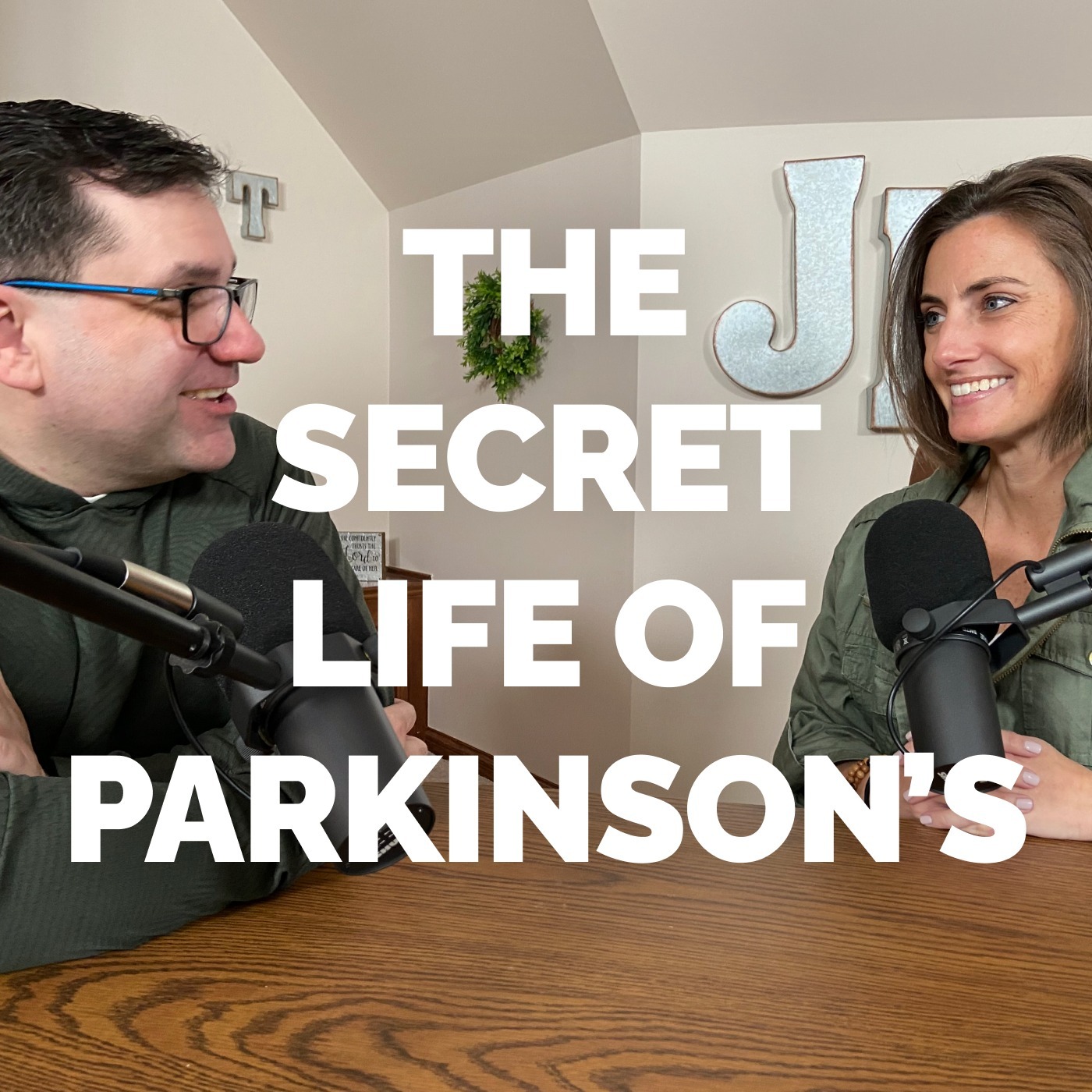
The Secret Life of Parkinson's · Jessica Krauser
A Parkinson’s diagnosis usually comes from a doctor. But learning how to actually live with Parkinson’s happens somewhere else. In this episode, we chat with Katie Webster about the gap between medical care and the day-to-day reality of living with Parkinson’s — and why community, education and trusted resources matter so much. They discuss how organizations like Changing Parkinson’s and resources like The Secret Life of Parkinson’s podcast can help people feel less alone, better understand what they’re experiencing and become more confident navigating life with Parkinson’s. Katie also shares why creating a safe, trusted community is so important, the emotional journey that often follows diagnosis, and how resources for newly diagnosed individuals, exercise programs and patient-led education can help fill some of the gaps traditional healthcare simply can’t. Because sometimes the first step into the Parkinson’s community isn’t walking into a support group. Sometimes it’s pressing play. Chapters 00:00 Introduction to the episode and guest 00:28 The purpose of the podcast and nonprofit 02:25 Addressing the gap between diagnosis and reality 04:18 The importance of community and feeling safe 06:14 The impact of community on new diagnoses 08:04 The role of the podcast in education and support 12:10 The reach and impact of the podcast at the World Parkinson's Congress 16:48 Challenges in growing a nonprofit organization 22:55 The emotional journey of diagnosis and acceptance 26:57 Resources and support tools for newly diagnosed 27:23 Call to action and closing remarks
Steve: So I'm excited because we have we have a a guest with us that's plays two roles. The myth, the legend. Katie Webster. This is a lot of pressure. But but it's but it's fun because you're one of my really close friends. She's been around s my entire Parkinson's diagnosis journey. She had other things going on, but she happens to be a non profit ⁓ career guru. So we hired her as our executive director. Welcome to The Secret Life of Parkinsons, a podcast created by people living with Parkinsons to help break the stigma of a disease no one likes to talk about. And here are your hosts, Jessica Krauser and Brian Baker. So before anybody tunes us out and is like, ⁓ that I don't want to hear about nonprofits, this is what we want to talk about today. Too bad. No, I'm serious, because sometimes when we talk about like you know, advocacy, it's like it just takes a different spin. But this is really important because it's talking about what is that gap that we have between When you go to the doctor's office, whether you've just been diagnosed, or you're just seeing them for your one year follow up, or you're getting a pre DBS testing, that gap from there to then reality. And that's what our nonprofit, which includes this podcast, is powering. So I think it's really important for people to understand like what is missing and what what are those how can we start to fill those gaps? so yeah. Isn't that exciting? Very exciting. Are you gonna practice your speak out? I am. Because guess what? You have more than just me, you have Katie who's gonna put pressure on you. I was very excited to hear about your speak out process. It was exciting. I was thrilled. I was like, Yes, I get to talk about this. Yeah, yay. Using using different inflection points and it's just yes. Speaking up louder. All right, let's get back to Katie. So One, I I love ⁓ for those that don't know, we've had this the nonprofit changing Parkinson's for ⁓ over five years, six years now. And it's really started with the whole idea of there's so much information that we don't know. Like Brian and I would talk about things, we'd ask ourselves questions, but now we see like there is there is this gap. You know, there's all these families that come in and people have been diagnosed for so long. And they come in to see our space or they come in to talk to us or they come and see our podcast. So what are those things that we're trying to or at least trying to elevate? Like how are what are we trying to get across to people who were just diagnosed, or even those who are like in the middle of it? That's a great question, Jess. I know. First of all, thanks for having me. This is very exciting. ⁓ as Jess mentioned, I do have a nonprofit background, but ⁓ I think one thing to share is that it's always important that wherever you decide to land. Especially a nonprofit that you care deeply about the mission. So obviously having a personal connection with you, ⁓ and meeting all these great people like Brian, who I've got to meet over the years at the Volk. And others. Yes. So it's super fun to be here. But ⁓ I think the whole point is to find a place that people can call home or a community that they feel most ⁓ comfortable at. And I think I think just observing the space that the PD Next Steps gym is in, the podcast that you have, this huge following, some of the other programmatic things that you all have done over the years. The thing that kind of stands out through all that, and it's really whether you're the person diagnosed with Parkinson's, the person in their family, is that everybody just seeks community. They want a place where they feel like they can be themselves around others who are going through something similar. And I think that any time the gap is trying to find the ways that we can make people find that. And help find that for them. So can s since you're you were you were, you are a friend. And you've had you had the experience with me just being a friend and a support person like straight from the beginning and now being in the community by experiencing all the people and learning all the stuff. Like, what do you feel like people that aren't in the community might not see or understand? So either like those caregivers or somebody's son or daughter or parent whatever whatever they may be, like that surrounding network. Like what do you think that you were missing and not understanding? Yeah, I mean, I think, ⁓ and I've seen this in other nonprofits that I've been part of. And I think that's really what's important about having like a place that has advocacy or that is really doing good work for people that are that have an illness or a community. But I think what people don't know or what I was surprised ⁓ about this community specifically is just the care that everybody has for one another and the genuine ⁓ appreciation, understanding of what everybody is going through. And when people walk through the door, they really feel like they're in a place that they're safe. And I think that safety, trust, those are big things that can be the the a disease is overwhelming. Like I can't imagine what it's like to get a diagnosis of having Parkinson's or anything else. And just how it throws you off your journey or what you thought was going to be your journey and to have a place where people can go to PD Next Gym or tune into you guys. I mean, it's clear and evident through the podcast what this has done for people who are seeking just that, a community that they can be part of. Because I've heard you say this is what the community that nobody asks to be part of. And so I think that's one of the things that Changing Parkinson's and you all have done, and that I'm excited to be part of, is that you are providing a a place for people to go to be with others that are going through similar things. ⁓ I remember somebody coming into the gym a couple weeks ago that was newly diagnosed and they were nervous. ⁓ and this is not the first time I've heard have heard this over the last seven months, but they were like, I can't I can't believe how many people said hi to me and how welcoming everybody is. And I think that I can only speculate but how lonely getting a diagnosis is, and to go into a place or to tune into a podcast. To be able to see others going through the same thing and how ⁓ comforting that might feel, or just knowing that there's a place that people can go to to for an outlet. Well that's good that they said that. Maybe they you weren't there that day, 'cause I can imagine you going up to somebody being like, Hi, welcome to our space. No, I do it with intent. It's hey, welcome to our space. I like that. It goes something. No, I but ⁓ the thing I think is unique is just the age range and how ⁓ like Regardless of somebody's eighty in their eighties or in their forties, we all have that one thing in common and like when we go there we don't even I don't see somebody's age. I know, I don't either. Yeah, it's ⁓ especially 'cause half of them act like they're teenagers. ⁓ my gosh. Sorry about that. Yeah, you included. But I think that says something though, that you act like you're I mean, people are acting like themselves. And I think that the one thing, again, like through a space in people's communities that they can find ⁓ comfort in like that's what they want to be able to go somewhere where they find that they can be themselves. And that's how the podcast is too. Absolutely. Everybody that we have on, we're like just we're just gonna ask you questions and be like you, people ask like questions beforehand. I'm like, I don't really prep questions beforehand. We just kinda let it roll because it's like it's just a conversation that, you know, we'd like to have and other people just like to apparently listen to us about. That's kinda funny actually. Somebody wants to listen to us. Somebody actually cares about what we have to say. Well, but I think that is people are seeking that. And I think that what the podcast does is provide a place again for people to tune in and feel like they know you. And you both, ⁓ I mean the comments about you both and your relationship and how you banter. But like people feel like you're right in their room with people get mad at me though. They think they think she's mean to me. And they even said one time I was doing an exercise with Melissa and they're like, What's the what's the one girl what's why is the one girl being mean to the blonde haired woman? I'm like and they said, Who's the one with Parkinson's? I'm like, it's me. But yeah, I mean it's it's definitely it definitely helps because again to that point of like being f going from your doctors to home and then it's like what happens in between? It's like I try to compare this before. I don't know if I've ever told you this, but like I think it was when my mom said something one time, she's like, Well, she's I just feel like you talk about it all the time. I'm like, because it's it's in my face all the time. Like especially when my symptoms weren't controlled yet. And I was finally not finally, but when COVID hit and everybody talked about COVID every day, all day, on TV, on the phone, every family member, like for months. I'm like, That's what Parkinson's is like. You can't not escape it. You can't not think about it, you can't not talk about it. But you have nobody to talk about it with. I think people say those things probably and just in talking with other people who are caregivers or it's because they're s they're scared and they're frightened because they know that the life that you had planned together might look a little bit different. And I think that's scary for people. And so it seems like the easiest thing is to just not talk about it. But the reality is is that this is your new life, right? Like we just and I always talk about ⁓ i because I think it's an easy thing for people to understand and really I think this analogy is most people know somebody that has a kid. And so we'll talk about how it's like and Jess and I both have kids. They're the same close to the same ages, going through the same kinds of things. And it's like before kids and then kids. And so before kids, we're like, we're so we can do whatever we want and we're so tired from what? I don't know what I was so tired from, but we were so tired. And then you have to hang over. Is that what it was? Hang on. I don't know. Too much fun. But then you have kids and you're like your whole life is uprooted and it's completely different. And so you have to navigate your new normal with a baby, a toddler, a kindergartner, a middle schooler, a high schooler. And so I think that we've found that and again, it's not the same, but just to I think to talk to other people about a journey, you know, having a Parkinson's diagnosis is you have your life before Parkinson's, right? Then you have a diagnosis of Parkinson's and where you ever you are in that journey, You know, it changes. It ebbs and flows. Maybe new symptoms come. Maybe you get a different medication that alters something. Maybe you have DBS. ⁓ maybe you do something else. And so along the way, you're always altering what the journey looks like. And I think that's been really helpful, honestly, for me to be able to talk to other people about what this could be like for somebody because I don't think I think people don't talk about things it's cause it's because they're scared and they're not educated. And so when that happens then they assume things or they're just like, I don't wanna engage. ⁓ and I think what's been most rewarding about the community because I'm in it every day because our nonprofit is literally in our on our campus with with campus. With we do have a campus. Yeah, we do have a campus. That's what we're gonna g we're gonna go with campus. Right? What do you think? Campus? I like it. The main campus ho houses ⁓ our nonprofit as well as the PD Next Steps gym, but is just the the community. And I feel like again, you guys have done such a great job of building community with people all over the world. I have to say when Jess and I and Melissa we went to the World Parkinson's Congress. I keep I tell everybody this story because I was blown away. I think I knew like the impact that the podcast had. Her popularity. But I didn't quite understand it until I was in a space with four thousand other people from all over the country. And they were coming up to Jess and be like, Are you Are you from the secret life of Parkinson's bathroom? Or I would see people and they would be like pointing to their friend like it was a rock star, like, is her? Like, is that her? And then they I I remember looking at me like, It's her. Like, come over and talk. But it was awesome because I think that really for me just showed the depth and like scope of what this podcast has done for so many and I think with our nonprofit like I really want more people to feel to find this. That yeah and their communities because they're they don't have that. Just so you know there was a few people that once they saw me they're like it's Brian with you? ⁓ yeah. I'm like, no, he had to work. So next time we'll just bring your face. If you can't come we'll put it over ours and we'll have a stick. This is Yeah. So what are what are some challenges that you ⁓ faced coming into the position that you're in that you didn't expect? that I wasn't a nonprofit. Well, I'm saying I'm a marketer and trying to grow this was yeah. No, honestly that was Well, I think that I was saying organizing stuff. Well, I mean just organization I yeah, I mean you have to understand that the organization was run by volunteers. So It's a volunteer-led organization with people who care deeply. in the things that everyone has done, I mean, you you know, Melissa's had the PD next steps, the so the gyms part of the nonprofit, and she started what 2018, 15 years ago. Years ago. Years ago. That has, I mean, Melissa's work in building that community locally. I'm talking locally, has been like enormous. And then, you know, Jess Jess is diagnosed, she meets Melissa. I meet Brian. Meets Brian. And I mean, the fact that you've created the podcast and the wish kits and this community with all volunteers and the passion that people have. I mean, I think that's just it's remarkable. And that's really the reason that it's been so successful. Are you getting teary eyed over this? Is this hus? Every time I do these podcasts, is this not just me being here? No, it's just Yeah. I'm so I am kinda sad that Then don't get to spend more time with you. I'm ⁓ anytime. but no, challenge wise, I mean, I think it's just taking something that has been really a labor of love for so many people and, you know, turning it into something even more. ⁓ I think anytime you're trying to grow and like learn an organization, there's always growing pains of just things that I mean, basic things that just need to be set up from a business standpoint. I mean, so really I think the biggest surprise is really just the not really surprise, but just the Amount of time to c get things functioning really in a more business way. ⁓ you know, the goal is to raise more money and and increase our awareness. I mean, we want more people to see the podcast. We wanna touch more individuals and ⁓ so all of those things take resources. And so, ⁓ you know, we're a team of small we're we're a small team, but I think we have a lot of excitement about where we want to go. It's nice to have somebody else to blame. Like I'm sorry about our our executive director is requiring I mean I've heard it a few times. I mean honestly, like I'm so done. Podcast questions I can answer every day, but like just random questions like on like the website or s something, you know, that I'm just like I don't want to deal with anymore. I can hand over It's exciting to me though. But it's great because I our whole our whole goal is to how can we reach more people? Like our podcast is doing great and we've done great organically without it have like putting much effort into it. So now if we actually put effort into it, and if people subscribe no, no, I mean effort like in terms of like the background stuff. You're right, I haven't put any effort into it. ⁓ no, that's not what I meant. ⁓ I'm agreeing to you. people like how you show up. ⁓ but no like just even putting some more like structure around it and having the the help to do that. Like so if people are if you are subscribed to this e ⁓ podcast. And if you haven't subscribed, subscribe now. ⁓ because when you subscribe, then we're gonna be able to have, you know, we have different like shows or seasons or playlists of, you know, this is my whole DBS journey, or this is if you're newly diagnosed, go see all of these clips together. Or you know, just like different like we might survey people to learn like what topics do they want to hear about. Do they want to have a live Q A, like a live webinar or something like that. So we might be doing doing more. Doing more. Good stuff. Yeah, but it'll all be good things because, you know, the comments that we get, and I know we read these all the time, it's just like it's just incredible how people just feel part of our community or it's our our collectively community of PD. But then they also just don't feel like they're on an island anymore. Yeah. So I think that's really important. I mean, I think when you ask about challenges, of course, I mean we're kind of being funny about just natural challenges of of starting a business, if you will, but I think really the biggest challenge is is ensuring that we can reach more people. I mean, I think that's it's a it's a challenge, it's ⁓ exciting and a challenge in a different way because we want more people to be part of this, to feel part of a community. ⁓ like I feel when I see comments about people being you know, I wish I had this kind of community in my area. Like that makes me ex like I want to do more because I want people to have what you all have here. And, you know, there was a person that, you know, reached out to Jess and I love this. Like they reached out to Jess to connect and she connected them with another person in their community and now they've they've emailed and they've talked to each other on the phone, ⁓ and they've requested a wish kit and they're they're part of our community now. And I think that's that's really important. So you bring up a good ⁓ A good example. So there's three things that our nonprofit does, and we're sharing this again. We've shared this a lot before in the past, is what we call our wish kit. And these are things that we just wish we knew when we were diagnosed. And you can order it for free. For lunch? For free. so this is what you know, when people donate, we put these wish kits together. It helps power the the PD next steps program. Which will be ⁓ people will be able to get trained on in in the future. And the home workout series that Melissa has set up that anybody can have access to if you sign up. And then the podcast. But these are things that we wish we knew when we were first diagnosed. And nothing is it's we've done this for three years, four years. I think so. And very few things have changed because it's still it's still the same. Like we just need to know like high level information as to like what's gonna stop us from like wanting to Literally I've heard people say, and you've said it too before, of like jumping off a cliff. It's like this does not progress overnight. You are not by yourself, you are not alone, you're not on an island. And there's simple things like what can just make you feel better. Going back to the pregnancy example, it's like you get a diaper bag and kit, like in the hospital, with your bundle of joy. So our our bundle of joy gives us a water bottle and a toothbrush. ⁓ but no, just things that it will keep you in the know of What not these aren't that it's not that they're the they're the most important things, but they are tangible. how to live your best life today with Parkinson's. And I think that's one of the things what you all have done is we're trying to ensure that people can live their best life today, meeting you where you are, wherever that is, in your journey. And this I think has been something that we've seen huge interest in and it's really been it's fancy water bottle. It is a fancy water bottle. Well, 'cause the thing is, I mean, we I originally some people on our our volunteers like to try and like find things that are maybe a little bit more inexpensive. And I get it. It's like we're trying to save money so we don't have to spend so much on a kit. But at the same time I'm like, I this needs to be functional. Functional for people with Parkinson's. So having like it has to have like a straw a straw, exactly. Have a straw or have the ability to sip or have it an easy open. Same thing with the toothbrush. I'm I tested like Seven different toothbrushes one time. And I like there there was only one I really love, but that's like $80. So then we went to this one and it's it's obviously much cheaper, but the other ones I couldn't do because I'm like, there's way too many buttons, or they were too hard to push. And it's like, so just being be just being methodical about and and this, not that we have to get rid of it because it's a journal, but like I can't read my own handwriting now. Earlier I was able to, but seven years in now I can't see any like not that I can't see anything. I can't see what read what I wrote. So I don't know what the solve is for that. Talk text. We should put a phone in there. ⁓ there you go. Talk text. Yeah. ⁓ but yeah, so just like this is this is one of the things, the podcast and just getting the podcast structured in a way that it's easy for people to navigate, find what you're looking for. Like I ⁓ I don't know if I told you ⁓ yes, I did. ⁓ I reposted podcast number eighty yesterday. That that is what you said, yes. Look at you for clarifying your speech. Good job. ⁓ stop with intent. That was very good. That was very good. But we had Dr. Patel on. Okay. And it was ⁓ a conversation about Parkinson's dementia, Louis body dementia, and Alzheimer's. And he clearly explained the differences, the symptoms to for caregivers to look for, this things for patients ourselves to look for. And you know, you can have one without the ⁓ like You can have Parkinson's, but you don't not everybody gets Parkinson's dementia. You can have Parkinson's and you can get Alzheimer's. So there's like there's just all these different things. And I'm like and this con conversation came up a couple of times with friends of mine. So I'm like, I should really repost this. So it's like things like that that we have so much great content and I want people to find it at the right time that they're trying to find it. So anyways. Those are things that we're working on. I don't know, you put you do put effort and time into Organizing the podcast in the sections. I I do a lot of research, but I love doing it. Like that's that was like my job before. Well, I think you bring the research up. And I think one of the other things that we've been really focusing a lot of our efforts on is understanding the emotional journey that people go through when they have a diagnosis. And so ⁓ we've been working with somebody who's helped us survey individuals that are living with Parkinson's about like kind of like the stages that you go through with Getting a diagnosis and the questions that you're getting or you're thinking about, like, how's this gonna change my life? What does this look like for my family? And those are all real things that people are going through and they're asking. And I think the one thing that has kind of stood out to me in all the conversations that I've had with people is that everyone says the same thing. I got a diagnosis and they were like, now what? And they didn't know where to go. So we're the now what. We're the now what. And so it's I I they told me to come back in six months. I can't imagine how difficult that is to hear. Again, it's like if you're pregnant for those women who are out there and you you're pregnant, you get you go in and they're like, You're pregnant. ⁓ see in see you in nine months, six nine months and you're like, Huh? What am I supposed to do now? Like we d we should have like they know there's books out there, like Yeah. But Well I mean, I think to me it just amazes me when I find out somebody here somebody locally comes in, they've been diagnosed for three years and they never heard about us. I know. That's what it's like, how do we get to more people? How do we get to them? Well, I think you have to also be ready. I mean, I we've talked a lot about this. Like I think that you have to be ready to ⁓ like understand that this is what you have, that you have to accept that you have been diagnosed with Parkinson's. And you know, I think you like we've talked, we wanna be there for people when they're ready to move forward. And when they're ready to live their life with Parkinson's, that in they're at a place that they can accept that and maybe sometimes but sometimes it's getting them in there right to see that environment. But I mean but sometimes it could just be the caregiver that's finding it or a family member or friend or something that can share it. Or can that's why it could be as easy as like somebody finding the kit and it's like, you know what I'm gonna share this. Yeah. Or a podcast. I've we've seen that a lot where they're like, I'm gonna share this with my yeah, parents. Well, 'cause I think the podcast and the kit are ⁓ you are engaging in the fact that you might have a diagnosis and be somewhat ready to accept, but you're doing it still on your own and it's in your own privacy. Yeah. Whereas when you go to a place like the gym, for example, you've You're ready to come almost come out and like talk about it more publicly and accept the fact with others. And so I think the thing about our organization that I really have loved that has been created and that we can continue to carry is that we are meeting people where they are. And so if you aren't ready to put yourself out there with others, that's okay. We have a wish kit that can help guide you during that time, or a podcast with both of you that can say, learn about this, this or this. Like the topics that you all cover are so broad and really they hit kinda they hit every part. So not only symptoms, medication, but like really truly what people are living with and how they navigate their life. And I think that's yeah. Or if you go back to the podcast, you can see a big difference in between like I can't when I cringe watch ⁓ with with the early on ones with the rhythm and pace that we go at plus How young we looked. I know. It's like how how in in shape I used to be. We all age good. Today and then the progression of it has come on. Yeah. So now I have to go to speak out class. But at least you're doing something. You're doing it. Yeah. I know. Good job. And I just thought Well but people resonate with you though too, because 'cause you're real life. Yeah, you're real life. You're real, Brian. I don't know, they tell me when I mumble. Yeah, he gets a lot of comments that Brian, you're mumbling. It's like, well no shit. ⁓ But I think we actually just I just thought of another like podcast playlist or episodes or something like that as, you know, if if you know somebody who's in denial. Yeah. Like these are the episodes for you to watch or for them to watch or f if you can get them to watch or if if not, then this is for you to see 'cause there's there are a lot of people that are still in denial. You're not. I I you know, and I don't I mean to me I was ⁓ like I said, it it was just such a relief to know I know, but there's only th there's only a bucket of us that are like that. I know, I know. And but it's har hard for me to comprehend like why aren't you relieved that you know what you have now? Yeah. But then there's people who are pissed, there's people who are scared, there's people who are unsure and it's it's all the things, so just trying to tackle that. Well and I I'm excited about that part of us identifying that emotional journey because I think you've done how two hundred plus episodes of podcasts that you can put together to say, newly diagnosed, I'm depressed. ⁓ how do I deal with my family? Like what are some of the things that like people wouldn't even know to anticipate? And you can at least we can help guide them to these spaces, which I think is really important. Lots more to come. Yeah. So one thing I know I we need to say more and we'll probably do this moving forward. But if you want to learn more or keep up to date, please visit www.changingparkinsons.org. And you can sign up for our newsletter. ⁓ also don't forget to subscribe to this channel because then you'll be able to see in real time any updates that we do. To the channel and you'll always get the hopefully the podcast comes out every Thursday, assuming that I get it on there. Like that's my biggest thing is like make sure the podcast goes live. and hopefully more fun future things to come. So thank you. This is fun. Thanks for coming on. I'm happy to come anytime. This is fun. One time we'll we'll really focus in on our friendship and see how that has Yeah. I would love to do that. Yeah. What we should. No. I did say. ⁓ it's change. She she used to like you. That's not true. He never liked her. No, but I do think it's interesting to see, like the progression from a yeah, from a friendship standpoint. But I don't feel like it's changed our friendship. We just you know I don't know. We're now playing mahjong to Mahjong. We're obsessed with Mahjong to help our company. No. It's a really addictive game, but it's great for cognitive. Yeah. I mean perfect. Is it better than Block Blast? I have no idea what that is. Is that on your phone? Yeah. Yeah, this is in person, like you have to hang out with people to do that. Put your phones down and you have to focus. Yeah, that would be a really good podcast topic, actually. Friendships. Yeah, yeah. My friends talked about that before. Mm-hmm. So we've had the kids on. We needed to get your son on too. He's a little bit busy. He's busy. He's in his twenties. Living his best life. Living his best life. Those are the those are the days to remember. Alright, well in our last 30 seconds, I'll leave you with this. Please help us out if you can. Check out changingparkinsons.org and see all the different things that we're doing. Like we said, there we have the gym exercises, home workout series, we have the kit that you can order, and then obviously the podcast. So make sure you subscribe, tune in, and check us out every week. I'll see you next time. This episode of the Secret Life of Parkinsons was brought to you by Changing Parkinsons. If this podcast has meant something to you, consider making a gift to help keep it going. And if you're ready to move, you can now join our PD Next Steps Home Workout Series with over 100 custom workouts delivered right to your own living room. Visit ChangingParkinsons.org to give, get moving, or join our newsletter. We'd love to know who's listening. Until next time, you keep showing up. We'll be right here, meeting you where you are.