
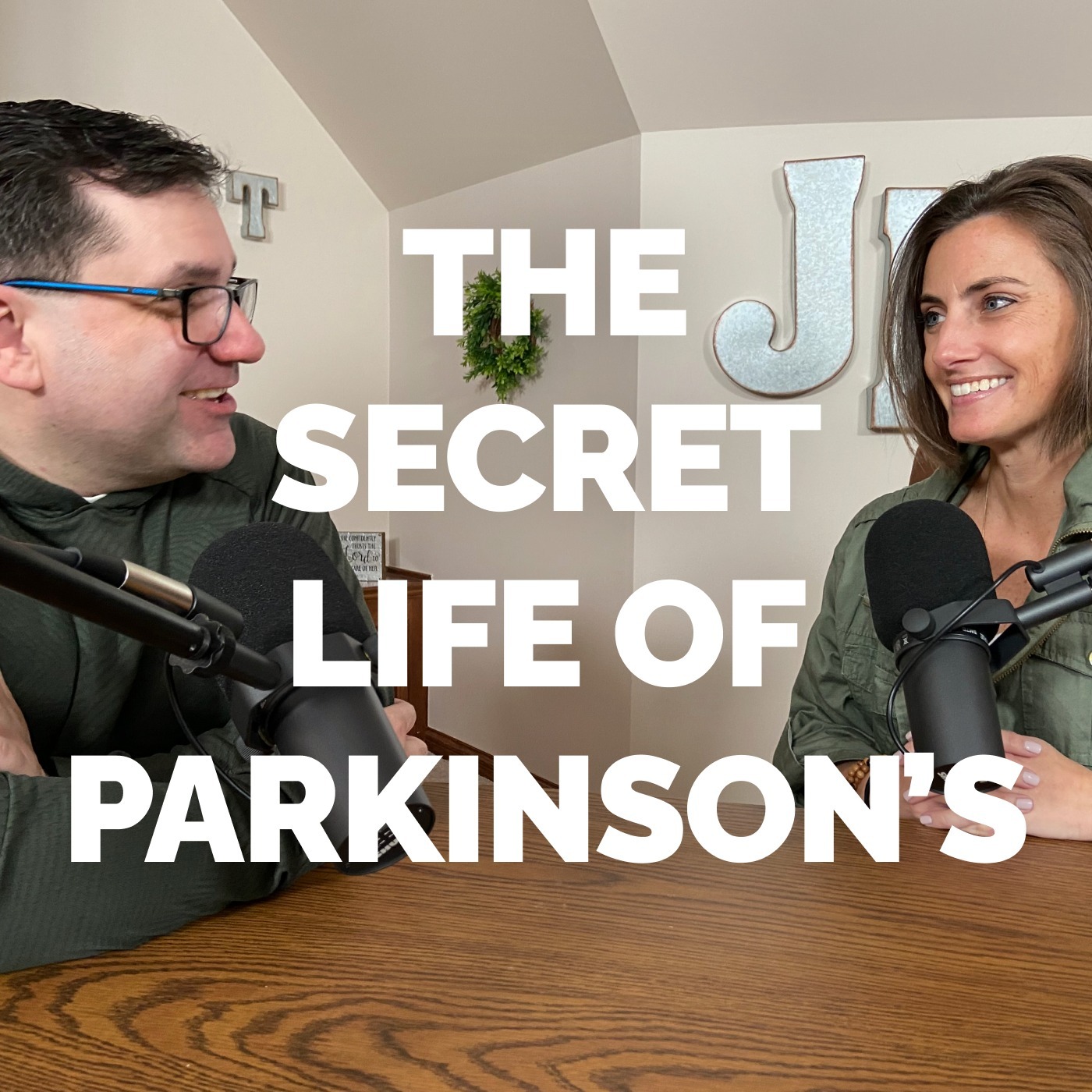
The Secret Life of Parkinson's · Jessica Krauser
In this episode, we meet Jason and Angie, a couple navigating Parkinson's together since Jason's diagnosis at age 42. They share how Parkinson's has affected their marriage, the importance of communication and humor, and how they've learned to take life one day at a time. It's an honest conversation about the challenges Parkinson's brings—but also about staying connected, finding hope, and remembering that Parkinson's is only one part of their story. Chapters: 00:00 Meet Angie & Jason 02:24 Jason's Parkinson's diagnosis 06:48 Finding community and support 08:13 Parkinson's, marriage & intimacy 10:17 Communication and staying connected 17:13 Taking Parkinson's one day at a time 20:01 Advice for newly diagnosed couples 22:22 Choosing hope
Steve: How long does a video capture your attention? Maybe seven, eight minutes or literally. Yeah. Like a long enough on X to watch it for three minutes and then move on. Well, it depends. It's like if it's interesting or not. So like like I said, and I know people have said that they've binge watched our shows before, which I think is. I can't even binge watch you. Actually, I cringe them because I'm like, ⁓ my God, look how you look how much weight I've gained, huh? Welcome to The Secret Life of Parkinsons, a podcast created by people living with Parkinsons to help break the stigma of a disease no one likes to talk about. And here are your hosts, Jessica Krauser and Brian Baker. But I binge watched Angie and Jason the other day. ⁓ so welcome guys. Thank you so much for coming on. Thank you for having us. Thanks very much. They have you guys are on Facebook and Insta Instagram, right? Is that the only two plot platforms? So they have a their handle name is called Beyond the Brochure. So they're married. Jason has Parkinson's and he was diagnosed in 2017. That's me. I love how you did that in some of your videos. You're like, this is that's I'm it's me. I'm the guy. But but your your videos are so like quick, simple, to the point, and it gets at so many little topics that you're just like the topics, I guess, that we talk about from a Parkinson standpoint, it's ones that it's like, okay, like I know I know about that because I've been dealing with it too. But Angie, with yours, It's you have a care partner like you h do care partner snippets and those have been super helpful almost for me for like maybe what my husband's going through and he's just not saying anything because I mean no offense, he's a guy and sometimes guys just are a little bit harder at that. And we're still I'm we're in our forties. ⁓ quit bragging. I love it. I'm forty four. Are you fifty? You're fifty one. Why do I keep forgetting how old you are? You just turned fifty one yesterday? I did, yes. Happy birthday. Yeah. So you guys are a month a month apart? Yeah, July second. Okay. Wow. Very cool. Well, okay. Angie, Jason was We're like brothers. Yeah, obviously. So tell us a little bit about yourself. like what what you guys when you got diagnosed and then what brought you to having beyond the brochure. Well, ⁓ I'm Jason Goodying. This is my wife Angie, and ⁓ we've been married for twenty six years. And ⁓ in two thousand seventeen I was diagnosed with ⁓ Parkinson's. ⁓ after a couple of years of just figuring out what was wrong with me. So you know, this is there's stuff that was starting to happen that you just noticed that was like not right. Yeah. Like really not right. Like wow that sucks my chest that all about the stiff arm, you know, and we have a reel on this, but I started to call it his ken hand or as kin arm. And Barbie. Barbie Kin and just that stiffness. And so that was going on and you had a lot of cramping and Yeah. My f my my right foot stopped moving very well, you know. It's like, wow, what this is just not what I'm supposed to be doing. So it took him a while to figure it out though, you know, the doctors. And they first diagnosed him with hemochromatosis and they were hoping that his symptoms were from hemochromatosis, was which is the body's inability to shed excess iron. ⁓ and so his iron levels were off the charts. And so he went through six months, eight months of phlebotomies. Yeah. So I had like give him a pint of blood a week for like six months. And so he dropped crazy. Yeah. And then one weekend of in August in 2017, we went camping and he was hadn't been diagnosed with Parkinson's yet. ⁓ but it was for birthdays. So his birthday and our kids' birthdays are in August. Three of us, yeah. Yeah. And he was tripping over everything. I mean, camping is the worst thing you can do when you habitually trip, right? Like there's root systems and there's fires and you know all sorts there was a cliff. So ⁓ we ended up packing up and coming home and he went to sleep and I called our family doctor because we hadn't been, you know, diagnosed yet. And so the family doctor said Well, it it now looks like it's either ALS or Parkinson's. And so that was not good news to hear for me. Yeah. And I was asleep, so she's like having to take this all in on her own. Yeah. Yeah. So that then ⁓ turning to thank God it's Parkinson's, you know. Thank God it's Parkinson's, right? Yeah. When you were going through all that, had you seen a neurologist or just a family doctor? At that point was family doctor and they tried to get us in a couple of movement specialists. Right. After that moment they sent us to a couple of neurologists. We went to the went to Ursula and we went to who's Susie from Sweet Readers. And so anyway, we were able to meet a few and they all said the same thing was Parkinson's and it just took a long time for us to get in to see the the specialists. Yeah. So no. Which is unusual for a lot of people we understand. No, I know, with only six hundred and sixty movement disorder specialists for all movement disorder, you know, issues, not just emergency. I know, and there's and there's over a million of us, and there's gonna be twice as many. And there's still a shortage of these movement disorder specialists. Well plus there's all sorts of other movement disorders besides that, you know, I'm sure they're just incredibly overwhelmed. So most people that we have heard from do have a weight, which is incredibly stressful. Yeah. Right. You know, I mean this for both of them. Did you know anything about it? Did you know anything about Parkinson's when you found out? Did you have to do a lot of research? Not not really. You know, it was one of those things you just I was always a very healthy person and never had any issues in my past. And so it was like ⁓ I knew what Parkinson's was, but you know, didn't know what it meant to live with it, you know, of course. And ⁓ and and that's really what came up with the the reason why we came up with the brochures is because even everything you hear from the doctors they don't really know what you live with. Right. Right. From the day to day standpoint. So it was like you get this information from a pamphlet and it's like, okay, great. ⁓ now what? Mm-hmm. How do I go about daily life? Yeah. Right. And then ⁓ so you know, you some depression said it said pretty early on with with the diagnosis. And I was like, wait a minute, I'll live my life still. Yeah. Right. So it was like and that's when that you just kinda I changed my perspective and said, Hey, let's go let's just go after living versus like the go after Parkinson's. But so in the beginning I I remember I watched a a quick episode of I don't know if you call them episodes or clips of yours, but ⁓ you said for years you guys didn't talk about Parkinson's. Is that like Was it with anybody or just with each other? 'Cause and I s I bring that up because my husband and I like that was all we talked about, I feel like, for the first year. And we talk about this a lot. Like for the first year we're kind of like all in. It consumes you. It consumes you. But then after a while and my husband's very supportive. ⁓ but then after that, you know, he really is. What? It's just it's just a simple fact that you had to call that out. ⁓ yeah, 'cause somebody somebody said they haven't seen my husband yet before, but he doesn't like to be on camera. But he's like this industry guy. Yeah. He's really there. He's he's totally there. No, but but you know, he got to the point and he we talked about it and he's like, we just need to live our life. He's like, we don't, I don't wanna, you know, bring it up or talk about it all the time. So but I'm also at the point where I'm like, I don't need assistance. Like, I mean, obviously when I was getting DBS, you know, he came to he's he's been to every appointment that I've had with my neurologist and things like that. But what did what when you say you didn't talk about Parkinson's, was it that you didn't just talk about it with each other or with other people and what was that like and what turned the corner? Yeah, I think we were I think we had established, okay, we have appointments, we have this, we have to take medication. ⁓ and that's how we discussed it with each other. We didn't really like discuss like what it meant, how it impacted us. Right. Like emotionally and like and how it impacted our relationship and what that meant. Right, right. And I think he was doing so well for the first couple of years and and he really is you're still doing well in tons of ways. But he was doing so we're like, okay, let's just move on with life. And and our s we live in a small community and so people noticed. and so we had told our imm immediate family, we had told our kids, which was really difficult. ⁓ some of our close friends knew, and then we didn't really talk about it beyond that. First few couple of years anyway. And I think our community, they talked and they spread the word and stuff, but people were really supportive and they didn't bring it up either. ⁓ but then there was a moment where I was like, I'm at work and it's like I gotta start talking to people. Talk my students, I have to talk to like my boss, you know. So I have to sort of think about the future, what this means for, you know, my my my my profession. So as your symptoms progressed, we had to tell more and more people. And and then it actually became easier, right? Once you have that burden that is shared and it's no longer like, ooh, do they know or do they not know? And I mean, it was kind of a freeing thing, in my opinion. Yeah, for sure, yeah. Yeah, it helps like, you know, just even now you know I I have this like walking sticker cane sometimes I use and I don't always use it but I hold it sometimes just so people recognize ⁓ there's something that's why it's maybe not walking so smoothly. But you have a cool stick, it's not a cane. Yeah, yeah, exactly, exactly. Right. Yeah. I like that. Yeah. But so ha you guys then you recognize the fact that you talked about it, but you didn't talk about like the emotional aspect between the two of you of what this meant. So How is that how like how did that transpire? Well, I think for us it was just like, you know, that that part about intimacy. Intimacy is so much more than like the bedroom. Intimacy is like the connection you have. And I think I think we decided that that's something we have to re- rekindle. Yeah. Make sure that's part of our lives and front and center again. Yeah, I think that There have been stages where we communicated really well. And then we were like, all right, let's just see what happens and life moves on because our kids were growing up, we're working full time. We have a house to take care of. There's a yard. We have pets. I mean, there's all sorts of things that are just normal daily life. And so we would deep dive into these conversations and then we'd let it go. And, you know, that happened kind of around the time where you have DBS. Like there was a lot to discuss and a lot of changes and a lot of And so we talked a lot about kind of the maybe we were kind of doing the brochure thing, like, hey, do we have all of our boxes checked rather than hey, how how are you? How are you doing? How are you feeling? Yeah. You know, and then that evolved. And I think actually starting our page really helped you and I talk. ⁓ yeah, exactly. So it's almost like it's easier to talk to other people about it than it is for each other sometimes. Or we'll realize, ⁓ maybe we need to talk about that and then we'll get off a talk and then we'll be very, you know, more succinct about it for like the real opposed. Yeah. Yeah. No, I think that actually makes sense because Brian said one time to me, he's like, Well, don't don't you ever ask Derek this question, like how he's doing? And I'm like, No. Like I guess I should, but it's like so we don't I don't even think about things until we talk about it on here. And this has been like therapeutic for us in that in that instance. Exactly. And it's so important to recognize the care partners going th through the same stuff you are in a different in the sense that the same timeline of things, but in different ways. But yeah, and I think sometimes like I don't know the physical like I I I see it but and I love you and I mm and I'm a part of it, but I don't feel this physical symptoms. And there's a lot of of the care partner like Did I cause this? Is it because I sprayed for ants a few times? And you know, those like how can I take it from him? How can I fix things? How how do I and there's really no answers, right? And that's I think a really frustrating thing for care partners is we want to help so much and we want to do something, but there's not much to do. And so I think we've found a a way to help one another through communicating and There's just been so much positive feedback from the people that follow us that it's really helpful for them. ⁓ that it's it's just it's as you said, it's very therapeutic. Yeah. It's really fueled. Why would I keep doing it? Mm-hmm. For sure. Yeah. I I there's a couple there's a couple of things that you've you said, Angie, that I wanted to show my husband. Cause again, it's it's quick, it's nothing in depth. And it's things that I think he might be thinking of, but he doesn't want to say it out loud to me. and again, very so like we're like we've been married twenty years this month and we have two kids and it's but it's like there's things that it's like, you know, you just go about life and then you it's hard it's sometimes it's like not easy just to get in like those deep conversations, especially with like the day to day with kids in high school and working and all that stuff. But yeah, I think I I I like I like all the things that you're putting out with that. When you talk about Comparing Parkinson's and not comparing Parkinson's. ⁓ yeah. See I I find it beneficial to compare yourself, don't say. Yeah, well, just in the aspect of hey, if this seventy five year old great grandmother can do a burpee at seventy five, why can't I do it at fifty one? You know, or forty, you know, and stuff like that. That's ⁓ comparing that way, I find motivational. I think there's a difference between comparing like in encouraging ways versus like you don't know anything yet, versus like, you know, wait just wait till you get this symptom and then you might not be able to handle it or something. It's like or or doomsday stuff. You know, the the blue ribbon for the worst symptoms, you know, like we're not trying to one up each other with this disease. Like God forbid, you know, somebody is having in it ⁓ a horrendous time, you know, either as a care partner, as a person with Parkinson's with the symptoms. And nobody wishes that on anyone. And ⁓ I think, you know, hey, I have this, well I have this. It's not it's not about that. It's about competitions. It's not competition. You know, it's well that's where I think the community aspect falls into that. And then what we just talking about, just there were just a moment ago as far as having the community say, you know, we we do talk about hey, what well we were just talking between us we were just talking about what kind of medications are you on? How much are you taking? Did you have DBS? And those are all things that I think people use as therapeutic okay, there is hope. There is hey medic that medication's working for Jason, maybe it'll work for me. Right. You know, that type of stuff. but I think you guys were seeing on your channel even like that people were compare like having comparisons and it's like and that and that that's what happens I think when you're newly diagnosed. The first thing that you think of is like I don't want to go to this seminar or this community or this exercise class because I don't want to see what I might be like. Right, exactly. But it's like everyone is so different. Right. Yeah. That's the thing, you know, it and it presents itself differently each day even some day sometimes. Yeah. And for me, you know, I have some great weeks sometimes or have some sh shitty days sometimes. You know Well and sometimes that the community helps in that aspect too because when you say yeah I'm having a shitty day, I know one hundred percent what that feels like versus you know, your wife n being sympathetic with not knowing what it feels like. That's hard for me to watch her go through those things, you know. So it's like you know, I don't want to put her through any un ⁓ necessary pain. Mhm. But you know, that but she also is says ⁓ you'll bring it on too so you know here here it is let's go yeah I had to I had to have a little chuckle in there because when I've when I first got my DBS I asked my the person programming, I was like, so like is it a race that you see you get to level twelve first or what? She's like, No, no, no. I was like, ⁓ okay. So I don't want to go to level twelve. One other aspect about the competition thing is, you know, a lot of times I think there's ⁓ You know, there's different stages of progression and our doctor does not use those stages with us. And so, you know, a lot of people say is Jason at stage three or you know, whatever, and we're just we're just looking at we're just waiting for What is what is stage three? Yeah. And what does that mean to me later on or was it you know, it's like I don't know yet. I'll I'll know when it comes. Yeah. ⁓ and for me I like to live day day to day or life at in the moment because no guarantee about tomorrow. No guarantee you know, the past is the past future's no guarantee of. So they're on guarantee is right now. So the fourth right now. Speaking of having a bad day, I'm having I don't know why the heck I'm so tremory. I feel like my D V S is turned off, but I've checked it multiple times and it's not. So but it's like an idea. It's it's been great for the last year and then it's just today that you're shaking. Yeah. I mean I've been I had like random She gets nervous around me. It's only been four years, five years. Yeah. No, I get like I get like random tremors like every so often, like nothing crazy, but like this, it's like I almost like I can't stop and I'm thankful that we're not video videoing my legs underneath the table 'cause it's like they haven't stopped yet. So you're always trying to upstage me. Yeah. I wanna I'm it's just one of my b one of my bad days. ⁓ Okay, so I have another question about with ⁓ for being like you know, married couple, like what is what is one thing that, Angie, that you wish people understood about being a spouse to someone with Parkinson's? Because it's not easy to be, you know, married to somebody with a chronic illness, even though we we all say the vows of, you know, in sickness and in health, but I've I've known a lot of people that have this has split them up. You know, so what are what are things that you that you wish you other people understood about being in your position? Yeah, I think it's really important ⁓ that people understand that there's a lot of of fear and guilt that comes with being a care partner. But at the same time, there's also this level I've that I'm so proud of, Jason. And so it's It's almost and I don't want to say Dr. Jekyll, Mr. Hyde, kind of, but it's like these two kind of fighting forces. Like, ⁓ I'm really, really scared, but I'm also super, super proud, right? And it it's very complex. Like the the feelings that that I think care partners go through every day are so varied and random that ⁓ you know, based on how he's doing and based on what we've heard from our doctor and based on, you know, the history that we've been through, that it's kind of hard to ⁓ catch on to ⁓ something stable, you know. And so ⁓ like me. No, no. Yeah. I mean there's there's things like, gosh, did I do and I mentioned this earlier in the podcast with you guys, it's like, did I do something? Is this my fault? You know, and then I'll be like, hey, I can say You know, yeah, I can support them through this and this and this. And really, I'm probably one of the only people that can. Yeah. You know, so that is a huge responsibility. And there's a constant grief that comes with that. You know, that constant grief. Even when I'm hanging out with friends and having a good time and doing things I love, there's just this low level of constant grief. and it's not Jason's fault and I choose to be here, right? It's this continual process of choice. You know, that yeah, this is definit definitely difficult, but this is what I've dedicated myself to. I've promised, and this is what I'm going to continue doing. so I think I threw a whole bunch of stuff at you. I want to give you a hug. Just one. No, I I think that was that that was actually perfect. And what we'll close with is. If there's a couple that is just newly diagnosed and they're watching this, because I know a lot of sometimes they watch it together, we get comments, and sometimes it's the spouse that will watch and they'll get their, you know, the person with Parkinson to watch it or vice versa. You know, what is something that you would want them to hear from a couple that has been married twenty-six years and has had Parkinson's now for nine years? What would you want them to hear? Well for me I th I I have this ⁓ thing I say all the time. It's ⁓ everything's temporary, this tool pass. So remember that if you're in a bad moment, it's temporary. Mm-hmm. It it will pass, good things are to come. So you know, sit and breathe, breathe through that moment and remember the good one's about to come. And I would say that you get to choose your attitude. Yes. especially as a care partner and I can't speak so much for a person with Parkinson's, but as a care partner, you get to choose, okay, I am going to be this type of care partner. And my attitude is going to carry me through and it's going to help my person with Parkinson's and carry them through. And you know, as long as you have a a capable team, you have friends around you, ⁓ you have a plan, you can actually still have a very happy, hopeful life with some, you know, Caveats of stress and hiccups, yeah. I call it a hiccup, but you know, your life and your future may look different. Yeah. But it doesn't mean it's bad. Right. But there's twists and turns throughout life and you just have to figure out how are we gonna get through this in the most creative, positive way that we possibly can. And that's Yeah, nobody gets through life scot free. Mm-hmm. Mm-hmm. And we all deal with something someday. So And they can do it. And yeah. They can do it. This is doable. It's it's awful. It sucks. But at the same time, there's there's ways to still life ahead. You guys are the cutest. ⁓ my God. I love you guys. Well, this is this has been great. Angie Jason, thank you guys so much for joining us. We really appreciate it. I usually wrap up with thirty seconds of stuff, but you guys actually said everything pretty well. But let me let me give it a shot. ⁓ in our last thirty seconds I'll leave you with this. ⁓ as Angie and Jason both said, it's your attitude and how you how you go about life, even with with a diagnosis, whether you're the care partner or the person living with Parkinson's. So choose your attitude, take your time, live day by day. Thanks, and we'll see you next time. This episode of the Secret Life of Parkinsons was brought to you by Changing Parkinsons. If this podcast has meant something to you, consider making a gift to help keep it going. And if you're ready to move, You can now join our PD Next Steps Home Workout Series with over 100 custom workouts delivered right to your own living room. Visit changingparkinsons.org to give, get moving, or join our newsletter. We'd love to know who's listening. Until next time, you keep showing up. We'll be right here, meeting you where you are.