
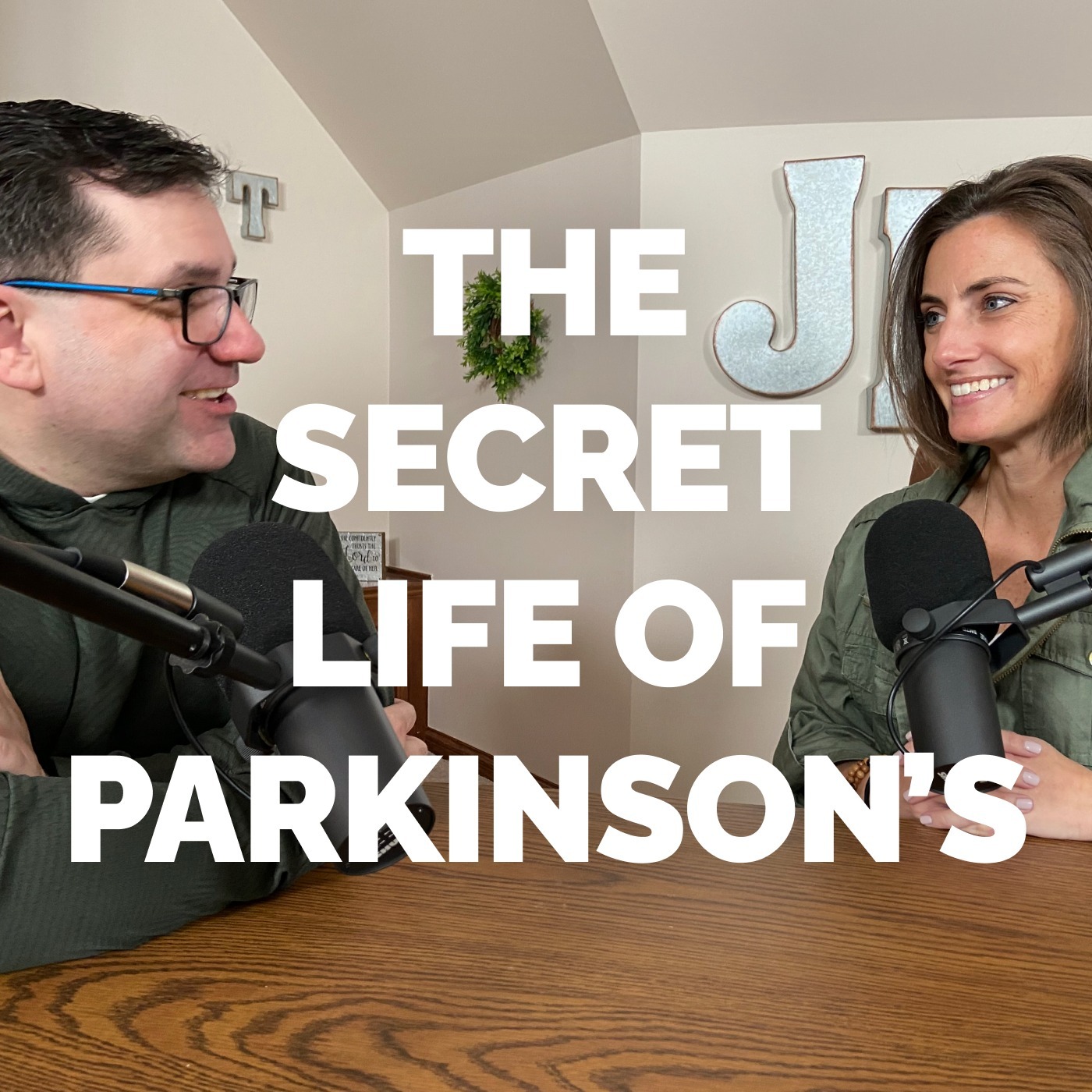
The Secret Life of Parkinson's · Jessica Krauser
This episode explores how improv and creative programs like those at Northwestern and Second City can help individuals with Parkinson's improve their mental agility, social engagement, and quality of life. Doug Blanchard shares his personal journey with Parkinson's and how participating in improv has made a positive impact. Chapters: 00:00 Introduction to Doug Blanchard and the podcast 02:23 Details of his DBS surgery and ongoing treatment 05:13 The structure and community of the 10-week improv program 07:54 Getting involved and overcoming nerves in improv 10:19 Using improv scenarios to enhance quick thinking 11:18 The fun and social aspect of improv for Parkinson's 12:45 The impact of improv on cognitive and emotional health 13:43 Other exercises and physical activities for Parkinson's 15:10 Potential for local improv initiatives and community outreach 16:09 Closing thoughts: staying active mentally and physically
Steve: So Brian has actually you've never been to a place called The Second City. No, she's just telling me about that, and I was like, What is that? She's like, Yeah, Chicago, right now. I know. So we have with us today Doug Blanchard. Doug, thank you so much for coming on. Welcome to The Secret Life of Parkinsons, a podcast created by people living with Parkinsons to help break the stigma of a disease no one likes to talk about. Now here are your hosts, Jessica Krauser and Brian Baker. Doug lives with Parkinson's and he'll tell us a little bit about that. But what we're excited to talk about is the improv that Northwestern and Second City have come up as a program, right? Correct. So do you think you would be funny? Would you would you ever get it? I'm hilarious. I so we actually I saw a clip that we'll share here later on in the in the segment, but I would that would be nerve wracking. So tell us about when you were diagnosed and how you found out about this program through Second City and and what it's done for you. Sure. I think the the whole journey starts. I I I I was an adult onset marathoner and was deeply engrossed in running and having a wonderful time like that. over the course of about 10 years, ran about eighteen marathons or so. And wow. Last year or two, something was just wrong. my wife noticed it, some other things and just, you know, you said something's wrong in the body, but you're not it's not important think about too much or but finally a few friends looked at my parents and had ALS and MS and so you know some of the most wrong lineage of insidious diseases so I I think I got I got I got up early easily from yeah so anyway so going forward I had a doctor who looked at me and said, you know, I I'm not the one for you, but there's some people northwestern watch I go see and see what happens there. They did a death scan, a few other things actually Dr. Vega, I think probably is figured it out within the first ten minutes of talking with him. Mm-hmm. Great people at at Northwestern. it's wonderful being there. He treated very, very well. And I just had DBS myself beginning in June. great. How was that? I was gonna say though, but I don't see any scars. He's good. Or or or maybe he didn't do it. Yeah. So far so good. I I I'm sure everybody goes through a process and you know we're kind of manipulating the numbers a little bit and kind of experimenting with it. that's kind of the frustrating part. But our next programming meeting I think is about two weeks and have a number of questions for that. So if there's anything I think it's kinda I've reached kind of a homeostasis of being calmer. the discon dyskinesia is almost gone. but I get gait especially frozen feet a little more frequently so kind of bouncing one off the other. So Dr. Bain had mentioned about the resources that Northwestern has. So they have a singing with the opera company they've Dancing with the Joffrey Ballet. And they saw I saw that in improv, it's like insidious. because I'd done a lot of corporate training and been in the legal legal world, legal profession for actually 20, 25 years. My goal was always to make an attorney laugh at least once a day. So a daunting goal sometimes. but you know, probably your point about being scared about it, actually improv is a very easy way to do comedy. Stand up is hard. I mean, those people have to get sure down to first precise words. Improv, you don't have people on the stage with you. And if you really think about it, We probably in an eighty to ninety percent improv world. Not much of our lives are scripted out. and you know, you people react in different ways to different situations and that's that's where we're hopefully the comedy is, yeah. Yeah, that was the one thing that I took away. I know you were talking to Steve before we even jumped on this call, but you said ninety eight percent of life is improv. So how do you how has Parkinson's made that feel even more true? never once around the corner. figuratively. When it started for us, Northwestern launched the program right before COVID hit and decided to keep going over the COVID and do it ver via Zoom. and I caught up in about halfway through that that segment. And we kept telling ourselves, look, if we can do this on Zoom, where you see a very limited amount of people, the person you're dealing with, wait till we see each other live. It was kind of a handicap, I think we turned it into a positive, but it really made us focus on the person. And that's what my problem is about it, being in the moment with them. If you think how you're doing the brain processes at a normal day. Most of us, in fact, all of us probably are thinking, What am gonna say next? And not necessarily listening to what the other person's talking to you about. it's a way of kind of saying, Stop, you're important. I mean you really understand what they're saying. Now I can respond. Easier said than than than done. That's that's the number one skill if you can get that gone. And you may have heard our kind of tagline is yes and. Yeah. So anything that happens, you want to positively acknowledge that. say yes, that's great. And What else can we do? What else can you do? What's gonna happen next? So this is an actual 10 week program, right? Correct, correct. Lisa Bainey has been our instructor and coach for a number of years. we've been together about five years, I think. I unfortunately because of the travel and it's taking me five hours round trip to get down there for two hour class. So unfortunately I've had to drop out that. But we had about ten or twelve of us have very regular people being down there and Lisa did a terrific job of drawing things out. And I think we all acknowledge ourselves as look, we have Arkansas, we're we're unique, we're special. And our goal was set to not play to an audience but play to each other. And that was our goal was to crack each other up as much as we could throughout the day. So would you play like did you actually ever get up in front of other people? Yeah, we had three shows. and they got progressively more or well attended. first friends and family. Second one, we had a couple of strangers while meander in. We had over fifty at our last show. that was very exciting. We walk out an audience. I think that might be the I think that might be a video that Steve has. Steve, if you can pull that up. They're gonna perform for you a whole bunch of our favorite games and exercises that we do in our class every week. We call that right, Bob. so here we have Steve and Doug, who are going to be creating a new product that doesn't exist. I see a suggestion of a type of product that they've invented. Brush. Brush. A new kind of brush. Bob and welcome back to the No Man Home Shopping Number. That's right, Bob. This brush, you don't even have to handle it. You just tell it, hair, hair, you're right, Bob, it's everywhere. That's right, Bob. And you don't have to plug it in. It's got batteries, which is why it sometimes catches on fire. That's right, Bob. That's why. Do use it in the shower. It's it's a fire group basically. That's right, Bob. And in the shower you want to wear rubber to ground yourself if you do get shocked. More for people in shorter time? That's right, Bob. That's right. That's why we can land it up and Well Bob, that's why we need to have a lot of people in the shower. my god. That's a case of dyskinesia out control, though. I was just like that. That's right, Bob. So it's that I mean, I don't know, like I I don't know if I could do it. Like I I would be like super nervous. So how do like how do they get people involved? Like aren't there isn't like I know you said when you heard about you're like, yeah, that's totally I totally try that, that's for me. But are people typically nervous or are they ready to go? I I think when you get there, no one really has the aspirations of becoming a star or something. that nature, but I think it's a way to interm intermingle with with like people. and that's probably one of our biggest challenges is finding other people like us. And with with the comedy end of it, I think everybody was very relaxed. Lisa did a great job of just being very calm about it and saying we're here for each other. We're you know we're here for the neurology part of that get our get our improv brain working. And that was our our biggest challenge. we have a very diverse group too we had a a retired naval captain Yeah, he wrote code and just all sorts of stuff that come from all diverse backgrounds and look at the common goal of trying to make it funnier for each other. So even though it's like an actual like a 10 week program is what I at least read, do you get do you st would you still I know you said you did it for like five years, so would you just keep going back? Like what did that what does that look like? Yeah, it's like anything else made for self improvement or you know, it's it's like taking a yoga class or Pilates class over and over again. Okay. Same s sam some kind of repetition in that situation. So what all do you like what do you learn not I mean not what do you learn, but like what do you practice, I guess, on at something like this? Great question. So we start out with very simple games, because that it's all based on games. That's right, Bob, that's a great one. And and the fellow I'm doing it there, Steve and I have done a number of those. And the idea is and it does get cut off sometimes, but we know we're we're tired of using a microwave or a broom. We want some more esoteric type of objects to you know kind of sing the praises of but seen at a great one not that long ago where it was on dishes her soap and how can you make that funny? And he goes, Well, you know, it's not liquid, it's it's not powder, it's you're doing your dishes mentally. And that just went off while off on a whole riff. So we had a l a lot of fun with that. Again, if you stick to the yes and you know we acknowledge what somebody said, move on. So what melee's doing a better answer question is putting out some scenarios. And we do a lot of character characterizations. a town hall meeting and go on in this town hall meeting if you have multiple characters in there. So there's mayor perhaps, a town official, and some event happens. And now we all react to it as as as villagers there. So you may have a dog catcher that's working with that. and you know, try to fit the roles in into the people there and just let's see where it goes. That's funny. I mean I can I could I I think it would be fun for even just like somebody to come to like I don't I don't know if this even happens, like if there's improv for Parkinson's and other locations, but it's like if if the leader, like you're saying, like Lisa is her name, that does it like if somebody like her or her like goes to different locations, like if she came to our our gym, like that's our community group. And it's like it would be so funny to like put people in that spot. In those in those situations. Cause I feel like it would just be wouldn't it just get you out of like your Day to day I we exercise together, so that's like our our our outlet. But it's you're still stuck in like, okay, now I'm exercising and we're talking about medications, we're talking about how we feel. This just sounds like it's just fun. Like I think using can it's the same thing, you know, they talk about if you don't use it, you lose it. So using your brain. Yeah. You're kinda quick if you're quick witted. Yeah, it's kinda what you and I started with too, just the banter. Yeah. You know, back and forth that we'd have at the gym. That's why we thought we'd be good at a podcast. We we were wrong. card and it says, you find yourself with wet pants. We have to figure out why. So sat in a puddle, always sp sprayed me or and you know, whatever it may be, and and that just kinda keeps the the the The brain turning and going faster. So maybe instead of Melissa, because Melissa our sho she she's our fitness instructor, instead of her asking us like, okay, n name fruits that are whatever, we should ask her like do quick, quick, quick. That would be funny. Sure, sure. I don't know what we start with, it's kind of more of an icebreaker than called five things. So Lisa will say, five flavors of ice cream. So Ryan should have that five flavors of ice cream. Butter pecan, chocolate, strawberry, Reese's cup. Mm, that's good. Yeah. And cookie dough. Jessica, what what are your five flav five favorite flavors of cakes? Of cakes? I like red velvet, chocolate, vanilla, marble, and I do like banana. Use the improv. Yeah. Now see now we're professionals. Well, but they so Northwestern, so I saw, and I don't know if you were a part of this or not, but they did an actual study on did you go through the were you part of the study as well? No no, no, I I I I heard about it that that was we reinforced it. So Yeah, so I took a look at it and it said that they saw significant improvement pre to post intervention of this this improv class was seen on their UPD R S scores. which is great because I mean it c it just goes to show after you're diagnosed with Parkinson's, it's not just a sit and wallow. Like you can better yourself just by getting out there. Getting out there and exercising your your brain, your physical aspect of of of your life and any anything. It's like but moving or doing something is going to improve your day to day versus not doing. Do you still exercise? Do you do you run anymore? running unfortunately no, I I I've got Poor eyesight, I had some macular issues there too. So between that and COVID, it kind of ended it. But I think for 11 years, I accomplished an awful lot. That is, I mean, 18 18 marathons is is quite significant. What other type of exercises do you participate in? do you Pilates a couple times a week? we've got a big boxing group. meeting with about 50 or so members in there now, and do some core work at the YMCA. That's not necessarily specific for for Parkinson's, but there's a few of us that are in that group too and everybody helps. So it's it's balance and strength training and a lot of the the regular ones, but I the toughest part of of the whole DBS for me, sitting still. You know, and's killing my hand to get out and get in the garden or you out and get active again and type of thing. So Yeah. Are any of your exercise groups, are they any of them Parkinson specific or is it just General Pilates general? Pilates is from the general and so is the the the core of the the boxing group and we we meet Tuesday and Thursday afternoons for a couple hours and that that that that's all Parkinson's. Nice. Well, Doug, this was awesome. Thank you so much for reaching out to us and letting us know about this. I think you should actually check it out when you're there for a while. I know I'm going to. Yeah. but I loved I love Second City. I used to go there sometimes when we'd visit Chicago, but I'd love to even see if there's somebody that would come to like local places like here. And do something 'cause that just sounds like just sounds like fun. Like instead of just getting together like Yeah. I wonder if we reach out like to the the comedy clubs locally, if they would Yeah. Have somebody that would want to take this on. Yeah. And and just the the the quick comment there, make sure it's an improv club and not a stand up. Okay. Two completely different things. Good to know. And I actually w one of my goals here that we're selling on a rock, we're just trying to get an improv to point here. I I just wanna be able to spread the word and get everybody else involved in it and it's fun. Yeah, that's awesome. Well again, thank you so much. Re really appreciate your time. In our last thirty seconds, we will leave you with this. Whether it's physical exercise or mental exercise like improv, you wanna keep yourself moving, you wanna keep yourself engaged. And doing something like improv improv can improve things like your mental capacity, your ability to speak on your feet quickly, and probably many other things that we'll be looking into in the near future. So with that, we'll see you next time. Thanks.