
The Scuba Gear Lab · The Scuba Gear Lab
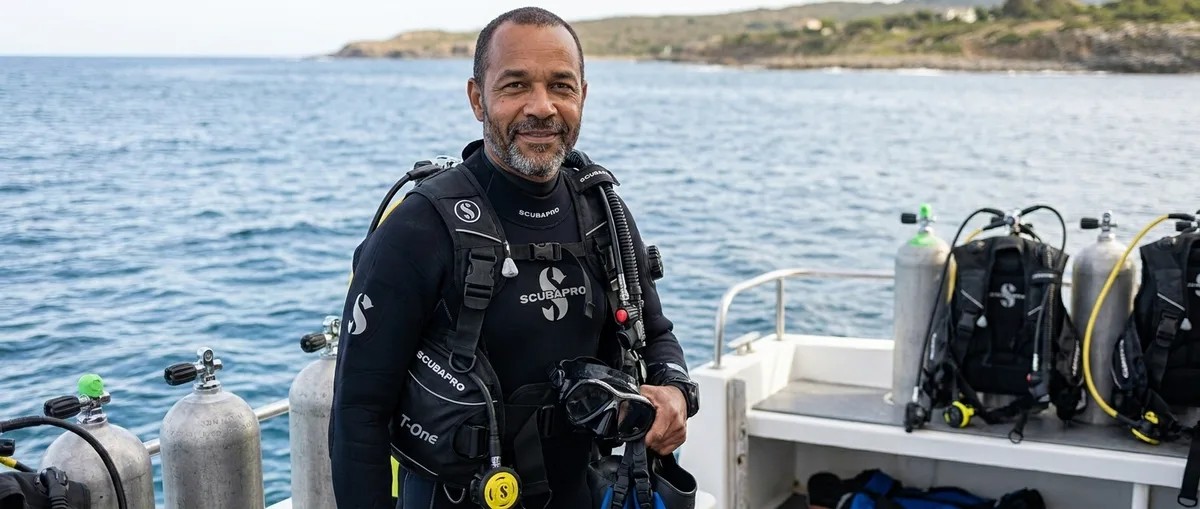
Scubapro T One Bcd Review I've watched a lot of divers over the years wrestle with backmount wing systems that just don't fit their body geometry, especially smaller-framed divers who find themselves swimming inside their gear rather than wearing it. The hits the market as Scubapro's answer to the travel-oriented backmount crowd—a minimalist wing system that promises the simplicity of a backplate-and-wing setup without the DIY intimidation factor. After logging about forty dives with this BCD across tropical reef sites in the Philippines and some cooler quarry environments back home, here's my scubapro t one bcd review verdict: it's a well-executed travel wing with some smart design choices, but it's not without compromises that'll matter depending on what kind of diving you do. What to Look For in a Travel Backmount BCD Before we get into the specifics of this scubapro t one bcd review, let's talk about what actually separates a capable travel wing from the pack of similar-looking minimalist BCDs flooding the market. Weight distribution and plate material matter more than most marketing suggests. You'll see aluminum backplates, stainless steel plates, and polymer composite pl…
I've lost count of how many times I've watched a diver—especially someone on the smaller side—struggle with a backmount wing system that just doesn't fit. They're not wearing the gear; they're swimming inside it. Scubapro's T One BCD promises to fix that: a minimalist travel wing that gives you the simplicity of a backplate setup without making you feel like you need an engineering degree to put it together. I'm Marcus Okafor, and I've spent the last forty dives putting this thing through its paces—from Philippine reefs to cold quarry water back home—and I've got thoughts. You're listening to The Scuba Gear Lab Podcast. Quick thing before we dive in—everything you're about to hear is researched, tested, and written by real dive professionals, but the voice you're hearing right now is AI-generated. Just wanted to be upfront about that. If you've been listening for a while, thanks for making this part of your week. And if you're new here, glad you found us. We drop new episodes every Monday, Wednesday, and Friday covering gear reviews, equipment breakdowns, all that good stuff. Today we're talking about the Scubapro T One BCD, so let's get into it. Before we dig into the specifics of the T One, let's talk about what actually separates a solid travel wing from all the lookalike minimalist BCDs flooding the market right now. Weight distribution and plate material matter more than the marketing would have you believe. You've got aluminum backplates, stainless steel, and polymer composites—and each one shifts your buoyancy needs in different ways. A stainless steel plate typically adds five to six pounds of negative ballast in saltwater, which is brilliant if you're diving a three-millimeter wetsuit in warm water and struggling to get down. But it's dead weight in your luggage, and it's overkill if you're already wearing thick neoprene. Aluminum plates usually run one to two pounds negative. Composite plates actually float, which sounds terrible until you're in a seven-millimeter suit in cold water and suddenly you're not adding bricks to your pockets. I tested the T One with its integrated composite plate in both scenarios, and I can tell you: knowing your typical exposure suit thickness before you buy makes all the difference in getting your weighting dialed. Harness adjustability and fit range separate systems that work for everyone from systems that only work for medium-sized men. The fundamentals of scuba gear sizing become obvious the moment you try to adjust a harness underwater and discover the buckles are positioned where you can't reach them. Look for shoulder strap adjustment points you can reach without contorting yourself, crotch strap length that accommodates different torso lengths, and chest straps that don't dig into your throat or slide off your shoulders. The T One uses a continuous webbing system with sliding D-rings rather than traditional cam buckles. It's lighter and simpler, but it requires you to get the initial threading right. Once you're suited up, major adjustments are a pain. Wing shape and lift capacity need to match your cylinder configuration and buoyancy requirements, not just look cool in photos. A thirty-pound lift wing sounds adequate until you're trying to float a steel HP100 cylinder plus a seven-millimeter wetsuit at the surface while waiting for a boat pickup. I've seen divers struggle with inadequate wing volume, fighting to keep their head above water at the surface because they bought a minimalist travel wing for a cold-water dive trip. The T One sits at thirty pounds of lift, which is genuinely enough for single-tank tropical diving with an aluminum 80 and minimal exposure protection. But it's marginal for steel cylinders or anything beyond a three-millimeter suit. That's not a flaw—it's a design constraint you need to understand before you commit. Pack size and travel weight are the entire point of a travel BCD, but the devil lives in the details. A system that compresses to the size of a cantaloupe but requires you to reassemble half of it at your destination isn't actually travel-friendly. It's a disassembled BCD. Look for how many components are permanently integrated versus separate pieces, whether the harness requires re-threading each trip, and the actual packed weight including any required accessories. The T One's integrated plate and harness system means you're packing one unit that weighs about six and a half pounds total. That compares favorably to most backplate-and-wing setups that clock in closer to eight to ten pounds depending on plate material. Dump valve configuration and accessibility determine whether you can actually control your buoyancy or whether you're constantly hunting for the right pull-cord. You want a shoulder dump you can reach with your left hand, a butt dump you can activate while horizontal, and an overpressure relief valve that prevents catastrophic wing inflation without needing your input. The T One positions its primary dump on the left shoulder and includes a second dump on the lower right rear. Standard enough, though I found the shoulder dump pull-cord shorter than I prefer, which meant reaching across my chest rather than a quick pull at shoulder height. Now let's talk about the T One and how it stacks up against some other travel-oriented backmount options. The Scubapro T One represents Scubapro's minimalist answer to the travel wing category. It's a lightweight backmount system built around an integrated composite backplate and streamlined harness. The entire assembly packs down to roughly the size of a football and tips the scale at six and a half pounds, making it one of the lighter fully-featured travel wings I've tested. Check the show notes for a link to the current price. Here's what works. That integrated composite backplate eliminates separate plate assembly while providing near-neutral buoyancy. You get a genuine thirty-pound lift capacity that handles single aluminum tanks plus three to five-millimeter exposure suits without struggle. The continuous webbing harness system sheds weight and eliminates bulky hardware. Elastic bungee wing keepers prevent excessive wing flutter when deflated—and they actually work, unlike the loose bungees on cheaper systems. You get two large mesh cargo pockets with zippered closures and quick-drain panels. There are multiple attachment points for gauge clips, SMB pockets, and accessories. And the foldable design packs smaller than most traditional jacket BCDs. Here's what doesn't work as well. That shoulder dump pull-cord positions low enough that smaller-handed divers will find it awkward to reach. The fixed crotch strap length requires harness adjustment to dial in proper torso fit. That thirty-pound lift capacity becomes marginal with steel cylinders or exposure suits thicker than five millimeters. The composite backplate lacks the ballast contribution of steel or aluminum, so you're carrying additional lead weight for thin exposure protection. And premium pricing—typically around seven hundred to seven hundred fifty dollars—puts it above several comparable travel wing systems. I dove this BCD for the first time in Anilao, Philippines, paired with an aluminum 80 and a three-millimeter shorty. Getting the harness dialed took about fifteen minutes of threading and adjusting on the boat. Not difficult, but definitely something you want to sort before you're rushing to splash. Once properly fitted, the composite plate sat comfortably against my back without the pressure points I sometimes feel with traditional rigid backplates. The wing itself inflates predictably and dumps smoothly through the shoulder valve, though I did find myself wishing that pull-cord sat an inch or two higher for easier reach. The real test came during a drift dive along a coral wall where I was shooting macro subjects. The wing stays remarkably flat when deflated, with minimal drag profile. Those elastic keepers actually do their job. The mesh pockets swallowed my SMB, spool, and backup mask without bulging noticeably, and the quick-drain panels cleared the water fast enough that I wasn't hauling around pocket-trapped water when I got back on the boat. Now, the Hollis SMS75 Katana 2 Travel Wing System takes a different approach to the travel wing concept with a modular soft-plate design and thirty-eight-pound lift wing. This system weighs about seven point two pounds complete and includes more traditional harness hardware than the T One. Check the show notes for a link to the current price. What works here: the soft backplate with built-in padding eliminates rigid plate discomfort. That thirty-eight-pound lift capacity accommodates steel tanks and thicker exposure suits. Traditional quick-release shoulder buckles enable fast doffing and donning. Removable weight pockets integrate into the harness for better trim. You get multiple D-ring configurations for sidemount-style accessory attachment. And it's compatible with standard backplate accessories despite the soft-plate design. What doesn't: the soft plate lacks the stability of rigid plates during surface swims. It's heavier packed weight than ultralight travel wings. Those shoulder buckles add failure points compared to continuous webbing. And it's got a higher profile when deflated, which creates more drag than slimmer wings. The Dive Rite Nomad XT Sidemount Convertible pushes into hybrid territory with a system that converts between backmount and sidemount configurations. At five point eight pounds in backmount trim, it's the lightest option here, though that versatility requires compromises. Check the show notes for a link to the current price. On the plus side: dual-configuration design covers both backmount and sidemount diving. Lightest packed weight in the category. Adjustable bungee wing system adapts to different cylinder sizes. Minimalist harness sheds every possible gram. It includes dedicated sidemount bungees and attachment points. And it compresses to an impressively small pack size. On the downside: twenty-eight-pound backmount lift capacity limits cylinder and exposure suit options. Minimalist harness lacks padding that makes long surface swims comfortable. Sidemount conversion requires carrying additional bungees and hardware. Wing shape optimized for sidemount creates suboptimal profile in backmount configuration. And there's less shoulder strap padding than dedicated backmount systems. The Apeks WTX-D30 Travel Wing Set combines a lightweight aluminum backplate with a thirty-pound donut wing and modular harness system. Total weight runs eight point one pounds with the aluminum plate, positioning it as less of a true travel wing and more of a compact backmount system. Check the show notes for a link to the current price. What works: aluminum backplate provides one to two pounds negative ballast contribution. Donut wing design distributes air symmetrically around the cylinder. Modular harness accepts standard backplate accessories. Solid construction quality with Apeks' typical attention to detail. Multiple dump valve positions including dedicated butt dump. And it's compatible with Apeks' full ecosystem of accessories and upgrades. What doesn't: heavier than composite-plate competitors even in travel configuration. Requires partial disassembly for optimal packing. Premium pricing without significant feature advantages over lighter options. And aluminum plate adds weight without the ballast contribution of steel for cold-water diving. The Zeagle Express Tech Deluxe occupies middle ground between traditional jacket BCDs and minimalist travel wings with an integrated weight system and thirty-pound rear inflation bladder. At seven point eight pounds, it sacrifices some travel-friendliness for conventional features. Check the show notes for a link to the current price. Here's what's good: integrated weight pockets hold up to twenty pounds total for easy ditching. Padded backplate provides more comfort than bare rigid plates. Pull-dump shoulder valve uses Zeagle's reliable pull-cord system. Rip-cord weight release system enables quick weight ditching. Single-tank adapter accommodates various cylinder diameters. And ripcord weight integration eliminates loose weight pockets. Here's what's not: integrated weights shift the concept away from pure minimalist travel design. Heavier and bulkier packed size than ultralight competitors. Rear inflation bladder shape creates higher profile than purpose-built wings. Limited D-ring positions compared to technical-oriented systems. And it's less modular than true backplate-and-wing systems for future upgrades. The OMS IQ Lite Pack System strips travel wing design to absolute essentials with a skeletal aluminum frame and thirty-two-pound wing. The complete system weighs six point nine pounds and packs down to a tight bundle. Check the show notes for a link to the current price. The good stuff: skeletal frame reduces weight while maintaining structural rigidity. Thirty-two-pound lift provides slightly more margin than thirty-pound competitors. Continuous webbing harness eliminates buckle hardware. Single-piece design requires zero assembly at destination. Compatible with standard cylinder bands and tank sizing. And quick-adjust shoulder straps enable fitting over different exposure suits. The not-so-good stuff: skeletal frame digs into back without adequate undergarment padding. Minimal harness padding makes extended surface swims uncomfortable. Limited accessory attachment points compared to full backplate systems. Wing material feels thinner than premium competitors. And shoulder strap adjustment requires more effort than quick-release buckles. Now let's tackle some questions that come up a lot. Is the Scubapro T One worth the premium price compared to budget travel wings? The T One commands pricing around seven hundred to seven hundred fifty dollars, which puts it firmly in premium territory alongside Apeks and high-end Hollis systems. Whether that premium is worth it depends entirely on how much you value integrated design and brand reliability over raw specifications. You can absolutely find travel wings with similar lift capacity and lower weight for four hundred to five hundred dollars. Brands like Dive Rite and XDeep offer capable systems at lower price points. What you're paying for with the T One is Scubapro's build quality, the integrated composite plate design that eliminates assembly headaches, and a harness system that's genuinely refined rather than just functional. I've had the shoulder dump valve on a budget travel wing fail at sixty feet, flooding the wing and turning a simple reef dive into an immediate ascent and surface swim. That's never happened with any Scubapro BCD I've tested. If you're diving this thing six times over three years on vacation, buy whatever fits your budget. If you're logging fifty dives annually and trusting this system in conditions that vary from calm Caribbean reefs to current-swept walls, the reliability premium matters. Can the T One handle cold water diving with thick wetsuits or drysuits? The honest answer is that it's marginal for anything beyond a five-millimeter wetsuit, and it's genuinely inadequate for drysuit diving. That thirty-pound lift capacity sounds reasonable until you calculate actual buoyancy requirements. A steel HP100 cylinder runs about nine pounds negative when full in saltwater. A seven-millimeter two-piece wetsuit adds roughly fourteen to sixteen pounds of positive buoyancy at the surface when fully expanded. You're already at twenty-three to twenty-five pounds of lift requirement before accounting for your own body composition, any additional equipment like cameras or lights, and a safety margin for surface flotation while exhausted. The T One will float you—barely—but you'll be using nearly full wing inflation just to maintain comfortable surface position. That means zero reserve capacity if conditions deteriorate or you need to support another diver. For tropical diving with aluminum cylinders and three to five-millimeter exposure suits, it's perfectly adequate. Beyond that, you're pushing the system past its design intent. If you're planning cold-water diving, understanding how to choose a wetsuit helps you calculate actual buoyancy compensation requirements before you commit to an undersized travel wing. How does the composite backplate affect weighting compared to aluminum or steel plates? The composite plate on the T One is essentially neutrally buoyant. It neither adds nor subtracts meaningful ballast from your weighting calculation. By contrast, a stainless steel backplate typically contributes five to six pounds of negative ballast in saltwater, and an aluminum plate adds one to two pounds negative. What this means practically: if you're diving an aluminum 80 with a three-millimeter wetsuit in tropical water, you might normally wear six to eight pounds of lead with a steel backplate system. With the T One's composite plate, you're probably looking at ten to twelve pounds of lead to achieve the same neutral buoyancy. That's not inherently bad—it's just different. The advantage is that the composite plate system lets you fine-tune your weighting more precisely rather than starting with a six-pound anchor on your back. The disadvantage is that you're carrying that lead somewhere else on your body instead of having it integrated into the backplate. I found this setup worked brilliantly in warm water where I needed minimal lead anyway, but it felt inefficient in cooler water with thicker exposure suits where I was adding fourteen-plus pounds of lead and wishing some of that was built into the plate itself. Does the continuous webbing harness system complicate adjustment compared to traditional buckles? Yes and no. The continuous webbing design definitely requires more time for initial fitting. You're threading webbing through D-rings and adjusting slider positions rather than just clicking buckles open and closed. That first setup on the boat deck took me a solid fifteen minutes of threading, wearing, adjusting, re-threading until I got the shoulder straps and waist band positioned correctly. The upside is that once it's dialed, it stays dialed. There are no buckles to accidentally pop open, no plastic hardware to crack or corrode, and the overall system is lighter and less bulky. Quick adjustments between different exposure suit thicknesses are more involved than with traditional quick-release buckles, though. If you're switching between a three-millimeter shorty and a five-millimeter full suit between dives, you'll spend a few minutes loosening or tightening webbing rather than just popping buckles open a notch. I found the system worked best when I was diving similar configurations repeatedly—same cylinder, same exposure suit—where the harness just stayed set for days at a time. For divers who frequently change configurations, traditional buckles offer more convenience even if they add weight and complexity. How does the T One compare to a full technical backplate-and-wing setup for single-tank recreational diving? The T One essentially splits the difference between a traditional jacket BCD and a full technical backplate-and-wing system. Compared to a proper backplate-and-wing setup—say, a stainless steel plate with a thirty to forty-pound wing and continuous webbing harness—the T One trades some stability and modularity for lighter weight and integrated design. A technical backplate-and-wing gives you the option to swap plates, change wings, adjust harness configurations, and upgrade individual components as your diving evolves. The T One is what it is. You're locked into that composite plate and thirty-pound wing. The integrated design means less capability for customization but also less complexity and lighter packed weight. In the water, I found the T One less stable during surface swims than a rigid steel plate. That composite plate flexes slightly under load where steel doesn't budge. But the difference disappeared once I descended past ten feet. For pure single-tank recreational diving, the T One delivers ninety percent of the performance of a technical backplate-and-wing at about seventy percent of the weight. If you're planning to progress into technical diving, doubles, or sidemount configurations, invest in a proper modular backplate-and-wing system. If you're committed to single-tank recreational diving and prioritize travel convenience, the T One makes more sense. The broader context of scuba buoyancy compensators helps clarify where different BCD styles excel and where they compromise. So here's my verdict. The Scubapro T One BCD delivers on its core promise: a lightweight, packable backmount wing system that works reliably for single-tank tropical diving. That composite backplate eliminates the assembly headaches of traditional backplate-and-wing setups while keeping weight down to six and a half pounds. The thirty-pound wing provides adequate lift for aluminum cylinders with exposure suits up to about five millimeters. The harness system is genuinely refined once you get it dialed, and build quality matches Scubapro's reputation. But this review wouldn't be honest without acknowledging the limitations. That thirty-pound lift capacity becomes marginal quickly if you move to steel cylinders or thicker exposure suits. The composite plate requires carrying additional lead weight compared to steel plate systems. And the shoulder dump pull-cord positions just awkwardly enough to annoy smaller-handed divers. At around seven hundred to seven hundred fifty dollars, you're paying a premium that's justified if you value integrated design and brand reliability, but harder to defend if you're shopping purely on specifications. I'd recommend the T One for dedicated warm-water divers who rack up significant annual dive counts and need gear that packs light without sacrificing performance. If you're diving quarterly on vacation and want maximum versatility across conditions, a more substantial backplate-and-wing system with higher lift capacity makes better sense. If you're budget-constrained and willing to tolerate slightly less refined harness systems, capable alternatives exist at two hundred to three hundred dollars less. This isn't the right BCD for everyone, but for the specific niche it targets—frequent tropical divers who prioritize travel convenience and reliable performance—it's a well-executed solution that performs as advertised. Thanks for listening to this episode of The Scuba Gear Lab Podcast. We've got new episodes coming at you every Monday, Wednesday, and Friday, so there's always something new to check out. If you found this one helpful, I'd really appreciate it if you'd leave a five-star rating and maybe write a quick review. That stuff actually matters—it's how other divers find the show when they're looking for honest gear info. And definitely hit subscribe or follow so you get notified the second a new episode drops. See you on the next one.