
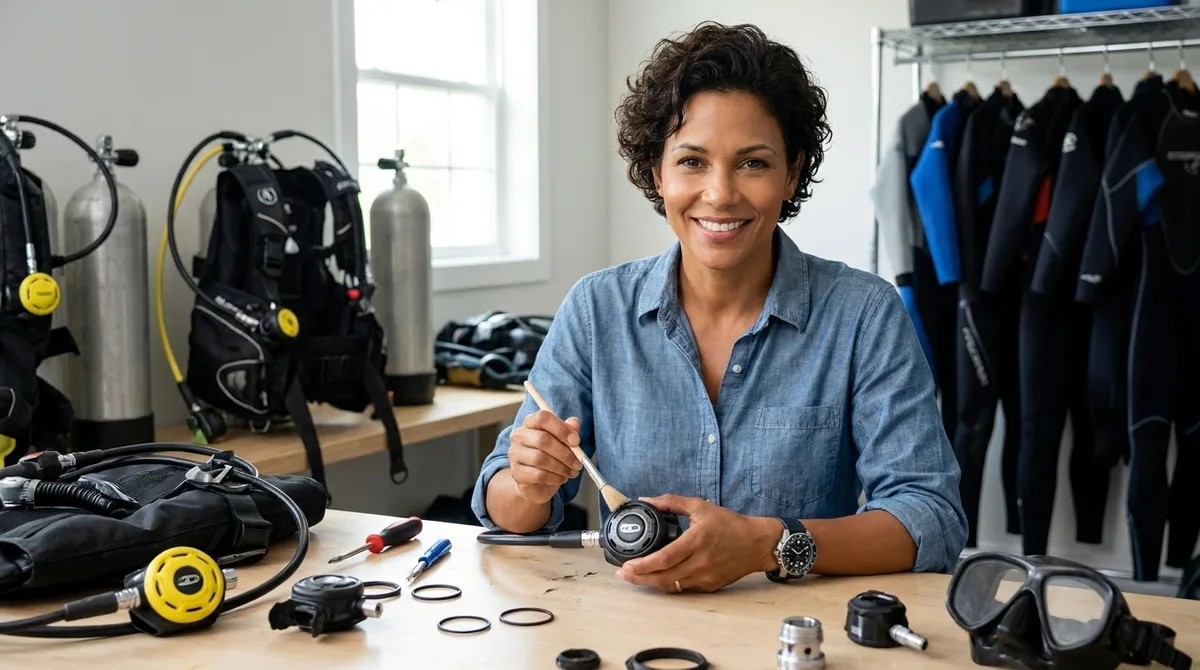
The Scuba Gear Lab · The Scuba Gear Lab
Scuba Gear Maintenance Checklist: Keep Your Equipment Dive-Ready I'll be honest—I didn't think much about maintenance when I bought my first BCD. I figured if it worked fine underwater, it was good to go, right? Wrong. After a dive trip where my inflator button stuck at depth (terrifying, by the way), I learned the hard way that a proper scuba gear maintenance checklist isn't optional. It's what keeps you safe and your gear working when you need it most. This checklist is for recreational divers like me who own at least some of their own equipment. Whether you've got a full setup or you're still building your collection piece by piece, these maintenance habits will help you catch problems before they ruin a dive—or worse. I'm still learning what works best, but these are the routines that have saved me from equipment headaches time and again. After Every Dive: Immediate Care These steps happen right after you surface, before you even pack your (/what-is-a-scuba-gear-bag). I used to skip this stuff when I was tired, but trust me—salt and sand are your gear's worst enemies, and they work fast. Rinse everything in fresh water within an hour. This means your regulator (with the du…
My inflator button stuck at depth once. I was hovering over a reef, casually adjusting my buoyancy, and the button just... wouldn't release. My BCD kept inflating while I frantically tried to vent air and control my ascent. Absolutely terrifying. And you know what caused it? Salt buildup I could've prevented with about ninety seconds of proper rinsing. My name is Camila Reyes, and I'm an underwater photography enthusiast and recreational diver sharing what I've learned about taking care of scuba gear—mostly by making mistakes so you don't have to. You're listening to The Scuba Gear Lab Podcast. Quick heads up—the research, content, and script you're hearing are all written and verified by real divers and gear enthusiasts, but the voice delivering it is AI-generated. Just wanted to be transparent about that upfront. If you've been listening for a while, thank you. Seriously, it's great having you back. And if you're new here, welcome aboard. We release new episodes every Monday, Wednesday, and Friday, covering scuba gear advice, maintenance tips, and diving insights from a recreational diver's perspective. Today we're getting into something that honestly changed how I approach my own equipment. Let's get into it. I'll be honest, I didn't think much about maintenance when I bought my first BCD. I figured if it worked fine underwater, it was good to go, right? Wrong. That stuck inflator button I mentioned? That's when I learned the hard way that a proper scuba gear maintenance checklist isn't optional. It's what keeps you safe and your gear working when you need it most. This checklist is for recreational divers like me who own at least some of their own equipment. Whether you've got a full setup or you're still building your collection piece by piece, these maintenance habits will help you catch problems before they ruin a dive or worse. I'm still learning what works best, but these are the routines that have saved me from equipment headaches time and again. Now, let's talk about what happens immediately after every dive. These steps happen right after you surface, before you even pack your gear bag. I used to skip this stuff when I was tired, but trust me, salt and sand are your gear's worst enemies, and they work fast. Rinse everything in fresh water within an hour. This means your regulator with the dust cap on and no button pressing, your BCD inside and out, your wetsuit, your fins, your mask, literally everything that touched salt water. I use a big rinse tank at the dive shop when I can, but a regular garden hose works fine too. Soak your regulator for at least fifteen minutes. Keep that dust cap secure and don't press the purge button while it's submerged in the rinse water. The first time I forgot the dust cap, I got water in the first stage and had to get it serviced early. Expensive mistake. Flush your BCD bladder thoroughly. Fill it about halfway with fresh water through the mouthpiece, slosh it around, hold it upside down, and drain it completely. Then hang it partially inflated, maybe twenty-five percent full, with the inflator hose at the lowest point so any remaining water can drain out. I learned this after finding mildew inside mine. Gross and totally avoidable. Check for visible damage while everything's wet. Tears in your wetsuit, frayed webbing on your BCD, cracks in your fin straps, scratches on your mask lens. It's way easier to spot problems when gear is still wet and you're thinking about the dive you just did. Remove and rinse your dive computer separately. Take it off any straps or mounts, rinse the contacts and buttons, and make sure no salt crystals are building up around the interface. My screen got sticky once because I didn't rinse the buttons properly. Inspect o-rings on tank valves and reg dust caps. Look for sand, hair, or any deformation. A tiny grain of sand in the wrong place can cause a leak you won't notice until you're already in the water. Check your weight pockets and dump valves. Make sure nothing's stuck, corroded, or blocked with sand. I once had a weight pocket release get jammed with debris. It wouldn't open when I needed it to. Moving on to weekly maintenance. When you're on a dive trip or doing multiple dives per week, these checks keep small issues from becoming big ones. I do these on Sunday evenings during busy diving periods. Inspect all hoses for bulges or cracks. Run your fingers along the entire length of every regulator hose and BCD inflator hose. You're feeling for soft spots, bubbles under the rubber, or any weird texture changes. If you find a bulge, that hose needs replacing before your next dive. It's already failing internally. Test your BCD's inflator and dump valves dry. Press the inflator button and make sure it rebounds quickly without sticking. Pull all your dump valve cords and verify they snap back. Sticky valves are usually caused by salt buildup or sand in the mechanism. Check mask and fin strap elasticity. Pull and release each strap. It should snap back firmly. If straps feel loose or show white stress marks, they're degrading and you'll want replacements soon. I always carry spare mask and fin straps now after one snapped during a shore dive entry. Clean and lubricate zippers on wetsuits and gear bags. Use a toothbrush and mild soap to clean wetsuit zippers, then apply a little beeswax or zipper lubricant. Corroded zippers are so frustrating, and this takes maybe two minutes. Recharge or check your dive light batteries. Even if you didn't use your light, check that it still turns on and holds a charge. I keep a little log of when I last charged each battery so I don't get caught with a dead light on a night dive. Verify your dive computer is syncing and logging correctly. Download your dive data and make sure the Bluetooth or USB connection is working. This is also a good time to check that your dive computer's settings haven't reset randomly. It happens sometimes after battery changes. Now let's get into monthly maintenance. These are the deeper checks I do once a month, or before any big dive trip. Some of this stuff I'm still getting better at noticing, but it's made a real difference in catching problems early. Pressurize your regulator and listen for leaks. Hook it up to a tank, open the valve slowly, and listen carefully around both the first and second stages. A good seal should be silent. Any hissing means something needs attention, usually an o-ring, but sometimes it's the intermediate pressure setting drifting. Test breathe your regulator at different positions. Breathe normally while holding the second stage above your head, at chest level, and below your knees. Breathing resistance should stay pretty consistent. If it gets noticeably harder in certain positions, your regulator might need adjustment or service. The maintenance schedule for regulators typically recommends annual service, but monthly testing helps you catch issues between those appointments. Inspect all quick-disconnect fittings. Your low-pressure inflator hose, SPG hose, and any other quick-connects should lock firmly and show no corrosion around the collar. I lightly lubricate mine with silicone grease every couple of months. Check your SPG for accuracy. With your tank fully pressurized, your gauge should match the fill pressure, usually around two hundred bar or three thousand psi. If it's off by more than ten percent, the gauge might be failing. Also look for moisture inside the glass. That means the seal is compromised. Examine all buckles and D-rings for corrosion or stress cracks. Plastic buckles can become brittle over time, especially with sun exposure. Metal D-rings can corrode if they're not marine-grade stainless steel. Give everything a good tug to make sure it's still solid. Hang and inspect your wetsuit in good light. Look for any thinning material, especially in the knees, elbows, and crotch. Small tears can be repaired with neoprene cement, but you want to catch them before they become big rips. I also check the seals at wrists, ankles, and neck for any separation from the neoprene body. Clean and condition your BCD if needed. If you've been diving in particularly murky or contaminated water, this is when I do a deeper clean with mild detergent designed for dive gear. Never use harsh chemicals. They break down the materials faster. Store everything properly between uses. BCDs should be hung on wide hangers, never folded. Regulators should be in a protective case or bag away from direct sunlight, and wetsuits should hang inside-out in a cool, shaded area. I learned about proper storage from my research on building my gear collection, and it's genuinely extended the life of everything I own. Before every dive trip, I do a full pre-departure inspection. This is my full systems check before I pack anything. I do this at least forty-eight hours before I leave so I have time to fix or replace anything that's not working. Nothing worse than discovering a problem at the dive site. Full pressure test with breathing simulation. Hook up your reg, pressurize it, and take at least twenty full breaths from both your primary and alternate second stages. Breathe hard, like you would at depth or during a swim against current. Any weird resistance, whistling, or free-flow issues need professional attention. Inflate your BCD completely and let it sit for thirty minutes. It should hold air without significant deflation. A slow leak usually means a bladder puncture or leaking valve seal. I once showed up to a liveaboard with a BCD that wouldn't hold air. The crew was nice about it, but I felt like an idiot. Test all your gauges and instruments. Depth gauge, compass, dive computer, and SPG should all be functioning perfectly. Replace computer batteries if they're showing low warnings. I also sync my computer and update its firmware if there's been any manufacturer updates. Pack spare parts and tools. At minimum, I bring extra mask and fin straps, a few different sizes of o-rings, silicone grease, a save-a-dive kit, and a small adjustable wrench. You'd be surprised what you can fix yourself between dives with just these basics. Verify tank valve compatibility if you're traveling. If you're used to yoke connections but diving somewhere that uses DIN valves or vice versa, make sure you have the right adapters or that your regulator can convert. I had to rent a reg on my first Europe trip because I didn't think about this. Document your gear configuration with photos. I take pictures of my full setup, including how I have my hoses routed and where my accessories are clipped. If something comes loose or I need to reconfigure, I can reference exactly how I had it set up. This also helps if you need to describe your gear to a dive shop for service or if something gets lost. Weigh your gear if you're flying. Airlines have gotten stricter about baggage weight, and dive gear is heavy. Knowing your weight ahead of time helps you plan whether to check two bags, ship gear ahead, or rent some items at your destination. I'm actually working on optimizing my setup for travel because my current configuration pushes luggage limits pretty hard. Here's the quick version I run through the morning of any dive. Print this out or save it on your phone. I have it in my notes app and check it off every single time. Dust cap on regulator first stage, no visible damage to hoses. BCD holds air, all valves and dumps function smoothly. Mask strap in good condition, anti-fog applied. Fins have both straps or buckles secure. Wetsuit inspected for tears, zippers working. Dive computer charged or battery good, settings correct. SPG and other instruments functioning. Weight system secure, correct amount of weight for conditions. Tank valve opens and closes smoothly, o-ring present and intact. All accessories clipped or secured, that's knife, light, SMB, and anything else. Logbook and certification cards with you. And buddy check plan reviewed. Yes, that counts as gear maintenance. Let me answer some questions that come up a lot. How often should I get my regulator professionally serviced? Most manufacturers recommend annual service or every hundred dives, whichever comes first, but that's a baseline. If you dive in cold water, silty conditions, or very frequently, you might need service more often, maybe every six months. I get mine serviced every year before my big annual dive trip, even if I haven't hit a hundred dives, because the labor cost is way less than dealing with a failure underwater. Watch for signs like harder breathing, slight free-flows, or any hissing when pressurized. Those mean it's time regardless of the calendar. Can I use regular soap or household cleaners on my dive gear? Nope, and I learned this one the expensive way. Regular soaps can leave residues that degrade rubber and neoprene, and harsh cleaners can damage the coatings on lenses and computer screens. For most rinsing, fresh water is enough. When you need actual cleaning, use products specifically made for dive gear or very mild dish soap diluted heavily, and always rinse thoroughly afterward. For wetsuit cleaning, there are specialized neoprene shampoos that won't break down the material or mess with the flexibility. What should I do if I notice a problem with my gear right before a scheduled dive? Don't dive with it. I know it's disappointing, especially if you've paid for a boat trip or traveled somewhere special, but compromised gear is how accidents happen. Most dive operations have rental equipment available, and that's a way better option than risking a malfunction underwater. If it's something minor like a fin strap, your save-a-dive kit might have a quick fix. But anything involving your regulator, BCD inflation system, or other life-support equipment? Sit that dive out or rent. The ocean will still be there after you get your gear properly fixed. I'll admit, when I first started building my own gear collection, the maintenance side felt overwhelming. There were so many little things to remember, and honestly, I just wanted to dive. But after a few close calls and one genuinely scary equipment issue that could've been prevented, I realized that a solid scuba gear maintenance checklist isn't about being paranoid. It's about being ready. These habits have become second nature now. Rinsing gear after every dive takes maybe ten minutes. Monthly checks take less time than scrolling through my photos from the last dive trip. And that pre-trip inspection? It's given me so much peace of mind knowing everything works before I'm sixty feet down on a reef. Your gear takes care of you underwater. Taking care of it between dives is just part of being a responsible diver. Plus, well-maintained equipment lasts years longer, which means more money for dive trips instead of replacement gear. I'm still figuring out all the details, like how often certain things really need replacing versus just maintaining, but these routines have already saved me money and probably kept me safer than I even realize. Start with the basics, build the habits, and your gear will be ready whenever you are. That wraps up this episode of The Scuba Gear Lab Podcast. Thanks for listening. New episodes come out every Monday, Wednesday, and Friday, so there's always something fresh waiting for you. If you got something out of this episode, I'd be really grateful if you could leave a five-star rating and maybe write a quick review. It genuinely makes a difference—it's how other divers find the show and figure out if it's worth their time. And if you haven't already, hit subscribe or follow so you get a notification the second a new episode drops. Thanks again, and I'll catch you on the next one.