
The Scuba Gear Lab · The Scuba Gear Lab
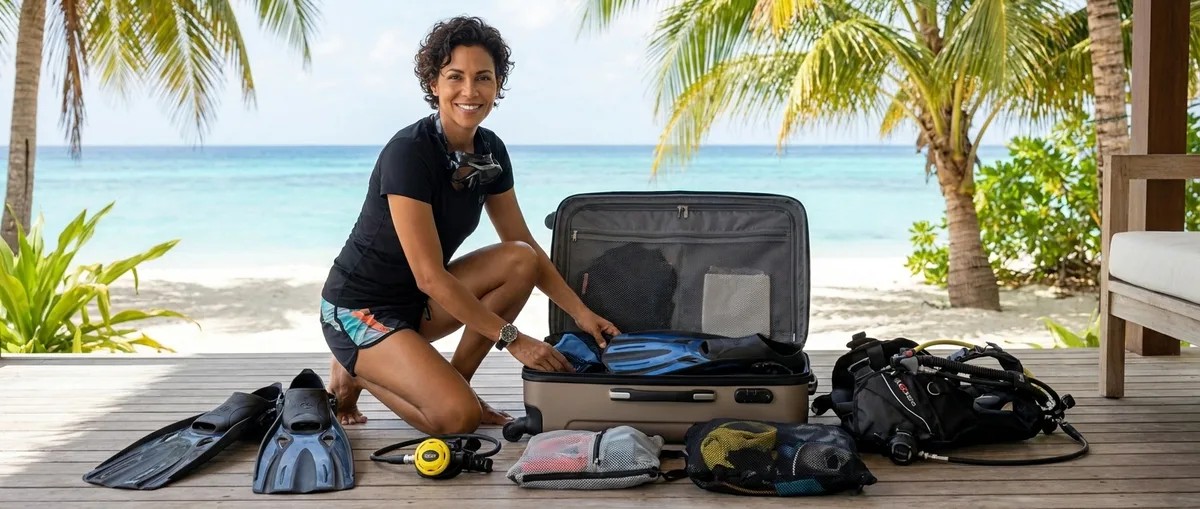
How to Build a Travel-Friendly Scuba Gear Kit I learned the hard way that packing all my scuba gear for a trip to Cozumel last year was a disaster. My checked bag hit 70 pounds, the airline charged me extra fees, and I arrived exhausted from lugging everything through three airports. Building a smart travel scuba gear kit changed everything for me—now I dive just as comfortably but with half the weight and hassle. This guide walks you through exactly how to put together a kit that keeps you diving well without destroying your back or your travel budget. We'll cover what to bring, what to rent, and how to pack it all efficiently. Whether you're planning a week in the Caribbean or a liveaboard in Southeast Asia, you'll learn to travel lighter while still having everything you actually need. This process takes about an hour to plan and organize the first time, but once you've got your system down, packing for dive trips becomes quick and stress-free. Perfect for recreational divers who want to explore new sites without the logistics nightmare. What You'll Need Before you start building your travel scuba gear kit, gather these essentials: - A reliable dive bag or backpack designe…
Last year I dragged a 70-pound dive bag through three airports on my way to Cozumel, paid extra baggage fees, and nearly threw my back out before I even got in the water. There had to be a better way. I'm Camila Reyes, and I finally figured out how to pack everything I actually need for a dive trip without destroying my spine or my travel budget. You're listening to The Scuba Gear Lab Podcast. Quick heads up, the content you're about to hear was researched and written entirely by me and verified for accuracy, but the voice you're hearing is AI-generated. Just wanted to be upfront about that. If you've been listening for a while, thank you. Seriously. It's awesome knowing you keep coming back. And if you're new here, welcome aboard. We drop new episodes every Monday, Wednesday, and Friday covering everything from gear choices to packing strategies to maintenance tips. Today's episode is all about something that used to stress me out completely, packing for dive trips without ending up with a bag that weighs as much as a small person. Alright, here's what I figured out. So here's what changed everything for me. I learned to build a smart travel kit that keeps me diving comfortably but cuts the weight and hassle in half. This guide's gonna walk you through exactly how to put together a kit that works, what you should bring versus rent, and how to pack it all efficiently. Whether you're planning a week in the Caribbean or a liveaboard in Southeast Asia, you'll be traveling lighter while still having everything you need. The first time you do this, it'll take maybe an hour to plan and organize. But once you've got your system down, packing for dive trips becomes quick and honestly kind of stress-free. This is perfect for recreational divers who want to explore new sites without turning the logistics into a nightmare. Before you start building your kit, you'll want to gather a few things. Get yourself a reliable dive bag or backpack designed for scuba equipment. We'll talk about sizing in a minute. You'll need your personal fit-critical gear, stuff like your mask, fins, snorkel, and wetsuit if you own one. Grab your small dive accessories you already have, things like your dive computer, compass, surface marker buoy. A digital luggage scale is super helpful for weighing your bag before heading to the airport. Pick up some packing cubes or mesh bags to organize smaller items. Have your dive certification card and logbook ready, either physical or digital. And this is important, get a list of the dive shop's rental inventory at your destination. Just check their website or shoot them an email. Alright, now let's talk about identifying your non-negotiable personal gear. The foundation of any travel kit starts with items that absolutely must fit you perfectly to be safe and comfortable. For me, that's always my mask, fins, and dive computer. These three things can completely ruin a dive trip if they don't fit right. Your mask is absolutely personal. I've watched so many divers struggle with leaky rental masks, spending half their dive clearing water instead of enjoying the reef. A mask that seals properly to your face makes such a difference, and they're lightweight enough that there's zero reason to skip packing yours. Mine weighs maybe eight ounces with the protective case. Fins are trickier because they're bulky, but after getting blisters from stiff rental fins in Honduras, I always pack my own now. If you're really tight on space, this is where you might compromise. But if you have room, bring them. The difference in comfort during a four-dive day is massive. Your dive computer goes without saying if you own one. Rental computers vary wildly in their interface and features, and fumbling with unfamiliar buttons underwater isn't fun. Plus, having your own dive profile history all in one device just makes sense for tracking your diving progress. Here's where building a travel kit gets strategic. The heavy stuff, regulators, BCDs, and tanks, should almost always be rented unless you're doing technical diving or have specific needs. I used to feel weird about renting a BCD because I thought I needed my gear to dive well. That's not true. Reputable dive shops maintain their rental equipment carefully, especially in popular dive destinations that depend on tourism. I've used rental BCDs in Belize, Mexico, and Thailand without issues. Regulators are the one rental item that made me nervous at first, but modern rental regs from established shops are serviced regularly and work just fine for recreational diving. The weight savings alone, a reg set can add five to seven pounds to your bag, makes renting worth it. If you're worried, ask the dive shop about their service schedule when you book. Most are happy to share that information. Tanks are obviously rented everywhere. You can't fly with compressed gas anyway. And weights should be too. Never pack lead weights in your luggage. The dive shop will have them, and you'll save yourself from a ridiculous baggage fee. The one exception I'd make, if you're going somewhere remote or diving with a smaller operation, email ahead to confirm their rental inventory and condition. I learned this lesson planning a trip to a tiny island off the coast where the dive shop was basically one guy with a boat and some sketchy-looking gear. Moving on to exposure protection. Wetsuits and exposure protection are where I see divers make the biggest packing mistakes. The decision to bring your own or rent depends entirely on where you're diving and how your body handles temperature. For tropical diving, water above 78 degrees, I usually rent a 3mm shorty or skip it entirely if I'm just doing a couple of shallow dives. Rental wetsuits in warm destinations are plentiful and fine for most people. But I run cold. I get chilly even in 82-degree water after 45 minutes. So I invested in a lightweight 3mm full suit that packs down small. It weighs about three pounds and compresses into a packing cube. If you're heading somewhere cooler, bringing your own wetsuit makes more sense. You know it fits, you know it's clean, and you won't get stuck with a worn-out rental that's lost half its insulation. Choosing the right wetsuit for your diving environment completely changed my comfort level on longer dive trips. Dive skins and rash guards are perfect for travel. They weigh almost nothing, dry overnight, and protect you from sun and stings in warm water. I pack one on every trip regardless of whether I'm bringing a wetsuit. Gloves and booties are lightweight enough to toss in your bag if you have them. I always bring my 3mm booties because they protect my feet during shore entries and fit my open-heel fins perfectly. Rental booties are hit-or-miss, and blisters from ill-fitting booties are miserable. Now let's talk about organizing small accessories and safety gear. The little stuff adds up fast if you're not intentional. I use a mesh bag to keep all my small dive accessories together. This makes packing and unpacking at the dive shop so much faster. There are some must-pack small items for any travel kit. Surface marker buoy and spool or finger reel. A dive knife or cutting tool, but check airline rules because this goes in checked luggage only. An underwater flashlight or dive light, even for day dives. Spare mask strap and fin straps. Defog solution for your mask. And a dive slate or wetnotes. I keep my SMB and spool clipped together so they're ready to go. Deploying an SMB is a basic safety skill, and having your own familiar gear makes it easier. Mine is a bright orange four-footer that rolls up tiny. My dive light goes on every trip because you never know when you'll peek under a ledge or do a dawn dive. I use a compact LED light that runs on AA batteries. No need to bring a charger or worry about proprietary batteries dying. Spare parts seem excessive until you need them. A backup mask strap weighs half an ounce and could save your dive day. Same with fin straps. I learned this after snapping a fin strap on dive two of a five-day trip and having to limp through the rest of the dives with a borrowed, wrong-size strap. Your bag choice matters more than you'd think. I started with a giant mesh duffel that could fit everything, including a full set of scuba gear and half of Belize, apparently. But it was awful for travel. Mesh bags don't protect anything, they're annoying to carry through airports, and you can't use them as carry-on. For a travel kit, you want something in the 80 to 120 liter range that can work as checked luggage but isn't so huge you're tempted to overpack. I switched to a roller bag designed for dive gear, and it's been perfect. It protects my electronics, has separate compartments for wet and dry items, and the wheels save my shoulders. If you prefer a backpack style, make sure it has padded straps and a hip belt. You'll be walking through airports, docks, and boats with this thing. Some divers I know swear by backpack-style bags for easier transport on small boats where wheels are useless. Here's my carry-on strategy. I always pack my mask, dive computer, and anything electronic or valuable in my carry-on, never in checked luggage. Airlines lose bags sometimes, and while I can rent a BCD anywhere, I can't easily replace my dive computer mid-trip. One trick that's saved me, keep a printed copy of your gear list inside your dive bag. If the airline loses your luggage, you'll have everything documented for the claim. Let me walk you through packing your travel kit properly. This keeps everything organized and prevents that awful scramble at the dive shop when you're trying to find something. Start with heavy, bulky items at the bottom. Fins, booties, wetsuit if you're bringing one. Pack your fins heel-to-toe to save space. I learned this from a liveaboard crew member who watched me struggle with my bag. Use packing cubes for small accessories. I have one cube for electronics, dive light, backup batteries, GoPro stuff. One for soft items, dive skin, rash guard, spare straps. And one for safety gear, SMB, spool, whistle, dive knife. This system means I can pull out exactly what I need without dumping my entire bag. Your wetsuit, if you're packing one, should go in last or in a separate wet-dry compartment if your bag has one. Roll it instead of folding it to minimize creases. I also put my wetsuit in a plastic bag so it doesn't touch my other gear if it's still damp from a pre-trip gear check. Weight management is critical. Airlines typically allow 50 pounds for checked bags, but I try to keep mine around 40 to 45 pounds so I have room for souvenirs or a wet wetsuit on the return flight. Use your luggage scale before you leave home. Paying overweight fees at the airport is such a waste of money. Pro move, wear your bulkiest items. I wear my dive booties as my airplane shoes, with regular shoes in my carry-on to change into, and wear any heavy jacket or hoodie instead of packing it. It looks a little ridiculous, but it works. This is the part I definitely didn't think about on my first dive trip, and I paid for it. Taking care of your gear while traveling ensures it lasts and doesn't stink up your hotel room. After each dive day, rinse your personal gear thoroughly with fresh water. Most dive shops have rinse tanks or hoses. I focus especially on my dive computer, mask, and fins. Salt buildup can damage seals and fog up lenses. If you brought a wetsuit, rinse it inside and out. Drying is tricky in humid dive destinations. I pack a small travel clothesline, the kind with built-in clips, and hang wet items in my room with the AC or fan running. Never leave wet neoprene or lycra balled up in your bag overnight. It'll grow mildew faster than you'd believe. I made that mistake in Roatán and my dive skin smelled swampy for the rest of the trip. Before packing for your flight home, make sure everything is as dry as possible. If something's still damp, pack it separately in a plastic bag so it doesn't soak your other gear. When you get home, do a proper gear maintenance routine. Your dive computer deserves extra care. After rinsing, let it air dry completely before packing. I keep mine in a padded case in my carry-on, never in checked luggage where temperature and pressure changes could potentially affect the electronics. Let me share some pro tips and common mistakes. The biggest mistake I see, and made myself, is overpacking just-in-case items. You don't need three backup masks or four dive lights. Trust that dive shops exist at your destination and can help if something breaks. Pack smart, not scared. Test everything before you leave. I once arrived in Mexico to discover my dive computer battery was dead. Could've checked that at home. Do a full gear check a week before departure, not the night before your flight. Here's a weird tip that works. Take photos of your gear laid out before packing. It helps you remember what you brought and makes packing for the return trip faster. Plus, if the airline loses your bag, you have visual documentation. Don't pack your regulator. You're renting it, remember? But if you do decide to bring your own reg for some reason, make absolutely sure it's completely dry and depressurized. The pressure changes during flight can cause issues with a sealed first stage. Consider the local culture and regulations at your destination. Some places restrict or ban certain items like spear guns or dive knives over a certain length. Check before you pack anything that could be considered a weapon. Weight distribution matters for your comfort too. I pack heavier items closer to my back in a backpack-style bag, which helps with balance. For roller bags, center the weight so it doesn't tip over. Let me answer some questions I get asked all the time. How much should a complete travel kit weigh? A well-planned kit typically weighs between 25 and 35 pounds depending on whether you pack a wetsuit and how many accessories you bring. Without a wetsuit, I can usually keep mine around 20 to 25 pounds. This leaves plenty of room in your 50-pound checked bag allowance for clothes and other travel items. Should I bring my own regulator when traveling for scuba diving? For most recreational divers traveling to established dive destinations, renting a regulator makes more sense than packing your own due to weight savings and the hassle of traveling with high-pressure equipment. Rental regulators at reputable shops are well-maintained and safe. Bring your own only if you're doing technical diving, going somewhere very remote, or have specific medical or comfort needs that require a particular regulator setup. Can I pack dive gear in a carry-on bag instead of checking it? You can pack some dive gear in carry-on luggage, but not everything. Items like masks, dive computers, snorkels, wetsuits, and most small accessories are fine in carry-on bags. However, dive knives, cutting tools, and anything sharp must go in checked luggage according to TSA regulations. Your best strategy is to pack valuable electronics and fit-critical items in carry-on while checking the bulk of your gear. How do I keep my dive gear from smelling bad during travel? Rinse all your gear thoroughly with fresh water after every dive day and allow it to dry completely before packing. Pack a small mesh bag or packing cube specifically for wet items, and keep them separate from dry gear. When you get home, immediately unpack everything, rinse it again if needed, and hang it to dry completely. The key is never letting wet saltwater-soaked gear sit sealed in a bag for extended periods. Building a travel kit that actually works for you takes some trial and error, but following these steps will get you most of the way there on your first try. Focus on packing fit-critical personal items like your mask, fins, and dive computer while renting the heavy stuff like BCDs and regulators at your destination. The right dive bag, smart packing organization, and realistic decisions about what to bring versus rent will transform your dive travel experience. I went from dreading the logistics of dive trips to genuinely enjoying the whole process, and you will too once you dial in your system. Pack light, dive often, and save your energy for the reefs instead of wrestling with oversized luggage. That wraps up this episode of The Scuba Gear Lab Podcast. Thanks for listening. We've got new episodes coming your way every Monday, Wednesday, and Friday. If you got something useful out of today's episode, I'd really appreciate it if you could leave us a five-star rating and maybe write a quick review. It actually makes a huge difference because that's how other divers find the show when they're searching for gear advice or trip planning help. And if you haven't already, hit subscribe or follow so you get notified the second a new episode drops. See you next time.