
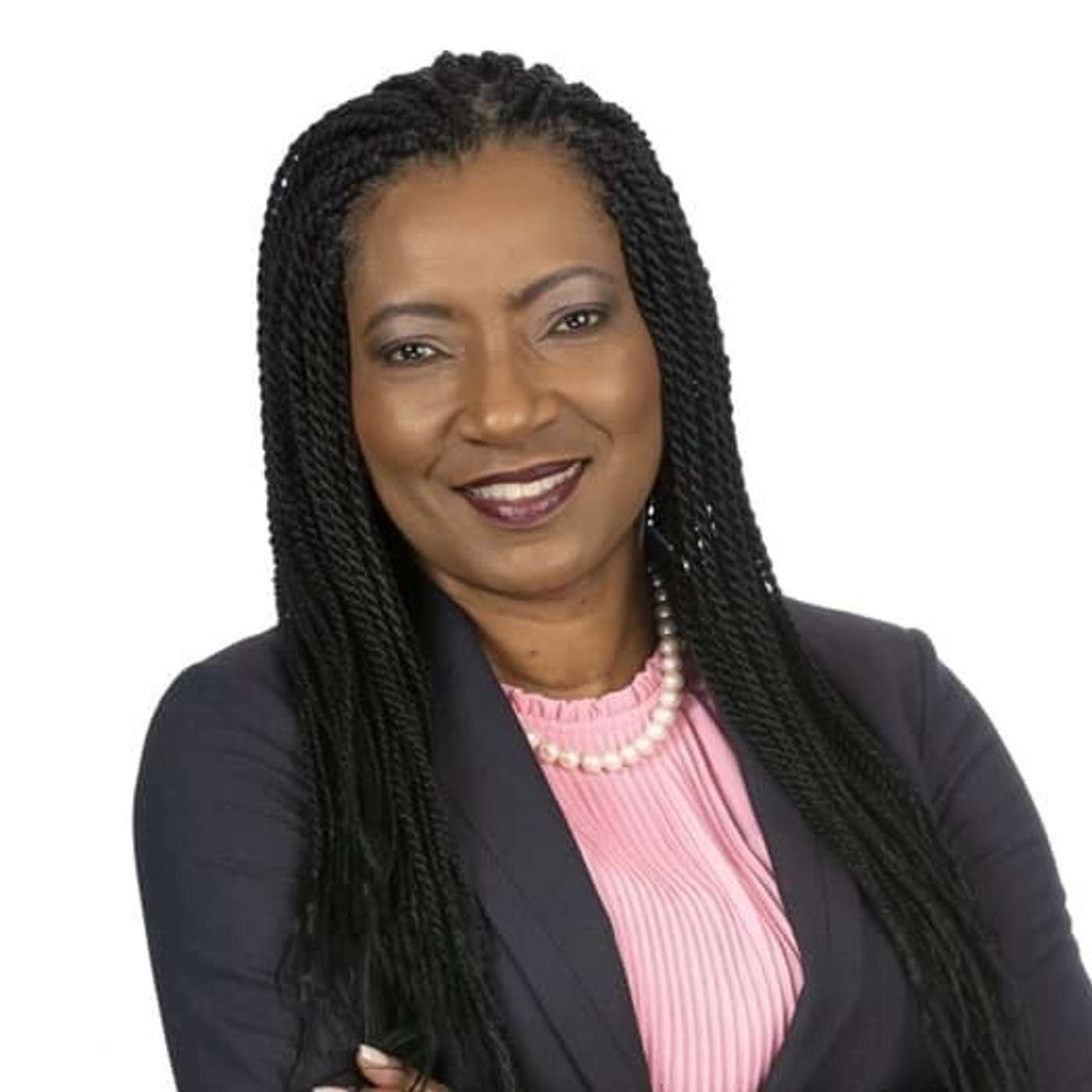
The Scoop with Tanya Flanagan · Tanya Flanagan
Tanya Flanagan hosts Ted Pappageorge, Secretary-Treasurer of Culinary Workers Union Local 226. Pappageorge discusses the union's history, growth from 18,000 to 60,000 members, and the "Las Vegas dream" of good jobs and affordable healthcare. He highlights the union's efforts in political organizing, housing assistance, and healthcare provision, including four free health centers. Pappageorge also addresses the impact of private equity on housing and healthcare, emphasizing the need for cost control and quality care. The conversation touches on the union's role in legislative advocacy and the importance of homeownership for working-class families.
Announcer 0:00 This is a KUNV Studios original program. The Wesley Knight 0:05 content of this program does not reflect the views or opinions of 91.5 Jazz and more, the University of Nevada, Las Vegas, or the Board of Regents of the Nevada System of Higher Education. Good Tanya Flanagan 0:20 morning, and thank you for joining me for the Scoop with Tanya Flanagan. I'm so happy you decided to wake up and start your day with me. Here on the Scoop, where we talk about life, joy, funny moments, trending topics, and so much more. We promise to keep you in the know and find out what you know. So let's get started. Good morning, Las Vegas, and welcome to another edition of the Scoop with me. I want to say thank you for waking up on this beautiful Sunday morning as we experience what's left of summer. To tune in to wonderful programming right here on 91.5 KUMB Jazz and more. As always, I do my very best to bring interesting people into the studio to have a conversation that I hope will be informative and introduce you to aspects of life, culture, and living in Las Vegas that you may or may not be aware of. Today, I have the pleasure of welcoming to the studio really a legend in the space that we so many of us call our livelihood. We're built on tourism. We're built on gaming. I have in the studio today Ted Papa George, who is part of Culinary Workers Union Local 226, and you've worn many hats. So I don't want to limit you to one, even though I think you have the tallest hat on right now as Secretary Treasurer, but good morning and welcome. Ted Pappageorge 1:47 Thanks for having me. I'm very happy to be here, and yeah, I have worn a lot of hats. I my parents worked in the hotels. I worked in the hotels. I'm a 44 year union member, but I've been working at the union for about 35 years. I was involved in a strike for nine months, and I was a bartender in the hotels, and we won the strike. But I ended up going to work at the union, and since then I've done you know non-union organizing, contract negotiations, the president of the union, and now currently Secretary Treasurer, and very proud. Though we we were doing good, and there's a lot to do. Tanya Flanagan 2:28 Absolutely, political organizing from the union standpoint, because the strike, and then the other activities that that go on that affect how workers are supported, and the benefits they receive. But you, 35, 40 years, you've seen a lot of elections. You've seen a lot of local and federal, national presidents, candidates come through. Culinary is often the stage for change. What do you think the greatest benefit has been to that, or the greatest accomplishment out of that kind of space. And I ask because we're in this, we're headed, you know, we're in this season right now. And I don't know, just curiosity washed over me when you said that. Ted Pappageorge 3:13 Well, we've come a long ways. When when I was working in the hotels, the union was in some trouble. 1984, there was a big citywide strike, and we lost six hotels. They decertified after a year, and we were about 18,000 members in 1990, and now we're 60,000 members. So we, it's been a lot of blood, sweat, and tears, and and and fights, and and strikes, and the strikes that we get involved in tend to be very long, and very nasty, and so we've been able to do something what we call the Las Vegas dream-the idea that you can have a good job, a union job, where you can make enough wage to support your family, you can you can take your kids to the doctor without going bankrupt. You can have a retirement that, in addition to to Social Security, and have respect on the job, and and that your time served means something, because hotel jobs and restaurant jobs are poor people's jobs without a union around this country, we've changed that in Las Vegas. So even the non-union properties have to compete, and if they don't want their workers to have a union, like like some of our friends, like at stations, casinos, then they've got to compete, and and that was has been their game plan. So that I would say that's the I have the most pride in where we are at and what we've been able to build as far as a standard and the standard of Las Vegas and this Las Vegas dream that is attainable here. But we've also realized that there was a lot more we. Do to mobilize our members because you know working class folks don't like politicians and don't like politics and feel like it's just more the same, and and but there's so there's work to be done on that, and we spent the last 20 years really working with our members to offer citizenship classes, so our members that are not citizens can vote, but also really educating folks about: okay, is this a union issue? Is this a political issue? You know, if if for example, this the latest administration is harming tourism by you know attacking our best allies like Canada and Mexico, which also are best customers to come to Las Vegas, because the out of state, the out of country folks stay longer and spend more, and then you end up getting laid off over that. Is that a union issue or is that a political issue? And for our members to make the connection that okay, that's something the union should be tackling, as opposed to that's politics. We should why are we spending our dues money on that? So we've come a long ways, and where we are now is that we look our members come out on a leave of absence, cooks, room cleaners, food servers, they come out on leave of absence every two years when it's political time for the primaries or generals, and we run the largest walk programs in the state, the largest ones in the Vegas, the largest ones in Reno. But they're manned by our members that they leave the AC, they leave the hotels, and they go out in 110, and they're on a mission, and it's it's been pretty effective. And the goal is to make sure that working class folks are heard and their voices are heard. This is a working class state. It just is. The main industries you don't need a college degree, but you better learn how to move. They're physical. They're very physical, hard Jobs, and and and we think that we've been a big part of the political part of being active, with our members being active and working class folks demanding that we have attention, along with being very organized in a kind of a very member based union where the members have a lot of input as far as leading negotiations and leading the direction of the union has been a critical part to build that that standard that people enjoy here. Tanya Flanagan 7:32 Working in hotel business here has always been sort of an anomaly, or used to be, and I say that to say they were good-paying jobs in the sense that for a long time they matched where the market was to a degree. You could be a bailman or even valet or whatever your role might be, and you could afford a house, and you could afford a decent quality of life, and you talked about how is it a union issue? Is it a political issue? Where are you guys? What are the what are the conversations around the economy right now, working housing market affordability as a whole, and how that is impacting this community? Ted Pappageorge 8:21 Well, we were always very proud that when we talk about our Las Vegas dream, that we feel like we've been a big part of building with the rest of the labor movement in this in this town and in the state. But look, we've we've we're the largest union, and we've we have to take responsibility and lead. and And part of that was ability to own a home. So, if you were a guest room attendant, a room cleaner, or a cook, and a married couple that works in these hotels, you didn't necessarily have to be a cocktail server that, or or a banquet server that was making real good money to be able to own a home. You could afford to own a home. That's really gone now. Housing has doubled in the last four or five years since the pandemic, but there's a real issue here that not only that, but with the kind of the addition of the short-term rentals that take up a piece of the stock, and then this idea of the we call them Wall Street landlords. This idea of corporations that are created out, and instead of during the recession, where you had, you know, private equity and hedge funds coming in and buying up homes and flipping them, now they buy them to keep them and rent them long term, and then the once you commit or you corner a certain amount of the housing stock, then you are able to then raise the rents, and it really looks like a real plan to create a generation of renters, and so that is something that politically we've taken on. We call it neighborhood stability. The last few years, we've had allies like yourself, you know, push very hard in the legislature, but it. Is an issue that, along with what is really a crisis in healthcare right now, and the ability for the average person to be able to afford healthcare, for for companies to be able to provide healthcare, those two things when we talk about the economy, because when we talk to folks, gas, groceries, electric bill, car insurance are high, but these two things-the ability to to own a home and what for a working class person is the only way to create wealth, right? At the end of the day, significant generational wealth, Tanya Flanagan 10:40 yes, Ted Pappageorge 10:40 and then healthcare because if you end up on the wrong side of your health, you can lose everything, and the safety net has is is really being restricted. And we're very proud of you know we just opened our fourth health center for our members and be able to figure out how to really fight for a fair shot at healthcare that can cover your family, like I said before, that you take your kids to the doctor without going bankrupt, but also the ability for the union to control the quality and the cost-you know-that's critical. Tanya Flanagan 11:14 It is. I noticed that you guys had celebrated the opening of, as you mentioned, the Fourth Health center, and the ability to offer access to care at no cost, no copay, no premium. Prescriptions are covered, and it's an interesting conversation as well. Where we're going with healthcare in the legislature has been an interesting conversation, and I've experienced a health crisis or a medical situation even overseas. So I had surgery in a overseas in South America some years ago, and everything that I did, including MRIs and surgery and the stay, cost me less than 6000 U.S. dollars in the other country, and I went to a private hospital. And so, when you see things, and those who know me know I'm a three-time breast cancer survivor, so I've had a lot of medical care here as well because of the cancer diagnosis. Allowing healthcare, finding a way to make health healthcare equitable in our country, universal healthcare is the conversation that we're constantly having, but not quite achieving, trying different things to create a path toward this, but yet not quite hitting the mark for your members. At least it's kind of like you're providing this space. How do you see yourself as an example to others without being a threat? Ted Pappageorge 12:41 Well, look, I don't think it's a threat at all. I think that we're raising the standards, and I think that's a very useful role for the community and across the country. But I think it's pretty clear we're not only not achieving this idea of universal healthcare, at least that everybody has health care and that it's a right to health care. We're going backwards. I think that's clear, and so, but there's a tension on that because if you talk to our union members and you say, "Hey, you know, we should have, you know, every we should be Medicare for all. Let's say, for example, well, there's no way would our members say, "Well, okay, let's just give up our culinary healthcare and our health centers for for Medicare, that's that would never fly, and that's a significant portion of the public that is nervous about that. But there's also this question: Okay, so how do we get there? And that is a real tension. Our take on that is that it's not a they're not at odds. That the goal should be that in this country, everyone should have health care, and that we have to control cost. Everybody knows, I think, that big pharma in this country, you know, the costs for the drugs that you and a health plan has to pay for, if you have health care, or you have to pay for, are through the roof compared to the rest of the civilized first first world countries. Not forget about third world countries. Tanya Flanagan 14:04 And let me say, I technically injured myself in a third world country. Speaker 1 14:08 Yeah. Tanya Flanagan 14:09 And three days, private room, kinesiologist, anesthesiologist, MRI, orthopedic surgeon, round the clock nurses, meals, you name it. Ted Pappageorge 14:22 Well, that's right. I did. Tanya Flanagan 14:24 I know. I did all of this. I wanted to paint the picture. All of this for less. It is the most inexpensive medical care I've ever had for less than 6000, equivalent to less than 6000 U.S. dollars. I had broken my leg and dislocated my ankle. I came back to the country and had the screw taken out. Once I got back, it was almost $6,000 just to have the screw removed, and it was outpatient. Ted Pappageorge 14:49 So, just kind of going back, I told you that really we've got this idea of private equity taking over the housing market and through a lot of different venues and creating a generation of renters. That's already happened in the in the healthcare market, private equity, large investment firms, large corporate concerns, for profits, and we just we see that's what controls healthcare in this country, and it's it's it's stunning and stark when you travel to other countries of what the difference is. So there's a pathway, and that that's part of the pathway to get healthcare for everybody. Is that there has to be a will to take on these large corporate interests in healthcare and dial that back. But then the other thing is this: is that there's a lot of ways to get to this, and and it's a transitional kind of place. We think that because you've got to deal as a policy maker and with the folks that have insurance that they want to keep versus the millions that are in trouble with insurance, and we think there's a way to get there. So for us, we we think that is that we have to move forward and set the standard. There's no reason why the healthcare that we provide at our health centers, and and it's we like to say it's free, free, free, and and you know the best price is free. Now, of course, it's not free. We go bargain with the companies, and there is an economic package we negotiate, and part of that package goes to pay for healthcare increases for that year. Part of that package goes to pay for wages, and but the more healthcare that has to get spent on healthcare. Less money left over for wages. That's how our contracts are structured, and that's very purposeful so that our members really understand that. Look, if we spend, if we use generic drugs, and we can up our generic drug intake, then we have more money left over for our wage increases. If we can build these health centers, which is a huge investment over 10 years and over half a billion dollars, or close to it, with our our pension plan to help fund that, that we can grab a hold of this healthcare model and we can control the cost and the quality, so you can get the best quality at the best possible cost. But that means you're not going to be able to necessarily see your neighborhood primary care doctor like you've been doing, but if we do that, then we can then there's more money left over for wages, so that we have a our pharmacies are called free pharmacies. The we have our four pharmacies are the busiest busiest pharmacies in the state, but we don't handle premium drugs there. We handle some, like some diabetics drugs, but overall, it's generics and and it's it's free. And every one of our health centers has it. So the idea is to drive behavior and get folks into an area where you can be you can move the population health up and set the standard, but why isn't this kind of healthcare available for everyone? Well, there's a bigger problem. We think our our role is to make sure we're providing the best healthcare and then be leaders in the advocacy area to try to win healthcare for for everyone. Tanya Flanagan 18:17 I do have one question in in the space of the quality of care in establishing this model, which you all have set up. How do you drive the balance? So, say I mentioned eye cancer, for example. How do you drive the balance or treat in the areas of specialization? Right. So, how do you treat in the areas areas of specialization? If we have other, we have services outside of the health center that you provide. Does do you also have these areas covered within your model? Do you become? Are we creating competition? Not that competition isn't healthy. Sometimes it can be. Sometimes it can be something that we have to look at to make sure we're not creating more of a concern rather than a solution, but how does it work in the areas of specialization, which is what a lot of people leave or talk about leaving here to go get care somewhere else because they feel like the specialized care that they need isn't always here. Ted Pappageorge 19:15 Well, that was the old joke: the best place to get health care in Las Vegas is the airport, right? So, and that's been around for a while, and for some parts of reality. But for our model, it's about really focusing on adult primary care. That is where the transition this year. And there's a lot of debate and discussion with our members. But at the end of the day, the vast majority agree that you know, we're going to be able to provide the best adult primary care if we can control the quality and the and the cost, and that's through our health centers. The specialists, that's something that our members can still go through the network. They're not required to go through gatekeepers and referrals. They can use the specialists as much as they want, and we have the. Largest network of specialists out there, but in the most Tanya Flanagan 20:03 thoughtful balance. Ted Pappageorge 20:04 Well, there there is, but in the health center, the idea is to be able to put things under one roof, kind of a one-stop shop. So you can get labs, you can get all your radiology. We have pharmacy. We also have all the soft tissue care, like physical therapy, acupuncture, chiropractic. Because again, these jobs are very physical jobs these are demanding physical jobs and you've got a lot of sprains and and tears and and back issues whether you're bartending and you're bending and twisting all day or you're a cocktail server wearing high heels carrying a load of drinks for five miles a night, or your room cleaner, which is probably the most demanding job in a hotel, cleaning those rooms and and hitting your quotas. So, but that that's that's the model. And when we get the adult primary care within our health center, when those are members, that's when we can really tackle the folks that are dealing with diabetics, high blood pressure, heart disease, the the the big drivers and costs that simply just getting folks to have a primary care doctor as opposed to going to urgent care, or these kind of switcheroos out there, these freestanding emergency rooms that these for profits are building that are really problematic because if if you go to a for if you go to a freestanding emergency room, let's say with one of the for profits that are about 20 of them in the in the valley now, generally most people are going there for urgent care type care, but that means they can charge our health fund $2,500 a visit if you go to these freestanding emergency rooms. So there's the way is to make sure people go to the emergency room when they need emergency room, but they go to true emergency rooms at the hospitals because then they can admit you. And then for urgent care, we have walk-in care available daily. There's a percentage of slots available every day for walk-in care, but then the idea is to get folks to actually choose a primary care doctor, and a lot of folks in this industry, in our industry, don't. So, are Tanya Flanagan 22:12 your do your hours match like if I if I were a culinary worker, needed emergency care or immediate care, are your hours limited? Are your hours 24 hours? Well, Ted Pappageorge 22:23 they're certainly not 24 hours, but are we're from like I don't know, like eight to nine in the morning till like 10 o'clock at night. Okay, you know the idea is to be able to get folks either before shift or after shift. So so specialists go to the network. Obviously, hospitalization, emergency rooms, inpatient, outpatient, all that. But the real cost, in order to be able to get the best care and have the best healthcare, and we look, everybody wants our healthcare. We're very proud of it. But there's been so much work to with our own members to really drive these costs down, and that means making sure that we have cost controls, whether it's driving to generic drugs or whether it's creating a hospital coalition that works with all sorts of employers and other unions to negotiate hospital rates, we we we created that, and whether it's all sorts of whether we go to the legislature and talk to folks about looking at surprise bills, so we put controls on that or diabetes transparency. Our union, the Culinary Union, also is the most active union in the health in the legislature on healthcare because we have such a large population, and we think what we do helps drive healthcare and health numbers throughout the valley for the whole community. Tanya Flanagan 23:43 I am enjoying this conversation and talk. As I'm a huge advocate for healthcare and just looking at, I've worked in spaces to give families more access to options in healthcare or to just provide services when they don't have them. I wish we had even more time. We're down to less than five, almost less than five minutes left in the show because I really wanted to dig into the housing issue a little bit further, especially with this corporate housing that we're seeing, and it came before the legislature in the last session and also in the special session. I'm trying to get some controls, and we're seeing this buyup of housing across the country and the renter community that you you talked about being created, and how once that is established, people can no longer forth rents. Like it's just it's just driving down the dream of home ownership. It's becoming so much harder to attain for people. Ted Pappageorge 24:35 Well, if if one if you are limiting the options and housing stock in the first place that puts a huge barrier that allows you to then kind of corner the the rents and if rents which rents have risen in some areas 30 40% that means that that that disposable income was was was. Savings to be able to save up for a down payment on a home, and and so when you put these things together and you have this this corporate private equity kind of Wall Street landlord interest, it's different than you know folks that have saved up their life and they bought a couple homes and they're renting out a few homes and they and they own their home. When you have that sort of impediment, that's where you end up with this idea of of really this game plan of curating a generation of renters. So we're doing we have negotiated a housing fund, and we negotiate that every employer has to pay an extra two cents an hour into a large fund that provides up to $30,000 to our members to be able to buy a home. It could be used for buying down the interest rate and for and for down payment, applying to the principal. Some down payment, but most loans still require an actual down payment in addition to assistance. But what we've also done is we partnered up with a very large community lender called NACA, Neighborhood Assistance Corporation of America, and their loan product, which is subsidized through Bank of America and other agreements, does not require a down payment, does not require mortgage insurance, does not require a credit score, but you do have to be very strict about can you afford the house? You know, you have to prove your income. It has to be steady income. When you put those two things together, we are finding that folks can't afford what they want to afford, but they could Tanya Flanagan 26:35 afford to first home, right? The Ted Pappageorge 26:37 dream of becoming a homeowner can happen, and and again, why shouldn't everybody have that opportunity? So a lot of folks like you and other legislators have worked so hard, and folks in the community to try to, you know, set aside money to be able to provide funding, and it and it's seasonal in a way, right? It's there until it runs out. But what we've done is we've negotiated a permanent fund that allows us to be able to really jump in and change people's lives when it comes to the ability to own a home, and so our homeowner percentages are much higher than other folks that would be in the in this industry that weren't part of these part of the union. Tanya Flanagan 27:18 I wish we had more time to talk because I'd like to talk about how the culinary unions' models and practices are shaping other communities, destinations that may have some similar numbers. No, no, not the same as the the volume of business that we do here in terms of hospitality. Therefore, employing people, but just even if it's not that, just is a model. You know what I'm saying for doing business because sometimes as a country we've got it feels like we've gotten so far away from where the employer cared about the employee like everyone was a family, but in talking to you today and having an opportunity to peel back some of the layers on how the Culinary Union Local 226 works here in our valley, it feels like a family business, and I think that's one of the nicest things that I hope people have taken away from having the opportunity to listen this morning. That it feels like a family business. Ted Pappageorge 28:13 Well, what Vegas Tanya Flanagan 28:14 was built on. We Ted Pappageorge 28:15 there is a bit of that, but the reality is, is that we have to figure out partnerships with some of the largest corporations in the world, and at the same time, making sure we don't lose track of you know making sure people can find their way and and have that Las Vegas dream. And there is a way to do that, but we also have to be somewhat to be the cops because the there is no bargaining group. We have to if we negotiate a great contract with one large company, we got to get it across the street. So we're very proud of that, and that Las Vegas dream is a big deal for Tanya Flanagan 28:52 us. Well, folks, I've had the pleasure of having Ted Papa George from Culinary Local 226 here. Our time is out. Tune in next week. It was good. I'm so sorry. We'll see you next week. Thank you so much for having me. Thank you. I want to thank you for tuning into the scoop with me, Tonya Flanagan, and I want to invite you to get social with me. I'm on Facebook and Twitter. My name is my handle T A N Y A F L A N A G A N. You can also find me on Instagram at Tanya Almanize Flanagan, and if you have a thought, an opinion, or a suggestion, don't hesitate to shoot me an email to [email protected]. Thanks again for joining in. Stay safe and have a great week. Transcribed by https://otter.ai