
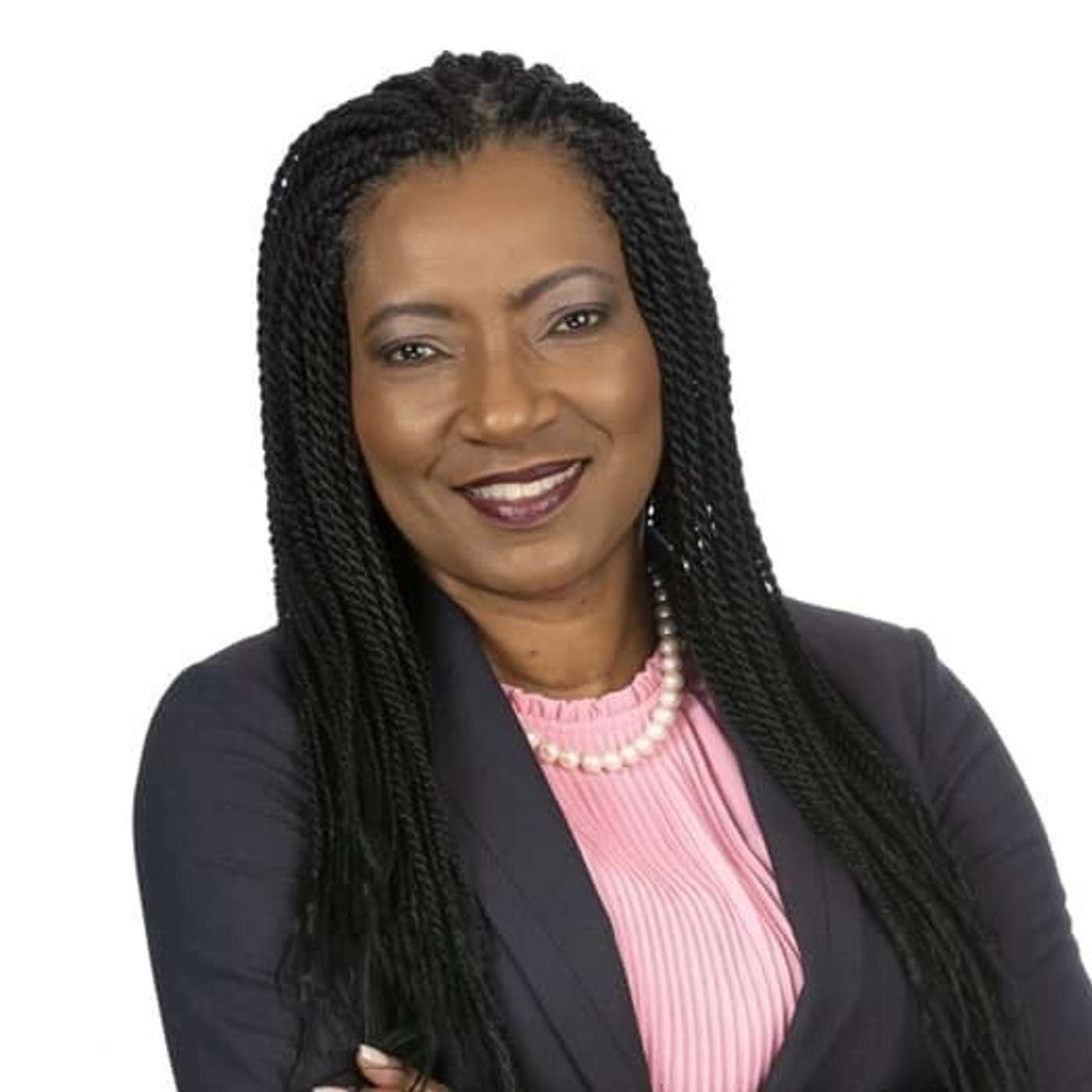
The Scoop with Tanya Flanagan · Tanya Flanagan
A candid conversation with Las Vegas NAACP President Quentin Savwoir to talk midterm elections, Nevada’s Ballot Question 6, and the future of the NAACP under his historic leadership as a member of the “younger generation!”
Announcer: This is a KUNV Studios original program. Wesley Knight: The content of this program does not reflect the views or opinions of 91.5 Jazz and more, the University of Nevada Las Vegas, or the Board of Regents of the Nevada System of Higher Education. Tanya Flanagan: Good morning and thank you for joining me for the Scoop with Tanya Flanagan. I'm so happy you decided to wake up and start your day with me. Here on the Scoop where we talk about life, joy, funny moments, trending topics, and so much more. We promise to keep you in the know and find out what you know. So let's get started. Good morning Las Vegas and welcome to another edition of the Scoop with me, Tanya Flanagan, right here on KUNV 91.5 Jazz and more. As always, I am so grateful to have you. listening in and engaging around interesting topics. It's been a minute since I was able to get back here with you live and in person, but it's a busy season right now. I am delighted to welcome to the studio today another fabulous guest for what I hope will be an insightful and delightful well, I don't know if this conversation would be delightful, so I won't use that adjective, but It will be informative and it will leave you, I think, thinking about where you maybe stand on issues. It's purely information. What you do with it is what you do with it. Quentin Savoir, president of the Las Vegas chapter of the NAACP. Good morning. Quentin Savwoir: Good morning. Tanya Flanagan: Good morning. Good morning. How are you? Quentin Savwoir: I'm doing good. Thank you. How about yourself? Tanya Flanagan: You know, the weather is great. We are, oh my gosh, less than a dozen days to the final day for voting, November 3rd around the corner. A lot is happening in the country, a lot is happening in our state, a lot is at stake for many people and everybody has a different perspective. While we are watching candidates' races closely. We also have questions on the ballot again in this election cycle. So coming up, early voting's going on now through October 30th. So if you're if you haven't, please do. If you think it's not important that you do it. Quentin Savwoir: I'm here to tell you it is. Tanya Flanagan: We're here to tell you it is. It's a point of privilege, but it's a voice and a right to exercise it. So, you know, arm yourself with information and go do that. Quentin Savwoir: So in Nevada we have such a privilege because there's that early vote period and I think we got about ten days left now, right? But it really gives families and voters the space to research and to identify the candidates that identify that most identify with what, you know, their beliefs and their values are. So I come from a city and a state where you can't vote early 'cause there's not the voting early period. And I remember as a child Election day was just election day and all you could vote was on that Tuesday from seven to seven, you know? Tanya Flanagan: It used to be really a of election day vote everywhere. Quentin Savwoir: Yeah. Tanya Flanagan: You know, we've come really far and the state of Nevada, as a member of the legislature, I can say a lot of effort and energy has gone into giving people access, Nevada's access to participate in the process. So you can mail a ballot in, you can early vote at any one of the early voting sites. you can same day register to vote. I mean, like you there are a lot of options of how you are able to participate in this process. And COVID also changed the way, you know, we do business because we saw we people were losing their lives. And so we had to find another way to make sure citizens could participate in their right to vote. Quentin Savwoir: Without risking their lives. Tanya Flanagan: Without risking death. Quentin Savwoir: Yeah. Tanya Flanagan: Because it was crazy. Quentin Savwoir: Yeah. Tanya Flanagan: You know? Quentin Savwoir: Yeah. Tanya Flanagan: Having worked also in a government space for more than two decades, I think that our department, our election department does a really good job. Quentin Savwoir: An outstanding job. Tanya Flanagan: A really good job. It's and it's a lot of work. It's a lot of people to the volunteers who turn out to help work, you know, with the polling places. Kudos to you because that's just a lot it's a lot of sacrifice. Quentin Savwoir: It's a lot of sacrifice. And we're living in a climate And I hope this isn't two partisan, but we're living in a climate where elections officials are under a lot of scrutiny, right? I want to tell your listeners that if they haven't got the opportunity to tour the Clark County Elections Department, now they're probably not taking tours right now, folks. Okay? I would think not. But after the election, definitely go to the Clark County Elections Department and ask for a public tour because I was impressed with the walkthrough the different layers of security. security that they have to ensure that all of our voices are held with integrity and intention. I was inspired by the culture. Everybody was saying hi to everybody. It was a it just felt really, really good in there. And what's more is these are our friends and our neighbors and our family members that are literally doing the work of making democracy function. So I take offense personally when folks attack the Elections Department because I know the work that it takes to make our democracy work. I remember being 19 years old, 20 years old, 21, going to work the polls with my stepmother and I was often the youngest person there. But it made me have a great deal of affinity for these folks that believe that our communities deserve to have their voices heard. Tanya Flanagan: You mentioned your age and I am always impressed when young people know that they wanna engage in the process. So the fact that you got started in your early 20s, because I mean, honestly, people are like in college, just on the other side of college, if you started, you know, straight out of high school, if you started a little bit later, if you change your major in the process, if you do two majors, whatever your story may be, college can be a longer than four year journey for some, right? But when you know at a young age that you want to engage in this space of advocacy, of activism, I think there's a certain type of personality that responds to the call of act to call to action. And there's I've talked about this before on the show and there's nothing wrong with it because some of us are just consumed with family, with children, with after school activities, with sporting events, with the things that just, you know, keep our day to day lives moving forward. But there's the need to have The people who are the boots to the ground, the front line, right? You have to have your frontline soldiers. Yeah. And when you know at a young age you want to be a frontline soldier, that's something to me. Quentin Savwoir: That is something. I it was speech and debate for me. It was my stepmother who at the time was a poll worker and it w it was like her and her homegirls ran a whole polling place. So I thought it was fun. But I was also a nerd. So speech and debate got me interested in the advocacy side, but it was working those polling places that really taught me, no, there's actual people who carry the fidelity of our elections every single cycle. There are our neighbors, there are our church members, there are our friends. So I just want us to keep that in mind because we live in this climate where it seems like our election workers are targeted and I don't like it. Tanya Flanagan: Do you look do you look in the mirror and say? That's me. And I'm saying that to say at 21 you were at a poll with your that sounds tricky. But you were at a s an election site with your stepmom, you know, volunteering, so to speak, or working, so to speak. But now, fast forward to you many, many, many years later. Quentin Savwoir: Yeah, 40-year-old me. Tanya Flanagan: I didn't want to call you old like that. I didn't want to call out your age like that. But, you know, 20 years later, essentially, and you are the face of one of the oldest. Quentin Savwoir: Yeah. Tanya Flanagan: organizations that fight for equity and access. And when you look in the mirror, do you go, oh my gosh, this is me. This is my role in that space that I began to carve out when I was just 20 years old. Quentin Savwoir: I don't want to sound pretentious, but yes, I've had that moment. I've had that moment where I've caught myself staring at myself thinking, oh, you've become the man you used to imagine being. I remember 21 year old Quentin thinking, Well, one, who's gonna be crazy enough to do this advocacy stuff with me? Like there's no real money in this, right? Who cares enough about people enough to like really put their own well-being on the line? Who's willing to sacrifice? Because all of the work of advocacy, activism, civil rights, it is a sacrifice. And when I talk to people, I remind them, you know, Dr. King sacrificed a lot and he didn't get paid sick days. Fannie Lou Hamer had her life threatened. She didn't get Summer Fridays, you know? So I I'm grateful to live in a time where I can do the work that I'm passionate about and be compensated and also have reverence for the history of those who've come before me and knowing that they were only incentivized in knowing that one day perhaps you and I would be able to have a discussion like this. Tanya Flanagan: That is powerful and it is true. And I remember watching, the movie, Ava Duvernay's movie Selma. Quentin Savwoir: Mm-hmm. Tanya Flanagan: And I remember feeling tired, like, around the time it came out and going to see it. But as I sat there and watched it, 'cause I, you know, I went to Martin Luther King Junior Elementary School and Percy O. Julian Junior High School and all of that. And so you're in a school where it's constantly being embedded. here is where you hail from, here is the torch, this is what we're carrying, here's the light, here's the role. And I remember sitting in the movie and feeling like I'm tired. But watching that movie and looking at everything that they went through to protect access, to be treated fairly, to be seen. And I remember sitting there going, who am I to be tired? And that's all I could think was, if you thought you needed a break, if you thought you wanted a break, break is over before it starts, who am I to be tired? And I just kept going. Like it just resonated with me in this way that sent a tingle throughout my entire body just and the tears began to develop in my eyes. I was like, mm. Who am I to be tired? That's real what these people have gone through. Quentin Savwoir: That's real. And I have to tell, I share those anecdotes and those stories with the folks who tell me, well, I don't have time, you know, or I've got to protect my peace. And I'm like, well, yeah, we need to do that. But you think Dr. King wasn't tired? Like, do you think Megar Evers didn't want to protect his peace? Megar Evers was targeted at his home. where his children live. You know what I'm saying? So when I hear people talk about being tired or I don't have time to be in the movement, it's like, hey, listen, I'm grateful that Maker Evers made time. I'm glad that Dr. King, you know, wasn't so keen on protecting his peace as we say in the culture now. It's like, no, the responsibilities that we have to one another are certainly, they certainly take precedent. to one individual person. Tanya Flanagan: So as you've come, we talked about you in a full circle space now. You've come through your couple of decades from 20 to your 40s. Talk a little bit about what you do in this because you have two roles. You're US president of the NAACP, but you are not your income comes from a from another organization. Quentin Savwoir: Right. Tanya Flanagan: Because I don't want people to think the NAACP It's a free job. It's paying you a salary. I want to be clear. That one's a free job. Quentin Savwoir: It's a free job. Tanya Flanagan: That's just for the love of the people. Quentin Savwoir: It pays in cortisol and sleepless nights, okay? Tanya Flanagan: For the love of the people. So with that, talk a little bit about what you do in your respective role. Quentin Savwoir: For sure. I'm the director of programs and strategy at an organization called the Ballot Initiative Strategy Center. Acronym is known as BISC. We call ourselves Biscuits. That works for me because I love carbs. At BISC only. At BISC, we are an infrastructure building organization and we help create the conditions for labor groups, grassroots groups, and community activists to use direct democracy to materially enhance their lives. And I emphasize that materially enhanced part because so many disaffected voters in today's climate don't feel like voting matters because they haven't been able to see how our system of government has tangibly improved their life. I talk about this anecdote all the time. It was 2018. I was working at Make It Work Nevada and we were knocking doors in Marble Manor. This young man opened the door and he says, I give him my spill. I'm so excited 'cause this is my first cycle in Nevada and I'm proving myself, right? And I give him my spill and he says, Well, my hood didn't get no better under Obama. It didn't get no worse under Trump. What are you asking me to vote for? And that anecdote lives with me rent-free because I could have stood there and engaged in a policy debate with him. I could have told him about, you know, the Affordable Care Act or the CHIPS Act or whatever piece of policy that we hear about coming out of Washington. But the reality is that the actions that happen in Washington, D.C. very reldom, if very rarely, if ever, show people materially that our democracy is working for them, particularly when they're competing against the backdrop of rising costs. of not having access to the things that they need just to get by. So when I talk about materially changing conditions, working at BISC has been fantastic because when you start talking about issues and not people, you attract new people into the process. And it's been a real joy to be there. I lead the program team. So that consists of our training department, that consists of our research and messaging, and that consists of our policy and legal advocacy work as well. Tanya Flanagan: It's really interesting and listening to you, something like struck me and it was this idea that what's happening in Washington doesn't feel like it materially is changing your life at home. But I think I'm wondering, is the miscommunication that often or too often, and yes, the conversation is a part about people, right? Because you have to send the right people. or whoever you believe the right person is to that responsibility, that role in Washington, that United States Senator role, that United States Congress, congresswoman, congressman role. But the is the conversation too often around the people who are your choices versus the issues that the people need to address or are addressing. Because I think a lot of times you don't even like I've run legislation and people know that I'm a state legislator, but they probably don't really know which bills I got through in the session. Or even if you know who your assembly person is or your state senator, you we don't always know. I remember going to a black collective sort of training boot camp for running for office and they talked about how people don't always know policy. Quentin Savwoir: Yeah. Tanya Flanagan: They don't have so when you said that it made me it really resonated with me issues because I think what happens is in the course of talking, the messaging is missed on making sure people understand the issues that this person championed. Like you just don't know what that is. You just know the person, but you don't really know. You either like the person sometimes or you don't. But you don't really know what the person did. And I think that's I don't I guess I'm saying I don't know that the Washington part doesn't trickle down to your material betterment. Quentin Savwoir: Sure. Tanya Flanagan: It's just knowing what the issue is that happened in Washington that trickled down and affected your material betterment versus knowing the person who's in Washington. Quentin Savwoir: Absolutely. Tanya Flanagan: Does that make sense? Quentin Savwoir: It does. Okay. I think a lot of that it's I think it's a nuanced problem because you're right. Like we obviously know that things that come out of Washington can materially improve your life. Tanya Flanagan: Absolutely. Quentin Savwoir: But because we have taken civics out of school and most people don't even understand the difference between the responsibilities of someone in Congress versus someone that's up in Carson City, right? It creates a situation where people don't know where to place the blame, right? So your trash doesn't get picked up one time and all of a sudden it's the president's fault. And it's just like, wait, that's not the right level of government. And there's also this place where, and I was talking to my colleague at work today about you know, this media environment that we're in. The media has an agenda, folks. Like, and their agenda is to make money. And unfortunately, it's not very savvy, it's not very lucrative to talk about issues because when you can talk about a person and when you can slander a person, it's far more salacious, it's more tantalizing, it's gonna keep people's attention. So the theater of trading barbs becomes the focal point. versus actually talking about how do we get the gas down? Like I think that no matter what political party you are at, you want cheap gas. Tanya Flanagan: This is true, but I hear what you're saying. I think as a journalist, so now you I Quentin Savwoir: know I've been shots fired. Tanya Flanagan: Basically over here folks, shots fired. And so we just can't let the shots get fired and like, what, I'm just gonna roll over like the big dog is on top of me. I'm a little puppy. I think that. So I think that what you see is the how it's moved, right? Because a lot of times now you have entertainment in news. You don't just have news. You have entertainment, you have an exchange, you have an intentional opposites put together to talk about an issue. So now you have entertainment in news. You don't just have news. So does media have a role? Absolutely there's a responsibility. But I believe like at the true core of it, as a journalist, who believes in the integrity of the process, I think that there are many people doing the job that still live up to and uphold that integrity. It's just I hate to say it has me where you find the news, but it depends on what it is that you're watching for news. Quentin Savwoir: That's right. Tanya Flanagan: And why that is being presented. And at the end of the day, sometimes now it is entertainment, but if you're still picking up a newspaper and turning the pages. where you're still getting the nitty-gritty. Quentin Savwoir: Yeah. Tanya Flanagan: On some of what you know you're getting, especially from like a New York Times or a Washington Post or, you know, the oldie's but goodies. Quentin Savwoir: The oldies but Chicago Tribune. Tanya Flanagan: You know, the oldies but goodies. I just have to say that, but also while we are talking about your work, some of it's making sure people are educated in the space and your advocacy. on some of the stuff coming up on this year's ballot. Well, in ten days, the final, you know, the clock is ticking on the last ten days to take a look at question six and question seven. Quentin Savwoir: Yes. Tanya Flanagan: And, I went to a rally earlier this week. Governor Whitmer was here from Michigan. Quentin Savwoir: Okay. Tanya Flanagan: Talking about just and as a women's health advocate myself, as a three time breast cancer survivor who served on the board for Coleman, who ran legislation in Carson City to give women access to IVF through insurance. Number six is heavily about women's health. It's just about choices. It's about and it was on the ballot in 2024. Quentin Savwoir: Yeah. So Question six. Well what I preface by saying so many of the conversations about women's health care are always had without women and without birth parents and they're typically also held by folks that don't look like me. So I just want to name that to say I believe that ladies should be having these discussions. Ladies and birth parents should be having the discussions about what's necessary for their bodies versus a bunch of people who probably couldn't even point to where those organs are. But I digress. The educational aspects of question six are as follows. Question six is a citizen initiative constitutional amendment. In Nevada, you have to pass a constitutional amendment by ballot twice in order for it to go into the state constitution. Nevadans have already passed this measure. If it passes again, it will go in the state constitution. Question six is the right to abortion, and a yes vote supports providing for a state constitutional right to an abortion, providing for the state to regulate abortion after fetal viability except where medically indicated to protect the life or health of the pregnant patient. The no option there says that you oppose providing for a state constitutional right to an abortion, providing for the state to regulate abortion after fetal viability, except where medically indicated to protect the life or health of the pregnant patient. So really this boils down to if your values align with do you think that women in birth parents deserve to have autonomy over their bodies? Do you believe that they deserve to have access to reproductive health care needs that exist? I believe so. There are others that believe otherwise, but it is very important to make your voice heard, not only in this race, for a particular cause, but to understand how this question fits into the broader political landscape across the United States. Since Roe vs. Wade was overturned, we've seen a whole lot of states that have tightened up restrictions when it comes to reproductive health care access, And in the years since, we have seen exceptional increases in maternal mortality and people who have died in childbirth. We continue to have this crisis around maternal mortality, particularly with black women, particularly with women of color. So it's important for us to not just pay attention or research this question, but to understand that this question has been posed to Nevadans at a time when certain political ideologies in this country are trying to weaponize this issue in order to pull out a certain type of voter. So Nevada, should it pass, will codify access. And the other bright star this cycle where someone is proactively pursuing access to reproductive health care is in Virginia. Virginia is running a legislatively referred constitutional amendment to also secure access to reproductive health care. So that's the rundown on question six. It's not just happening in a bubble here in Nevada, but it is instead part of this broader political movement to, you know, drive out people who have a certain ideology. Tanya Flanagan: Yeah, it's a conversation. This it's one of those spaces where it's an it's for me it's individual choice. Quentin Savwoir: Yeah. Tanya Flanagan: And when you go in to cast a ballot, you're alone, it's a private moment for you. I just say to folks, you know, not leaning one way or the other. That's not my job to tell you how to lean. It's not my responsibility to lean in on you on how you lean. It's just to say, do your homework and make sure you know and understand. And think about not just yourself. I think sometimes too things come before us that don't affect our immediate lives. Quentin Savwoir: Yeah. Tanya Flanagan: And we have to think about in the context of, well, it doesn't affect me, it may affect someone that I know. And that makes a huge difference as well. Like, does it affect a niece or a daughter or because it's 'cause this is what's important to me is making sure women have good health care. Quentin Savwoir: Yes. Tanya Flanagan: That no matter what has happened, you have options to think about what's the best for you emotionally, mentally, spiritually, and physically? Quentin Savwoir: Absolutely. Tanya Flanagan: So, you know, what is the best form of care? And are we making that care available? Quentin Savwoir: Yes. Tanya Flanagan: To women? Quentin Savwoir: And I don't know that anybody would disagree with that, right? Tanya Flanagan: Like doesn't that sound But if when you have things like this, it's taking it's either putting an option on the table or taking an option off the table. And how does that availability or the lack thereof affect my overall total picture on care and where does that leave me? And every situation and circumstance is different. And so I'm not an advocate for or against because that's a heck of an emotional ride for anyone who has to make that it has to look at that possibility in their life, not mine. Quentin Savwoir: But but to that point that you made about thinking deeper about even if it doesn't impact you, that it might impact somebody you know a niece that you don't know is on the way or a cousin that's a small child right now. I think as a society we could all do a better job of thinking about how something might not just impact me, right? We're gonna get to question seven, but I wanna tell a quick anecdote. Tanya Flanagan: We're gonna run to it because we have less than five minutes. Quentin Savwoir: Oh, we better run to it. Well then let's parlay right on into that thing. In the vein of thinking about how we need to think about each other. I recently had a debate with a black man who looks just like me, right, in the middle of Marios, about ballot measure question seven. And I was explaining to him, hey, you know, this particular thing could impact us in a way that's not good. And he basically says to me, Well, you know, I know the people who don't have IDs and I don't think they should be voting. And I just was mind blown because I was expressing to this man like, hey, everybody should participate in democracy and have a voice in shaping what their community looks like. But he was singularly thinking about, no, I know them and they don't deserve to have their voice heard. And that is to me such an indication of like we haven't thought beyond ourselves. And I wonder how much of that has permeated throughout our community, not just in southern Nevada, but throughout the country. Yeah, any community. Yeah, exactly. Tanya Flanagan: I had a similar conversation and someone called, a good friend called me and said, Help me understand why I should be a no on, you know, seven. And I was like, because she was like, I always take my ID when I vote. I said, well, I take my ID when I vote too. But, you know, take my ID, right? It's just what I do. You don't need it, but take it. And I know I have gone in and been flipped and just signed my signature and they were like, no. And I was like, oh, let me do it right. Quentin Savwoir: They will tell you no in a heartbeat. Tanya Flanagan: They will tell you no in a heartbeat. Quentin Savwoir: Because it's signature verification. Tanya Flanagan: It's serious. That is a very real process. But I said to her, now that we have made it in our state, it is so accessible to participate, especially after COVID, when we introduced everyone got the mail ballot and mail, voting by mail is a very real thing here. Vote, drop it in a, I say take it to a Clark County Government Center drop box and drop it. more so than putting it back in USPS. Nothing wrong with the United States Postal Service, but I just say, you know, take it, right? If you can, take it. Sign it on the outside and, you know, do your thing. Sign the outside with your proper signature and take it and drop it in the box, right? But so because of that, you can't make the people who show up who just like to go press the buttons. I want to go press the buttons, right? I want to go make my choices in person. I want to see them on the screen. You can't make the person who shows up in person have an ID to come in because the one you got in mail, you didn't see an ID. Quentin Savwoir: Right. Tanya Flanagan: So, and she was like, oh, so the process has to be equal and fair. Quentin Savwoir: Yeah. Tanya Flanagan: And that's to me one of the factors. Like, that's the biggest thing. Like fair, equal. Everyone gets access. But that to me was like the logical, but I see what you're saying where you're having these conversations about the perspective of the lens through which John versus Sandy versus Tim versus Tom versus Brian versus Tony versus Lindsay versus Susan sees this issue, right? And at the end of the day, it's accessibility and it has to be the same. That's how it's fair. Quentin Savwoir: That's how it's fair. Nevada has fair, safe, and accurate elections across the board, and that's why I was glad we gave some roses to our folks at the Clark County Elections Department because they work really hard to keep our elections fair and integral. Question seven is another constitutional amendment. The yes side will say that we need stronger integrity in our elections, that we need to increase confidence. They would assert that there's rampant voter fraud. I think we have all heard this narrative since the 2020 election. without actually having substantial evidence to prove as such. So the yes side is trying to put into the state constitution this requirement to show ID. The no side would tell you we have fair, safe, and accurate elections and that passing question seven would be an abridgment to your right to vote. I'll remind you that the right to vote is like the freedom of speech, freedom of religion, right? We have a constitutional right to vote. And as long as you have registered properly with your county registrar, the current system works exactly. Tanya Flanagan: Well, there you have it, folks. This was a hot topic. 10 days left, and now it's on you. Quentin Savwoir: It's on you. Tanya Flanagan: Shared some information about a lot of different things and gotten to know Quentin. Thank you for being here. Until next week, right here on KUNV 91.5. Jazz and more. Stay safe. I want to thank you for tuning into the Scoop with me, Tanya Flanagan, and I want to invite you to get social with me. I'm on Facebook and Twitter. My name is My Handle. T-A-N-Y-A-F-L-A-N-A-G-A-N. You can also find me on Instagram at Tanya Almanize Flanagan. And if you have a thought, an opinion, or a suggestion, don't hesitate to shoot me an email to tanya.flanagan at unlv.edu. Thanks again for joining in. Stay safe and have a great week.