
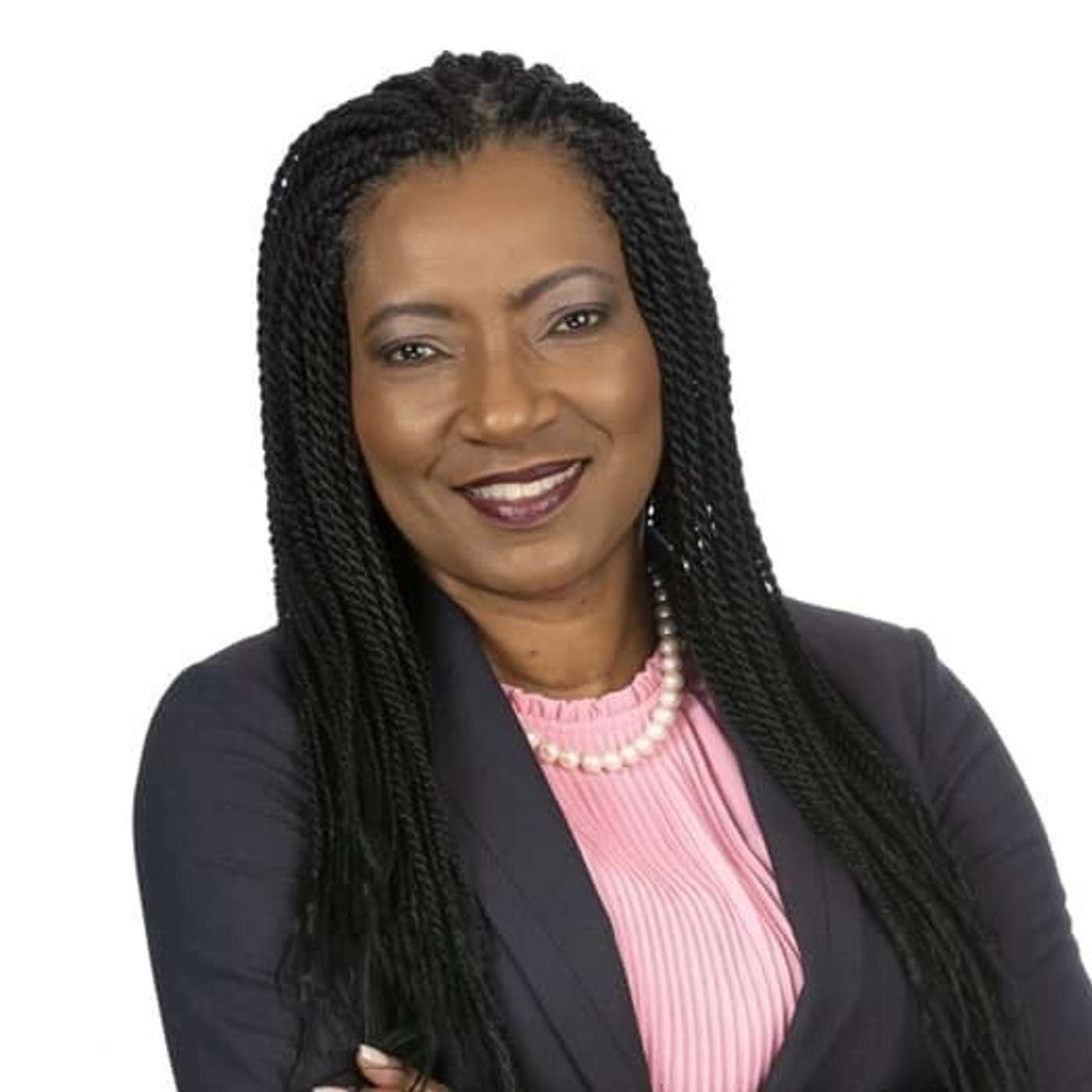
The Scoop with Tanya Flanagan · Tanya Flanagan
Early detection and honest family conversations can save lives, and this episode brings together survivors, advocates, and researchers for a candid look at breast cancer in 2026. Tammy shares her stage one triple-positive diagnosis after finding a lump despite a clear mammogram, while Tanya discusses her three breast cancer diagnoses, including a stage zero diagnosis caught through baseline mammography, and the higher mortality rate for Black women. The guests stress not ignoring symptoms like fatigue or a lump, and they talk about breaking cultural patterns of silence around family cancer history. Amanda and Latoschka invite listeners to join the Voices of Black Women Study, which is seeking 100,000 Black women ages 20 to 60, including those who have never had cancer, to help close research gaps. The conversation also covers advocacy through the American Cancer Society Cancer Action Network, expanded screening access, younger diagnoses, and the value of colon cancer screening. Listeners are invited to the Making Strides Against Breast Cancer walk at Las Vegas Motor Speedway on October 11, with free onsite registration, and are pointed to voices.cancer.org, fightcancer.org/nevada, and makingstrideswalk.org/lasvegasnv for more information.
Announcer 0:00 This is a KUNV Studios original program. The Wesley Knight 0:05 content of this program does not reflect the views or opinions of 91.5 Jazz and more, the University of Nevada, Las Vegas, or the Board of Regents of the Nevada System of Higher Education. Tanya Flanagan 0:20 Good morning, and thank you for joining me for the Scoop with Tanya Flanagan. I'm so happy you decided to wake up and start your day with me. Here on the Scoop, where we talk about life, joy, funny moments, trending topics, and so much more. We promise to keep you in the know and find out what you know. So let's get started. Good morning, Las Vegas, and welcome to another edition of the Scoop with me, Tanya Flanagan, right here on 91.5 KUNB Jazz and More. I am so delighted that once again you've decided to wake up and start your day with me right here for an interesting conversation. We have entered the month of October. I cannot believe it's already October. But as you all know, if you've ever listened to the show or different shows over the years, Breast Cancer Awareness Month is near and dear to my heart, and I always like to make sure that I bring a focus to it during the month of October, and provide you with as much information as possible, testimonials introduce you to interesting people who've lived through an era of their life that was impacted by cancer, their life, or a family member's life, or just ways that you can individually be more healthy, and you can help someone who you may know and love dearly, who may be going through a journey, survive that journey with dignity, with courage, and just be as vibrant as possible. So this morning, I am delighted to welcome to the show several guests. We have what I hope is an honest and dynamic conversation about where we are in 2026 with breast cancer. So, without further ado, I'd like to introduce you to three wonderful ladies, and we'll get to know them better as the show progresses. I have with me Amanda McWilliams. Good morning. Good Amanda McWilliams 2:08 morning, Tanya. Thank you for having me. Tanya Flanagan 2:10 Thank you for being here. Amanda is the lead for Congressional District Four for American Cancer Society's Cancer Action Network, and she's also an ambassador for the Voices of Black Women Study, and we'll get into a little bit more about the Voices for Black Women Study. I also am delighted to have with me today Tammy Moyle, who is the state lead ambassador for ACS Can. Hi, Tammy. Hi. Tammy Moyo 2:33 Good morning. How are you today? Tanya Flanagan 2:34 I'm good. Thanks for being here. Tammy Moyo 2:36 Thank you. Tanya Flanagan 2:36 And last but not least, I'd like to introduce Latasha Neither. Hello. Hello. Good morning. Good morning. I love chipper people in the morning. Latasha is the grant, the senior grad. Well, you are grant, but I was about to just, I was about to be like you know play, but let me be good. The senior grassroots manager for American Cancer Society's Cancer Action Network and the person who introduced me to the Black Voices study, so delighted to have each of you here, and excited to talk with you about all things cancer. All things cancer. So, with that, let's get into it. Tammy, you're a survivor. Tammy Moyo 3:14 I am, yeah. Tanya Flanagan 3:15 So, congratulations. Tammy Moyo 3:17 Thank you. I think we're the survivors. Yeah, I think the show today. Yeah, Tanya Flanagan 3:21 as I didn't disclose, I well, if you haven't heard a show in the past, which I've disclosed on numerous occasions, my three-time journey with breast cancer. So, to our survivors who are listening, congratulations! Yes, Tammy Moyo 3:34 congratulations to you too. Tanya Flanagan 3:36 Absolutely, to anyone newly diagnosed, you can make it. You will make it. Tell us a little bit about your cancer experience and just kind of set the stage for, you know, what person, what a person can experience and deal with. Tammy Moyo 3:51 Yeah, so I was already a volunteer for ACS Can at the time. My sister was a cancer survivor. My best lost my best one of my best friends to cancer. So anyway, I had had a mammogram, came back clean, everything looked great, and was happened to be changing one day. And the way that I was changing, my finger landed on a lump that was on my right breast. I just was like, "Oh, I'm sure it's fine. I'm sure it's no big deal. I kind of put it off, and actually, I was at breakfast with Latoshka, and I told her, "I'm like I found this lump, and she was like, "Get it checked out. Like you know better, get it checked out. So I went and got it checked out, and sure enough, I was diagnosed stage one triple positive breast cancer. So it thankfully, because of the work that we do with American Cancer Society, I feel very lucky. I have walked in knowing probably more than the average person does about cancer, but I can tell you that one in eight women will get diagnosed with breast cancer at some point in their life. And I always tell people do not ignore symptoms. If I learned anything, it was my only symptom before I found the lump was I was very. Tired, like extreme fatigue. I have three kids in sports. I just thought we were busy. Like any symptom you might have, go to your doctor. I would rather like rather be safe than sorry, right? It's better to check it out. And yeah, it's just so important to not ignore the signs. We always say early screening saves lives. Tanya Flanagan 5:18 I think you made some points that really resonated with me, and one of the things you said is, I had three boys, and they were doing sports, and I was super fatigued, but I just thought I was tired from my life. Yep. And then I also wanted to touch on. You said you were a triple positive breast cancer. Yes. And so I want to make sure people understand the terms. But first point, don't ignore how you're feeling? A lot of times, as women, we're mothers, wives. We're just busy with work. Even if you like a career chasing type, you know, like you're the executive personality, right? That type of woman, you're busy, and even if you don't have a high power position, just the day to day grind of surviving can make you a very busy person who makes the your well being secondary as opposed to a primary focus, and we think that oh I'm just tired or whatever. The excuse becomes for why you neglect your body. Don't do not neglect your body. Please take a moment, pause, and look into whatever feels strange and uncomfortable? I don't care how minor you think it is, because to your point, you had a stage one, I had a stage zero cancer that I couldn't even feel. And on the request of a baseline mammogram, because I lost my mother and a paternal aunt to breast cancer, I just wanted it on record. I never thought anything would come back and say find a surgeon, they couldn't even feel it. So, and I had to your point this weird headache that kept coming over my right eye, and I was busy working in gaming at that point in my life. Latoschka Nether 6:52 And you were 29. Tanya Flanagan 6:54 No, I was actually 3230. but I appreciate being not really being younger, but that you are still that you think I'm younger Latoschka Nether 7:01 than the than what there's some weird just Tanya Flanagan 7:03 in being younger, but no, I was very young when I was diagnosed, and I you would have never thought at 32, yeah. And then on the piece of triple positive, a lot of black women are often diagnosed triple negative. Tammy happens to be Caucasian. I am African American, so in my case, mostly it's a triple negative. But I happen to have a triple positive breast cancer. Okay. While white women are diagnosed more often, black women die more frequently, and oftentimes it's because we're diagnosed with triple negative cancer. And what that means is, the traditional course of treatment does not work to attack the cancer. When you have a triple positive cancer, the TCH, the taxotericarboplatin Herceptin course of treatment actually is proven through studies, and that's why we're talking about a study today. It's proven to work. So that's a great segue into the study, the Voices of Black Women Study. Latoshka, let's talk about that. What is this? Latoschka Nether 8:02 So yeah, I'm I'm gonna touch on it a little bit, and then I'm gonna hand it off to Amanda, who's one of our ambassadors for the program. But the Voices of Black Women Study kicked off a couple years ago, and we are in the process throughout the entirety of the United States looking for 100,000 Black women to share their family story and experience between the ages of 20 and 60. We need to understand what is happening. Why are families having to endure this diagnosis as we talk about breast cancer, why is it happening in our community? Why are our women dying at a 40% higher rate than other races? What is going on? And the only way we can have those conversations or understand them, so that the research can certainly follow what is happening, is to start with the study and understanding what family history looks like. If we talk to Black women, this is why the study is so huge and so hugely important. We talk to Black women. We are, you know, the catalyst for a lot of, you know, research research that happens. A lot of treatments that that come out of you know what we've given, but now we we need to focus on why that is. Like, what does that look like? Amanda McWilliams 9:29 And may I add, this is Amanda. I just wanted to add about. I Tanya Flanagan 9:34 wanted because we were going to bring you, and I wanted to bring you, and let me ask you to touch on something when you get into it. As a ambassador. who's not a cancer survivor, what brought you into this space? Was it family? Like, what's the passion for you behind why you do what you do, and and all that stuff? Like, I'm curious to know what is the drive that brings you to this space, Amanda McWilliams 9:58 okay, Tanya Flanagan 9:59 to make the difference. I will tie Amanda McWilliams 10:00 that in, but I don't want to to lose the thunder on the important points that Lataska brought up about voices of Black women because that is why you know my why is because I lost my mother to lung cancer actually, and that is my why. And Tammy talks about one in eight will be diagnosed. It's probably, and this is my statistic. You'll have to Google it. It's probably like one in four have been affected. We all know somebody. It might even be more like one in three or two that we all know someone, someone near and dear to us, typically who has been impacted by cancer. So it's a very important thing to attack. So me coming into the space, it was a way for me to honor my mother's memory, and speaking to voice the voices study, the reason the study is important is because they need to get the perspective and research those who have not been impacted by cancer, such as myself. So that's why I'm able to be a well. I can be a voices ambassador, but I can also participate in the study because, to Latoska's point, Black women are more greatly impacted. So if you have not been affected by cancer personally, you are the candidate that we want to hear from for voices of Black women, so that key questions can be asked, so doctors and researchers can try to figure out the why. So the type of people that we're looking for black women between the ages of 20 and 60, and note last year when we were here, the study was really 50 through 60. So the age demographic has even dropped because we need we need people to study. There are only nationally maybe about 7,000 who have signed up of the 100,000, and that's a serious problem. But we need people who have never been diagnosed with cancer and who are living in the United States to share their unique health perspective. And here's the caveat: I know it's hard to take a survey. I typically do not complete surveys myself, but because it's so important, they have to gather so much information. Know that the survey is going to take a minute. It's going to take about an hour, but please know that you're helping your future generations by taking that survey, participating in the survey. So initially, it takes about an hour, and then there's generally two short follow-ups per year where they'll reach out to you and gather more information. So for those who are interested in participating, voices.cancer.org, so you too can be a black woman that they can hear your voice and you can help impact the future research of cancer. So my mother was my why, but when I was listening to Tammy talk about her lump that she just inadvertently found, one thing since you know, I've been a ACS can volunteer for a couple years, but through my volunteerism, you know, I learned about like colon cancer screening and how the age has been reduced to 45 versus 50. So when I learned that, I I signed up to get screened, and lo and behold, the polyps were found during my colon cancer screening, and when they pulled the polyps and tested them, they were precancerous, and that was when I was 47 years old. So can you imagine if I would have waited to 50? You know that those precancerous polyps could have been cancer. So screening is important, research is important, as you mentioned, paying attention to your symptoms is important, and because we live in a world where cancer is, you know, really, really bad for us, that it is very important that we remain mindful and diligent in our studies, our research, and in our service. But that is my why in memory of my mother, Dorothy Reed. Tanya Flanagan 13:36 Thank you. Thank you for doing that, doing this in memory of your mom. This is not the first time on the show we've talked about the voices for black, the voices of black women study, and it's not the first time because I remember the first time you approached me, which was maybe last year or even two years ago. I bring it back because of the importance. We've had several community conversations, and I invite you to visit the cancer website to get information to find out how you can engage, even on a local level, in a local conversation about this. It's so important, and it's not traditional. We've all shared how rare it is that you take a look at Black women's lives, and when I say take a look, we're talking about and correct me if I'm wrong. We're talking about what creates the stress levels, Latoschka Nether 14:28 the Tanya Flanagan 14:29 socioeconomic issues that you may be, the hurdles you're trying to overcome, the demands of work, the access to health care, the structure of your community, the access to healthy food, to to exercise, to other health concerns. Amanda talked about other factors that this may flare up for people. Whether you've had other types of cancer, I have friends who are multiple cancer survivors of different different types of cancer, and so having come through this with a diagnosis. In 2003, 2007, and 2008, in my own life, and seeing how the treatment of cancer has evolved and advanced since my mother, who was diagnosed, passed away in 1999. So, seeing the changes over decades and generations, how women are while we want them to be well, we want them to be fully cured. We've even come a long way with just managing metastatic breast cancer to where it's not the death sentence that it once was. With research for genetic testing that tells you even more about yourself. So, I mean, having a study like this is so important in making a difference on how and how what shapes healthcare as we move forward. Latoschka Nether 15:46 Yeah, the study is is the part that kicks off how we get to the next level. Tammy Moyo 15:53 Right, Latoschka Nether 15:53 partnering and tying with that are the pieces of legislation that go along with that. We want to make sure that women have access to screening. We want to make sure that younger women have access to screening. We're seeing diagnosis of various cancers, not just breast cancer, happening at younger ages. Is that an environmental issue? Is that a you know stress level issue? Is that you know you know what is what is happening? How are our our physical bodies evolving? Those are things that we need to learn and know and understand in the study. And you know, part of that study is understanding family dynamic. We want to know all of the things because there's there's something that triggers this. What is it? And for us, I mean, we've we've always for any of the the black women that I that I know, or the black families that I know, we've always had a culture of silence. You know, those are things you don't talk about. Those are things you definitely don't talk about outside of the house. Don't ask any questions. These we we have to move beyond that, or we will continue to die at higher rates unnecessarily for things that can be cured or prevented. Tanya Flanagan 17:11 I think we are getting more vocal. I mean, Amanda, with the you talked about the study and people being reached out to multiple times a year, can you talk a little bit more about what a person should expect, either one of you or any of you, in participating in the study. I take a survey. Do I do this online? Is it a question? What's the questionnaire process like? Because people are like, it sounds simple, but what does that mean that I'm doing a survey and then multiple times of the year? Here you come. You're coming back. Amanda McWilliams 17:37 Well, it is online questions, and to Latoska's point, you know, sadly, often your family doesn't share your their health journey, and we'll ask those type of questions. I remember being third. My grandfather died when I was almost 10. I was 30 years old before I knew he died from prostate cancer. That's how secretive and guarded historically, you know, our families have been with that type of information, and that's important information, especially considering the fact that now I'm a mother of a son. But just in general, but you know, but you will, you may have to ask some family members a few questions if you do not know, and you might learn a lot. But those are the type of questions, background questions, just wanting to know eating habits, your history, you know, all of those type of things, just basic things, so they can try to you know pinpoint you know the root cause of some of these issues. But a lot of it has to do with we really need to make sure we're having tough conversations with our family, so we will know our family history every time. You know I talked about that you know colonoscopy. I immediately shared with my children in the results and how important that is. And anytime I can, I share that story because you know I'm at an age now where people have colonoscopies, and I have an employee even this week who was terrified about having a colonoscopy and letting them know that there is nothing to fear. That is the one cancer you do not have to die from. If if it is discovered early, you do not. You know, just like removing the polyps removed a potential cancer, and then you know they screen three years later and there were no polyps. You know, thank you Jesus. But it's just the fact that it isn't very important that you get past. Oh, somebody's going to stick a device. You know, at a place I don't want it to be. But you don't even sleep in right. You're going to be. You do not know that that is happening. You know the hardest part. You know, as everyone told me, and I'll tell the world on the radio that is really the preparation. Absolutely. You know, drinking your stuff and making sure you're near something where Latoschka Nether 19:30 you you know. But if you Tanya Flanagan 19:30 want to go on a crash diet and you're guaranteed to lose five to six pounds from having that kind of stress, you know, start over. It's like detoxing, and I'm going to clean eat. That's what every. I think. That is what everyone says after they have. All right. As they prepare for a colonoscopy, and then they go out and have like pizza or chicken wings. Right. But go on screen. Latoschka Nether 19:49 I was going to add to you know what Amanda said. I for for my own experience. Well, when when they expanded our study age. This year, I became eligible to participate. So I actually went through the screening of the the process of filling out the application and under you know asking the answering the questions. And what wound up happening is I had to get on the phone because there were things on there that I did not know. I mean, I had no clue. And then what happened after that process? I wound up getting the ladies of my family together around a table. We collected. This is going to sound kind of creepy and morbid, but we have programs from people who have passed on, so we put together a book so that we could now document like what happened, what happened, like who was yeah, interesting way to release. So it became it became a family project, and we started having conversations. Oh, we didn't even know that, and looking up and trying to figure. So it helped it helped to spawn a different kind of conversation with you know family history and understanding family history. So now we know going forward. I have a son, and I need to know that yeah, we had some prostate cancer in our family. I you know I we have breast cancer in our family. We have a cancer gene that runs through both sides of my family, and that is terrifying in a way. But at least we know, and those are conversations. But you know, so then you Tanya Flanagan 21:30 know you can do the dietary changes. Absolutely, I know we're having a lot of conversation about the voices of Black women study. And but while I have Tammy, I want to cross over because as a state lead ambassador for ACS Cancer Action Network. What's your role? Because are you talking about this study? Are you talking about other aspects of the work that the American Cancer Society? Tammy Moyo 21:52 I talk about it all. I talk about it all. We do everything. My role is honestly just to help with our team of volunteers as well as just being kind of like we we all have a district like Amanda's district four. I work with Senator Curtis Masto's office. My our Vice SLA Deidra she works with Rosen's office. So we're kind of like the the person that they connect with locally and then also in in DC. I wanted to add in though whether it's voices during the survey or advocacy work in general. Sorry, this always makes me emotional when I think about it. The work that we are doing now is setting up future generations for success. Hopefully, God willing, the American Cancer Society does not exist in future generations, and we don't need it because we have a cure. So, what we do now? I keep thinking back to when I got diagnosed. Right, I have three kids. Sorry, I'm getting emotional again. Triple positive is one of the most treatable cancers now, thanks to cancer research and thanks to the work that other women who were diagnosed did in clinical trials, doctors did in studying. So now, when I got diagnosed, the very first thing my kids ask me is, of course, are you going to die? And I was able to say, no, it's very treatable. 97% chance of you know living like I'm going to be fine. It's going to suck for a little bit for our family, but I am going to be fine, and that's thanks to what people have done in the past for us to get us here to have such a treatable cancer at this point. So again, whether it's voices, whether it's advocacy, whatever the work we're doing now, future generations are going to be better because of it. So yes, it might take an hour of your time, and yes, you might have to dig and ask questions. But to know in the long run we're saving lives is well worth the time. I think, and that's why I advocate. That's why I continue to do what I do as a volunteer because I know someday some other mom with three kids is going to get diagnosed, and hopefully the work I do today is helping her in the future. Amanda McWilliams 24:02 Well said. Tammy Moyo 24:02 Thank you. Tanya Flanagan 24:03 Absolutely. Kudos from all of us on that. Absolutely well said. There's an opportunity for the community coming up too, though. Absolutely. You know, there's Latoschka Nether 24:12 always an opportunity, but yes, but there's a very specific one. I don't want to miss the time Tanya Flanagan 24:17 to say if you'd like to engage around this, because Amanda mentioned it's probably one in two, one in three. If you step into a room in some way, I was on a panel this summer, and when we had people stand up to acknowledge who knew someone or had been touched by cancer, no one's able to sit down in the room. Even if you've never been diagnosed, you're still not able to sit down in a room when someone says who's been touched by it. So the American Cancer Society's Making Strides Against Breast Cancer Walk is coming up on Sunday, October 11th. Latoschka Nether 24:52 Yes, it is Tanya Flanagan 24:53 out at the Las Vegas Motor Speedway. Latoschka Nether 24:55 Yep, doors open at seven. the The walk will start at 830. A.M. We are there at six to start setting. If you're not registered, are you are you Tanya Flanagan 25:05 are you sitting there going? I don't know if I'm gonna go. You can come register Latoschka Nether 25:10 on site. Okay, there's no cost. We want you in. We you know it is it is a fundraising opportunity, of course, for the organization. But it is more important that we are bringing the community together, so that everyone who is living with this condition or has lost someone to breast cancer knows that there is a place for them. There is a space. There is a a point of entry to help the next, as Tammy said, the next generation and set people up going forward to make sure that we don't have to keep fighting this. Tanya Flanagan 25:49 So, if someone wanted to find out or take a look at the pictures from last year, the previous years, the tutus, the pinks, the team names, it's always like you know, you. I used to say when I was going through it, you have to make jokes to laugh to keep from crying because breast cancer can be really tough on any given day for whatever reason that it rocks your boat that day. But what's the website? Where do people go to find out more about the pink tutu, the t-shirt, the funny names, the crazy glasses, whatever you think you might want to do. You Latoschka Nether 26:20 can just type in "making strides against breast cancer" and forward slash Nevada or Las Vegas, and you will find us the exact. Tammy Moyo 26:31 It's makingstrideswalk.org/lasvegasnv. Tanya Flanagan 26:35 Okay. Should you have a desire to get your steps in that way that day, it's a beautiful way to start the day. We have mountains all around the valley, so I mean, enjoy the beautiful weather. It's October. Latoschka Nether 26:47 It's October, and it's starting Tanya Flanagan 26:48 to creep down well below 100, like 95 and lower. And this is Tammy Moyo 26:53 our first year at the Las Vegas Motor Speedway too, so just wanted to throw that in there because it'll be a lot of fun. And thank you to them for having us there this Tanya Flanagan 27:01 year-that's really quite a production. I was out there earlier this week, and it was a sight to see. I mean, it's crazy. It made me wonder what is it like when all the cars come in for NASCAR. So I'm actually super excited that that's the location. It's very cool, and I hadn't been out there in years. I mean, probably crazy enough to say, "Oh my God, like 20 years! That's a long time. I really had not been out to a speedway in like 20 years, and so it has changed. It is very organized. There's all these all this signage of where you're going, so it's like a the Latoschka Nether 27:36 roads have been widened. It's Tanya Flanagan 27:39 really a place, but yeah, we we invite you to consider coming out to support a very good cause and to make new friends and to spend some special time with your friends. I like for people just to make sure they get information. So, anything else that you any of you would like to leave on how to get information on study, how to contact anyone to follow you, we have a couple minutes to make sure people are informed and connected. Amanda McWilliams 28:05 Well, I'll start definitely emphasizing the importance of voices of Black women. voices.cancer.org. If you are between the age of 20 and 60 and you have never been diagnosed with cancer, we invite you to participate in the study. Thank you. Latoschka Nether 28:22 And always, if you are interested in doing some advocacy work or learning more about the not only the study but our policy work, the things that make the the wheels move, fightcancer.org forward slash Nevada. We you will find all of us and all of the things that we champion and the things that we do in reference to policy work, community activities, engagement of all sorts around this thing we call cancer. Tanya Flanagan 28:51 Well, ladies, thank you so much for taking some time to stop in this morning for this very important conversation. I hate that we have to have it every year, but I'm glad that we're always making progress in the information that we share. So until our next opportunity to get together in a week from now, stay well, stay healthy. Consider coming out to have some fun at the walk. I will see you there. I will definitely be there, and we look forward to having you listen in next week on 91.5 KUMV Jazz and more. I want to thank you for tuning into the scoop with me, Tonya Flanagan, and I want to invite you to get social with me. I'm on Facebook and Twitter. My name is my handle T A N Y A F L A N A G A N. You can also find me on Instagram at Tanya Almanize Flanagan. And if you have a thought, an opinion, or a suggestion, don't hesitate to shoot me an email to Tanyaflanigan at unlv.edu. Thanks again for joining in. Stay safe and have a great week. Transcribed by https://otter.ai