
The Rev Rx Podcast | Conversations On What Matters Most · Rev. Chad Potts, PharmD
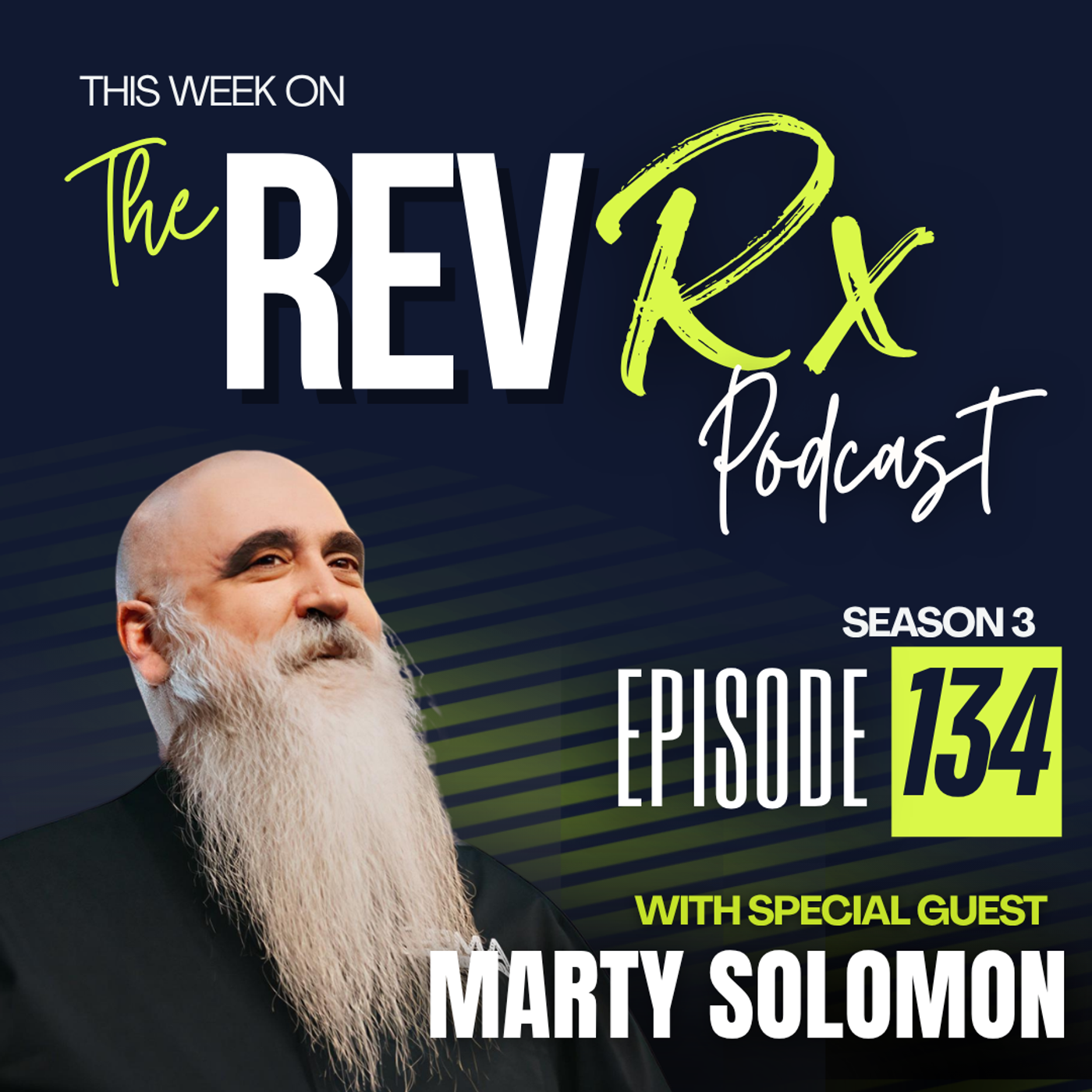
What if being human isn't the problem? What if it's actually part of God's plan? For many of us, Christianity has been presented as a story about how sinful and broken we are, how Jesus came to save us, and how one day we'll get to heaven. And while sin is real and salvation matters, is there more to the story? In this episode of The Rev Rx Podcast, I'm joined by Marty Solomon, host of the BEMA Podcast and co-author of The Gospel of Being Human, for a conversation about what it really means to be human. We explore why the story of humanity begins in Genesis 1, not Genesis 3, how Jesus shows us what it looks like to be fully human, and why following Christ isn't just about where we go when we die. It's about how we live right now. We also talk about how God sees us, the difference between our sinfulness and our identity, and what changes when we begin to see other people as beloved by God—even those we disagree with. In this conversation: Why our humanity isn't a mistake How our understanding of sin shapes our view of God What Jesus teaches us about being fully human Why eternal life matters in the here and now How God's love changes the way we see ourselves and others There's sin in us, no question. But there's far greater grace in Christ than there is sin in us. Connect with Marty: martysolomon.com Explore: The BEMA Podcast and The Gospel of Being Human Thanks for listening to The Rev Rx Podcast—conversations about what matters most. If you like this episode, please share it with a friend and leave us a review!
Chad Potts (Rev Rx): Hey friends, and welcome back to another episode of the RevRX podcast. I'm so glad you're here. And I'm excited to introduce to you our special guest today, Mr. Marty Solomon. Marty is he's the president of Campus Impact Ministries. He's the creator and host of the highly successful BEMA podcast, which I'm a big fan of. You guys should definitely listen. We're gonna talk about that today. but I just wanna say, brother, welcome to the show. I'm so glad you're here today. Marty Solomon: It is always fun to make new friends and I just love being able to be in situations like this. So thanks for having me. Chad Potts (Rev Rx): Yeah, absolutely. Man, I love the work you're doing, especially amongst young people. we need voices like yours helping us understand the Bible, helping us understand a world that was way different than ours today. And you're doing exactly that. but before we get to some of that, I'd love for you just to introduce yourself to our audience. Maybe someone here is meeting you for the first time. Help us to get to know who you are and a little bit about what God has called you to do. Marty Solomon: Yeah, my name is Marty Solomon. I grew up in Twin Falls, Idaho. I was in southern Idaho my whole life until about 2010. I got hired by Impact Campus Ministries. I moved to northern Idaho to start working at University of Idaho and Washington State University, on either side of the state border there. And that's where I got started with campus ministry. I did that for about five years. Then I started serving as the president of the organization. And that was required a lot of traveling. And we started kind of trying to figure out how we would reorder our lives based on needs. So I moved and relocated to Cincinnati, Ohio, in June of 2020. Been married for 22, almost 23 years this Chad Potts (Rev Rx): Congrats. Marty Solomon: January. Yes. I got two kids. I got a daughter who's about ready to turn 18. She's a senior in high school. I've got a sophomore son who is 16 years old. And yeah, we we have enjoyed this life that God has called us to. My work basically revolves around this experiment in campus ministry. We started with a Bible study that we were teaching on the college campus. And basically in two years, we would go through the whole Bible from Genesis to Revelation, a little bit of church history, trying to pull apart our typical assumptions and reconstruct a a a reading of the Bible that's historically informed, coming out of that original Jewish context. How can we let Jewish tradition and and wisdom kind of shape what we see the Bible doing? And and when I moved and when I took this new role, even before I moved, we just needed to shift the content online. We weren't trying to start a podcast chat. We were, we were using a podcast to talk to our students Chad Potts (Rev Rx): Yeah. Marty Solomon: and realized about two, two and a half years in, That they were a way we had an audience that was way bigger than we realized. Chad Potts (Rev Rx): Yes. Marty Solomon: We knew other people were listening to it, but not nearly to the scope that was happening. So ever since then we've been trying to steward this two hundred pound baby that God gave us. And and and that's what we've been up to. So really the podcast is that that two year program that we would take students through just in a podcast form. And then when we got to the end of that, we just kind of kept going, kept learning, kept growing. So we're ten seasons deep in the podcast and Trying to figure out how to steward that content with a team Chad Potts (Rev Rx): Yeah. Marty Solomon: of hosts and a team of teachers now. That's been fun. Chad Potts (Rev Rx): Well I love it. You guys do an excellent job. and one of the best I've seen, honestly. and so kudos to you for accidentally stumbling into podcasting. and you know what, it it's a medium, isn't it? It's a medium to to talk to other people about the Lord. and it's one that young people are tuning into more and more, it seems like. so hey, if that's how they're listening, let's let's continue the conversations. Marty Solomon: Absolutely. Chad Potts (Rev Rx): so tell us a little bit about Bama. before we get to the book, I'd love for you just to to talk a little bit about 'cause it it's the first five seasons, right? That's the core of of those couple years. can you can you tell somebody that may be interested or maybe potentially interested a little bit about what you get into with some of that Jewish context? Marty Solomon: Yeah, it is. First five seasons are the kind of the main body of work. the first season is all about Torah. So we're gonna spend 32 episodes just like walking through. We're gonna spend a lot of time at the beginning. We're trying to get used to at the beginning, trying to think episode zero is really an intro where we go over what is the difference between the S the Eastern set of assumptions and our western set of assumptions. They're different. And so going to the story with the right set of assumptions helps us. Hear the story like it was originally intended in that inspired context. So we spend a lot of time just okay, let's take this a story at a time, going, How is this heard in an Eastern context? How is Genesis one? How is it different? How is the story of Adam and Eve? And we just start to walk through there. Eventually we get to Abraham. We start picking things up a little bit. We do Leviticus all in one episode. We we spend some time wandering around the desert, just thinking about desert imagery. We do Deuteronomy in one episode. Then that kicks us over to season two. And and what we're doing throughout this journey is we're giving people just a little just a little bit of there's a little bit of overwhelming at the beginning. That's by design. evangelicals have been taught we know everything about everything. And so the podcast is designed to overwhelm you at the front, to make you feel like, man, do I know anything about the Bible? Because if that's not going to be a good or a fun or a a life-giving journey, we want to make sure that people know that. But along the way, we're just dripping tools. let's learn about literary devices and chiasms. Let's learn about Jewish midrash and tradition. And we're not giving it all at once. We're just step by step dropping little new tools, giving you more tools for your toolbox. So eventually we're going through the rest of the Hebrew scriptures and the in the history, the the prophets and the writings. we get to the the gospels in session three. We spend our time walking through Matthew verse by verse. We do all of Matthew. We spend a lot of time setting up the gospels before we do that. Then we go through the New Testament, some books verse by verse, some books not, but we go all the way from Acts through Revelation and season four. Season five is really short. I think we got eleven episodes on church history just to give us a sense of what the heck happened in between Revelation and me. and just to give, especially young people, a sense of how'd we get here. And that's the yeah, yeah. Chad Potts (Rev Rx): Well you guys bridged that gap well, yeah. and yeah, you're taking it from basically from the beginning of time to today. And Marty Solomon: Yeah. Yep. Chad Potts (Rev Rx): in five seasons. I love it. I'm two and a half seasons into this, or I guess about yeah, about two and a half seasons into this, and I'm I'm not touching quite that scope, but Marty Solomon: Yeah. Chad Potts (Rev Rx): but we need voices like yours. and and I love what you're doing. So thanks for leaning into that because you're giving Marty Solomon: Yep. Chad Potts (Rev Rx): us context is everything. I'm a big believer in that. And it and We read the Bible with Western eyes. And this is maybe a different conversation for a different day, but just before we pass by it, we read the Bible with Western eyes Marty Solomon: Yeah. Chad Potts (Rev Rx): and we miss so much of the story. Marty Solomon: Yeah. Chad Potts (Rev Rx): we miss so much of the richness that's there, the history and the context and the culture and all of that. And so you really you help it come alive. Marty Solomon: Yeah. Chad Potts (Rev Rx): And and and I wanna point all the listeners that are listening to this, check it out. it it's it's worth your while. So Marty Solomon: Yeah, well I appreciate that. Yep. Stop it at start at episode zero and start from the beginning so the journey works out the way it's supposed to. That's right. Absolutely. Absolutely. Chad Potts (Rev Rx): That's right. Benjamin, and then you can you can dive deep dive deep as you go back. Marty Solomon: Yep. Chad Potts (Rev Rx): Well, getting to your new book. and you've written, from my understanding, you've written two books now with a third to come. You you got kind of a trilogy in your mind. Marty Solomon: Yes. Yep. Chad Potts (Rev Rx): but I want to hone in on this second one because this it's a fascinating topic. it's actually I was just having a conversation about something to do with this a little bit earlier today. And I'm thinking, man, I've got this podcast coming up with Marty later on. Man, this is gonna be great. But the book is called The Gospel of Being Human. And that alone intrigues me. I'm like, ooh, what does that mean? but you r you co wrote it, I believe, with one of your one of your co hosts, is that right? Yep. Marty Solomon: Yep. Yep. Reed Dent's one of my good friends and co hosts on the podcast. Chad Potts (Rev Rx): Yeah, yeah. So can you can you tell us a little bit about the impetus behind this? I know it's kind of a part two from from your previous book. Marty Solomon: Yeah. Yeah. Chad Potts (Rev Rx): just kind of what you got what got you started into this thought process of the gospel of being human and what that looks like. Marty Solomon: Yeah, it was the next step along the way. and really it's a good book to focus on because the first book really is the podcast in a book. So everything I just introduced about the podcast is really everything in book form for those people that either haven't gone through the whole journey or aren't sure they want to. That's book one. What we discovered along the way is that you can learn all of the fun Jewish facts. You can learn about the Midrash and the chiasms and you can learn all these tidbits and and really never actually let it shape your theology. Chad Potts (Rev Rx): Choose. Marty Solomon: And I feel like one of the things we're we're notorious for is letting letting our theology shape the way we read the Bible, not letting the Bible shape the way we form theology. And I don't think it radically, radically, radically changes our theology. But if curiosity serves us well in how we read the Bible, curiosity also ought to serve us well in how we do theology. And so this book really took a look at not all of theology. That would have been too big of a task, but the part of theology that we think is important for our moment in history. Which is the theology of what it means to be human. And so we Chad Potts (Rev Rx): Yeah. Marty Solomon: wanted to like the premise of the book is essentially we have been told that being human is bad news. Like our humanity is about our sinfulness, our depravity, our rebellion, our brokenness, all of which is a part of the human experience. There's no doubt about that. Nobody's going to argue with that. And yet it is only a part of the human experience. And Chad Potts (Rev Rx): Hm. Yes. Marty Solomon: it's a part of this book sought to remind us that God Our humanity was God's original intention. it wasn't when we become the thing that God's wanting us to become, we're becoming more human, not less. Chad Potts (Rev Rx): Yeah. Marty Solomon: and and so the sinful part of our humanity is real, but it's only a part of a much larger part of what it means to be human. And Chad Potts (Rev Rx): Yeah. Marty Solomon: this book wanted to kind of tackle that that larger conversation and remind us of those other things. Chad Potts (Rev Rx): I love that. and you know, I come from a culture and a background from an evangelical perspective, that has traditionally really harped on that. Really harped on the idea that I'm terrible, I'm broken, I'm unworthy. You know, somehow God tolerates me because of what Jesus did. and and those things are true. You know, th there is some tension there, but that is true. We're not saying that's not the truth. We're not Marty Solomon: Yep. Yep. Chad Potts (Rev Rx): saying that we aren't sinful, we're not saying that's not a problem. But what what really resonates with me is when you say somet something along the lines of what if being human isn't the problem? What if being human isn't the point? can you elaborate on that a little bit and and maybe point us towards where we begin reading about the history of humanity matters? Marty Solomon: Yeah, yeah. I I love this idea of like we've been told that our humanity is a bug. Maybe it's the feature. maybe Chad Potts (Rev Rx): Yeah. Marty Solomon: it maybe it's actually the th it's it's not the problem. It's the it's the program. Chad Potts (Rev Rx): I like that. Marty Solomon: And and so there like we we were given at the very beginning of this. I think one part of your question was like, where do we where does this start? It starts at the very, very beginning because we were given a very particular and special role and relationship. In terms of who we are and how we relate to both God and the creation. there Chad Potts (Rev Rx): Mm-hmm. Marty Solomon: was something very we're just not another part of creation. We have a particular role in what it means to be the image of God, be the reflection of God, be a conduit of what God's doing in the world. We're supposed to be stewarding this larger thing, which what that means is there is a part of my humanity that that is everything I'm supposed to be. when when I like going back to that statement, when I become the thing that Jesus is making me to be, I'm becoming more human because his intention was for me to be fully to be fully human would be to be that that full thing that God wanted in the garden, to Chad Potts (Rev Rx): Yes. Marty Solomon: be that steward, to be that caretaker, to be that partner. The rabbis talk about God's partners in the work of creation. That's a rabbinical phrase. And and to think of the fact that God made creation. And was looking for partners. And so he made us as a part of that venture. And to try to get back to that place. And that goes back to the very, very beginning. I don't have to wait till Abraham. I don't wait till Sinai. I don't wait till some it's the very way that God made the cosmos at the beginning. Yeah. Chad Potts (Rev Rx): Mm-hmm. Yeah. Genesis one. you know, and I think a lot of times we begin our reading of human history at Genesis three in the fall. And, Marty Solomon: Yes. Yes. Chad Potts (Rev Rx): you know, we begin to think, well, you know, if we say things like I'm only, I'm only human, Marty Solomon: Yep. Chad Potts (Rev Rx): you know, as though that's some some lesser than Marty Solomon: Yes. Chad Potts (Rev Rx): part of our lives. but you know, yes, sin is part of the human condition. But what we're essentially saying here, it correct me if I'm wrong, is that sin is not the most fundamental truth about who we are. Marty Solomon: Yes. Yes. Chad Potts (Rev Rx): Is that a fair statement? Okay. Marty Solomon: Not the most fundamental truth of who we are and not what the actual larger story is about. one Chad Potts (Rev Rx): That's right. That's right. Marty Solomon: of the things I've been saying on book tour is sin enters the story of God late and leaves the story of God early. Like it At the very beginning of the story, there's no sin. At the very, very end of the story, there's no sin. Which that means is that sin has a beginning and an end. It's the intruder on a larger story of eternity, of the kingdom of God, of shalom, of righteousness and justice. God's doing this bigger thing and sin intrudes on it. God's doing this beautiful whole thing and sin distorts it. So when we start the story late, we're really doing a disservice to what that larger, bigger story. Around it is. And like you said, it's important to remember that the sin, I had a Bible teacher that said, if you take sin out of the story, you have a pamphlet, which is a great point. But those those beginning and ending pages really do remind us of where this began and where this is headed. And Chad Potts (Rev Rx): You must. Marty Solomon: and sin is only a part of a much larger, beautiful thing that God's doing. Chad Potts (Rev Rx): Yeah. So then how does that affect the timeline of the here and now? so we realize that we're fallen sinful creatures. we realize that we're in need of a savior. We also realize that one day we will be in eternity where there is no sin, if if we you know, if if if we believe in Christ, because of his work on the cross, we will be there. again, going back to the way maybe I was raised, it's very much your bad. Jesus is good. Jesus died for you, which is, you know, praise the Lord. and you're going to heaven when you die. And there's not a lot in that theology about the here and now. So how does how does embracing this idea of Jesus called us to more, how does that affect the here and now, not just one day when I die? Marty Solomon: Yes. I I think of three things. The first thing I think of is how how we start the story, which we've kind of already talked about. Is it about what I'm not or what I am? Is the story about well er everything I'm not? I'm a sinner. I'm not holy. I'm not I'm not complete. I'm or is about what I am. I am made in the image of God. I am supposed to play this role in creation. Number two, it becomes about whether or not like what is the problem? Is the problem my sin? That I'm getting saved from? Or is the problem a restoration of shalom? is the problem, am I trying to fix a a default in me? Or is that a part of a larger thing that God's trying to put like there's a restoration project or there's an escape project? Which brings me to the third and probably the most important and relevant to your question, which is if I do the first two wrong, if I do the first two, if I answer the first two questions the wrong way, then this becomes a whole Spiritual escapism, disembodied Chad Potts (Rev Rx): Yes. Marty Solomon: evacuation. Some glad morning when this life is o'er, I'll get out of here. What happens when I die? Everything now is just a waste of time and a waiting, waiting pattern to get out of here to get somewhere else. But if the story, if we if we hold the story maybe a more biblically complete way, then this is not about spiritual escapism, it's about physical participation. there's a restoration project going on here. God's restoring this world. It's not about life after death. It becomes about life before death. And there will be life after death. That's a beautiful thing. But the Bible doesn't actually spend a whole bunch of time talking to us about it. Chad Potts (Rev Rx): Yeah. Mm-hmm. Marty Solomon: It really doesn't, because what the Bible's trying to get us to do, if if there is this eternity that we believe that there is, the Bible's trying to get us to get ready for it now. One of the things that I always have found interesting is we all have this assumption that when I die. God's going to flip some magical switch. And now I'm going to love what I spent my whole life hating. Like we're going to be in heaven with unadulterated generosity. But if I didn't love generosity now, why is that all of a sudden going to be heaven later? It's like Jesus is inviting us in all of his parables. Live heaven now Chad Potts (Rev Rx): Yeah. Right. Marty Solomon: so that when heaven is the only thing that's here, it actually feels like good news. It actually feels like a party. It actually feels like the banquet because that's going to go on for all of eternity. So if you don't like it, that will be really, really bad news. so live that way now. So it has this all of this present urgency of don't waste a single moment today so that we can maximize whatever God's gonna do for all of eternity. Chad Potts (Rev Rx): Yeah. I love the idea and the concept of preparing our hearts now for eternity. you know, I I mentioned to you I pastor young adults and sometimes I'll see sitting around and you know not at our church, of course, but in theoretical churches. Marty Solomon: Yes. Chad Potts (Rev Rx): I want to call anybody out, but you know, sitting around kind of, you know, stone faced their worship and stuff. And I'm like, Man, if you don't like worshiping Jesus here, you're gonna be awfully bored in eternity. You know, why that's right, that's right. Marty Solomon: Yeah. Yeah. It's gonna be the lamest party ever. Chad Potts (Rev Rx): And so, you know, when it becomes about About eternity. Eternal life is not just one day. Later, future, eternal life starts now. Marty Solomon: Yep. Yeah. Yeah. Chad Potts (Rev Rx): and I think that's kind of the heart behind when Jesus was at was was teaching his disciples to pray, the whole concept of thy kingdom come, thy will be done on earth as it is in heaven, Marty Solomon: Yeah. Chad Potts (Rev Rx): is kind of bringing that kingdom, and that's you know, Jesus talks about kingdom a ton, bringing that kingdom to earth and kind of bringing heaven down. Is that is that kind Marty Solomon: Yep. Yep. Yep. Chad Potts (Rev Rx): of a is that is that a reasonable stance on that? Marty Solomon: Yeah, absolutely. I think the tone that you've that you get everywhere from Jesus to the apostles, everything through this New Testament community keeps trying keeps trying to insist that heaven is like breaking forth in the that that world keeps breaking forth in the midst of this world. There's this constant reaffirmation of the goodness of this world that God's trying to redeem, because heaven keeps showing up and breaking out in the middle of everything else. That's so wrong and so broken. The goodness the w how is it that John says that the light has shown in the darkness and the darkness has not, cannot, will not overcome it. Chad Potts (Rev Rx): Yeah, Marty Solomon: and that's part of the message that I think we see played out. Chad Potts (Rev Rx): And and thinking about our role in that as well. Marty Solomon: Yes. Chad Potts (Rev Rx): bringing bringing little bursts of heaven, to this earth, man. That's that's what it's about. Marty Solomon: Yeah. Yeah. John's gospel will end by circling back around to that point when when essentially there's this, there's another woman in a garden meeting Jesus. It's all it's almost like we're start it's there's a new creation bursting forth in the midst of this one. Chad Potts (Rev Rx): Mm. Yeah. Yeah. Marty Solomon: and John says, All right, now we've learned about it. Now he's come and gone. Now we're given the spirit. Let's go. So yeah. Chad Potts (Rev Rx): Yeah, yeah. We continue it. so thinking of Jesus, we'd we'd mentioned him a couple of times. it's not lost on us, is it, that Jesus became human. Marty Solomon: Yeah. Chad Potts (Rev Rx): So thinking about what it looks like to to live in our full humanity, keeping in mind that the word became flesh. Marty Solomon: Yes. Chad Potts (Rev Rx): he dwelt among us. And keeping in mind too that Jesus was fully God, yes. And you know, he of course he shows us what God is like if you want to see God the Father. Look at look at Christ, look at God the Son. Marty Solomon: Yeah. Chad Potts (Rev Rx): but then he he also didn't he come to show us what it looks like to be fully human. Marty Solomon: Absolutely. Chad Potts (Rev Rx): N. T. Wright, I believe, uses the phrase truly human. Marty Solomon: Yes. Chad Potts (Rev Rx): C. S. Lewis uses the phrase about like what all men were intended to be, something along Marty Solomon: Yes. Chad Potts (Rev Rx): those lines. can you help us think about that in in the humanity of Christ and how that helps us? Marty Solomon: Yeah. If Jesus is fully God and fully man, fully human, then then he's helping us see and understand what humanity looks like when it's done well. And if you if people listen to my podcast a lot, they know that I I just hate the idea of goggogles where Jesus is wandering around and he does things and he knows things because he's God. And the reason I get so cranked up about that is because of this very question you're asking. Because Jesus' humanity is what makes him unbelievably relevant. We're supposed to be drawn to him as our model and our example. A lot of scholars will point to the fact that when you see the free the phrase faith in Christ in the New Testament, they'll say, most of the time, you really can't translate that faith in the Greek doesn't have the conjunction. So we don't know if it's faith in Christ. That only makes sense in like a creedal. Christian context, which won't exist for. So what are they saying? Well, one of the ways you could translate it is the faith of, the faithfulness of Jesus, which if I read it that way and I'm invited to have the faith of Jesus, well, what I'm being invited to do is be human like he was human, trust the story like he trusted the story. Be the like people love to talk about his miracles as his divine attributes. But lots of people in the story did miracles. Elijah did miracles, Elisha miracles. That doesn't Make them God. Jesus was trying to show us what faith can do when it shows up in the human experience. And so everything about Jesus is this model and this example for us to go, that that is what it looks like to be fully, perfectly, completely, everything we want to be human. He's our, yes, he never stopped being God, but he he he he didn't consider equality with God something to be held on to. Instead, he took on the form of our humanity, became a servant and obedient to death, just to show us what faith in the human experience looks like. Chad Potts (Rev Rx): Hm. And I love that because there is a real tension there between him as God and him as him him as a as a human. can you help us think through that a little bit too as far as all right, he did do miracles. So did other people. Okay. Marty Solomon: Yep. Yep. Chad Potts (Rev Rx): That's not what got him crucified. Marty Solomon: Right. Chad Potts (Rev Rx): it was you know, if you read on and it it's the blasphemy, right? It's the him saying he can forgive sins and you know, some people say he Jesus never said he was God. Well, yeah. To me that seems to that seems to kinda take care of itself. what are your thoughts on that issue and kind of how does that help help us see the whole big picture there? Marty Solomon: Yeah. Yeah, he definitely comes and he confronts a lot of I don't know, theological certainty. He confronts a Chad Potts (Rev Rx): Yeah. Marty Solomon: lot of self-righteousness. Chad Potts (Rev Rx): Yeah. Marty Solomon: What one of the things that I always point out to my students is even when he's being accused of blasphemy in a Pharisaic context, he spends three years with the Pharisees. There are at least two times that they try to save his life. They try to come and say, Herod's trying to kill you. Chad Potts (Rev Rx): Mm-hmm. Marty Solomon: So we always think that the Pharisees and he spends one week confronting rel corrupt religious power in the context of imperial power. I don't think the imperial power of Rome really gives one. we watch Pilate, he's like, I really care about this guy. This guy's not a threat Chad Potts (Rev Rx): Yeah. Marty Solomon: to me. they have their imperial agendas that end up getting, helping in this crucifixion. But what really gets him he spends he spends one week confronting, straightly confronting religious corruption. And it's not Judaism. It's religious corruption that he confronts. and and that's what ends up getting him crucified. And and I think there is some lesson of association of what are the dangers of what are the dangers of religious self-righteousness, Chad Potts (Rev Rx): Yeah. Marty Solomon: of religious when we mix our religious faith with the wrong kinds of power or whatever those things, or what is the danger of ideologies. that that can really get us in a place where, man, we are we are squarely anti Christ. And I think that's Chad Potts (Rev Rx): Yeah. And we've Marty Solomon: part of it. Chad Potts (Rev Rx): there's been a weaponization of of theology and you know across the ages as well. And I think we have to be careful there. Marty Solomon: baby. Yeah. Chad Potts (Rev Rx): and you know, thinking about Jesus being fully God, you know, how d how does that how does that help us as humans to realize that, okay, we serve a God who knows what it's like to walk on this earth and be like us. What what does that do in in our lives as we experience the the the limitations, the the the rest and the work cycle and all the things. How how does it help us to know that God walked this earth too? Marty Solomon: Yeah, that that whole lesson out of Hebrews that that through Jesus God knows what it is to suffer, that there's no suffering, no pain, which he's not talking in some transactional. Obviously, there are some pains that he never experienced, but the idea of ultimate human suffering, anguish, injustice, like that he experienced that that there's some movement of God that is a movement of solidarity. there's there's often this wrestling match we do of like, why doesn't God, if God's all powerful and all that stuff, why doesn't God and yet there's something about this where God says, I'm in this with you. We're putting this whole thing together. And the one thing I'm gonna do is I'm not going to I've created this world with all kinds of potential. At times it's been taken one direction, at times another. We need to figure out how to put this back together. And as we figure it out, I'm never going to leave your side. It's that Abraham walking up the mountain with Isaac, believing, Hebrews tells us, great book for your question, the book of Hebrews. Chad Potts (Rev Rx): Yeah, it is. Marty Solomon: But Abraham believing that somehow on the other side of this, he has his son. He knows what God's asked him to do. But somehow, when all is said and done, his son will be with him on the other side of the story. And it's and he refuses. The Jews will point out that phrase hanae. At the beginning, God says, Abraham, Abraham, Hanaini, here I am. And at the end of the story, the angel calls out Abraham, Abraham, he says, Hanaini, here I am. Right in the middle of that story, usually it's not translated in your English Bible, but Isaac talks to his father and he says, Hey, Dad, where's the sacrifice? And when he says, Hey, dad, Abraham responds in the Hebrew with that same hanaini. Abraham Chad Potts (Rev Rx): Mm. Marty Solomon: is just as present to his son as is. To God. And I think we see in that the character of God that says, I am as committed to the shalom justice project as anything. I am equally committed to you. So as we work towards this, I am not going to stand at a distance. I'm going to jump into the chaos. I am going to get into the mess. I'm going to be born into an animal shelter. I'm going to die on a cross. I'm going to experience betrayal. I'm not gonna get out of pain. I'm gonna go through this pain with you because I know that's what you go through. And Chad Potts (Rev Rx): Yeah. Marty Solomon: I don't know what all the depths are of that good news, but there's something about God's solidarity that is pretty, pretty, pretty telling. Chad Potts (Rev Rx): Yeah, yeah. His spirit with us does make all the difference. Marty Solomon: Yeah. Chad Potts (Rev Rx): and and knowing that we pray to one who is who understands. Marty Solomon: Yes. Chad Potts (Rev Rx): who understands. solidarity is important. Now, on this topic of sin, I'm I'm switching gears just a little bit, but sin is part of the human condition. We're not minimizing that. but sin sometimes if that's all we focus on when we think about our humanity. I've heard you say before, this might have been on a different podcast, but you s you've said before that y if your if your children only knew you as the sin in your life, that that would be very disturbing. Can we talk about that a little bit? about maybe what the what the consequences are of of only thinking of our humanity as sinful. Marty Solomon: Yeah, yeah, or the other way around. if I only if I only thought of my kids in terms Chad Potts (Rev Rx): Or the other way around. Right. That's right. Marty Solomon: of when we think about how God sees us, we use there's a lot of theology where we talk about when God sees us, he unless Jesus stands in the in the way, all God sees is our sinfulness. He's driven to wrath because he can't be with us. All he can see is and yet if we believe in God, if the if the father metaphor is a beautiful metaphor used in scripture as much as anything else. Then I have to think about what it's like for me to think when I think of my when I I know about my kids' failures. I know about their weaknesses, I know about their shortcomings. I know that they've screwed up in big ways. I know that they have sinned. both against God, they've also sinned against me. They've done things, obviously. That's part of my kids' story. I know that I never look at them and think, you sinner. Chad Potts (Rev Rx): Yeah. Marty Solomon: It's true about them, and there are consequences to all their actions and things that we have to do and And but it never changes how I see them, what I see when I look at them. I see their circumstances. That sucks when they get stuck in a spot where their choices have brought them to some horrible situation. But but golly, I all I all I see is kids that I love. All I see is kids that I care about. If that's true about me, how much more is that true? course God's seen every single decision. Every he searches the heart and examines the mind. He knows not only the things I've done, but the motives and the selfishness that causes me to do them. But he still sees everything that he loves about me. And that belovedness is something I was on book tour and I was going through Oklahoma and they asked me to stop by the there's a prison ministry that asked me to stop by the penitentiary on my way through. So I got a chance to spend the day with these These guys that had made some horrible decisions, very, very destructive decisions that had ruined lives, taken lives. And as I as I hung out with them for the day, it became glaringly obvious that yes, there are consequences. Most of these guys will not be getting out. They will be there for life. because there are consequences to very destructive decisions that they've made. However, there was nothing different about their value or their dignity as a human being than me. There there were consequences for their decisions. Th there's destructive tendencies that have to be accounted for. But their value and their worth, their dignity and their belovedness was zero, absolutely no different. Every single one of those guys was just as loved by God, just as valued, just as much human dignity as I had. And Chad Potts (Rev Rx): Yeah. Marty Solomon: that's something that we need to remember first about ourselves. But then that starts to trickle out to well, if that's true about me, that's true about the people I care about. It's true about well gosh, it's even true about my enemies. And we talk about that in the book as well. So Chad Potts (Rev Rx): Yeah, that and that's so that's such a helpful metaphor to me, a as a father. because I'm an imperfect father. And Marty Solomon: Yeah. Yeah. Yep. Chad Potts (Rev Rx): again, like hopefully my kids look at me, they're not like, man, what a sinnered father he is. Marty Solomon: Yeah, right. Chad Potts (Rev Rx): so the so it works both ways. But even in that, like I I I mean, I might joke around with them, you knuckleheads, you know. But but I love them. Like Marty Solomon: Yeah, yeah, yeah. Chad Potts (Rev Rx): the the most fundamental part about them is that they're my children and I love them. Marty Solomon: Yeah. Yeah. Chad Potts (Rev Rx): I I you know, I made them and they're part of me. And with with the theology you mentioned, started with, you know, God can't be with us, God can't see us except through Christ and that kind of thing. I'm like, where does the prodigal son fit in that? That's not the same story, I don't think. and so I I like the curiosity with which you approach things. because I feel like maybe that was one of the Pharisees' issues, is that they weren't nearly as curious as they should have been. Marty Solomon: Sure. Sure. Chad Potts (Rev Rx): and so you're you're not afraid to say, let's ask questions about this, because Marty Solomon: Yeah. Chad Potts (Rev Rx): I think that leads us more towards the truth than being so dogmatic about something that we can't possibly think through it. Marty Solomon: Yep. Yep. Chad Potts (Rev Rx): and so, thinking through the tension that we're talking about. On one side, Christianity can become concerned with shame and human depravity to the nth degree. Marty Solomon: Yeah. Chad Potts (Rev Rx): and there is a real concept of understanding and being pure in heart. You know, I bring nothing to my salvation except the sin that makes it necessary. Like I get that. Marty Solomon: Yeah, sure. Chad Potts (Rev Rx): but on the other side, there is a world out there that tells us you're perfect how you are. Just follow your heart. Marty Solomon: Yeah. Yeah. Chad Potts (Rev Rx): And I think this approach is more the truth behind both of those. Marty Solomon: Yeah. Chad Potts (Rev Rx): the middle ground, if you will, Marty Solomon: Yeah. Chad Potts (Rev Rx): which is, you know, really and truly sin, yeah, that's the problem. Marty Solomon: Yeah. Chad Potts (Rev Rx): It it it cost Jesus his life. That's why he came. Marty Solomon: Yeah. Yeah. Chad Potts (Rev Rx): But that's not the most fundamental thing about you. You are beloved. Marty Solomon: Yeah. Chad Potts (Rev Rx): You are beloved. So so let me as we as we wrap up a little bit, let me ask you this. If we see others as beloved, as the most fundamental thing about them, and yeah, they've sinned and yeah, there's consequences, and yeah, we're in a mess, how does that change the way that I begin to see other people and treat other people? You alluded to it a minute ago, but Let's go a little deeper there, if you don't mind, as we wrap up. Marty Solomon: Yeah. I yeah, if God well, there's gonna be so many things that mirror who God is and how God shows up in the story, which is what's so beautiful about the incarnation of Jesus coming and and doing this going back to our earlier part of the conversation. Because if God if God saw our sinfulness, which is really, I mean, that's about as as other. Like if God is one thing, we are we are the most other of God. Chad Potts (Rev Rx): Right. Opposite. Marty Solomon: God, we are the most, yeah, the most opposite, that's about as opposite of God as we can be. And if God's movement in in the face of that opposition was to draw close in solidarity, then when I see people that I think are outside other, and again, I'm we're speaking, there's going to be all kinds of caveats to this about, you know, boundaries and safety. And yes, some people are destructive, and we're not denying accountability and all kinds of things like that. But generally in poetic theological statement posture stuff, I my movement should mirror that of God. I should, I should make a move of solidarity, because they're they're less other, they're less opposite of me than I am of God. Chad Potts (Rev Rx): That's right. Marty Solomon: And God was drawn to a movement of solidarity. So I too can be drawn to a movement of, well, they have the same shared humanity that that I have. Well, I know what it is to struggle. I know what that's what makes the gospel such good news. I know what it is to be beloved. I can I can either tell them of that for the first time, I can remind them of that if they've forgotten that it's true, I can whatever. But this thing that we're doing together is a shared human experience of how big the love of God is. Like I love that passage in Romans. If sin entered the world through Adam, well, how much more? Grace through Jesus. yeah, our sin is a our sin is a big deal, full stop, period. It hurts things, it breaks things, it separates us from God. It it it's why Jesus dies. And yet that death of Jesus, that love of Christ, that love of God is so much more. That's how big the love of God is. It's not Chad Potts (Rev Rx): Yeah. Marty Solomon: even like equal if well, which one's gonna win out? Paul's like, no, how much more? Chad Potts (Rev Rx): Yeah. Marty Solomon: If our sin is that crazy, man, the grace of God, the love of God, the the good news of God's love for us has which that's where Paul's gonna head in three more chapters. He's gonna say nothing can separate us from this love, not height nor death, angels nor demons. we're more than conquerors, like this whole message. And so these enemies of mine, I'm trying to draw them, I'm trying to draw myself toward them. I'm trying to draw them toward myself because we are this human experience together. Where we get to remind ourselves of our belovedness before God and be the thing that God's asked us to be together. Chad Potts (Rev Rx): Yeah. What a great way to think through one of the deeper theological concepts Marty Solomon: Yeah. Chad Potts (Rev Rx): that there that there is out there. and brother, you're helping us. let me a couple things. number one is you know, I I feel like that there's, you know, as as we approach this, I feel like this is really giving our theology feat, if you will. how we read the Bible should shape how we live our lives. And I think you've painted that well for us. and you're doing you're doing that today by showing us how we how we view our humanity, what it looks like to be a human being, can play Marty Solomon: Yeah. Chad Potts (Rev Rx): out in our everyday interactions with other people. Marty Solomon: Yeah. Chad Potts (Rev Rx): absolutely love that. And then essentially what we're saying here is this yes, there is sin in us, no dispute, but there is far greater grace in Christ than there is sin in us. And let us not forget it. Marty Solomon: Yeah. Yeah. Yeah. Chad Potts (Rev Rx): The gospel is not God's plan to make us less human. It is God's work of restoring us to the kind of humans he created us to be. Marty Solomon: Mm. Chad Potts (Rev Rx): And I think as we pull that together, I think we say a hearty amen to that. Marty Solomon: Amen. Chad Potts (Rev Rx): Marty, brother, you were a blessing. you were a treat. I this has been one of my favorite episodes, to be honest with you. Marty Solomon: Yeah. Chad Potts (Rev Rx): I appreciate you being here. Can you tell our listeners how to find out more about you, the Bama podcast, and everything else you've got going on? Marty Solomon: Yeah, you can find everything that I do over at martysolomon.com. You can find the podcast, YouTube, books, other interviews like this that I've done, where I'm gonna be for the next few months, Israel tours, all the things you might wanna find. Everything's at Martysolomon.com. Go find me over there. Chad Potts (Rev Rx): Awesome. I'll put the links in the show notes. But Marty bless you, brother. Thanks for being here and can't wait to talk to you again soon. Marty Solomon: Absolutely. Thanks, Cheb.
More The Rev Rx Podcast | Conversations On What Matters Most episodes →