
The Rev Rx Podcast | Conversations On What Matters Most · Rev. Chad Potts, PharmD
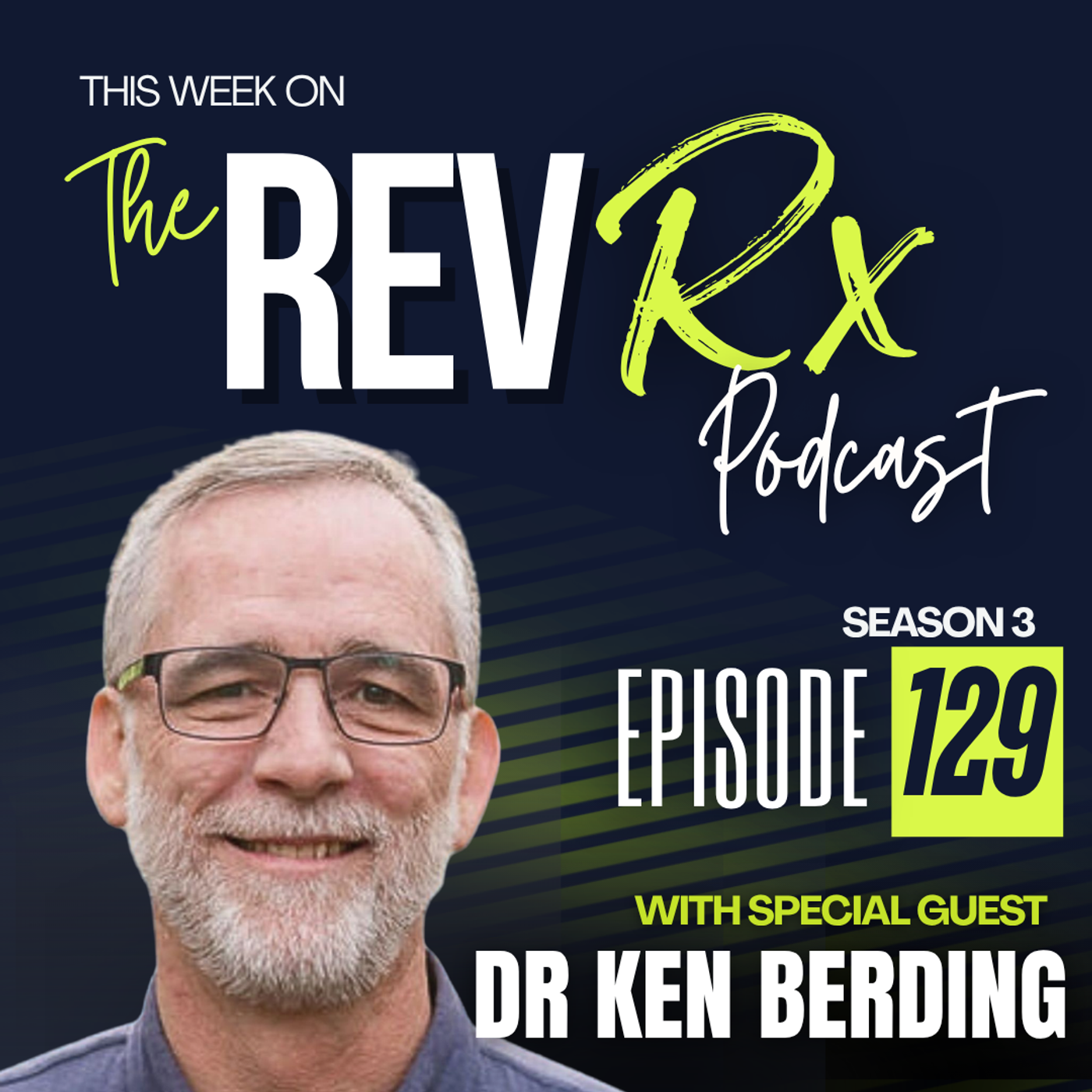
We have more access to the Bible than any generation in history. Multiple translations. Bible apps. Audio Bibles. Search tools. A Bible in our pocket everywhere we go. But has greater access actually helped us know God’s Word? In this episode of the Rev Rx Podcast, Chad sits down with Dr. Ken Berding, New Testament professor at Talbot School of Theology and author of The Bible by Heart, to talk about the increasingly forgotten practice of Scripture memorization. Dr. Berding explains why memorizing Scripture is about far more than being able to recite Bible verses. It’s about allowing God’s Word to shape the way we think, pray, endure suffering, encourage others, and understand the rest of Scripture. They discuss: • Why having a Bible on your phone isn’t the same as having God’s Word in your heart • Why memorizing entire passages can be more powerful than isolated verses • What the Bible itself teaches us about memorization • How singing, listening, reading aloud, rhythm, writing, and repetition can help Scripture stick • Why the Psalms are a great place to begin • Dr. Berding’s simple 50–25 approach to memorizing a passage • What to do if you think you’re terrible at memorization • How Scripture memory helps us remain grounded when suffering comes • Free Bible Fluency resources for understanding the big story of Scripture You don’t have to memorize an entire book of the Bible tomorrow. Start small. Open Psalm 23. Read it aloud. Read it again. And begin putting God’s Word somewhere a phone can never replace—your heart. To connect with Dr Berding: - Check out the website: https://kennethberding.com/ - Get the book: https://a.co/d/0c04EQjs ---------------------------------- WANT TO GO DEEPER? If you're a man who wants to go beyond just listening and start growing alongside other Christian men, check out The Rev Rx Collective. For just $5/month (or choose the annual plan to get 2 months free), you'll get access to private Rev Rx Online Bible Studies, exclusive conversations and Q&A's, early access select episodes, practical resources, and a community of men who want to grow in their faith. Come grow with us inside The Rev Rx Collective! Check it out here: https://revrx.circle.so/revrxcollectivehome
Chad Potts: Hello, friends, and welcome back to another episode of the Rev RX Podcast. I'm so glad you're here listening to us today, and I'm so glad to have with me special guest, Dr. Ken Birding. Dr. Birding, welcome to the show. Ken Berding: Thanks, so glad to be with you today. Chad Potts: Yes, sir. I shared with you, I'm going to have a section of my bookshelf devoted to your works because the more I find out about the books you've written, the more I'm like, ooh, I've got to have that one too. but you Ken Berding: Thanks so much. Chad Potts: have a unique perspective. you really have a needed voice within the Christian realm and the Christian worldview today. And so we're gonna get into a specific topic about one of your books. But before we do that, I'd love it. If you could just introduce yourself to our audience, help us to get to to get to know you. just a little bit more. Ken Berding: Great. Thanks. I am married to Trudy. We're celebrating forty years of marriage this summer. I have Chad Potts: Congress. Ken Berding: four daughters, like Philip in the Bible. He's one of my heroes. Chad Potts: Yeah. Ken Berding: They're all cool, cool prophetesses they say. And I now have seven grandkids too, one that was just born five days ago. lived overseas for seven and a half years in the Middle East and have been teaching at Biola University. Yeah, Talbot School of Theology in the New Testament department for the past twenty four years. I'm also an elder at my church, Redemption Hill Church. and so really love the church as well. Chad Potts: Incredible. over in sunny California. yeah. Ken Berding: Well, it's a really nice day here today. I hope it's nice there too. Chad Potts: It's it is. It's a nice day in in humid Georgia, but but good to come to you from across the across the states. your impact is is incredible within my life. And so I appreciate some of the things, some of the works you've done. Some of your most fascinating works to me are The Thorn in the Flesh, work working in Paul. some of the work with the early church fathers. you actually have a new book coming out. and I'd mention to you, maybe we can do a round two and discuss it on suffering. but today I would love to discuss with you your book on memorizing scripture. I shared with you that that's kind of near and dear to my heart. and and you know, memorization of scripture, you the word tells us hide the word in your heart. and you know, to me that seems like a command. Ken Berding: That's right. Chad Potts: And something that we ought to take seriously. Not that I have perfected the art by any stretch, but I I I I do I do think it's something that's a fascinating topic for us to bring to our listeners today. and I'm just interested, what was it that drew you to write a book on memorizing scripture? Of course, we're gonna put links in the show notes and all of that to make sure everybody has links to your specific work. But where did this first come from? Of course, we know as Christians. that the word of God is important, but but where did memorization come from and and kind of what led you there? Ken Berding: Well, memorization for me started when I was a high schooler. I had a friend, he came to me one day and said he was memorizing Philippians. I was like, the whole book of Philippians? And he's like, Yeah. And I'm like, I'd like to do that, but I couldn't do Philippians since he had already claimed it. So I decided to try Second Timothy and I just started working really hard on it and learned Second Timothy, and it was really impacting because I I had this. scripture going through my head all the time. And then decided to try Philippians after that because you know he couldn't claim it forever forever. And and that just started a process of memorizing scripture that has been in incredibly impacting in my life. It's just different to have the word of God in your mind, not just like general principles. I often talk to people who say, you know, I, you know, I I don't know it in my head, but I kind of know it you know, principles about it. And actually I I'd like to push back against that a little bit because the very word of God which was inspired to us is not a set of principles. It's actually God's word. And Chad Potts: Mm-hmm. Ken Berding: there's something different when you hear it in God's voice too, the way that He actually put it down. So that started a journey for me. And I just kept memorizing scripture. But I will say there was about there was a significant period in my life where I wasn't memorizing at all. maybe a decade or something like that. And as I look back with, you know, great sadness that I didn't memorize during that decade, I I realized the reason for it was I didn't know anybody else who was memorizing scripture at that moment. Now, there probably were people around me. I just didn't know who they were. And and I just felt so alone in it. And it's like nobody values it. And so, you know, I don't need to do it. So I stopped doing it. At one point it just was like, well, this is stupid, Ken. You just need to Start in again. So then I started in again. And then I realized, you know, throughout scripture, there's a there's a lot of of hints even about how to memorize scripture. And that got me on a journey of just thinking about, okay, well, how come they knew so much scripture? And we don't know very much today. I mean, they knew vast amounts compared to what like really what we would consider mature Christians even know today. and so I was just curious about No, how did they learn so much? And that just got me into the the question of are there any sort of methods, anything in scripture that shows us what they were doing? And that's where this book, The Bible by Heart, the Bible's own method for scripture memory came out of. Chad Potts: Yeah, love that. and what an incredible story of, you know, you did it for a while, extremely impactful. And then sometimes things just fall off in our life, don't they? and and it's not Ken Berding: Yeah, they do. Chad Potts: because sometimes it's not even a cognitive choice. sometimes just the busyness of life causes things to fall away. And you know, I that's happened in my life. that's happened in a lot of the young adults I pastor as well. You know, they'd be telling Man, I'm on a roll with my scripture reading and my you know, maybe even memorization and my prayer time and my quiet time. and then something sneaks in. And it's not like I said I'm not going to do this anymore. although maybe in your case there was a little bit of that. But, you know, a lot of times the enemy, you know, if he if he can't make us bad, he'll make us busy. you know, the you've heard the quote. and and I think a lot of times that's true. And some of those habits, those holy habits that are so important in our formation, become sacrificed over time. but you got back to it. And then you begin to look at some methods. And then the Bible begins speaking to you in a new way. And I've I've realized that too. Ken Berding: Okay. Chad Potts: as I've as I've learned to as I've learned to study and learn about particularly rat the rabbi setting within the New Testament context of of you know of Jesus' day and and learning about How much scripture that the average Jewish male would have memorized by certain ages? that's be that's become convicting to me over time because I'm thinking, you know, if this was important to them, why is this not important to us? You know, and and I grew up in the, you know, I had Iwanas when I grew up through throughout church and some denominations have like Bible quizzing, things like that. We talked about it offline. There are some programs in place, but by and large it seems like memorization isn't a priority to the everyday believer. one of the things we'd mentioned is that no no generation up to this point has ever been able to carry around a device like this, cell phones, et cetera, and have multiple translations of the Bible at their fingertips. But one of the things that I've noticed is that that hasn't necessarily translated, no pun intended, translated into more biblical literacy. at least within my sphere of influence, although there seems to be perhaps this undercurrent we talked about of of of the analog coming back. But what's been your experience in biblical literacy and then this generation where we have more access to the Bible? but is that really translating into you know into more people reading it and more people understanding it and more people memorizing it? Ken Berding: Hmm. Yeah. So I do think that there is a small undercurrent of of people who are more interested in actually knowing scripture. I know, I know maybe a dozen people who have scripture memory partners. I know a small group on Biola's campus where I teach, where they get together and just do scripture memory together. It's like a club, an informal club. Having said that, in general, we're really not in a good place at all. I describe it in my book, Bible Revival, Recommitting Ourselves One Book, as a as a famine of learning the Word of God from from the book of Amos. I use an analogy there is a woman named Stir Stacy Irvine and she she ate nothing but chicken nuggets like that's all she ever ate she was a teenager And she would occasionally eat a few fries with it. And one day, like her throat swelled up and they had to rush her to the hospital and they had to, you know, like force open her airways because she never ate, you know, vegetables or anything else like that. So she had everything available to her, but you know, she didn't eat it. And that's the same way it is with us today. We have more available, and I love the availability. I think it's fantastic. But it's so much that we don't even feel we need it. Remember just outside of my office, a student one time he goes, Well, why do I need to memorize? He did he literally pulled out his phone, he says, I've got it right here. But you know what he doesn't get, Chad? He doesn't get like last night before I went to sleep, I quoted a chapter of scripture to my wife before we went to bed. She loves going to sleep with me quoting scripture to her. Doesn't get that in the middle of the night I can wake up and when I'm having trouble sleeping, I can quote through scripture and I can think about it and I can meditate on it. And the Bible talks about meditation all the time. And he can't do that actually. Not really. There is a type of meditation he can do, but he can't really do what the Bible is envisioning when it talks about meditation, unless you memorize it. Because meditation presupposes memorization in the scripture. Chad Potts: Well, and I can't tell you how many times in talking with other people, whether it be talking in a pastoral role, helping someone through some grief or or suffering that they're going through, just a tough time, or you know, talking to someone who's maybe interested in becoming a Christian, where specific verses come to mind. you know, and and and it's n it's just not as effective, can I say it that way? It's just not as effective to say the Bible says something like this. Ken Berding: Exactly. Chad Potts: Compared to, here's what the word of God says. and being able to know who wrote it, being able to know the context behind it, you know, all of that plays into it. but that was one of my questions to you was why memorize scripture? you know, Ken Berding: Hm, that's right. Chad Potts: what are some of the benefits that you have maybe seen in your life? and you mentioned about some, you know, vaguely a couple things, but you know, you you've had moments where, you know, you've lived overseas in the Middle East and you've had different situations come up I'm sure, but can you tell us a couple of stories about how memorizing scripture has has really been effective in your life? and and you kind of sense that as a calling for most of us as Christians and not just for the super Christians or those that want to take it to the next level. Ken Berding: Right. I mean there are there are some of the things like you were talking about when you're sharing with somebody, just having scripture there ready. I would agree with that. But I don't think that that's the the biggest payoff from having scripture memorized. I think it's the transformation that takes place in a person's heart as they're just constantly memorizing as sorry, meditating on the scripture that they've already memorized. so there was a period of time when I You know, I had some really hard things. I was really wrestling through, some relational things, and I realized I didn't have enough psalms memorized. And my early memorization was mostly in the epistles, and I just kept memorizing there and some in the gospels, but I didn't have enough psalms, and I really needed them. I needed some laments, I needed some just, you know, affirmations of the character of God. And so I went off and just started memorizing the psalms. And actually, I love. Knowing psalms. and I just keep adding to it because I found those to be so helpful to me when I'm praying and I don't know how to pray. Gives me words to know how to pray and to lament when I don't I just don't know what to say. That's just inc incredibly helpful. By the way, psalms tend to be easier to memorize too. I hadn't realized this, but they're pretty They're pretty easy to memorize compared to memorizing I I mean, if you want to memorize Romans eight, please do it. It's absolutely fantastic to know. But it's a little bit harder than memorizing, I don't know, Psalm Psalm forty six or something. Yeah? Chad Potts: Yeah, maybe like the poetry versus the prose plays into that too. I agree with you. I think I think that and and I love the Psalms too for a lot of different reasons. But one is it's, you know, the outpouring of the human heart to God in the midst of the things we deal with. whatever you're dealing with, you can probably find something very close in the Psalms where someone is crying out to God, whether it be David or or another psalmist. but yeah, just those cries of lament. And then we're being reminded. of here's what I'm dealing with. And then there's usually a side B, isn't there? Here's what I'm dealing with. God, why am I dealing with this? Where are you? And then the the reminder of, but here's who you are. And I know you're with me. And I know things aren't as they seem. Yeah. Ken Berding: That's right. That's right. The affirmation of the affirmation of trust that comes right at the very end of so many of those laments. Chad Potts: Yeah. Yeah. Ken Berding: Yeah, you know, you were asking about other benefits, and another benefit of memorizing scripture is that I've just noticed, and maybe you've noticed this also, Chad, that people who memorize scripture, they're just much more solid in their faith. They're not easily shaken. Now, there are people who have memorized scripture and they go off and maybe it's just gone in their head and hasn't gone into their heart. So I would encourage Chad Potts: Right. Ken Berding: people listening today also to make sure that that you take it into your heart and think and meditate on it and take it to the Lord in prayer and all that. But most people who memorize scripture, you know, when the when when the difficulties, when the floods of life, when the hurricanes of life, when the relational difficulties, when you know the loss, the suffering comes, you know, they they're much more solid They go to places. I just mentioned Psalm 46. You know, God is our refuge in strength, a very present help in trouble. Therefore, I will not fear. Though the earth should quake, though the mountains should fall into the heart of the sea, though the waters roar and foam, though the mountains quake at the swelling tide. You know, God is our refuge in strength. I mean, that's amazing to be able to do that. And there's just something about interacting with God's revealed word. moment by moment, day by day. That is incredible. That's by the way, that's also why I encourage people to to try to memorize passages, at least paragraphs, for sure chapters, whole books if they can do them. And because they get things in context too. I do think that memorizing individual verses is great. You know, things you like you mentioned you did I wana growing up and great. Any anything that Anything that got people under the word of God I'm supportive of. Chad Potts: Sure. Ken Berding: But there's something different that happens when you know a whole chapter or when you know a whole book. It just Chad Potts: Yeah, don't don't stop there. Yeah. Ken Berding: You understand you understand sometimes passages in ways that you just never would, simply because you've repeated them fifty, a hundred, hundred and fifty, two hundred times. Chad Potts: Well, and and even the practicality of having the word in your heart. because when you go through those moments, you know, you you had the student who said, I've I've got I've got my phone. Why do I need to memorize it? Well, number one, you know, you are you are you gonna carry around a topical index? you know, you can probably Google that or something, but you know, where are you gonna go if you don't have it memorized? You know, where are you gonna go to find The words that you need for that particular situation. And then two, you know, the enemy wants to keep you discouraged. Ken Berding: Remember? Chad Potts: And he's gonna he's gonna take away those practical I mean, the last thing you wanna do is to have to go research something when you're going through one of life's storms. But if it's inside of you and if it's part of you, then there's beauty in that. Ken Berding: Yeah, there's one more benefit just comes out of what you're seeing. You know, the New Testament authors they quote from the Old Testament all the time. Like Chad Potts: Yeah. Right. Ken Berding: they just know it. They're not looking it up. They're not carrying a scroll underneath their arm and opening Chad Potts: Mm-hmm. Ken Berding: it up. They just know it. And they're making connections. And those connections don't happen on your cell phone. They they happen in your mind. You're like, that sounds like this. And then you go there and you, and that sounds like this. And granted, sometimes people make connections that really aren't aren't valid. They're not doing careful reading of scripture, but a lot of times those are really helpful because though it's one book. I mean it's it's a bunch of books. It's sixty-six books written by forty authors, but it's one book because there's one mind behind it. It's God's mind behind it, and so those connections are really important. Chad Potts: Yeah, very, very important point point that you made there. you know, the interrelationship between the two covenants. And it is one book. it is one big story, you can think Ken Berding: no. Chad Potts: of it that way. now getting to your book in particular, of course we don't want to give it away. We want you guys to read it. but Ken Berding: That's fine. No, you c I'm happy to give away as much as you want. Chad Potts: we've got to leave some mystery. So but One one of the things that's fascinating is there's a lot, you know, there's there's some books out there about memorizing scripture. And it's basically what the author has found that helped them. Okay. one of the things that I really like about your approach, and it's fascinating, it's unique, is the fact that the Bible has its own method. when you look at the Bible, you start seeing these clues, you start seeing these habits. Matter of fact, I think there's 10 of them that you bring out to us. but you start seeing these habits that that that happened in scripture that allowed people to better memorize scripture. when did you start putting those pieces together? and and man, was that just an an an eye-opening experience for you? Because I've never heard this before. And when I came across your work, I'm thinking, man, this is really, really helpful. Ken Berding: Yeah, well, i it's old it's not that old as far as an idea. So I only go back about six years. And since books take a while to write, that's really not too old Chad Potts: No. Ken Berding: for a book. And and then I just thought, okay, well, how it was the question, how did they memorize during Bible times? And I I thought, okay, I'm just gonna go do a bunch of historical work, which I did do some historical work. How did people generally memorize in those times? And then I thought, Well, what does the Bible itself do? What does the Bible itself show? Does it teach anything? Does it illustrate things? Because a lot of this isn't taught. You kind have to infer it. And a lot of your listeners probably are are familiar with the term biblical theology. Well, biblical theology just means trying to find kind of patterns that are in scripture on you know particular topics. And so then the question was: is there a pattern? Is there anything? that can teach us how to memorize scripture. Is there a biblical theology of scripture memorization? Chad Potts: Sure, sure. Ken Berding: And when you ask the question, then it's just fun. I mean, if you love scripture, this this is go look. So I just started reading through the Bible and thinking through the Bible and started taking notes in for a couple of years. That's all I did until I I found, you know, what I what I did for this book. But then, you know, I wanted to put it all down, but I couldn't do that for a book on scripture memory because Nobody wants to read a long book on scripture memory. So Chad Potts: Yeah. Ken Berding: I decided to make a really short book, and this this book is. It's like a hundred pages long, kind Chad Potts: Mm-hmm. Ken Berding: of bigger words, and you can read it in a couple hours. if you're a fast reader, maybe even in an hour and a half. That's Chad Potts: Yeah, it's approachable. Yeah. Ken Berding: right. And I wanted to do something that because pi you know, people they don't want to read a book about scripture memory. They to memorize scripture. Chad Potts: Yeah. Ken Berding: So the the the substance, the essence of what is there. in the Bible is in that book. But basically you just you can see that there are a number of different things people did. And by doing these what you called habits or practices or disciplines, if you want to use that word, you can memorize a lot of scripture. You just have Chad Potts: Yeah. Ken Berding: to give it time. Actually scripture memory isn't hard. It's just time consuming. Chad Potts: Yeah, yeah. Ken Berding: If you do it right, it's not hard. It's just time consuming. Chad Potts: And and most things worthwhile are time consuming. and you know, that we live in a world that doesn't like that. We don't you know, we don't like things that Ken Berding: That's right. Chad Potts: we want efficiency, right? but the Ken Berding: That's right. Chad Potts: things worth doing, the things that matter most do take time. and there's no shortcuts there. can you give us a couple of examples of these disciplines and these habits that that you think maybe are are are unique, that maybe some of us may not be familiar with. But can really be impactful when it helps us to think about memorizing scripture. Ken Berding: Well, there's nothing really unique here. I think that everything that is in scripture people have recognized just as being good ways to memorize scripture. Chad Potts: Mm-hmm. Ken Berding: It's just what's what makes it helpful is to see that it's already in scripture. So for example, you know, you can sing, and that's in the Bible about singing, and singing is connected with memorization in a number of points in the Bible. Simply listening over and over again. That's how they memorize a lot of times in the Bible. Not passive listening, though that too can help you. but like active listening, where you're listening for what's coming next and trying to actually be do do you know do say the next thing that's coming. That's that's something. Repetitive reading, that's one of the most important of all of them. But then like displaying also, like you can put you can put things up on the doorposts of your house, like Deuteronomy Chad Potts: Yep. Ken Berding: 6. Six says Chad Potts: Right. Ken Berding: you can you can hang them in front of your face. You can see them in your mind's eye also. these these types of things are in scripture. and those and you can you can write. that's good for shorter passages, not for long ones. It takes too long to do that. But you know, the king of Israel was supposed to write down a copy of the law for himself. I bet you he learned a lot of scripture by writing it down, so they had to run. Chad Potts: I bet he did. Ken Berding: A lot slower writing than we do when we type out on a computer today. Chad Potts: Absolutely. I I'm intrigued by the singing. and matter of fact, you've put together some resources that I've come across recently with Bible fluency. and and I'd like to, you know, maybe while we're here, let's let's talk about that a minute because a lot of people don't think about, or at least I haven't, until I came across your work of singing the word of God. now, some of you may be familiar with a with a Christian singing group, Shane and Shane. and they put out a devotional every morning. It comes to my cell phone and it's and and one of their things is they want to sing the word of God. And they've really, they've really put a lot of emphasis in songwriting recently that is straight from the Bible. in in matter of fact, they call it, you know, I think they call they have a whole album called Psalms and they take Psalms pretty much word for word, you know, certain ones, and and they make it a song. That coupled with your thought about helping us memorize scripture. That's a really, really powerful way to memorize. And matter of fact, with with biblical fluency, you do just that. Can you tell us a little bit about that and some of the resources you have available through that avenue? Ken Berding: Yeah, sure. Well, Bible Fluency, Bible Fluency dot com, there's a whole bunch of free resources you can go to. And basically what it's trying to do is it's trying to address the hole that is is there for most people. So even if you grew up in the church, let's say you grew up hearing a lot of a lot of stories about the Bible, let's say that you went did awana and you learned a bunch of verses, there's still something That you're missing in most cases. And because I teach undergraduate Christian students, I know what they're missing pretty well. What they're missing is the ability to say, okay, well, what's in Isaiah? And just to give you an answer. Or to think basically mentally map their way through the Bible. So what I did is I took the 200 most important events, characters, and themes in the Old Testament, and the 200 most important events, characters, and themes in the New Testament, and reduced them to seven songs. Which I got a lot of help from a bunch of musicians in my church. And we recorded those songs. And they also have flashcards that go along with them so you can visually learn them. And basically what you do is is, you know, you can you can think your way through Genesis and think your way through Exodus. And once you've and and all the way through the scriptures, and once you can do that, then you can hang minor things on those and you can find like if you say, Where's a Hithophel? Well You can find Ahithophel because you know it's connected with the story of David. And and so you can take it, you can find him in in in Samuel. And that kind of thing. So that's that's what that is. It's trying to fill that middle position. There are also, you know, there are also videos there. There's there's teaching you can actually do old testament fluency in 11 weeks. Or 12 weeks, it's 11 Chad Potts: Yes. Ken Berding: weeks plus a test. You can do New Testament fluency in 12 weeks. Like teaching curriculum is there, free for people to use. There's no Chad Potts: Yeah, free. Ken Berding: there's no copyright on anything. I mean, it's copyright in the sense you shouldn't go sell it, but you can use it as you Chad Potts: Mm-hmm. Ken Berding: wish. Happy for people to do that. And Chad Potts: Yeah, yeah. Ken Berding: anyway, this is a way for people to be able to learn that, which is a little bit different than what we've been talking about, which is memorizing the very word of God. But it's an important part of the process of actually being to fluently think your way through scripture. Chad Potts: Yeah. And and you you hit it from a few angles. And I really appreciate that because there's something here for everybody. And I like the idea of being able to have those basic themes that, like you said, you can kind of hang more on to after you kind of create a backbone. That's the way I see it. and you know, one of the most one of the most exciting times in my life was when I've been able to put together themes in the Bible. And and I'll share this as the example with you. when I didn't realize, I didn't put together, and you know, you know, I I think a lot of a lot of us are we have holes in our in our scripture reading. but for probably twenty some odd years of my life, I did not put together how the Israelites ended up in Egypt. And it was all through the Joseph story. and and that was I mean, I'd I'd grown up I'd grown up in church my whole life. I was saved when I was nine. you know, went through a wand is memorized all these verses, but just being able to see the big picture, the complete story there, that was an eye-opening moment for me in my twenties when I thought, wow, I have missed so much. and that got me really excited to keep digging in and finding more of those. you can call them Easter eggs or whatever you want to, throughout scripture of just seeing the big story, seeing the big picture, seeing the backbone. And then being able to add the small things on top of it. And I and I think that the Bible Fluency Project really helps do some of that for us. Yeah. Ken Berding: That's great. We could also back on our topic of just memorizing specific scriptures. There are more and more people. You mentioned Shane and Shane, but like the upper room. I I recently Chad Potts: Mm-hmm. Yeah. Ken Berding: came across a a group of hip hoppers who are working their way through the psalms and their their hip I know I don't it was the book of Philippians, actually. They're doing actually a number of New Testament books and they're doing a pretty good job with it. I mean it's the quality is good because I've realized that it's not always the music. Music does tap in your mind, but it's the rhythm. So rhythm really helps a lot. Chad Potts: Yeah. Ken Berding: So I've been recently even doing some things with rhythm, because there's a middle part of memorizing that it can be hard when you actually have to just Decide that now I'm going to actually get it. So you read out loud. I would recommend read a passage out loud 50 times before you do anything else. Just read it out loud with intonation, but then you have to stop and you have to try to get it into your mind. And sometimes there are little parts that are hard, sticking points, I call them. And and sometimes rhythm can can help there. I'll give you an example. John 14, let not your heart be troubled. Believe in God, believe also in me. In my father's house are many dwelling places. If it were not so, I would have told you. And and and you go like that. So then the rhythm is kind of in in a way that music's not, the rhythm is kind of easy once you've done it rhythmically to move it into regular speech. With music it's a little harder. It's kind of a big the bridge is a little bit bigger. So some people they've memorized psalms and stuff just with music and it's just forever it's gonna be a song to them, which is fine. I don't I don't mind that. That's all good. But I'd like to be able to quote it as well. So I try to move it over and I've had to do that with some some things that I've learned through music as well. Chad Potts: Really helpful, really helpful tip there. you're right. The rhythm kind of leads you through some of that. and I want to hit too on on on listening, because we live in a world where a lot of a lot of you guys that are listening may commute. you may have a commute to work, you know, every day, morning, evening, whatever that looks like for you. and those are ideal times that I have found where sometimes I'll just I'll get out this Bible. on my phone and you can actually you can choose different voices, there's different apps. you can have you know Ken Berding: Different speeds. Chad Potts: your v yep, all the all of your favorite voice actors and actresses, you know, you lots of lots of different options. But just having the word of God playing and and just focusing on that. And yeah, I mean maybe passively listening is you know, there's some merit there as well. but actively listening on your commute can be really, really transformational to your day. you know, I I'm all about the quiet time, the prayer, the reading the scripture, but I think using some of those commutes that we have, some of those downtimes wisely, can really feed into the memorizing scripture as well. Ken Berding: That's fantastic. I do it sometimes during my morning exercise time. I'll just listen. There's a three-chapter section I recently memorized. just by listening. Because I wrote this book, you know, I decided I'm not just gonna memorize everything that's coming in the same way that I've done in the past. I've been trying all the methods out too. So I I did one. I will say this about listening though. you're gonna have to do a lot more than the 50 times reading it out loud. Chad Potts: Mm-hmm. Ken Berding: It's gonna have to be more hundreds of times. especially if you're doing more passive listening. But at some point it has to become more active listening where you try to mouth with it and word with it. But boy, it's it's great, you know. I'm doing my stretches and I'm doing my strengthening stuff, and and I'm you know, I'm unquoting from the Bible or I'm listening to someone else quote from the Bible. I'll give you one Chad Potts: Love it. Ken Berding: other one other tip that might be helpful for some of your listeners. If you record yourself doing it, then you've got your own intonation. I do love the idea of having voice actors too, and just going with them, especially if you have different people's voices. That's that's really fantastic. Chad Potts: Yeah. Ken Berding: But I have I've gotten some benefit from j from just listening to myself do it because it's my own rhythm, my own my own pace. So you might try that as well. Chad Potts: Yeah. Yeah, and we read we read with a rhythm and pace, whether we know it or not. and when we say things verbally, that kind of that kind of gives that away. And and I think, yeah, listening to that, that makes sense. So there's so many different ways that we could get into this, but I I love how we've left it. because I l I think there's a lot of intrigue there. But but Ken, for the listener who says, I'm terrible at memorization. I've had people say, Man, I can't remember people's names, much less memorize scripture. What would be your advice to them and what are some what are maybe the first couple of steps that you would recommend for them? Maybe we've already talked about when it when they when it comes to deciding to get started with memorization. Ken Berding: Well, I will grant that some people have a harder time than others in memorizing that it that is that is the truth. And some of us also have kind of mental blocks because of our past. Memorization just means pain to us. That's all it means. Chad Potts: Yeah. Math facts and all the things, yeah. Ken Berding: Exactly. I would I would probably I would start with the Middle Eastern proverb I learned years ago that just says, Drop by drop a lake is formed. It's one of my favorite proverbs. And I would say that you take a chapter. If you've never done any memorizing, I'm speaking to your to your listeners right now. Start with Psalm 23. You should know Psalm 23 or the Lord's Prayer. At the very least, you should start with those two. And just read it out loud. one time out loud. And do one mark. One. That's one. And then read it out loud again. Thinking about it, maybe walking around, but reading it with intonation, that's two. Do it at least fifty times. If you really aren't good at memorizing, then do it a hundred times before you do anything else. There's no pain in what I just said. It's just reading the Word of God, and you will just so benefit from it. And then at the end of that fifty times or a hundred times if you choose to do it a hundred times, then sit down and kind of put your hand over it and try to do a bit at a time. Maybe Do a little bit of rhythming if you if you can do that. Some people can't do that, but maybe get someone to help you with that if you need to. And then after you can say your way through it, then you need to repeat it 25 more times. you could do that with a very short, very picturesque psalm like Psalm 23, but you could do this with you know conceptual, conceptually difficult epistles, let's say. And that's where I would start. I would read it 50 times out loud, go through the process, the middle process of just kind of like trying, trying, trying to memorize it. What you think of memorizing, that's the hardest part, but it'll be way easier because you've already done it 50 times out loud, and then repeat it 25 more times to get it solidified. And don't don't go past those 25. You need to do those 25. And I'm in the middle of doing that right now. Yeah, like I know it, I know this passage. Chad Potts: Mm-hmm. Ken Berding: But I've only done it 15 times and I know from experience I need to do at least 25 times. I'll probably do it more than 25 actually, just to make sure that it'll stick with me. That's where I would start. I would add to that listening, like you just said. I would so that would be a second layer on that. And just doing those two things. Well, I think I would add also that I would I would photocopy it and put it on the inside door of the cupboard in my in my bathroom or somewhere or Or laminate it and put it on your shower so you can look at it in the morning. If you could do those three things together on a passage, you can do it. Chad Potts: Yeah. And you're using the senses God gave you. one of the things that I think is fascinating is that we're using a lot of the a lot of our five senses when we're doing when we're doing this. It's not just one. the more layers you can add onto that, the better. and you know, it's almost like God knew what he was doing when he made us. in Ken Berding: I think you did. Chad Potts: using our entire bodies when it comes to memorizing his word. and I would add to that, just get started. there you used the word block a minute ago, and I think that that is very true for a lot of people. We think of bad memories from grade school. matter of fact, what's funny is when my when I memorized multiplication facts, I remember my mom bought me these music videos or our music tapes. and it was I think it might have been like rap or something. It was some sort of hip hop multiplication facts. But I learned my multiplication facts that way. and it became fun to me. And memorizing scripture can become fun as well. think sometimes we think we're not good at it or we don't see the value in it. Hopefully this podcast episode has shown you how beneficial it can be. and God's word commands for us to have his word in our hearts. And I can't encourage you enough. check out Ken's Dr. Burding's books. can you tell us a little bit more about where to find you? Because your web website really has a lot of very helpful resources to you, blog articles, that kind of thing. Ken Berding: Thanks. The easiest way to get connected with me is to go to KennethBirding dot com. KenBirding.com will get you there as well. But KennethBirding dot com and you can probably find most of what you need to find out about me there. I also put up something every ten days, so I'd love to be able to share something with you. I just put up something about spiritual warfare this week. Chad Potts: Yeah. Check that out. Good stuff. Dr. Burning, you're a blessing. thanks for being here with us Ken Berding: Thank you. Chad Potts: today. I appreciate you and your voice. I appreciate your ministry. Appreciate your passion for helping people lean into God, live faithfully to Him and understand His Word. So blessings to you and your family. thanks for for being here on the on the show. And hey, you guys watch out. We're gonna probably have an episode two. with Dr. Birding because he's got a new book coming out and I can't wait to talk about it. So bless you, brother. Ken Berding: Thank you so much.
More The Rev Rx Podcast | Conversations On What Matters Most episodes →