
The Rev Rx Podcast | Conversations On What Matters Most · Rev. Chad Potts, PharmD
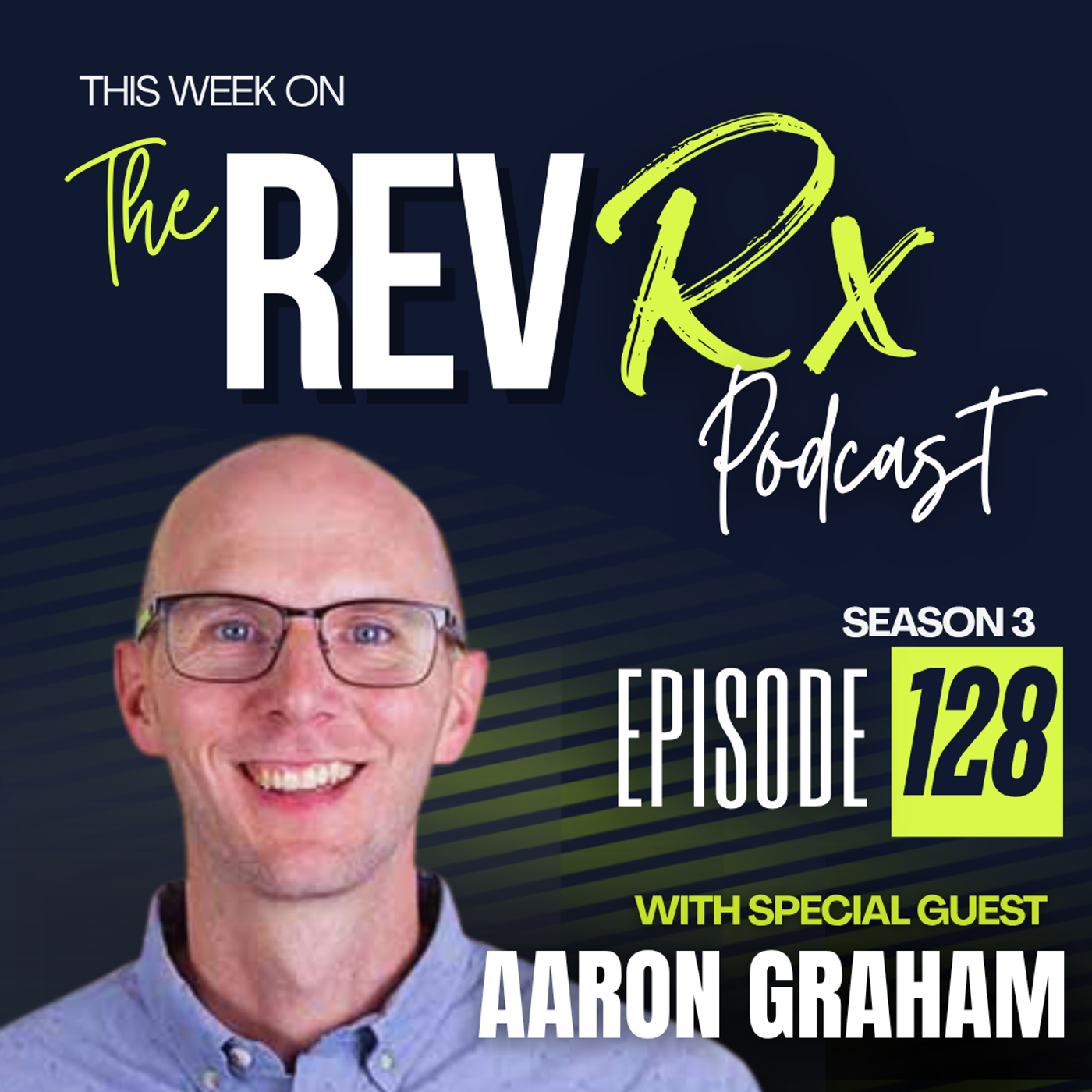
What happens when culture begins discipling Christians more than the church does? Pastor and author Aaron Graham joins me to talk about his book Unshakable Faith: How to Stand Firm in a Culture of Lies and the subtle ways secular ideas can creep into our faith without us even realizing it. Aaron pastors The District Church in Washington, D.C., a multiethnic congregation representing people from around the world. After watching friends, ministry leaders, and fellow Christians slowly drift from historic Christian faith, Aaron began asking a difficult question: What is shaping us? In this conversation, we talk about cultural drift, “secularized Christianity,” and seven lies Christians are increasingly tempted to believe. We especially dig into two of them: • “It’s all about me.” How consumer culture can turn God, church, prayer, and even worship into something centered around our comfort and preferences. • “Faith should be private.” Why following Jesus is personal, but was never intended to remain hidden. Aaron also shares seven historic Christian practices that help form an unshakable faith: true worship, deep community, bold storytelling, Bible engagement, biblical justice, Spirit-filled living, and radical forgiveness. One of the biggest reminders from this conversation is simple: If we don’t intentionally allow Jesus to disciple us, the world will gladly do it instead. We don’t need a watered-down Christianity that simply adds Jesus to the life we already want. Jesus invites us to surrender, reorient our lives around Him, and discover that true flourishing is found not through grasping—but through letting go. If you feel like your faith has been drifting, or you’re trying to help the next generation follow Jesus in an increasingly post-Christian culture, this conversation is for you. To connect with Pastor Aaron: - Check out the website: https://www.aarongrahamdc.com/ - Get the book: https://a.co/d/00ODXskA ---------------------------------- WANT TO GO DEEPER? If you're a man who wants to go beyond just listening and start growing alongside other Christian men, check out The Rev Rx Collective. For just $5/month (or choose the annual plan to get 2 months free), you'll get access to private Rev Rx Online Bible Studies, exclusive conversations and Q&A's, early access select episodes, practical resources, and a community of men who want to grow in their faith. Come grow with us inside The Rev Rx Collective! Check it out here: https://revrx.circle.so/revrxcollectivehome
Chad Potts (Rev Rx): Hello, friends, and welcome back to another episode of the Rev RX Podcast. I'm so glad you've joined us today. And I'm so glad to have special guest, Pastor Aaron Graham, with us today. Pastor, thank you so much for joining us. So glad you're here. Can't wait to dive in to our topic today with you. Aaron Graham: Yeah, thanks for having me on, Chad. I'm excited to to get to know you and the listeners a little bit more and be able to talk today. So thanks for your podcast. Chad Potts (Rev Rx): Yes, sir. I shared with you offline. No, you are the founder and pastor of the district church in Washington, DC, which is a multi-ethnic church. from my understanding, represents about 80 nations. Is that right? and Aaron Graham: That's right. Yep. Chad Potts (Rev Rx): I've never been there, but I can imagine it's probably a little glimpse of heaven. Aaron Graham: Yeah. It is. It really is. It's like to see people Chad Potts (Rev Rx): The multi ethnicity. Aaron Graham: from all walks of life worshipping together is amazing. Chad Potts (Rev Rx): Love it. and I told you before, you get a little street cred from me. I have a lot of authors on here, and and no disrespect to anyone else, but you you get street cred if you're a pastor and you're writing a book about pastoring. So I I love Aaron Graham: Thank you. Chad Potts (Rev Rx): for those of you who are watching this, we're gonna be talking about unshakable faith today. how to stand firm in a culture of lies. I have really delved into this book, Aaron, and I find myself saying, Ooh, Aaron Graham: Mm-hmm. Chad Potts (Rev Rx): toes hurt a little bit when I'm reading through this. but you have found a way to to balance a convicting message with a pervasive hope that Aaron Graham: Mm. Chad Potts (Rev Rx): that Christ is with us and gives us a way out. And so thanks for the work that you've done. And I'd love to to before we jump into the book. Hear a little bit more about you. Can you introduce yourself to us, help us to get to know you just a little bit better? Aaron Graham: Yeah, sure. So yeah, Aaron Graham, I pastor the district church here in Washington, DC. It's a church that my wife and I planted sixteen years ago in northwest DC. So we are in a neighborhood called Columbia Heights. It's the most diverse neighborhood of DC. It's two miles directly north of the White House. we've been portable on Sundays as a church for the this whole time. And we're renovating a huge church building that was entrusted to us that will open up hopefully in about a year and a half and be a permanent home right in the heart of DC. So we're really excited about that. but I grew up as a missionary kid in Liberia and then Kuwait and then settled in Richmond, Virginia, which is where I went to middle school, high school, and then college at University of Richmond. Then felt called into urban ministry, went up to Boston for five years and accidentally planted a church in the inner city that I ended up pastoring for five years. Went to grad school in Boston, met my wife Amy there. And then we moved to DC and we adopted two of our children, Elijah and Natalie, that are both teenagers now. humble beginnings as the church just starting in our living room and then has just consistently and steadily grown over the years. And we love DC. We we absolutely love it. It's complex, it's challenging in its own ways, but we love pasturing here. Chad Potts (Rev Rx): Yeah, absolutely. I and I love what you guys are doing. You're also big advocates for adoption and foster care. Is that right? Yeah. Aaron Graham: Yeah, absolutely. I just came out of a meeting right now with Brotherhood Mutual, who was just giving us a large grant for our foster care and adoption ministry with DC 127. And so we've that comes from James 127, which says True Religions to Care for Orphans and Widows. So we work with about 30 churches here to recruit foster and adopt the families and help keep kids out of the foster care system in the first place, because kids are meant to be raised in families. and so how do you find healthy families for them? Chad Potts (Rev Rx): Yeah. doing the Lord's work and and that's a that's a special thing to my heart too. Aaron Graham: Thank you. Chad Potts (Rev Rx): but but thinking about the work you're doing there, and I and I love your background, it's so diverse and you you've lived several places and you've seen a lot. And you know, when when I read the opening pages of your book, you describe something that I have seen but been have been maybe had some challenges putting words to. And it's this cultural drift. I pastor young adults. I see college age kids, I see them come out of high school, come out of youth group. And, you know, they're they're on fire for the Lord. youth groups are really fun time. You have events, you have conferences, you have all of these things. And then it's like things cool off, Aaron Graham: Mm. Chad Potts (Rev Rx): spiritually speaking, with a lot of these kids. and it's not just a young adult issue. it Aaron Graham: Mm-hmm. Chad Potts (Rev Rx): it's across the board. And it's not, I'm in the Bible Belt. it's not just a Bible belt issue. I think it's global. you know, in in in some different places. But but here's the thing. You described you describe a place where secular culture seems to influence us more than the church. And that puts perfect words to what I've been seeing over the years where I am as well. So I'm curious if you could kind of paint that portrait for us Aaron Graham: Mm. Chad Potts (Rev Rx): of what you've seen in your locale, what you've seen amongst your people and and what kind of why you felt called to step into that gap. call it what it is, but then give us a way out. Aaron Graham: Yeah. Well, one of the big theses of unshakable faith is that if we don't disciple our people, the world gladly will. So we're the church steps back, the world steps in. And it's happens in a subtle way among Christians. And so my book goes through seven lies that Christians are believing and how easy and deceptive it is. But for me, I just noticed the same pattern that you were just talking about, where a young person is on fire for God, wants to serve God, and then they encounter human suffering, they encounter their own suffering, and their faith is not strong enough to actually help them endure the trials and tribulations of life. And so it gets weaker over time. And and I just saw this pattern over and over. I open up the book by telling a story. I'm coming back from vacation and I just start writing down the names of people. I had known there's a lot of friends and colleagues in ministry who had drifted in their faith, but I just started listing them name by name. And I filled up pages in my moleskin notebook of people that had left the church, left ministry, left the biblically orthodox faith. And these are not just people, this is not like people in our church. That would be a longer list. This was just like people my age. Chad Potts (Rev Rx): Mm-hmm. Aaron Graham: and I just wept. I was just like, this is so sad. This is not what we set out to do. And I realized that like so often we argue about the political issues of the day or things like human sexuality, which are really important conversations to have, but that there was something f going on further upstream. And how our secular culture was subtly discipling Christians to shift from the authority of God to the authority of self, where I am my the ultimate judge, that I am the one that determines truth. I get to decide what is best. And of course, there's a hint of truth in it because it's like everybody has their own story, everybody has their own experiences, and those are valid. But ultimately, we're taught to fear God and to. Follow him, that he is the one in authority, and that there's a right way and a wrong way to do life. And him and his God and his grace has designed it and invited us to live in that way. And so when we actually submit to that, it leads to our own flourishing, it leads to our own happiness and fulfillment. And so that was a little bit of the backstory. It was just seeing, it's just very personal for me. And I've had a front row seat. To this progressive theological drift, which is where people reinterpret the historic teachings of the church and make them more applicable to the modern culture. So it's kind of like, hey, if we edit the Bible in this way, then maybe we'll reach more people. But what ends up happening is this you strip the gospel of its saving power. And you, and it's like it was tempting to think that this was like a more recent thing in the last 10, 20 years. And I can name several. movements, organizations that I had front row seat to that were involved in this. But what I realized is like, no, this has been happening for three or four hundred years since the Enlightenment. It's been happening from the beginning of time, from the garden, where Chad Potts (Rev Rx): That's right. Aaron Graham: God's like, I mean the devil is like to Eve, like, did God really say this? Can maybe you could spin that a little bit to your own advantage. It doesn't have to be, you can have it both ways. And so it's it's nothing new. I just felt like I wanted to write the way the enemy continues to try to get Christians to weaken, water down, and drift in their faith. So I was gonna call the the book Stop the Drift, you know, because that's in in in a way what the message is about. Chad Potts (Rev Rx): Yeah. Absolutely. And, you know, it it's easily easily recognized, but but difficult to really ascertain maybe what's going on at the root. you do a good job of diagnosing that, I think, for us. now you mentioned there's a phrase in there that that I circled and underlined a few times and it's secularized Christian. when you when you're kind of describing this situation, this drift, it's secularized Christian, someone who profess professes the name of Christ, but is increasingly shaped more by culture than scripture. you know, and in in thinking about the world we live in today, you know, and and I'm in the Bible belt where, you know, it's it's almost culturally, you know, it it's the cultural norm to say you belong to a church, you know, and call yourself a Christian. but there real there really is this this issue of being a Christian in name only, that that we see a good bit. And it breaks my heart. You know, there's no judgment or shame that I'm tying to that. but it pricks my heart because That was me for a large part of my life. and I shared with you a little bit offline, my ri my listeners have heard this story before, but I'll I'll keep it brief. But for me, Christianity for a large part of my life was was checking the boxes. I would go to church and I told I shared with you, I went to school in Atlanta and I went to a very prevalent church in Atlanta, a very prevalent pastor. it was fortunate to have been under his leadership for so many years. But if I'm really, really honest with you, the reason I went to church on Sunday was was either to check that box or to make myself feel better about the life I've lived Monday through Saturday. there was no real prayer life on my end. it it was just, you know, if I can't figure things out for myself and I need a Hail Mary, I'll throw one up. Aaron Graham: huh. Chad Potts (Rev Rx): but by and large, I I can figure life out myself. there was no scripture reading except what the pastor preached about on that Sunday. And I would close my Bible and I'd open it back up next time I went to church. And so I found myself in your book, Aaron, as you were describing this. And it just it it pierced my heart because there are so many people who I just want to say, if you only knew, you know, Aaron Graham: Mm. Chad Potts (Rev Rx): if you only knew what was available to you through a relationship with Christ, Aaron Graham: never. Chad Potts (Rev Rx): would you say that a large part of this secularized Christianity in your eyes has become less relationship and maybe more ritualistic? Aaron Graham: Yeah, I mean, I think that word secularized Christianity is is sort of an oxymoron, right? Because just like, how can something Chad Potts (Rev Rx): It is. Yeah. Aaron Graham: be Christian and secular at the same time? But what I'm trying to say is that the secular worldview, which is at its root around a shift in authority, it's towards what sociologists called expressive individualism. That's where the authority rests with with you, that this shift in authority is actually being brought into the church. And so When you know, you you and I are raised in the church and we know the language of church, like we know socially how to fit in. We know what the leadership's looking for, we know what our parents are looking for. And so Chad Potts (Rev Rx): That's right. Aaron Graham: we can say the right things, but like our hearts are far from God or our mindsets, our worldview is far from God. And I think that's the real challenge is to say, you know, what ways is my belief system. Actually, not Christian, even though I say I'm a Christian, like it, like you said, in name, or I go to church. And I think that's that's what we're we're seeing here, is like the, you know, Jesus talks about the parable of the sower and about how the seed falls on different kinds of ground. But like it can fall, you know, on a hard path and be swept up, can fall around the thorns, and it can be choked in the thorns by the cares of life. By the deceitfulness of wealth and other things. And so I think that's one of the challenges today is to have an unshakable faith that can stand the test of time. And we know that God is unshakable, his kingdom is unshakable. And so, how how do we lean into that? And how do we expose these subtle lies that the enemy is is trying to import into the church? Of course, he disguises himself as an angel of light, so he always mixes truth with lies. How is he deceiving Christians to water down their faith? Chad Potts (Rev Rx): Absolutely. Yeah, and and it's it's one of those it's one of those troubling truths that we have to we have to know what we're dealing with first and understanding that the the the the true core of this is a lie from the enemy. And I love how you tie it into Genesis three, you know, every bit of the way. I love how you use the screw tape letters, quotes from it all throughout it too, because that's one of my favorite books as well. And it's really one of the best books that show us, you know, obviously it's it's fictional, but that show us kind of maybe how the enemy works a little bit. because I think a lot of times we we don't identify that right off. So cultural drift is something we're dealing with. Secular culture seems to be creeping into the churching to the churches and influencing some of our people more than the church is actually influencing them. So what do we do about it? Well, I think number one is looking at those seven lies. Could could you just kind of briefly mention the seven lies? and then we'll dig maybe into a couple of but I'd love for you to just kind of get your your brief introduction of all seven. Aaron Graham: Yeah. So the seven lies that Christians are tempted to believe today, the first one is that it's all about me. The second one is that church is optional. The third is that faith is private. The fourth is that the Bible is outdated. The fifth is that charity is enough. The sixth is that everything is rational. And the seventh is that enemies must be canceled. And each of these lies leads to a counterfeit identity, like how people begin to see that that's how the lie gets rooted in a lifestyle and not just a belief system. And then the commitment that counters that is the historic practice in the church that the church has practiced for 2,000 years that counter these lies. But when we don't address the lie, we don't get momentum discipleship-wise in these core practices of the church. Chad Potts (Rev Rx): Yeah. And and I like how you started off too. I'm backtracking a tab, but you just said something that reminded me of it. You know, it we're not placing blame on people. matter of fact, you you take blame for it yourself as a pastor, and I would say I do as I do as well. Yeah. Aaron Graham: Yeah. Yep. Yeah, I'm part of the problem. Yeah. Chad Potts (Rev Rx): because sometimes we've we've tried to make the gospel message more palatable Aaron Graham: Mm-hmm. Chad Potts (Rev Rx): or more relevant at the sake of deep d deep disciples. Let's try that again. Deep discipl discipleship. Deep discipleship. Aaron Graham: Mm-hmm. Yeah. Yeah. Chad Potts (Rev Rx): and and I know, man, that that's so hard because you want people to understand the gospel and understand how it fits into their lives. But one of the things you said is that maybe we've shown people how to fit Christ into their lives, but not how to reorient their lives to him completely. That's my paraphrase. But but I think there's so much truth in that. Yeah. Aaron Graham: Yeah. Yeah. It's and I I I say that in the introduction to the book about how pastors like myself have been part of the problem. And when you're in a urban, progressive politically and theologically area like DC, you're oriented towards love. Like if you can just if we as the church can just hug the city tight enough, love the city tight enough, it's gonna love us back. And it's like, no, it might hit you back. You don't know. Like, and so It's like truth and love. That's what we're called Chad Potts (Rev Rx): Yeah. Aaron Graham: to in the gospel, truth and love. And I think depending on how you're wired, you know, people tend to be all truth, no love, or all love, no truth. And we know Jesus came full of grace, he came full of truth. And so I think for me as a pastor in writing this book, it's sort of a confessional to say, hey, I think I I leaned on that love side, but I minimized the parts. Of scripture that are at odds with culture in order to try to minimize conflict or tension in relationships or in the church. But I did a disservice to this next generation of what it means to really stand firm in the gospel. And so, you know, there's massive deconstruction happening, lots of people leaving the church today. Gen Z is either in revival or retreat. Chad Potts (Rev Rx): Mm-hmm. Aaron Graham: You know, there's more people that are coming to faith right now among this next generation that are attending church more often. But the macro trend is that still there's a lot of people that are leaving the church. Like more people now don't go to church than do go to church for the first time in US history. And so the question is what is it that is behind that drift? What is it that's leading to that? And my heart, as much as I would love my friends, the prodigals, to come back home, this book was written for that person that you're ministering to, Chad. It's the 23 year old who just graduated from college and they're tr they're they're looking to land their first job. They might be moving to a new community. They're trying to figure out if they're gonna go to church, if so, what kind of church, whether they're gonna really practice their faith for themselves. The infrastructure has not been built like it has been growing up and then in college maybe. And so they're on their own. And what I what I felt like is if if Christian young Christians could make these decisions early on Chad Potts (Rev Rx): Yes. Aaron Graham: around their engagement in scripture and church and other things, then they will they will not just survive in Babylon, this post Christian world we're increasingly live in, they will thrive in Babylon. And that's that's my heart and prayer. And that's what makes me excited to hear what you're doing and helping reach this this demographic of eighteen to thirty year olds, which is like ninety percent of our church. It's mostly Chad Potts (Rev Rx): Yeah. Aaron Graham: young. Chad Potts (Rev Rx): Love it. Love it. and and and that's the unshakable part. absolutely. so one of the things that is, like it or not, shaping our world today, and and the church included in that, is this lie that faith is all about me. Aaron Graham: Mm-hmm. Chad Potts (Rev Rx): you know, and and nobody would probably say that. You know, Aaron Graham: Yeah. Yeah. Chad Potts (Rev Rx): I don't think we're you know, man, I love my faith. It's all about me. But Aaron Graham: Yeah, yeah. Nobody would admit that. It's not it's not Chad Potts (Rev Rx): What does Aaron Graham: PC to admit that. Chad Potts (Rev Rx): No, no, but how does that show up in our lives, in our decisions, and in the way we in the way we show up in the world? Aaron Graham: Yeah. We were talking screw tape letters before. Screw tape, for those who don't know, it's a book by C.S. Lewis, which is Screw Tapes The Senior Devil writing to the Junior Devil about a playbook of how to deceive Christians. And it was written Chad Potts (Rev Rx): Mm. Aaron Graham: eight eighty years ago in secular Europe, increasingly secular Europe, which we're more familiar with now in the US of a increasingly secular world. But one of the things Screwtape says in in like one of the early letters in the book, he says the best thing where it is possible is to keep the patient. That's us Christians, the patient from the serious intention of praying altogether. And the simplest to do that is to turn their gaze away from God toward themselves. And just that subtle thing. And so that can manifest this lie that it's all about me is that my church experience, worship, the sermon, it's all about me. And it's so easy to understand how we develop this mentality because like our whole lives are curated. Around our own experience. I mean, just think about the online experience. You get to watch everything on demand now. Everything is the algorithm that feeds you what you want to watch. And so it's like, I love watching like animals in nature attack each other. And so I just get fed video after video or like marriages where there's joking between the husband and the wife, you know, and like, and I just get fed that over and over. And so the reality is like. It's like we're being taught every day, especially when like it's the end of the day and you're tired and you might be scrolling that it's like all about me. It's all about my custom experience. And so then we bring that mentality into the church and into our relationship with God. And we're thinking about ourselves first rather than God. And so then we think God's main job is to make us comfortable. And it's like, when did it ever becomes God's main job to make us comfortable? We're supposed to bring him glory, advance his purposes. And yes, he, you know, we are most satisfied when he's most glorified. So our own flourishing is related to that. But, you know, Chad, you you know all the the stats and studies about loneliness and how it's at an all-time high. D C DC was recently named the loneliest city in the country. There's like Chad Potts (Rev Rx): Well Aaron Graham: seven million people in the DC greater area. Why are we lonely? It's like, cause we're. climbing the corporate ladder, thinking it's all about me, thinking that if I get to a certain height or have this certain experience, this vacation or whatever, then I'm going to be fulfilled. And it's like, no, it's not how it works. Like our fulfillment doesn't come from the things of this world. so yeah, that's that's a little bit of the intro to that lie. Chad Potts (Rev Rx): Yeah, and it's, you know, God God becomes means to an end, at that point rather than the end itself. And you know, that can play out in a lot of different ways. It can play it can show up in our prayer life. One of the things you brought up was interesting. It can show up in our prayer life. And it and I remember hearing a clip about this a few years ago. I don't know who said it. but it was basically this concept of a lot of times our prayer life revolves around protecting us. protect us, protect our kids, protect, you know. what would happen if we stopped praying for God's protection and started praying that whatever happens, that God be glorified. Aaron Graham: Mm. Mm-hmm. Chad Potts (Rev Rx): and as a father, boy, that's hard. Aaron Graham: Mm-hmm. Chad Potts (Rev Rx): but just thinking about that, like our w when when we pray in in in church, when we it's it's a long list of things that okay, I would I would like for this to happen, like for this to happen. Aaron Graham: Mm. Chad Potts (Rev Rx): can you protect me from this? Keep these bad things from happening. Aaron Graham: Mm-hmm. Chad Potts (Rev Rx): You know, that can show up in that way. So maybe that's an audit for us. You know, look at your prayer life. Aaron Graham: Mm-hmm. Chad Potts (Rev Rx): you know, is that is that a way that it shows up? And then you're right, like we become church shoppers. And there's like a whole you know, there's a whole other chapter for that. But we start attending church based on, you know, how how how well fed did I come out of that place? You know, did it meet my needs? Was it convenient for me? we start thinking about things like worship and you did I feel that I that did I get an experience out of that. you know I love the old the old saying of somebody came out saying, Yeah, I didn't get anything out of worship today and they said, Well that's okay. We weren't worshiping you anyway. That's right. That's right. But the you know the a lot Aaron Graham: Yeah, it wasn't for you first and foremost. You know. And it's like you want people to you want to love going to your church. You want to enjoy it's not a bad thing, but that's not the first thing. And that becomes the first thing. It's like. Chad Potts (Rev Rx): Yeah. No. Yeah. That's right. And that that shows up in a lot of different ways. And it, you know, kind of caricatures of this and we we pick on it a little bit, but there's some truth there. there's some underlying truth there. that self ha has has snuck in. Aaron Graham: Mm-hmm. Chad Potts (Rev Rx): And we have ended up making this thing, which is not about us at all, about us completely. Aaron Graham: Yeah. Chad Potts (Rev Rx): and then one of the things you mentioned too that I wanted to bring up was We think that that, you know, culture tells us that fulfillment comes through grasping. It Aaron Graham: Mm. Chad Potts (Rev Rx): comes through achieving. It comes through grabbing on and accumulating. Aaron Graham: Mm-hmm. Chad Potts (Rev Rx): But really and truly, we mentioned this a minute ago, true fulfillment to flour, true flourishing as a human comes God's way. And it comes not through the grasping, but through the letting go. Aaron Graham: Yeah. Chad Potts (Rev Rx): Can you unpack that a little bit for us and how that plays into this life? Aaron Graham: Yeah. Yeah, it's not through the grasping, but the surrendering. I mean, and isn't that the story of how we become Christians? It's by denying ourselves, taking up our cross and following Jesus. And it seems like really painful. And it is hard to repent and turn from some of the idols and the things of this world. But that's like the core of what it means to be a Christian. Like if we have not repented and turned, then we're just adding Jesus on top of our secular worldview. And so, you know, just For for one of my own stories of how God convicted me around this. I grew up, you know, as a missionary kid, I saw poverty growing up. And then I grew up in like the suburbs of Richmond, Virginia, and then went to a really preppy school, University of Richmond. And so when I was graduating, I really felt called to go and live and work among the poor in the inner city of Boston. And I felt God telling me, like, give everything that you have away. And go serve me. Like Matthew 10, when Jesus sent out the disciples, he said, take nothing with you. And it was like, that's radical. But it was like so that the disciples would have to depend on meeting a person of peace to meet their physical needs, so that they would have the opportunity to preach the gospel to meet somebody's spiritual needs. Chad Potts (Rev Rx): Hm, well. Aaron Graham: And it was like, wow. Relationships are meant to be two way. And so much of evangelism in the church, we think, it's just us serving and us telling. But it's like, no, we don't come in at the same level. And that isn't that the example of Jesus that God made him who had no sin to become sin for us. He's he he came from heaven to earth, the incarnation. And he was without sin, but he was fully God and fully human. And he lived among us. And that's what we're called to do. And that requires surrender. That requires me to say, you know what? I'm more committed to advancing the kingdom of God than I am the American dream. Nothing wrong with making money, nothing wrong with having things. Praise God. We all need things to survive. But that's not the ultimate goal in life. And that's not what will ultimately fulfill. So it's surrender, you know, not grasping and climbing the ladder that brings fulfillment. Chad Potts (Rev Rx): Amen. a big part of when I felt a call to ministry and I kind of got outside of that checking the box. you know, I I began to get more serious about my faith and I felt the Lord drawing me close. Thank, thank the Lord for his drawing grace. Aaron Graham: Mm. Chad Potts (Rev Rx): the grace that never leaves us, even when we're knuckleheaded, as I tell my kids. Aaron Graham: I mean. Chad Potts (Rev Rx): but through this process, I began to I began to kind of read my Bible and it began to speak to me. And you know, it it's like, wow, you know, I didn't know the Bible said this. And I'd ask I would ask my wife now, who I was engaged to at the time, like, did you know the Bible said that? She's like, Well, yeah. Like, I had no idea. And I was just coming alive. Aaron Graham: Yeah. Chad Potts (Rev Rx): And I was coming alive in ways that that the things of this earth were not doing for me. Aaron Graham: yeah. Chad Potts (Rev Rx): I had reached a point where I had, you know, I had achieved my dream of going to college and getting my degree. I was working at a great job, making good money, had a brand new car, cool house, had the girl, had all the things that society told me I needed to fulfill me. But there was something still very much missing. And it wasn't until I understood I can have a relationship with the creator of the universe, the one that I that I go and and pay homage to once a week on Sundays, he wants a relationship with me. Aaron Graham: Mm. Chad Potts (Rev Rx): And when that began to to develop in my life. I've never felt anything like it. That's what fulfillment looks like. And it's the things of this earth, the American dream. I'd achieved the American dream, but I was still empty inside. Aaron Graham: Hmm. Mm-hmm. Chad Potts (Rev Rx): And you're so right. The things of this earth cannot fill that goal that hole that that God can fill. and I love your story. That's when you met my sis, I guess. and you know, that's a different story for a different day, maybe. Yeah. Aaron Graham: Hmm. Amen. Mm-hmm. Yep. Yep. She's like the mother Teresa of Boston. Yeah, she she brought me in. She put clothes on my body and food in my belly and gave me a place to stay. Chad Potts (Rev Rx): Man, what a God ordained Aaron Graham: Yeah. Chad Potts (Rev Rx): God ordained story. But yeah, realizing where our fulfillment comes. And it's not what society tells you. Aaron Graham: Hmm. Yeah. Chad Potts (Rev Rx): that's part of the lie. And then moving on to another lie. Again, we're gonna get into a couple of these and not all of them, but fate should be private. Fate Aaron Graham: Yeah. Chad Potts (Rev Rx): should be private. I have noticed, it it and again, one of those sections that just really hit home with me. I've noticed that a lot of times. You know, we we we come to Christ. We all you know, if you're a Christian, you have that story of how Christ met you where you were. And everybody's is different. There Aaron Graham: Mm-hmm. Chad Potts (Rev Rx): are some I used to feel like my testimony was nothing compared to the guy who was delivered from drugs and alcohol and all the things. But we all have a story to tell. And in each of those stories, God gets the glory. Aaron Graham: Mm-hmm. Chad Potts (Rev Rx): But a lot of people aren't sharing those stories. Aaron Graham: Mm-hmm. Chad Potts (Rev Rx): a lot of times we're scared. A lot of times we don't feel equipped, we don't feel empowered to tell those stories. And so then our faith becomes private. So I'd love for you to kind of talk talk about this and what you've seen in your world as far as this life from you know about casual Christianity, kind of just adding Christianity in with everything else, Aaron Graham: Mm-hmm. Chad Potts (Rev Rx): versus a public confession that Jesus is actually Lord. Aaron Graham: Yeah. And that's really the call. When when I talk about faith as private, I faith is meant to be personal. Like we need to personally believe and own it. But when I say private, meaning it's not supposed to be restricted to ourself. And when we're unwilling to talk about our faith in our workplace, with our family, with our neighbors, and it doesn't have to we don't have to be the crazy loud evangelists like preaching and hitting people over with the Bible, but when we're not real about what God's done in our life and That it's the main thing in our life, then it it has this like watering down effect. It leads to this nominal Chad Potts (Rev Rx): Yes. Aaron Graham: Christianity where we're Christian in name only or in only one part of our life. And so one of the things I don't write about this in the book, but one of the things that's related to this, that, you know, just a story to kind of illustrate the importance of Jesus being Lord, like Lord overall. Because, you know, when we When we baptize people, we ask them this the same questions that have been asked in the history of the church. Have you renounced all sin and evil desires that draw you from the from the love of God? Secondly, have you received Christ as Savior? And then third, do you commit to following him as Lord? So th that what counters this lie that faith is private is the the Lordship of Christ. That I am submitting every area of my life over to the Lordship of Christ. There's nothing hidden. There's nothing hidden. There's not some part secret part of my life. It's all out before the Lord. So John Wesley, go back to the story. So, so John Wesley, a famous evangelist in the first Great Awakening, kind of at the end of the first Great Awakening, came from the UK, preached to tens of thousands of people in the US. and he would preach to like low-wage workers, day laborers, and many of them would come to faith in Christ. And he would put them in small groups that were called bands or classes, and they had like intense accountability. This is like the beginning of like the small group movement, in a sense. and and these These bands, a small groups, were were really committed to the pursuit of holiness and loving their wives and their families. So these like drunk dudes started loving their wives, started staying faithful. They actually started showing up to work on time, they like kept their jobs and they started moving up in their jobs because they were being discipled around these virtues like diligence, self-control, and simplicity. And so those virtues naturally led to greater prosperity. But Wesley was like lamenting that this prosperity created a new spiritual danger, that it led people to be prideful, and that this pride created love of the world, which then was destructive to the Christian faith. And so, you know, Wesley wasn't against making money. I mean, he's famous for saying, gain all you can, save all you can, give all you can. So it's like make as much money as you can as a pharmacist, but understand that it's a means to advance God's kingdom, right? And like you're you're a tent maker. You're like Paul now. You're like, Chad Potts (Rev Rx): Yeah. Aaron Graham: you got the revelation that like you're a pharmacist so that you can feed your family and and be able to spend more and more time doing God's work. And and and you are also doing God's work. You're doing the ministry of healing, which is incredible. But it's gain all you can, save all you can, give all you can. But the pattern that Wesley noticed. Was that spiritual conversion would lead to people being disciplined, especially when they got into to to church, into groups, and accountability. That then led to prosperity. Like if you do the Bible, you will be upwardly mobile. But that will then lead, if you're not careful, to spiritual drift. And that's this whole thing around constant surrender. That I'm following the way of Jesus and I'm actually intentionally being downwardly mobile in my generosity. I'm being downwardly mobile with my time. I'm not evaluating every single opportunity based on how does it help me? How does it advance my career? You know, it's in losing my life that I that I gain it. And so that's one of the dangers. And you know, it's all about me. And then church is optional, and then faith is private. And these lies kind of build on themselves and they chip away at the core and foundational aspects of our faith. Chad Potts (Rev Rx): Yeah. and you know, you mentioned that you know it doesn't necessarily mean being the guy on the street corner, y you know, Aaron Graham: Yeah. Chad Potts (Rev Rx): yelling at people and I you know, I'm not saying it's wrong, but I I'm not sure how fruitful that is. however, some people may have differing opinions there. But Aaron Graham: huh. Chad Potts (Rev Rx): what does it look like, in Washington DC in your church to to be living your life in a public way, in an unashamed way? where you're showing up to work, showing up as as a you know, as a mom, dad, as the person that says Jesus is Lord of all of my life. Aaron Graham: Yeah. We do a story, we do a series every year called This Is My Story. It's our most popular series that we've done. We've done it every year since our church started. It's just a short two week series where three people per week share a testimony, 10 minutes each, of how they met God at their lowest moment in their biggest question, in their biggest doubt, and their biggest struggle. These are very successful DC people. That are getting up. I'm giving up the pulpit for two weeks. I'm walking with them, training them on how to do this, but where they're sharing their testimonies. And it's it's like the most popular series of the year because these ordinary folks that are working on the hill, working at the White House, they're working at the schools, they're working at the hospital, are saying publicly online on YouTube and to the church, Jesus is Lord of my life. And this is how and where I met him. And but I think it's not just about doing that on stage. that's kind of, you know, an extreme example, but it's also learning to tell your story. All of our small groups, we call life groups, are structured around the value of storytelling. That part of our life is to be able to tell what God has done in our life. Jesus says, the Holy Spirit will come upon you. You will be my witnesses. When the Holy Spirit comes upon you, Acts one eight, you'll be my witnesses in Jerusalem. Judeo, Samaria, to the ends of the earth. So so there's no area, no place where God's not called you to share your story and be bold in your faith. Philemon six talks about how his prayer is that he that you would be active in sharing your faith so that you would know every good gift that comes from above. Like that I'm paraphrasing, but it's it's basically like as you share your faith, you grow in your faith as well. Chad Potts (Rev Rx): Yes. Aaron Graham: And so I think a lot of us think that, we've got to be an apologist, we got to know the Bible. Back and forth, we have to all the no, you know, you just need a story that I was lost and now I'm found. I'm blind, but now I see, or I had an encounter with God, or I was praying, or God spoke to me in this way. It doesn't have to be this heroic story. You, every single person that's listening right now, you have a story to tell and you have a responsibility to share that story with others, to say, like the apostle Paul said, I'm not ashamed of the gospel, it's the power of salvation for everyone who believes. Chad Potts (Rev Rx): Absolutely. And and you know, just showing priorities. can you know sho showing some of those those those lines in the sand that we draw as Christians. you share the story in a book about the guy who said, you know, everybody at my company now knows about this thing I'm attending Wednesday night because he because it was a priority to him and and he made you know everybody had to adjust their schedule because he's this big important, you know, CEO or whatever. because he said, I've gonna I'm gonna be at church on Wednesday night. Because that's important to me and this is this I'm growing and and Aaron Graham: Totally. Chad Potts (Rev Rx): Jesus is Lord of my life and I'm gonna be there. And so now everybody in his company, not because he stood up on the stage and said all this, but because he showed what's a priority to him. Aaron Graham: Totally. Chad Potts (Rev Rx): simply standing by the belief in Christ and and showing what he's done in your life. that's enough. Aaron Graham: Yeah. Here here's the challenge, Chad. a Barna study recently shared that almost half of practicing Christian millennials, so that's people like 30s age, almost half agree, at least somewhat, that it's wrong to share your personal beliefs with someone of a different faith in hopes that they'll come to faith. So so half of the people in the church roughly say it's wrong. to share, even just to share our story. And so so the first step is actually just being convicted that I should do it. And the Chad Potts (Rev Rx): That's right. Aaron Graham: second step is to actually open up your mouth when given the opportunity. Chad Potts (Rev Rx): Well and yeah, and and and we see the secular culture, you know, infringing on that because it's like, you know, to each his own. Who are you to impose your w you know, your beliefs on me? And it's not about that. but it's about being obedient to Christ and Aaron Graham: Yeah, yeah, yeah, yeah, yeah. Chad Potts (Rev Rx): and letting him lead. well, man, I wish w I told you I wish we could have like six hour discussion on this. Nobody would listen, Aaron Graham: Yeah, yeah. Chad Potts (Rev Rx): but I would love it. but as we kind of draw to a conclusion here, can you walk us through some of those historic Christian practices? Aaron Graham: Yeah. Chad Potts (Rev Rx): because I th I think a big part of this whole process is identifying the lies that you're believing. Aaron Graham: Mm-hmm. Chad Potts (Rev Rx): repenting of those lies, and repenting is a big part of this. but then there are some things that the church has practiced for you know, since the beginning Aaron Graham: Yeah. Chad Potts (Rev Rx): that have a way of recent our soul on God. Aaron Graham: Mm. Chad Potts (Rev Rx): and I'd love if if you don't mind, can you share some of those with us Aaron Graham: Yeah. Chad Potts (Rev Rx): to show us some of those ageless practices that get our focus back on where it needs to be? Aaron Graham: Yeah. So the real yeah, exactly. The real focus is this is the home base of where we want to be as Christians, but we gotta do counter formation, counter the lie so that we can focus on spiritual formation, which is the main work that we're called to do in any and every season and any culture and any time period in history. So the first one is true worship. And so this is just an invitation to be spiritually an invitation to be renewed in a God-centered faith, not a self-centered faith. And so this really asks the question of what do I believe about God? Do I fear God? So that's true worship. The second one is deep community. And this is an invitation to be spiritually formed through the local church. So this is resisting the lie that church is optional, resisting the counterfeit identity of being a church shopper. So deep community. The third one is bold storytelling. That's what we were just talking about. This is an invitation to share your faith with courage and authenticity. And this resists the lie that. Faith is private. The fourth one is Bible engagement. This is an invitation to dive deep into all of God's word. And so this resists the lie that the Bible is outdated, that we need to edit it, that we can cut out parts that don't really fit in with our cultural moment or make us uncomfortable. This is saying, you know what? I need to read through the whole Bible. You know, maybe set a goal to read through the whole Bible in one year and do that with other people so I can encounter some of these texts that I can wrestle with. The fifth one is biblical justice. And I'm trying to take back that term, because it's a biblical term, but it's been co-opted by the left and dismissed by the right. But it's it's actually a biblical term to care for the poor, to care for those right in your own backyard who might not have opportunities that that that we can love the widow, the orphan, and the stranger. and this resists the lie that charity is enough, that I can just change the world with my spare change in my spare time. Chad Potts (Rev Rx): That's right. Aaron Graham: The sixth one is spirit-filled living. This is an invitation to discover and operate in your spiritual gifts. If you are a follower of Jesus, God has given you his Holy Spirit and you have spiritual gifts, and you are meant to operate in those spiritual gifts to help build up the body of Christ to help meet the needs of the world. And then the last one is radical forgiveness. And this is an invitation to practice peacemaking in a divided world. And this resists the lie that enemies must be canceled. And so this is like that divisive influence or you polarize to mobilize. And so the ability to maintain relationship across difference, it doesn't mean watering down your faith. It doesn't mean compromising on your faith, but the ability to maintain a relationship with someone across the political aisle, someone who has some different convictions than you, for you to be able to love them and speak the truth in love. is an increasing art form that I think we need to learn more and more. And the church throughout 2000 years has did that, the early church, when you're in a persecuted context, you have to learn how to do that. Chad Potts (Rev Rx): Hm. That's right. Aaron Graham: And so so that's the last one is radical forgiveness. Chad Potts (Rev Rx): Yeah, love that. These things recenter our souls on God. you know, there's nothing magical about practicing these things, but if we practice them with the right heart, and if we're approaching God with the right attitude, then it's, you know, there's no place for pride. There's no place for self-centeredness. There's no place for some of these lies to creep in because we now are experiencing truth in love. And love that. well, Aaron Graham: Good. That's good. Chad Potts (Rev Rx): Aaron, man, you're a blessing. thank you for the work you're doing. Thank you for giving us a resource. I mentioned to you that I'm teaching this to my young adults right now. You are giving us a resource to be able to address the things that society is creeping in and influencing influencing us with and distancing that from the truth of God. And Aaron Graham: Mm-hmm. Chad Potts (Rev Rx): showing us how to navigate a culture that is increasingly difficult to navigate as Christians. Aaron Graham: Uh-huh. Chad Potts (Rev Rx): But we've got to be in the world, not of the world. And you give us a Aaron Graham: Absolutely. Chad Potts (Rev Rx): practical way to do that with unshakable faith. So Blessings to you, your ministry, your family. You are a gift. And just thank you so much for leaning into your gifts and helping us at as the church. Aaron Graham: Thank you, Chad, for hosting me. Thanks for reading the book and doing it with your church. And happy to serve you and and grateful to have this conversation today. Chad Potts (Rev Rx): Thanks so much.
More The Rev Rx Podcast | Conversations On What Matters Most episodes →