
The Rev Rx Podcast | Conversations On What Matters Most · Rev. Chad Potts, PharmD
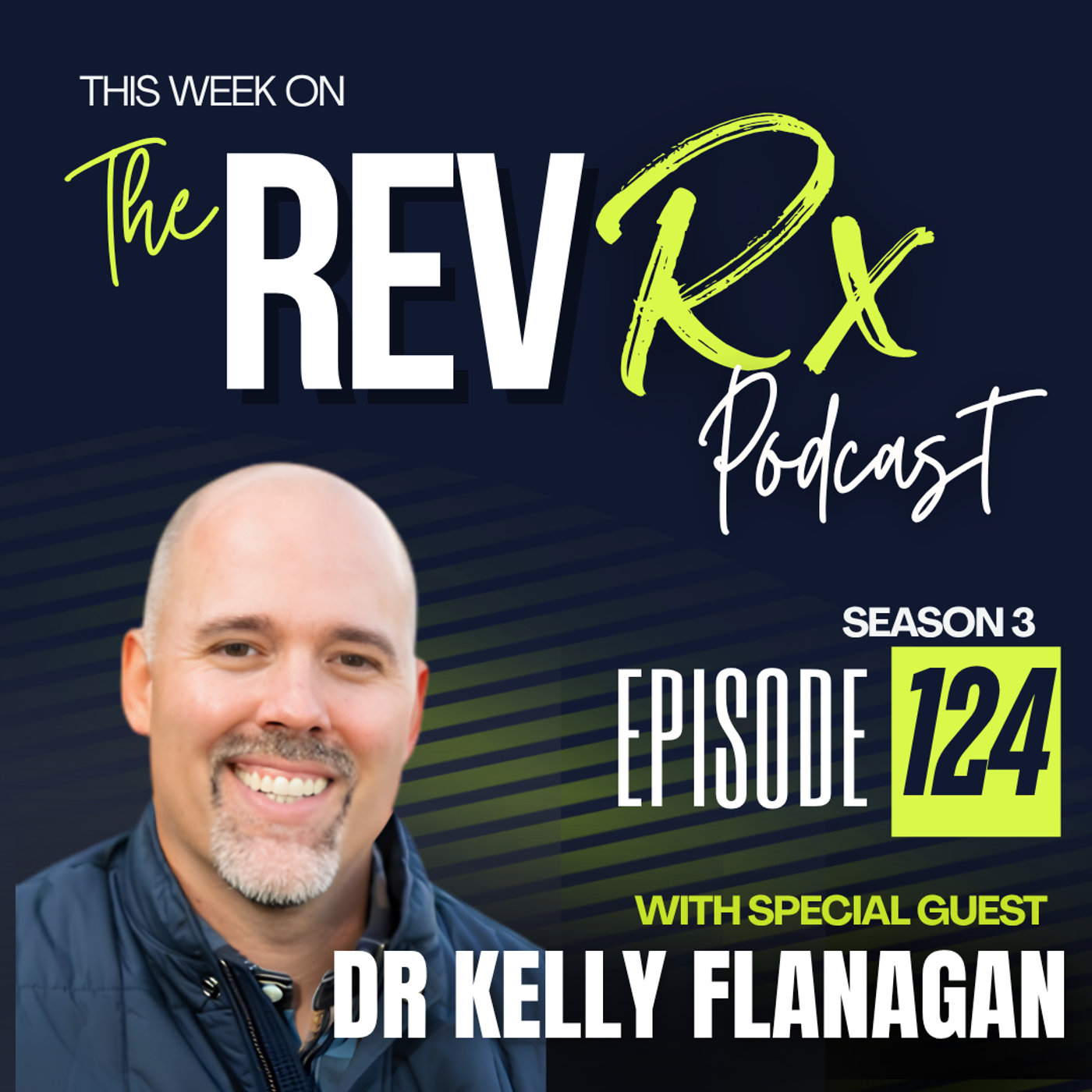
Why do we sometimes react in ways we immediately regret - even when we know better? Maybe you get defensive when your spouse makes a simple comment. Maybe anger takes over before you have time to think. Or maybe you shut down, withdraw, or say something you wish you could take back. In this episode, host Chad Potts sits down with clinical psychologist and author Dr. Kelly Flanagan to unpack what actually happens when we get triggered - and how we can learn to respond better. In this episode, you'll discover: what it actually means to be emotionally triggered the difference between a reaction and a response how your nervous system affects conflict and communication how fear and shame influence relationship patterns why 'that's just the way I am' may not be a good excuse practical steps for becoming less triggered and more intentional Dr. Kelly Flanagan is a clinical psychologist and the author of 'The Road Less Triggered'. His work helps people understand their emotional patterns, navigate conflict, build better and healthier relationships, and move from triggers towards connection. If you've ever wondered 'why do I react like this?' - this episode is for you! Connect with Dr. Kelly Flanagan: https://drkellyflanagan.com/books/ Follow the Rev Rx Podcast for conversations that help you think more deeply about faith, family, health, relationships, and the things that matter most.
Chad Potts (Rev Rx): Hello friends and welcome back to another episode of the Rev Rx podcast. I'm so glad you're here and I'm so glad to have our special guest today. Could not wait to jump into this conversation with you Dr. Kelly Flanagan, welcome to the show, brother. Glad you're here. Dr. Kelly Flanagan: Reverend, it is great to be here. Chad Potts (Rev Rx): I answer to a lot of names, and that's one of them. Dr. Kelly Flanagan: Yeah. Chad Potts (Rev Rx): yeah, some some maybe we shouldn't repeat on the show, but that's right, that's right. Dr. Kelly Flanagan: Right. Especially in triggered moments, right? Chad Potts (Rev Rx): but but you have done tremendous work in this world of emotional regulation, introspection, Dr. Kelly Flanagan: Yeah. Chad Potts (Rev Rx): mature response to triggers. Dr. Kelly Flanagan: Hmm. Yeah. Chad Potts (Rev Rx): and it's something that I have been able to apply to my life and I just shared with you, actually was able to take some of the information that you've put out. and talk to my nine year old daughter about it and and it's to the point where she can understand it. So thank you from a personal level, Dr. Kelly Flanagan: Yeah. Chad Potts (Rev Rx): for your in-depth work in this field and being able to take the complex and make it simple. and and so can't wait to share with our audience some of some of what you have spent your life's work doing. Dr. Kelly Flanagan: Yeah, well I I'm glad to hear that. I think when we're triggered a lot of us feel emotionally about nine years old. So y you know, if you're Chad Potts (Rev Rx): That's right. Dr. Kelly Flanagan: gonna write a book about it, you better speak at you know, at that level. I mean and by that I mean with that sort of simplicity and clarity so that it's really just tangible. So I'm glad to hear that it's helpful. Chad Potts (Rev Rx): Yes, absolutely. you're helping so many families. And before we jump into the topic though, I'd love to hear a little more about you. can you Dr. Kelly Flanagan: Yeah. Yeah. Chad Potts (Rev Rx): just help us to get to know you a little better? Dr. Kelly Flanagan: Yeah. Clinical psychologist by training. met my wife who is also named Kelly, spelled exactly the same way at Penn Chad Potts (Rev Rx): Awesome. Dr. Kelly Flanagan: State in graduate school. we are Dr. Kelly and Dr. Kelly Flanagan. We just actually got back from a s traveling for a speaking event and you know, it's just such a hoot at the airport, like the ticketing agent and the TSA, they always do double takes. so we met in graduate school, became a clinical psychologist, but not most of what I learned in graduate school really didn't help me, personally understand this this shame problem that I was carrying around and really not trusting my worthiness and and how I was created in God's image. And and so I went on my own personal healing journey and that led to me writing publicly, started in twenty twelve of blogging, wound up publishing my first book, Lovable, Embracing What's Truest About You So You Can Truly Embrace Your Life and in two thousand and seventeen. and a book written basically from a father to his kids, but also to the little kids still living on in me, you know, about my inherent worthiness and their inherent worthiness. Well the reality was like I that that got in at a head level for me. and I would be living from that sense of worthiness and and treating everyone else. as worthy creatures, like ninety, I don't know, I don't know the percentage, ninety-five percent of the time, and then five percent Chad Potts (Rev Rx): Yeah. Dr. Kelly Flanagan: of the time I get triggered, and it was like none of it, none of it had happened, you know. And all of it Chad Potts (Rev Rx): Yeah. All that's out the window. Dr. Kelly Flanagan: goes out the window in that moment. And and that really culminated for me during COVID. we you know, it was a stressful year for me. I I got triggered near the beginning of the year before the the virus even hit and I it blew up my business partnership with my best friend and the friendship and and COVID hits, you know, kids are schooling from home, becoming Zombies as I called them. and and then there was a Sunday afternoon. My wife had convinced me finally, like all the public pools are closed. Now we've got to get that above ground pool I've been trying to convince you, you know, of for years. And I'm like, okay, let's do it. So right, Chad Potts (Rev Rx): Yeah. Now's the time. Now's the time. Dr. Kelly Flanagan: now's the time. So like everybody else. So we we got it installed and it was time to fill it up. And we went out on a Sunday morning and my wife put the hose over the side of the pool and she put a rock on it to anchor it there. Well, the rock wasn't heavy enough and we did not go back out until the afternoon. And Chad Potts (Rev Rx): No. Dr. Kelly Flanagan: and I went out in the afternoon and the pool was bone dry and the backyard was like a muddy lake and I got triggered, right? And I'm like, Chad Potts (Rev Rx): Mm. Dr. Kelly Flanagan: Well, if I don't want to set my marriage back a month, I better or more, I better just get out of here. I need to go for a bike ride, so Hop on my bike to blow off steam, not the wisest thing to do to cycle at 30 miles an hour on asphalt when you're just angry and not paying attention. And almost hit a car, went over the handlebars of my bike. I broke my left collarbone in two places on the asphalt. and it never actually healed. you know, they say that bones heal stronger in the broken places, but this is called a fibrous tissue non-union fracture. So I've got like two hinges in my collarbone now. And it made for this like really long. slow, painful recovery. So I got to New Year's Eve going into 2021. And I was I was I'm like literally looking for like fitness resolutions because I'm totally out of shape because of the the long recovery. And in the middle of it I come across this incredible quote by Michael Singer. don't let anything in life be important enough that you're willing to close your heart over it. And Chad Potts (Rev Rx): Yeah. Dr. Kelly Flanagan: it like hit me harder than the asphalt road had, you know, like Yeah, man, it's not my situations that Chad Potts (Rev Rx): Yeah. Dr. Kelly Flanagan: are that are have got me here. It's my reactions to my situations. And I need to learn how to keep my heart open in these situations and not get triggered and make the situation worse than it is. So my resolution going into 2021 was moment to moment, I will notice my heart closing and try to open it back up. and I put the word in try from the beginning because I apparently Chad Potts (Rev Rx): Well, Dr. Kelly Flanagan: I knew ahead of time how hard that was going to be. And it Chad Potts (Rev Rx): Yeah. Dr. Kelly Flanagan: was and Basically it launched me on a journey and and I realized there just wasn't a lot of help out there around this. and that if there was gonna be a curriculum for open heartedness and turning our triggers into togetherness, I was gonna have to create it. And so that's what I did over the next few years and and that resulted in this book of mine, The Road Less Triggered where I lay it all out. Chad Potts (Rev Rx): Awesome. and such an important word. You're right. There's not much help out there. Dr. Kelly Flanagan: Mm-hmm. Chad Potts (Rev Rx): and I think we'd we'd mentioned offline this whole issue of being triggered. it's part of the human condition. I mean, it's universal. We all relate to that. Dr. Kelly Flanagan: Yeah. Absolutely. Yeah. Chad Potts (Rev Rx): but I don't know that we know what to do with it. that Dr. Kelly Flanagan: That's right. That's right. Chad Potts (Rev Rx): was that's me that's been me for a large part of my life. And, you know, sometimes we we call it other things. You know, for some people Dr. Kelly Flanagan: Mm-hmm. Chad Potts (Rev Rx): it may come out as like anger issues or or, you know, we need anger management. We need Dr. Kelly Flanagan: Right, exactly. Yeah. Chad Potts (Rev Rx): But but really what you're helping us do is get to the root of the problem Dr. Kelly Flanagan: Yeah. Chad Potts (Rev Rx): and help us to control what we can control Dr. Kelly Flanagan: That's right. Chad Potts (Rev Rx): and not try to control the things we can't. and I love that story. Untethered Soul, that's another great book for those Dr. Kelly Flanagan: Yeah, yeah. Chad Potts (Rev Rx): of you listening. wonderful quote. And I love how that launched you. And I, you know, there's so many different ways we can go with this, but I'd like to talk about being open hearted for a minute. that's a that's a phrase that I can't say I've always been familiar with. Dr. Kelly Flanagan: Mm-hmm. Chad Potts (Rev Rx): And so can you unpack that for us just a little bit? what does it mean to be open hearted, close hearted? And how do you how does that vision kind of impact your work when it comes to being triggered? Dr. Kelly Flanagan: Yeah. So I've defined open heartedness in this book as and in my life as the willingness to fully experience the present moment as it is without doing anything to it, especially when it's not going the way we want. I'll say it one more time. The willingness Chad Potts (Rev Rx): Yeah. That's good. Dr. Kelly Flanagan: to fully experience the present moment as it is, without doing anything to it. Especially when it's not going the way we want. and and that doesn't a lot of people think that means passivity, you know, it means, we sort of letting things happen. It's not to s it's Chad Potts (Rev Rx): Yeah. Check out. Yeah. Dr. Kelly Flanagan: not to say that you're not gonna respond in the next moment. It just means you're not gonna react in this moment, right? You're gonna take a moment to sit on it, and then your response will be wiser in the next moment. one of the things I address really early on in the book is that an open heart doesn't make your boundaries weaker. It makes your boundaries wiser. Right. So you're gonna have a response instead of a reaction if you can just practice open heartedness for a moment and get centered and still within what's happening. Right. So that's how I define open heart and I and to me it's the practice that moves us from triggers to togetherness. Right. I don't think of open heartedness as a condition that you sort of snap your fingers. It's a practice. When things aren't going the way you want, you know, you said something I think really important. You said we don't know how to how to react when we're triggered. And the reality is Our nervous system thinks it knows how to react in that moment, right? It's wired to deal decisively with threats out there. So when we're triggered and our nervous system activates, we jump right into reacting to our people or the situation or what we see as the problem. And we are very unwise. we are acting like at that point pretty much every other mammal on the planet. And we haven't tapped into the things that make us uniquely human. So open heartedness is the practice of learning how to get still for a minute. And fully experience this thing and then act wisely from our our best and highest human capacities. Chad Potts (Rev Rx): Yeah, super wise is is this whole process because all right, something happens, we're triggered. Dr. Kelly Flanagan: Mm-hmm. Chad Potts (Rev Rx): And you can either respond or you can react. Dr. Kelly Flanagan: Yeah. Yeah. Chad Potts (Rev Rx): And that's the way I like to think of it, in those words, is respond or react. and so many times we react in the moment. And Dr. Kelly Flanagan: That's right. Chad Potts (Rev Rx): you're right, that's that animal instinct in us. Dr. Kelly Flanagan: Yeah. Yeah. Chad Potts (Rev Rx): and and that's not our best selves. Dr. Kelly Flanagan: No. It's well, it's Chad Potts (Rev Rx): If it's even ourselves at all. I mean it's it's Dr. Kelly Flanagan: it's important and we need it, you know, like if you're walking through a dark parking garage at midnight and you hear footsteps rapidly coming up behind you, you better have that nervous system reaction. You know, if your car if your kid steps out in front of a car, right, you better have that nervous system reaction. So we don't want to get rid of it. but we do want to recognize that in a number of situations, operating only from it is not gonna lead to the best result. So one of the things I say in in the book is that a reaction is a failure of self regulation, whereas a response is the fruit of self regulation, right? That that's really the difference between a reaction and a response is just can I get regulated long enough to operate as a whole person rather than just a nervous system? Chad Potts (Rev Rx): That's absolutely right. And and I love the way you word that. And, you know, in my role as pastor, I do a lot Dr. Kelly Flanagan: Okay. Chad Potts (Rev Rx): of counseling. I do marital counseling, I do premarital counseling, which is fun. mar marital counseling is not all that fun because you're entering in and Yeah. Dr. Kelly Flanagan: Yes. It's so true. Yep. Chad Potts (Rev Rx): you know, you're coming into it and it's like, you know, hey, we need you to do a miracle, right? Dr. Kelly Flanagan: Yeah, that's right. Chad Potts (Rev Rx): we're we're on the we're on the cusp here. and it's so easy once you kind of Are aware of Dr. Kelly Flanagan: Mm. Chad Potts (Rev Rx): some of these response versus reaction stories, it plays out so much. Dr. Kelly Flanagan: Yes. Yeah. Yes. Chad Potts (Rev Rx): these triggered responses, or triggered reactions, I guess I should say, are responsible for a lot of the communication issues that we have Dr. Kelly Flanagan: That's right. Chad Potts (Rev Rx): and are responsible for a lot of of the relationship issues that we have. what have you seen in your experience? Dr. Kelly Flanagan: Right. Yeah. That's right. That's right. Yeah. No, that's exactly right. I so I was my my niche in the clinical psychology training was and my specialty was communication, conflict resolution amongst couples, you know, marriages in particular. I mean, that was my that my dominant practice out in the outpatient mental health field was was couples work. and in that space, you're just you're trained to equip couples with communication tools that they will then use to resolve problems in their relationship and then presumably be happier. but one of the things I discovered early on in my practice is that the couples I was teaching the skills to, number one, a lot of them already had the skills. you know, like they were talented doctors and attorneys and business people and teachers and stay-at-home parents of really busy households and and their communication skills worked just fine until they, you know, hit a moment in their relationship. Chad Potts (Rev Rx): Right. Dr. Kelly Flanagan: And then as I say in the book, then they would just close their communication toolbox and lose all access to those skills. So the couple's work has actually become much more enjoyable for me now that I realize that, you know, like Chad Potts (Rev Rx): Yeah. Yeah. Dr. Kelly Flanagan: it's so demoralizing. You teach a couple of skills, you help them solve a problem, and it all seems to be going better. And then the next week they come in and it's just a different problem and they shut their toolbox again and they don't know how to keep it open. So now the work for me just narrows in very specifically. on when is your heart closing? And we're just gonna pause around that moment because communication doesn't break down between people, it turns out it breaks down within people when our heart closes and we lose access to our skills. So we're just gonna find that moment where your heart closes and we're just gonna press pause on it and we are gonna hover around that and and work to get your heart back open. And once we do, once the nervous system's calm and your heart's open, well You know, lo and behold, you got access to all those skills again and the two of you do do just fine together. It's Chad Potts (Rev Rx): Yeah. Dr. Kelly Flanagan: one of my favorite things now to have like, you know, get to the conclusion of an hour of couples coaching and I'll say, Hey, did we solve any problems? Did we solve the problem you came in with? No. Are your hearts hearts open? Yes. Do you feel good about the hour? Yeah. Right. And you start Chad Potts (Rev Rx): Yeah, that's that's right. Dr. Kelly Flanagan: to realize that for all of us, all we want to do is be open hearted and in connection, right? And so the issue isn't the problem that we're trying to solve, it's the fact that our hearts are closing while we're trying to solve it. Chad Potts (Rev Rx): Yeah, and you've given me some resources too, to enter into those messy situations and be able to bring some clarity. Dr. Kelly Flanagan: Mm, good. I'm glad to hear that. Chad Potts (Rev Rx): because it's a lot of the same things over and over, just that they look different, different Dr. Kelly Flanagan: Yeah. That's right. Chad Potts (Rev Rx): symptoms of the same root issue. and it's that we we lose capacity to to be able to think wisely, to be able to communicate well, to be able to Dr. Kelly Flanagan: Mm-hmm. Yeah. Chad Potts (Rev Rx): access the tools that are already at our disposal because we become triggered. So I Maybe we can spend some time talking about that moment of being triggered. Dr. Kelly Flanagan: Yeah. Chad Potts (Rev Rx): because you know, we talked about a little bit of the animal instinct in us. But you know, it it triggering, and that's something that's kind of a key word in our world today, isn't it? you know, the Dr. Kelly Flanagan: It is. Chad Potts (Rev Rx): a lot of times I've actually seen trigger warnings on several different podcasts and different things Dr. Kelly Flanagan: Mm-hmm. Right. Chad Potts (Rev Rx): of hey, this may trigger you. it kind of becomes a hot button topic. But I think we're doing a lot of work around that that really helps bring clarity, Dr. Kelly Flanagan: Right. Yeah. Chad Potts (Rev Rx): showing that hey, triggered is a state. that we maybe don't want to necessarily avoid, but we want to make sure that we're aware that Dr. Kelly Flanagan: yeah. Chad Potts (Rev Rx): this may bring a triggered moment to us so that we can think our way through it. but when those words come or when the situation Dr. Kelly Flanagan: Yes. Chad Potts (Rev Rx): comes, and maybe it's the wife complaining about the classic Dr. Kelly Flanagan: Mm-hmm. Chad Potts (Rev Rx): illustration about the toilet seat left open or whatever. You know, Dr. Kelly Flanagan: That's right. Chad Potts (Rev Rx): divorce you know, divorces don't happen because you left the toilet seat open. Divorces happen because you don't know how to communicate around it. Dr. Kelly Flanagan: That's right. That's right. Chad Potts (Rev Rx): but what happens in that moment to our bodies? We talked a little bit about nervous system, but Dr. Kelly Flanagan: Yes. Chad Potts (Rev Rx): you know, it it's it's I guess some protection mechanisms Dr. Kelly Flanagan: That's right. Chad Potts (Rev Rx): too. can you talk can you talk us through that from maybe a psychological standpoint? Dr. Kelly Flanagan: Yeah, absolutely. So yeah, I mean triggered, ironically, triggered is a triggering word for some people, right? They're like, I Chad Potts (Rev Rx): Yeah. Some people roll their eyes when they yeah. Dr. Kelly Flanagan: know. Well, and that's and there's reason for that. Like, you know, you you see a a TikTok influencer at Star get Starbucks, you know, saying they didn't get the right ki kind of cold foam and they're telling a million followers they're triggered. And it's like that doesn't really mean anything anymore. Chad Potts (Rev Rx): Just right. No. Dr. Kelly Flanagan: but the reason I ultimately chose to settle on that word and even put it in the title is it is the word that people use, you know, like and it th everyone knows exactly what that means right away, like Chad Potts (Rev Rx): That's right. Dr. Kelly Flanagan: when you're triggered. So even though some people have sort of cheapened the word, I I don't think that it necessarily changes the reality for all of us. and you're getting at a really great point, which is in a triggered moment, like one of the defining factors is that our nervous system is activated. and and it and it It bears asking, you know, why why is our nervous system activated when, to use your example, our wife says we didn't put down the toilet, right? Like your nervous system is a highly evolved sort of system that is designed to help you deal with existential threats, mortal danger, right? It's only supposed to come online when like you're you're you run into a tiger on the Serengeti, right? So it's like, wow, my wife said I didn't put the toilet seat up and my nervous system got activated. That from for all of us should be like full stop, right? Like, Chad Potts (Rev Rx): Yeah, yeah. Dr. Kelly Flanagan: so there's more going on here than meets the eye. If if if a part of my biology thinks that I'm being mortally threatened right now. And and so in the in the in the book, we talk about number one, you gotta get calm. You have to use your body signals to recognize you're about. get more and more activated. You gotta disrupt your defensive responses and then get your nervous system regulated. and if you don't do that first, all is lost. Right. So we did we spend a third of the book talking about that. Which because I learned that back in 2021 that if I didn't do that, there was just nothing else you know, game over. Then the question Yeah Chad Potts (Rev Rx): Yeah, space is important. Yeah. Dr. Kelly Flanagan: it is it is. And then in that space, right? Right, what do you now that you've got you've created the space for yourself with the with a calm nervous system to ask the question What just happened there when she said I didn't put the toilet seat down and I acted like I was about to be killed? What what is going on there? And and what we explore in the second half of the book is that in our triggered moments, you know, one of one of the things you run into when you do deep work with people is they always say, and rightly so, I just I don't see the point of going and digging around in my past, right? That just seems like a search and destroy expedition, and of course you'll find something you know. I actually say I agree with you. I don't think we want to go digging in your past, but what's happening in your triggered moment is that your past is pushing its way into the present. so we don't have to go looking for your past, it comes looking for you. Right. And so there there was a time in our lives as human beings where if we did something wrong, if someone was was upset with us, a parent, or a guardian, It was an existential threat, right? Like right now, as a if my wife, I mean, literally, if my wife says I didn't put the toilet seat down, you know, as an adult, it's like it doesn't sorry. or I'll go do it. Or I mean this is it's a nothing burger, right? But as a child, you are completely dependent upon your your people, on your parents, on your authority figures, on your tribe. And and as human beings, we're unique in this. Like most mammals on the planet have to live in that state of dependency for like three months. We Chad Potts (Rev Rx): Mm-hmm. Dr. Kelly Flanagan: have to live in it for decades, right? Chad Potts (Rev Rx): Yes. Dr. Kelly Flanagan: And so there was a time where if you felt unseen, misunderstood, or unsupported, my my three definition, my three sort of ingredients in loneliness, then it was scary. Chad Potts (Rev Rx): Yeah. Dr. Kelly Flanagan: and and what happened is that scared response to losing the favor of your tribe. or losing the presence of your people got baked into your nervous system. I just call it like the ordinary trauma of being human, right? Like, Chad Potts (Rev Rx): That's right. Dr. Kelly Flanagan: they're not happy with me. They could leave me or they could punish me. I'm not going to be protected the way that I need to. And so when when your your wife says, for instance, I we keep going back, it could be a thousand different things, but your wife says you didn't put the toilet seat down, there's actually a a a a nervous system reaction that's baked into you that says If I lose her favor, if I lose her approval, then I'll either lose her presence or I'll lose her protection. And and that's what's happening in that moment. And so we need Chad Potts (Rev Rx): Yeah. Hmm. Dr. Kelly Flanagan: to to to create the space to learn how to walk ourselves through that reaction so we can get to the other side of it and have a response. Chad Potts (Rev Rx): And that's that's a really important thing to think about. and I love how you worded all of that. I mean, it just that gives words to I think a lot of times how we feel. And, you know, there are trauma and wounds, obviously, in in some people's lives that maybe have made that response a little exaggerated. But I think Dr. Kelly Flanagan: Absolutely. Chad Potts (Rev Rx): I think that's what makes triggered such part of the just a universal experience because we've all experienced that being dependent on someone else. Dr. Kelly Flanagan: And I just hosted an event and and I was talking with a couple after presenting a couple of frameworks and and and and she said, you know, I I don't have any I don't think I really have any trauma in my in my childhood. And and I think it's important to address that because I do think we we get triggered and people actually get stuck going, either, I've gotta find the big capital T trauma that caused this, Or I don't even want to go look at this trigger because I'm gonna find some big capital T trauma I don't want to deal with. Right. And and I and I just said to her, I said, I got great news for you. you don't have to have any trauma to get triggered. Like being human as a child was painful enough to sort of set you down this path and scary enough. in in the best of childhoods, just the human condition itself lends itself to this kind of reaction. So So and you're right. And and I don't want to minimize that for some people they do have big T trauma that contributes to this reaction as well. but it I don't think it does us any good to kind of go, Well, people with big T trauma get triggered and the rest of us don't because we know the truth. We're all getting triggered all the time. Chad Potts (Rev Rx): That's right. And and to that brings to mind a question for you. to what degree does fear play into some Dr. Kelly Flanagan: Yeah. Chad Potts (Rev Rx): of this? I keep that keeps coming to mind for me. it seems Dr. Kelly Flanagan: My Chad Potts (Rev Rx): like there's this there's this component of fear, fear of losing someone, fear of losing someone's present, fears fear of losing protection or you know, whatever that may be. I think a lot Dr. Kelly Flanagan: Yes. Chad Potts (Rev Rx): of it may be fear driven. Is is that a valid concern or illustration? there's my nine year old right here. Dr. Kelly Flanagan: Yeah, I think it's a I think I love your the it's a deeply intuitive question. The the framework I had just presented at that event, I basically said, Listen, The ordinary trauma of human existence is separation from each other, which is a shock to a child, right? Chad Potts (Rev Rx): That's right. Dr. Kelly Flanagan: Who is dependent upon their their adult attachments. and then the universal pain point that arises from that is a sense of loneliness. And around age six to eight, every k almost every kid gets cognitively developed enough that they can go, wait, this separation and loneliness thing doesn't feel very good. I'm gonna try to fix it. I'm gonna try to figure out what to do with it. Now there's a psychological term called locus of control that a lot of people haven't heard of, but it's the idea that you can have either an external locus of control or an internal locus of control. And this is how you assign meaning to events that are happening to you. So give you an example. Say my son loses a high school soccer game and he comes home and he says, my gosh, the refs were unfair and the field conditions were terrible. That's an external locus of control. He's assigning the cause of the event to things outside of him. If he comes home and he says, my gosh, I didn't hydrate enough and I didn't get enough sleep last night and I need to, you know, go out and train harder. Internal locus of control. Right. So what I see and what I've noticed is that when a child had an external locus of control to explain their loneliness, basically they exist in a state of fear. They go, man, people can just leave you. Like you can be the best kid ever. And people can just still leave you or punish you or be mean to you or unfair to you. And so there's this this experience of being out of control of connection and afraid. and you end up with an identity where you ki you feel sort of undesired and and you and you worry that that's how like life is gonna play out for you. If you had an internal locus of control at that state of childhood, you go, I must be lonely because of something wrong with me. that Chad Potts (Rev Rx): Yeah, there's something something in me that causes that. Yeah. Dr. Kelly Flanagan: Exactly. Is there's people don't like me, people don't want to be around me, people, you know, so there's something wrong with me I have to fix. And if that's the case, then your dominant emotion is one of more shame than fear. It's there's something wrong with me. I'm undesirable, and now I've got to sort of try to make myself more desirable. And and so I would say, and that that these are sort of the two core ways we move through the world, fear or shame. Chad Potts (Rev Rx): Yeah. Yeah. Dr. Kelly Flanagan: And we all have a little bit of both, of course, but the question is when you're triggered. And you get in that conflict cycle with your partner, which of these two sort of roles do you tend to inhabit? Because they do tend to pair up in relationships. I I very rarely see two people who have a dominant shame response and two people with a dominant fear response together. Usually it's fear and shame playing off each other in a conflict cycle. So so yeah, I think there's a lot of fear out there and there's a lot of shame. And and if we can hit pause and go, I just I get a little bit emotional because my wife and I finally did this. Decently well a couple weeks ago. We were getting into our conflict cycle and we're like, we're doing it, aren't we? Yep. But what's the reality here? The reality here is I just want to feel connected to you. And you just want to feel connected to me. And I don't want to feel alone and you don't want to feel alone. But our ways of trying to get that without vulnerability by being protected and safe are making it worse. They're disconnecting Chad Potts (Rev Rx): That's right. Dr. Kelly Flanagan: us. They're leaving us more alone. So can we? we downshift into some vulnerability here and go, all this stuff I'm doing that makes you feel like I don't want to be with you? It's actually the opposite. I just really want to be with you right now. Right. so if we can Chad Potts (Rev Rx): I love that, yeah. Dr. Kelly Flanagan: help couples make that shift and people in general, then I think there's there's possibility for new patterns. Chad Potts (Rev Rx): Absolutely. And and new patterns is is something that I think we need to realize. that that that's okay. I speak to a lot of people and and we say things like, yeah, that's just the way that I am. that's just the way I've always been. Dr. Kelly Flanagan: Hm, yeah. Chad Potts (Rev Rx): and and man, that's a bad reason to stay stuck, isn't it? we Dr. Kelly Flanagan: right. Chad Potts (Rev Rx): can learn new patterns. We can do better. and and and I love how you mentioned how you're still working through this. Dr. Kelly Flanagan: Mm-hmm. Mm hmm. Yep. That's right. Chad Potts (Rev Rx): you know, you've literally written the book on it. And and so your vul vulnerability here is is really helpful because I think it shows us that, you know, this is there there doesn't need to be additional shame because we're doing this, because Dr. Kelly Flanagan: That's right. Chad Potts (Rev Rx): you know, we're all still kind of working through this process. We're learning new patterns. giving Dr. Kelly Flanagan: That's right. Chad Potts (Rev Rx): ourselves grace in the moments is helpful. But that's the irony, is that, you know, what we're trying to push towards is actually pushing us further away, if we don't if we don't handle Dr. Kelly Flanagan: Exactly. Yes. Chad Potts (Rev Rx): it correctly. so why is it so hard? I mean, why is it something that we struggle so much with? Is it just that instinct or or what are your thoughts on that? Dr. Kelly Flanagan: So I I'm not ta I would not take credit for this. I I might have synthesized a bunch of ideas into this particular quote. but one thing I will say is that we you don't have a personality, you have a pattern that that really your personality, like I think of like childhood is the period of life where you learn life hurts. And Chad Potts (Rev Rx): Mm-hmm. Yeah. Dr. Kelly Flanagan: then adulthood is the l period of life you spend trying to manage that pain, you know. And our patterns are just pain management projects. Right. So so why why is it so hard? because we are we are wired to seek pleasure and avoid pain. And so our entire quote unquote personality, our entire sort of relationship matrix and our all of our patterns are built around I don't want to have any more of that pain I had from earlier in life. and so one of the things that we have to develop the capacity for is to be able to experience pain for just a moment. And I would say 90 seconds tops, because that's how long a painful moment will last if you don't do anything to it. We have to learn how to like actually go, this pain isn't life threatening. it doesn't feel good. but instead of enacting my pattern of self protection in order to try to manage it, which creates way more suffering, then I'm just going to feel this pain for a moment. And and then get through it. So one of the metaphors I offered at this event to close it out, and and again, this isn't mine, I heard it somewhere, is the metaphor of putting a really hot coal in the middle of your open palm, like right on that middle knuckle. Right. And if you put a really hot coal on that knuckle, it's gonna hurt a lot, right? that's gonna be that's gonna be painful. It's gonna be a pinprick of pain. but what we do with our patterns and our personalities and our relationship. sort of cycles is we we close our fist around that coal, trying to protect from more pain. And in doing that, we just create immeasurable suffering. and so what we discover if we learn how to keep our heart open and not clench up around that initially painful moment is we've got we've got pain, but we can handle it. and and that's probably where the metaphor breaks down because I wouldn't encourage anybody to leave a hot coal in their hand for very long. But but we can handle that pain, right? We Chad Potts (Rev Rx): Right. Yeah. Dr. Kelly Flanagan: can decide what to do with that pain. and and it's true that there's there's data, empirical evidence that shows that any emotion that starts to run through the body lasts about 90 seconds if you just let it run through. And so can you stay, can you feel sad for 90 seconds? You know, can you feel afraid for 90 seconds? Can you just let that that energy move through? And then on the other side of that, you're gonna discover you're open hearted, you have access to your highest mind and all of your human capacities, and you can can show up in a way that's a little more vulnerable. and actually fosters connection rather than driving that disconnection. Chad Potts (Rev Rx): Yeah, yeah, so good. And the thing that keeps the the thing that I like to think about that helps me through this process is you're you're going from living on autopilot Dr. Kelly Flanagan: Yes. Chad Potts (Rev Rx): to living with intentionality. Dr. Kelly Flanagan: That's right. Chad Potts (Rev Rx): And that takes some time. That takes a lot Dr. Kelly Flanagan: That's right. Chad Potts (Rev Rx): of practice. I don't know that we ever really arrive, but it's something I think we should be striving for. Dr. Kelly Flanagan: Yes, that's right. That's right. Chad Potts (Rev Rx): but but you're so right. It's it's about embracing a little bit of pain now. Dr. Kelly Flanagan: Mm-hmm. Chad Potts (Rev Rx): To to avoid a whole lot of suffering later. Dr. Kelly Flanagan: And that's, you know, it's amazing how much of of of what masquerades as intentionality is actually autopilot. You know, Chad Potts (Rev Rx): Yeah. Dr. Kelly Flanagan: like a classic example. I I work w with a lot of high achievers, you know, who they say, Well, I'm gonna I'm gonna work myself, you know, to exhaustion until I get to a certain level of, you know, accomplishment or wealth or whatever. And then they get there and they can't stop. and they thought that was being intentional the whole time, but it turns out it was just, you know, autopilot masquerading as intentionality because it it's part of their pattern of not getting still enough and not getting quiet enough long enough to feel the coal in your hand. I'm just gonna I'm gonna hustle and move and earn and and once I get to this level of sort of, you know, achievement, then I'll have complete control of my world and I'll be happy and I won't need to deal with it. And then they get there and they go. I can't stop. Yeah, because if you stop, you're gonna have to see it, you're gonna have to feel it. So so yes, like we want to restore people's actual intentionality about how they're showing up moment to moment to their life rather than the obvious autopilots and and the not so obvious ones. Yeah. Chad Potts (Rev Rx): I love that. Dr. Flanagan, if there's someone listening today, and they're they're just they're relating to this. They're like, man, I'm I struggle, I get defensive, I get angry, I I react instead of respond. I know better. and and Dr. Kelly Flanagan: Mm-hmm. Chad Potts (Rev Rx): a lot of my audience, you know, they're they're followers of Jesus. you know, you know, Dr. Kelly Flanagan: Mm-hmm. Chad Potts (Rev Rx): we read scriptures like be slow to anger, be patient, forgive, you know, all these things, but that's just not where they're practicing at the moment. What would be kind of one practical step that they could take today? to start moving in that direction. What what would be an easy step to implement right where they are? Dr. Kelly Flanagan: It's great question. And the first thing I would do is say, also pay attention to Paul, who said, Why do I do what I don't want to do? And I don't do what Chad Potts (Rev Rx): Yeah, that's right. Relatable. Dr. Kelly Flanagan: I right, do want to do. And Chad Potts (Rev Rx): Mm. Dr. Kelly Flanagan: I think he must have been triggered when he said that. Chad Potts (Rev Rx): Yeah. Dr. Kelly Flanagan: Like why like why can't I force my nervous system to do the thing that I know my soul wants to do right now? You know. yeah, yeah. I I mean Chad Potts (Rev Rx): I'm never gonna look at that passage the same. Yeah. Dr. Kelly Flanagan: it's he's he gave us a lot of grace in that. Chad Potts (Rev Rx): He did. Dr. Kelly Flanagan: So what I would say is I would just start out where the process starts in the book, which is the the t the chapter of step one and title and the title of chapter one is sense your conflict coming. Chad Potts (Rev Rx): Mm. Dr. Kelly Flanagan: we actually and you said it earlier and I'm glad that this has sort of brought us back to it. We're not trying to avoid our triggered moments, right? Like that's that's not the goal here. We're trying to become so familiar with them. that we can see him coming from a mile off, you know, Chad Potts (Rev Rx): That's right. Dr. Kelly Flanagan: and and and we're not seeing our body as broken or the problem. We're seeing it actually as a great tool for starting to recognize that this is about to happen. because I I I will often use the metaphor of a furnace to describe how a triggered moment actually happens. We think it happens instantaneously, but it's just because we're not paying attention and we missed all of the sort of buildup. so like a furnace doesn't just start kicking on hot air full blast right away, you know, You hear that little whoosh in the furnace where the pilot light kicks on and starting to heat up the air. And then the next step is the fan starts to go and it gets a little bit louder and then finally it starts pumping hot air, right? our bodies are like that too for the most part. we have a pilot light that kicks on. I'm gonna give you an example. It's gonna happen tonight. Actually, here's a good example. All right. Real life, Chad Potts (Rev Rx): Real life, guys. Dr. Kelly Flanagan: my my goodness. So my son's girlfriend's family has invited us out to dinner tonight to celebrate her birthday. Great. I wrap up my professional calls two hours before that. I'm gonna have some notes to do, emails to return, phone calls to return. And then I plan to get in a probably forty-five to fifty minute bike ride. Hopefully I will not go over the handlebars. That's Chad Potts (Rev Rx): Yeah, slower this time. So Dr. Kelly Flanagan: right. So If I get behind in that sequence, I know, I know how much my wife wants me to be there on time. I wish I was a better person and I wanted to be there on time. I I it doesn't doesn't matter to me that much, I'll be completely honest, right? Chad Potts (Rev Rx): Doesn't bother you. Yeah. Dr. Kelly Flanagan: But I want to be there on time for her and there with her. and if I start to get behind in that sequence, my pilot light is gonna kick on. And it's not gonna kick on because I'm afraid of being late for the dinner. It's gonna kick on because I'm gonna be afraid of her disapproval and her being upset Chad Potts (Rev Rx): Yeah. Dr. Kelly Flanagan: at me, right? Chad Potts (Rev Rx): Makes sense. Dr. Kelly Flanagan: And so as soon as that pilot light kicks on, I'm starting to set myself up for a triggered moment. Right. And that's now the point where I know I have to start to to get regulated, make some wise decisions, right? can you get this all done in time or do you need to skip the bike ride tonight? Or do you need to see if you can make it happen? And then if you don't Yeah, know that you deserve what you get and and sort of show up open heartedly to that moment, you know, like but but the point being your body gives you very early warning signs. There's data that I present in the book that says that if you really pay attention to your body's feedback, you'll get an 80% earlier warning that you're Chad Potts (Rev Rx): Yeah. Dr. Kelly Flanagan: about to be triggered because it gives you that much warning that it's starting to get activated. So that's the first thing I would encourage folks to do is start to love your body in that sense. start to recognize that it's giving you valuable information. and and in fact I in the in in in the book you'll get a a a a URL to download a resource. I call it the See It Soon Yourself Inventory. and it helps you do the name name your number exercise. So I I started doing this this exercise with couples a while back. They both show up on my Zoom screen, right? for a couples coaching session and I can just tell. Like and I used to think you had to be in a room with somebody to sense their energy. Nope. Like you could feel it you know, digitally. And so I started to say, okay, on a scale from one to ten, one being, I don't want to be here. I'm not even sure I want to be with this person, right? My heart is completely closed to ten. My heart's completely open. It's like the day we met, the day we, you know, got engaged, the day we got married. Where are you at on that scale right now in this moment from one to ten? Right. And one of the exercises I encourage in the first chapter of that book is get really good at knowing how your body shows up, how your thoughts show up and how your impulses show up from ten down to one. Now what people will say is I'm not sure about the difference between seven and six. That's okay. Like a pick a few anchors. Ten, seven, three, one. Because if you get really good at noticing your internal state as your heart's closing and you're getting triggered, what you're going to be able to do. is in the moment you're gonna be able, whoa, what just happened? I just dropped from a ten to a six. That's I need to slow down here and pay attention to that. Cause if I get to a three, we all know what happens, right? Chad Potts (Rev Rx): That's right. Dr. Kelly Flanagan: Yeah. So that's that's the first encouragement that I would give to folks is your body is is a valuable asset and and start to use it in that way to get to know your triggered moment before it even happens. Chad Potts (Rev Rx): Well, there are clues. and I think that's what we're saying. Dr. Kelly Flanagan: They're cool. Yep, that's right. Chad Potts (Rev Rx): and and the autopilot keeps us from looking for those clues, but living with intentionality, true intentionality, Dr. Kelly Flanagan: That's right. That's right. Chad Potts (Rev Rx): really helps us identify some of those. And and guys, it's about showing up as your best self. Dr. Kelly Flanagan: That's right. Chad Potts (Rev Rx): you know, it you're you're really helping us, Dr. Flanagan, to to show up as our best self, to to really thrive and flourish as humans and to take away some of the things that that are really detrimental. to relationships and detrimental Dr. Kelly Flanagan: Yes. Chad Potts (Rev Rx): to our lives. And so love how you worded that. Yeah. Dr. Kelly Flanagan: And I'm I'm pretty convinced like most of our personal growth happens in our triggered moments. The rest is sort of getting to enjoy the fruit of our growth. But like those triggered moments and and I really see a shift in people in their journey when they actually do start to value the treasure tr triggered moments. In the book I talk about how a triggered moment is like an X on a treasure map, right? And if you found an X on a treasure map, you'd start digging into it and find the treasure underneath it, right? But The way we treat our triggered moments is like we try to bypass the X the next time or pretend it, you know, it didn't happen or brush it out of the sand. And and once once you start to get some wins with your triggered moments in terms of learning about yourself, seeing pattern shift in your relationships, you're gonna be like, this is actually where the really good stuff happens if we can slow Chad Potts (Rev Rx): That's right. Dr. Kelly Flanagan: down and be intentional. Chad Potts (Rev Rx): Well, and that's what we all want. we want to be able to show up for one another as our best selves. We want to support one another. We don't we want our relationships to be to be positive and to be glorifying to God. And Dr. Kelly Flanagan: Yeah. That's right. Chad Potts (Rev Rx): you know, this this is tremendous, tremendous work and a tremendous resource. and you have been brilliant with us today. So thank you for sharing with our audience and and for those that are interested in your work. I want to encourage each and each and every one of you. reach out. this this guy knows this stuff and the book is Dr. Kelly Flanagan: Yeah. Well. Chad Potts (Rev Rx): fantastic. But sh give us a resource, you know, your website, that kind of thing for where they can learn Dr. Kelly Flanagan: Yep. Yeah. Chad Potts (Rev Rx): more about you. Dr. Kelly Flanagan: Yeah. Well, one thing I'd encourage folks, you know, you've heard me mention a process several times today, and we sort of I think it's actually to your intuition, we were relatively sequential, but like we we jumped around a little bit and we didn't even get to the third part of the process, which is okay, now that you know how to navigate these moments and and and sort of be open hearted through them, now what do you do to get reconnected? Right. So one of the things I'd encourage listeners to do, I have a really short video tutorial that I've created that walks you through all nine steps of the process. So you don't even need to read a whole book to sort of get familiar with it. and if if folks just email me at dr Kellybonus at gmail.com, it's a D-R Kelly K-E-L-L-Y bonus at gmail.com. then I'll I'll send you a link to the the video to download it so you can have it. Full disclosure. It subscribes you to my online community, the Less Triggered Tribe. There are 15,000 of us going strong. but I and you can unsubscribe at any time, of course, if you want, but I actually don't think you will. I mean, it it comes with some really nice benefits. it's an incredible community and you'll have people to work on all this stuff with. of course, if you're interested in just getting the book, it's at roadless triggered dot com and you can go ahead and get a copy and available in paperback and digital and audio and all the different formats. Chad Potts (Rev Rx): Thank you, brother. you have been a gift to me. And Dr. Kelly Flanagan: Hm. Chad Potts (Rev Rx): so what a what a pleasure it is and a privilege to have you here on the show to share some of that with my audience today. So thank you, brother. Blessings to you and your family. hope all goes well today with your schedule and with the event Dr. Kelly Flanagan: Thank you. Chad Potts (Rev Rx): tonight. may you be less triggered. and if you do experience triggers, may you be open-hearted. So bless you, my friend. We'll talk soon. Dr. Kelly Flanagan: Amen. Amen. Thanks so much. Chad Potts (Rev Rx): Yep.
More The Rev Rx Podcast | Conversations On What Matters Most episodes →