
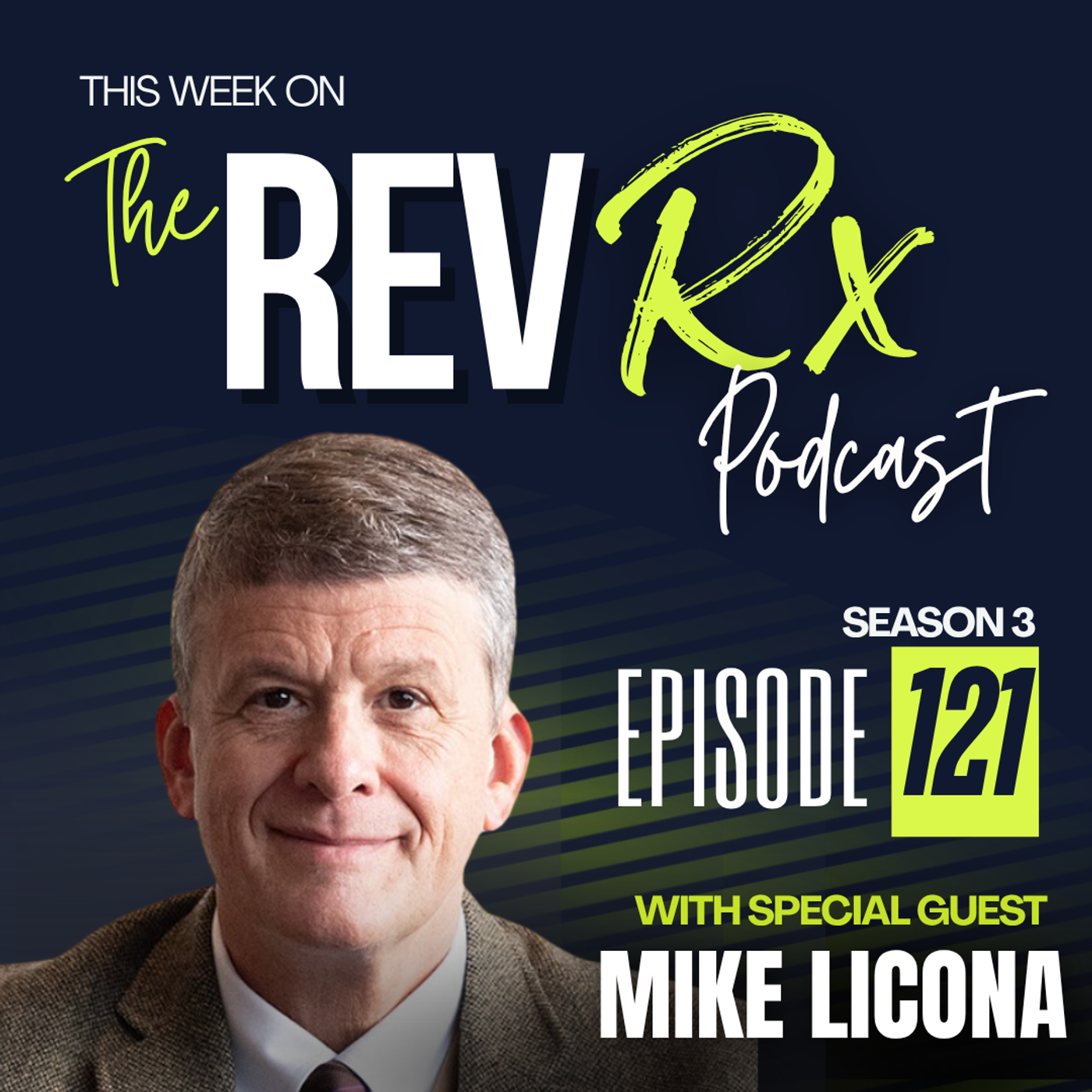
The Rev Rx Podcast | Conversations On What Matters Most · Rev. Chad Potts, PharmD
Can we actually trust the Bible? What about the contradictions critics point out? Were the Gospels written too late? Did the Gospel writers disagree with each other? And does any of that affect our faith? In this episode of the RevRx Podcast, Chad sits down with renowned New Testament scholar and Christian apologist Dr. Mike Licona to tackle one of Christianity’s biggest questions. Drawing from decades of historical research, doctoral work, and debates with leading skeptics—including Bart Ehrman—Dr. Licona explains why thoughtful investigation has actually strengthened his confidence in Scripture. Rather than avoiding difficult questions, this conversation demonstrates why Christians don’t have to fear them. In this episode you’ll learn: Why doubt isn’t the enemy of faith Can we really trust the Gospels? What “God-breathed” Scripture actually means How historians evaluate ancient documents Why Gospel differences don’t automatically equal contradictions How ancient biography helps explain the Gospel accounts Why the resurrection remains the foundation of Christianity Practical reasons you can have confidence in your Bible Whether you’ve wrestled with questions yourself or want to better answer your children’s questions someday, this conversation will equip and encourage you. Connect with Dr. Mike Licona Website - https://www.risenjesus.com/ YouTube - https://www.youtube.com/@MikeLiconaOfficial/videos Books: - https://www.risenjesus.com/booksJesus, Contradicted Why Are There Differences in the Gospels?Listen & Subscribe If this episode encouraged you, please: ⭐ Leave a review 📲 Share this episode with a friend 🎙️ Subscribe so you never miss a conversation about the things that matter most.
Chad Potts: Welcome back friends to another episode of the RevRx Podcast where we have conversations about the things that matter most. I'm so honored and privileged to have with you my friend, Mike. You are an inspiration. You have really written some fantastic books. You've got content out there that I have followed for years and you're making a difference in the kingdom, brother. And I am proud to say you are our special guest here on the RevRx Podcast today. Welcome to the show, Mike. Glad you're here. Mike Licona: thanks, brother. It's good to be with you, Chad. Yeah. Chad Potts: Yeah, fellow Georgian. And I love that. We shared a little bit offline before we hit record. But friend, you are doing important work for the kingdom. We're gonna talk about today one of the pressing questions that I get asked a lot as a young adult pastor, where people are trying to make their faith their own and believe in their faith because they believe it and not just because that's how they were raised. And one of the questions I get a lot is can we really trust the Bible? That's going to be our topic today. But before we get into that, Mike, I'd love to just hear a little bit about you. Can you introduce yourself to our listeners? Help us to get to know you a little better and tell us a little bit about how you got to where you are today. Mike Licona: Yeah, well, thanks, Chad. So I will be 65 in July. I grew up in Baltimore, Maryland. And I became a Christian at the age of 10. I didn't grow a whole lot spiritually during my teens. I ended up going to a Christian university where I really got excited about my faith. And by the time I... Graduated college, I was reading scripture probably an hour a day and probably pray in a minimum of two hours a day. And one to two hours a day. And just really feeling close to the Lord. I went to grad school for New Testament studies and in the fall of 1985, toward the end of my coursework. I just began to question my faith. It wasn't anything that I learned perhaps. It was just the thought, you know, I was brought up in a Christian family. I've only been exposed to Christianity, but what if I'd been brought up in Afghanistan? Would I be a Muslim or India? Would I be a Hindu? Have I just kind of persuaded myself? I haven't been exposed to any other religious views. And if I'm wrong on this, it could cost me eternity. And that really started to bother me. And I thought, you know, before I devote my life to Christ, maybe I should spend a little time to see if this is true after all. And so I did. Just a little bit at that time. One of my roommates recommended that I see Gary Habermas, who was a philosophy professor and I'd never had him for class, but I knocked on his office door. was. cordial to me, invited me in. He said, you know, I expressed that I was having some doubts. He said, well, don't feel bad about that. I have seminary students quite often tell me about they're having doubts. He said he had experienced doubts in the past, but that what had really helped him was the historical evidence for the resurrection of Jesus. And he began to share that with me. So probably after about 20, 25 minutes for the entire visit, I don't remember how long it was. I mean, this was like 40 years ago, right? I felt encouraged about my faith. I was just pretty much looking for reassurance at that time. But once I left school and started interacting with nonbelievers and sharing my faith and they'd bring up objections, I wasn't prepared for that. I had Chad Potts: you Yeah. Thanks Mike Licona: I had no desire to learn Christian apologetics while I was in grad school. But it's like, you know, I didn't really need it at that time. Now I kind of needed it. And so I called Gary again. There was no email back then. We're talking about the mid to late 80s. you know, he would talk with me. He would point me to sources books. He would send me some copies of journal articles and I'd read these. I was just. Chad Potts: Hmm. Yeah. Mike Licona: devouring this information. I went through several periods of doubt and one of the largest occurred was as I was getting started in my doctoral research. I decided I wanted to investigate the resurrection of Jesus using the tools of historians. Gary Habermas told me that no historian had really done a major in-depth you know, study the resurrection from a historical perspective. And so I wanted to do that. I wanted to see if I subjected the claim that Jesus rose from the dead to a sober-minded historical investigation, what would it look like? Could I actually prove the resurrection that way? As I started to read, and probably a year into it as I'd been reading books and journal articles written by philosophers of history and professional general historians, I came to understand that there's no such thing as an unbiased historian. Everybody has their own agendas and nobody comes from an entirely clean slate where they have no preferences. And so I realized that that applied to me as well. And biases, Chad Potts: Right. Mike Licona: are perhaps the greatest threat to a fair-minded investigation that's done with integrity. So I identified some problems that I was having with my own biases, like when I was reading books on the resurrection that was written by scholars who said Jesus rose from the dead. I wanted it to prove Jesus rose from the dead, so when I was reading friendly sources, it's like I'm reading them in depth and very carefully to see What all their arguments you they used so that I could use them. But then when I was reading the other views, like by John Dominic cross in or Garrett Luderman or Steven Patterson, people like that. I found myself sometimes skimming through because of course their writings were they didn't have much to offer, right? They were wrong. So I said, well, wait a minute, wait a minute. This isn't right. Not if I'm going to do this. Chad Potts: Right. They're wrong. Mike Licona: a fair-minded investigation with integrity. So I'd go back and reread those things. And I would try to give them the same kind of open-minded attention that I did to the friendly sources. So, you know, I started to see that, wow, you know, this is quite difficult. And then you start to recognize that a lot of historians don't even recognize that they have a bias. A lot of New Testament scholars don't recognize that they have a bias or if they do, they don't really do anything about it because while they're coming from, you know, whether Christian or skeptical perspective, it's the other guy who has the problem with their bias, not themselves, because they're right. Right. Same problem I had. So, you know, I came to the point that if, if, if I can't prove Jesus rose from the dead, I can still be a Christian. if it's like indeterminate, but at the evidence points significantly away from the resurrection of Jesus, I'm thinking I'm going to give up my faith. I'm going to do this right. I don't care where any, what anybody else does. This is my eternity. And when I die, I'm going to face, if God exists, I'm going to face an audience of one. And that one's opinion of me is all that's going to matter at that point. And so I want to do this with integrity and, and come to a conclusion that to the best of my ability, is the truth. It arrives at the truth or as close to it as I could get. And, so at the end, I did conclude that Jesus rose from the dead. That was based on a lot of research. It was based on a dissertation that was three to four times longer than the average doctoral dissertation. Chad Potts: Well. Mike Licona: It was after debating multiple, multiple high profile, highly esteemed, skeptical New Testament scholars, philosophers, and even Muslims. Because I figured if I'm going against the people who are the top of their disciplines, who are coming with their A game, you know, I'm going to have my blind spots. They are too, but they're going to bring the best of the skeptical arguments and the most informed ones. And, you know, let's see where it comes to. so I became, you know, I just, it reaffirmed my faith. Although in a sense that you can't prove the resurrection in a sense, in a strict sense of prove, all we can look is probability when it comes to history, especially, especially ancient history. So I think sober-minded investigation can reveal that Jesus probably rose from the dead and certainly more probable than not. So that's where I am. That's what got me on this. then later on, you know, as I'll wind up with this, cause I've been going on too long. The, the skeptics would, you know, call into question the gospels. And for me, once. Chad Potts: You're good. That's what we're here for. Mike Licona: you conclude that Jesus rose from the dead. And I think we can build the very probable case that Jesus rose without even using the Gospels chat. And in that case, you know, if Jesus rose from the dead, you know, it's game set match. Christianity is true, period. So even if the Gospels suffered from all the problems that skeptics like to cite, we don't know who wrote them. Chad Potts: Mm-hmm. Right. Right. Mike Licona: They're biased, contain contradictions, they're written too long after the events they purport to describe. They weren't written by eyewitnesses, those kind of objections. It doesn't matter, you know, it would matter in terms of the reliability of the gospels, of course, but it wouldn't matter in terms of is Christianity true? And so those things didn't bother me as much as they used to. And, but I noticed they bothered a lot of believers. So that's what got me. working on the gospels to talk about their reliability and dealing with various objections that have been brought up and trying to look at it as fair minded as I could. Chad Potts: And I love that. And I love that you're transparent enough to share with us your doubt journey. I think a lot, I shared this with you a little bit ago. I think a lot of people, a lot of Christians kind of have silent doubts about things, but they're scared to admit them. Nobody wants to be the guy that's like, well, but what about this? You know, do we really know that's true? And you know, you mentioned when you started coming into this apologetics world. you were devouring it. And that's been me. You know, I realized that at some point that, hey, you know, I'm a pastor and I don't have the answers to some of these questions. And they're good questions, good questions like, did Jesus really rise from the dead? And why does that matter? Good questions like, can we trust our Bible? Good questions like, are the gospels reliable? You know, where did the universe come from? Where did life come from? Things like that. You know, and we have these answers. that we kind of say, but they're realizing that there are good answers to those questions has made me kind of devour all of that as well. And so for listeners of the podcast, I know you guys realize that we've kind of taken an apologetic journey over about the last six months. We actually had an episode about the resurrection of Christ and why that matters. We had that around Easter. And Mike, you've hit a lot of different categories and maybe we can do a series because you're such an interesting individual. And you've written some intriguing books. I'm particularly interested in Paul meets Mohammed. I had Abdul-Murray on the show a I guess, couple episodes ago, sharing about how he grew up Muslim, devout Muslim, but then how he couldn't defend that anymore. He became a Christian. So maybe we can talk about that in a future episode. But what I want to talk about today is number one, the fact that doubts are okay. You know, I believe that church needs to be the place that you bring those doubts. It needs to be the safest place to have those questions and the church needs to be equipped to answer those questions. And so that's one of the things we're doing today is equipping and we're, we're educating and showing that there are good answers to those good questions. But one of the things I think that has bugged a lot of people and you mentioned in one of your videos that after your debate, I believe it was with Bert Ehrman. Mike Licona: Mm-hmm. Chad Potts: One of the things that bothered a lot of the people who listened to that, that I guess wrote into you later, was the fact that it seemed like you won that debate, but it bothered them about some of the contradictions in the Gospels that he brought up. Now, you didn't address those because you weren't proving your case using the Gospels, and those were kind of red herrings. But that was something you began to address later on, and you've written now two books. on this topic of the contradictions in the Bible and does that change the reliability of our Bible? So thinking about the fact that a lot of my listeners, they're not scholars, okay? Their parents, they're busy professionals following Jesus in the middle of the chaos. And I'm there too. I'm listening to these podcast clips in the middle of, whether it be changing diapers or on the way to a sports game or something like that. Big, big question here. Why should we as Christians care if the Bible or the Gospels are reliable? What's the big picture here? Why is that important for us to understand? Mike Licona: Well, the gospels are our primary sources that talk about the life of and teachings of Jesus. So this is where we learn a lot. I mean, you can learn about salvation, you the gospel from Paul, who's writing probably before any of the gospels were written, or least all, but perhaps Mark. So, you you get the gospel, we can get a number of Jesus's teachings from Paul, but you know, to really learn about the life of Jesus and most of his teachings, you got to go to the gospels. That's where you find the man Jesus. And so if they're not historically reliable, then we can get a distorted picture of Jesus in our minds. So that's why it's important. You know, how do we, how are we supposed to live the Christian life? Again, Paul has a lot of that in his writings. So does the other New Testament literature. Chad Potts: Mm-hmm. Mike Licona: But when you come to the gospels, those are going to be our primary sources for these things. Chad Potts: Yeah, yeah. And this important for us, know, Christ is our example. So if we're going to emulate Christ, and if we're going to strive for Christ likeness through the gift of the Holy Spirit in us, we need to kind of know what that looks like, right? And if we get a distorted picture, that's, that's different. Mike Licona: Yeah, it's like, if I want to know about somebody do I want to know about them just from reading one letter or four books? You know, yeah. Chad Potts: Yeah, yeah, yeah, absolutely. So they are our go-tos for the life of Christ. And there's been a lot written and a lot said about those, but one of the things I want to talk about is just big picture, again, overview of Scripture. What was Jesus's view, speaking of him, of Scripture on the whole? I think sometimes people think of Scriptures maybe inspirational, but maybe not authoritarian. They don't have authority. And so what's the perspective here from Jesus's point of view? What are some things that he says? What are some ways that he views scripture and how does that help us today? Mike Licona: Well, we want to be careful that, you know, when we're looking and getting this stuff from the gospels, we want to be careful that we're not arguing in a circle. Right. So we, you know, Jesus thought that the, that the scriptures are divinely inspired or authoritative. And how do know that? Well, from the scriptures that are divinely authoritative, you know, and divinely inspired. So I come at this from a historic. Chad Potts: Yeah. Mike Licona: a historical perspective. So some of the tools that historians use would be things like, are there some eyewitness sources? Are the sources early? Do we have, one of the most important is, do we have multiple independent sources? So if one person talks about something, that's good. If two people are providing an independent story, Well, that's really good, you know? It's better, the more the better. So do we have multiple independent sources, hostile or unsympathetic sources, sources that are kind of embarrassing to the cause of the person who's writing this? Why would you put something like that in there unless it was true, you know, if it's gonna potentially damage your cause? Chad Potts: Right. Mike Licona: So, I mean, these are just common sense criteria. So we do have that when it comes to the gospels pertaining to Jesus's view of the Bible, which at that point was just the Old Testament. So, you know, we have multiple independent sources and you've got this motif that permeates throughout all four gospels about how Jesus sees the gospels as God's divine word. And what that means, we can talk about that. Sometimes people associate that as though it's a transcript of what God says. And that's not necessarily what it means. But this is the authoritative, divinely inspired Word of God, is how Jesus looked at it. And we know this because he relied on it during times of fasting, during times of persecution. Chad Potts: Mm-hmm. Yeah. Yeah. Mike Licona: even while on the cross, you know, he appealed to it constantly. That was his source. So, that's one thing. We can just see how Jesus revealed Scripture. It was authoritative. It was ultimately from God. And then when it comes to the New Testament, something else we can see multiply attested is that Jesus commissioned his disciples Chad Potts: Hmm. Mike Licona: and gave them authority. So, to the extent that they preserve the message and teachings of Jesus, the writings of the disciples and those that follow them, their associates, then we can, I think it's reasonable to conclude that those should be considered divinely inspired and authoritative as well. Chad Potts: Hmm. Yeah, very well put. And so delving into that area where Jesus, we know Jesus thought that scripture was divinely inspired. I do want to talk about that a little bit because we have several scriptures, kind of the hallmark is Second Timothy 316, You know, the scripture is God breathe, they're God inspired. You know, and how that's not exactly the same as God dictated, right? It's not like God had this fact from heaven that he sent down and someone wrote the exact dictation of that. but yet use the characteristics of the writers, the personalities of the writers. Can you give us kind of a plain English view of what that means that scripture is God-breed, they're God-inspired, and how that changes the way that we see it? Mike Licona: Sure, well the Greek term that's used there is unique to the New Testament. It's theanoustas, meaning literally God breathed. But what does that mean? Now on the surface that would seem to suggest dictation, divine dictation, God breathed. But is that what it means? So it's not used anywhere else throughout the New Testament. So it's kind of difficult to know since that's our only example. So. When you look throughout the other ancient literature, both in Christian literature that comes after the New Testament, Jewish literature, Greco-Roman literature, surprisingly it's found in all of that. So in the Greco-Roman literature, we have some writings called the Sibylian Oracles, which some of them could predate Jesus. It could go back as far as like of the first century BC or even a little before that. And these talk of Sibyls were, they were pagan priestesses, okay? And the oracles that they would give would be like, these are oracles from the divine. These are messages from the divine teachings. So they talk about how, they talk about theanustas streams, streams that are God-breathed. They say on another part of it, says that everything is God-breathed. have, boy, it's been a little bit since I looked at this, so I can't remember the guy's name, but he was a astrologer from the second or third century. And he talked about how ether is God-breathed. Now ether was a substance back then. Chad Potts: Yeah. Mike Licona: We don't think that ether exists today, but they thought it was an all encompassing substance that included air. And he said that everything was God-grived. You have the Testament of Abraham, which was written probably at the end of the first century. It's a Jewish writing. It's kind of a funny one, but it talks about how it's time for Abraham to die and he doesn't want to die. so anyway, finally he dies. Chad Potts: Thank Mike Licona: and the angels come and they put ointment on his corpse that is theanus das, God breathes. So, but what does that mean? So it could in some ways mean that it was divine, divinely dictated, but I think at minimum it means that it ultimately has its origin in God. It comes from God in some sense. So it's not just Chad Potts: Hmm. Mike Licona: scripture that would be God-breathed, everything could be God-breathed, created. And some things are flawed, right, due to sin and the fall. So what about scripture? Well, you know, have the scripture we have today, and even your most conservative scholars would agree that our present scripture has some errors in it due to, at least by transmission, right? Chad Potts: Hmm. Yeah. Mike Licona: Strong, strict, and errantist, traditional and errantist will say the Bible's an errant in its autographs, but not in the copies that we have today. Some of the manuscripts have been corrupted to the point that we don't know what the original actually said in some cases. So is the scripture we have today divinely inspired or parts of it, most of it? Chad Potts: Yeah. Mike Licona: You know, if you're, if you're going to say it in a very strict and errant sense, that's what you'd have to say. Most scripture is divinely inspired as God breathed, but not all of it. Right. So, it seems to me that if you take, a little more flexible view of inspiration, and this has to go with the, what does inspiration God breathed means? I think it at minimal, means that God was involved in the process and Chad Potts: Sure. Hmm. Mike Licona: given his sovereignty, he's involved in the process to some extent to ensure that everything he wants us to know has been preserved with sufficient accuracy. So that's how I would go with that. Chad Potts: Mm. That's good. That's a good refrigerator quote for us. And although the way you kind of pulled all that together and you know, it's important to look at how that word is used, you know, within the context of the Greco-Roman world too. So I appreciate you bringing that in. And you know, it's important to look back and see, you know, the autographs versus the transcriptions and kind of how that happens. And again, we could talk for three hours about this, but I'm hoping that what this does Mike Licona: you Chad Potts: is that it makes our listeners hungry to find out more about the canon, about the Bible and how it came to be. But let's get into some of those contradictions, seemingly contradictions, apparent contradictions. Yeah. Mike Licona: Chad, if it's okay with you, I think we should cover one other, you know, text and that's the second Peter one. 21, 22, right? Because, you know, some people would say, well, wait, what do you do with that one? So that text says no prophecy of scripture is a matter of one's own interpretation. No prophecy matter is matter of human will, but men moved carried along by the Holy spirit spoke from God. Chad Potts: Ooh yeah. Let's do that. Yep, there you go. Let's do it. Mike Licona: And that would seem to suggest, I mean, you could take that in the sense that, you know, it's kind of a dictation. And really, it does sound that way, like dictation. So what do we do with that? Well, if it is dictation, and I'm not aware of any scholar today, even no matter how conservative who thinks that it's divine dictation, there's problems with divine dictation because you have all these different educational levels as you go through scriptures, you know. Paul is more educated and Luke is more educated than let's say John, right? The author of Hebrews, whoever that was, was very good at writing and it was an excellent orator, knew rhetoric really well. you know, you have these things, Paul has a memory lapse in 1 Corinthians 1 16 when he says, I don't remember. if I baptized anyone outside the household of Stephanus. Well, Paul might not have remembered, but if scripture is divinely dictated, well, then God would have known, the Holy Spirit would have known. So that would be a problem for the dictation view. You have, it's too much to get into, but there's a couple of examples. One that I'm really fond of, that... seems to suggest that there's editorial fatigue involved on Luke's part. So these things are severe challenges, I think, to the divine dictation view. And then when you look at 2 Peter, and it talks about prophecy of scripture, is that talking about all of scripture, or is it only talking about prophecy? Now, when you look at Josephus and Philo, who were two Jews, who wrote in the first century, Jewish historians of the first century, they talk about prophets and how God inspired them and said, yeah, he took over their cognitive abilities entirely so that it's so every word coming out of their mouth, every thought that they were having, everything was It was like they were puppets, they were robots, and everything that came out was exactly as God had it. That's what they thought, and they were using words that would be cognates of what Peter uses in 2 Peter. But they're only applying that to prophets. Chad Potts: Yeah. Hmm. Mike Licona: When 2 Peter 1 says, no prophecy of scripture is a matter of one's own interpretation, for no prophecy was ever made by an act of human will. But men moved, carried along by the Holy Spirit, spoke from God. Yeah, that'd be divine dictation, but only in reference to prophecy. Otherwise, again, you've got memory lapse, editorial fatigue, various... Chad Potts: Yeah, yeah. Mike Licona: education levels, God becomes multiple personality, right? Chad Potts: Yeah, Excellent point. And I think that kind of gives us a fuller spectrum of what to do with that verse because otherwise, yeah, like, what do we think about that? Well, that applies to prophecy. We don't see some of those things with prophecy and that would make sense. And those first century historians really help us think about that in the terms of what that verse means in context. So, super helpful. And all we're trying to do here is just kind of explain some of the basic tenets of, you Mike Licona: Mm-hmm. Chad Potts: can, how do we think about Scripture? Is it just a collection of books that some people wrote or is it the mind of God or is it some combination of both? And I think it's helpful to walk through these together. And then when we get to the gospels, and Mike, I want to go on to contradictions, but is there anything else you want to add about the issue of God breathed, God inspired? that kind of cover. Mike Licona: Well, think we, you know, the bottom line is, you know, we don't actually know what it means to say all scripture is the annustas, God breathed, but at minimum, at minimum, it means that they ultimately have their origin in God and that, you know, I think we can have confidence that God has preserved everything he wants us to know with sufficient accuracy. And look, Even if you take a more divine dictation view of inspiration, still have to acknowledge that we have errors in our present text. You know, there's the numerical discrepancies between Samuel, Kings and Chronicles. You have in first Samuel, it says David killed Goliath and second Samuel says El Hanan killed Goliath. You've got in Mark chapter two, it says that You know, David ate and his men ate the sacred bread during the days of a by it when no by a thought was high priest, but you go back to the Old Testament. It's not a by a thought. It's his father, a himalaya whose high priest, you know, what do you do with these kinds of things? So even Norman Geisler and Thomas Howe in their book, the big book of Bible difficulties, very, very, very ultra conservative theologians and. You know, they acknowledge that we have errors in our present text. They will say that it's due to copyist errors. But the thing is, God did not see fit to preserve an inerrant text for us, which means he doesn't think that it's important for us to have an inerrant text. Why then can we still trust what we have? And the strict traditional narrative would have to say because we think that because Jesus rose from the dead, God and his sovereignty has seen to it. He was behind the process of preservation so that at least ensured, given free will of the copyist, he ensured that everything he wants for us to know has been preserved with sufficient accuracy. That's the same thing that I would say with a more flexible view of inspiration. Chad Potts: Yeah. The nomination I belong to says it this way, that the Bible is inerrant in all things pertaining to our salvation. And so that leaves room for the flexibility of saying, you know, some of these other things, there's errors, but you know what? We've got everything there that we need to know about how to be saved and about, you know, about what Christ did for us. And so, yeah, being able to walk through that process. And I love the way you summarize that. We can still trust it. Even with Mike Licona: Mm. Chad Potts: some of the issues that we talked about. And then specifically the Gospels. You mentioned some contradictions. You mentioned some errors that were present in some of these. And in the Gospels, we see some of those. I love that you mentioned the harmony of the Gospels. It's kind of a, you know, it's a tough fit for some of those things. But thinking about the fact that you have debated some of the most prominent scholars. who have looked at the same text we look at and say, you see these contradictions? That means you can't trust it. Can you walk us through some of the biggest examples of those and kind of how we can walk through some of that and explain either, you know, that that's not a contradiction or that is a contradiction, but here's why we can work around that. Mike Licona: Well, there are quite a few of them. But let's just look at the crucifixion and resurrection. So when was Jesus crucified? Well, the Gospel Mark says around 9 a.m., whereas John says just after 12 noon. So which one was it? That's one thing. When did the temple veil... Chad Potts: Yeah, good. Mike Licona: split in half. Luke said it was prior to Jesus, just prior to his death, whereas Matthew and Mark say it was after Jesus' death. Did Jesus carry his cross all the way as portrayed in John, or did Simon of Cyrene help him as portrayed in the synoptic gospels, Matthew, Mark, and Luke? Chad Potts: Yeah. Mike Licona: Let's see, you got the resurrection narratives. How many women went to the tomb? You have Luke, well, I'm sorry, Matthew, Mark and Luke, the synoptic gospels have multiple women. John just mentions Mary Magdalene. When the women got to the tomb, how many angels did they see? Matthew, Mark have one, Luke and John have two. Where did Jesus first appear to his group of male disciples? Was it in? Chad Potts: Mm-hmm. Mike Licona: Galilee like Matthew says and mark implies or was it in Jerusalem as Luke and John have it How long was Jesus with them? Was it a? lengthy period of time of a few weeks As you probably have in Matthew and and certainly have it in John Or did Jesus rise from the dead all the appearances and the ascension occurred on Easter Sunday as Luke has it? you know, this is just the death and resurrection narratives Chad Potts: Right. Mike Licona: I think that just about all of those can be easily accounted for by what I would call and others would call compositional devices. And these are things, techniques when communicating in writing and are still used today in our everyday ordinary conversations. So like I might come back from, let's say I was at the grocery store and I said, Hey, I saw our neighbor who just moved in across the street. And he said that they're getting acclimated to their house. Well, maybe that guy's sister was with him. Okay, his wife wasn't, but his sister was with him. But when I'm talking to my wife, I only mention him because he's the one that lives in the house and with whom we deal with, you know, on a regular basis. So the sister was kind of irrelevant to the conversation. But maybe later on, he is talking to my wife and said, yeah, your husband saw my sister and I at the mall or at the grocery store. And my wife wouldn't be justified in saying, well, that contradicts what my husband told me, right? Why? Because I'm using a device that I would call literary spotlighting or spotlighting. It's kind of like you go to a theatrical performance, you see a bunch of actors on the stage and at one point the lights go out and a spotlight shines on a single actor who breaks out in a song or a monologue. You know the other ones are there, but all the focus is on that one. And we use spotlighting all the time. It's not a contradiction. It would only be a contradiction if I had said to my wife, I saw our new neighbor at the grocery store and he was alone. Chad Potts: Yeah, right. And his sister was not there. There's no reason to say that. Mike Licona: So that's right. Nobody else was with them. So, yeah. So that'd be like one. Well, that could easily explain the difference between why Matthew and Mark have one angel, Luke and John have two. Matthew and Mark are focusing on the one who's announcing the resurrection. You have another example of literary spotlighting. know, how many women went to the tomb? You have Matthew, Mark and Luke, multiple women, John. as Mary Magdalene, but it says early in the morning, while it was still dark, Mary Magdalene went to the tomb and found it empty. And she came back and found Peter and the beloved disciple and said, they have taken the Lord and we, we don't know where they've laid him. Who's we, right? It's probably not, she's probably not including Peter and the beloved disciple because well, they didn't even know the tomb was empty before she got there, right? Of course they wouldn't know where they'd taken him. Chad Potts: Hmm. Yeah. Mike Licona: probably referring to the other women. And so then who goes to the tomb? Well, you've got Luke says Peter went to the tomb, doesn't say just Peter, but only mentions Peter going to the tomb, whereas John says Peter and the beloved disciple went to the tomb. But then later on, 12 verses later in Luke's Gospel, Jesus is talking to the mass disciples, it says their eyes were kept from recognizing him. And he says to them, why the long faces guys? And they said, well, you know, have you not been around Jerusalem enough to know what just happened over the weekend? You know, Jesus was crucified, but you know, our women went to the, folk went to the tomb this morning and saw angels who said he'd been raised. And then some of our own, plural, some of our own went to the tomb and found it empty as the women had said, well, wait a minute, Luke, just 12 verses earlier, you said just Peter. No, I didn't say just Peter, I only mentioned Peter, he's the main disciple, he's spotlighting. So you've got three examples of spotlighting going on in the resurrection narratives alone. So that's just spotlighting, there are several other examples within the death and resurrection narratives of other kind of literary compositional devices, things again that we use in our everyday ordinary conversations. that can account for those differences. Chad Potts: Yeah, and somehow we hold, we hold ancient writers to a different standard, don't we sometimes when we read those scriptures, we're like, well, they didn't say everyone was there. Well, we don't do that either. And so realizing that we use some of those as well. Yeah. Mike Licona: That's right. Well, here's something about the everyone. In Mark chapter 1, I think it's verse 5, it's talking about John the Baptist, and it says, all of the region of Judea and everyone, every Jerusalemite, everyone living in Jerusalem went out to see John the Baptist and were baptized by him. Now, obviously, not everyone. who lived in Jerusalem and everyone in the region went to see John and were baptized by him. The high priest in the Sanhedrin didn't go and be baptized by him. That is hyperbole that is being used there, obviously. Chad Potts: Yeah, yeah, yeah. And in thinking about things like genealogies, there's a couple of different genealogies in the Gospels, but ancient biographies were a little bit different, right? Can you walk us through that a little bit? Mike Licona: Sure. So, some have tried to reconcile the two genealogies and say, one's the genealogy of Jesus through Mary, the other through Joseph. But there's some problems with that. So, when you read Matthew's gospel carefully, that first chapter, and you go through the genealogy, first of all, at verse 17 it says, these are all the generations. from Abraham to Jesus, all of them. And so you've got 14 generations from Abraham to David, 14 generations from David to the deportation of Babylon, and 14 generations from the deportation to Jesus, 42 in all, all the generations. So you compare that with all the generations that Luke includes. Now he goes all the way back to Adam. But if you only include those from in Luke's from Abraham to Jesus, there's still more than 42. So, um, that would be one problem if you're taking these in a very, uh, wooden sense. Another thing is when you read it carefully in Matthew, Jeconiah is the 14 in the second set of 14. And then Matthew cheats and reuses him as the first generation in the third set. Chad Potts: Mm-hmm. Mm-hmm. Mike Licona: So just shows he's not trying to be really careful here. And then he says, all the generations, three sets of four. So what's going on here? Well, this has been proposed by a number of New Testament scholars, even conservative ones like Craig Blomberg. And they say that what's going on here probably is a rhetorical device called gematria, where a numerical value is assigned to a letter. We can see this going on even in Psalm 119, which each section Chad Potts: Yeah. Mike Licona: you know, in there is numbered by one of the Hebrew letters in the alphabet. So what we have is gematria here and there are 14 letters. I'm sorry, in the name David, Delwede, you have three Hebrew letters. The D is the fourth letter in the Hebrew alphabet. Chad Potts: Right. Mike Licona: And the V, Vav, is the sixth letter. And then you have D, there are no vowels in ancient Hebrew. So you have four, six, four, it comes to 14. So what Matthew is doing here, yes, he's giving actual people to show that there is a line here that points Jesus back to Messiah, but he's also doing it in an artistic sense through gematria. Say, David, David, David, he's doing this numerically. Chad Potts: Yeah. Mike Licona: to say Jesus is the son of David, the Messiah. So it just, it's useless to try to reconcile these two, to harmonize the two genealogies because then you miss out on what Matthew is actually doing here. Chad Potts: Yeah, and that's beautiful. And that brings so much to me that brings so much richness to the text showing what Matthew is trying to do with that. I think that's beautiful. He's not just listing a group of names. He's doing it in an artistic sense. And that would have made a lot of sense to the original audience to Matt, to which Matthew was writing, right? To the Jewish audience. You know, Hey, he's tying it in with King David, you know, to the, you know, to the, you know, to the Jewish faith and to the Jewish tribe. And so Absolutely beautiful in my opinion. when we think about chronological differences, that's another thing I think that hangs people up sometimes. Help us think about that because the ancient writers may have arranged things differently. Can you give us some examples of when that happens? Mike Licona: Well, one example that is common is that, you know, Jesus cleanses the temple, overturns the tables of the money changers and merchants. That's in the final week of his life. Whereas in Matthew, Mark and Luke, whereas in John, it's at the beginning of his ministry. Now, some could say, and my friend Randy Richards has published and argues that there were two temple cleansings. Maybe he's right. But most scholars think that there was only one and John has relocated it to the beginning of the ministry. Johannine specialist Craig Keener suggests that the reason John does this is he wants to frame Jesus' entire ministry symbolically as a Passover. So it happens at the very beginning. He inaugurates us at the beginning. the temple cleansing during Passover and then Jesus is executed at the end during Passover. And what's also interesting is the timing of Jesus's crucifixion. So in Matthew, Mark and Luke, you have the last supper happen on the Passover and then Jesus is crucified the next day. Whereas in John's gospel, the last supper isn't a Passover meal. There's nothing there's. to suggest it's a Passover meal. And then Jesus in John 18, verse 29, I believe, says that the Jews handed over Jesus to Pilate, but they did not follow him into the Praetorian so that they would not be defiled and therefore they could eat the Passover that evening. That's kind of interesting. So in that sense, Jesus would have been, you know, Chad Potts: Yeah. Yeah. Mike Licona: you know, he's the Passover lamb that's being slaughtered on the eve of the Passover, right before the Passover would begin at sunset. The time of the crucifixion was probably changed by John as well. the crucifixion, I'm sorry, the Mishnah, which is second and third century, Chad Potts: Mm-hmm. Mike Licona: has suggested that or reported that when the Passover fell on a Sabbath, you typically have the burnt offerings offered on the Sabbath. But now you got to do the Passover lamb as well. So you're going to move the burnt offerings back a couple of hours. They're typically done about mid afternoon, maybe around two o'clock. So if it's moved back a couple of hours, that puts you to right around noon, that the burnt offerings are going to be offered so that the Passover can be Chad Potts: Hmm. Hmm. Mike Licona: offered a little bit later before sunset. So in that case, if Jesus is delivered to be crucified just after 12 noon, is that symbolic of John? Is he saying that symbolically to say Jesus is the burnt offering of our sins and our paths over lamb? That's pretty interesting. Now in ancient biography, he would have been. Chad Potts: Mm-hmm. Mike Licona: allowed to do some things like this. Matthew would have been allowed to do some things like this with the genealogy. Let me give one other example because this is my favorite one. One was the temple cleansed. Well, you have Mark saying that Jesus rides in on Palm Sunday and he goes in and he just looks around. It's late today so he just looks around in the temple and then he and his disciples leave. Chad Potts: Yeah. Sure. Mike Licona: They go to the Mount of Olives that night, spend the night there. The next morning, Monday, he's coming back to Jerusalem with his disciples. They come across a fig tree. He's hungry, no figs on it, so he curses it. Then he goes in, he sees some stuff going on. Again, this is Monday. He sees some things going on in the temple he doesn't approve of, so he cleanses the temple on Monday. Then they leave, they go back to the Mount of Olives, they spend the night there. Tuesday morning, they get up, they come back. And Peter says, look, Lord, the tree that you cursed yesterday has withered and died. And when you come to Matthew's gospel, he rides in on Palm Sunday, just like Mark says, he goes into the temple. But here, Matthew is going to conflate two temple visits into one. He's going to bring the Monday temple visit and combine it with Sunday temple visit. And Jesus is going to cleanse the temple on Sunday. Chad Potts: Thank Mike Licona: So there's a conflation there. And then they leave, they go to the Mount of Olives, spend the night there. Monday they return to Jerusalem. Jesus sees the fig tree, no figs on it, so he curses it. And Matthew says, immediately it withers and dies. So he conflates the two steps of the fig tree and Mark into one, just like he conflated the two temples. Why? He's just simplifying. So he's relocating, he's relocating the temple cleansing from Monday to Sunday. And he's relocating when they noticed the fig tree had withered and died from Tuesday to Monday. Chad Potts: Yeah, yeah, I love that. And you know, it's, it's, it's easy to look at the contradictions and say, Ooh, look at all that. How do we defend this? But to me, it's pretty easy. With help from people like you. A lot of it is is really related to the context. A lot of it is written a lot of it is related to how ancient texts were written. A lot of it is just common sense. And in my opinion, you know, hey, these things, as we explain some of those, it makes the Bible come alive more than it did before. So in an attempt to reconcile some of these things, I find myself being more encouraged that this Bible that we read and that has maybe some seemingly contradictory moments actually is alive and actually is reliable. And there's more examples we could cover, but for the sake of time, I want to direct you, my listeners, to your book. You've written two on this topic. Why are there differences? Yep, I was wanting to say contradictions. That's not right. Why are there differences in the Gospels and then Jesus contradicted? Can you talk about both of those works and kind of the difference between those? Mike Licona: Why are there differences in the Gospels? Why are there differences in the gospels was published by Oxford University Press in 2017. It's an academic monograph. gives a lot of examples, 19 examples actually. In the gospels, it gives even more. I think 36 examples. I went through ancient biographies written by Plutarch who's largely regarded as antiquity's greatest biographer. And I point out 36, episodes in Plutarch's lives that are reported on two or more occasions, because he wrote more than 60 of which 48 have survived. So when you just look at nine of them and you compare them, this is the time of Julius Caesar around that time. And I identified 36 stories that appear in two or more of those nine biographies. And in 30 of them, there are differences. So what's interesting here is you have the same author, in many cases, using the same sources. in several of them, he's writing at the same time. He's writing them simultaneously. So differences still appear. And then you look into the same kind of differences, which shows some kind of pattern. He must be using some kind of a compositional device. And largely, classicists acknowledge that it's not only Plutarch. that use them, but also other ancient biographers and historians. So if you take these same compositional devices that you identify Plutarch using, and then you apply that and read the differences in the gospels in view of those compositional devices, it's like Hark, more than 90 % of the differences in the gospels can be accounted for. I mean, I think harmonization is appropriate in some cases or difference in oral tradition that is used that the gospel authors were relying on, things like that. But I'm saying in a high 90 percentile of the cases could be accounted for by these compositional devices. Now that was an academic monograph. It's kind of dry writing. Okay. And after that came out, Christians reading this, conservative Christians, were having some hesitations. Well, how does that fit? How does that jive with the inspiration and inerrancy of scripture? so, you know, wrestling with this for another eight years, I found other examples and really wrestled with some of these things with inspiration and inerrancy. And so I wrote a more easily understood book. And that gives them like I said other examples, but it also gets into Well some some even more radical differences that I didn't even cover in the first book. So there are fewer examples But it it gives a wider range of the kind of examples like repurposing and Things like this and then how does that work with the inspiration and narrancy of scripture? And that's what's in Jesus contradicted now. I didn't like that title because it just, but Zondervan, the Zondervan academic wanted it to do it to sound provocative, to appeal to a wider, broader audience than just evangelicals. Chad Potts: Yeah, and I would, think you did a good job explaining those. You should because you're the author, but I can geek out on why there are differences in the gospel. Like that's my, I love that. I love reading scholarly works. But for the lay people out there, if you want something more, more approachable, I guess, a little simpler to understand. Jesus contradicted is a tremendous resource. Mike, brother, you've been tremendous with us today and that's so many directions I want to go in, but I want to ask you this. at the end of the day, why do you still believe the gospels tell the truth about Jesus? Mike Licona: Well, I've got a lecture on that. You know, people can access on my YouTube channel, Dr. Mike Lacona, or I think it's Dr. Mike Lacona official, something like that. Just type in my name, you'll see my channel come up. It's got about a thousand videos on it. And just put in historical reliability and it should come up or look under playlist for. Gospels or something like that. Um, I think, you know, there's a number of criteria that I've mentioned that I think we got to be fair minded and say, you know, we're not going to, um, privilege the gospels on this. When we talk about historically reliable, what do we mean? Right. Um, and I'd say, well, it preserves an essentially faithful representation of what occurred. It's not going to be exhaustive. It doesn't have to be inerrant. You know, if we're talking about this historical reliability of Tacitus's Annals of Rome or Suetonius's lives of the 12 Caesars. Are they historically reliable? You what do we mean by that? Do they have to be inerrant? Well, no, not to be historically reliable. I consider my wife to be a reliable source of memory, but she's not perfect, you know. So, you know, what do we mean by reliable? What kind of criteria are involved? So I would say, you know, there's good reasons to think the author used good judgment in their choice of sources. Two, the author used their sources. responsibly. Three, we can verify numerous items that are correct. They can be verified as historically correct. And fourth, no more than a very small percentage of things and nothing major can be shown to be reasonable candidates for error. So, you know, I've also got an article on my website where I risenjesus.com where I compare Mark's gospel, the first gospel, for its reliability given what I've just said with Suetonius' Life of Augustus, which is considered to be his greatest biography. And Suetonius writes, he's a Roman biographer and writes more closely to how modern biographers do than any other ancient biographer. So the two I compare and come to the conclusion that they're right about the same. So if you're gonna reject the reliability of Mark's gospel, you gotta reject the reliability of Suetonius' what's considered his most reliable biography. Basically nothing in antiquity is historically reliable if the gospels aren't. Chad Potts: love that. And so answering the question, can we trust our Bible? Can we trust the Gospels? I think we can say absolutely yes. They tell us what we need to know. They tell us what God intended for us to know, and they help us to know Christ, and they help us to know His saving grace that's available to all of us. Mike, you're doing tremendous work. I've been on your website, I've been on your YouTube channel, and I have been just way too many articles, but they've helped me in my faith. And so I'm going to put Mike Licona: Hmm. Chad Potts: obviously links in the show notes to all of those things. But brother, keep fighting the good fight. You're giving us tools to help us grow in our faith and help us learn that we can trust the Bibles that's been given to us. I love the way it said Bible was not written to us, but it was written for us. And you're helping us with that. So Mike, blessings to you, blessings to your ministry. And I wish nothing but the best for you and your family. Thanks for joining us today. Mike Licona: Well, thank you Chad for having me and thank you for what you are doing for the kingdom. Chad Potts: Thank you, brother.
More The Rev Rx Podcast | Conversations On What Matters Most episodes →