
The Recovered Life Show | Mental Health and Addiction Recovery Podcast · Damon Frank
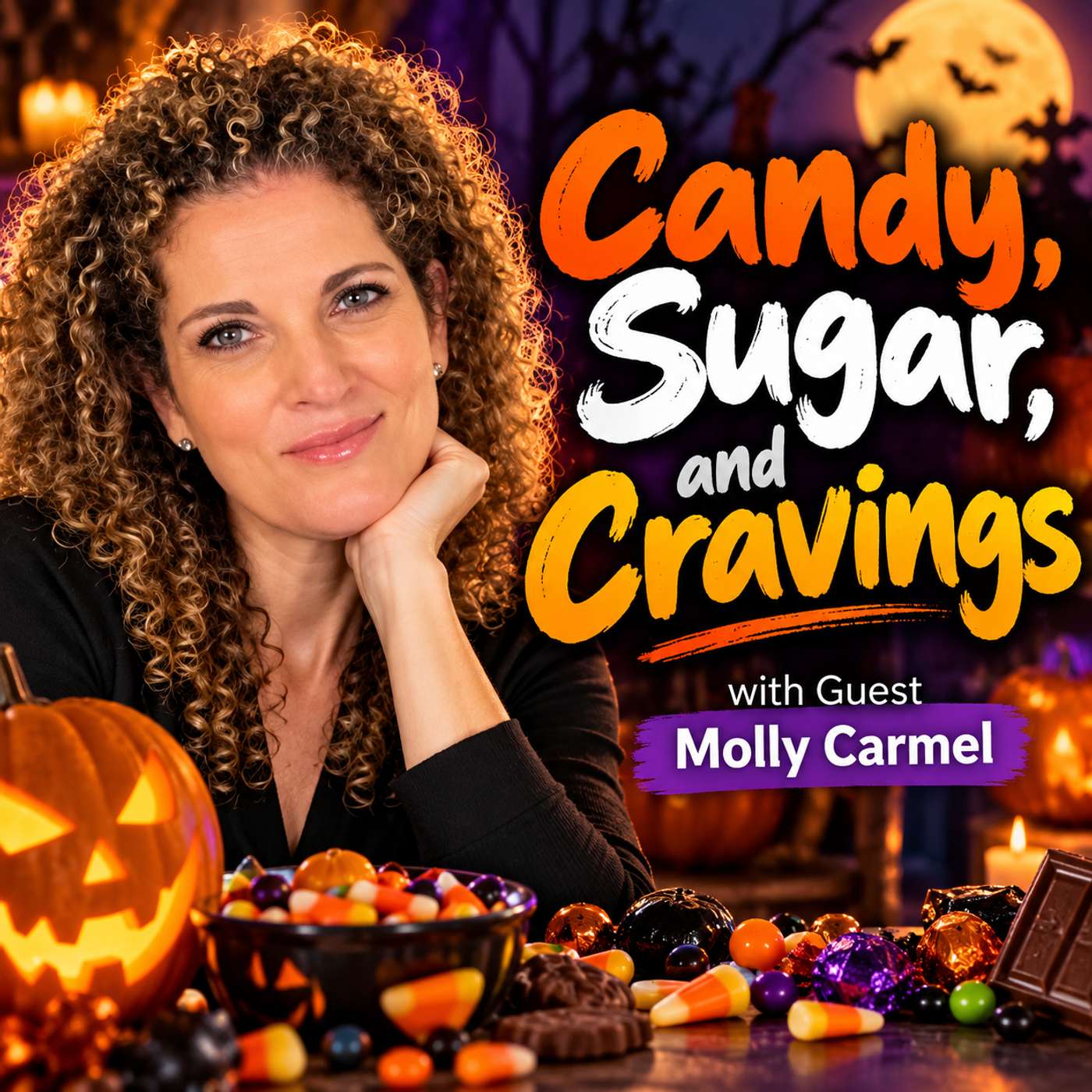
You put down the alcohol or the drugs — and picked up sugar instead. If that sounds familiar, this Halloween episode is for you. Molly Carmel, an addictions and eating-disorder therapist and the author of Breaking Up with Sugar, joins Damon to talk about the addiction nobody takes seriously: sugar. Molly nearly died of food addiction herself, and she explains why sugar is so hard to quit — you've been in a relationship with it since your first birthday cake, you can't simply stop eating, and today's ultra-processed food is not your grandma's sugar. They also get into why Halloween kicks off the "Bermuda Triangle" of relapse season — Halloween, Thanksgiving, and Christmas — and how to make it through without trading one addiction for another. Join the Recovered Life Community here. Find out how to work with Damon here.
I, by the way, like I'm like a very hardcore sugar addict. So it's actually possible that I could have been pulled over because I, I almost, you know, I almost died of food addiction. And so of course, I hope it never gets that way for some people. But I think in many ways for many people, it's like a very easy addiction where we could just say, you know, a hindrance to overlook and just say, oh, it's not that big of a deal. Oh, I'll deal with it later. You're listening to The Recovered Life Show, the show that helps people in recovery live their best recovered lives. And welcome back to The Recovered Life Show. Today's guest is Molly Carmel, a therapist specializing in DBT. A coach works in addiction and eating disorders. She is the creator of a really amazing new program called The Starting Over System. Stop Starting Over System. And she's also the author of Breaking Up with Sugar. I'm so glad that you're on the show. We're gonna be talking about craving that shows up after getting sober. What happens, Molly, when somebody puts down alcohol and drugs and picks up sugar instead? Welcome to the show. So thank you so much for having me. I'm so excited to be here. I love a good chat about things like this. So count me in. You know what? I love this. I will tell you, anyone who knows me, I have been jumping up and down for years, sometimes in 12 step groups when people bring in those, you know, that 24 pack of jelly donuts and the sugar coffee made stuff. And I'm like, this cannot be good forever, anyone. And I know over my own recovery journey, I found sugar one of the hardest addictions to really put down. It's a tricky one, especially when you're talking about something that is abstinence based largely, right? Like drugs and alcohol, like you don't have to, you know, drink and use. And certainly you don't have to be eating cupcakes, but if you think about trigger points and you think about culture and you think about, like, age of first use, right? Like, you know, your first birthday, you probably add some cake. And so I think the emotional attachment is greater. I think the social attachment is greater. And, you know, it's an interesting thing that they often talk about in recovery, which they, you know, and I think partially it's true, right? It's not as bad. I've heard, you know, nobody got pulled over for driving under the influence of sugar. By the way, like I'm like a very hardcore sugar addict. So it's actually possible that I could have been pulled over because I almost, you know, I almost died of food addiction. And so of course, I hope it never gets that way for some people. I think in many ways for many people, it's like a very easy addiction, or we could just say, you know, hindrance to overlook and just say, oh, it's not that big of a deal. Oh, I'll deal with it later. And certainly I think as I've been doing this work for the last 17, almost 25 years, food addiction largely the last 20. And what's happened in science is pretty wild. Just clear that this is really bad for you. But I think what's interesting when people get sober, it feels like, well, this is okay, right? This is better. In some ways may be true, but in other ways, it is sort of like, you know, kind of switching seats into another larger problem. And I think when we're getting sober, one of our goals is freedom. And in many ways, when we're picking up sugar in the absence of alcohol where, you know, we're starting to get addicted again and not free. Yeah, I love how you're putting this in your own journey. You know, I think people do not look at sugar as part of disordered eating. Yeah. I think they look at it as just something that we grew up with. And as we know more about risk rewards, it becomes even more an interesting discussion because from a very young age, our reward system is get a cupcake, get a cookie, get right, get a lullaby, you get sugar. I wanna go back a little bit about your book, Breaking Up with Sugar. And why I really wanted to interview you because it's Halloween now and everybody's consuming a large amount of sugar. And there's people that listen to the show that this is their first Halloween sober or maybe alcohol or drugs or some sort of eating disorder, right? And now they're tempted with some stuff. I love how you use breaking up with sugar as if it's a relationship. Well, it is a relationship. Can we talk about that a little bit? Cause that is, it is a relationship, isn't it? Well, I think that's what I'm saying. The reason it's hard, you know, the reason it's hard to break up with sugar is that there's really two relationships you have to have in this world, right? One is gonna be with food and one is gonna be with yourself. Like we can't stop eating. And so writing the relationship is such a powerful spiritual, emotional, you know, and behavioral journey for so many. I think with food though, I just, I wanna say something about the sugar that we're eating today. I know we don't wanna talk too much science but I do wanna say like, it's not your grandma's sugar. I mean, the amount of ultra process like addictive food we're putting in our bodies these days, I think that might not get enough credit. And what we're saying about Halloween that we know so deeply about the world of recovery is Halloween kicks off like Bermuda Triangle, right? It starts off that time, Halloween Thanksgiving Christmas where it's just so easy to get lost and it's so easy to relapse. It's so easy to lose sight of what's important to you. And so when I think about this relationship with food, the other reason I think of it as a relationship is my goodness, it is just so hard to break up with, right? And breaking up is hard to do. And you know, I'm one of those people when people ask me what I do for a living, I don't always wanna tell them cause I don't always wanna hear about like, oh God, I have the worst, I'm me and shook. And I'm like, oh Lord, you know, like cause people really, I would say 80% of the time if I bring up anything about sugar to people, they are gonna sit and tell me that they just have the worst problem with sugar. And they don't realize it. Yeah, it's a horrible relationship, you know? And I, it's funny cause I talk a lot, when we do a lot of TikTok lives and I talk a lot about my first addiction was escapism and sugar. My first addiction was sugar. And I remember as a teenager, my mom brought me to the doctor because I was overdosing on sugar. This is long before I became an alcoholic, long before I ever drank alcohol. But the right, it was on the wall, right? Yeah, and it is so addictive and it just fires off for me everything in my neuro receptors. And it is like a relationship too. And I think it's because it's so interwound in our society. Like look, what's gonna happen what's gonna happen on Halloween? We're gonna teach little kids to go door to door. And get the sugar, which like you're saying, it is not this high fructose. This is not your everyday sugar. This isn't even like a home baked cookie with just some white sugar in it, right? Like we're talking, I mean, it's interesting, it's an amazing book Michael Moss wrote called Hooked. And he wrote it after he wrote Sugar Flower or whatever. But the thesis of his book, he went into this book being like, the food is not addictive, you're all overreacting. He's a journalist. And he ended that book being like, wow, was I wrong? And the thing that I always remember, if we think about it from addiction, right? We think about like people, places and things. I mean, what do you think about when you think about the movies? Popcorn, what do you think about when you think about the ball game with your dad? Hot dogs, cracker dogs. What do you think? So now we're like, now we're moving into this Bermuda triangle where it's like, and my grandmother's pumpkin pie. I mean, you wanna get deep into a relationship with people, places and things, bring food and bring the holidays together and welcome home, right? And this, it does kick it off, Halloween kicks it off. And you know, there are a lot of people and I love that you're in recovery. Me too. It's good for all of us. It's good for all of us, isn't it? Yeah, I always say, both of us, that would not be good if we were back. Yeah, exactly. Many people writing thank you notes for it, yeah. So many people are trying to get sober. And I had an experience several years ago in Los Angeles where I was going to this men's, and I just wanna say lower in state funded, city funded rehab, and I would see people that were coming off the street and getting sober and I would see them really change their lives, Molly. And I would just sit there and I would talk with them and I was going every Sunday. And it was not a great place, but I saw people get better and better and better. And then all of a sudden I would see people make these stupid decisions that were kind of even out of the re-character, that the new character that they're building, for no reason, even no payoff. And I noticed those people were the ones that were going to 7-Eleven, these huge soft drinks, chips, candy, whatever. They were overdosing. They were really triggering their addiction and they weren't able to think because they had such a high level of sugar. Sugar is really what made them go out. I really feel that, because some of them asked me, I said, I really think it's your diet. Like, I'm not a doctor, but it's your diet. You can't think clearly about making bad decisions. It's, I actually think it's, this is not a clinical term, but like it's kind of crazy that we don't think it's an addiction. It's kind of crazy that we don't think, oh, like what I'm fueling my body with is not going to have an impact on my mood, on my outlook on life, on my capacity to make good choices. I know that like I have a godson who has ADHD and so obviously he's a, has a different kind of neurological system in that way. And when he puts a ton of sugar in his body, it's a bear, he's a very different person. And I know that I can't say this enough, but when you're talking about 7-Eleven, you're not just talking about sugar. You're talking about a processed food and like cocaine is a processed substance. Like you're talking about a substance that has been created for you not just to buy, but for you to crave and think about. And when we're talking about holidays, like these are created memories, right, around food. The amount of times that I've treated people that I've like, there's no way I can't eat this. There's no way I can't do that. It's one of my mentors always says when he thinks about addiction, it's like the nature of the person, the nature of the substance and the nature of the environment, right? And so if we have this person who's already has a predisposition to addiction for trauma, for biology, whatever it is, right? And you have an environment that is whatever it is, right? I don't know, like I live a really beautiful life, but I had a lot of childhood trauma and so environments were tricky for me. But when you're talking about the nature of the substance, again, like it's not your grandma's sugar that we're talking about here. We have big food, just like we have big pharma, just like we have cigarette, like big food is literally wants to keep you in their system. And interestingly, different than cigarettes, different than alcohol, different than drugs, it's had you in its system since you were like three years old. I must have this memory, like I can get you. I loved Dunkaroos so much, like you escapism and food. And like my mom would have these Dunkaroos hid in her house and I would like find them and I'd go into the bathroom and I'd be like so excited for the Dunkaroos. And what's so interesting is that as I tell you the story, I'm getting a little excited. Like my dopamine is like, yeah, let's get a Dunkaroot, right? So it's just like, it's unfortunate that it really parallels the other addictions. Except could we have a spin on it to say, perhaps the same freedom. We know that if you've done something like quit cigarettes, quit alcohol, quit drugs, you know that that's the big con of addiction. It sits and says to you, worst idea ever, how are you ever gonna live with that? How are you gonna go to your wedding and not have champagne? You know what it starts saying. Yes, yes. I'm on the other side. The life I live being free from process food addiction. It's unbelievable what I'm capable of, what my body feels like, what my life feels like. Absolutely incredible. The thing with the food that's different, but kind of not because the research is kind of clear of this in heroin use too, is we have to start to think about it in a different frame, which is more of a harm reduction frame, which is more like slip, get right back on. But in a way that like, I always say to people, like it's not if you're gonna mess up with the food, like you're definitely gonna mess up. And so we wanna like be working on having it not be a shameful experience, getting you right back on, learning about what happened so we can have a better idea of how to live the very best life possible. Like I'm not a huge believer with the food that you have to like hit rock bottom in order to get well. Like I think there's just this big, beautiful life and there's a lot of research that's supporting that with food that like there's a risk, decreased risk of Alzheimer's disease is what they're finding with sugar right now. I mean, it's big stuff. It's not just like a cup of coffee. It's absolutely good. You know, I had a autoimmune disorder several years back. I had Graves disease that went into hypothyroidism and I'm very, very ill. And I made an attempt to get off of sugar and I did it for six months, which was huge for me. Amazing. I didn't even get to eat jam processed foods in anything. I mean, spaghetti sauce, no, has sugar in it. Even things that would convert. Oh, you went like that hardcore. I went hardcore. And then as I started to get better over the years, I then went back and then COVID of course, that just destroyed me. For sure. And then I threw some health challenges and blood sugar. I said, no, this is it. And I for two years went on a high protein which really worked well for me. And I did it for two years. I only had 30 grams of carbs a day. I had nothing, like not rarely. And my life totally changed. I mean, my thinking changed. My ADHD changed. Everything changed about my life. And I realized, wow. And now I've started to kind of get back on sugar a little bit. It's horrible. It's just a horrible. But I think that's the piece of, you know, I wrote this book, Breaking Up with Sugar. I run a whole program about stop starting over. And it's sort of like, we have to find, like I had a woman once, right? And every week she'd come into session and she'd say, I fell off the wagon, Molly. I fell off the wagon every week. And finally I'm like, Ellen, we got to expand the wagon. Like, we have to make the wagon bigger. And I think that's the thing. The other reason I wrote the book called Breaking Up with Sugar and then this like stop starting over is like, we need to make a relationship with food. That's one we don't want to leave. And that does come with finding food you enjoy. Like being able to have kind of a base camp of food. And then if you stray, you come back and really also, I think dealing with some of the nervous system stuff, I don't know what you think about this, but I think so much of our overeating comes from the third addiction, which is, you know, people addiction. So like learning boundaries, you know, saying yes when we mean yes and saying no when we mean no. So I think it's a bit more comprehensive, but as you're talking about like diet culture, I think really lives in our DNA for many of us. And you know, what we're about to see, I swear, probably on November 1st, the 30 day challenge, the cleanse, the this, the that, like it's literally diet culture trying to keep you in this loop. Quitting sugar, breaking up with sugar, creating a loving and beautiful relationship with food in yourself, isn't a diet. Like a diet is a perfectionistic set of rules. I mean, you can do it for a certain amount of time, but after a while, if it isn't something that you love to do and you're not getting the benefits of a big, beautiful life, there's a whole culture waiting to take you back in. And by the way, waiting to convince you that you're the reason it didn't work, not the plan itself. And so I think when we're thinking, like it's really why that I started, this program I started is after 20 years of doing this work being like, it's about the food and it's not about the food at all, because what you're saying is so true, right? Like we can all go on a cleanse, but it's about like, how do I integrate this and make this a part of myself? Sort of like in recovery, like quitting drinking is one piece of it, right? If we're just like, stop drinking. I mean, I think of us among my own recovery. If I quit without a support group, I would be drinking on this call. I mean, no questions asked, right? Like I just, it just wouldn't work for me. Like I'm a full-time high maintenance addict and I require a lot of stuff. And I think the same can be said for food. The problem is very different than alcohol culture. Is there's an entire culture telling you it should be easy, it should be quick and that there's something wrong with you if you wanna do this in the same way with the integrity that you quit drugs and alcohol. But that's the only way it works, unfortunately. Well, this is, and I wanna talk a little bit about your journey to in your recovery. I always find it interesting where people have a mental health background, right? And then also get, because I think it's very profound because I think people who get their own recovery, it's much easier to coach and help people. I don't even understand how people do it. I know they do. I don't get it. I don't get it. I don't get it. But I just feel like for me, I'm like, I can just pick it out so easy, you know? Yeah, you know, I wanted to talk, the interesting thing about, you said about sugar is the stop starting over system. Okay, so what I found what's so different between alcoholism and sugar is there is a line of sugar or carbs? Let's just say fast converting carbs, right? That I can consume without it affecting my thinking or physicality, right? My physical health or mental health. Without called no. One will kick off this phenomenon, right? There is a line for me, right? Like so, I was so hardcore for so long, right? That eventually I cracked and I cracked because of cultural issues. And when I first started taking sugar again, when I was first starting, I was like, this tastes like poison. Isn't that so funny? You're like, this is so sweet. Oh my God. I told my wife, I said, you know, I can, is there something wrong with this? You taste this, she's like, no, it tastes like chocolate. I'm like, no. It's mutated to make you addicted actually, Damon. It is, it is and it tasted like poison and this really, this got me thinking, but I have to ask your journey, how did this happen? Did, was it weight? Because a lot of times it's with weight. I noticed these women, but a lot of times it's not too. You know, it's just, you just don't feel good. Well, like you, you know, I started off, you know, addicted to fantasy and food and I had some pretty serious childhood trauma and then, you know, I was this really, really, you know, overweight kid and mom put me on a diet at seven and I remember when I was in the nutritionist's office and I was like seven and a half and they're like saying, like, okay, well, you know, the protein should be the size of your palm and I'm like, oh my God, I can't stop eating. Like that's the problem, right? And I went to Weight Watchers camps and then I'd gain the weight back and it was just a part of who I was and I got to be 325 pounds when I was about 22 years old and that was the very beginning of bariatric surgery. I would like to share with everybody, this is where you're gonna know I'm a real addict because I got bariatric surgery in 2001 and ate my way through it. I ate my way through bariatric surgery as an eating disorders therapist. I mean, the story is really fun and fresh. Going into our own podcast on it another day. Then as I'm sort of like an eating disorder therapist gaining my weight back, like I'm about to lose my job. I don't have a trust fund. Like this is the only game in town. So I don't know what to do, right? My brother, Mikey, who can't do anything, well, he can now at the time, goes on paleo and he's just losing weight hand over fist and I think to myself, I'm gonna go on paleo. If Mikey can do it, I can do it, right? This is just diet culture. I go off sugar, I go off flour. Here are the two things that happen. You and I know this. First of all, all my cravings end. I'm like, huh, right? Second of all, I go through severe detox. I'm like, huh, and I'm an addiction therapist. I know what's happening. And I'm like, oh my God, it's addictive. I go study so fast. By the way, I'm running a weight loss clinic with a very different model. I go train with all these people. I walk into my clinic one day, I flip it on its head. I started, these people are so mad at me. I'm like, listen, the research changed. This whole thing changed. The game has changed. And so that's like 17 years ago. And I wanna say this, which is really not, when you think about traditional abstinence-based recovery, I have over 15 years over of alcohol and drugs. I have 17 years largely abstinent. There have been times where I've had to get help again. There's times where the nutritionists that were in my book with me had to treat me. I mean, there have been times. And I think that's like sort of the different pieces that diet culture has in this belief that once we fall out of the cycle, the cycle is out. And you know, like we may as well, like, right? Like may as well get fettuccine all free. Don't go get a bunch of fro-yos since I fell off. But that's akin to getting a flat tire and like slicing all the tires on your car. Like the way we behave around food is absolutely crazy. The interesting thing about that thing we do with the food, right? Like when we like have a misstep, we like run out of the house, or like when we spill coffee on our shirt, we like spill coffee all over our shirt, is from a neural pathway perspective, we're actually strengthening that cycle. Effectively, every time, like you strengthen this binge, shame, restrict, start over, binge, restrict, shame, I mean, and it really goes into our neural pathways. And that's what we're saying about the food today, right? If you think that what you're putting in your body to fuel your body doesn't impact the entirety of your life, and I will pinky swear on this in ways that you don't even know it's possible if you're in the thing, because we all know that about addictions, what it does. Like of course this whole idea of like, when I make a mistake, I quit completely and hurt myself more, like you think that's not doing something to your spirit? Like of course it is. It is, you know, I've been trying to educate people. One of the things that we did with Recovered Life is that I, and I love, you know, I love 12 Steps. It was great. It saved me because it was the only thing around. Yeah, that's a reality. I didn't even know anything else. Right, like I didn't have me. Yeah. Yeah, I did. I was, you know, in my mid-20s and it was in the 90s, like there was not as much education as there is now. And there's so many great things about that, about that modality. But I would go in two meetings and I would see people whacked out of their mind on sugar, their fifth donut, three pieces of cake, coffee mate, sitting and talking about emotional sobriety. Yeah. And I would go, something's not right. Yeah. Something's not right here. You know what I mean? Well, delusion is such a core value of addiction, isn't it? It is. And you know what? And I noticed something and I told a friend of mine, Christy, and I said, you know what's interesting? Sugar addiction is woven into the 12-step culture. Well, it says eat chocolate. We're rewarding people. Yeah, it says eat chocolate. Yeah. And by the way, there is a harm reduction. I get it. When you first come in, if you're killing yourself with alcohol and drugs, yes, it is better to have it. It's like levels of lethality, right? But ultimately, you don't want to end up there. You don't want to end up there. Yeah, to use an AA slogan, like how free do you want to be? How free do you want to be? And the problem is is that food addiction is sort of OK, right? I always think I loved that show, 30 Rock. And the way that the main character on that show jokes about binging, when I started watching it for like the 18th time, hello, addiction. It's like, you know, she's just joking about eating these crappy potato chips. She's joking about how many hot dogs she's eating. She's joking. I mean, it's and so it is like an easier, more accepted. I mean, of course, there's like, you know, of course, there's a prejudice against obese people, whatever. But interestingly, this is sort of a side piece. But, you know, of course, at this point in my career, I treat many people on GLPs last week in the same day for people by a social media or clients, get in touch with me about and say the same thing. The sugar addiction is alive. The sugar addiction overrides the GLP. Oh, yeah. Oh, yeah. Because sugar doesn't care how hungry you are. And by the way, there's something going on specifically with alcoholics and well as well with recovery with people who are in long term recovery with sugar. I think it even affects them more. I was going to say, I think alcoholism in a way is kind of a diabetes in a very strange way. Because when I'm talking with the experts like you and people like we just had on somebody from Brown University and University of Austin, Texas, there's something about the brain with people who have this compulsion that there is no stop. There is no once it's in it, there is no stop. This whole idea of like, I'm going to use willpower to get through this. Well, yeah, we're not moderate people. I mean, I was sort of thinking as we were talking because I'm sort of like, well, you know, for some people, like we're not talking about them, right? Like they can have like a sliver of the cake and be good to go. And then there's even these people like that can have this hardcore big huge meal overeating episode on Thanksgiving and Christmas back to normal, no problem. That's not what we're talking about today. You know? No, you're not. Because it's like Thanksgiving is like the national holiday of binging that we can kind of like say like, oh, it's not that bad because look what she's doing. It's like, we say in the addictions world, like frequency intensity duration, right? How often is it happening? How long does it happen for? And like kind of how bad is it? That's your, you know, it's a self-diagnosed illness. Well, look, we pretty much know if you're listening to this and you suffer from any kind of addiction, which I believe is a mental health disorder, right? Dis-ease, let's say dis-ease. If you suffer from that, you already have the neuro pathways in there that you're gonna respond to sure. We know this. Well, Damon, it's safe to say if you're in 10 minutes to our interview and you haven't been like, oh, you know, like my friend Kimber, my friend Kimber's always like, you know, if you asked me to take a quiz for a kleptomaniac, I'd be like, I'm not a kleptomaniac, you know, but if you asked me to take a quiz for circuit addiction, I'd be like, I don't know, maybe, no, I'm not. Like, there's all this conversation. Like, if you're even like, oh, these people are funny, right? Oh, I like them. Like, you probably have the thing, you know? I wanna talk about a stop starting over system. You know, you made me think about something. A couple of years ago, when I was on this, I don't even wanna say died. It was really a lifestyle, it was just a lifestyle. Somebody asked me what I wanted, what kind of cake I wanted for my birthday. Yeah. And I said, and I thought about it. And what came out of my mouth shocked me. I said, I don't think I want one. And they said, well, why? And I said, I don't think I wanna reward myself with something that hurts me. God, isn't that beautiful? And I couldn't believe I said it. I got, that's it, I'm writing a book right there. You know, I said that, I go, I can't, I go, why am I rewarding myself with something? I'm not gonna feel good two hours after this. I'm not, right? There's other things, there's other vices I have that would make me feel, but like- Only with clarity, do you get that feeling? Yeah, like the first thing you ever, it's gonna be better for me, you know, in a way. Like there's other things I could do that were much more moderate than eating something that was so, it's not even gonna taste good. I wanna talk about stop starting over. How, about this idea of this diet versus lifestyle. And what I'm getting from you, I'm not quite sure is that stop starting over is really about a lifestyle, not a restriction based life. What I really, you know, I've done this work for 25 years, right? I mean, and so, and I said this at the beginning of my career, but then I made a program for it at the end of my career. And when I first meet people, I'm like, I want this to be the last time you tell somebody your history. Diet culture doesn't, it doesn't appeal to that. Diet culture wants you, just like big food, it wants you in their system forever and ever and ever. And so what I found is like, even when I wrote breaking up with sugar, right? People are still like, wanna talk about the food. And the other thing, wanna talk about in the spirit of your birthday stories. Like, well, how can I make a birthday cake? That still is like a birthday cake, but like, doesn't have sugar in it. And I'm like, I think we might just wanna give up dessert. Like it seems like, you know, and what you're saying is like, you woke up with the kind of clarity that someone in recovery has, you know, just like you wouldn't say on your birthday, like, well, should I have McCallan's Scotch on birthday? You'd be like, well, that's not gonna work because I'm an alcoholic. Like you finally have a thing work. On my 40th birthday, my friends made me this watermelon cake and it was the most beautiful thing I ever saw, but I don't even need dessert anymore. So it's like, I was like, oh, that's so beautiful and so sweet. What we find over the holidays. And then I wanna get to my program. People who have a problem with you drinking usually have a drinking problem. People who have a problem with you not eating sugar and you not eating things have their own products. Listen to this, you know, say that again. People who have a problem with you not eating sugar and Halloween, they have the problem not yet. People who have a problem with what you're eating have a problem with eating just like people who have a problem with what you're drinking have a problem with drinking. It's not about you, even though it feels that way. So what I found is like, everybody still wants to be talking about the food and it's about the food, but once you clarify, like, okay, this thing is killing me, it stops being about the food and diet culture keeps us obsessed with the food. And so I made this, I decided I needed to make this program that did a few things, right? The first thing it did was really get to like the root of the problem. And interestingly for so many, and I'm sure a lot of people in recovery from alcohol know this is like perfectionism, like getting rid of this black and white thinking, getting rid of this idea that there's like, you know, a drink at the finish line, like in Alcoholics Anonymous, like when you get your 90 day coin. I remember when I got my 90 day coin, I was like, oh my God, what do I do now? And my sponsor's like, go to day 91, right? So breaking this perfectionism loop and getting into a more, just a looser gripped relationship with food. And then we have this opportunity, and this is what happens when you make this sacred vow to yourself in your relationship with food to not give up no matter what. Like, do you know what that does to a spirit? Like, and the other thing that it does is allow for you to go there, to go and finally get to the bottom of what's fueling a lot of this. You're saying you think it's a mental health disease. I agree wholeheartedly. I think it's a spiritual disease. I think it's an emotional disease. Then I think there's this huge biological piece, but weirdly the biological piece is the easiest one to fix, because you stop doing it, but you need to build a life in which you don't feel the need to binge anymore. You don't feel the need to run to 7-Eleven when you have an uncomfortable feeling. And that takes learning about the nervous system, learning about feelings, learning about boundaries, and then bringing in some spirituality, learning how to effectively when we're dealing with dysfunctions, I think in alcohol, but certainly with food. It's gonna be a dysfunction of nourishment and nurturing. And we don't know how to nurture ourselves in a way that isn't harmful when we're deep in a disease. And effectively, I love your 7-Eleven story and I love your cake story. You don't know how to nourish yourself in a way that isn't harmful. And so it's a lot of relearning, but effectively, it's about creating life where you never have to click on that Instagram story of like do this in 30 days and you never need to like join the health challenge at work anymore. And you don't need to like, that's a complete and integrated part of your life that you found your own solution for with my team's help. And I gotta tell you, I'm not easily shocked this program shocks me because people are finally given the space to heal. When you take the diet out of it, you can finally heal. So if there's somebody sitting there listening saying, you know what, I always been starting on Halloween and go all the way through and this is me, this has always been me. I've always been addicted to sugar. Is there hope? What would you tell them? Well, I'd say first stop saying that because your brain doesn't know you're kidding. And I would say, I mean, listen, I have been doing this, it's sad work being an addiction therapist. So I'm a real optimist and I really believe anything is possible. And I think it's like, we just, that's what it, stop starting over. It's also like we make this commitment to never ever give up on ourselves. I have this commitment with myself has changed my whole life, right? And diet culture and all of this relapse that always it brings you down and makes you believe you can't do it again. Try it one more time. I mean, if you try it one more time just you make this commitment like, I am going to heal this, it will be my life's work and I will heal it and my life will be beautiful. That's all I know to be true. But it requires some frustration tolerance around the imperfection of healing with food just like with alcohol and drugs, right? Amazing, amazing. Molly, thank you so much. We're gonna have Molly on after the show. I'm gonna ask her some questions about how to actually do this, how to take this first step. We're gonna have you back. Thank you so much for coming on. I appreciate it. Thank you so much, Peter. It's so fun.
More The Recovered Life Show | Mental Health and Addiction Recovery Podcast episodes →