
The Poverty Trap · Joan DeMartin
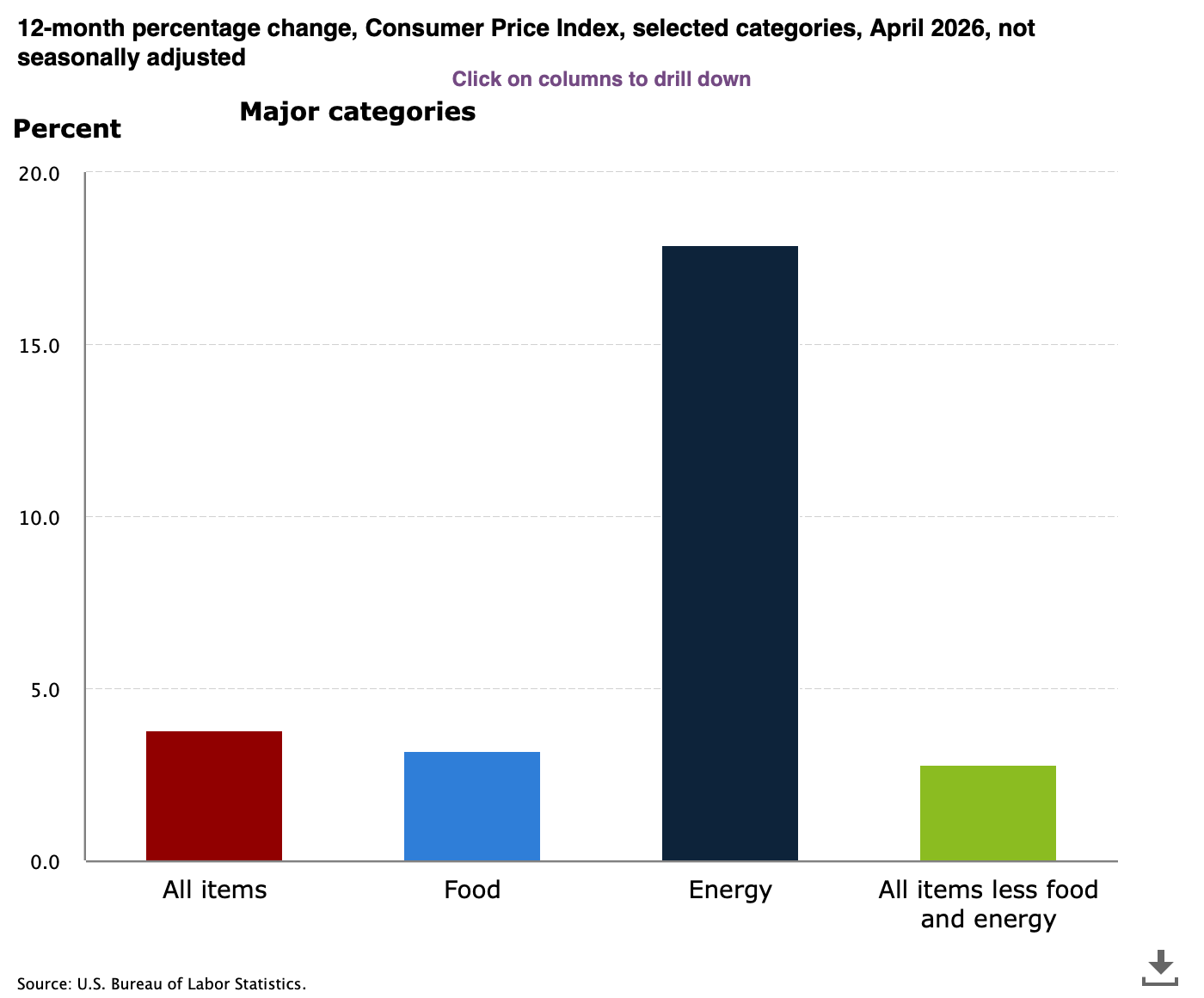
Welcome to The Poverty Trap, a newsletter and podcast for people who are fed up with the inequality baked into America’s system and want to individually and collectively make change. Thinking about subscribing? Here’s what one “founding member” subscriber recently had to say about The Poverty Trap: “You do great work, Joan. I don’t always get to read your newsletter, but when I do, I leave more informed and more compassionate…” Amy B. Breaking News! According to a New York Times article published just hours ago, the Consumer Price Index, a marker for inflation, soared in April to 3.8%, from 3.3% in March. Here’s a chart fresh from the Bureau of Labor Statistics (BLS) showing the increase in select categories of goods and services over the last 12 month period. Check out the BLS here for more charts, if you dare. Inflation is painful for tens of millions of Americans, but for those living on a fixed income, mostly seniors and the disabled, it can mean choosing among rent, food or keeping the lights on at the end of each month. Here are the numbers according to the Social Security Administration‘s (SSA.gov) Monthly Statistical Snapshot for April, 2026. — There are over 75 million social security recipients, including retirees, the disabled, their survivors and those receiving Supplemental Security Income (SSI), a means tested program for the poor. Here are a few of the most recent numbers: — The average Social Security monthly payment among all categories of recipients is $1,932.80, and for retired workers the average monthly payment is $2,071; — Social Security monthly amounts are adjusted annually according to the Cost of Living Adjustment (COLA) formula. Benefits increased by 2.8% for 2026, but the 10% increase in Medicare Part B premiums, which are automatically deducted from social security checks, nearly erases this year’s cost of living increase; — Social Security is the only form of income for over 22 million senior citizens; and… — In the context of poverty, approximately 36 million people in the United States live at or below the official government poverty line as of 2024, the most recent year statistics are available from the U.S. Census Bureau, and approximately 15% or 9.2 million are senior citizens. Some 50-60 million Americans live on a retirement income set by Social Security benefit amounts and perhaps one or more other fixed revenue streams like a pension and/or annuities payments. But these sources of income are typically fixed, with only small “cost-of-living” raises that never come close to matching the increase in prices for basic needs like food, housing and utilities. The problem when fixed incomes meet inflation is that prices for most goods and services go up, but the ability to pay for them stays the same. And speaking of retired folks, 2026 is a historic peak for seniors, with approximately “11,400 Americans turning 65 each day”. Food prices, for example, have gone up 34.6% from 2019, and continue to rise—an enormous...
0:00SPEAKER_00Hello subscribers,
0:02SPEAKER_00this is Joan DeMartin and welcome to The Poverty Trap,
0:07a newsletter and podcast for people who are fed up with the
0:11inequality baked into
0:13SPEAKER_00America's system and want to individually and collectively make change.
0:19SPEAKER_00In case you're thinking about subscribing, here's a little advertisement.
0:23Here's what one founding member subscriber recently had to say
0:26about The Poverty Trap.
0:28SPEAKER_00Quote,
0:29SPEAKER_00You do great work, Joan.
0:31SPEAKER_00I don't always get to read your newsletter,
0:33SPEAKER_00but when I do,
0:34SPEAKER_00I leave more informed and more compassionate.
0:39SPEAKER_00End of quote.
0:40SPEAKER_00And that is from Amy B.