
The Poverty Trap · Joan DeMartin
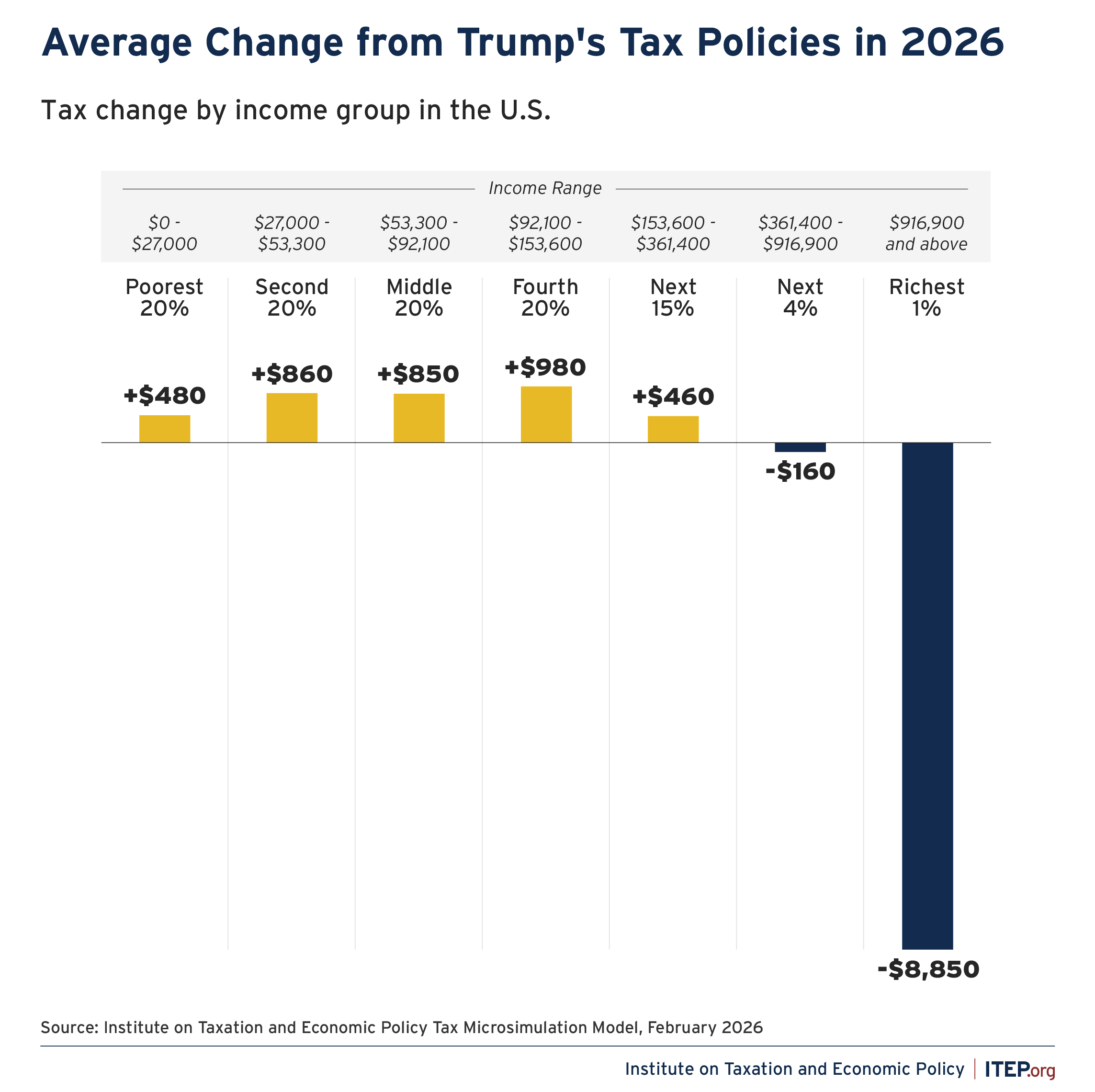
Welcome to The Poverty Trap, a newsletter and podcast for people who are fed up with the inequality baked into America’s system and want to individually and collectively make change. Thinking about subscribing? Here’s what one “founding member” subscriber recently had to say about The Poverty Trap: “You do great work, Joan. I don’t always get to read your newsletter, but when I do, I leave more informed and more compassionate…” Amy B. Yes, data from the Federal Reserve through the fourth quarter of 2025 shows economic inequality, both income and wealth inequality, has worsened in the last 15 months since President Trump began his second term on January 20, 2025. A CBS report analyzing this data says: The top 1% of households owned 31.7% of all U.S. wealth in the third quarter of 2025, the highest share on record since the Federal Reserve began tracking household wealth in 1989. That share has increased even as wealth growth for the rest of the population has stalled or slowed, the data shows. Collectively, the wealthiest 1% held about $55 trillion in assets in the third quarter of 2025 — roughly equal to the wealth held by the bottom 90% of Americans combined. That last data summary is astounding: the richest 1% of Americans hold approximately the same amount of wealth as a combined 90% of Americans. And the forecast for 2026 and beyond is a continued widening of the income and wealth gap, with stipulations of course. But why did the inequality gap widen significantly in 2025? Here’s what a few experts have to say: — The stock market surged through 2025, but mostly due to AI investments. (Remember Attorney General Bondi shrieking into the microphone that the Dow had hit 50,000?) The rich disproportionally invest in stocks and other securities where they hold most of their wealth. A recent CBS article noted: “A May Gallup poll found that 87% of Americans who own stock live in households with incomes of $100,000 or more.” So when the markets go up, wealthy stock and securities’ investors get even richer. That is in contrast to middle and lower income Americans whose main asset is the family home (if they are lucky enough to own one, likely with a hefty mortgage). Unfortunately, home prices and wage growth (measured against inflation), slowed during 2025 while the price of food, and other goods and services went up significantly, further draining wealth from average income Americans. — But what about those taxes you paid a few days ago? Another unfortunate reality for middle and lower income Americans who pay most of their taxes on straight earned income—they pay a higher percentage of their income in taxes than the wealthy and uber-wealthy. Why? Because the tax code levies lower rates on passive income (like dividends from stocks and bonds) than earned income from paychecks. Plus, there are more tax loopholes to “minimize the impact of the tax” for the passive income investments held in much higher amounts by the wealthy, than for salaried or...
0:00SPEAKER_00Hello, subscribers.
0:02SPEAKER_00This is Joan DeMartin,
0:04SPEAKER_00and welcome to The Poverty Trap,
0:06a newsletter and podcast for people who are fed up with the
0:11inequality baked into
0:13SPEAKER_00America's system and want to individually and collectively make change.
0:19SPEAKER_00In case you're thinking about subscribing,
0:21here's what one founding member subscriber recently had to say
0:25about The Poverty
0:26SPEAKER_00Trap.
0:27SPEAKER_00Quote, You do great work, Joan.
0:30SPEAKER_00I don't always get to read your newsletter,
0:32SPEAKER_00but when I do,
0:33SPEAKER_00I leave more informed and more compassionate.
0:37SPEAKER_00End quote.