
The Poverty Trap · Joan DeMartin
Welcome to The Poverty Trap, a newsletter and podcast for people who are fed up with the inequality baked into America’s system and want to individually and collectively make change. Thinking about subscribing? Here’s what one paid subscriber recently had to say about The Poverty Trap: “You do great work, Joan. I don’t always get to read your newsletter, but when I do, I leave more informed and more compassionate…” Amy B. One Big Issue: Investment in the stock market is skewed heavily toward the wealthy and white. The most recent statistics as of April 2026 show that 58% of U.S. adults own stock (down from 62% in 2025), but the top 10% of Americans by net worth own 87% of that stock, while the bottom 50% of Americans by net worth own only 1% of stock. Structuring the same data in more stark terms, the top 1% of Americans by net worth own more stock than the bottom 90% of Americans, combined. Breakdown of stock ownership by race shows another disparity: there is a massive gap between white Americans, who own approximately 87% of stocks, and Black Americans, who are 13% of the U.S. population and own 0.7% of stocks, while Hispanic Americans also own 0.7% of stocks, but make up 18.9% of the U.S. population. This startling analysis from The New School, Institute on Race, Power and Political Economy demonstrates the racial wealth divide well beyond stock market investments, and offers specific changes to our country’s policy choices that could at least partially reverse this inequality. Why It Matters: President Trump’s decision-making for most issues seems to revolve around how the stock market reacts—from tariffs to the war in Iran—the President looks to the response of the market to make major economic and other policy decisions. But how the stock market goes is not necessarily a reflection of how our economy goes. And policy decisions made to help the stock market reach stratospheric heights don’t necessarily benefit the majority of Americans or our country. What might be even worse is that the President himself, his family and administration are heavily invested in the stock market. So is this administration making decisions for the entire country that only benefit the white and wealthy, including him and those closest to him? As the Nobel-winning economist Paul Krugman has explained more than once: “The stock market is not the economy”. The basic reasoning, translated by Investopedia in a recent article, is that “the stock market tracks the value and expected future earnings of publicly traded companies, while the economy comprises all U.S. production, consumption, employment, and commerce.” A soaring stock market doesn’t mean the overall economy and the 330 million people who are part of that economy are doing well financially, and vice-versa. But according to a Washington Post article published a couple of weeks ago, President Trump admitted the stock market was his oracle and even guided his foreign policy decisions: “The stock market is...
0:00SPEAKER_00Hello, subscribers.
0:02SPEAKER_00This is Joan DeMartin,
0:04SPEAKER_00and welcome to The Poverty Trap,
0:07SPEAKER_00a newsletter and podcast for people who are fed up with the inequality baked
0:13SPEAKER_00into America's system and want to individually and collectively make change.
0:19SPEAKER_00In case you're thinking about subscribing,
0:21SPEAKER_00here's what one paid subscriber recently had to say about The Poverty Trap.
0:27SPEAKER_00Quote,
0:30SPEAKER_00I don't always get to read your newsletter,
0:32SPEAKER_00but when I do, I leave more informed and more compassionate.
0:36SPEAKER_00End quote.
0:38SPEAKER_00And that is from Amy B.
0:40SPEAKER_00Thank you so much, Amy, for those kind words.
0:43SPEAKER_00The title of today's post is Inequality in Stock Market Investment and Why It Matters.
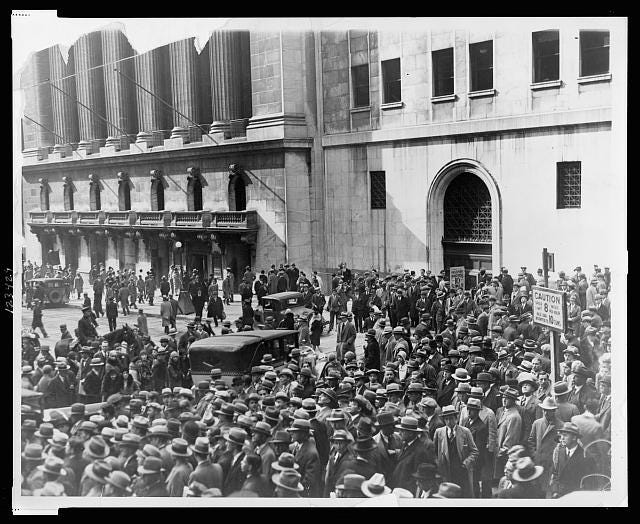
0:55SPEAKER_00Starting with a photo of