
The Pet Parent Podcast · Total Pet Parent
Multi-Pet Home Safety Checklist: Preventing Food Aggression, Territory Conflicts, and Cross-Species Risks Living with multiple pets is one of the most rewarding things you can do—and I say that as someone who navigates daily life with four rescue dogs, each with their own quirks and boundaries. But multi pet home safety requires more than just love and good intentions. I've seen too many clients arrive at my grooming shop with stories of household scuffles that could've been prevented with the right setup. This checklist walks you through the practical steps to create a safe, low-conflict environment for dogs, cats, small animals, and even fish tanks, covering everything from feeding zones to territorial management and species-specific hazards. If you're managing multiple species or personalities under one roof, the fundamentals of (/multi-pet-household) become your daily operating system. Let's break down what actually keeps everyone safe. Food and Feeding Zone Safety Separate feeding stations are non-negotiable in my house. I learned this the hard way when my terrier mix went after my senior shepherd over a dropped kibble. The difference between (/feeding-multiple-pets-separa…
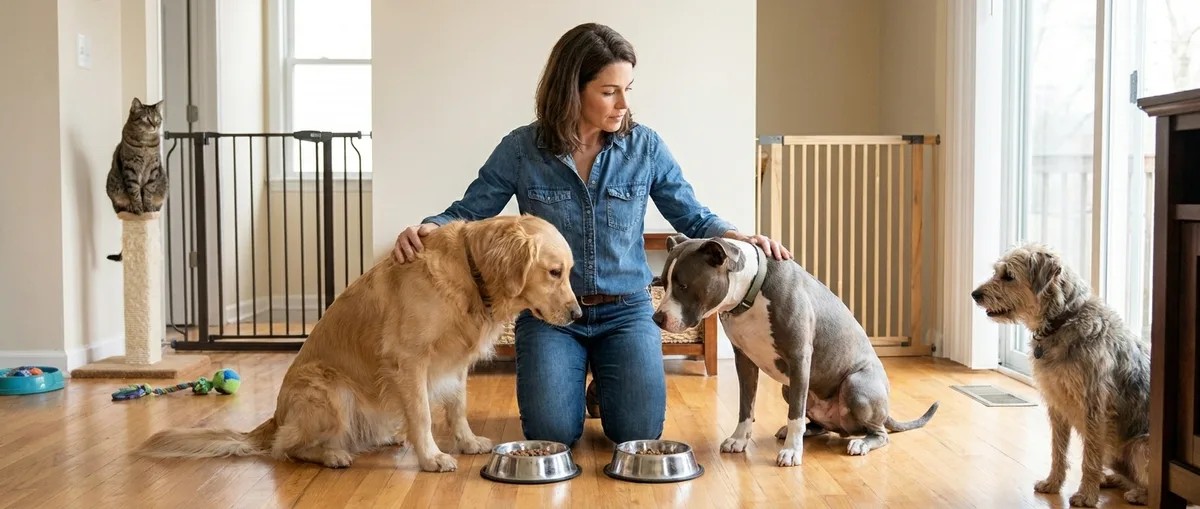
I learned about resource guarding the hard way when my terrier mix lunged at my senior shepherd over a single piece of kibble that hit the floor. That was the moment I realized love and good intentions aren't enough when you're managing multiple animals under one roof. I'm Jasmine Caldwell, and I've spent close to a decade as a professional pet groomer working with dogs of every temperament you can imagine. At home, I navigate daily life with four rescue dogs, each one with their own quirks and invisible boundary lines. Today, I'm walking you through the safety systems that actually prevent conflicts, injuries, and emergencies in multi-pet households. You're listening to Total Pet Parent Podcast. Just so you know upfront, the research and script you're hearing today are written and verified by real people with hands-on experience, but the voice delivering it is AI-generated. We're transparent about that. If you've been listening for a bit, thanks for coming back. It's great to have you here. And if you're just discovering the show, welcome aboard. We release new episodes every Monday, Wednesday, and Friday, covering all the messy, real-world challenges that come with living with animals. Today's episode is one you'll want to save if you're managing more than one pet under the same roof. Let's jump in. Living with multiple pets is one of the most rewarding things you can do, but it requires more than just love and good intentions. I've seen too many clients arrive at my grooming shop with stories of household scuffles that could've been prevented with the right setup. This is about the practical steps you need to create a safe, low-conflict environment for dogs, cats, small animals, and even fish tanks. We're covering everything from feeding zones to territorial management and species-specific hazards. If you're managing multiple species or personalities under one roof, the fundamentals of multi-pet household management become your daily operating system. Now, let's talk about food and feeding zone safety. Separate feeding stations are non-negotiable in my house. The difference between feeding multiple pets separately and letting them share space during meals is often the difference between peace and a veterinary emergency. Physical barriers between bowls matter. Use baby gates, closed doors, or crate walls to create visual and spatial separation during feeding times. Dogs especially can't resist another dog's bowl, even if they're not food-aggressive by nature. If you can't physically separate pets, try staggered feeding times. Feed the most anxious or resource-guarding animal first in a closed room, then rotate others through. Cats typically prefer elevated feeding stations away from dog traffic anyway. For homes with food thieves, and I'm looking at you, Labrador owners, microchip-activated feeders with RFID tags ensure each pet accesses only their own food. This is critical if one animal is on a prescription diet or medication. Slow-feeder bowls for competitive eaters help too. These puzzle-style bowls, stainless steel or BPA-free silicone are the safest materials, force fast eaters to slow down. That reduces the finish-fast-and-steal behavior that triggers fights. Elevated stations for cats and small dogs work really well. Mounting feeding platforms three to four feet high gives cats a predator-free zone and prevents larger dogs from accessing feline food, which is too protein-rich for canine digestive systems long-term. Keep all pets in sight for fifteen to twenty minutes after meals. Vomiting, regurgitation, or resource guarding often happens during this window, and early intervention prevents escalation. Position water sources in multiple locations, not just near food, to prevent one dominant pet from blocking access. I keep three bowls scattered across my house so no single dog can guard them all. Moving on to territory and space management. Territory conflicts are subtle until they're not. My senior shepherd claimed the hallway as his for months before I realized he was blocking the other dogs from accessing the bedroom. Multi-pet home safety means recognizing these invisible boundary lines before they become physical altercations. Each animal needs at least two safe spots they can retreat to. Dogs need crate space or beds in quiet corners, cats need vertical territory like cat trees or wall shelves, and small animals like rabbits need enclosed hideaways within their enclosures. Visual barriers in open floor plans make a huge difference. Use furniture, folding screens, or strategically placed pet gates to break up sightlines. This prevents the constant visual monitoring that stresses both dogs and cats and can trigger stalking behavior. Doorway and hallway protocols help too. Teach a wait command so pets don't rush through narrow passages simultaneously. I've seen more scuffles happen in doorways than anywhere else, simply because two animals tried to squeeze through at once. If two pets can't safely coexist unsupervised, create a rotation schedule using baby gates or closed doors so each gets floor time while the other is contained. This works for cat-dog households and for introducing a new cat to a dog during the desensitization phase. Install cat shelves, window perches, or tall cat trees so felines can exit ground-level conflicts vertically. Cats feel safest when they can observe from above, and it prevents them from being cornered by dogs. Even if you don't use crates full time, crate training gives each dog a locked-down safe space during high-stress moments like visitors arriving, meal prep, or when you can't supervise. Don't force animals to share beds or crates. Sleep is when pets are most vulnerable, and even bonded pairs may need their own space to decompress overnight. I keep three baby gates installed permanently in my house to create instant separation zones. The pressure-mounted kind, look for models rated to forty inches tall or more for large dogs, let you reconfigure space without drilling holes. Now let's get into cross-species hazard prevention. This is where multi-pet home safety gets tricky. What's safe for a dog might poison a cat. What's enrichment for a cat might terrorize a hamster. I've groomed plenty of dogs who've had close calls with species-specific hazards their owners never considered. Dog food contains vitamin D and protein levels unsafe for cats long-term. Cat food is too rich for dogs and can cause pancreatitis. Both are deadly to small animals like rabbits or guinea pigs who need high-fiber, low-protein diets. Store all foods in sealed, labeled containers. Keep flea and tick preventatives, senior dog supplements, and prescription meds in species-specific containers. Permethrin-based dog flea treatments are lethal to cats even in trace amounts transferred via touch. Dogs eating cat feces, that's coprophagia, isn't just gross. It spreads parasites like Toxoplasma and Giardia. Use top-entry litter boxes or place boxes behind baby gates with cat-sized openings too small for dogs. Hamster, guinea pig, and rabbit cages must have locking latches, not just pressure clips, and be elevated or placed in rooms with closed doors. Even the gentlest dog retains prey drive, and the stress alone can kill small prey animals through cardiac events. If you're setting up an aquarium, make sure the stand is stable and the lid is secured. Curious cats will paw at fish, and dogs can knock over tanks. Electrical cords must be hidden to prevent chewing. Keep bird companions in rooms dogs and cats can't access unsupervised. Birds are fragile, and even playful batting from a cat can cause fatal injuries or chronic stress-related illness. Plants like lilies are deadly to cats, sago palms are toxic to dogs, and certain succulents harm rabbits. Cross-reference every houseplant with ASPCA's toxic plant database for all species in your home. Cats lack the liver enzyme to metabolize many essential oils like tea tree, eucalyptus, and citrus, and birds have hyper-sensitive respiratory systems. Skip the diffusers entirely in multi-species households. Let's talk about behavioral warning signs and intervention points. I've learned to read tension in dog body language after nearly a decade at the grooming table. But at home, I'm watching for multi-species signals too. A cat's flattened ears around the new puppy, my older dog's stiff posture when the terrier approaches his bed. Recognizing why pets fight over food and resources means catching these signs early. If one pet goes motionless while staring at another, interrupt immediately with a verbal cue or by creating distance. This is pre-aggression signaling in both dogs and cats. A pet positioning themselves between you and another animal, or between an animal and food, water, or doorways, is claiming ownership. Redirect them to another space before it escalates. Dogs displaying whale eye, that's when you can see the whites of their eyes, around other pets are stressed and may snap. Give them an exit route and separate them from the trigger animal. Hair standing up along the spine in dogs or a puffed tail in cats signals arousal and potential aggression. Don't assume it's just playing if other warning signs are present. Constant barking, hissing, or growling that doesn't de-escalate after a few seconds means the animals aren't working it out themselves. Separate them and reset. Even neutered dogs may mount or herd other pets during status conflicts. This isn't sexual, it's dominance-related and should be interrupted to prevent retaliation. If a normally social pet starts hiding, refusing to enter certain rooms, or showing hypervigilance, they're being bullied or stressed by another animal. Investigate the social hierarchy immediately. A pet who suddenly stops eating in their usual spot, or who starts eliminating outside the litter box or potty area, is signaling environmental stress, often related to another pet's behavior. Next up, household safety infrastructure. The physical setup of your home either supports multi-pet home safety or undermines it. I've rearranged my floor plan three times to accommodate my dogs' changing needs as they've aged and as I've brought in new rescues. Use locking lid cans or keep bins inside cabinets with childproof latches for trash and recycling. Dogs will eat spoiled food, sharp bones, and toxic scraps. Cats can get trapped inside bags. Small animals can choke on plastic. Bundle and elevate electrical cords, or run them through PVC piping. Puppies, kittens, and rabbits chew indiscriminately, and electrocution or intestinal blockages from ingested plastic are common multi-pet emergencies. If you have a large dog and a small dog or cat, block stairway access during play. I've seen too many small animals get trampled or knocked down stairs by an excited larger dog. Use washable rugs or interlocking foam tiles in areas where pets run or play. Senior dogs especially can't stop on hardwood, leading to collisions with walls, furniture, or other animals. Reinforce or replace flimsy screens on windows cats can access. High-rise syndrome injuries from cats falling through screens happen year-round, not just in summer. Store all household chemicals, including pet shampoos and grooming products, behind locked doors. Even pet-safe products can cause harm if a curious animal chews through the bottle. Keep species-specific toys separated. Dog toys with squeakers can trigger prey drive in some dogs toward small animals. Cat toys with strings are choking hazards for dogs who swallow them whole. Use earthquake straps or L-brackets to secure bookshelves, dressers, and entertainment centers. Cats climbing, dogs jumping, or multiple animals playing can topple unsecured pieces. Now, veterinary and health monitoring systems. Managing health records and preventive care for multiple pets is its own job. I keep a spreadsheet on my phone because I can't track four dogs' vaccine schedules, heartworm dates, and flea treatments in my head. If you're juggling more than two animals, managing multiple pet vet care becomes a weekly task. Use labeled pill organizers or locking tackle boxes to prevent medication mix-ups. A senior dog's arthritis meds can poison a cat, and dosing errors are common when you're managing multiple prescriptions. Designate a bathroom or spare bedroom where you can isolate a pet showing illness symptoms. This prevents disease spread, especially upper respiratory infections in cats, kennel cough in dogs, or parasites in any species, and gives the sick animal recovery space. When you have multiple pets using outdoor spaces or litter boxes, track individual elimination habits. Changes in frequency, color, or consistency signal illness, and you need to know which animal is affected. Weigh each animal monthly using a home scale. Small pet scales work for cats and dogs under twenty pounds, bathroom scales for larger dogs. Unexplained weight loss or gain indicates illness or that one pet is stealing another's food. Stagger flea, tick treatments, and dewormers by a few days so you're not dosing everyone simultaneously. If there's an adverse reaction, you'll know which pet and which product caused it. Keep a laminated card on your fridge listing each pet's name, species, breed, age, weight, medications, and your vet's contact info. If someone else needs to care for your animals or if you're incapacitated, this saves critical time. Don't share brushes, nail clippers, or combs between species or even between individual dogs. This spreads skin conditions, fungal infections, and parasites like mites. Here's a final check you can run through weekly to maintain multi-pet home safety. All feeding stations are separated and bowls are clean. Water sources are accessible to all pets without guarding. Territory zones have clear boundaries and escape routes. Toxic plants, foods, and chemicals are secured. Litter boxes are cleaned and accessible only to cats. Small animal enclosures have locked latches. Medication and supplements are labeled and separated by species. Trash cans are secured and inaccessible. Cords, screens, and furniture are safe and stable. Each pet has been observed eating, drinking, and eliminating normally. Body language between pets shows relaxation, not tension. All vaccines and preventives are current and documented. Let's tackle some frequently asked questions. Can dogs and cats share the same water bowl safely? Yes, dogs and cats can share water bowls without health risks if the bowls are cleaned daily. The bigger issue is behavioral, as some dogs will guard water sources or contaminate them by dropping food or toys in, which deters cats from drinking and can lead to dehydration or urinary issues in felines. How do I stop my dog from eating cat food when I'm not home? Place cat food on elevated feeding stations at least four to five feet high, countertops, cat trees, or wall-mounted shelves where dogs can't reach, or use microchip-activated feeders that only open for your cat's specific RFID collar tag. Cat food's high protein and fat content can cause pancreatitis in dogs if eaten regularly. What's the safest way to introduce a rabbit to a household that already has dogs? Keep the rabbit in a separate room behind a closed door for at least two weeks while the dog becomes desensitized to the scent, then conduct controlled visual introductions with the rabbit in a secure elevated enclosure and the dog on leash. Never allow direct contact unsupervised, as even a gentle dog's prey drive can cause fatal stress or injury to rabbits. Multi-pet home safety isn't a one-time setup. It's a daily practice of observation, adjustment, and boundary maintenance. I've reshuffled my dogs' feeding spots, added gates, and changed routines more times than I can count because what worked last year doesn't work now that my senior has arthritis and my terrier has decided he's in charge. The goal isn't perfection. It's creating a home where every animal feels secure enough to relax, where resources aren't worth fighting over, and where you've eliminated the predictable hazards before they become emergencies. Whether you're balancing dogs and cats, adding small animals to the mix, or just managing multiple strong personalities, these systems give you the framework to keep everyone safe while you all figure out how to live together. Trust your gut when something feels off between your pets. That tension you're noticing? It's real. And catching it early, before it becomes a bite, a fight, or a veterinary crisis, is what this whole checklist is about. That wraps up this episode of Total Pet Parent Podcast. Thanks for listening. New episodes come out every Monday, Wednesday, and Friday, so there's always something fresh waiting for you. If this episode helped you out, I'd really appreciate it if you'd leave a five-star rating and write a quick review. It's honestly one of the best ways to help other pet parents find the show when they're searching for answers. And hit subscribe or follow so you get notified the second a new episode drops. I'll catch you in the next one.