
The Pet Parent Podcast · Total Pet Parent
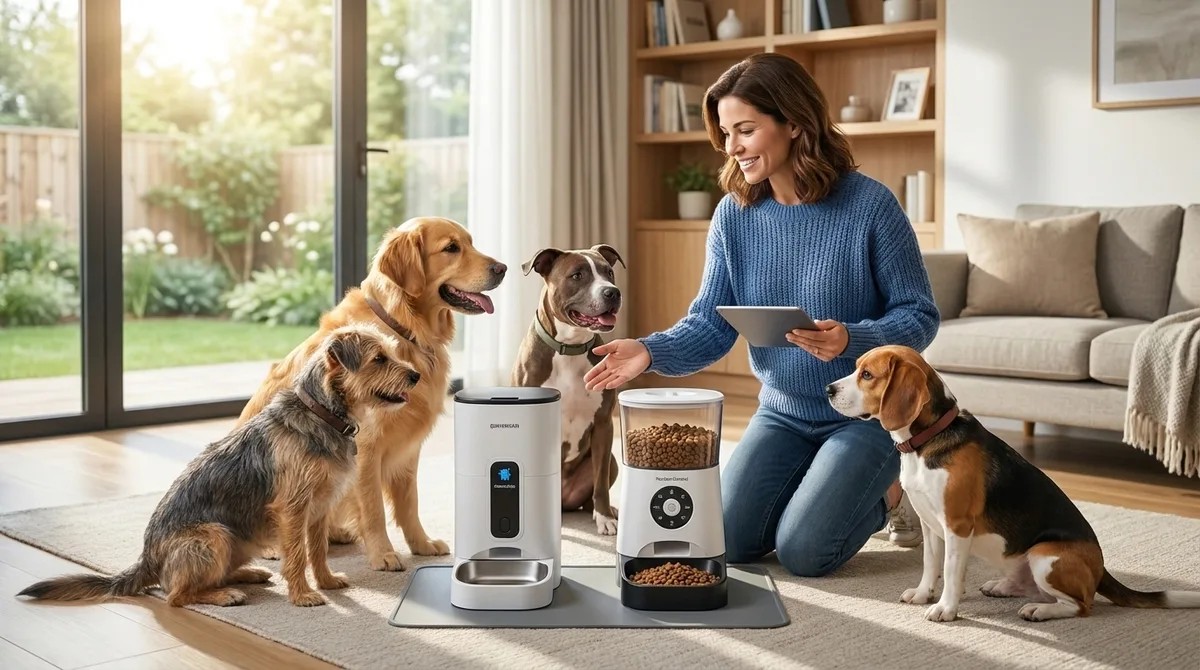
Best Automatic Pet Feeders for Multi-Pet Households: Microchip and Portion Control Options I stood in my kitchen at five-thirty in the morning, watching my terrier mix Luna try to shove my senior shepherd Boone away from his bowl for the third time that week. Meanwhile, my two other dogs circled, waiting for their chance. Managing automatic feeders multiple pets in one household feels like orchestrating a very chaotic, very food-motivated ballet. After testing a dozen models with my own four rescues and seeing the feeding chaos that plays out in multi-pet homes at the grooming shop, I've learned that microchip-activated feeders and portion-control systems aren't luxuries—they're relationship savers. The right setup stops the pushy eaters from stealing, keeps diet-restricted pets on track, and gives everyone a calmer, fairer mealtime. What to Look For in Automatic Feeders for Multiple Pets Shopping for automatic feeders multiple pets can actually use gets confusing fast, because most feeders are designed for single-pet homes. I've watched clients come back frustrated after buying the wrong type, so here's what actually matters when you're feeding more than one animal. Selective …
I watched my terrier mix try to shove my senior shepherd away from his breakfast bowl for the third morning in a row, while my two other dogs circled like vultures waiting for their opening. If you're feeding more than one pet in the same house, you already know this chaos. I'm Jasmine Caldwell, and I've spent the last few months testing automatic feeders with my four rescue dogs to figure out what actually stops the stealing, the bullying, and the diet disasters that happen when every meal turns into a free-for-all. You're listening to Total Pet Parent Podcast. Quick heads up before we dive in: everything you're about to hear, the research, the testing, the recommendations, that's all been written and verified by real people who actually work with pets every day. The voice delivering it is AI-generated, but the content itself is completely human. Just wanted to be upfront about that. If you've been listening for a while, thank you. Seriously, it's good to have you back. And if this is your first episode, welcome. You're in good company if you're trying to manage mealtime with more than one pet and it feels like herding cats, or dogs, or both. We release new episodes every Monday, Wednesday, and Friday, so you'll never run out of practical advice. Let's jump into today's episode on automatic feeders that actually stop the food stealing and make feeding multiple pets way less stressful. Managing feeding time when you've got multiple pets feels like orchestrating a chaotic, food-motivated ballet. After testing a dozen feeder models with my own four rescues and watching the feeding drama that plays out daily in the multi-pet homes I see at the grooming shop, I've learned that microchip-activated feeders and portion-control systems aren't luxuries. They're relationship savers. The right setup stops pushy eaters from stealing, keeps diet-restricted pets on track, and gives everyone a calmer, fairer mealtime. Now, let's talk about what actually matters when you're shopping for feeders that multiple pets can use. Most feeders you'll find are designed for single-pet homes, and I've watched plenty of frustrated clients come back after buying the wrong type. Selective access controls are the dealbreaker feature. You need feeders that physically prevent one pet from eating another's food. Microchip-activated models read your pet's unique ID chip, the same one your vet implanted for identification, and they only open for that specific animal. RFID collar tag systems work similarly but require your pet to wear a tag, which is fine for dogs but sometimes problematic for cats who hate collars. I use both types in my house. Microchip readers for my chip-shy rescue who won't wear anything, and RFID for the others. The SureFlap Microchip Pet Feeder reads chips up to about three inches away and closes within seconds after your pet walks away, which stops the food thieves in their tracks. Some cheaper models have slower lid mechanisms, and trust me, a determined Labrador can hoover half a bowl in the time it takes a slow lid to close. Portion accuracy and customization matter more than you'd think. My senior shepherd Boone needs exactly one and a half cups twice daily for his joint issues and weight management, while Luna the terrier gets three-quarters of a cup three times daily to manage her blood sugar. Feeders with programmable portion sizes, usually ranging from one sixteenth of a cup to three cups per meal, let you dial in each pet's needs. Look for models that dispense dry kibble in precise amounts rather than gravity feeders that just dump food. The mechanism matters too. Auger-style dispensers, those spiral screws that lift kibble, handle different kibble sizes better than paddle wheels, which jam on large or irregularly shaped pieces. I learned this the hard way when a paddle-wheel model got stuck on Boone's large-breed orthopedic kibble and just stopped feeding him for an entire day while I was at work. Bowl capacity and refill frequency directly affect how often you're hovering over the thing. Most single-pet automatic feeders hold four to six pounds of dry food, which sounds like plenty until you're feeding four animals. I calculate backward from how much my pack eats daily, about eight cups total, to figure out how long a hopper will last. A six-pound capacity, roughly twenty-four cups of average kibble, gives me about three days before refilling. If you're running multiple units, this becomes a logistics puzzle. Some households solve this by using one high-capacity gravity feeder combined with microchip-controlled bowls at feeding time, though that requires more coordination. Power source reliability becomes critical when meals happen on a schedule. Battery-powered units, usually three or four D batteries or rechargeable lithium, work during power outages and let you place feeders anywhere, but they die at the worst times. I keep backup batteries on hand after Luna's feeder went dark overnight and she missed breakfast, which turned her into an absolute gremlin by noon. Plug-in models with battery backup are the sweet spot. Consistent power with emergency coverage. Check the backup duration too. Some models only hold programming for a few hours, others maintain schedules for days. Material safety and durability matter when multiple pets are pawing at, nudging, and occasionally rage-attacking feeders that won't open for them. Food-grade plastic, look for BPA-free certification, is standard, but the housing quality varies wildly. Thin plastic cracks when a frustrated dog bats at it. Reinforced bases with rubber feet stay put when a cat tries to tip it over. Stainless steel bowls are easier to clean and less likely to harbor bacteria than plastic inserts, though they cost more. My terrier Luna figured out she could flip a lightweight feeder to spill kibble everywhere, so I now look for models over five pounds empty or ones I can bolt down. Cleaning accessibility affects whether you'll actually maintain the thing. Multi-pet households mean more drool, more paws, more grime. Feeders with removable bowls and hoppers that disassemble without tools get cleaned weekly in my house. Models with fixed components get wiped down but never truly deep-cleaned, and they start smelling funky within a month. Dishwasher-safe parts are a bonus but not essential. I hand-wash everything anyway to check for damage or jams. Moving on to our top picks. First up is the SureFeed Microflash Microchip Pet Feeder, the sealed bowl version. Check the show notes for a link to the current price. This feeder reads your pet's existing microchip or the included RFID collar tag, opening a covered bowl that holds up to thirteen and a half fluid ounces of wet or dry food. That's just enough for one meal for a medium-sized dog or a full day's portions for a cat. The sealed lid keeps food fresh and stops odor from attracting other pets, which is huge in multi-pet household situations where one animal is on prescription food. Here's what works well. It reads most international microchip formats, nine, ten, and fifteen-digit chips, without additional tags. The sealed bowl design actually keeps wet food fresh for hours and prevents odor leakage. There's a training mode that lets pets get used to the opening lid before you enforce access restrictions. The low, wide bowl design works for flat-faced breeds and whisker-sensitive cats. And it runs on four C batteries that last four to six months with regular use. The downsides: bowl capacity is too small for large-breed dogs who need more than two cups per meal. The lid mechanism can get sticky if wet food dries on the hinge, needs weekly cleaning. It's expensive compared to basic timed feeders, especially when you need multiple units. And some cats are initially spooked by the motorized lid opening sound. I use two of these for my smaller dogs and they've stopped the food stealing completely. The sealed lid genuinely works. I can prep wet food in the morning for an evening meal and it's still fresh when the lid opens. The lid does make a quiet whirring sound that startled my anxious rescue the first few times, but the training mode, where the lid stays open until your pet gets comfortable, solved that within a week. Next is the PetSafe Healthy Pet Simply Feed Automatic Dog and Cat Feeder. Check the show notes for the link. This one dispenses one eighth of a cup to four cups per meal using a slow-feed mode that breaks larger portions into smaller servings over fifteen minutes, which is helpful for dogs who inhale food and then vomit. The hopper holds twenty-four cups of dry kibble, and you can schedule up to twelve meals daily. That works for puppies, diabetic pets, or just spreading calories across the day. What's good: large twenty-four-cup hopper means less frequent refilling in multi-pet homes. Slow-feed mode helps prevent bloat and vomiting in fast eaters. The stainless steel bowl is dishwasher-safe and doesn't absorb odors. The conveyor belt mechanism handles different kibble sizes without jamming. And it's plug-in with battery backup that maintains the schedule during power outages. The problems: no selective access control, so any pet can eat from it. It only works if you separate pets or use it with another barrier system. The conveyor belt can be loud during dispensing, especially in quiet morning hours. The programming interface is unintuitive with confusing button combinations. And the bowl sits low to the ground, which isn't great for large breeds or pets with neck issues. This feeder works as a reliable dispenser in my house, but I had to pair it with physical feeding stations to keep the wrong dogs from accessing it. The slow-feed mode genuinely helped Luna stop vomiting after meals. It breaks her one-and-a-half-cup breakfast into six small drops over fifteen minutes, which mimics grazing. The conveyor system has handled everything from small dental kibble to large orthopedic pieces without jamming, which is more than I can say for paddle-wheel models. The Cat Mate C500 Digital 5 Meal Feeder is next. Check the show notes for pricing. It's a rotating carousel with five compartments that hold about one cup of dry or semi-moist food each, covered by individual lids that open on a timer you set. It's designed for cats but works for small dogs too. I've seen it used successfully for Chihuahuas, Yorkies, and similar breeds at the grooming shop. The positives: five separate compartments let you pre-portion different foods or medications per meal. There's an ice pack slot under the carousel that keeps wet food or raw food cool for up to twenty-four hours. It's extremely quiet, the lid rotation won't spook anxious cats or light-sleeping dogs. It's affordable enough to buy multiple units for different pets without breaking the bank. And there's a tamper-resistant lid with a locking mechanism that stops smart cats from manually rotating it. The negatives: no microchip or RFID access control, you need to physically separate pets when it feeds. Small compartment size, one cup each, won't work for medium or large dogs. The carousel can jam if you overfill compartments or use sticky wet food. And the programming resets if batteries die completely, losing your meal schedule. I recommend this to clients with cats and small dogs who need different meal times but can be separated during feeding. The ice pack feature actually keeps food fresh in warm weather, and the quiet operation means it won't trigger food aggression and territory conflicts by startling pets awake with loud mechanical sounds. Just don't overfill the compartments. Leave a little space or the lid catches on kibble and won't rotate properly. The PETLIBRO Automatic Cat Feeder with Camera and App Control is up next. Check the show notes for the link. This one connects to your phone via Wi-Fi, letting you schedule meals, adjust portions, one twelfth of a cup to four and a half cups per meal, and even watch your pets eat through a built-in ten-eighty-p camera with night vision. The four-liter hopper holds roughly sixteen cups of dry food, and you can trigger manual feedings remotely if you're running late or just want to mess with portion timing. What works: the camera lets you verify who's actually eating from it and catch food thieves in action. App control means you can adjust schedules on the fly without reprogramming at the unit. Two-way audio lets you call your pet to the feeder or discourage others from approaching. There's a desiccant bag holder that keeps kibble fresh in humid climates. And smart notifications alert you when food is low or if the hopper jams. What doesn't: requires stable Wi-Fi connection, loses smart features if your network goes down. No microchip access control, so multiple pets can still steal from each other. The camera angle is fixed and might not capture the bowl area depending on feeder placement. And the app interface can be glitchy with delayed notifications or connection drops. This feeder sits in my kitchen feeding Luna, and I've caught Boone trying to nudge her away twice using the camera, which let me intervene remotely with the speaker function. The app sends me low-food alerts, which is genuinely useful when life gets chaotic. But the Wi-Fi dependency is real. During a router issue last month, it reverted to the last programmed schedule and I couldn't adjust portions for a day. The Whisker Feeder-Robot, that's the Automatic Smart Feeder for Cats, is next. Check the show notes for pricing. This one uses a scale-based system that measures food by weight, up to six point six pounds capacity, and lets you track exactly how much your cat eats per meal through a connected app. It works with dry food only, dispensing portions from one sixteenth of a cup to three cups with precision that's helpful for weight management or medical conditions. The good stuff: built-in scale tracks actual consumption, showing you if a pet is eating less, which is an early illness warning sign. Child-lock mode prevents kids or clever pets from manually dispensing extra food. The clear, removable hopper lets you see kibble levels at a glance. Quiet dispensing mechanism won't startle skittish cats or nervous dogs. And the stainless steel bowl insert is dishwasher-safe and odor-resistant. The drawbacks: premium price point makes buying multiple units expensive for multi-pet homes. No microchip control, any pet can access the bowl once food is dispensed. The app requires subscription for full historical tracking and health insights, basic functions are free. And it only works with dry kibble under a certain size, large-breed dog food can jam the chute. I tested this with my smallest dog and was impressed by the consumption tracking. It showed me she was leaving about an eighth of her meals uneaten, which turned out to be a tooth issue I caught early. For households managing pets with specific health needs, the data is valuable. But at this price, you're really paying for the smart features, which don't add much if you just need basic timed feeding. Last is the Petmate Cafe Pet Feeder, the gravity-style with portion control insert. Check the show notes for the link. This is a gravity-fed hopper that continuously fills a bowl as your pet eats, combined with an optional portion-control insert that meters out a set amount per refill cycle. It holds up to twelve pounds of dry food and works without batteries or programming. Pure mechanical simplicity. What's good: no batteries, no Wi-Fi, no programming to fail, completely mechanical operation. Large capacity works well for big dogs or multi-dog households with shared feeding times. Dishwasher-safe plastic components make cleaning straightforward. It's an inexpensive baseline option if you need multiple feeding stations on a budget. And it works as a backup feeder during power outages or travel. What's not: zero access control, any pet can eat unlimited food unless you physically intervene. The portion control insert is imprecise and depends on kibble size and shape. Continuous food availability can lead to overeating, obesity, and resource guarding behavior. And it attracts insects and rodents if left outdoors or in garages. This isn't technically an automatic feeder for multiple pets with selective access, but I include it because some households use several of these at different feeding stations, managing access by separating pets physically during meal times. It works if you're committed to feeding multiple pets separately in different rooms or crates. I use one as a backup when I'm traveling and have a pet sitter coming once daily. It ensures my dogs have food available even if timing gets off. Now let's talk about some frequently asked questions. Can microchip feeders work for both dogs and cats in the same household? Yes, microchip feeders read the same ISO-standard identification chips used for both dogs and cats, typically nine, ten, or fifteen-digit formats depending on your country and when the chip was implanted. The feeder doesn't care about species. It just reads the unique chip number and opens if that number is programmed into its memory. I've seen households successfully use SureFeed units for both a diabetic cat who needs prescription food and a dog with grain allergies who needs different kibble, placing the feeders in separate areas so pets aren't competing for access. The main limitation is bowl size. Most microchip feeders are designed for cat portions, so they work for small dogs, under twenty-five pounds, but won't hold enough food for a single meal for larger breeds. If you're feeding a seventy-pound dog and a twelve-pound cat, you'll likely need different feeder types placed strategically around your home. How do I train a food-aggressive dog to use an automatic feeder instead of stealing from other pets? Start by feeding the aggressive dog separately in a closed room or crate with the automatic feeder, letting them associate the device with positive, stress-free meals for at least a week. During this time, keep all other pets completely out of sight and scent range during feeding to remove competition triggers. Once the dog reliably eats from the feeder without anxiety, begin short supervised sessions where other pets are visible but physically separated, baby gates work well, rewarding calm behavior around feeding time with high-value treats. The goal is to break the scarcity mindset that drives food aggression. When a dog learns that the feeder provides consistent, uninterrupted meals and that other pets' food isn't accessible anyway, the urgency to steal decreases. Microchip feeders help because the aggressive dog physically cannot access other bowls, which removes the opportunity for rehearsing the stealing behavior. I worked through this with Luna, my terrier, over about three weeks, and pairing the feeder with resource management training made the biggest difference. She stopped guarding because there was nothing left to guard. What's the best feeding schedule when using automatic feeders for pets with different dietary needs? Stagger feeding times by at least fifteen to thirty minutes per pet if they're in shared spaces, which reduces competition and gives you time to supervise each animal's meal without chaos. For pets on medical diets, diabetic cats needing timed insulin, dogs with pancreatitis requiring small frequent meals, seniors with sensitive digestion, precision matters more than convenience, so I program their feeders first and build the rest of the household schedule around them. My senior shepherd Boone eats at seven a.m. and five p.m. for his joint medication timing. Luna eats at eight a.m., one p.m., and six p.m. for blood sugar management. And my other two dogs get meals at eight-thirty a.m. and six-thirty p.m. in separate rooms. This sounds complicated, but the feeders handle it automatically once programmed, and the structure actually calms the household. Everyone knows their turn is coming, so the mealtime anxiety dropped dramatically. For households mixing dry dog food and wet dog food based on individual pet preferences or health needs, sealed microchip feeders work for wet portions while timed gravity feeders handle dry kibble, letting you customize each pet's meal composition without manual intervention every time. Do automatic feeders help prevent obesity in multi-pet households where one pet is a fast eater? They do, but only if you pair them with portion control and physical separation. Automatic feeders alone won't stop a fast eater from stealing a slower pet's meal unless you use microchip access controls or feed in separate spaces. Fast eaters typically finish their own portions in under a minute, then move to other bowls while slower pets are still eating, which leads to the fast eater consuming double portions and the slow eater not getting enough. Slow-feed modes, like the PetSafe Healthy Pet's fifteen-minute dispensing, help by spreading the fast eater's meal out over time, keeping them occupied longer and reducing the window for stealing. I've also seen households successfully use microchip feeders set to close immediately after the registered pet walks away, which physically prevents the fast eater from accessing leftovers in other bowls. Weight management comes down to total daily calories, so even with automatic feeders, you need to measure portions accurately and adjust based on body condition. I weigh my dogs monthly and reduce kibble by about one eighth of a cup per meal if I feel extra padding over their ribs, which the feeder's programmable portions make easy to implement consistently. Can I use one automatic feeder for multiple small pets if I adjust the schedule? Technically yes, but you lose the protection against food theft and diet customization that makes automatic feeders valuable in multi-pet homes. A single timed feeder dispensing multiple meals throughout the day will work if all pets eat the same food in the same amounts and you're always around to supervise and separate them during feeding times. But at that point, you're doing most of the work manually anyway. I've seen this attempted with littermate puppies eating identical puppy food, and it worked for maybe six weeks until their growth rates diverged and one needed more calories than the other. For cats with different activity levels or dogs at different life stages, puppy, adult, senior, individual feeders let you dial in precise portions and schedules per pet. The cost adds up quickly. I spent around five hundred dollars outfitting my four-dog household with appropriate feeders. But the time saved and stress reduced made it worthwhile compared to hand-feeding everyone separately twice daily. If budget is tight, prioritize the pets with medical needs or food aggression issues first, and use manual feeding in separate rooms for the others until you can add more units. Here's the verdict. Automatic feeders that multiple pets can reliably use aren't about convenience. They're about fairness, health, and honestly, preserving your sanity when you're managing different diets, schedules, and personalities. After years of testing these with my own four rescues and hearing feedback from multi-pet clients at the grooming shop, I keep coming back to microchip-activated models for any household where diet control or food stealing is an issue. They're not cheap, but the first time you watch a feeder close its lid on a food thief or track consumption data that catches an illness early, the value clicks into place. Start with your most challenging eater, the medical case, the aggressive one, the stealer, and build out from there as budget allows. Thanks for listening to this episode of Total Pet Parent Podcast. We drop new episodes every Monday, Wednesday, and Friday, so there's always something coming up that might make your life with multiple pets a little easier. If this episode helped you out, I'd be really grateful if you'd leave a five-star rating and write a quick review. It genuinely makes a difference because it helps other pet parents find the show when they're searching for answers to the same problems you're dealing with. And if you haven't already, hit subscribe or follow so you get a notification the second a new episode goes live. I'll catch you in the next one.