
The Pet Parent Podcast · Total Pet Parent
10 Items From The Dollar Store To Use For Your Puppy Training I've spent nearly a decade handling dogs of all temperaments at the grooming table, and one thing I've learned: effective puppy training doesn't require an expensive arsenal of gear. My terrier mix proved that when I brought him home five years ago—some of our best early training sessions happened with household items and dollar store finds. The 10 items from the dollar store to use for your puppy training that I'm sharing here have worked across my four rescues and countless grooming clients whose owners were looking for budget-friendly solutions. These picks span basic obedience, impulse control, enrichment, and handling preparation. Every item costs around a dollar, and most have multiple training applications. Small Plastic Containers with Lids The sit at the foundation of scent work and impulse control training for puppies 8 weeks and older. I punch a few holes in the lid, drop a high-value treat inside, and let my puppies work to figure out how to access the reward—this builds problem-solving skills and keeps mouths busy during those destructive teething phases from 3 to 6 months. Dollar store versions work p…
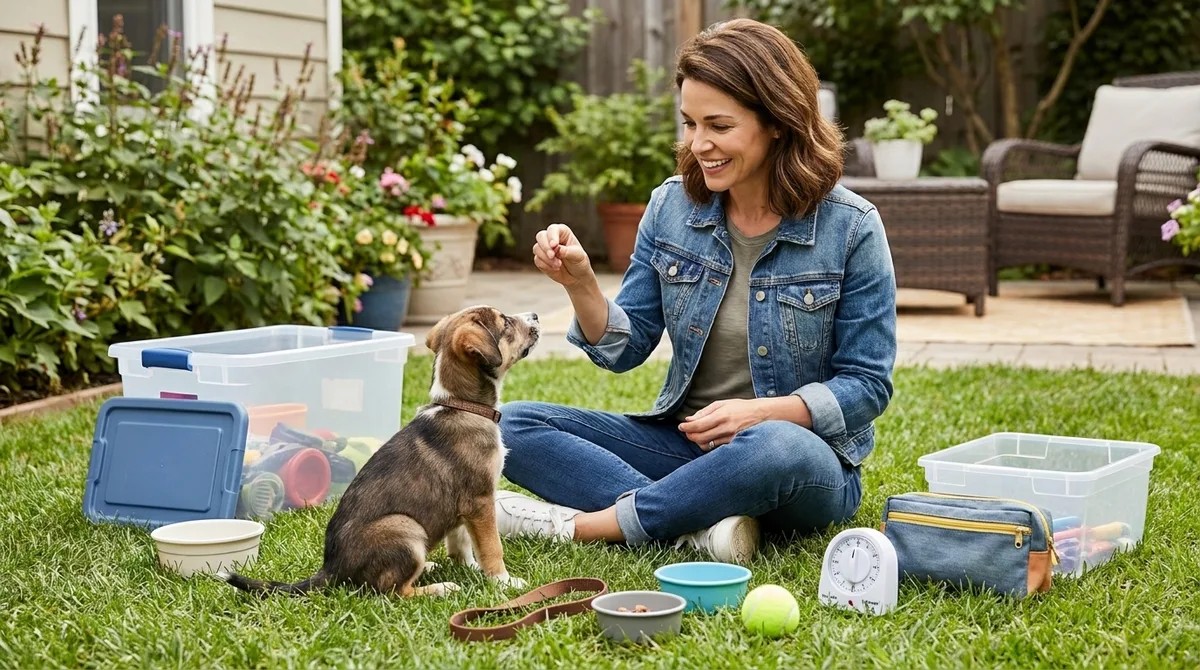
You don't need a credit card and a specialty pet store to raise a well-behaved puppy. Some of the best training tools I've ever used cost about a buck each, and I've been handling dogs professionally for almost ten years now. I'm Jasmine Caldwell, a professional pet groomer who's spent nearly a decade working with dogs of all breeds and temperaments, and I live with four rescue dogs who've taught me that the price tag on your training gear matters way less than how you use it. You're listening to Total Pet Parent Podcast. Quick heads up before we get started: everything you're about to hear was researched and written by a real human expert, that's me, but the voice you're hearing is AI-generated to make production faster and more consistent. Now, if you're a regular listener, thank you. Seriously. Your time could go a million different places, and you're choosing to spend it here. If you're new to the show, I'm glad you found us. We talk practical, real-world pet advice without the fluff or the sales pitch. New episodes come out every Monday, Wednesday, and Friday, so you've always got something fresh to dig into. Let's get into what I've got for you today. I've spent nearly a decade handling dogs of all temperaments at the grooming table, and one thing I've learned: effective puppy training doesn't require an expensive arsenal of gear. My terrier mix proved that when I brought him home five years ago. Some of our best early training sessions happened with household items and dollar store finds. The ten items from the dollar store to use for your puppy training that I'm sharing here have worked across my four rescues and countless grooming clients whose owners were looking for budget-friendly solutions. These picks span basic obedience, impulse control, enrichment, and handling preparation. Every item costs around a dollar, and most have multiple training applications. First up: small plastic containers with lids. These sit at the foundation of scent work and impulse control training for puppies eight weeks and older. I punch a few holes in the lid, drop a high-value treat inside, and let my puppies work to figure out how to access the reward. This builds problem-solving skills and keeps mouths busy during those destructive teething phases from three to six months. Dollar store versions work perfectly for this application, though the lids can crack after a few weeks of enthusiastic puppy chewing. I rotate through several at a time, using them for nose work games where I hide containers around the house and reward my pups for finding them. This taps into natural scent-tracking instincts that positive reinforcement methods emphasize. Next, wooden spoons. A long-handled wooden spoon becomes a target stick for teaching touch commands and guiding puppies into position without physical manipulation. I hold the spoon bowl-end out, say touch, and click-and-treat when my puppy's nose makes contact. This foundation behavior translates into dozens of other cues later, from heeling to recall. The wooden material is safe if chewed, which will happen with young puppies, and the length keeps your hand far enough away that puppies learn to focus on the tool rather than grabbing at your fingers. Dollar store spoons sometimes have rough edges where the handle meets the bowl, so I sand those down with an emery board before first use. Moving on to kitchen timers. Mechanical wind-up timers teach duration behaviors like stay and place for puppies twelve weeks and older who've mastered basic sit-stay for a few seconds. I set the timer for 30 seconds, ask my puppy to hold a down-stay, and release with okay when the bell rings. The audible marker helps puppies understand that the release comes from an external cue, not just when they decide to break position. This approach has saved me during grooming sessions with anxious dogs who needed to learn that standing still on the table has a predictable endpoint. The main drawback is that wind-up timers can startle sound-sensitive puppies on the first few uses, so I start by letting them hear it from another room before incorporating it into training. Now let's talk about plastic shower curtain rings. These lightweight rings are perfect for retrieval training and teaching drop it to puppies from ten weeks onward. I toss the ring, encourage my puppy to grab it, then trade for a treat while saying drop. The smooth plastic slides out of puppy mouths easily, unlike fabric toys that encourage tugging and possessive behavior during early training stages. I keep a set of five or six rings clipped together on a carabiner in my training pouch. My senior shepherd still gets excited when she hears them jingle, even though we started this game when she was a gangly adolescent. The rings occasionally crack if a heavy chewer really clamps down, but at a dollar for a full pack, I just toss the broken ones. Next item: foam brushes and paint rollers. These cheap grooming tools introduce handling tolerance and desensitization for puppies who'll eventually need professional grooming or veterinary exams. I run a dry foam brush over my puppy's body, paws, ears, and tail while feeding treats continuously. This mimics the sensation of being brushed, clipped, and examined without the intimidation of metal tools. The connection between early handling practice and proper grooming preparation can't be overstated. I've worked with too many adult dogs who panic at the sight of clippers because nobody took ten minutes a week to condition them as puppies. Dollar store foam brushes shed bristles after a few sessions, so I inspect them before each use and replace when they start falling apart. Plastic measuring cups are up next. A set of measuring cups becomes a portion control tool and a noise desensitization object all at once. I measure my puppy's kibble into a one-cup scoop and let them hear it rattle before pouring it into their bowl. This builds positive associations with handling sounds that resemble grooming clippers, nail grinders, and other equipment they'll encounter later. The cups also work brilliantly for teaching wait at mealtimes. I hold the filled cup at chest height, wait for my puppy to sit and make eye contact, then lower it slowly. Any breaking of the sit means the cup goes back up. This impulse control exercise translates directly into better leash manners and doorway behavior. The thin plastic can crack if dropped on tile, but I've gotten months of use from dollar store sets. Now, silicone ice cube trays. These trays are my go-to for frozen enrichment during teething phases and hot weather. I fill each compartment with a mix of plain yogurt and mashed banana, or low-sodium broth for puppies with dairy sensitivities, freeze overnight, and pop out individual cubes for supervised chewing sessions that soothe sore gums and provide mental stimulation. The small cube size is appropriate for puppies eight weeks and older, unlike large Kong toys that can frustrate tiny mouths. My terrier mix went through two silicone trays a month during his worst teething phase between four and six months. He'd chew the tray itself once the treat was gone. I learned to remove the tray immediately after he finished the frozen portion, which added an extra step but prevented silicone ingestion. Let's move on to dish towels. Plain cotton dish towels become scent discrimination tools and tug toys for controlled play. I introduce gentle tug games with a towel around twelve weeks, always ending the game on my terms by asking for a drop and rewarding compliance. This teaches puppies that playing with humans involves rules and self-control, not just wild thrashing. The same towels work for scent training when I rub them on different family members and ask my puppy to find the person whose scent matches. I've watched this simple game build confidence in shy puppies who were nervous about approaching new people. Dollar store towels are thin enough that they don't pose a choking hazard if a thread comes loose, though I still supervise all tug sessions and inspect for fraying. Next up: plastic tennis ball tube containers. These tall, narrow tubes, sold for storing three tennis balls, are perfect for place platform training when turned upside down. I teach my puppies to put all four paws on the overturned container and hold that position. This builds body awareness, rear-end control, and the foundation for more advanced tricks and agility obstacles later. The small diameter means even tiny breed puppies can succeed quickly, which keeps motivation high during five-to-ten-minute training sessions. The plastic can be slippery on hardwood floors, so I put a rubber shelf liner underneath to prevent sliding. I've also used these containers for bobbing-for-treats games by floating kibble in water inside the tube, though that creates a cleanup situation I don't always have patience for. Last item: bandanas and fabric scraps. A few cheap cotton bandanas introduce costume tolerance and cooperative handling. I tie a loose bandana around my puppy's neck for 30 seconds while feeding treats continuously, gradually increasing duration over several sessions. This prepares them for wearing collars, harnesses, grooming loops, and the Elizabethan collars they might need after a vet visit. The fabric material is forgiving if a puppy panics and tries to back out, unlike buckled collars that can catch and frighten. I learned this approach after watching a client's puppy develop collar phobia because it was introduced too quickly. A puppy who trusts you during handling exercises will also settle better during feeding transitions as they age. I've seen that connection play out more times than I can count. Now, how did I make these picks? These ten items from the dollar store to use for your puppy training came directly from my grooming table experience and home training sessions with my four rescues. I've seen what works when you're conditioning a nervous puppy to tolerate handling, and I've learned that expensive training gear doesn't guarantee better results than thoughtfully applied dollar store finds. Every item on this list serves multiple training functions. I'm not interested in single-use gadgets when you're trying to build skills on a budget. I prioritized safety, meaning no small parts and non-toxic materials, versatility so they work across different training goals, and real-world durability for puppies eight weeks through six months old. I tested these items with my terrier mix during his adolescent chaos phase, my senior shepherd when she was learning basic manners after rescue, and dozens of grooming clients' puppies whose owners needed affordable solutions. The picks reflect what actually survived enthusiastic puppy teeth and short attention spans, not what looks good in a catalog. Let me tackle some questions that come up all the time. First: what age should I start using dollar store items for puppy training? You can start using these ten items from the dollar store to use for your puppy training as early as eight weeks old, which is when most puppies join their new homes and enter their primary socialization window that extends through sixteen weeks. Items like measuring cups for noise desensitization and foam brushes for handling practice work beautifully with very young puppies, while duration tools like kitchen timers are better suited for puppies twelve weeks and older who've developed basic impulse control. Are dollar store items safe for teething puppies? Dollar store items are safe for supervised training with teething puppies, typically three to six months old, as long as you inspect them before each session and remove any item that shows cracks, sharp edges, or loose pieces. I replace wooden spoons and plastic containers frequently during heavy teething phases because puppy teeth can break off chunks of material. The key word is supervised, meaning these aren't leave-alone chew toys but guided training tools you control and put away after each five-to-ten-minute session. Can I use these items for adult dog training too? Yes, these items work for adult dogs learning new behaviors or retraining problem patterns, though you might need sturdier versions for powerful chewers. My senior shepherd still does scent work with plastic containers at nine years old, and I've used target sticks with adult rescue dogs who never learned basic commands. The training principles remain the same regardless of age, and starting with inexpensive materials makes sense when you're testing whether a particular approach clicks with an individual dog's learning style. How long do dollar store training items typically last? Most of these ten items from the dollar store to use for your puppy training last anywhere from a few weeks to several months depending on your puppy's chewing intensity and how frequently you train. Silicone ice cube trays and plastic containers might survive a month with an enthusiastic chewer, while dish towels and bandanas can last three to four months if you're only using them for brief handling sessions. I budget around five to ten dollars monthly to replace items as they wear out, which is still dramatically cheaper than purchasing dedicated training equipment that serves the same functions. Here's my final take on all this. The ten items from the dollar store to use for your puppy training that I've outlined here have carried my own dogs and my grooming clients' puppies through critical early development phases. I've watched these simple tools build the foundation for reliable recall, calm grooming table behavior, and the kind of impulse control that makes living with an adult dog genuinely enjoyable. Puppy training isn't about having the fanciest gear. It's about consistent, short sessions that build trust and teach your dog how to think. A wooden spoon and some plastic containers accomplish that just as well as expensive clickers and training platforms, especially when you're still figuring out what motivates your individual puppy. My terrier mix responds to frozen treat cubes like they're made of gold, while my shepherd mix couldn't care less about food but will work all day for a fabric tug game. Start with these budget picks, see what resonates with your puppy's personality, and save the investment purchases for when you've identified their genuine preferences and training trajectory. That wraps up this episode of Total Pet Parent Podcast. Thanks for listening. New episodes drop every Monday, Wednesday, and Friday, so there's always something coming down the pipeline. If you found this episode useful, would you mind leaving a five-star rating and a quick review? It actually makes a difference. That's how people who need this information end up finding the show in the first place. And if you haven't already, hit subscribe or follow so you get a notification the second a new episode goes live. Talk soon.