
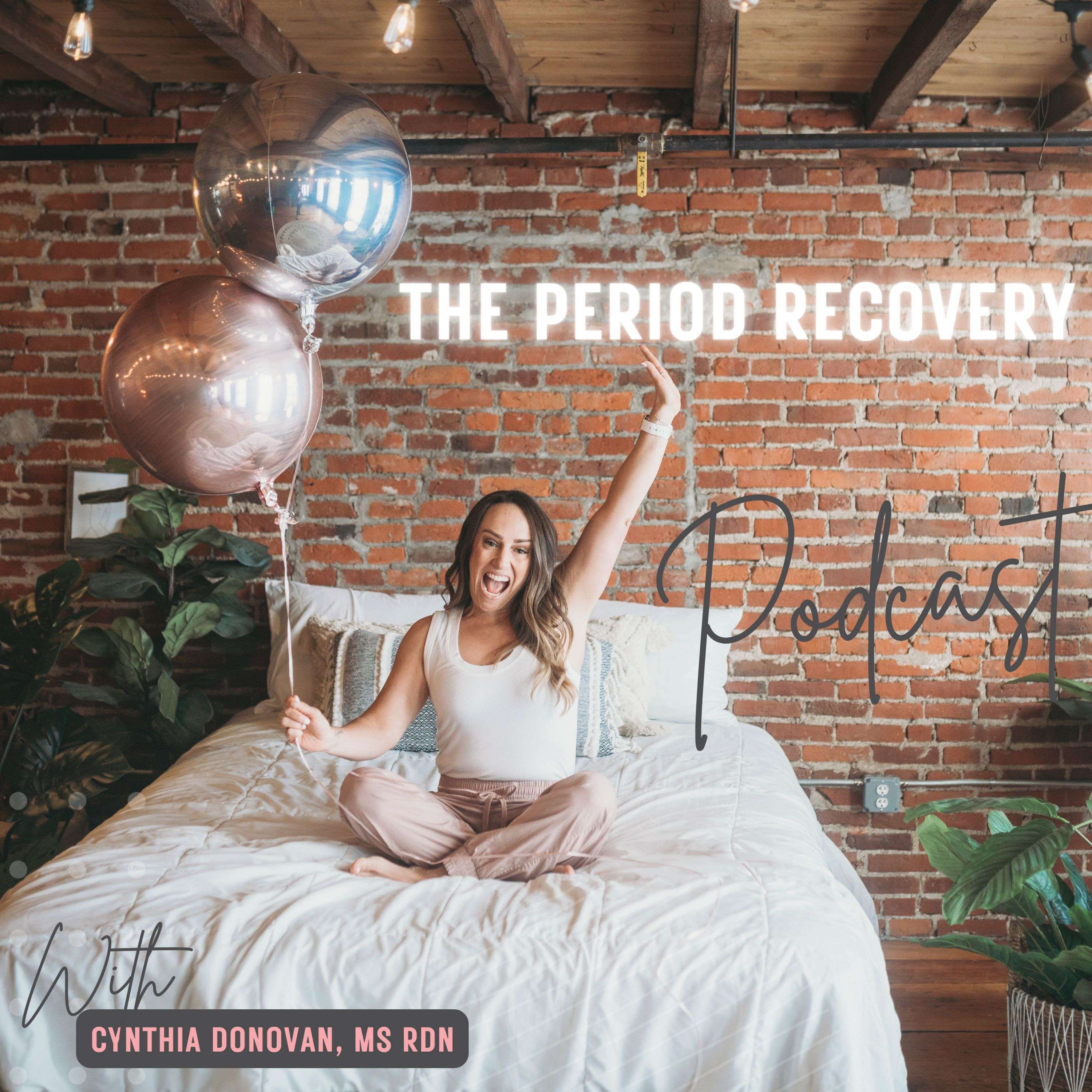
The Period Recovery Podcast · Cynthia Donovan
What happens when you finally get your period back… only to lose it again? In this deeply honest conversation, Cynthia sits down with Audrey to talk about her experience with hypothalamic amenorrhea (HA), exercise obsession, food rigidity, perfectionism, and the identity crisis that can happen during recovery. Audrey shares how calorie counting, overexercise, and chasing the “healthy girl” image slowly disconnected her from herself — and why getting her cycle back required so much more than simply eating more food. Together, they discuss: Why HA recovery is about more than food and exercise The hidden identity piece behind missing periods Why getting your period back once doesn’t always mean full recovery Exercise addiction, perfectionism, and needing external validation Learning to feel safe in your body again The emotional side of weight gain during HA recovery How hormones impact mood, relationships, joy, and creativity Why community and accountability changed everything Dating, relationships, and regaining emotional capacity after HA The difference between “looking healthy” and actually being healthy What helped Audrey keep her period long-term This episode is for any woman struggling with: Hypothalamic amenorrhea (HA) Missing or irregular periods RED-S Exercise obsession Food guilt and rigidity Fear of weight gain Identity loss during recovery Fertility concerns Overtraining and underfueling You are not broken. Your body is communicating with you. Listen in for one of the most powerful recovery conversations yet. Apply for Recipe for a Period coaching w/Cynthia: https://www.periodnutritionist.com/applyforcoaching New to HA? Discover the truth about HA: click the link to download Cynthia's fact sheet that debunks common myths and misinformation! Trying +3 months to get your period back? Click here to download the Safety Worksheet YouTube: https://www.youtube.com/@theperiodnutritionist Instagram: www.instagram.com/period.nutritionist
Cynthia Donovan: Hi Audrey, welcome to the podcast. To all the amazing women out there, hope you enjoyed this episode. Take a moment to reflect on what resonated and how you can start applying it to your own recovery journey. I truly want to thank you from the bottom of my heart for being here and listening to the podcast. I know there are so many podcasts and resources out there and it means the world to me that you're choosing to spend this time with me. If you're looking for more support on your recovery journey, Welcome to the Period Recovery Podcast. I'm your host, Cynthia Donovan, registered dietitian and period recovery expert who has been where you are. This podcast is for the active, high achieving woman who feels like she's doing everything right in her life, but her body isn't responding. Whether you've just discovered you have hypothalamic amenorrhea or you feel like you've already tried it all in regards to getting your period back and restoring your fertility, or you're on your journey to become a mom. Welcome back everybody to another episode of the podcast. And today we have Audrey, my past client from last year on the pod. And she is in her last year as a senior studying advertising and she had gotten her period back before we started working together. And ultimately she was following me for a long time and then she's like, maybe I shouldn't reach out to Cynthia because I've already gotten a period back. Audrey McClatchie: Thank you so much for having me, good to be here. Cynthia Donovan: I am so excited you're here. I always get so excited to catch up because, I'll say this almost on every single recording, because I ⁓ care about of you guys. And then it's like, you're with me for like three months-ish, and then it's like, you leave the nest and we don't get to keep in touch. So this is so lovely. And I know you have so much to share today, Audrey. ⁓ So ⁓ gosh, where we Let's talk about like, you're in the right place. Here we go beyond just getting your period back. We talk about fueling your body, regulating your nervous system, redefining your relationship with food and exercise and stepping into the version of you that feels strong, feminine and fully you. This is your safe space for honest conversations, expert guidance and the deeper work that creates lasting change. So you can take the stress and the guests out, restore and keep your period and your fertility visit my website periodnutritionist.com. And if this episode supported you, it would mean the world to me. Again, if you just subscribe, left a review, or shared it with another woman who needs to hear this. The more we talk about missing periods and fertility, the more women we could support. Are you ready to get your period back and step into the woman you were meant to be? I'll see you in two weeks. But she managed to get one or two periods back with a little bit of support before and now she's going on. think she said period number eight or nine. And yeah, she is dating now. She is living a full free life. And she said, you know, I think the biggest piece and takeaway of this all is to just don't give up on yourself and to keep going. And also don't label yourself as crazy. This is a really hard, difficult thing to do. What what's currently going on right now for you? Like, where are you at in life? What are you doing? Audrey McClatchie: Yeah, right now I'm a senior in college, so I'm finishing up my last semester studying advertising. We're definitely a really bittersweet era of life, and I'm so excited to graduate and look at jobs with advertising. But I've also just really loved being in school, and so just trying to enjoy the last few months. Cynthia Donovan: and your connection to yourself. Get ready to be inspired, get ready to feel seen, and finally get your period and life back. Let's go. Mmm, that's so exciting. And like you said, bittersweet. Because it's like, I bet when you started college, it's kind of like, ⁓ my gosh, like, this another four year or like more schooling, it's like, ⁓ this feels like it's going to take forever. And then it's like here. So Audrey goes into sharing her full past of how she came to lose her period, how she came to get it back and all the things outside of just the food and the decrease in exercise that helped her not only get her period back, but get multiple periods and live the most full, free, joyful life ever. So let's dive in and chat with Audrey. Audrey McClatchie: Mm-hmm, totally. blink of an eye totally just goes so fast. It's crazy. Cynthia Donovan: It goes so fast. And it's just so crazy as you age, as you get older. I mean, I remember being a kid, it's like, ⁓ my gosh, like when's Christmas coming? Like, it feels like everything's taking forever. And then time speeds up. And yes, and it speeds up even more when you become a mom. But that's another topic. We're not going to talk about moms today. But I do want to just dive into Audrey, like a little bit of background story, like Audrey McClatchie: Mm-hmm. I know, it's crazy. Cynthia Donovan: How did you even come to losing your period? Like take us way back to where you think it started for you. Audrey McClatchie: Yeah, kind of I think a little opposite than a lot of girls I've just talked to in the program. I feel like I really had no issues with body image or restrictive eating growing up. And for me, it was really when I hit college, I was really active growing up and grew up in a really loving, amazing household and just was really just thinking about fueling and running and just being a student and growing up. ⁓ But then I went and had my freshman year of college and I was on a meal plan and just had like a really fun year and then the year ended and I just kind of had that first thought of, yeah, I think my body has changed and whether it be just different lifestyle or just becoming an adult woman, all of those things, I kind of had that first reoccurring thought pattern of I've changed and I think that's a bad thing. And then I kind of started getting into the calorie counting, which is one thing where if I could literally go back with a magic wand, I wish I could have said, Audrey, just don't download that calorie counter. And I have a lot of opinions about that. ⁓ But that summer after my freshman year of college, I just kind of got into this mentality of like, okay, I'm just gonna be like so active. I'm gonna eat so well. I was tracking my calories and it just got really intense, really fast, but it felt really private. I was just. I would be running and working out and just being really critical about how much I was eating. And I kind of got to the point where I also felt really trapped in a social media algorithm that was really stuck in diet culture and everything I was seeing on Instagram and Pinterest was all just like recipes that were all about under fueling and trying to eat as little as possible. So it was kind of a collision of all these things and initially just that drive to just wanna lose a freshman 15. ⁓ And then I actually, at end of that summer, I went on a volunteer trip for my church, which was a year and a half. And so I was completely on my own. Well, I worked with, like in a partnership with another girl and would move around. I was in Colorado for a year and a half, but I wasn't at home anymore. And I didn't, I wasn't living at home with all the things that are good and bad about living at home. But I think during that year and a half, it kind of progressed. in a worse way, I just became more more restricted and kind of stuck in a lot of just like perfectionism and wanting to work hard both on this volunteer trip, but also just finding myself still struggling with just constantly tracking calories and feeling really rigid about always getting as intensive a workout as I could, especially because we only had like 30 minutes every morning. And just really stuck on that and just progressively. finding myself more stuck in restriction. And then I came home from this volunteer trip, it's been a year and a half, I hadn't seen my family in a year and a half. ⁓ And I feel really grateful now that they expressed some concern. I lost a significant amount of weight and they brought up that something needed to change. And it was good that I had people in my family helping me and encouraging me to eat more at that point. But then what I think happened is, The anxiety of being pressured to eat more led to wanting to exercise more. And I found that my scales had tipped quite a bit. I'd spent a year and a half really restrictive with food and I was exercising, but I was limited by a half hour. And at this point coming home ⁓ from this volunteer trip, I kind of shifted into really intense exercise and I probably was eating more, but I still was, it was just not enough. And I was training as if I was training for... some race, something, but I wasn't eating that way. No, seriously. And just completely unnecessary amounts of exercise and just so stuck in a routine and felt so much guilt about missing a single day and just running towards absolutely nothing, basically. There was no goal even. I wasn't even training for a race or anything. I was just running myself into the ground because... Cynthia Donovan: the Olympics. Audrey McClatchie: I wanted to look a certain way and I wanted people to think of me in a certain way. I liked being known as someone disciplined, someone who ate healthy, someone who went to the gym every day and would run and was super active. And I was addicted to that kind of identity that I had built for myself. And ultimately that was my downfall. And I lost my period. I guess I forgot to even mention that. I lost my period right when I left on my volunteer trip. So it was about like three months into a really intense. diet routine. I didn't have any period for two and a half years, absolutely nothing. And then I feel really grateful. My mom is the one that said, you know what, I just, let's just stop exercising. Like let's have a little bit of faith in this. Just, just stop. And obviously your period hasn't come back. Like something really needs to change. And I was working with a therapist and a dietician and, and for a second it was actually good. I got a couple periods back, but then Cynthia Donovan: Yeah. Audrey McClatchie: without the accountability, it just came back. And so after a summer of having two, maybe three periods that were kind of irregular and weird, I kind of was just like, okay, good enough, time to get back into running. And again, like I've been out of this for so long. What are people thinking of me? Why isn't she running anymore? Like everyone must be so concerned about me and why I'm not keeping up my exercise routine, which now I realize is a little ridiculous. But that's just how it felt in the moment is Everyone is watching me. Everyone's judging me. Everyone must be noticing that I'm gaining weight and Must be noticing that I've completely changed my lifestyle and so I fell back into it lost my period for another six months and At this point that's when I said, okay I think I need a little more help and this was the point where I've been following you sent the on Instagram for a year listen to so many podcasts and I just realized I really needed that third person view so badly and I needed accountability. And I just still wasn't really good at trusting what my body needed and needed someone to help me with that. And so that kind of brought me to, that was like May, I think that I started working with you. And I remember feeling kind of unsure coming to you even because I felt like I didn't have a classic story. was like, I've been in this for so long. I even got my period back. Cynthia Donovan: Hmm. Audrey McClatchie: And then it left again, I'm like, can I still work with you? And I just remember you saying absolutely, because if I think I want help and support, then absolutely I deserved help and support. And ultimately I want the best cycle possible. And I just was not there at all. Even if I was kind of having a period, I know now like even that wasn't, it wasn't completely optimal. And so I'm so grateful that I was welcomed into the community and that. I just had enough bravery to say, hey, I'd actually really like some accountability. I really want to be able to have children someday and that matters to me and this is not sustainable. It's taken up so much mental space. I think it's time to get some help for real and like fully lock in. So that kind of brings me to when I started working with you. Cynthia Donovan: Yes, Audrey, and I'm gonna fast forward for just a quick second, then I have so many things I wanna ask you. ⁓ How many periods have you had now? Audrey McClatchie: I've had eight or nine, I think. Yeah, yeah. Cynthia Donovan: Okay, so it's I think it's back for the long long haul, right? Yeah, yeah. And we'll talk a little bit about like, you know, how how you actually got there and what was different, you know, for you doing the work before getting your period back and then you know, what was different now for you actually keeping your period. And I think it's a strong point you bring up because I think a lot of women probably feel the same of like, well, like Audrey McClatchie: Mm-hmm. Totally. Cynthia Donovan: I just got to get my period back. and you know, I've gotten it back. Like I don't, I don't fit the missing period bill of like, you haven't had a period in years or months. Like I am different. And the thing is, I just want to point out there, depending how you got your period back, right? You did work with a dietician, you said in a therapist, which is great. ⁓ but whether it's a dietician, a therapist, a doctor, a DIY course, whatever it may be. If we're not looking at the very things that led our period missing in the first place, and I'm not talking about like the exercise and the lack of food, but like, who are we? And what is our identity? you got your period back right but then it was like maybe ⁓ we didn't go ⁓ the safety the body needs looking at the identity maybe ⁓ doing other things a little bit differently there was a big ⁓ A big push or a drive to like get back to like normal life, if you will, because what are people going to be thinking? And so where do you thought that, right? We only know what we know when we know it. You might have heard me say that before, but where did that, that kind of thinking get you? Like in the first place. And I think you've kind of already told us, right? But if you could tell yourself, I guess, tell your, your younger self, older self or your past self. a couple things about doing period recovery and then wanting to get back to it. What would you, what would you say? Audrey McClatchie: ⁓ I would say you need to have some more patience. Yeah, that's something I've thought a lot about. And I think I would agree the mental piece, I had no idea how important that would be. And that mental stress of worrying about being off track, about people's judgment, all of these things, a timeline or a way that I see myself progressing with training and strength, even those are good things, but putting any expectation for a timeline on myself did the complete opposite with my recovery. And I think that 100 % drove me back into it. It made me run back into the obsessive thoughts and the mental strain of things. And instead of just leaning into it and realizing that I can trust my body and my body will tell me when it feels safe. And I'm so grateful for that intuition now, but not paying attention to that in the past 100 % just led to running back into old habits. Cynthia Donovan: Yeah, and I heard you say that timeline, right? The timeline. So was it a timeline of you saying like, okay, got my period back. I got a couple. Like, now it's time to get back to real life? Or was there any? Yeah, that's my question. Was it was that the timeline you're speaking of? Like I need to like get back to like normal real life or whatever we want to call it. Audrey McClatchie: Yeah, honestly, I think a lot of it was still stuck in my self image. ⁓ Something that was really hard for me throughout all of recovery was when friends, roommates, anyone would talk about wanting to do, like go to the gym, go on a hike, do anything. And it would make my blood boil. And thinking back, it's kind of silly to me now, but that was such a difficult thing for me to let go of my image and to hear someone else. say, ⁓ I'm going to the gym, and it would make me mad because I wanted to be like, well, I would be going right now, but I just can't, and I wanna explain this, but at the same time, it's not something I'm just telling everyone in my life about, but it's so hard to decompartmentalize this one part of who you are when it feels like it is literally cemented into your entire identity to be an active, healthy girl. and that was so difficult to let go of. And I was chasing that image again. And I think that's why I lost my period again. As I said, it's time to, to re-cement my image for everyone because it feels again, like everyone's paying attention to me, even though they're not. And it's such a difficult little mental battle to get over. So I don't know if that answers that question. Cynthia Donovan: No, absolutely. my question to that Audrey is what helped you not go back to that place again? Because you got your period back again. how did you, was it, did you recognize it? Like saying like, ⁓ like I know why I came back here. Or did you recognize it after the fact that you got more periods and you maybe did things a little bit differently this time around? So what, what, what, how did you, or I guess how did you move through it? How did you move through it and not go back to that place again? Audrey McClatchie: Hmm. I think remembering that consistency doesn't end when you get first period, second period, third period. That was what I did wrong the first time. I hit first period and let up on the recovery routine of really focusing on enough and frequently enough of the right macronutrients frequently. Um, and when I started working with you and so that's something I think this community teaches so well that I'm so grateful for is that you're not just eating in a way. that gets you through period recovery, but we all deserve to be well-fed women that can function mentally and physically and emotionally show up for people and ourselves. And that's like a lifelong thing. And so I think what shifted for me is I'm learning how to eat in a way that supports my body for my entire life and not just for period recovery. And that's not to say that... You are literally following this recommended way of eating when you're in the thick of period recovery, but the principle, I think, resonated so much better after working with you and just realizing that it's about the long-term taking care of myself. And that has completely changed how I look at movement, how I look at how I eat, because I want to take care of myself for my whole life. And that means being intentional. maybe for a while longer, but eventually it'll become normal and it has already become normal ⁓ to support myself in a way that in the past would have felt like too much. But because of how I feel now and my energy and everything, I'm like, now know what my body needs and it's more than I would have thought like three years ago, but it's good and it's good for me and I know myself and that's how I need to just keep moving forward now. Cynthia Donovan: Mm. Yeah, yeah, and I appreciate you sharing that. And two things I want to ask is like that like thing of like, this is too much food, right? This is too much food for me. And I was just actually on a call earlier today of like, that's a lot of food. We're talking about that's a lot of food, which I'm sure you had felt probably when we first met, that's a lot of food. And I just want to say kind of point like is like Is it a lot of food or is it that you're not used to fully nourishing your body? Right? Because there's different things because It may look like a lot of food because you're not used to it and your brain perceives more food with weight gain, with loss of identity, with who the heck are we? What if we like gain so much weight we don't even know who we are? like, you know, the worst case scenarios that just, just easily just float in our minds, right? And so, you know, thinking about that, and I heard you say like what I thought was a lot of food, but really wasn't. Audrey McClatchie: Yeah. Cynthia Donovan: How did you finally say to yourself like, yeah, like I thought that was enough food or I thought that was too much food, but like turns out it isn't. Was it the positive benefits that you saw Audrey? Was it like, you know what, I've done this one way one time and I'm not gonna do it the same way I did before. What do you think helped you kind of get over the fact that like this really isn't a lot of food? Audrey McClatchie: Yeah, I think something that maybe a lot of women struggling with HA experience is like used to volume eating and my plate's so healthy because there's a lot of greens and there's a lot of like really just more like complex grains if you're having grains and it feels like, I don't know, it feels like I've always eaten and it's always been, ⁓ this looks like enough, but I think for me, ⁓ Cynthia Donovan: Hmm. Audrey McClatchie: learning about the importance of having enough fat and carbs helped me really think about the density of what I was eating versus like the physical volume amount that I was eating. And I think that's something that was hard for me to learn. And when I started tuning into that, I started just noticing that it's good to eat nutrient dense things. And it totally just impacted everything about how I felt in my body, and just kind of, I think, shifting that from the volume to the density, and that it's not bad to eat calorically dense things. And in fact, in this time of ATA recovery, that is the best thing I could possibly be doing. And just stepping away and realizing why is this certain food making me feel this anxiety? And what is actually going on in my head right now? And can I just try it and realize that it's just... a meal and if I really just don't like it, just don't have it again. But there's so many things now that I just really enjoy eating because I learned that I don't have to be- it's not about being afraid of anything, it's about ⁓ just finding things that provide enough nutrients for your body and in HA recovery that is like a really important aspect and so I definitely had to understand the whole density of macros aspect way better. Cynthia Donovan: Yeah. Yeah. Yeah. And I appreciate you sharing that Audrey. And yeah, that could be, it could be a lot. And we have to give ourselves so much grace because depending how long are disordered yet, I don't see it's hard because when I say disordered eating, it's like the rest of the world is participating in this disordered behavior. But not all the time? does these disordered behaviors result in physical ailments such as like a missing period? ⁓ So I just want to say everybody's healthy is different. Audrey McClatchie: Mm-hmm. Cynthia Donovan: But also if we are avoiding social situations or we're in our heads of being like, OK, well, if I eat a bagel for breakfast, well, I can't have a sandwich for lunch. then, oh, my gosh, I have dinner on Friday. So that means I can't have pizza on Wednesday with my friends and like, you know, all that mental mind games that we we we play. so anyways, going back to that, you know, we get caught up in so many years of this quote unquote healthy eating that is really like disordered eating like hidden. And we just happen to be the women that lose our periods, which is so frustrating. But yet at the same time, would you say now Audrey that I don't want to say you're grateful that you lost your period because I mean, of course that comes with health issues, but like if you didn't lose your period, do you think that you would have gone to Audrey McClatchie: Yes, yes. Cynthia Donovan: the depths of really healing your relationship with food, body, and identity like you did. Audrey McClatchie: I 100 % feel grateful that as a woman, my body is smart enough to give me the biggest red flag that something is going wrong. So I really do feel grateful and it's almost scary to think just where I would be right now mentally, physically, if I didn't have that sign that something was wrong. Like it really is a beautiful thing and truly I think just Cynthia Donovan: Hmm. Well said. you Audrey McClatchie: so special that we have this unique trait as women, this physiological response that tells us when we're too stressed, we're not eating enough, we're exercising too much. ⁓ And it's taught me so much about my hormones. I feel so much more educated on the importance of hormones now and ⁓ just realizing how that has linked to my mood and how that has changed and just, it's impacted dating even, like all of these pieces of my life. Cynthia Donovan: Mm. Audrey McClatchie: It all, it makes sense. It's all connected to having a healthy body, healthy hormones. So I definitely would agree. I feel grateful that my body gave me a sign that it wasn't doing okay. Cynthia Donovan: Thank you for sharing. said that so beautifully, Audrey, too. ⁓ And yes, it could be scary, you know, ultimately to be like, ⁓ my gosh, my period's missing or something is wrong with me. But can we just take it as information? Information that like, okay, like something's going on. Nothing is wrong with me because HA is a completely reversible thing. know, so yeah, you said that beautifully. And I also want to say healthy. Like what maybe was unquote healthy to us say when five years ago might actually have been somewhat healthy depending where and who we were and what we were doing. But now it's like how do we create our own version of health? Like the ⁓ eat your vegetables every day and exercise every day like You know, that could be healthy if you have a regular menstrual cycle. But if our periods are missing that veggie thing and that exercise thing and that weight bearing exercises that we're supposed to do for our bone health, which FYI, if you don't have estrogen, your bone health is being really impacted. And if you get your period back, your estrogen will go up and then you could actually benefit off of those weight bearing activities. But we're not going to, we're not going to get into much to exercise right now, but I just wanted to share like, what is our healthy in this season of life? Audrey McClatchie: Mm-hmm. Cynthia Donovan: Right? Because maybe Audrey decides like in five years she's getting married and she wants to have a baby. health might look a little bit different for her. She might be prioritizing taking her prenatal vitamin and getting more vegetables in also while making sure that her period is regular and she is doing all the things to keep her body in a healthy place for pregnancy. Maybe she desires in 10 years, she wants to run a marathon. And so her intake for her food is dramatically going to increase. So I just want to say that health can look different in different seasons and that what we have learned in the past about eat your veggies, exercise every day, and this is bad, this is good. It's not applicable when you're going through period recovery. So I wanted to share that. And then I also wanted to share a little bit, Audrey, if you don't mind, I heard you say, and you don't have to go super in detail that it helped me with dating, like just going through this whole process. How did it help you? with dating. you mind sharing? Audrey McClatchie: No, not at all. And ⁓ my goodness, night and day, it's crazy. I think when I was in the thick of HA, I was so stuck on a routine. And so that's one aspect. I had no bandwidth for being present and giving to a relationship because I don't think I could have handled another person getting in the way of my gym routine or someone saying, hey, let's go out to dinner, would have threw me for a loop. I would have been just, spiraling and the planning anxiety would have just been so difficult. Yes, all those things. Yeah, like having someone else in your life is a beautiful thing that involves flexibility and that is not what I had in the middle of HA. I think another big piece is just hormones. I had zero estrogen, zero progesterone for years. Cynthia Donovan: researching the menu a week ahead of time, trying to be good through the week. Yeah. Audrey McClatchie: And I was doing lab tests and so I knew that, it was a fact. And it wasn't until I got my period back. I actually remember writing in my journal, I think last spring when we had started working together, I had a couple periods back. I remember writing in my journal. I can't remember the last time it has been so easy for me to laugh this hard and this often. It was one of the craziest shifts and then sounding really dramatic, but it really was. was that dramatic for me because I didn't realize how much I was pushing for happiness in my life and I was happy and I feel so grateful for my friends and my family. have wonderful support network but everything became lighter and I felt like I was like tapping into my middle school self again which is just the most amazing thing to realize that like you are always in yourself and when your hormones aren't there it's so difficult. to feel like yourself. And also, if you don't have hormones, you're just not as interested in dating. And that's just a fact. I just, I wasn't really interested in going out. I wasn't really feeling like that physical anything. I just wanted to avoid any dates. And I could see that pattern happening when I lost my period again. It was a few months into that that I just remember having a thought of just, man, I just... to have no interest in dating right now. And I'm in college and that's such a fun and important just phase of this life. And so that kind of freaked me out a bit of am I missing out on opportunities because I'm not putting my best foot forward and I just don't even really care to date. But figuring out my cycle just completely shifted my desire to look for and to give affection because I had just such a greater capacity to give love more than I would have a few years ago. Cynthia Donovan: you Audrey McClatchie: and the flexibility in my life, all those things I mentioned, I'd say that 100 % changed and now I'm in a really great relationship with someone that I really care about and I know he cares about me and ironically, we met and started dating right when I got my cycles back consistently and that also felt like the coolest little miracle in my life because it felt like a big sign to me too that this person really likes you and cares about you because of who you are. Cynthia Donovan: Bye. Audrey McClatchie: because that was honestly the climax of my losing fitness identity. Like I was really doing no exercise. Like I had totally intentionally been trying to gain weight. Like all of that was just out the window. And that was the greatest thing to start dating someone when honestly, like physically was not like at my, I don't even want to call it peak, but like, cause it wasn't a good thing, truthfully. ⁓ But. I wasn't performing, I wasn't trying to chase some kind of aesthetic. I was just me at that point. And I was coming out of something really hard and he still chose me and I had the capacity to choose him. And that felt like the greatest sign that like this is a good thing to pursue and he cares about you and so do you. And so just complete turnaround. I feel so grateful for the whole, just how that all worked out and everything I've learned about relationships because of this. Cynthia Donovan: Mm. Oh, Audrey. So beautiful. That is so beautiful from what you just shared about just like being like lighter and laughing and just feeling like your core self, you know, all the way back to when you were a kid. And I just want to say all of us out there that aren't feeling somewhat as a kid at times, right? We can't be like, you know, 12 year old all the time or 14 year old, but Audrey McClatchie: Totally. Cynthia Donovan: you know, feeling that way, being able to play and laugh and be joyful like that. I mean, I'm 40 years old, Audrey, and that is still a big part of my life. Being a kid in the capacity that is necessary, of course, not like, you know, it's so good. But I'll tell you what my former self of like when I was missing my period, restricting food and all that, like there was no room for fun. Audrey McClatchie: Yes! Knowing is good! It's fun! Yeah! Cynthia Donovan: laughter, none of that. And of course, like scientifically, our bodies are in survival mode. Like if you're in survival mode, you're like, it's not time to party. It's not time to have fun. It's not time to seek out your mates. And so, you know, that what you said is absolutely beautiful because that that's the stuff like the laughter, the being present, the joy, the fun that is part of keeping your period around. Audrey McClatchie: Mm-mm. ⁓ No, I don't. Mm-hmm. Cynthia Donovan: Not just the nourishment and the rest and not too much exercise, but all of those things. And I heard you say journaling. Did you do a lot of journaling, Audrey? Audrey McClatchie: Yes, honestly, I might be a obsessive journaler. I just love journaling so much. And I've always been that way. And ⁓ even in the really hard moments of ATA recovery, even before I'd even gotten any period back, I wrote a ton. And I actually just kind of scrolled through it right before I hopped on this call with you, because I just was curious. And I don't know, I was just thinking about it. And if there's anything that I wanted to bring up. And I just, the tone, it's so. Cynthia Donovan: you Yeah. Hello? Yeah. Audrey McClatchie: It's just kind of sad to me. Like, this girl two years ago was just, all of her mental space was so preoccupied and afraid and this strange dichotomy of like, I feel so much pressure to look a certain way and to eat this way and exercise this way. And then on the other hand, I'm so afraid that I'm never gonna be able to have a family. And I know this is so bad for me. I know that I'm not myself. And this constant tug of war, I felt like I was always in the thick of that feeling of Cynthia Donovan: Hmm. Audrey McClatchie: hopelessness and feeling so much stress that I know I need to choose what's good for me and good for my future self, my future family. ⁓ And for me, journaling helps so much. I still, like, sometimes I still journal about these things and what I still continue to learn and what I'm continuing to grow in. ⁓ But there is just so much power in, think, writing down your experience and your thoughts. Especially when I have a moment that feels triggering or hard, which still totally happens. I don't want to pretend my life is perfect, these thoughts never come up. I still am like figuring out my relationship with, okay, what's the good, what's the best amount of exercise and things like that. Like we all just are always figuring it out. ⁓ But when I write things down and take a moment to pause and just recognize what thought is happening, it does so much to help me get through that. And I would Cynthia Donovan: ⁓ there's still bumps, right? Audrey McClatchie: totally endorse journaling, it's amazing. Cynthia Donovan: Yes, same, same, same. And so that's what I wanted to talk about is, you know, yes, the food, we need to eat enough foods, we need to rest enough, not do too much exercise for our body. Like we get it. That's like across the that's plastered everywhere about period recovery, like eat enough, rest enough, don't do too much exercise. But what about the other stuff? The other stuff like the journaling, like the maybe the breathing, like how else, Audrey? Did you bring safety to your body outside of the nourishment and the rest and the not too much exercise? Audrey McClatchie: Yeah, I think another big thing for me was really just tapping into creativity again. That's another thing that I remember journaling about is I feel so much more creative than I have ever felt in the last few years. And I am an extremely creative major. And so that was not serving me to not have any creativity. But I think when I had suddenly so much time that had been spent on obsessing about meals and spending time in the gym. or worrying about exercising enough, I had time that I needed to fill again. And it was so much fun to just do the embroidery project that I'd been wanting to do that I had on my Pinterest board and to like enjoy cooking and like being with friends and making meals together and taking time to just slow everything down and write more, create more, sew more, do whatever it is that just... feels fun. think that was really important to find a way to replace those hours I had spent with destructive habits and replace it with something that fed my soul in a really great way. And it's not totally made a difference, I think, in my recovery. Cynthia Donovan: Yeah. So more fun and more play. And when you kind of figured that out, because you probably might have heard me say like, all right, well, we're not going to the gym as much anymore. Like what, what are we, what are we doing? and it's important that I don't want to say we fill that time, but we start to explore. So I want to know for you, Audrey, when that came about, when you're like, okay, I need to fill my time outside of the gym. Was it easy for you to be like, ⁓ yeah, I'm just going to do these projects and I'm going to do this and that. Or was it kind of like, okay. Like, ugh, this feels a little uncomfortable. Audrey McClatchie: ⁓ not comfortable at all. Like it was really hard at first and I already kind of mentioned I really had a hard time with people around me doing active things. So, so difficult for me to get over that. Like cannot emphasize that enough. And it- Cynthia Donovan: Thank you. How did you get over it, Audrey, if you don't mind me asking? Audrey McClatchie: I think I just had to learn to just, it happened and just let it just move on. Just like how people say, like, if you have a thought that's triggering or hard or just something not kind to yourself, just acknowledge it for what it is and kind of just realize like, huh, this is making me kind of feel away. And then you can just let it go. And it feels kind of untangible to describe it like that. Cynthia Donovan: Mm. Yeah. Audrey McClatchie: And it sounded like that to me when I was first trying to learn how to do this, but it's just true. ⁓ I think also like, yeah, you choose how you want it to let it simmer or not. I think also choosing to celebrate someone because they want to go do something for a good reason. And I think in my mind, because I was so stuck in doing things for the wrong reasons for a lot of time, forcing myself to do extra intense forms of exercise because I was trying to look a certain way. Cynthia Donovan: You can choose, right? Audrey McClatchie: I almost was like assuming everyone else is doing it for that reason. And so it made it more frustrating, but realizing that people just want to move to feel good. Right now I want to move to feel good and be strong and take care of myself. And just realizing that when someone says they're gonna go do something, it's like, ⁓ fun, like that is fun. And it almost has helped me reinforce it to myself. Like my friend said, ⁓ I'm going to the gym. And my response is, great, have so much fun. And it reinforces to me that like, it's fun to go to the gym. And when it doesn't feel fun, why am I doing it? ⁓ So maybe it's both sides of that, trying to let it go, but also it's a good thing. Celebrate it and let it be a celebration for you too, to reinforce that mindset in yourself as well. Cynthia Donovan: Yeah, yeah, I Yeah, I love that. Yeah, absolutely. so, yeah, I'm glad you explained the behind the scenes of that, like doing things differently, whether it's, you know, starting a project or, you know, what was the other thing, hanging out with friends over like going to the gym, like that wasn't an easy thing straight up, you know, and that it took practice, right? Would you say I kind of practiced my way into? feeling more comfortable and confident with those more fun things that were actually super productive to period recovery. Audrey McClatchie: Yeah, no, definitely. It was hard and I think it's almost kind of like a weird curve. feel like very first few weeks, it is actually really fun because your body is just so desperate for a break and then it kind of gets hard. It's like that initial part, easy, fun. And then, yeah, no, it really is. And then it is hard. And then I think it just, it gets good and easy again in the sense that you start to see the fruits from it and you see how it... Cynthia Donovan: It's like little honeymoon and then it's like, ⁓ this is the reality. Audrey McClatchie: helps you and makes you want to do it more. Cynthia Donovan: Yeah, yeah, absolutely. And it takes time. just we have to lots of patience, would you say, and lots of lots of grace for ourselves ⁓ and that, you know, the uncomfortable feeling of like doing something different, such as hanging out with friends versus going to the gym, ⁓ that is going to feel uncomfortable at first. But over time, would you say it was like a little less uncomfortable, a little less uncomfortable until it was like, OK, like I'm not even thinking about it anymore. Audrey McClatchie: for sure. Totally, yes. And now, again, flexibility, I feel like I'm saying that word so much, but that is what I feel so grateful for. I'm practicing trying to let go of this rigidity so that when my friends say, hey, let's go to the park right now, just to do who knows what, like run around in frolic, I'm like, sure, I'd love to do that because life is flexible and there's things we all need to get done. But that's the joy of it, is just learning to love that you can just choose to do something because you want to do it and it feels good. And that is perfectly good for you to do that. Cynthia Donovan: Yeah, I love that you shared that, Audrey, because I think, you know, a lot of recovery beforehand, you know, is rigidity, but then also rigidity sometimes rears its ugly head in period recovery, right of doing it perfect and doing it right. And so was there ever a point for you that you were like, Okay, I need to do period recovery, like I got to eat three meals a day and three snacks and like, Audrey McClatchie: Yeah. Cynthia Donovan: Was there any of that rigidity for you? And if so, how did you let go of that? Audrey McClatchie: Yeah, I think that was hard, especially if I felt like I was in a situation where I almost felt a little bit of embarrassment being like, time for my snack. Or again, I really struggled with feeling like people were watching me, whether because they knew what was going on and wanted to even support me. Or if they didn't know what was going on, it just felt like everyone's got eyes on me. That was a really hard mental struggle. ⁓ And so I think it was hard when I was like, I know I need... Cynthia Donovan: Yeah Audrey McClatchie: to add a little more of this or it's time for me to eat again. need to make sure I'm trying to follow this plan that will help me get out of this HA cycle. And so that was hard ⁓ when I was learning to do that in the group setting and just realized that eyes on my own lane, like put the blinders on. It's not about anyone else. It's just about you and you know what you need. And just like how I would hope that I would support any friend going through this journey and what want to just totally empathize with them and tell them that it's really fine to just focus on what you need, even if it feels like the whole world is doing the opposite. Like, it's gonna be okay. And it took a while for me to get to the point to fully internalize that, that I can't let other people's judgment influence how I live my life and how I choose to take care of my body. Cynthia Donovan: Yeah. And so it sounds a little bit like the advice you would say to your friend you actually gave to yourself. Yeah. Audrey McClatchie: Another great little tactic to pull out. It definitely helped me. ⁓ Cynthia Donovan: Mm-hmm. Yes, yes. And I was going to say my last question was going to be like, what do you think the biggest thing, you know, that made the most impact on you? But I'm hearing it was a lot of small things. Like, ⁓ I just started eating more carbs. You know, it was a lot of the small things that weren't always food and rest related. Audrey McClatchie: Mm-hmm. Yeah, I think the only thing I would add is having a community and I 100 % loved talking to all those women in the period recovery group. That I think is the only thing I haven't mentioned that completely changed my recovery journey. And it helped me realize that it's also okay to be vulnerable with people that are close to you that you don't care about you. I felt like for the longest time I had a really hard time talking to my roommates about it and was just trying to keep it really private. But as soon as you verbalize something with people that you trust and that you know really want the best for you, that shame just disappears. And like that shame just thrives in secrecy and having the community but also like really just being open with my roommates and my family members really meant a ton. And I actually, I know I sent you a video of this a few months ago, but my roommates threw me a period party and I cried because Cynthia Donovan: period party. Audrey McClatchie: One, I was proud of myself that I had the bravery to even tell them about it. And two, it just goes to show that people really just want the best for you and they want to support you and celebrate you. That was like one of the most incredible experiences to just feel so completely seen by them. And they are just angels and just want the best for me. And it just made me realize again that it's so worth it to go through the hard to come out and just have such a better outlook on yourself and on life and that community is so critical and I'm just so grateful for the period community and the people that helped me through it. So both of those. Cynthia Donovan: Yeah, yeah. And thank you, Audrey, for sharing that. And would you say the biggest thing in the community was it the vulnerability, like, acceptance, the relatability, the, what do you think was most helpful? Just not feeling alone. What do you think was the most helpful for you? Audrey McClatchie: I think it was validating little thoughts I'd have where I'd be like, am I going crazy? Why am I bothered by this? It was things like saying, I feel triggered when my roommate says that they're going to the gym. What am I supposed to do about that? Is that just me? And having so many girls be like, ⁓ no, that's hard. That's really hard. And realizing that I don't need to just shove it down, shove it down, shove it down, hide from these feelings I'm having. ⁓ And also just having like practical questions and just be like, I'm curious about. Cynthia Donovan: Okay. Audrey McClatchie: this is this kind of like symptom, something you've all experienced and ⁓ because as much as I love the people that I've been able to talk to about this, they're not in the thick of it and they don't know the ins and outs of like what signs are we looking for and like learning about ovulation and these things that are telling me that my body is starting to feel safe again and there was a lot of like more technical things that I wanted to talk about and ask questions about that. I wouldn't necessarily like want to talk about with roommates or even like my parents just because they just wouldn't really know as well and it's totally fine. So that was also a huge benefit. Cynthia Donovan: Yeah. Yeah. And I appreciate you sharing that Audrey, because that the community component is really huge. For all those reasons, and then some. And so I'm so glad that was an instrumental part of your recovery. And I also want to say, like, look what happens when we I don't want to say let go if you want to use the word surrender to like what we need to do to become the women, the woman that we're meant to be, you know, because ultimately we have controlled our body and looked a certain way because maybe we, you know, thought that people would pay attention to us or maybe you started doing it without those intentions. And then people started to be like, ⁓ like Audrey, like you're so disciplined and you're this and you're that. And it's like, I feel a connection. Like there's a connection there. Like we feel seen, we feel loved, we feel, and I just want to have a difference between that and the actual true connection you are feeling now. Right. Audrey McClatchie: Yeah, ⁓ 100%. And we don't want to be loved by anyone because of how we look. And I would hope that no one in my life only feels loved by me because I compliment them. But really, we just, it's about our whole character. It's about who we are. And ⁓ that's something else that I've learned so much about and just realizing that health isn't about a weight or a look, but it's a byproduct of being healthy. And for me, being healthy was gaining weight. And I'm grateful because I would not be the person I am right now if I hadn't gone through that process. And I would consider myself healthier now than I was when I was working out six days a week and running miles upon miles. Completely different turn out. Cynthia Donovan: Yeah. And I bet stronger than probably you were before. And I was just having a conversation with another client who just finished my program. She's like, Cynthia, she's like, I can't believe I only work out three days a week now. Audrey McClatchie: Yes. Yes. ⁓ Cynthia Donovan: And I'm stronger than I ever have been before. And I'm like, yes, yes, that is what happens when we have proper fuel, proper estrogen levels and progesterone and all the things. Yeah. For the output that we do, we get way more ROI, return on investment of our working out, even though we're not Audrey McClatchie: Yes. Yeah. Mm-hmm. Totally. Cynthia Donovan: She's not doing it for that matter anymore, right? We're not even doing it for that matter. So it's really cool to see and have that be a transformation. And that just goes to show you when we take the emphasis off of, I don't want to say health because health before might have looked like an image to us, but health and like you said, like whole mind, body, soul, spirit kind of level, everything else falls into place. Literally everything. Audrey McClatchie: Yeah, I want to emphasize that. And this is very funny, but I'm actually in this aerial dance class right now, like through my university that I specifically didn't take this last year because I knew it was a little more intense and was really like, I am committed to getting my period back. And now that I'm taking this class, like I cannot even tell you, I am having the time of my life. And I even like said this out loud yesterday to someone, my roommate or boyfriend or someone, like I cannot believe how strong I felt today. Cynthia Donovan: Mm-hmm. Audrey McClatchie: And just like how I grow stronger by just doing this class week after week, I know it's also because I have hormones that help actually feel my muscles and make me stronger. And it is the most amazing thing to like go do something hard and feel so strong and have so much fun. And I just love doing this class and it is totally not for the aesthetics, but it's... Honestly, sometimes it's embarrassing because I'm really bad at it, but it's so much fun. it's just like, holy smokes, I could not have done this like a few years ago. And it's just such an incredible thing to actually realize that you are capable of so much more strength when you give your body the fuel and nutrition it needs. So I totally agree. Cynthia Donovan: It's fun. Yes, yes, which is so, it's just so awesome. And that just goes to show like, you know, when we're in the thick of recovery, it's like, am I ever not gonna have to like think about this? And Audrey, I think you're a testament to say like, no, I don't have to put like so much brain and mental work into it. Right anymore. So amazing. So I wanna know, let's close it with your kind of biggest piece, piece or pieces. Audrey McClatchie: Yeah. Mm-hmm. Yeah. Cynthia Donovan: Advice that you would give to the woman out there that is like, alright, maybe I've got my period back once or twice Either way, I'm struggling. I'm eating more. I'm resting more but no period what what would you what advice would you give to them? Audrey McClatchie: I think the advice that I would give is that you're not crazy. think that, yeah, I'm like, there's all these things I could say, but that, I think that's what I would say, is like, you are so not crazy. You're not broken. You're not unfixable. Like, it's not that everyone else is doing everything right except you, and everyone else can do all these things or look a certain way and still have their period, but truly, like, Cynthia Donovan: million things. Audrey McClatchie: really realized that it is so cool that you're just a unique person and you can get through it and it's gonna be hard but it's so worth it to ⁓ just come into the best of yourself and know that it's gonna be okay. Cynthia Donovan: Yeah. Thank you so much, Audrey, for being here and sharing such a beautiful story of so much hope and a bit of hardship, which is important to note. Like, period recovery is definitely not unicorns and butterflies, right? But the hard parts, like going through the hard parts is ultimately what, you know, helps us turn into the woman that we're. Audrey McClatchie: Not at all. Cynthia Donovan: meant to be or at least closer to the woman that we're meant to be right so yeah so thank you so much Audrey for being here today Audrey McClatchie: Yes. ⁓ I agree. Yeah, thank you so much for having me. I'm so grateful for this program. It's really made a huge impact on my life. So thank you. Cynthia Donovan: I'm so glad Audrey, thank you.