
The Peptide Effect · Peptides Made Simple
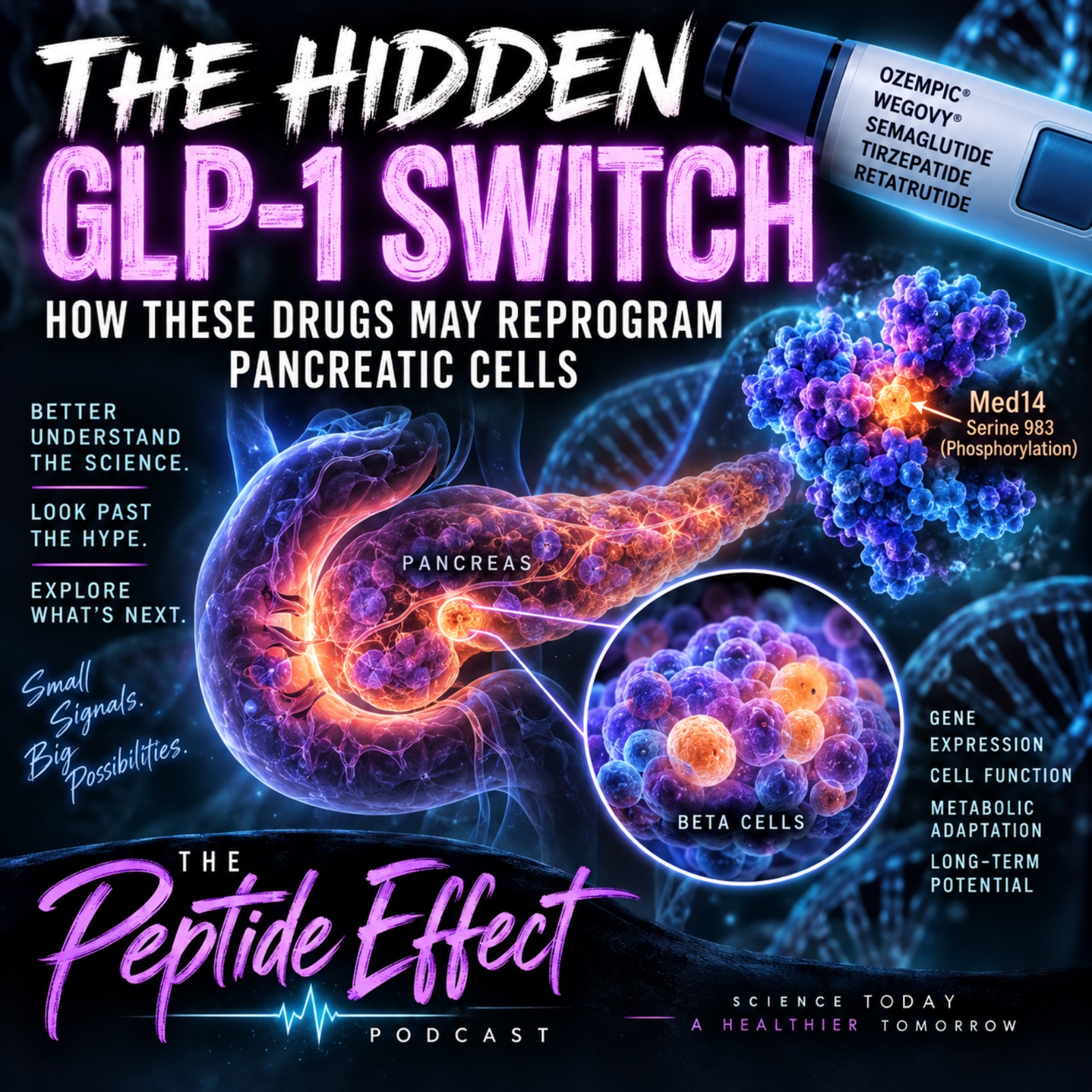
Got something to say to this podcast? Send a voicemail, and you might hear yourself on the next episode! What if GLP-1 drugs are doing more than controlling blood sugar and reducing appetite? In this episode of The Peptide Effect, we break down a 2026 study revealing a newly identified molecular “switch” involving Med14, a protein that helps regulate gene transcription inside pancreatic beta cells. Researchers found that sustained GLP-1 receptor signaling may activate broader gene programs tied to beta-cell function, metabolism, and viability. We’ll explain what Med14 is, what phosphorylation means, how GLP-1 signals travel from the cell surface to the nucleus, and why this discovery could matter for the future of metabolic medicine. We’ll also separate what the study actually found from the exaggerated claims you may see online, including whether GLP-1 drugs permanently “reprogram” the pancreas. A fascinating look at what may be happening beneath the surface of GLP-1 therapy, far beyond appetite suppression and weight loss.
0:00Welcome back to the Peptide Effect. Before we
0:02get started, this episode is for educational
0:05and informational purposes only. It is not medical
0:08advice, and it is not intended to diagnose, treat,
0:12cure, or prevent any disease. Nothing discussed
0:16today should be used as a reason to start, stop,
0:19increase, decrease, or otherwise change a medication
0:23or treatment without talking with a qualified
0:25healthcare professional. Today we're going deep
0:28into a fascinating new piece of GLP -1 research.
0:32And when I say deep, I don't mean we're going
0:34to spend the next half hour drowning in scientific
0:36terminology. We're going to take what is happening
0:39at the molecular level, break it down piece by
0:41piece, and figure out why scientists are paying