
The Peptide Effect · Peptides Made Simple
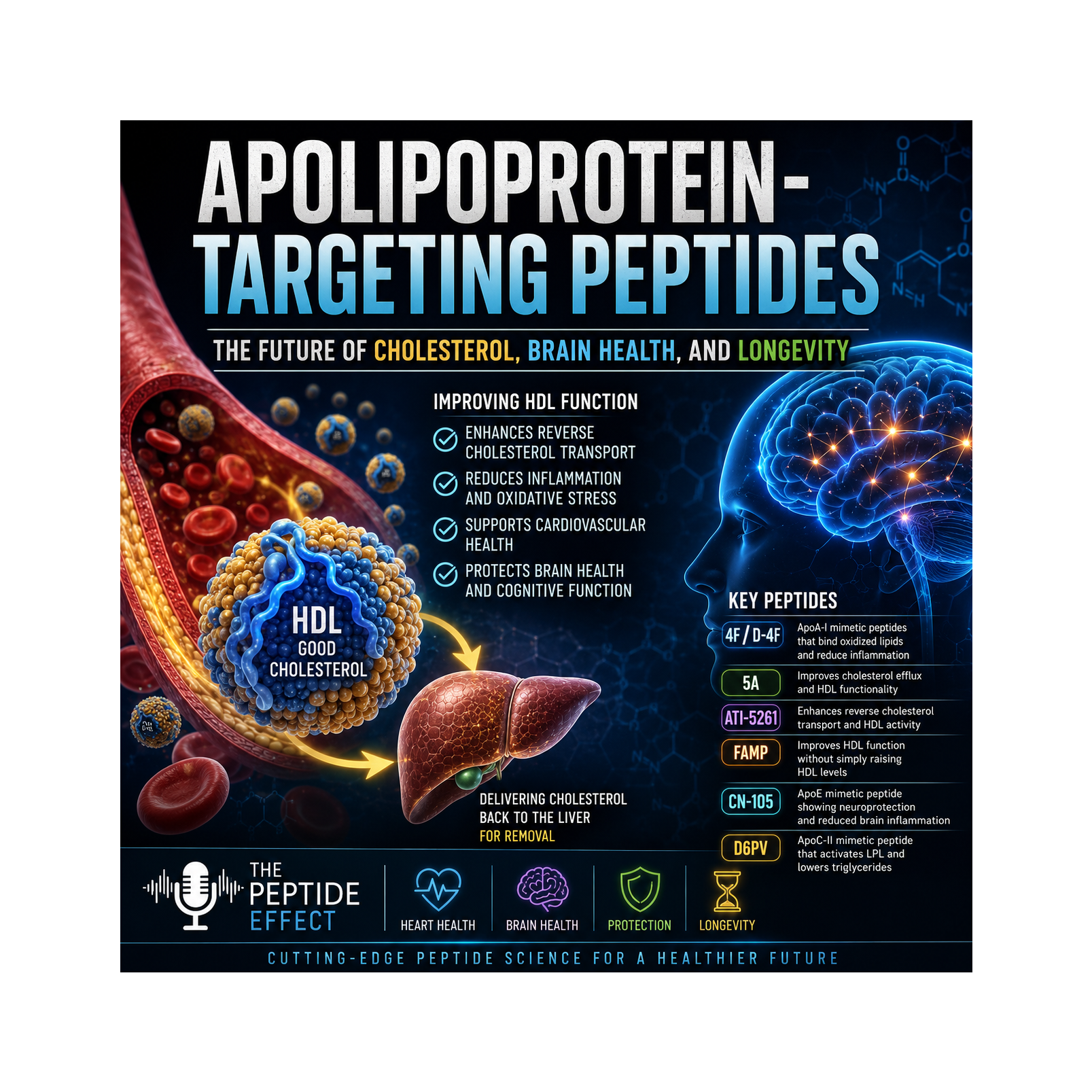
Got something to say to this podcast? Send a voicemail, and you might hear yourself on the next episode! In this episode of The Peptide Effect, we explore the emerging world of apolipoprotein-targeting peptides and how they’re reshaping the future of cardiovascular and neurological research. Learn how apolipoproteins transport cholesterol throughout the body, why HDL function may be just as important as HDL levels, and how experimental peptides such as 4F, 5A, ATI-5261, FAMP, CN-105, and D6PV are being investigated for their potential to improve cholesterol metabolism, reduce inflammation, protect the brain, and support healthy aging. We’ll also discuss reverse cholesterol transport, ApoA-I, ApoE, ApoC-II, and the role these peptides may play in the future of precision medicine. Whether you’re interested in peptide science, longevity, heart health, or cutting-edge biomedical research, this episode offers a comprehensive introduction to one of the newest frontiers in peptide therapeutics.
0:00This podcast is intended for educational and
0:02informational purposes only. It is not medical
0:05advice and should not be used to diagnose, treat,
0:08cure or prevent any disease. Many of the compounds
0:12discussed today are investigational and have
0:14not been approved for general medical use. Always
0:17consult a qualified healthcare professional before
0:20making decisions about your health or using any
0:22medication, peptide or research compound. Welcome
0:26back to the peptide effect. Today we're taking
0:29a deep dive into one of the newest and most exciting
0:32areas of peptide research, apolipoprotein -targeting
0:35peptides. While compounds like BPC, 157, GHKCU,
0:41MOS -C, and SS 31 have become well known among
0:45peptide enthusiasts, apolipoprotein -targeting