
The People Factor · Thomas Kohler, pplwise
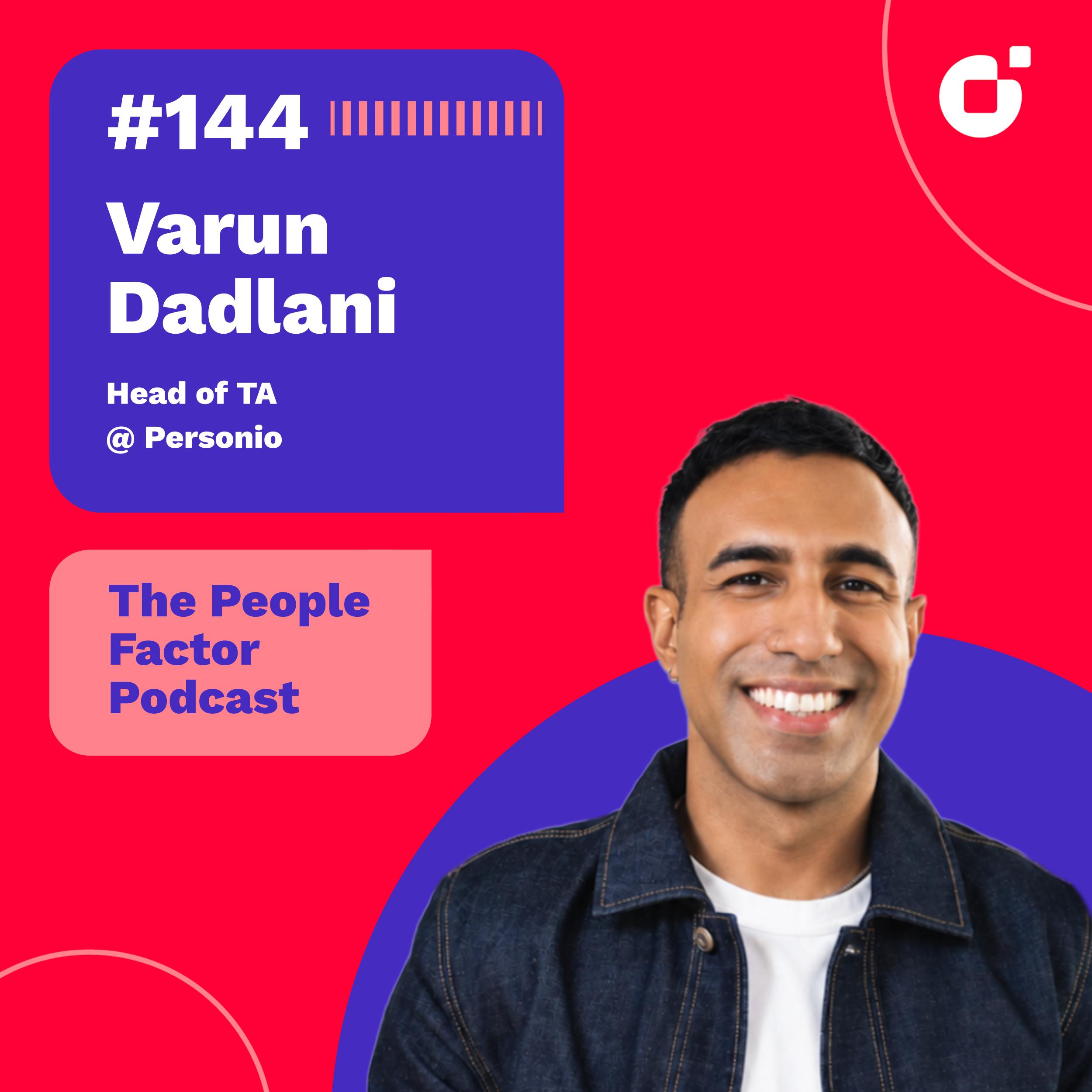
Varun Dadlani is Head of Talent Acquisition at Personio, where he leads the global TA function across recruiting, employer branding, operations and enablement. At Netflix, he built an engineering hub from zero to 70 people in just eight months and set up the EMEA go-to-market team for the advertising business. At Uber, he rose from coordinator to the EMEA leadership team in five years. Varun focuses on scalable hiring, structured interviewing and building an AI-fluent workforce, bringing valuable insights into the future of talent acquisition. Shownotes 00:00 - Intro & Varun's journey from Dropbox, Uber and Netflix to Personio 02:29 - How Personio assesses AI fluency in interviews 07:20 - AI slop and the new "AI admin tax" 11:48 - The TA operating model of the future: from transactional to strategic partner 14:09 - Which TA roles will change _________________ Guest Linkedin: https://www.linkedin.com/in/varundadlani/ Thomas Linkedin: https://www.linkedin.com/in/thomas-kohler-pplwise/ Thomas e-mail: [email protected] pplwise: https://pplwise.com/
Thomas Kohler: Today's guest, Varun, head of talent acquisition from Personio. Varun, I'm really excited that you're here in Munich. we finally made it. Yeah. maybe let's start with a bit of an introduction about yourself because you have been in big hyper-growth tech on the consumer side, on a B2B side. You're in talent acquisition for more than 15 years. tell us a bit more about what shaped you most, what you're doing now, and then we talk about Varun Dadlani: Today's guest, Varun, head of talent acquisition from Personio. Varun, I'm really excited that you're here in Munich. we finally made it. Yeah. maybe let's start with a bit of an introduction about yourself because you have been in big hyper-growth tech on the consumer side, on a B2B side. You're in talent acquisition for more than 15 years. tell us a bit more about what shaped you most, what you're doing now, and then we talk about Thomas Kohler: TA operating model in today's world with AI and everything and also performance and a few other topics. Okay, cool, super. Thanks for having me. very ambitious to do this at 9 a.m. in the middle of Oktoberfest. but happy to be here and and happy to to join you here in the studio. my name is Varun. I I lead the TA team at Pezonio, mostly focused on non-tech hiring. Varun Dadlani: TA operating model in today's world with AI and everything and also performance and a few other topics. Okay, cool. Super. Thanks for having me. very ambitious to do this at 9 a.m. in the middle of Oktoberfest. But happy to be here and and happy to to join you here in the studio. my name is Varun. I I lead the TA team at Pezonio, mostly focused on non-tech hiring and GTM hiring. and my journey is Thomas Kohler: And GTM hiring. and my journey is I'm one of those people that I think there's very few of us that loves but loves TA from my college days, right? So as a student I knew I wanted TA. I did not fall into it like many, many of my peers, but rather went after it and and was lucky to Varun Dadlani: I'm one of those people that I think there's very few of us that loves but loves TA from my college days, right? So as a student, I knew I wanted TA. I did not fall into it like many, many of my peers, but rather went after it and and was lucky to to join some some of these American companies back in the in the Silicon Valley boom that were just launching their their European operations. So I got to launch Dropbox for business in NIMIA. Thomas Kohler: To join some some of these American companies back in the in the Silicon Valley boom that were just launching their their European operations. So I got to launch Dropbox for business in IMIA out of Dublin and got to launch Uber Eats for Uber and and lots of new markets for them for the ride-sharing business. So so really, really great experiences there. Got to to launch the advertising business and the first engineering hub for Netflix. Varun Dadlani: Out of Dublin and got to launch Uber Eats for Uber and and lots of new markets for them for their ride sharing business. So, so really, really great experiences there. Got to to launch the advertising business and the first engineering hub for Netflix. So that was really a great, a great way to sort of get into this world of recruiting. I'm quite quite American, I have to say, if I'm very candid. Thomas Kohler: So that was really a a great a great way to to to sort of get into into this world of recruiting. quite quite American, I have to say, if I'm very candid. And now it feels really good to land in a in a European company and being being centered close to the center of gravity makes pretty big difference there. So leading teams for a while, loving it. And and yeah, excited to to chat more about about all that. Yes. I'm of course also following Varun Dadlani: And now it feels really good to land in a in a European company and being being centered close to the center of gravity makes pretty big difference there. So leading teams for a while, loving it, and and yeah, excited to to chat more about about all that. Yes. I'm of course also following Personia very closely because it's also a Munich headquarter based like we are, right? And I saw I think a few weeks ago a post from Hannu. Yeah. Thomas Kohler: Personia very closely because it's also a Munich headquarter based like we are, right? And I saw I think a few weeks ago a post from Hanno where he brought the entire company for one week to Berlin, I guess, for an AI week. Yeah. I saw something like this. Yeah. Was it really that everybody came together and test AI stuff or what what was this about and were you part of it? Yeah, yeah, yeah. Everyone was part of it. it's something called the AI surge week. it we didn't we didn't get physically together. We we're we have some Varun Dadlani: Where he brought the entire company for one week to Berlin, I guess, for an AI week. Yeah. I saw something like this. Yeah. Was it really that everybody came together and test AI stuff or what what was this about and were you part of it? Yeah, yeah, yeah. Everyone was part of it. it's something called the AI Surge Week. it we didn't we didn't get physically together. We we're we have some great offices in in in a few different locations. And so people did come together to to the office. We spent quite a lot of time Thomas Kohler: great offices in in in a few different locations. And so people did come together to the office. We spent quite a lot of time, Varun Dadlani: business time, right? To really to really look at okay, how are we working today today? What are what are things that we can potentially leverage AI to automate? What are the repeatable tasks we want to get rid of? and really it was a bit of a you know, it it's we're trying to enable what is a a total paradigm and mindset shift of an entire workforce, right? Thomas Kohler: business time, right? To really to really look at, okay, how are we working today today? What are what are things that we can potentially leverage AI to automate? What are the repeatable tasks we want to get rid of? and really it was a bit of a, you know, it it's we're trying to enable what is a a total paradigm and mindset shift of an entire workforce, right? Varun Dadlani: Things are moving so so fast. And so I think the intention there is to create the space within our business hours. Thomas Kohler: Things are moving so, so fast. And so I think the intention there is to create the space within our business hours to really question are we doing things the most efficient way? Are we doing things in the most automated way? And I think having a week where we're, which is also we there's buzz around it, there's there's even parties, there's there's little activations, and a ton of opportunities for enablement. We're we brought a ton of experts in, are the co CEO from from Langdock, Judith. Varun Dadlani: to really question are we doing things the most efficient way are we doing things in the most automated way and i think having a week where we're which is also we there's buzz around it there's there's even parties there's there's little activations and a ton of opportunities for enablement we're we brought a ton of experts in our the co-cEO from from Langdock Judith she came over and talked to us and so I think there's yeah it it was it was really great to have that moment Thomas Kohler: She came over and talked to us. And so I think there's yeah, it it it was it was really great to have that moment and I'm sure it's not the last one that will that we'll just focus on on surging, surging this AI topic. And when you when you look back to maybe this week, but also to Persunio um's AI usage, yeah. Do you see a certain, I would say, concentration on where AI is already used the most and how in which process, organization workflow? Yeah. Varun Dadlani: And I'm sure it's not the last one that will that will just focus on on surging surging this AI topic. And when you look when you look back to maybe this week, but also to Personio, um's AI usage, yeah. Do you see a certain I would say concentration on where AI is already used the most and how in which process, organization workflow? Yeah. I would say everywhere. Like I think if if it's I mean it's such it's become such a part of our DNA already. Thomas Kohler: I would say everywhere. I think if if it's it's such it's become such a part of our DNA already. Varun Dadlani: I talked to I talked to some of my peers right in Berlin at from other tech companies and and I do feel like we're in a really good place and we have some momentum and I think we're not gonna try we're just because we're in a good place doesn't mean we're gonna stop. it requires a lot a lot of investment. Talking about it a lot and all the time. I mean I talk about it every day. Thomas Kohler: I talked to I talked to some of my peers, right, in Berlin, at from other tech companies and and I do feel like we're in a really good place and we have some momentum and I think we're not gonna try we're just because we're in a good place doesn't mean we're gonna stop. it requires a lot a lot of investment talking about it a lot and all the time. I mean, I talk about it every day. it's part of our structured assessment process for every candidate that goes through how how do you assess it? we I I think so it starts up with the with TA, Varun Dadlani: it's part of our structured assessment process for every candidate that goes through. How? How do you assess it? we you know, I I think so it starts up with it with TA. Thomas Kohler: right? It starts with my team. we are we are the gatekeepers in many ways. We are the frontline and and we we essentially look to assess okay, can we get a signal on what yeah, how you use AI, right? I think we we started off maybe six months ago asking candidates, do you use AI? Varun Dadlani: Right. It starts with my team. we are we are the gatekeepers in many ways. We are the front line. And and we we essentially look to assess okay, can we get a signal on what yeah, how you use AI, right? I think we we started off maybe six months ago asking candidates, do you use AI? That is the most useless signal. Thomas Kohler: That is the most useless signal. It does not say anything. Yes. Yes. Yeah. yeah, yes. I write emails with AI. and and I think that, you know, I think that that that you know, thinking about what that tells us and the signal it tells us and connecting it to our hiring decisions, there wasn't any anything. But how do you assess AI fluency now? Because I in the prep you also mentioned that most of the companies are getting it wrong. How how to get it right? Varun Dadlani: It does not say anything. Yes. Yes. Yeah. yeah, yes. I write emails with AI. and and I think that, you know, I think that that that you know, thinking about what that tells us and the signal it tells us and connecting it to our hiring decisions, there wasn't any anything. How do you assess AI fluency now? Because I in the prep you also mentioned that most of the companies are getting it wrong. How how to get it right? Thomas Kohler: Yeah, I think it's about really looking for signals of of of so how someone thinks, right? And so for example, right now we're asking a question around, yeah, can you tell me about how AI has changed the way you work? And and really if they can go specific, right? If they can go deep into an automation, into like a workflow, a workflow evolution, then that's what we're looking for, right? Someone someone that can can can look at something and then and take it. Varun Dadlani: Yeah, I think it's about really looking for signals of of of so how someone thinks, right? And so for example, right now we're asking a question around, yeah, can you tell me about how AI has changed the way you work? And and really if they can go specific, right? If they can go deep into an automation, into like a workflow, a workflow evolution, then that's what we're looking for, right? Someone someone that can can can look at something and then and take it. Thomas Kohler: apply technology and and take it to the next level, right? And that's a very simple signal to look for. Then I think in other parts of the process, what we're what we're gonna look for is very more dip department specific. And what yeah, what GTM system did you build to essentially automate your lead, I don't know, lead generation, whatever. and those are the we're we're looking for these signals all throughout the process so that so that when when if we're only bringing in AI fluent people into our workforce and that starts compounding. Varun Dadlani: Apply technology and and take it to the next level, right? And that's a very simple signal to look for. Then I think in other parts of the process, what we're what we're gonna look for is very more dip department specific. And what yeah, what GTM system did you build to essentially automate your lead, I don't know, lead generation, whatever. and those are the we're we're looking for these signals all throughout the process so that so that when when if we're only bringing in AI fluent people into our workforce, and that starts compounding. Thomas Kohler: Right? Because we're we are replacing part of our workforce every every quarter. And if we keep doing that, you have an extremely AI fluent workforce, right? And and do you also have people within the company that are more pessimistic about AI? Because I'm part of a lot of discussions and of course there is a big hype around it and a big I would say optimism often as well. Yeah. But there are also people who say, Okay, especially for Varun Dadlani: Right? Because we're we are replacing part of our workforce every every quarter. And if we keep doing that, you have an extremely AI fluent workforce, right? And and do you also have people within the company that are more pessimistic about AI? Because I'm part of a lot of discussions and of course there is a big hype around it and a big I would say optimism often as well. Yeah. But there are also people who say, Okay, especially for Thomas Kohler: entry level hires yeah who are more maybe native or flu fluent to AI already. Yeah. They sometimes maybe don't think about something first and directly go into AI and then it creates also a lot of AI slop. And then ultimately for the manager who owns or is responsible for something, then it just creates more work, right? Yeah, yeah. Do you also have these counterpart or counter direction at Persona or is it more optimistic? and then Varun Dadlani: entry level hires yeah who are more maybe native or flu fluent to AI already. Yeah. They sometimes maybe don't think about something first and directly go into AI and then it creates also a lot of AI slop. And then ultimately for the manager who owns or is responsible for something, then it just creates more work, right? Yeah, yeah, yeah. Do you also have these counterpart or counter direction at Persona or is it more optimistic? and then Thomas Kohler: Just see what's worked what what works and sticks, and then the rest isn't there anywhere, or or how how is how is your dynamic? There's AI slob everywhere. Like everywhere. And so we need to talk about it, right? And and and I do talk about it also with with my team, and we're certainly talking about it within the people team. Is there there has to be guidelines on how to write with AI. You need to essentially Varun Dadlani: Just see what's worked what what works and sticks, and then the rest isn't there anywhere, or or how how is how is your dynamic? There's AI slob everywhere. Like everywhere. And so we need to talk about it, right? And and and I do talk about it also with with my team, and we're certainly talking about it within the people team. Is there there has to be guidelines on how to write with AI. You need to essentially Thomas Kohler: There's a thing about the AI enabled employee or yeah workforce. Part of the role of everyone's role is gonna become AI admin, right? And that's really making sure that we're able to to to look at what what we're producing and making sure that you stand by it, that you can justify that you can you can defend every single thing that is in that document, right? And and if it's yeah, it like length like people are Varun Dadlani: There's a thing about the AI enabled employee or yeah workforce. Part of the role of everyone's role is gonna become AI admin, right? And that's really making sure that we're able to to to look at what what we're producing and making sure that you stand by it, that you can justify that you can you can defend every single thing that is in that document, right? And and if it's yeah, it like length like people are Thomas Kohler: Quality is always over quantity. And I think people are getting confused now with these really long AI documents. I think, was it the CEO of Shopify? He just a few days ago said AI slop grenade. That's these when you just have these massive documents that people are just shipping constantly. But they're they're yeah, they're they're not great. And so I do think I do think there's gonna be a big part of this transition to AI that will involve this this tax, this AI admin tax. Varun Dadlani: Quality is always over quantity. And I think people are getting confused now with these really long AI documents. I think, was it the CEO of Shopify? He just a few days ago said AI slop grenade. That's these when you just have these massive documents that people are just shipping constantly. But they're they're yeah, they're they're not great. And so I do think I do think there's gonna be a big part of this transition to AI that will involve this this tax, this AI admin tax. Thomas Kohler: To really make sure are we compliant, right, to EU law? Are we are we producing what a really, really competent human could produce with skipping the hours of research and and analysis and all these all these other things that we're that we're automating. What is one thing for you personally that you now do way better with AI than without AI before? Yeah. well I if I'm selfish, I would say like organize myself, right? Varun Dadlani: To really make sure are we compliant, right, to EU law? Are we are we producing what a really, really competent human could produce with skipping the hours of research and and analysis and all these all these other things that we're that we're automating. What is one thing for you personally that you now do way better with AI than without AI before? Yeah. well I if I'm selfish, I would say like organize myself, right? Thomas Kohler: And I think being able to to to know exactly how to start my day and how to finish it and and what needs to happen when. and so all of that I've I've How do you exactly do that? Well, I use granola, which is I don't know if if if you've if you've heard of it or use it, but I think the and and connect it to to to Claude, it just it does magic. And and and essentially being able to analyze my meeting notes, figuring out what's how to prioritize all the different to-dos that I have. Varun Dadlani: And I think being able to to to know exactly how to start my day and how to finish it and and what needs to happen when. and so all of that I've I've How do you exactly do that? Well, I use granola, which is I don't know if if if you've if you've heard of it or use it, but I think the and and connect it to to to Claude, it just it does magic. And and and essentially being able to analyze my meeting notes, figuring out what's how to prioritize all the different to-dos that I have. Thomas Kohler: How to start my day and know exactly what meetings I have in the calendar and did you also train your or you have some agents or systems that you trained that say, Hey, I don't want to have meetings in the morning, for instance. I want to have deep work or something. Do you also have this set up already that how how to work with Varun? Because I saw this document exists, but also. Does the AI also know? So look, I I'll be very honest, I tried, but I am I Varun Dadlani: How to start my day and know exactly what meetings I have in the calendar and did you also train your or you have some agents or systems that you trained that say, Hey, I don't want to have meetings in the morning, for instance. I want to have deep work or something. Do you also have this set up already that how how to work with Varun? Because I saw this document exists, but also. Does the AI also know? So look, I I'll be very honest, I tried, but I am I Thomas Kohler: I think the one thing I love to have control over is my calendar. And I think my team also knows that my calendar moves very quickly and and I think I need yeah, I I cannot have an agent moving things for me because I my calendar is yeah, is how I organize myself and and so I I'm not there yet. Yeah, and maybe it's also maybe it's fine. Yeah, yeah, yeah, exactly. Yeah, yeah. Absolutely. Absolutely. No, yeah. And and I mean for AI to work Varun Dadlani: I think the one thing I love to have control over is my calendar. And I think my team also knows that my calendar moves very quickly and and I think I need yeah, I I cannot have an agent moving things for me because I my calendar is yeah, is how I organize myself and and so I I'm not there yet. Yeah, and maybe it's also maybe it's fine. Yeah, yeah, yeah, exactly. Yeah, yeah. Absolutely. Absolutely. No, yeah. And and I mean for AI to work Thomas Kohler: human needs to work as well. I guess that's right. So yes. okay on the on the let's say higher level aspect. Yeah. You saw organizations that are forward thinking, Netflix, Uber, Dropbox, many others. now also Personiu. What changed in the operating model of a talent acquisition organization now with all this Varun Dadlani: human needs to work as well. I guess that's right. So yes. okay on the on the let's say higher level aspect. Yeah. You saw organizations that are forward thinking, Netflix, Uber, Dropbox, many others. now also Personiu. What changed in the operating model of a talent acquisition organization now with all this Thomas Kohler: AI as a hashtag, let's say. Yeah. how would you how would you nowadays set up a modern forward thinking TA organization? Yeah. Varun Dadlani: AI as a hashtag, let's say. Yeah. how would you how would you nowadays set up a modern forward thinking TA organization? Yeah. Thomas Kohler: Probably there's a couple of things I I've been thinking about because I do think about even my my role as a leader and how I see my my organization, in in twenty twenty-eight, right? it's not that far away, right? But things are moving. Yeah, it sounds so far away, but really where it's like a year and a few months away, right? So and things are moving that fast that you do need to just think one year at a time. the role of I think the role of the recruiter specifically is is gonna change. Varun Dadlani: Probably there's a couple of things I I've been thinking about because I do think about even my my role as a leader and how I see my my organization, in in twenty twenty-eight, right? it's not that far away, right? But things are moving. Yeah, it sounds so far away, but really where it's like a year and a few months away, right? So and things are moving that fast that you do need to just think one year at a time. the role of I think the role of the recruiter specifically is is gonna change. Thomas Kohler: I think we we are we are we are a transactional sort of function that focuses a lot on sort of actions like you know sourcing, screening, moving candidates through a process, you know, closing. And and I think that the role will probably evolve and elevate itself to a more to a more strategic partner. because some of the Varun Dadlani: I think we we are we are we are a transactional sort of function that focuses a lot on sort of actions like you know sourcing, screening, moving candidates through a process, you know, closing. And and I think that the role will probably evolve and elevate itself to a more to a more strategic partner. because some of the Some of let's say the more repeatable work will be will be more automated. And I think I think like things like KPIs around, you know, how many screens or how many, you know, time and stage and all these very, very like micromanagey kind of KPIs will be gone. I've I mean, I've never been a fan of them. I even today I don't I don't measure my team on that. I measure them on their relationships. Thomas Kohler: Some of let's say the more repeatable work will be will be more automated. And I think I think like things like KPIs around, you know, how many screens or how many, you know, time and stage and all these very, very like micromanagey kind of KPIs will be gone. I've I mean, I've never been a fan of them. I even today I don't I don't measure my team on that. I measure them on their relationships. Right. I measure the i within the business, right? I measure them on the quality of their hires. I measure them on their dil their a ability to deliver to the plan that was given to them. on time, hopefully, right? but but I think quality of of quality of talent will become much, much important. like let's say pipeline generation and management, I think and employer branding will become a thing. I think com competition's gonna get Varun Dadlani: Right. I measure the i within the business, right? I measure them on the quality of their hires. I measure them on their dil their a ability to deliver to the plan that was given to them. on time, hopefully, right? but but I think quality of of quality of talent will become much, much important. like let's say pipeline generation and management, I think and employer branding will become a thing. I think com competition's gonna get Thomas Kohler: even even more intense in in the in the talent markets because talent mobility is also going up right especially in more conservative places like germany where people like to stay in companies for longer yeah and those trends are all leading to to yeah recruiters needing to have more judgment and not following a checklist as they're doing a phone screen of they have this they have this they have this having that said we're still gonna need Varun Dadlani: even even more intense in in the in the talent markets because talent mobility is also going up right especially in more conservative places like germany where people like to stay in companies for longer yeah and those trends are all leading to to yeah recruiters needing to have more judgment and not following a checklist as they're doing a phone screen of they have this they have this they have this having that said we're still gonna need Thomas Kohler: So we're still need gonna need to recruit I don't know, certain profiles maybe at volume and that will require some some more transactional work. But I do think we are evolving more in that in that direction of quality of hire, applying judgment, being a strategic strategic advisor to our to our clients. And also from an role perspective, do you think that the roles still stay the same? Let's say we have sourcers and we Varun Dadlani: So we're still need gonna need to recruit, I don't know, certain profiles maybe at volume, and that will require some some more transactional work. But I do think we are evolving more in that in that direction of quality of hire, applying judgment, being a strategic strategic advisor to our to our clients. And also from an role perspective, do you think that the roles still stay the same? Let's say we have sourcers, we have Thomas Kohler: Then there is also a TA ops role. Some call it coordinators, but I think this is already kind of gone that it's just coordination. Yeah. Yeah, it's gonna evolve like with every other role in the world. At least in new roles created that don't exist yet? Yeah I I've seen them. I've definitely seen them outside of TA. I'm thinking about about, you know, what the the the state of my org looks like in the future. Varun Dadlani: Then there is also a TA ops role. Some call it coordinators, but I think this is already kind of gone that it's just coordination. Yeah. Yeah, it's gonna evolve like with every other role in the world. At least in new roles created that don't exist yet? Yeah I I've seen them. I've definitely seen them outside of TA. I'm thinking about about, you know, what the the the state of my org looks like in the future. Thomas Kohler: But definitely ops will evolve, right? It will become more of a it will become more about, s building systems that that scale and and automation. right. I think I think, you know, getting assessment right will also be more of this there's gonna be more of a focus. Like how do we how do we elevate the assessment so and how do we measure the quality of of the of the folks that we're we're bringing in? I mean it's gonna obviously the bar's gonna change from company to company, but I do think roles will change. Varun Dadlani: But definitely ops will evolve, right? It will become more of a it will become more about, s building systems that that scale and and automation. right. I think I think, you know, getting assessment right will also be more of this there's gonna be more of a focus. Like how do we how do we elevate the assessment so and how do we measure the quality of of the of the folks that we're we're bringing in? I mean it's gonna obviously the bar's gonna change from company to company, but I do think roles will change. Thomas Kohler: Yeah, probably sourcing and scheduling. scheduling as such and coordination, it feels like it's it's on its way out. I think it's said a few times, but like sourcing, I think there's still a a part of it that there's still niche talent and there will continue being niche talent in the world and there's be And think also with sourcing it's who what access to talent do you have in terms of communities, relationships, information as well, right? And if you by yourself, or through tools, whatever. Varun Dadlani: Yeah, probably sourcing and scheduling. scheduling as such and coordination, it feels like it's it's on its way out. I think it's said a few times, but like sourcing, I think there's still a a part of it that there's still niche talent and there will continue being niche talent in the world and there's gonna be And I think also with sourcing it's who what access to talent do you have in terms of communities, relationships, information as well, right? And if you by yourself, or through tools, whatever. Thomas Kohler: Yeah. can access that, I think that's always an advantage, yeah. One hundred percent. People buy from people, right? And and and I think those those relationships, communities, building your network, right? Vitamin B, like you say in German, is is so so important in recruiting, right? We can't forget that. I yeah, I people buy from people. I I I really feel like that holds true for as much for recruiting as for sales. Yes. Yeah. Arun, you shared one interesting topic with me. Yeah. how we win, right? Yeah. Varun Dadlani: Yeah. can access that, I think that's always an advantage, yeah. One hundred percent. People buy from people, right? And and and I think those those relationships, communities, building your network, right? Vitamin B, like you say in German, is is so so important in recruiting, right? We can't forget that. I yeah, I people buy from people. I I I really feel like that holds true for as much for recruiting as for sales. Yes. Yeah. Arun, you shared one interesting topic with me. Yeah. how we win, right? Yeah. Thomas Kohler: Tell us more about this document. It's essentially how to best work with you, right? And clearing out your expectations and how do you use it and what is behind that? Yeah, I think yeah, I think, you know, like working at places like like Uber and Netflix and you know, also one of the reasons I joined Pezonia was because culture was very front and center. And I do think maybe you've heard the the saying, culture eat strategy for breakfast. Yes, yeah, tracker. Yeah, exactly. Yeah. And and I really, really believe in that. And I think Varun Dadlani: Tell us more about this document. It's essentially how to best work with you, right? And clearing out your expectations and how do you use it and what is behind that? Yeah, I think, yeah, I think, you know, like working at places like like Uber and Netflix and you know, also one of the reasons I joined Pezonia was because culture was very front and center. And I do think maybe you've heard the the saying, culture eat strategy for breakfast. Yes, yeah, exactly. Yeah. And and I really, really believe in that. And I think Thomas Kohler: Build building culture for me is is hugely important. It it makes it makes the job fun. It creates a common denominator among the people around you and and and and how to operate. And I think I think codifying culture, this is probably something I learned at Netflix, can be quite powerful and talking about it constantly, right? And so I think I think talking with my team, my direct reports, their direct reports, really has has helped create this common denominator that we're speaking the same language and Varun Dadlani: Build building culture for me is is hugely important. It it makes it makes the job fun. It creates a common denominator among the people around you and and and and how to operate. And I think I think codifying culture, this is probably something I learned at Netflix, can be quite powerful and talking about it constantly, right? And so I think I think talking with my team, my direct reports, their direct reports, really has has helped create this common denominator that we're speaking the same language and Thomas Kohler: And the expectation that I have that we all are radical and and direct with each other so we can so we can improve better, right? Delivering feedback quickly and and with positive intent always helps us move faster, right? Making making all information available to everyone, being transparent. Context helps helps you move faster and smarter, right? What I also like to read, being transparent and honest, upfront, yeah, even Varun Dadlani: And the expectation that I have that we all are radical and and direct with each other so we can so we can improve better, right? Delivering feedback quickly and and with positive intent always helps us move faster, right? Making making all information available to everyone, being transparent. Context helps helps you move faster and smarter, right? What I also like to read, being transparent and honest, upfront, yeah, even Thomas Kohler: if it's really uncomfortable, right? I think this is what really stuck with me because sometimes you always want to highlight the positive things and frame something. but that's often not what brings you further or what makes you win. because it's often about okay, what are the risks, what are the bottlenecks, what what do we might miss? And how could we maybe anticipate it until it's too late? Yeah. Yeah. And this is what I really liked what you wrote there. you also talked a lot about Varun Dadlani: if it's really uncomfortable, right? I think this is what really stuck with me because sometimes you always want to highlight the positive things and frame something. but that's often not what brings you further or what makes you win. because it's often about okay, what are the risks, what are the bottlenecks, what what do we might miss? And how could we maybe anticipate it until it's too late? Yeah. Yeah. And this is what I really liked what you wrote there. you also talked a lot about Thomas Kohler: execution, transparency and candor, right? So I think that's all close together. do you have some principles, work principles, that you look for a recruiter in your team and that you say, okay, this is somebody I want to win with or I can do versus not? Yeah. I mean I I do prioritize bringing in diverse sort of experiences and and points of view, etcetera. I I think Varun Dadlani: execution, transparency and candle, right? So I think that's all close together. do you have some principles, work principles, that you look for a recruiter in your team and that you say, okay, this is somebody I want to win with or I can do versus not? Yeah. I mean I I do prioritize bringing in diverse sort of experiences and and points of view, etcetera. I I think Thomas Kohler: I think I do look for just, problem solving, right? I think creativity and and and not beyond the ability to source and assess effectively and manage a pipeline efficiently, someone that can take like a a business problem and partner with a business leader, go to market and solve it for them. Right. And and I think I think that's that's where we're headed anyways, and and and so I I do look for for for signals around that. Varun Dadlani: I think I do look for just, problem solving, right? I think creativity and and and not beyond the ability to source and assess effectively and manage a pipeline efficiently, someone that can take like a a business problem and partner with a business leader, go to market and solve it for them. Right. And and and I think I think that's that's where we're headed anyways, and and and so I I do look for for for signals around that. Thomas Kohler: but yeah, if someone if someone is uncomfortable giving feedback, th like that's not good. if someone yeah, if someone yeah, I don't know if someone doesn't enjoy, you know, if someone operates like really as a solo player, that's also a flag, right? And and I talk a lot about we not I and and and and and how that also superpowers the team and the individuals in it. I always when I spot like a superpower in one of my team Varun Dadlani: but yeah, if someone if someone is uncomfortable giving feedback, th like that's not good. if someone yeah, if someone yeah, I don't know if someone doesn't enjoy, you know if someone operates like really as a solo player, that's also a flag, right? And and I talk a lot about we not I and and and and and how that also superpowers the team and the individuals in it. I always when I spot like a superpower in one of my team Thomas Kohler: I tell them immediately you need to export that to everyone else right away, right? And because because it's it's not just yours to hold. The whole team becomes stronger, yeah. if you share it. Yes. And you become stronger if you share it. Yes. so so those are some some things. But yeah, thanks for reading it and and for your for your comments. Yeah, also Varun, thanks for sharing. That's already it. Yeah, I really enjoyed it. Thank you. Thank you. Thank you so much for having me. Varun Dadlani: I tell them immediately you need to export that to everyone else right away, right? And because because it's it's not just yours to hold. The whole team becomes stronger, yeah. if you share it. Yes. And you become stronger if you share it. Yes. so so those are some some things. But yeah, thanks for reading it and and for your for your comments. Yeah, also Varun, thanks for sharing. That's already it. Yeah, I really enjoyed it. Thank you. Thank you. Thank you so much for having me.