
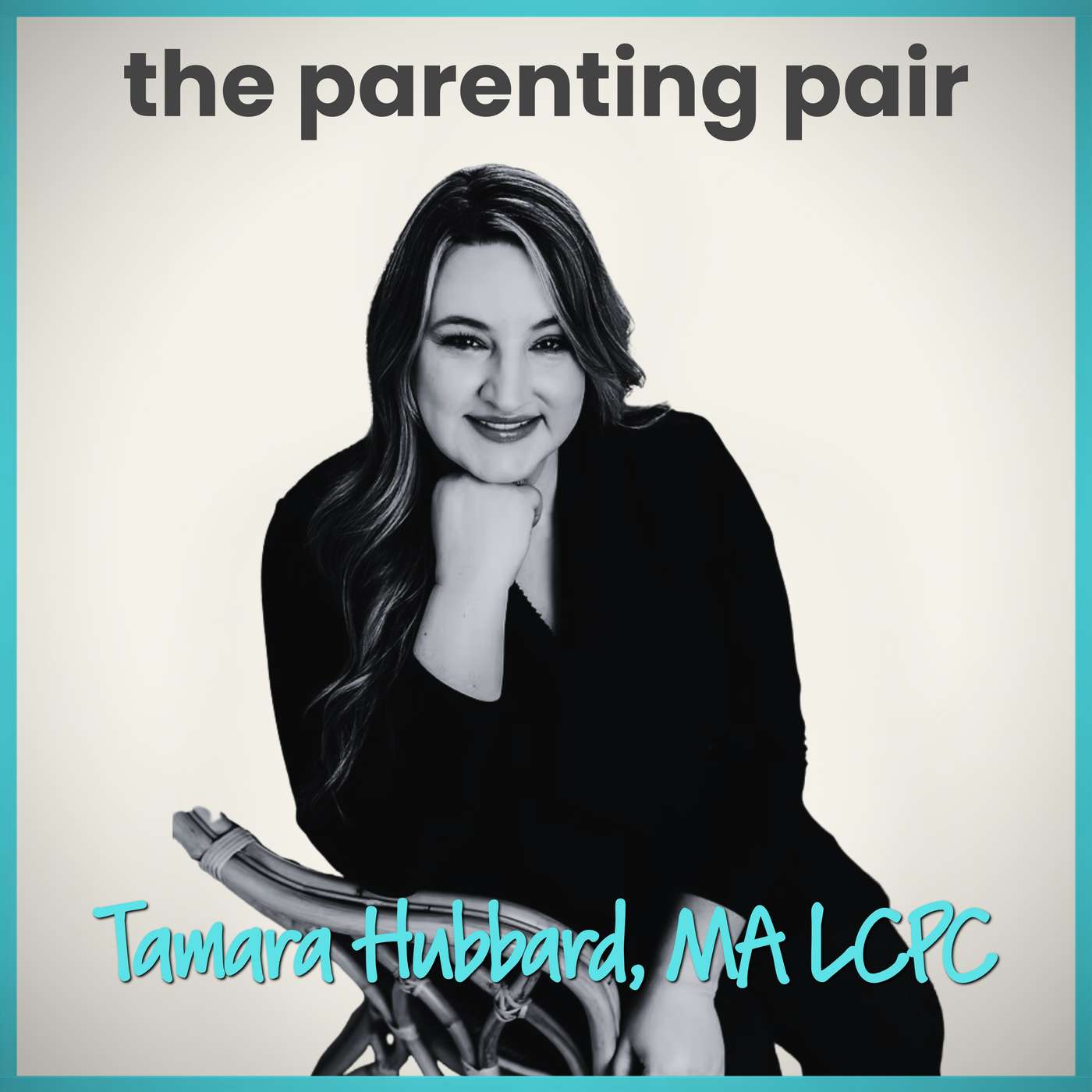
The Parenting Pair | Teens & Tweens · Dr. Annalise Caron & Dr. Suzanne Allen
Food allergies don't just affect what your child or teen eats—they can shape your family's entire experience of school, friendships, and independence. In this episode, therapist and author of May Contain Anxiety Tamara Hubbard joins Dr. Annalise Caron and Dr. Suzanne Allen to talk about food allergy anxiety in kids and teens, and how parents can build trust instead of fear. Together, they explore how parents can balance vigilance with confidence, help children gradually build independence, and avoid letting anxiety shrink their family's world. Tamara shares practical, evidence-based strategies for navigating food allergy anxiety while maintaining a strong parent-child relationship and preparing tweens and teens to safely manage their allergies as they grow. Whether your child was recently diagnosed or is preparing for college, this episode offers compassionate guidance to help your family move from fear toward confidence. In This Episode You'll Learn: Why food allergy anxiety is common—and when it becomes problematic How to balance safety with quality of life The difference between food allergy anxiety and food allergy social anxiety How to help tweens and teens gradually build independence The 6 "allergy parenting traps" that quietly increase anxiety over time Why trust is essential when preparing teens to manage allergies How to respond when your teen isn't taking allergies seriously The power of curiosity instead of lectures How Acceptance and Commitment Therapy (ACT) principles can help parents Ways family and friends can better support children with food allergies Practical strategies for reducing anxiety while keeping kids safe Here are some highlights from the episode: 00:00 How to Raise Independent Kids With Food Allergies 00:30 Food Allergies: Today's Topic 01:10 Meet Tamara Hubbard, MA, LCPC, Therapist & Author of "May Contain Anxiety" 02:18 Coping With Food Allergy Anxiety 06:01 Building Confidence Through Skill Development 08:40 Why Professional Guidance Matters 10:30 Living by Your Values, Not Your Anxiety 13:18 Teaching Kids With Food Allergies to Self-Advocate 16:39 Food Allergy Anxiety vs. Food Allergy Social Anxiety 17:54 How Parents and Kids Experience Food Allergy Anxiety Differently 20:43 Less Lecturing, More Understanding 23:44 Common Anxiety Thinking Traps 27:42 When Burnout Becomes a Wake-Up Call 29:02 Food Allergy Support Groups: Benefits and Drawbacks 31:55 How Others Can Better Support Kids With Food Allergies 33:59 How to Connect With Tamara Hubbard Resources Mentioned 📘 May Contain Anxiety: Managing the Overwhelm of Parenting Children with Food Allergies — by Tamara Hubbard, MA, LCPC 🌐 Food Allergy Counselor https://www.foodallergycounselor.com Educational resources, articles, and support for families. 🏥 Academy of Food Allergy Counseling https://www.foodallergycounseling.org Directory of allergy-informed mental health professionals and clinician education. 👩⚕️ Tamara Hubbard's Private...
Tamara Hubbard, MA, LCPC: We want them to trust themselves in managing their food allergy. We want to trust them in their ability to manage their food allergy, and they need to be trusted by us. And that happens by allowing them slowly and age appropriately to learn skills, practice skills with us overseeing them. Then I'll say, can tell the teens, you want us off your back? Dr. Suzanne Allen: Welcome back to the Parenting Pair Podcast. I'm Dr. Suzanne Allen. Dr. Annalise Caron: And I'm Dr. Annalise Caron. Dr. Suzanne Allen: And if you're a parent of a child with food allergies, you know that the worry does not stop when the meal ends or really, it doesn't. It doesn't stop ever. It follows you to family barbecues, to graduation parties, to college, to your son or daughter's first date, and honestly, everywhere in between. And even if your teen doesn't have an allergy, the chances are that they know someone who does. And knowing how to help your teen support a friend and how you can be supportive to this other parent and family really matters. Today, our guest has built her entire career around that very real and exhausting experience. Tamara Hubbard is a licensed therapist. She is an author of may contain anxiety, managing the overwhelm of parenting children with food allergies, and a founder of the Academy of Food allergy counseling. With twenty years of experience and a mission to fill the mental health gaps in the allergy community, she is exactly the person that I sought out and cold emailed to come today and speak to us about this topic. Her book is an incredible resource for families who have a child or someone that they love with a food allergy, and we are so thrilled to have her here today to talk about her book and to help our parents that are listening. So welcome, Tamara. Thank you so much for being here. Tamara Hubbard, MA, LCPC: Thank you so much for having me. It's an honor. Dr. Suzanne Allen: You know, I think if I mentioned to people that, like, having a child or a teen with a food allergy is very, you know, stressful or can create anxiety. I think a lot of people would kind of say, duh, you know, to me. Know, they'd be like, yeah. Yeah. We get it. That must be kind of stressful. But I think there are varying degrees of it. Right? And so I wonder from you, you know, one, if you can share a little bit maybe about what that anxiety looks like. And two, how we can better understand when this is, you know, kind of an anxiety that a family is managing and kind of coping and able to, you know, move through life on their own or when it's becoming problematic and interfering with the well-being of either their child or the parent or the family system? Tamara Hubbard, MA, LCPC: Yeah. And I am trained in marriage and family therapy, so constantly thinking about the family system and how the work I do, which is why it's so heavily included in my book too. So you ask a really important question. I always like to start off by saying that not every family is going to struggle with dealing with food allergies. Not every family is going to have high anxiety about this. Or not every family is going to initially have high anxiety and may have high anxiety at different ages and stages when they're finding it more challenging. So I like to put that out there to say not everybody is going to struggle with anxiety when they're living with food allergies. However, we do know that research shows that there is a large portion of families and people within the family system that do feel anxious. Parental anxiety is typically pretty high, even higher sometimes than the person or the child with food allergies themselves. And that is because the parents have to manage a lot of this from the early stages and ages. And so research also shows that there is a relationship between food allergy, anxiety and quality of life. And if you imagine a bell curve, right, you've got some who maybe have no anxiety, aren't carrying epinephrine, really don't kind of give any credence to food allergies, checking labels, living with precautions, all the way to the other side of the bell curve where there's families who are living in complete fear every day, hypervigilance to the point where they their world is getting smaller, and they're avoiding things that are meaningful. And so what research shows is we really want to get families to the middle of this bell curve and find their just right place of this balance between the anxiety level and quality of life. And that's going to look different for every family. So how I might know a family might benefit from some therapy or support or even conversations with their allergy care team to help them move towards that middle is when they start to avoid meaningful things because of this fear of lack of safety, or they're overestimating risk beyond what's medically necessary. There's just a lot of avoidance, a lot of feeling like the world is unsafe, or we can't do anything safely. And that usually is a sign that we need to have more conversations or maybe they need to have more conversations with their allergy care team as a starting point to get more information to help them feel more equipped to live with this food allergy well. Dr. Annalise Caron: And really in defense of food allergy parents, the reality is they really are face you know, certainly, if there's a risk of Yes. Glasses. You know, unlike, you know, when we work with, you know, people who have, you know, other anxieties or anxiety concerns that aren't necessarily based in in a real significant risk or a factual risk. With, you know, certain families for food allergies, there is a real risk to to the child. So it's I I have a lot of, you know, sympathy, empathy for that because to to determine, you know, is this a real danger or is it not? It's it is a real danger. So that makes it much more challenging, I imagine, in in in their thinking about it. Right? Tamara Hubbard, MA, LCPC: That's exactly right. And I I like to talk about it in terms of skill building. Being able to learn how to assess risk accurately based on what is really risk versus safety versus what our anxiety or our mind might tell us is safe versus unsafe is skill building. And the more that we avoid having experiences, the less we're going to be able to build those skills. And I also want to preface this by saying, you know, the healthcare system isn't set up so that we can have these skill building conversations during allergy care appointments. They're fifteen, twenty minute appointments, sometimes once a year if you're not in treatment. And the doctors have to get through a lot, right? So they're not always having these conversations from the get go or at all that are helping these families build the skills to live with these food allergies. And if I had a magic wand and I could change anything, it would be that. That there would be a lot of education upfront to help with mindset, to help with, you know, assessing risk. And so it's easy for an anxious parent or an anxious family to go to that place where listening to their mind, their anxious mind saying, you know, nothing is safe, and they don't learn how to assess that risk. And also, we want certainty, right? So we want to know there's zero risk and we live in a world where there's no zero risk unless we live in a bubble in our home. And even then there's risk. So it's all skill building and practicing. Dr. Suzanne Allen: I I really appreciate you sharing that because I do think a lot of your work, and I I really resonated personally with that in your book, is addressing how to live with a food allergy. And I think and and I agree with you. I think doctors in a really tough place here in the way our medical system is where they have very limited time. I also my personal experience has been that, you know, for maybe liability reasons or, you know, because they're not in control of it, that they can be fairly risk averse. And so things are either deemed as safe or unsafe, and there's not a lot of wiggle room in between, which I think oftentimes leaves parents with a lot of figuring that out themselves, and and then maybe fears over if I make the wrong decision, what could happen? And so falling back then into we're gonna put more things in the unsafe bucket. Tamara Hubbard, MA, LCPC: Absolutely. I mean, I forgot to mention I'm an allergy parent myself, which is what propelled me into this work. Right before this, I was doing substance abuse and couples therapy. And then my my youngest son was diagnosed with food allergy. And after going through that initial sort of just being the parent period, I started to get pulled into this work. My heart led me into it. And so, yes, absolutely. Right? When we don't have that guidance, we are going to try to figure that out ourselves. And we may turn to the internet or support groups online, which have their place for feeling less alone and that common humanity and compassion. However, there's not a lot of oversight and management of the anxiety in these groups or making sure there's evidence based and not just lived based information. So I always caution families to utilize that for a specific purpose, maybe to figure out some tips and tricks to make things easier, but to really lean on their allergists and allergy care teams guidance to determine how to manage their food allergy. And to your point, there are some allergy care teams that are more conservative with their guidance or really don't really give any guidance on how to live with it. And so I always encourage people to make sure that they're seeing a board certified allergist who is attending the national conferences every year, who are using the latest, you know, current best practices and are up to date on the latest research and information because allergy and immunology space is constantly changing. And so we need to make sure that they're using the the current latest best practices in order to guide families in the way that they need to be guided. Dr. Suzanne Allen: Yeah. And I even think maybe, you know, advocacy and, again, parents are having to do a lot already, but asking that question to an allergist, you know, to maybe determine if that's the right fit for your family of like, we really wanna keep our child safe, but we wanna help our child live a full life. Can you support us in that in addition to the safety aspects of EpiPens and testing and food restrictions? You know, can can we partner in this and find someone who's able to do that? I also really appreciate it in your book. I think there's a lot of guidance if if you're a parent out there who who is like, I don't know if I have that allergist. There was so much I found incredibly helpful in terms of the discussion in your book around values, and I would love for you to to talk a little bit more about that. Tamara Hubbard, MA, LCPC: Yeah. So that comes from my work in acceptance and commitment therapy or ACT, which is the theoretical framework that I use for a lot of my work with allergy parents because I find it so useful to help these parents accept and learn mindfulness around their own thoughts and feelings about the food allergy. I practice it myself in daily life, and it's not always easy. I still struggle with it sometimes. But part of one of the processes in ACT is looking at values. And we know that families managing food allergies have to have safety and protection as a core prioritized value. Absolutely, totally understandable. However, with that said, safety sometimes becomes the only value we focus on and it becomes a safety or other values versus safety and other values. And so a lot of my work, and that's what I put in the book too, is to help families understand that it is possible with information and support and practice, skill building, to be safe and figure out how to incorporate other values, which might be, you know, independence and curiosity and adventure and teaching their child responsibility, right? Like, one of the other things I talk about in the book is that we have to be mindful of three different developmental processes happening at the same time through all of these age and stages when we parent these kids is their child development, of course, our parental development, which needs to alter as theirs is they're going through their child development, and then food allergy management development. It's a lot to think about at once. But these things all play off of each other. And if we're getting stuck in one area, we're halting the development of the other areas. Dr. Annalise Caron: I I think it's such an important point that I'm resonating with. You know, a lot of our listeners are parents of teens and tweens, maybe parents of people about to send their kids off to college for the first time. And that transition, to having your child or teen manage more of their food allergy themselves has to be rather threatening. But I imagine some of this or could be rather unnerving. Imagine But some of the acceptance and commitment therapy messages are really important. What are your values? And how can you instill those values in your teenager while also, both things being true, have them learn how to effectively advocate for themselves in situations, speak up, and there's so many dynamics to this. Right? It's not just knowing what to eat or not eat, but managing maybe being in unique situations with other adults and having to ask what's in something. I imagine that could be very challenging for some teenagers and very threatening for parents who are letting their teenager go off to a graduation party this month or or whatever it might be. So do you have any thoughts on that or guidance for our listeners about that making that transition from kind of that elementary school age where I think, know, or even the preschool age where a lot of adults in the vicinity are are watching and helping and, you know, to kind of these older stages where kids really have to learn to advocate for themselves. Tamara Hubbard, MA, LCPC: I have a lot of thoughts as a clinician, and I'm also the parent of two teens. I have one in high school and one in college. So I'm living that right now. Dr. Annalise Caron: See, nailed it. I nailed that question. Tamara Hubbard, MA, LCPC: You nailed it. This is my life right now, right? So, yes. And I'm not going to sugarcoat it. It is hard. Or it can be hard, right? It's not always hard for everybody, but it absolutely can be hard. Because at the same time that these teens are trying to figure out who they are and learning to belong and figuring out how to belong and figuring out their own values separate of our our values that we might have talked about and taught, We're having to pull back to oversee things rather than try and control and do everything. And that is incredibly hard at the same time they're trying to gain more independence. Right? It's like feels very threatening to safety. So I want to honor that very real internal struggle and challenge. It is not easy. But that's where that awareness and mindfulness comes in of like, of course, we're gonna feel that way. We're supposed to feel that way. But that doesn't automatically mean that they're not going to manage their food allergy well. And so really, it's about thinking of age and stages as scaffolding, right? If we're trying to control and do everything for many, many years, maybe till middle school years or through middle school years, then there our kids are not getting the opportunities to build their own skills. And so we're not gonna feel like they're prepared and ready to go out there and live with food allergies. And that's gonna affect our own parental anxiety. That's going to affect how they feel about living with food allergies. And it's really about building trust. So what I talked to allergy parents about who have tweens and teens is that the goal is to build trust. It's bidirectional. We want them to trust themselves in managing their food allergy. We want to trust them in their ability to manage their food allergy, and they need to be trusted by us. And that is that happens by allowing them slowly and age appropriately to learn skills, practice skills with us overseeing them and then pulling back as as they show trustworthy behavior. And you know, I'll say we can tell the teens, you want us off your back? We want to get off your back. So this is how we do it, right? Like you show us that you're going to remember your epinephrine auto injector or epinephrine, you know, your nasal spray. You bring it every time. You're asking, you're reading labels, right? If you show you can do those things, I trust that you can keep yourself safe. I feel better about it, you feel better about it. But if you're not showing those things, maybe because you're resistant about it, that's gonna make it hard for us to trust that you can take care of yourself and we might have to look at the responsibility level and letting you have more independence or not. The other thing I like to bring up when we're talking about teens is that research now shows that there's a separate construct. So there's food allergy anxiety, and there's food allergy social anxiety too. And that's a newer construct that a colleague of mine, Melissa Engel, and her colleagues really talked about in a recent paper. And so that really hits home for this group of tweens and teens where they're really aware of the social health and that is a huge part of their their lives. And so they're trying to figure out how to stay safe or manage their food allergy while also negotiating all of that. And so I like to remind parents and have to remind myself of this often too, that oftentimes their food allergy management is not going to look exactly like the way that we've done it as parents. Doesn't automatically mean that they're not keeping themselves safe. They may not do as much as we'd like. That can induce anxiety. Dr. Annalise Caron: Could you ground that just to just for our listeners in because I'm following what you're saying, but even just with a simple de identified example of what you mean by that. Right? So how a parent might support or wish that they support their child in managing the allergy versus maybe how the teen might do that differently. Right. Just to to give us an example. Well, it provides with color. Dr. Suzanne Allen: The social anxiety Dr. Annalise Caron: Yeah. Piece Tamara Hubbard, MA, LCPC: Yeah. So, as parents meet, we may want our kids to, you know, kind of like almost announce, you know, not like awkwardly that they have a food allergy, but like, hey, I have, you know, a peanut milk allergy or whatever, and kind of let everybody know that, so everybody is aware if something happens. And a teen may be like, yeah, I'm not going to do that because that makes me feel different. And so maybe they don't tell anybody, which is not ideal, but maybe they tell one person, a close friend, and they do it quietly to the side. You know, they have somebody in their group at all time who knows where their epinephrine is. But they're not sort of making it well known. Whereas, you know, we're about advocacy and speaking up and and and we want it to look like very well known, like everybody knows, we're all safe. It may not look the same, but we've got to break it down and say, what are they doing? And are they doing the bare minimum? And we would like it to be more than that. And I mean, I say all this and I can feel the anxiety going up internally in meat. Dr. Suzanne Allen: Yeah. I feel it as you're saying. As you're speaking. Right? Tamara Hubbard, MA, LCPC: Yeah. This is just the reality sometimes of of things as we can get into these battles with our kids because they're not doing it exactly the way we have done it. We need to look and see what they are doing. And again, it may come back to they're not taking precautions and so then we need to have that trust based discussion about, you know, if you want responsibility and independence, this is how you get it. This is what you need to show us to be able to earn that just like you earn it with driving a car or you earn it, you know, and having a phone. It's not about us controlling it more. It's about helping them develop the internal motivation to do the things they need to do to, at at the very basic level, keep themselves safe. Dr. Suzanne Allen: What are ways that, you know, if if a parent kind of discovers or finds out, right, that their teen maybe isn't alerting people around them to, you know, the analogy or or, you know, where their medication is, for a variety of reasons. Right? I can imagine someone is not wanting to be a burden or kind of a pain, like to call attention to yourself, to be annoying. Right? Everyone else is just digging into the bag of whatever, you know, and they don't if a parent finds that out because I think this is such a hard line to walk. Right? Of like, if they're not engaging in safe behaviors, how do you kind of structure that more, but but also kind of try to maintain that relationship? And like you said, that natural parenting dynamic of, like, encouraging them to build confidence in themselves and autonomy while at the same time maybe having to enact possibly some I I don't know. I I don't think it's consequences. Right? But, like, some putting up some more guardrails maybe. Tamara Hubbard, MA, LCPC: Yeah. And I'm always talking just about what you said is trying to keep that that relationship intact. Right? We wanna get through the teen years with an intact parent child relationship as much as possible or as much as they're willing to allow. You know, I always like to start from a place of validation. And so parents saying, hey, it seems like it's hard for you to do that. And curiosity, right? Can you help me understand why you're struggling? Why you're choosing not to do that? Because sometimes it's anxiety showing up as sort of, you know, not being anxious about it, but just pushing it away. That that can also be anxiety showing up and saying, you know, I'm I'm not gonna do any of this stuff. It could be that they just are again, they haven't had an allergic reaction in many years, so they don't remember what it's like. And so they've kind of figured it's not a big deal anymore, you know, out of sight out of mind. So I really think it's important to have open ended conversation open ended questions and conversations with your teen. It's easy for us to go into lecture mode when we're anxious about that. And I have to catch myself sometimes too. But really trying to understand why. Why are they unwilling or unable to do these things? And it may look like having them have a conversation with their allergist. Maybe it's not you and them having this conversation because there's those dynamics there. So maybe it's like a cool, you know what, let's, you know, make an appointment for you to go and have that conversation and, and you know, maybe the allergist can share some things in a more age appropriate way that isn't about the parent child dynamics that might help that teen say, okay, actually, I can speak up in a way that doesn't make me feel like I'm, you know, highlighting myself because again, that that social burden, that's part of that food allergy, social anxiety too. They don't want to be a burden to anybody else. So it's not lecturing, it's asking questions, it's listening sometimes more than we speak. It is trying to seeking to understand where the struggle is, asking, can we work on this together? How can I be helpful? Do you need me to just listen? And let's get the allergist or allergy care team involved to try and figure this adjusting, you know, their their responsibility and independence levels until they're ready to take care of themselves, like, safely. Dr. Annalise Caron: Even that idea of of directing your teenager to the allergist, I I think in and of itself is you know, does foster autonomy. Right? Because then they're having it's taking that out out of that parent child dynamic. So it's not, oh, mom's controlling me again, or mom's so overreacting about my allergy. But it's really saying, I honor and respect that I may not be the best one to communicate this to you, and I may not have all the best ideas. Hey. Let's go to doctor Smith and just, you know, see what he or she has to say. Yep. I kinda like that. And, you know, as they grow, they're gonna have to do that more. So I I think that's a great kind of growth suggestion too. Mhmm. Dr. Suzanne Allen: As you were Yeah. Talking, I I actually had a couple of thoughts pop up, which were so interesting for me to observe. The thought, like, as a parent of a of a child with an allergy, you know, but I know best how to protect that or no one can do it as well as high you know, or or just some of those things. And it it's just amazing how quickly that that fierce level of kind of protection can jump up, and it it got me thinking a little bit. I thought, think about Tamara's book, of those anxiety like thinking traps. And I I would imagine at different stages, even if you kind of have somehow managed those younger year you know, that some of these teen and tween or college transitions, those could come again. I would love for you to maybe share a little bit about that, because I think that's really helpful for parents to to know about and know when those things come up, what, you know, what they might do. Tamara Hubbard, MA, LCPC: Yeah. And you're spot on, right? Maybe it didn't hit so hard early on, and now some of these things are are coming up, these dynamics. Or they did, and you were like, okay, we work I worked through them, and now they're coming back up because my fear level is going up again. So I talk about allergy parenting traps. And what I mean by that is that's behavioral patterns that we get into that in the short term seem to decrease anxiety and control anxiety, but in the long term, kind of usually set us up for challenges and struggles. And so examples of those are the certainty trap, right? Needing to know something is 100% safe versus, you know, like no risk. And I talk about what many of us in the field will say is learning, again, that that risk assessment, what's safe, safe enough, and not safe. And so there's a spectrum of risk and safety and helping us to not be all or nothing thinking with that's hard when we're dealing with risk and safety. I completely honor and understand that. But also, and we need to learn how to negotiate that so that we are not, you know, we're having quality of life as well. There's over functioning trap where, again, maybe we are doing all of the things longer than we need to because we're seeking control as parents versus allowing our kids to learn. There's over avoidance. Dr. Suzanne Allen: For those of you not watching, I'm raising my hand high in the air. Keep going, Tamara. Tamara Hubbard, MA, LCPC: And and this is what I say, ask me how I know. Right? Like, I'm with you on this. Right? Like, I have been through this. I still struggle with some of this stuff just because we can write a book and help others doesn't mean we're not humans struggling with these things as well. Right? The over over avoidance trap, right? And again, when I say that, I always want to qualify that and say that's avoidance beyond what's medically necessary, because avoidance is a skill and a tool in allergy management, right? Avoidance of an allergen, or sometimes there are things that are just not going to be able to be made safe enough. But if we listen to our mind, our mind is probably going to tell us we have to avoid much more than we medically necessarily need to. So that's what I mean by that. Right? There's also the resentment trap, getting stuck in that hole like everybody has it easier. Why are we dealing with this? Right? And we're gonna have those thoughts and feelings, but we don't want to stay stuck there because we're not going to be able to move forward from that point. There's the burnout trap as well. And then there's the comparison trap, right? Looking at how others are managing it and either following suit with them, which maybe isn't following evidence based guidelines or specific to our allergic profile guidance that we need. Or we feel like we're not a good enough allergy parent because we're not doing X, Y, and Z. And so it's important to be aware of some of these things and that oftentimes they're there because we're trying to manage or decrease anxiety. But to just be aware and say, is that impacting our ability to live the life we want to for us or me to function the way I want to as a parent, to parent the way I want to, and to start making some movements forward out of these traps. Dr. Suzanne Allen: I've almost found in my personal life in many instances outside of this that sometimes burnout is a gift when you're an over functioner, or you or you fall into that because I think it can be so reinforcing when you get through the barbecue, the preschool, the birthday party, and everything goes well. And maybe you've called in advance, you've talked with the other parent, and you've checked all the labels, and you've packed your own snacks, and then it goes well. And so it it really reinforces maybe that over control of, Dr. Annalise Caron: Mhmm. Dr. Suzanne Allen: See, did it right, and then we were safe, and everything went great. Or or I avoided it, and look, my child is doing fine. So so right. That some of those problems can be reinforced that at times in my life burnout has been a gift of when I get to the point where it's like, okay. That was reinforced, but I cannot possibly keep up with this. And sometimes that is the gift of the tween and teen years where, like, you you can't. Like, there's more that's out of your control if your child is living a life kind of further outside of your purview all the time that I mean, I wouldn't recommend this to other parents, so this is not a suggestion to to push towards burnout. Maybe this is a cautionary tale. Yeah. Tamara Hubbard, MA, LCPC: And you're not alone if you're feeling that way either. Yeah. Been there, done that. Ask me how I know. Again. Yes. Yeah. Dr. Annalise Caron: Yeah. Uh-huh. I'm curious when you mentioned the comparison trap, which I think comes up for so many people. Inside food allergies, outside food allergies related to so many things, which leads to greater anxiety and sadness, just whenever you're making comparisons to other people who maybe have it easier or it appears like they may have it easier. I'm curious. Do you recommend people, you know, sort of joining either online groups or in person groups of other food allergy parents? Because I can I can see that being in ways very supportive because you might be, you know, feeling less alone? But sometimes, and this isn't specific to food allergy allergies, I've also seen those sorts of, you know, either online groups or other groups almost breed greater anxiety in sort of an iatrogenic way, like, you know. And so I'm just curious your thoughts on those, you know, because I imagine they could be helpful. And just what are your thoughts? Tamara Hubbard, MA, LCPC: Yeah. I have lots of thoughts on that. So I, you know, I always encourage parents, whether it's food allergy, other chronic illnesses, or just parenting groups in general, to really be aware of why are they joining these groups? What is it they're trying to get out of these groups, right? When we're first diagnosed, it might be just feeling less alone, connecting with people who understand, right, that common humanity of compassion. But we also need to be aware of if you're, you know, in a group or you're frequenting a group or it's popping up in your feed often, and you find yourself feeling more anxious, or feeling like you need to overhaul everything because of the post you're reading or the things people are saying, that's a red sign that maybe that's not the right group for you to be in, or that you're not getting what you need out of that group, or that group is not providing you what you need right now to live the way you want to live. And so I'm always encouraging people to snooze groups, back out of groups, mindfully choose groups that maybe align more with where what they're trying to do in their lives. Unfollow some social media accounts, find ones that align better with them, only follow, you know, practitioners who are sharing evidence based stuff to curate their social media to work for them. Because again, while we can get evidence or sorry, lived based information from most online groups or social media accounts. We don't always get the evidence based information. And really, I want to encourage people to go back to their allergy care team and make these decisions with them specific to their child's allergic, you know, profile. Again, so much is happening in allergy and immunology that it's really, as my allergist colleagues tell me, it's an art and science. And so we really don't want to overgeneralize what we might read or hear about in these groups. It really can affect our anxiety and our mood, but there is some value in there too. We just have to be really mindful and have a purpose for why we're in these groups. Dr. Annalise Caron: Mhmm. Right. I think that's good advice. I think that's very good advice. Dr. Suzanne Allen: Tamara, there might be people listening who, you know, don't have a child or teen themselves with a food allergy, but know someone or they have a family member. You know, is there any advice or just thoughts you might offer to them if they're listening to this today and thinking, you know, oh my gosh. Like, wow. I I didn't think about this deeply or I have thought about it. Like, how how can I help or be supportive? Are there things that other adults, you know, can do or or teens can do that they can help their kids, you know, be a more supportive friend? Tamara Hubbard, MA, LCPC: I think one simple thing they can say is how can I be helpful? Right? Just start there. Really, families with food allergies are look what they're looking for is just as much as possible for people to come from a place of understanding, curiosity, open mindedness, and willingness to meet them where they're at, right? And so not all families are wanting everyone to change everything at a family gathering, right? They might just need to know the ingredients and then make their own decisions. What they don't want is people to come and say things like, you didn't have food allergies in my day. Yes, you do. Ray Romano has a peanut allergy and he's nearly 70, I think. So yes, they did exist. Or can't we just try a little? Or can't you just take that off of that dip? Or whatever, right? Like, that's not signaling that people understand and get it. And that brings up the anxiety because we feel like people don't get it and maybe this isn't a safe place. So if if you just start with a, how can I be helpful? How can I make this work for you guys? Or can I be helpful? Or just a simple, gosh, that feels hard. Understanding open mindedness, caring, and concern is really all people are looking for. Dr. Annalise Caron: That's so true. Oh my gosh. Just kidding. Things. I feel better already. Dr. Suzanne Allen: So many things. Just if someone asked you that question, how can I be helpful? Like, ugh. Yeah. I feel tremendous relief just thinking about that Tamara Hubbard, MA, LCPC: question. Totally. Dr. Annalise Caron: Yeah. Really, really appreciated this conversation today. And I just wonder for people listening, we've mentioned your wonderful book, Managing the Overwhelm of Parenting Children with food allergies right here. So if you are a food allergy parent or know one that you think might benefit from this, you know, certainly check this out. Check out Tamara's book. But where can people find you and your work if they wanna follow-up with you? Tamara Hubbard, MA, LCPC: Yeah. Thank you again for having me. So my resource website is foodallergycounselor.com. That's kind of my brand. I'm on Instagram, Facebook at food allergy counselor. I'm also there as at therapist Tamara because the other part of my my private practice is not just allergy parents, but also just women and moms in general. I have a passion for working with them. Certainly, the resource that I created, which used to be the Food Allergy Counselor Directory and Therapist Network, which has now morphed into the Academy of Food allergy counseling along with the medical director, Doctor. Alice Hoyt. So we've kind of taken what I started years ago and made it into this much bigger nonprofit. And I've stayed on as a chief advisor and that's foodallergycounseling.org. And that is where therapists can come and join us if they are interested in becoming allergy informed. We are CEU approved, and the community can find allergy informed therapists in their state, because of course, many don't realize that even if we do telehealth, we cannot work with people unless we're licensed in those states. And I'm also popping up all the time on podcasts and such. So and the book is available worldwide in multiple formats and even in some libraries. So and then for those who are in Illinois, Ohio, or Florida, I am in private practice in those areas, telehealth, and that website is tamarahubbardlcpc.com. Dr. Annalise Caron: Fantastic. Dr. Suzanne Allen: Thank you for all those resources. We're gonna put that into the show notes. So if you're listening and scrambling for a pen, don't worry. It'll be written down somewhere. I have a little plug. I don't know if you've tried this, but I I think actually allergists should, keep your book in their office. And when they are providing that diagnosis, I think it would just be a lovely I mean, not to evoke anxiety, but just of like, here, if you need this someday, like Yeah. Here's a guide to help you in some of the things that maybe don't come up in our appointment. So I don't know. Any allergists out there? I don't know if that's happening already, but that's my idea for you. Tamara Hubbard, MA, LCPC: You're very sweet. And I have a number of allergist friends and and physician assistant and nurse practitioner friends who have said they are regularly encouraging people. Because it it again, it it aims to help set that mindset of like, this is scary. I get it. You're you're understood. You're validated. You're heard. This is rational. We get it. And we can find a way to live and have a good quality of life. I got you. Dr. Suzanne Allen: Mhmm. And even the title may contain anxiety. Right? Like, it's not a guarantee. This isn't a predictive path of horrors for you. Just, it may be there. Right. We've got you, if it is. Tamara Hubbard, MA, LCPC: Yeah. Absolutely. I get it, and we're here for you. Dr. Annalise Caron: Yep. If you're listening today and you appreciated this conversation or you know someone with a food allergy, please, pass this along to them. Share it with them because I think the more people who have, you know, solid, good, informed information about how to support themselves and their kids, the better off everyone is. Right? And as always, if you enjoyed this, please go ahead and maybe subscribe to our podcast or rate and review it. That just helps us get our information to more people. So thank you, Tamara. It's been a wonderful discussion. Tamara Hubbard, MA, LCPC: Thank you so much. I really appreciate it. Dr. Annalise Caron: All right. Everyone, have a great week. And now a quick word from our lawyers. The Parenting Pair Podcast is designed for informational and educational purposes only. Do not rely on the information presented in this podcast as a substitute or replacement for professional psychological or medical advice, diagnosis, or treatment. If you have concerns about you or a family member's well-being, please contact a licensed mental health professional or physician.