
The Moreish Podcast: Caribbean History, Culture, and Cuisine · Hema Ramsingh
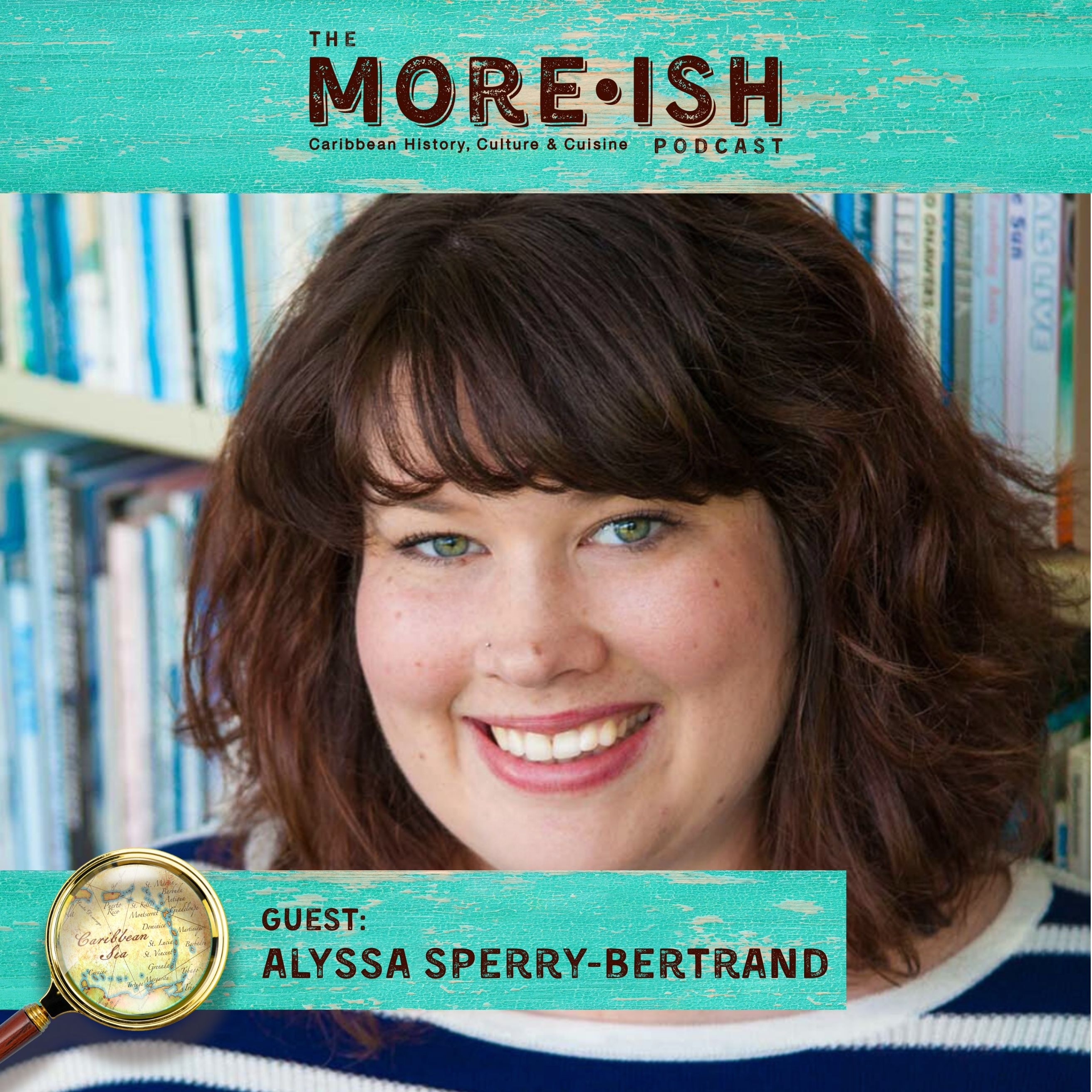
Many foods come to mind when people think of Jamaica, and one most often associated with Jamaican cuisine is jerk chicken. In this episode Hema is joined by Alyssa Sperry Bertrand, a retired pastry chef turned academic and historian, to discuss the evolution of jerk, from traditional methods to modern interpretations. They explore the origins as a food preservation method, the influence of the Taino people, Maroons and African cultures, and pimento wood, the one must have for authentic jerk. Listen as we dive into the history and cultural significance of jerk in Jamaican cuisine, the must-have spices in its modern flavour profile, and the global influence of the dish. Episodes Referenced Caribbean Foodways with Dr. Candice Goucher The connection between salt and spirituality with Alyssa Bertrand (Sperry) Exploring Caribbean Heritage through food with Marie Mitchell Belly Full Cookbook, Caribbean Food & Ingredients with Lesley Enston Caribbean Culinary History with Keshia Sakarah Resources and Links Friends of Jamaica https://servejamaica.org/ Eating Jamaica: How Food is Used as a Tool to Create and Reinforce Cultural Identity What is moreish? | more·ish ˈmōrish | informal, of food, causing a desire for more Join us onTikTok,Instagram andYouTube to continue the conversation. Music from #Uppbeat (free for Creators!)https://uppbeat.io/t/andrey-rossi/jerk-sauce Alyssa Bertrand (Sperry) is a leading expert on salt, and its relationship to Jamaican culture(s). As a former chef, and historical ethnographer she provides insight into the role salt played in the development of culture and identities among the Maroons and Rastafarians by understanding salt’s role during the Atlantic Slave Trade and how it shaped the cultural identities of the past and present. Alyssa received her master’s degree at the Department of Global Studies at the University of Oregon and her bachelor’s degree at Washington State University in Anthropology and History. Alyssa has received numerous awards and grants for her research including the Oregon International Research Grant, Folger Shakespeare Library Scholarship, and Library Research Excellence Award at Washington State University.
Alyssa Sperry Bertrand So, interesting enough jerk, in terms of its origins, is still a little blurry. There are communities that will claim that they were the ones that started it. You’ve got Maroons, you’ve got the Tainos, and then you’ve got African’s that will say we are. Um, but in reality, if you think about it, they all kind of do. You know, and that’s something that I talk about in this article. I talk about that they all have a little bit of that origin. [music] This is The Moreish Podcast where Caribbean history meets culture and cuisine. Hema Alyssa, thank you so much for joining me again on The Moreish Podcast. Alyssa Sperry Bertrand Well, you're welcome. Thanks for having me again. Hema We had a fascinating conversation about salt and Jamaica. And there was something in one of your articles that I really wanted to talk about separately. And that is the dish, the cooking method of jerk. Alyssa Sperry Bertrand Yes. Hema Before we dive into it, can you do a quick introduction? Alyssa Sperry Bertrand Yes. So my name is Alyssa Sperry Bertrand also known as the Salt Woman, now that you guys have probably heard the other podcast. And I research salt and Jamaican identity, as well as the general understanding of foodstuff. A little bit about me, I have a undergraduate degree from Washington State University in anthropology and history. I have a graduate degree, um, in global studies from the University of Oregon. I am currently on the board of Friends of Jamaica, um, which is a non-profit that helps local communities around the island in terms of community projects. So I'm just a little, a little here and there. Hema Your work came to me through my conversation with Dr. Candice Goucher on the history of food in the Caribbean. I started to read your paper on salt. And then I came across another article that you wrote, Eating Jamaica, How Food is Used as a Tool to Create and Reinforce Cultural Identity. You have so much information in that paper, but I want to focus in on the food or the dish that people associate with Jamaica, jerk. Alyssa Sperry Bertrand Yes. Hema And the history of jerk, how it came about and what it is today, because it seems like there is a bit of a journey from where it started to what it is. Alyssa Sperry Bertrand Absolutely. Most people when you hear the word jerk, you think of like jerk chicken, jerk pork, and you think of the spices with it like allspice or what is known as pimento down in Jamaica, scotch bonnet pepper, you know, cinnamon, all these different types of delicious spices and, and, seasonings that make it jerk. But in the beginning, it was not any of those. In fact, it was the cooking style that made it jerk. And most people don't realize that. It's interesting how history can be one thing and then it be moulded into something today. Now, I will say in this history, there is a key component that is still today that will identify it as jerk, and that is pimento. But yes, jerk and jerk chicken is the iconic dish of what Jamaica is. Um, of course, there's saltfish and ackee and, you know, there's a couple other things, but jerk is the foundation of Jamaican cooking. Hema When, when I talk to people what do you think about when I say the Caribbean, Jamaican and jerk are the top things that people mention. On the podcast, we talk about the historical influences of food and where food is today. And jerk is one of those things that started out in one way and it sounds to me like maybe there's a little bit of confusion or disagreement on who started making jerk Alyssa Sperry Bertrand Mm-hmm. Hema and why. Alyssa Sperry Bertrand Yeah, so interesting enough jerk in terms of its origins is still a little blurry. There are communities that will claim that they were the ones that started it. So you've got Maroons who say that they are ownership to jerk. Um, you've got the Tainos that will say that they are. And then you've Africans that will say, no we are. Um, but in reality, if you think about it, they all kind of do. You know, and that’s something that's in this paper, in this article, I talk about that they all have a little bit of that origin. I guess let me back up in terms of what is jerk. So jerk is basically a form of barbecuing. And, you know, I think the original idea of jerk was how the meat was prepared. It wasn't necessarily the spices or the seasonings that were the fundamental part of it. It was the preservation of the meat. So in the context of Jamaica, jerk wasn't actually jerk chicken first. It was jerk pork. Um, there was wild hogs, and when the Maroons, which I talked in the previous podcast, you know, when they ran away and became the Maroon community, they had to find provisions for themselves. And as great hunters as they were, they were able to hunt hogs, and in order to preserve this meat, they had to do a form of jerk. And in the other podcast, I talk about salt, and you know salt was not readily available all the time so they would use a replacement as in wood ash, and through this process of wood ash and then this barbecue style which was basically a big pit that was dug out and it was almost smoked. So I know that historically we've seen smoke as another form of preservation. You've got this wood ash and the smoke, but it was the type of wood that was used that began to be connected to the idea of jerk. And that was the pimento wood. Pimento is native to Jamaica. And for those who will hear me say pimento, it's what we call here in the States, um, allspice. It’s kind of got this beautiful warm, um, blend of like cinnamon and nutmeg and cloves all kind of rolled up into one. That's the wood that they would use. During this process with the wood ash and the pimento wood, you know, it kind of smoked this meat, making it what's known as jerk. Later on jerk then kind of started having some more spices add to it. That's where you start to get like the pimento spice, the scotch bonnet pepper, thyme, and scallions, and all these different things that kind of flavour the meat up. Over this course of history, you get from cooking in a pit with wood to now cooking on barbecues, metal grates. But the interesting thing is that true jerk it is, if it's cooked with pimento wood. So for all of the jerk that's being made outside of Jamaica that doesn't have pimento wood, it's not a true jerk. Um, now you can still make jerk chicken and it still tastes great. We went from this idea of jerk was a cooking style to now a flavour profile. And that's been the transition over the course of the history. And so now today, people don't necessarily think of jerk chicken as in cooking with pimento wood and, and wrapping it up in leaves and being smoked together with the wood ash and all that. Now it's the different spices. And to have a traditional jerk spice, you have to have scallions and thyme and scotch bonnet and pimento spice. Those are the foundation. Now, granted every family kind of has their own take on a jerk spice but you have to have at least those four to be the foundation of jerk spice. Hema You mentioned that the Tainos may have claimed jerk as theirs. Where does that fit in? Alyssa Sperry Bertrand Yes. So the claim is, and I do sometimes have a hard time pronouncing certain words, so please forgive me, um baracoa, um which in Spanish is representative as barbecue. As I've mentioned in the other podcasts, the Spaniards were the first to go to Jamaica, followed by the British. And so that's where this idea of the Tainos were the first to have jerk meats is because of that form of barbecuing. The Tainos and the Maroons did blend together. So now you've got this blending them together. You've barbacoa, which is that Spanish word translated into barbecue. And then you've got African communities across to the motherland, you've got evidence of smoked meats and barbecuing, as one would say, and those cultures. So in reality, even though there is no direct evidence for this, it could be a blended of two cultures together to create the iconic jerk meat that we see today. Hema This dish that we just associate with Jamaica has morphed and changed, yet the pimento, whether it's the wood or the spice, is the constant throughout history. Alyssa Sperry Bertrand Exactly. I remember the first time I had jerk chicken. Um, and I love the university that I went to, but, and this is how I got connected more with, with Dr. Goucher and also Jamaica was that she invited a guest to speak in her food, um, history class that I was attending as an undergrad. And Walde was the gentleman that came from Jamaica. And so the university thought it would be really fun to serve jerk chicken that day. I never had jerk chicken, but I knew this was not jerk chicken. It was like the most palest looking chicken I have ever seen in my life. And so I took it as a challenge to understand jerk. And so when talking to, um, different communities while in Jamaica, he and I were talking, and that's how I started to learn about what jerk truly is. And that pimento is like the foundation, whether it be using the wood or the spice or both, that creates jerk. I mean, jerk chicken has become such a massive cultural identity for Jamaica that they have jerk competitions. And I know there's a jerk stand in Westmoreland where he has won multiple awards for his jerk chicken. And he's just this little jerk stand on the side of the road and it's one of the best jerks I've ever had. And so it goes from that foundation of that, yes, it is still a form of barbecuing, but how it's barbecued is not necessarily what makes it jerk today. But if you want that true jerk of what the iconic jerk is, you have to have the pimento wood. Hema You spent time in Jamaica doing your research. Alyssa Sperry Bertrand Mm-hmm. Hema Did you find that most people are using the pimento wood? Alyssa Sperry Bertrand So if you go to a jerk stand or a jerk restaurant, yes, that is quintessential in terms of their process is that that pimento wood. If you go to a home, not necessarily. Um most of them will use like the pre-made jerk sauce that you can get at the store and then, I like for me at home, I make, as my husband says, one of the best jerk chickens. I'm really proud of that. I have worked so hard to have really great jerk chicken, but I don't have a barbecue. And so, I cook it in a cast iron pan and I, I crisp it up and then I put it into the oven and I cook it until it's fully cooked so it stays juicy, but crispy and all of that. That I would not consider a traditional jerk. It is jerk in the sense that it uses the traditional seasonings now, but it's not traditional in the sense that it uses pimento wood for the barbecuing process. And I'm completely omitting the barbecue and cooking it on the stove in the oven. And so, you know, you can say that it's jerk, but it's like a generation, generation removed jerk style. Hema I think that's the way with food. It evolves and it changes. And as people have moved and migrated, whether it's forced migration or voluntary, the way they make their food changes based on what's available. Alyssa Sperry Bertrand Exactly, and to your point, there are restaurants out there that make “jerk chicken”, and I'm putting them in quotes, um, just because of the fact that they've taken their own spin to it. And I think that's something of living in the States. And now I'm not in area that has a lot of Caribbean people. I would say that there's more African than Caribbean where I'm from, but there are Caribbean restaurants. They're not necessarily born Caribbean. They’re, they’re born in the States and they're not necessarily from Jamaica, but they will sell jerk chicken. And so, you know, it comes into this argument of who can claim jerk chicken? What is jerk and this is where that history comes from. If you had a Jamaican who would go to that restaurant, like my husband, he would flat out say that is not jerk chicken. That is a waste of money. Don't spend your money on that jerk chicken. Because it's such a, a identity factor. And so when you've got other cultures and other people making jerk, you know, I think ultimately it comes to this identity of who can claim jerk. And of course, Jamaica has taken claim to that term and to that cooking style. You could say someone could barbecue chicken and use those ingredients. Would that be considered jerk or would that just be considered a barbecue chicken with, you know, different seasonings? So I guess that's now the conversation that's being discussed, especially in the culinary industry, can you call something jerk chicken if it's not true to the jerk chicken that you see in Jamaica? And in the culinary field in general, you see these arguments of who can claim these types of dishes, in terms of their cultural background. I know my husband and I, we have conversations of like, if I were to open up a restaurant and cook jerk chicken, could I claim it because I'm a white person? We joke about how like he would just be in the front or his mom would be in the front and I would be in the back and no one would know, you know, the type of a thing. Hema Food is such a fascinating topic. I was born and raised in Toronto. My parents are Trinidadian, but my understanding and my knowledge and the foods that I grew up eating are based 40 years ago, 50 years ago when they left Trinidad to come to Canada. And food has evolved and changed and there's fusion. And so when I see more modern day interpretations of some of the dishes that I know, they're a little bit familiar, but kind of foreign. There's conversations to be had about the evolution of food. And take the stance that food is not good or bad if it's evolved, but there is the appropriation that we need to consider. That is a whole other topic. There's a lot of people, in my opinion, who have no business monetizing foods from the Caribbean, and they do it anyways and they have a privilege that allows them to create wealth out of that. Alyssa Sperry Bertrand Exactly. And you know, it's one that my husband and I have all the time, in terms of who can do what, especially in the food industry, you know. I, I'm like 50 % Polish, but yet I was a French pastry chef. And then I started working and researching in the Caribbean and make amazing jerk chicken and festival and dumplings and, I still have not gotten my rice and peas down, but my mother-in-law is helping me with that one. She is teaching me. So, and I think that's the thing is we live in such a blended world nowadays and blended cultures and mixed families. My mother-in-law, she teaches me these things in honour, and I embrace this this knowledge and this history and connection to her culture. But going back to the whole jerk thing, I think when you go and eat jerk chicken, if you go to a restaurant that claims to be jerk chicken, that if it is far removed from what the tradition of is made in Jamaica, then I don't think that they can claim it as jerk chicken. It's kind of one of those, those, it's a debate, you know? And there's gonna be people who disagree with me, but it's a debate. Hema I mean, the history is there. The, you can trace it many, many, many years back. I think it’s, I think at this point, people can listen and make their own, come to their own conclusions and their own judgment. We're just sharing the knowledge that you have. Alyssa Sperry Bertrand Yes, and I mean, I'll admit, I'm biased, you know. When you've had the authentic jerk chicken, you get a little bias in ya. Hema We did a fascinating episode on salt and the history and folklore and subcultures in Jamaica. I will link that down below. I will also, if I can link this article that we're referring to and also I'm going to include a link to the conversation with Dr. Goucher, which really started this whole conversation between you and I. Because all of this, the food and the history and the culture of the Caribbean is intermingled and morphs and changes and will probably continue to change as the populations change. As we can see with people migrating still, there are some shifts and changes in how people eat. I've talked to, last year, three different women who have written Caribbean cookbooks and they are all within the diaspora. They're documenting the recipes as they exist in their families now so that we always have these to go back to. Food is a fascinating topic. It is fluid. Alyssa Sperry Bertrand It is. It's life and it's what brings joy to so many people. And it is, in my opinion, the foundation to human culture because the flavours, the cooking methods and just sitting around the table and enjoying companies of family and friends and telling stories around, you know, a buffet of food is who we are as people. And if you take food away, then you take the memories, you take the culture, you take all of that away with it. Food is such a precious thing in our world, and it needs to be preserved, whether it be a particular food item or a meal or just the history around food in general. Hema I'm going to close our conversation with a quote from your article. "Food is more than something one eats to maintain life, but has evolved over the course of human existence to become part of culture or in some cases to create culture." I appreciate you taking the time to share your knowledge of jerk. After our two conversations, I need to go back to Jamaica and experience jerk and maybe the secret salt ponds for myself. Alyssa Sperry Bertrand Yes, absolutely. And especially after Hurricane Melissa, I mean, they're going to need the tourism and, that's something that's yeah… Hema If you have a link to a reputable source for donations, I will also include that in the show notes. Alyssa Sperry Bertrand Yes, absolutely. I'm glad that you brought that up because like I said, I'm on the board. I was a former director of grants for Friends of Jamaica, which is an affiliated non-profit with the National Peace Corps. And so we have raised over $50,000 and still continuing to raise. And I'm now the chair of the Hurricane Melissa Recovery Committee. We have been working in communities like Bluefields and with hospitals and just in general finding areas where they need the help. We're the small group that comes in after the large ones go down. And so we're now working with the local communities that need the help. Hema Alyssa, thank you so much. There will be links in the show notes so you can check out everything that we've just talked about. Alyssa Sperry Bertrand Well, thank you so much for having me. I've greatly appreciated having this discussion. [music] Thanks for joining me for today’s episode of The Moreish Podcast. Don’t forget to subscribe and leave a rating, it really does help in getting the podcast in front of more people. Follow on Instagram, TikTok, and YouTube for videos and more. And I’ll see you for the next episode.
More The Moreish Podcast: Caribbean History, Culture, and Cuisine episodes →