
The Moral Imagination · Michael Matheson Miller
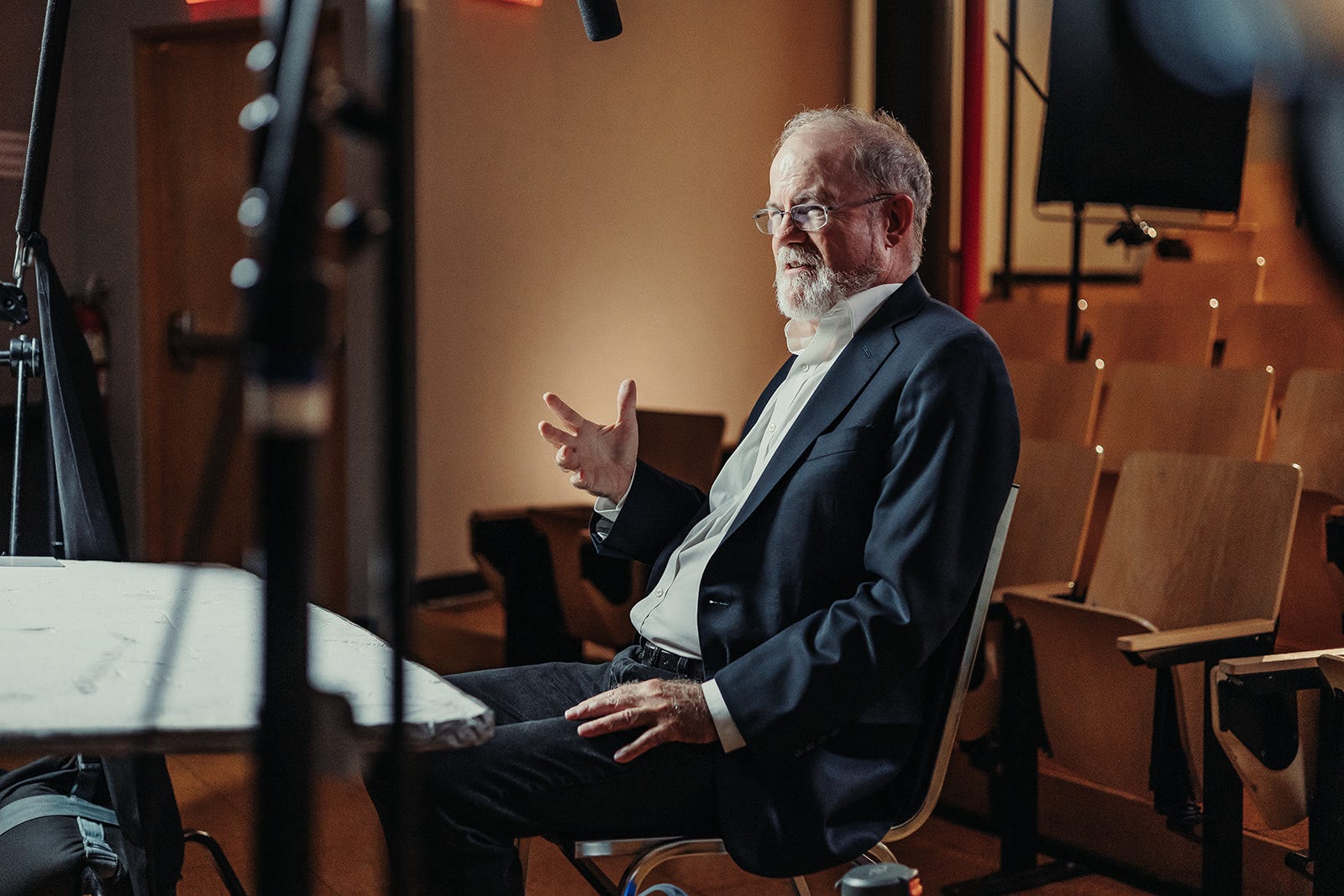
Photo Credit: Tyler Follon - Wingman Visuals In this episode of the Moral Imagination Podcast, I speak with Professor William Easterly of New York University about his work in development economics, and the problems of technocracy and social engineering of the poor. Easterly worked at the World Bank from 1985-2001 and began to be troubled by a number of things, including how aid is given without much concern about how it is distributed and managed thus subsidizing bad governance and harming the poor. We discuss Peter Bauer’s critique of how foreign aid politicizes development and delayed the development of business in Africa, and Bauer’s paradox of aid: * The countries that need aid — aid will not be effective * The countries where aid will be effective — do not need aid But the key problem with the dominant model of development is not simply a lack of efficiency, but the failure to respect the rights and agency of poor people. Easterly explains that development projects often result in people being deprived of their property, political rights, and participation and consent in the very projects that are supposed to help them. He discussed the tendency to to trivialize problems in the developing world, and the lack of feedback and market tests in development policy. We discuss how the developing world can often become a a lab for experiments for technocrats and social engineers. We also talk about Hayek’s Knowledge Problem, a response to Marianna Mazucatto idea of moonshots, and what I call “embedded'“ economics. We discuss a number of issues including * “The Debate that Never Happened” - Gunnar Myrdal vs. Friedrich Hayek on development economics * Social Engineering * Technocracy and the Hubris of the Technocrat * Spontaneous Order * Edmund Burke and Friedrich Hayek * Soviet 5-year central planning as model for economic development * Limited Horizons of Humanitarianism— a secular, hollowed out version of Christian love the focuses on material at the expense of personal agency. * Lack of Accountability * Material vs. Non-material Needs * Materialist visions of the human person * People have a right to consent to their own progress * Harry Potter novels vs. Mosquito Nets * Marianna Mazucatto’s ideas of Moonshots * vs. accidental discovery * vs opportunity costs * vs failed social engineering projects * and the complexity of economics and markets embedded in deep historical, cultural, norms, institutions, and religious foundations. * How to think about foreign aid and public goods like healthcare, infrastructure, education * Aid for emergencies vs. aid as answer to chronic poverty * Institutions of Justice including clear title to land, access to justice in the courts, ability to participate in the formal economy, and free exchange. * The impact of globalization on manufacturing in the US * Trade-offs and economic volatility * The moral rules that are needed for progress to beneficial * Consent, Self-Determination, Moral Equality * Attempts to...
0:00SPEAKER_03This is Michael Matheson Miller, and you are listening to the Moral Imagination Podcast.
0:14SPEAKER_03Thank you for listening to the Moral Imagination Podcast.
0:16SPEAKER_03My guest today is Professor William Easterly.
0:19SPEAKER_03I'll get to his bio in a moment.
0:20SPEAKER_03But before I do, I want to thank all of those who've written a review on Apple Podcasts.
0:25SPEAKER_03If you do like the podcast and you have some time, please give it a five-star review.
0:29SPEAKER_03It does help grow the podcast.
0:31SPEAKER_03Also, thanks to those who've supported me on Patreon.
0:33SPEAKER_03I do very much appreciate the support.
0:35SPEAKER_03It means a lot.
0:36SPEAKER_03And you can subscribe at themoralimagination.com, where I send out
0:42SPEAKER_03not only updates on podcasts, but essays I've written and various other pieces of information.
0:46SPEAKER_03Speaking of which,
0:47SPEAKER_03Acton University,
0:48SPEAKER_03this summer,