
The Media Beat · Maureen Kerr and Claire Tavernier
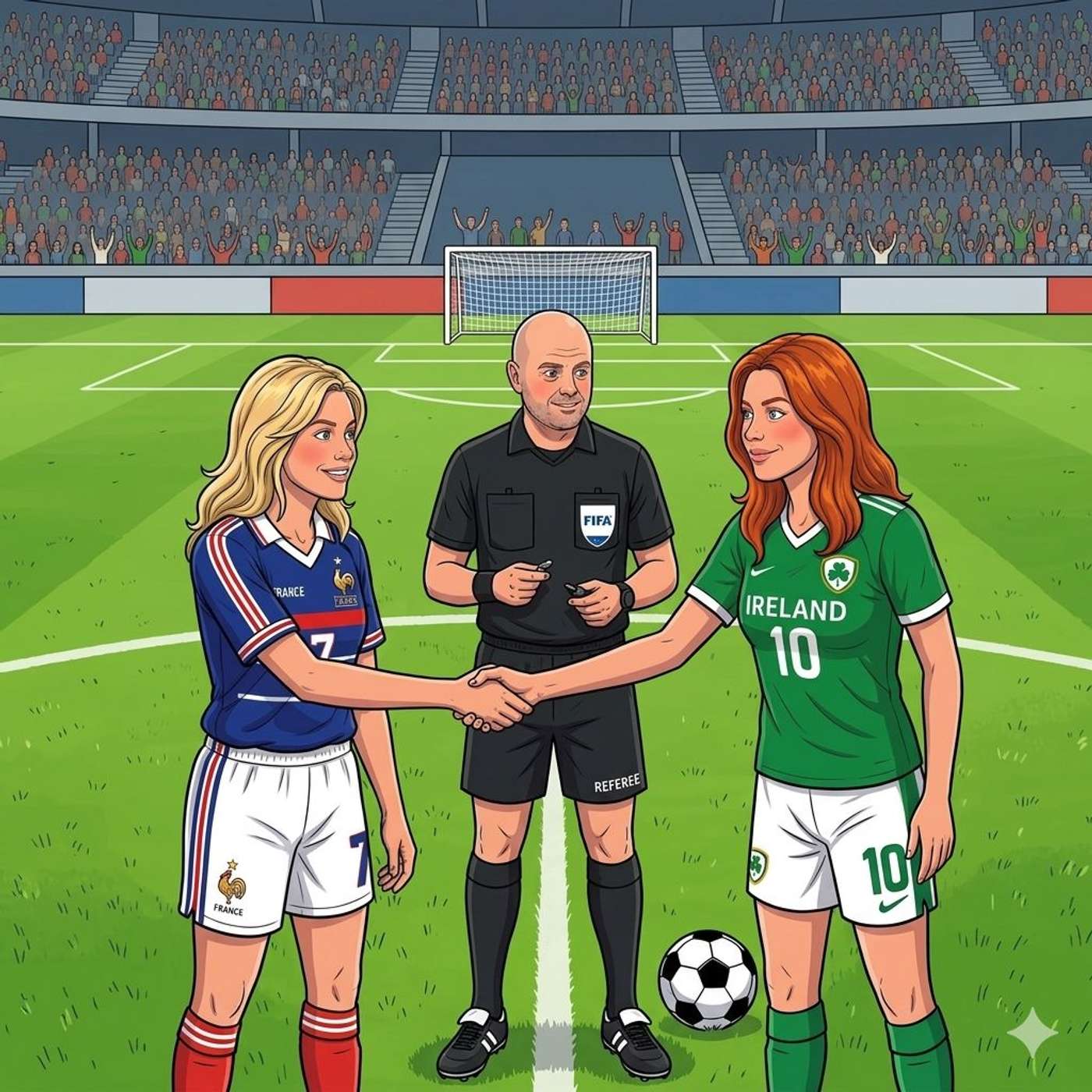
Everyone knows we are but a few weeks away from the planet's greatest sporting event, but how much do we know about the fascinating and mind-blowing world of sports rights? It's a double header this time as both Maureen and Claire grab hold of the subject and take us through the whole business, how quick the space is changing and what is new for WC2026. 2026 Upfronts and Cannes are in the news as is the Actors Unions vs AI. Claire has to improvise wildly during podmojis but they both still find time to give us the scoop on an Amazon purchase, a big goodbye and what follows Resident Evil.
The Media Beat — Episode 96 with Oliver Turnbull, Maureen Kerr, and Claire Tavernier Deep Dive: Sports Rights and the 2026 World Cup Oliver Turnbull [00:00] Very deep. Three, two, one. Oliver Turnbull [00:09] Hello everyone and welcome to The Media Beat with Maureen and Claire. We are on episode 96, and we’ve got a great episode, as we always do. Claire [00:16] Thank you. Oliver Turnbull [00:20] Maureen and Claire are primed because they’re doing a joint deep dive. So, in celebration of the fact that the World Cup starts in three weeks — which is so exciting for us football fans. Have we got a chance? Are England going to do it this time? No, they’re not. But who cares? It’s going to be exciting to watch. And everybody from around the world is absolutely going to be entranced by the ridiculously large number of teams — 64 going down to one. But we are going to enjoy it, and there is going to be something about sports rights in the deep dive to celebrate that fact. The biggest sporting event in four years is coming up. Oliver Turnbull [00:46] We’re also talking about the 2026 Upfront, which has been going on in New York. SAG-AFTRA, which I find very difficult to pronounce, but there’s a new deal that they’ve done on AI. And the Cannes Festival, of course, has been on. And I’m glad to say that the world-renowned and highly regarded scientist, Demi Moore, has been speaking up on AI, so I’ll be interested to find out what she thinks and her influence as well. Oliver Turnbull [01:22] On the Podmoji side, we’re talking about Amazon buying Oprah, Stephen Colbert waving goodbye, and something about the Resident Evil creators resurfacing, which sounds quite sinister. We’ll find out more about that later on. Oliver Turnbull [01:34] But first, let’s get into the deep dive. I can’t quite remember who’s going to start, actually. Maybe if you put your hand up. It’s Maureen. Maureen’s going to start this one. And it’s something I find fascinating — sports rights — particularly as my team, Tottenham, are on the verge of being relegated from the Premier League. So I’ll be listening carefully to… Claire [01:52] Can I — sorry — you mentioned the World Cup. Can we talk about the Premier League winners this week? Because it’s a pretty exciting week in North London. Oliver Turnbull [01:59] Not quite sure who that was. I’ll have to look it up. Maureen [02:03] Oh, didn’t they have red shirts? Oliver Turnbull [02:05] Well, in one part of North London… Claire [02:05] Suddenly in my… yeah. Maureen [02:07] I saw red shirts. I saw red shirts. Claire [02:08] There were definitely red shirts. Maureen [02:09] Yes. Oliver Turnbull [02:10] As you can tell, Maureen is a massive football fan. Maureen [02:11] And lots of people smiling. Claire [02:12] Twenty-two years we waited for this. Oliver Turnbull [02:16] Twenty-two years of hurt. Claire [02:16] Not quite as long as England has waited for the World Cup, but at least we got one. Oliver Turnbull [02:20] It’s 60 years. Well, I was alive when England won the World Cup, but only six weeks out. But congratulations, Claire — avid Arsenal fan. Maureen [02:26] I’m amazed that Oliver was so quiet. Yeah, he was so quiet. You could see he was skipping over that, wasn’t he? Oliver Turnbull [02:33] Yeah, that’s right. Maureen [02:33] Yes, skipping over that and talking about relegation instead, you know. Oliver Turnbull [02:37] Yeah, and then something else happened. And Maureen spotted a red shirt, and Claire is suddenly a mad Arsenal fan. Oliver Turnbull [02:44] No, you have mentioned being an Arsenal fan before. So congratulations. Maureen [02:47] She has always been one. She’s always been an Arsenal fan, haven’t you? Oliver Turnbull [02:48] Yes, she has. Claire [02:50] Honestly, Arsène Wenger — all the way back to Arsène Wenger, that’s when I… So don’t, don’t, don’t do this to me, Oliver. Anyway, we should move on. Oliver Turnbull [02:57] No, fair enough. Congratulations. It was well deserved. Oh God, that was awful. Right, let’s… To go back to sports rights more generally — we can leave out the disaster of disappearing from the Premier League and what that will mean — but yes, Maureen, sorry, and let’s not waste any more time. Maureen, please, over to you. Maureen [03:19] No problem. I find this much more entertaining — watching the two of you cackle and fight remotely, you know, over whose team should be there up front being spoken about. Maureen [03:31] So, anyway, well done, Claire, even though you’re not on the pitch. Oliver Turnbull [03:34] Yeah, brilliant effort. Claire [03:35] It was entirely me. I did this. I did this. Maureen [03:35] You’re out there on the fans. Exactly. Oliver Turnbull [03:37] Brilliant effort. It’s dedicated to Claire Tavernier. Maureen [03:39] Tell it, tell it, tell it. Exactly. Exactly. Oliver Turnbull [03:41] Yes, yes, yes. Maureen [03:41] All right. So, Oliver, back to the show. The show must go on, as they say. Oliver Turnbull [03:47] Yes, yes. Maureen [03:47] OK. You’re absolutely right. So we’re three weeks — my gosh, we’re three weeks out — from the 2026 FIFA World Cup. And the sports rights conversation is getting louder and louder, so much so that we need to do this deep dive. Claire made sure that it was definitely up there on the top of the agenda. So here goes, and that’s where I’m going to start. But it’s not with one deal or with one platform. It’s going to be what interests me — and that is the power structure that I think this World Cup is going to expose. Maureen [04:23] So three numbers set the frame here. Let’s do a little bit of data. The US sports rights total — and Claire will keep me honest here — has climbed almost 122% over the last decade, from about $14 billion in 2015 to at least $31 billion in 2025. The new NBA domestic package runs to the tune of around $76 billion over 11 years across Disney, ABC and Amazon. Maureen [04:57] And the streamers alone are projected to spend $14 billion on sports rights this year. So that tells you the cost story. Let’s get that out of the way. Maureen [05:07] OK, now I’m going to talk about something much more interesting. Maureen [05:10] All right. So I think it’s extraordinary that the biggest sporting event of 2026, which starts on June 11th, is still not streamer-led. Fox has the US English-language rights. BBC and ITV split the UK. Netflix has a Gary Lineker podcast deal, but no match footage. Maureen [05:33] Apple has built a viewing experience around third-party broadcasters, not its own rights package. So the streamers are not at the centre of this one. Maureen [05:44] They are arranged around it. And that is strange, because I think the rest of live sports is moving hard in the other direction. The NFL — and Claire’s going to talk a little bit more about this — but the NFL is already renegotiating ahead of schedule, reportedly looking for a 50% increase. Maureen [06:02] The estimated cost of watching every NFL game across YouTube TV, Amazon Prime, Peacock, and Netflix is now around $1,500 a season. Maureen [06:16] And that’s just before fees and internet. So fans are bloody frustrated by fragmentation, and regulators are starting to notice this. Now, Claire will pick that up a bit later. Maureen [06:26] I know. So, into that picture walks TikTok. FIFA has named TikTok its first preferred platform for the Men’s World Cup. Maureen [06:38] And that is not just a marketing exercise. TikTok has a 30-creator correspondent team covering the tournament across four continents, 11 countries, and 22 cities. Maureen [06:51] Now, these are not creators sitting at home reacting to the games. They are being given access — access to the team bus arrivals, to training sessions, press conferences, warm-ups, and the spaces around the tournament that usually belong to accredited journalists and broadcasters. Maureen [07:09] So that changes, I think, what counts as World Cup coverage. The match is still the match — we know that — but the experience of the tournament is increasingly being built around the match. Maureen [07:21] So clips, the fashion, the jokes, the bilingual fan communities, the referee explainers, the kit culture, the fan trivia, the quick reactions — that is what TikTok is trying to own. Maureen [07:35] Not the 90 minutes, but the feeling of the World Cup as a daily social event. And TikTok is not alone. FIFA also named YouTube a preferred platform for the 2026 World Cup. Maureen [07:49] So the media partners will be able to live-stream the first 10 minutes of every match on YouTube, with highlights, shorts, VOD, and archive content also part of the package. If you put those two deals together, TikTok is short, vertical, fan-first, and built for the scroll. Maureen [08:08] YouTube is longer — strange to say that — searchable, archival, and closer to the traditional sports vibe. So neither replaces the broadcast deals. Maureen [08:19] They sit on top of them. That is the point. So the World Cup will still be watched through broadcasters, but it will increasingly be felt, discussed, and retold through creators and platforms — before kickoff, between matches, after the final whistle, and in the formats that fans actually use. And there is the rights tension inside that. In the US, Fox Sports is the English-language rights holder, and there has been no public agreement extending TikTok live look-ins to US viewers. So the line between platform opportunity and broadcaster production is one to watch. This is the fault line, in my view: the rights owners own the match. Maureen [09:06] The platform owns the conversation around the match. For decades, those were treated as the same thing, as we all know, but they are not the same thing anymore. And I think that’s where the value question really gets interesting. Maureen [09:18] As I mentioned, $76 billion will be spent on the NBA. But you need to recover that through subscriptions, advertising, and retention. Maureen [09:29] If you spend nothing on the rights but capture the discovery side, the fan culture, and the conversation around the tournament, you may end up with a much more durable asset. Maureen [09:39] So TikTok has not bought the World Cup. YouTube has not bought the World Cup. But both have positioned themselves inside the way the fans will experience it. So the question is not just who owns the 90 minutes. The question is whether, fast-forward to 2030, the better business is owning the match or owning everything that happens around it. Maureen [10:04] Claire, this is where I’m going to hop off and hand it to you, because I think the production cost question sits directly underneath all of that. Claire [10:14] Absolutely. First of all, I want to point you to something that exists in the UK and in various other European countries. In the UK, it’s called the Ofcom Code on Sports and Other Listed and Designated Events. Claire [10:25] It’s a regulation that says that certain major events — and that includes the World Cup — have to be on free-to-air television. They can’t be on paid television. It was meant to protect those rights from paid television, but that also now includes the streamers. Claire [10:40] So in a way, there is no option for the FIFA World Cup in the UK. It has to be on BBC and ITV. And then they have a very complicated formula to split the rights. Claire [10:51] I’ve looked at two things quickly to add to your fantastic presentation, which I completely agree with. I looked at where the money goes. So you have all these major deals. Claire [11:03] Then we’ll talk a little bit about the World Cup, but also a little bit about club football in its wider sense. Where does all that money go? So it’s interesting — FIFA is going to make £10 billion from this World Cup. Claire [11:17] And they say that they’re a charity and that 90% of this is then redistributed to promote global football. Now, what they define as promoting global football has been under some investigation. They have created the FIFA World Peace Prize, as you know, which — I’m assuming — is also part of this. But there’s a question there. What we do know in the case of the World Cup is that money doesn’t go to clubs or players. Claire [11:44] But looking very briefly at both football — and I’m calling it football. I thought about calling it European football, and then I thought that is really unfair to South America, amongst many others. Claire [11:54] So I’m calling it real football and American football — which really shouldn’t be called football because it’s played with the hands. Talking about the clubs there, and how the money gets split: I’ve discovered something, Maureen. America is a communist country when it comes to American football. I know. Maureen [12:11] Yes. Claire [12:12] Shocking. The NFL — what they do is they get all the money from the sports rights, and, as you said, more and more fragmented to the frustration of the fans. And then that is redistributed absolutely equally amongst all of the 32 franchises. That means $432.6 million per team in 2024, for instance. And everybody gets it — the Dallas Cowboys get that, and the Green Bay Packers (which is also a team, I think) also get that. Everybody gets the same, and that includes even a third of the gate receipts, which also goes into a shared pool. What that means… Claire [12:52] …is that you don’t get this very-big-club-and-very-small-club tendency that occurs a lot in Europe. And what that means is, actually, it’s quite a loose market — an NFL franchise that didn’t do anything last year could be very good this year, because there’s also the draft system. That means they have access to the same players. Claire [13:11] The absolute opposite is Spain, where the money is not split equally. In fact, until recently, Real Madrid and Barcelona kept about 50% of all of the TV money that went into La Liga. So it’s slightly less bad now, but it remains a market where the big clubs are getting significantly more money than the smaller ones. The Premier League is somewhere in between, but still — if you’re a big club, if you’re Liverpool or Arsenal, you will get… So Liverpool, for instance, got £175 million… Claire [13:49] …and the bottom clubs got about £109 million. So it’s not as big a gap as it is in Spain, but it’s still — you want to be the big one. Claire [13:58] And that really was the point around the Super League. You remember we talked about the European Super League. It was about some of these big clubs saying, ‘No, actually, we don’t want to give any money to the small clubs. We really want to keep all of that money to ourselves.’ Claire [14:10] Now, the people who actually get to keep the money, though, are obviously the players. And if you really want to make money in sports today, what you want to be is a very expensive NFL player. Claire [14:23] Because, actually, the two biggest total contracts in the NFL — Dak Prescott of the Dallas Cowboys earns $60 million a year. He has a deal worth $240 million over four years. That’s the sort of money you can make if you play in the NFL. If you play in the Premier League, you will still… Oliver, do you know who the best-paid player in the Premier League is? Oliver Turnbull [14:49] Oh, golly, that would be a tricky one. Probably someone — yeah, an Arsenal or Liverpool player. Or a City player, maybe. Claire [14:56] Erling Haaland — £525,000 a week. Oliver Turnbull [14:57] Yeah, City player. No… Claire [15:00] So that’s £27 million a year. So, you know — it’s not a bad deal. Manchester City’s doing fine. Oliver Turnbull [15:07] He’s doing all right, that lad. Claire [15:08] But, you know, it’s… Oliver Turnbull [15:09] Born in Leeds as well. Could be playing for England. He was born in Leeds. It’s absolutely infuriating. Sorry. Claire [15:15] Anyway, moving on. So that’s where the money goes. Most of the money goes to the players, and the players keep the money and then spend it on whatever they want to spend it on. What the channels do is they pay that money to clubs or to FIFA, etc. The TV channels and the streamers — the ones that have the rights to show the sports — then have to pay for production costs. And this is the other area where there’s been a massive explosion of costs. So it’s really interesting to think about this. Claire [15:44] For a Fox Sports, or for the BBC and ITV — who are going to be spending a fortune on FIFA World Cup rights — they’re also going to be spending a fortune on producing the content. This is not something that’s going to make any money for them. They do it because, obviously, it’s a huge marketing spend. They will draw a lot of audiences. They can sell their other shows. If you’re a streamer, this is very much a battle against churn. We know that sports rights help against churn, but it’s not something that makes money for them. Claire [16:16] I don’t know if any of you were watching Match of the Day back in the ’90s when Alan Hansen was doing little circles around the players on the screen. Do you remember that? Some people remember that. Oliver Turnbull [16:25] Of course, yes. Claire [16:26] And then you had Gary Neville on Sky, who was pressing a touchscreen — and that was, ‘Oh wow, that was pretty exciting stuff.’ Claire [16:35] None of this. This is all gone now. What we’re talking about when we talk about football — top-tier football — is 30-plus cameras as standard. Drones everywhere. Real-time augmented graphics: player speed, distance covered, expected goals, all overlaid completely live. Virtual studios. And then AI-driven highlight clipping. You used to have to wait until Match of the Day to see the clips. No longer. The clips are happening in real time. They’re auto-generated and pushed to TikTok, pushed to YouTube. This all has to happen on the live feed. That’s the way you do it. Claire [17:14] So that’s changed dramatically. It has exploded the cost of production. One of these big games now costs, you know, one to two million pounds to produce in terms of production costs. Claire [17:28] And it’s going up. But what it’s also created is, again, a sort of two-tier or two-speed system, where if you’re not a Premier League game or a World Cup game — let’s say you’re a League Two or League One game — you don’t have that sort of budget. Somebody watching your game is going to say, ‘That looks a bit shit,’ to be honest. Claire [17:48] I mean, they’re not going to think, ‘Where are the drones?’ — because they don’t know about the drones. But suddenly it’s just going to look like something that was shot in the ’90s, because you can’t spend that sort of money on the smaller games. So, again, we are very much looking at a very, very expensive top end, and then not as much fun for the people at the bottom of it. So yes — we have the rights fees, we have enormous investments in production, and there are production obligations. They put a lot of production obligations on the people buying the rights. If you’re buying these rights, this is what you need to do. And then you sort of understand why TikTok and YouTube are going a slightly different route as well. Claire [18:32] Although you still need both. You do still need somebody to show the full game. So we’ll have to see what happens. And I’ll be cheering for France. Sorry, guys. Oliver Turnbull [18:42] That makes sense. I’m absolutely — I’m so excited now about the World Cup, so excited about the World Cup. Maureen, I had no idea about the involvement of TikTok, but it’s going to be fantastic. You’ll be watching the game and you’ll be on TikTok, and then you’ll be seeing these little comments and jokes coming in in real time. It’s going to be unbelievable. I can’t wait. You don’t have to watch, you know, Belgium versus the Canary Islands. Maureen [19:07] Or open up your TikTok account and then subscribe to Mac Allister — Alexis Mac Allister. Maureen [19:13] He’s a Scotsman. Oliver Turnbull [19:16] Really? The Argentinian? Maureen [19:19] He’s a Scotsman, actually. Yes. Oliver Turnbull [19:21] Oh, sorry, we’re talking about the other Mac Allister now. Maureen [19:22] Alexis Mac Allister. And he will be giving some fine commentary. Oliver Turnbull [19:24] OK. Claire [19:24] Yeah, I sounded more Scottish than Argentinian, to be honest. Maureen [19:27] Exactly. I was quite impressed. I was quite impressed. Can I do an Argentinian accent? Wow. Alexis Mac Allister. Oliver Turnbull [19:33] No. Maureen [19:34] Oliver, I thought you had those wonderful Scottish roots. Are you just… Oliver Turnbull [19:38] I do indeed have a lot of Scottish roots, that’s right. Maureen [19:39] Exactly. Oliver Turnbull [19:41] We both do, that’s right. I’m more of a Highlander, I think. Actually, no — borders. Anyway, France are in good shape. I’m just having a look at the odds on Betfair. Five to one, Claire. Same as Spain. So joint favourites with England at 7.4 to one — which I think is very, very not generous odds, because I’m a pessimist. Although we’ve got some Betfair… Maureen [20:00] And for those listening — please, we are not encouraging gambling. Just as a caveat, and a disclaimer for this show, we are not encouraging in any way gambling. Claire [20:05] No, why not? Just look at the odds. Don’t put money on it. Oliver Turnbull [20:07] Yeah, that’s right. Mr. Addison? No, no, absolutely. Just to give a flavour of what the market thinks. Yes, I think our stance is: not encouraging — but if you want to, why not? Maureen [20:18] Exactly. Oops. Oliver Turnbull [20:20] It’s quite a laugh. Right. We shall stop. We have to move on. That was first class. I love these double-headers. Very good. Worked very well. And I love the way Maureen starts with three numbers, because that gets your attention. ‘Oh, numbers — let me go.’ I like that. Excellent. Thank you so much. We must move on. And of course, now we go to ‘In the News.’ In the News Oliver Turnbull [20:45] OK, first story we have — Maureen Kerr is in New York, just to report on the 2026 Upfront. For those of you who don’t know what that is, she will explain. How’s the weather in New York, Maureen? And tell us all about the 2026 Upfront. Maureen [21:03] OK, very sunny. And I will pluralise that — Upfronts, Oliver, with an S, with an S. Oliver Turnbull [21:10] How is it? Maureen [21:11] So the Upfronts are — it’s basically the annual spring ritual where the TV networks and platforms pitch their next year of programming to advertisers, hoping to lock in ad spend before the season starts. Oliver Turnbull [21:12] Oh, I’m just going to see who got my notes wrong. Maureen [21:27] The 2026 Upfronts are a wrap in New York. So I’ll be jumping back on a flight and coming back to London — but the headline this year was not really about the schedules, about what’s coming up next. Maureen [21:39] It was more about the company that the networks were keeping. By that, I mean: YouTube brought Alex Cooper and the Subway Takes crew to Lincoln Center. Oliver’s looking very quizzical there. Fox built Tubi’s pitch around Gen Z creators and announced Fox Creator Studios as well. Televisa rolled out a partnership with MrBeast around the CONCACAF Gold Cup. And Beast Industries also held its own invitation-only breakfast for marketing executives, with the CEO describing the company as a next-generation media platform in the age of AI. So it’s all about who turned up. It has nothing to do with what we’re going to see. Anyway, they put some numbers… Maureen [22:31] …on the PowerPoint slide, and it says something to the tune of 1.3 billion unique people across any 90-day period. So that’s not a creator being brought in for favour — this is a media company making a reach argument. So is Beast Industries, I should say. Anyway, the calendar now tells the story. We’ve got NewFronts in March. Maureen [22:55] That’s already happened. We’ve got Upfronts in May, and we’ve got CreatorFronts in September. So three separate moments, all pitching to the same advertisers, which is extraordinary. Maureen [23:06] So, anyway, the shift is quite clear. We can see linear still delivers — I think the broadest reach — whereas streaming clearly gives advertisers targeting and addressability. And that’s what’s important. Creator-owned channels will provide, I think, the cultural relevance and direct community. What’s changed is that the networks have stopped pretending creators are an exotic sideshow or a side bet. Maureen [23:31] So they’re basically inside the room, they’re having breakfast with them, and in some cases they’re even renting the room next door. So, anyway, that changes the power dynamic. Maureen [23:41] Once the creators are no longer just talent — their distribution, their data, their community, and their conversion — the old buyer-seller map now starts to look very, very dated. Maureen [23:52] So the Upfronts are now really rather important. They have wrapped up, and we wait for September for the CreatorFronts. But Claire, what did you pick up from that extraordinary sort of set of circumstances over in New York? Claire [24:09] Very, very good summary. I think for me, it was very interesting. I saw it as a story about discovery — about discovery becoming so hard, and talent that can help discovery becoming so valuable as a result. Claire [24:22] It’s essentially what you’re selling at the Upfront. You’re selling, remember, to advertisers — not to TV critics, or even to the audience. You’re selling your ability to reach audiences at scale, and especially specific audiences like young men, for instance — audiences that are increasingly difficult for advertisers to reach. This is why they bring in MrBeast, because MrBeast actually helps reach this very difficult audience. I mean, Beast Games on Amazon became absolutely huge. It was Prime Video’s most-watched unscripted show ever. That’s the sort of thing that will get attention on Madison Avenue. So it’s not new that creators… Claire [25:05] …or individual creators, I should say, should be put front and centre at the Upfront, which has been going on for a long time. But I think the difference, exactly as you said, is now we’re talking about creators who own a much larger portion of the value chain. And that changes the dynamic quite a lot. So it’ll be interesting to see how that evolves. Claire [25:25] I will say one thing. There is a mixed record of digital creators moving to sort of mainstream-company video content, call it that. Some of them have done it successfully — we’ve just talked about MrBeast. Some of them have not. There are a lot of examples of people who have tried to move these very, very well-known creators. One example is Lilly Singh, who had 14 million YouTube subscribers. She was given a late-night show by NBC, which did very poorly and was cancelled pretty quickly. Claire [25:59] What we’re seeing is that the real success stories are those creators who stay on streaming or digital platforms — like Hot Ones has become a great example, or even the Amy Poehler podcast, which has become so important in terms of promotion that, as we said in the late-night-show deep dive, they’re essentially slowly but surely replacing talk shows. Claire [26:20] So it’ll be interesting to see how many of these creators do translate to mainstream content. I suspect some will — and I would probably bet on MrBeast — but I’m not sure all of them will. So that’s my take. Oliver Turnbull [26:32] So fascinating, so quickly moving, so dynamic — I think is the word. Everything changes, and everyone has to react to this new world. It’s great. It’s going to be fascinating what the qualities of influence are versus those who can make it on mainstream, and that we have left to see. Thank you so much. Moving on. Yes — so Claire has managed to make it. I don’t know how. But anyway, she’s standing in front of the Hollywood sign because she’s reporting on a new deal regarding AI and SAG-AFTRA — which I’ve now pronounced correctly — which is, I think, the actors’ union. But Claire will explain. Claire [27:07] SAG-AFTRA is indeed the actors’ union in Hollywood. It used to be two unions, and they merged, so now it’s only one, with a double-barrelled name. You will remember in 2023 — we were already doing the podcast — there was a very long strike of SAG-AFTRA, of the actors. It lasted for 118 days. It was the longest actors’ strike in Hollywood history. Claire [27:29] There were various reasons for the strike, but one of them was AI — the fear of actors of their image being used for AI training without consent. And they finally reached a deal in November 2023, which was quite restrictive, but was also very much seen as the first step. Well, we are three years later, and they are renegotiating — although the one that’s been signed, interestingly, is a four-year deal. So they’re trying to extend… Claire [27:59] …the timeline, so that helps for production planning, it helps for stability, and it helps people to be able to plan a bit more long-term. I would say this is the pragmatic deal. This is the deal where we’re like, ‘OK, do you know what — and we’ll come back to this with Demi Moore — AI is here.’ Claire [28:19] It’s not going back in the box, which I guess in 2023 people thought it still might, so we’d better try to make some money out of it. So now this is the deal. The deal is: ‘OK, we understand that there might be digital replicas, but we have provisions. They need informed consent. They need to be secured.’ Claire [28:40] So there will be a financial penalty if you use my digital likeness instead of me. So essentially it’s a sort of licence fee, as it were. And there needs to be — you know — the actor whose likeness is being used needs to be informed if their data is being licensed to a third party. Claire [28:57] So I think it’s the first step towards creating a legal framework around AI. And I think it’s quite a clever structure, to be honest. It’s a tax, not a ban. That’s how I would define it. But what did you think, Maureen? Maureen [29:14] So I think the micro-drama clause is the one I’m going to watch very, very carefully and closely, of course. Maureen [29:21] I get it that the AI provisions were always going to get the headlines, and everyone’s going to focus on that because of what happened in 2023. And also synthetic performers — we’ve got Tilly Norwood, who is, you know, clearly being looked to as someone we need to figure out whether or not there’s any human in the loop there at all. Maureen [29:43] What does it actually mean from a union point of view? But I think what’s happening is — they, the union, are now formally recognising that vertical micro-drama will be a covered category. Maureen [29:58] And, of course, you and I, Claire, have been talking about this for a long time now. That format basically was set somewhere between social media, mobile gaming, and very cheap television. And it’s now crossed into this union language, which will change the economics of this entire category. Maureen [30:18] The whole micro-drama model depends on speed, low labour costs, mobile-style monetisation. Maureen [30:26] It borrows from television, but it monetises more like a mobile product. So once performers, or shoots, or reuse of rights and compensation become part of the union framework… Maureen [30:39] …the format starts to look less like a loophole, in my view, and more like an emerging production category with real costs attached to it. So the big story is not only about AI and that AI has entered the contract — I think it’s the smallest-screen format has entered the contract too. That’s actually going to be really interesting to see how that plays out, and I’m definitely going to be following that for sure. Oliver Turnbull [31:07] Oh, sorry, Claire, you look like you’re going to add something spectacular. Claire [31:09] I’m just amazed, because this is — you know, pigs are flying, and Arsenal is winning the league, and I’m talking about AI and Maureen is talking about something else. What’s going on? Oliver Turnbull [31:23] No, this is total podcasting — wrestling. You can play in any position. Maureen [31:27] I knew you, Claire — I knew you would cover AI with eloquence, with depth. There’s no way I was going to duplicate that, so I had to find some angle. Maureen [31:38] So I read that 27-page contract back to front, front to back, in order to find the clause. Claire [31:39] Oh, very impressive. Very impressive. Maureen [31:46] And lo and behold, I found one. Micro-dramas — which is my second love, of all the lovable topics. Maureen [31:51] A lovable topic, yeah. Oliver Turnbull [31:54] Just feed the document into Maureen GPT, and it just comes out in seconds. Oliver Turnbull [31:57] So she’s still actual intelligence. Maureen [31:57] Exactly. Exactly. Yeah. Oliver Turnbull [32:01] Maureen has neural pathways intelligence. That was great. Maureen [32:05] I love the fact that you had to qualify that. That was wonderful — just in case the audience were second-guessing. All right. Anyway, sorry. Oliver Turnbull [32:13] Yeah, no, no, absolutely. Maureen [32:14] Back to you, Oliver. Oliver Turnbull [32:15] Don’t have a flurry of emails if anyone can do that. Thank you. Well, we’ve all been travelling a lot this week, because I’m here in the Carlton Hotel in Cannes, which is quite pleasant. I’ve been hanging out with Demi Moore. Oliver Turnbull [32:27] She likes to be called Demi, by the way. She told me that. And she’s got some interesting views on AI, which, of course, I passed straight on to Claire. So Cannes — we’re still going. I’m flying home on Saturday, I think. Oliver Turnbull [32:38] But yes, Demi’s thoughts on AI and other things that are going on at the Cannes Festival — Claire. Claire [32:46] It’s been a very — there’s been a lot of things going on at the Cannes Festival this year, which to me was the sort of original headline. She’s on the jury, and there was an opening press conference on the 12th of May when the festival opened, and she said: ‘AI is here. To fight it is to fight a battle that we will lose. To find ways in which we can work with it is a more valuable path.’ Now… Claire [33:13] …it’s a pretty pragmatic view, and I have to say, one that I think is pretty solid. Claire [33:18] It created a massive backlash. There’s another jury member, Paul Laverty, who is Ken Loach’s long-time screenwriter, so obviously he has a slightly different view on things. Claire [33:30] And he said, ‘No, no, no, no — this isn’t right. The billionaires behind AI assume the rest of the world will follow and swallow it no matter what the consequence is,’ which is also true. So, you know, the point is they’re both right. But in this case, Demi Moore is a pretty good and honest assessment of where we are with AI. And in fact, what was interesting at the Cannes market this year is that quite a few films were not just using AI, but using the fact that they were using AI as a selling point. So a lot of the films that were presented were talking about the fact that they were using AI in the production. Claire [34:05] There was an animated film called Critters, which was ‘human-led but AI-assisted’ was the line. There’s a movie called Paradise Lost, which is an adaptation of the John Milton poem, which again uses AI extensively in the production pipeline. There are a couple of others. So, you know, the point is… Claire [34:25] …this year — last year, people were hiding their AI. They were probably using it already, but they weren’t talking about it. This year, they’re actually upfront about it and using it as a selling point. So a very different model. A few other things happening in Cannes. Claire [34:40] The big streamers did not send as many people as they normally do, so they weren’t very present. When they were present, it was to say that, actually, they quite liked theatrical releases, and they were going to do it on some films. So the tone of the conversation has shifted a little bit. Claire [34:56] Forty-five-day window is the new window. People are talking about a 45-day window, meaning that the film is given 45 days in theatres before going to streaming. Claire [35:06] And that includes films that go on Netflix and other streamers. You know, this is something that Universal has now moved to officially, but it sounds like this is something that other streamers are going to adopt more and more. Claire [35:21] Which, again, is a big change. The one thing I want to talk about is a story that may not have been quite as big outside of France, but was absolutely massive in France. We’ve talked about Vincent Bolloré, who is this right-wing media mogul in France, before. Claire [35:35] On the opening day of the festival, 600 French cinema professionals signed an open letter titled ‘Time to Switch Off Bolloré,’ which meant: ‘We will not work with him. He has too much power, and we don’t like this.’ Claire [35:51] The point was: ‘We don’t like having a politically motivated billionaire controlling French cinema.’ Which sounds crazy. Claire [36:00] I don’t know why they would have a problem with that. Anyway, it was a very French thing to do, obviously, and nobody thought anything would come of it. Well, the Canal+ CEO then came back, and his response was extraordinary. He said in Cannes that Canal+ would refuse to work with anybody who had signed that letter. Claire [36:19] Which is incredible — and absolutely the only thing anybody in France talks about — because now people in the industry have a choice: either to back the letter and never work with Canal+ again, or to be the guys who decide to go and work there and therefore agree to these terms. And so that is, I guess, an argument about who controls the future of storytelling, in many ways, not to be too grandiose about it. Claire [36:52] Anyway, Maureen, I don’t know if you picked up on that story. Maureen [36:54] Wow. Not on the last part. So I do have a question — but you may not know the answer, and why would you? Is there, like, a time set for them to either endorse the letter, to say ‘I’m basically signing again,’ or ‘I’ve withdrawn’? Maureen [37:15] Is there a timeframe to say when they’ve got to do that? Because I hadn’t picked up about the Canal+ CEO. Oh, wow. Claire [37:22] No, no, I don’t think so. I think they just said they will not work with anybody who signed the letter. And I mean, we’re talking about, you know, Juliette Binoche — those very big names. Maureen [37:29] Yeah, I’ve seen the list, but I wonder if they were able then, if they could retract it. That’s the point — so that it wasn’t saying… I mean, that’s going to be tricky. Claire [37:39] Yeah, but can you? Would you? I mean, that’s the problem. Yeah, yeah, yeah. Maureen [37:44] Yeah, exactly. Maureen [37:45] Wow. Claire [37:46] So, no, can you imagine anything like that in the UK? I mean, you know, that is the story, to be honest, in France — that’s what everybody’s talking about. Oliver Turnbull [37:56] Blimey. Maureen [37:56] Well, I would have led with that story. I mean, Demi Moore seems rather pedestrian, even though it’s read as provocative. Claire [38:03] You know, it’s very French. I buried the lead. Maureen [38:07] I’d say Demi Moore’s very pedestrian — very pedestrian and prosaic of Demi Moore to just reflect on what the creative community is already doing anyway. Maureen [38:16] They’ve gone past the fact of, ‘Should we or should we not be using AI?’ Maureen [38:19] They’re all using AI. Everyone’s using AI. And they’re using it in the right places, and they’re disclosing it, and they’ve been transparent about it. Maureen [38:25] So, you know, wow — that is a story and a half. Oliver Turnbull [38:27] There were conversations like this around the… There were conversations around this about the talkies, weren’t there, I imagine? When the talkies came in, it would be, ‘Oh, that’s going to destroy cinema.’ I bet there were people saying that. Voices actually ruined it — cinema’s all about pictures, you know. But it was — and colour, probably. Probably even when colour came in, they’d say, ‘Oh, colour is an animation thing, isn’t it?’ Anyhow — Demi was charming, and actually her views were refreshingly pragmatic. I was a bit sniffy about her before, and I feel bad. Claire [38:49] Yeah, absolutely. You should not have been sniffy. Oliver Turnbull [38:51] I should not have been sniffy. No, what’s the matter with me? It’s my terrible cold and temperature, which, you know, I’ve been suffering with. Right — I will put a line across that excellent news round, which means: that was ‘In the News.’ Claire [39:07] Hopefully you’re putting a line under the news round, not across it. Because otherwise that’s… Maureen [39:09] Yes — not across it. Do we have to start again? Oliver Turnbull [39:13] Oh, yeah, yeah, yeah. Maureen [39:13] We seem to be correcting Oliver at every which way. That’s a bit unfair. Claire [39:17] Poor Oliver is not feeling well. Maureen [39:18] Poor Oliver — he’s got man flu. He’s got man flu. Oliver Turnbull [39:21] It’s really like having two big sisters bullying you, which is actually what I have. Oliver Turnbull [39:25] Yeah, I’m used to this. Oliver Turnbull [39:27] ‘Oh, Oliver. Oh, Oliver. What have you done now?’ I always had that when I was growing up. I’m used to it. I quite like it, really. So, yeah — anyway, let’s draw a line around the news, get to the other side of it, and say: that was ‘In the News.’ Oliver Turnbull [39:45] We’re now the other side of that line, and we are on to Podmoji. So, let’s do it. Podmoji Oliver Turnbull [39:51] Three this week, and they’re goodies. So the first one — and I think I’ll start with Claire. Amazon has bought Oprah — Oprah Winfrey — her podcast. I wonder how much for, and why is it good value for money, do you think? Claire [40:10] Well, this was part of the Upfronts. So, on the 11th of May at Amazon’s Upfront, they announced that they have acquired — well, they’re moving Oprah Winfrey’s podcasts to Amazon Prime Video. Claire [40:26] This is a continuation of what we’re just saying. Creators, personalities, people who draw audiences. The Oprah podcast pulls around 1 million views per episode. Claire [40:38] And I know it says podcast, but again, this is essentially a video show. The deal covers distribution and advertising rights across Prime Video, Amazon Music, Fire TV, and Audible. So that’s also interesting, because this is Amazon using their full value, as it were, across all things distribution. Claire [40:58] It also includes the book club and the Oprah Winfrey Show library. You remember that show? It’s been going on for ages. That’s where Tom Cruise jumped on the sofa. Claire [41:09] Nobody will get that reference, but I know what I’m talking about. Claire [41:11] And Oprah’s Favourite Things. So they’re basically buying a big chunk of the Oprah brand. So, you know, I think Oprah will get a certain audience to Amazon, and it will get it very successfully. She’s a fantastic creator. She has a very, very solid… Claire [41:30] …team, a group of followers. She also pulls into commerce. She pulls into all sorts of things that are of interest to Amazon. I think it’s a clever deal, and I suspect they’ve paid a lot of money for it. And — maybe in our next podcast — Oprah will start distributing cars again, because that was the big thing she did on her show once. Remember? Go under the chair and find a key to a car. Claire [41:55] So my Podmoji is a car. Driving across the street. Yeah, it’s a car. Oliver Turnbull [42:00] That’s a car, right? That’s a car. Claire [42:02] Look, it’s a car. Oliver Turnbull [42:03] Oh, yes, yes, yes. Not to be mistaken with your car… Well, you do realise we’re on YouTube now, Claire, so people can actually see that that looks especially like a lady’s hand. Claire [42:10] Did not — did not think that through properly. I’m sorry. I apologise. That’s not a very good apology. Oliver Turnbull [42:15] But it was bouncing up and down, very much like a car. Maureen [42:17] Car jumping. We’ll have to deal with that in post. We’ll deal with that in post, yes. Oliver Turnbull [42:20] Yeah. Using AI. Claire [42:21] Yeah, please add a car. Please add a car in post, Oliver. Oliver Turnbull [42:25] I could certainly do that with AI. Zero points for them. Maureen [42:28] I love that. Oliver Turnbull [42:29] Maureen. Maureen [42:30] Yeah, thank you. That was very entertaining, Claire. That really was. So, OK — can I just recap what Amazon has acquired? All right. So we’ve got, as you said, Oprah’s book club. We’ve got the full 25-season library of The Oprah Winfrey Show. So let’s take a moment with that last part. Twenty-five years’ worth of… Maureen [42:57] …catalogue. I mean, that’s extraordinary. So Amazon now has distribution rights to 25 — I keep saying it — 25 years of daytime television history. And it has not yet fully said what it’s going to do with that. Maureen [43:08] So that’s what I’m watching. I don’t need to say anything more about that. It was like — oh my gosh. Claire [43:16] Oh, that’s a nice one. Maureen [43:17] Oh, for Oprah. And that’s a win. Claire [43:17] Yes — and we have said that library content, you know, hours and hours, volume of library, was very important. Maureen [43:20] That’s a win. Whoa. Exactly. Claire [43:25] So from that perspective, it’s a very good deal. Maureen [43:28] And I think also — at 25 years, just in case you forgot that — but don’t forget about Amazon’s huge advertising business, and audio and video as well. Oliver Turnbull [43:28] How many years was that? Thirty-five. Yeah. Maureen [43:38] And they also get the Wondery slate as well, don’t they? Which has got the Kelce brothers, LeBron James, Kelly Palmer, and so on. And of course, Oprah. I think this is an astoundingly good deal. Marvellous deal. Oliver Turnbull [43:54] People are going to say, ‘Oh, what shall I do today, this afternoon? I wonder what was on Oprah’s show in 2005.’ Will they do that? Claire [44:02] Well, there is an appetite for just content. You know — what we used to call wallpaper TV. It’s still something that exists. It’ll be interesting. Maureen [44:10] Clips. And clips as well. Maureen [44:16] I mean, just as Claire described — fancy seeing Tom Cruise jumping up on the sofa, proclaiming his love for Katie Holmes. Maureen [44:24] You know, and that’s an amazing moment, for some people. Maureen [44:30] You’ve got the rights to do that. You clip it. You make fun with it. You know — it’s amazing. Claire [44:34] I think what you do with it is — you can’t just chuck it up there. Maureen [44:38] You can’t just clip it. Claire [44:38] You need to think about how to do it. Maureen [44:39] Of course. Of course. We can’t determine what they’re going to do in five seconds. Just throwing it out there. Watch this space. We’ll be covering this time and time again throughout 2026 and beyond. Oliver Turnbull [44:54] It’s a story. Running and running. Maureen [44:56] You betcha. Oliver Turnbull [44:56] That is our promise to you. Maureen [44:57] You betcha. Yeah. Oliver Turnbull [44:58] OK, that was good. Some Podmojis there. Deciding the scores. Right — Stephen Colbert is the next one. Let’s go to you, Maureen. He’s saying goodbye. What happened with that? Claire [45:13] I know who your point was — she’s going to be, I was going to say. Oliver Turnbull [45:16] Oh, yes, she’s a massive fan, of course — massive friend of the show. The Colbert Meister. Maureen [45:21] I’m a massive fan. I’m a massive fan of the show, Stephen Colbert’s Late Show, which was on CBS. They announced last year that — yeah, it was on CBS — but CBS has now said they’re going to retire it. Claire [45:30] Was on CBS. Maureen [45:37] I love that. I love that turn of phrase: ‘retire it.’ So, Oliver — no, retire, retire, retire. Lights off. Not even reimagining it. Oliver Turnbull [45:40] Reimagine. Oliver Turnbull [45:45] Reimagine it as blank space. Yeah. Maureen [45:47] No, they’re not. So, after 33 years of this franchise — 10 of them under Colbert — the network is definitely retiring the title completely. That’s what I’ve said. Now, I’m not going to get into why they’ve cancelled it, because I don’t necessarily believe it, but nonetheless it is stated and it’s out there that it was a financial decision. Maureen [46:09] Because there were reported losses to the tune of, I think, $40 to $50 million. But I think, you know, this is now part of the late-night story that gets lost. Maureen [46:21] I mean, this show — it was just absolutely amazing in terms of what it represented, its era of the late-night show hosts. Of course, there are four more remaining, each having their own little niche… Maureen [46:36] …an own little desk or sofa, or playing games if you’re talking about Jimmy Fallon. But this is now probably a consequence of what we were discussing earlier. I think the audience has shifted. They’ve moved to TikTok. They’ve moved to vertical. They’ve moved elsewhere. So it has changed. The economics have changed. Maureen [46:58] And the cultural footprint has changed. I am sad. I’m desperately sad about it. Letterman did launch this show 33 years ago, pre-internet. Claire [47:09] Carson — Carson first. Maureen [47:10] Sorry, sorry, sorry, sorry. Yes, that’s true. Thank you for that. And the internet barely existed, and now it is no more. Maureen [47:21] So, it’s not going to be reimagined. Tonight, the Ed Sullivan Theatre will close. The lights will go off, and Stephen Colbert in the Ed Sullivan Theatre will be no more. Maureen [47:35] I am desperately sad. Oliver Turnbull [47:37] Well, that is sad. You put it that way. Yeah — got it. That’s nice. Yeah. Claire. Claire [47:46] It’s sad. And, you know, this isn’t a surprising thing, but the interesting thing is that he — that was the best-performing of all the late-night shows in terms of audiences. It was still averaging 2.7 million viewers. Claire [47:58] It is the most-watched late-night show. So it doesn’t bode very well for the others — who all came, by the way, in his last week of the show: Fallon, Kimmel, Meyers, and John Oliver. They all came. Claire [48:10] David Letterman came back, who was the host for a very long time. So there was a long and extended goodbye party. I’m going to tip my hat to a number of gentlemen of the television, I think — from Johnny Carson to Letterman to Stephen Colbert. Claire [48:25] I think it was — it may have ended its run, but it was a very important show for a long time. I’m tipping my hat, which I also don’t have. Oliver Turnbull [48:31] Nice cut. Claire [48:34] I don’t have the car. I don’t have the hat. But you have to imagine it. Oliver Turnbull [48:36] You know, but you have the natural mimicry of a French mime performer. Maureen [48:43] I read — and I don’t know if anyone watches this — but I read that the slot is going to be Byron Allen’s Comics Unleashed. Claire [48:49] Oh, I don’t know that. That’ll be interesting. Maureen [48:53] Yeah. Yeah. Oliver Turnbull [48:53] He did that great satirical interview with Eminem, didn’t he? Stephen Colbert. And I thought both of them were very good in that. He pretended not to know who Eminem was, and Eminem pretended to be a sort of sulky performer. Oliver Turnbull [49:04] And I thought they were both very cool. I thought — he showed me that Eminem’s a cool guy, has a sense of humour. So, anyway, that’s what he did. Maureen [49:11] He’s a fantastic writer — fantastic writer as well, fantastic writer. Oliver Turnbull [49:12] So that’s over. Oh dear. Yeah, because he was a key writer on the show as well. Maureen [49:16] Yeah, he was a key writer, yeah. Oliver Turnbull [49:17] He wasn’t just a frontman. Yes — so another cultural icon goes the way of… Oliver Turnbull [49:24] I can’t think of anyone. So, next. Yes — I don’t understand what this is, but I can’t wait for it to be explained to me. I’m going to start with Claire, I think. The Resident Evil creator resurfaces, which sounds like they may have disappeared — with a mystery… Oliver Turnbull [49:38] I’ve got a deep voice today — with a mystery project. Claire [49:41] It’s a mystery project. So, this is just a funny story that caught my eye — funny or interesting. Shinji Mikami is a legendary game producer. He created Resident Evil, Devil May Cry, Ōkami, The Evil Within. So really scary games. Claire [49:58] He set up a stealth studio called Unbound, which was then acquired by a Korean publisher. So, obviously — well, obviously, he’s based in Japan. He was acquired by a Korean publisher in March. And then on the 1st of April, an announcement dropped about a potential mystery game that they might be working on. Half of the internet assumed that it was an April Fool’s joke, but apparently it wasn’t. And Mikami was quoted, saying: ‘For the first time in a while, I’ll be fully involved on site to work on a fairly large game.’ Now, if you’re the creator of Resident Evil, ‘a fairly large game’ is an interesting way of putting things. So gamers are very excited about this. The studio has 53 employees at the moment. They are growing very, very fast. Claire [50:56] In the very quick announcement, there was some sort of creature designs in the back. So I think people are assuming horror again, in the same vein as some of his other games, but we don’t know anything, and a lot of speculation is happening. Claire [51:11] The other interesting angle of that, apart from the mystery — and everybody likes a good mystery — is that cross-border M&A angle. A Korean studio buys a Japanese studio run by a proper legend, and they want to publish on all platforms. This isn’t a specific-platform game. So this is a very new structure for the gaming world that hasn’t really been covered in Western gaming press, which is an interesting element. So I thought it was a fun story. I’m looking forward to finding out more about it. So I’m going to — I imagine a Sherlock Holmes… Can I use that? Oliver Turnbull [51:50] OK. Yeah, that’s not bad. Claire [51:51] Sherlock Holmes hat and pipe — kind of look. Oliver Turnbull [51:54] Yeah, that’s well prepared. Claire [51:55] That’s my — or, I tell you what — what’s that called? A magnifying glass. Oliver Turnbull [52:00] Magnifying glass? Claire [52:02] Oh, actually, you know what? Oliver Turnbull [52:02] Yeah, your eye goes massive. Claire [52:04] I’m going to put my glasses on. Oliver Turnbull [52:04] Catching up. Claire [52:05] Look — where’s the mystery? Oliver Turnbull [52:06] That’ll do. Yeah, yeah, yeah. Claire [52:08] OK. That’s all I have. I’m all out of Podmojis for today. I feel like maybe this is the time where Maureen’s going to win the Podmojis. I’m slightly fearful. Oliver Turnbull [52:17] Well, at the moment, it’s looking quite close. That’s all I can reveal. A little bit like the relegation battle. Maureen [52:23] I wouldn’t bet on it, Claire. I wouldn’t bet on it, Claire. I’m probably as prepared as you are. So, yes. Oliver Turnbull [52:30] Not that we are encouraging betting. So — horror, you reckon? Horror? Maureen [52:32] And a legal disclaimer: we do not encourage betting. Oliver Turnbull [52:36] We do not encourage you betting in any shape or form. Maureen [52:39] And the horror — yes. So the dad of survival horror is now publishing in Korea. You’re absolutely right, Claire. Oliver Turnbull [52:47] So it’s likely not to be, like, 3D Pac-Man or something. Right. Maureen [52:50] Well, yeah, yeah, yeah. Oliver Turnbull [52:50] OK. I understand. Sorry, Maureen. Maureen [52:51] So, anyway — but, like, I think you’re absolutely right. This kind of move is never picked up in Western media. They usually sort of hone in on Japan separately, or on Korea. Maureen [53:02] So I think this is going to be fascinating to watch. And let’s see. Yeah, I have nothing to add to that story, because it’s all a mystery. And perhaps then, maybe I do likewise — I change my spectacles and say, ‘Ooh — we’re waiting.’ Claire [53:19] Ooh, yeah. Maureen [53:20] We’re waiting to see. Claire [53:20] OK, should we both put our glasses on? Oliver Turnbull [53:21] Oh, that’s very good. The double act has helped a lot. Maureen [53:22] There we go. Let’s put our glasses on. Claire [53:24] And we go — like, ‘Ooh, ooh, yeah.’ Maureen [53:25] Oh — we’re waiting. Bit Sherlock Holmes-y. Claire [53:28] That’s the double-eye emoji, yeah. Sign-Off Oliver Turnbull [53:30] Right. So, on your points — it turns out it’s a draw in the end, with 0.1 points apiece. Congratulations — that was very good. Claire [53:37] I’ve clawed that one back, because I wasn’t doing so well. Oliver Turnbull [53:39] Yeah, you have. Maureen [53:40] Gosh, you did well. You did well — especially at the beginning with the cars. Oliver Turnbull [53:42] Then you introduced the pipe. Yes. The judges — yeah, the team on VAR weren’t impressed with that, I’m afraid. It looked very much like a lady’s hand. Oliver Turnbull [53:53] Good. We are there. Oh — I’ve just got a note here. It says the Green Bay Packers is a football team, apparently. Something you said earlier. Claire [54:07] I didn’t say that. American football. Oliver Turnbull [54:10] American football. By the way, you know we criticise the Americans for saying ‘soccer’? We called it soccer up until about the 1970s. Maureen [54:16] It’s true. Claire [54:16] Yeah, but now we call it football. And it is played by putting your foot on a ball, which I think is a pretty good definition of football. Oliver Turnbull [54:22] That’s another great revelation. Thank you. Claire [54:26] Let’s look at American football for a moment. Oh, look — they’re holding the ball in their hands. Oliver Turnbull [54:30] Goodness me. Claire’s gone off. Maureen [54:33] And here is the end of the lesson by Claire. Oliver Turnbull [54:37] Yeah, it’s a very good point. Maureen [54:38] Claire steps down from her soapbox. Oliver Turnbull [54:38] Yeah — we have ‘association football,’ ‘soccer,’ and — no, probably not. Claire [54:42] Fine. Do you want to see a car? Maureen [54:46] I think she’s become quite delirious, yes. Oliver Turnbull [54:47] OK, that’s good. Yes — we’ve cleared a few things up there. Football is played with the foot. Green Bay Packers exist. Claire [54:55] They do exist. Oliver Turnbull [54:55] And Stephen Colbert is leaving. Thank you so much. I love the deep dive as well. The World Cup in three weeks — the whole world is so excited. It’s going to be brilliant. My friend takes three weeks off to watch every single match. Yeah, he’s a doctor, and he takes — yeah — and he said, ‘What do you think? What do you think Cuba playing Afghanistan? What do you think — Iraq?’ What are you doing? Anyway, it’s going to be brilliant. Maureen [55:03] He’s so excited. Claire [55:09] Oh, really? Wow. Maureen [55:10] Oh my gosh, wow. Wow. Oliver Turnbull [55:22] We’ll probably talk about it between then and then. Loads of really interesting stuff today about how the world is changing — which I quite like as well. We have to go. Gosh, we’re slightly over time, but not too much. So I will say goodbye to Claire. Oliver Turnbull [55:32] Bye-bye. Claire [55:33] Goodbye, Oliver. I hope you feel better soon. Oliver Turnbull [55:36] I feel better already, actually. And Maureen — goodbye. Maureen [55:40] Goodbye. Goodbye, Oliver. And yeah, I hope the man flu disappears. Goodbye. Oliver Turnbull [55:44] Oh, it’s been terrible — but I’ve had lots of juice. Maureen [55:45] Goodbye. Goodbye, Claire. Yeah. Claire [55:47] Goodbye. Oliver Turnbull [55:48] And goodbye to one and all. See you on the next one. But until then — bye bye. Oliver Turnbull [55:56] Oh, classic, I think. Maureen [55:59] Claire got the giggles. Claire [55:59] That was quite fun.