
The Meaningful Podcast · Sam Pepin
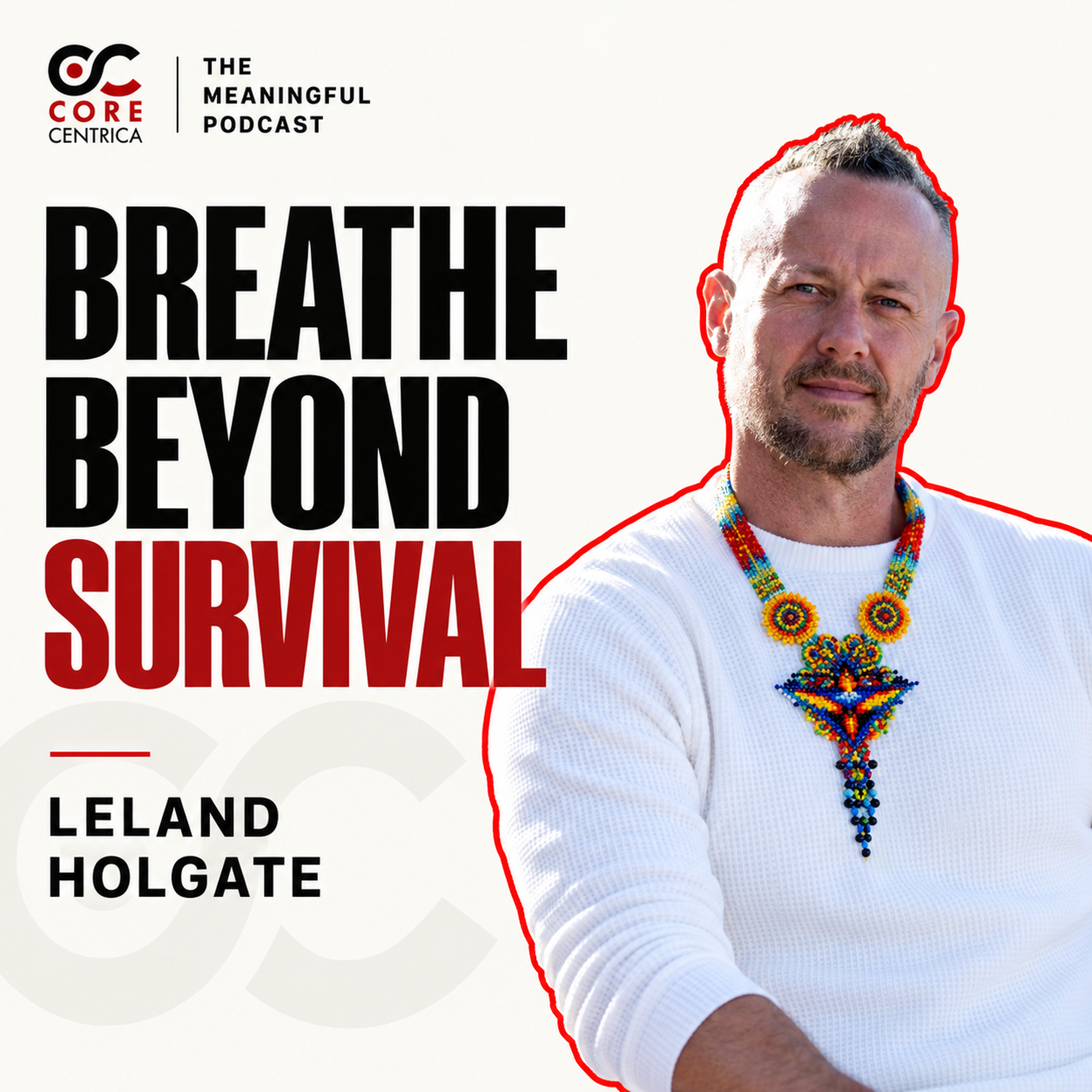
What does it mean to move beyond survival and feel present in your own life again? In episode 126 of The Meaningful Podcast, Sam Pepin speaks with Leland Holgate about identity, awareness, breathwork, and the daily choices that shape how we respond to experience. Leland is the founder of The Willful Warrior, a combat veteran and breathwork facilitator. He shares his personal account of growing up in a military family, service, a life-changing neck injury, and the rehabilitation journey that drew him toward yoga, breathwork and studying the body. Sam and Leland explore hypervigilance, the habits that can outlast a difficult situation, and the experience of carrying trauma as part of an identity. They discuss familiar patterns, core beliefs and the difference between pursuing a future version of yourself and noticing what you are feeling in the present. Leland explains the perspective behind his Welcome Home Method and why he emphasizes consistency, daily structure and returning to a practice after a setback. His accounts of recovery and clients' experiences are presented as his own experiences and views. The conversation also considers Carl Jung, the relationship between science and spirituality, and the work of integrating a powerful experience into everyday life. Looking ahead, they discuss wearables and other tools for awareness, while asking how technology can support personal responsibility. They close with Leland's reflections on identity, responding to what happens to us and the legacy he hopes to leave. Chapters 00:00 Trailer and guest introduction 03:21 Leland's personal journey 10:56 Hypervigilance and identity 23:43 Familiar patterns and returning after setbacks 34:22 The Welcome Home Method 51:09 Technology and self-leadership https://thewillfulwarrior.com/
speaker-0: Mr. Leland Oldgates. Welcome on an info podcast. How are you doing? speaker-1: Great. Thank you so much for having me. How you doing? speaker-0: I'm doing good. Thank you so much for joining us. it's the first time that we get acquainted, but I think your story is one that our audience will really like to really like to digest, I suppose. But to kick us off, please tell us more about the Wheel for Warrior. speaker-1: Yeah, absolutely. So the Willful Warrior is where I combine neuroscience techniques like rewiring the nervous system and our core method or foundational principles using breath work. So as a neuroscientist, I show people how they can literally shift and change absolutely every experience that they're having, both of course, inward, body wise, and mentally just overall life experience can be shifted. Just by focusing on something as simple as your breath. speaker-0: yeah. It it is incredible, right? The the increment when you when you understand that it's it's sometimes very very very often it's not doing more. It's just basically focusing on what really matters that is that is the most important. Take us back, Leland, to the very beginning of all of this. So just mentioned being a neuroscientific and somebody that likes to to do breath work and to help others. How did you combine to have those passions? Was that something you were you enjoyed in your youth? is that something very perhaps that only Catch up with you later. Tell us more about the the original of all that. speaker-1: Yeah, it was my v entry vector was very interesting because I was a army brat. So my dad was was military like myself. so grew up with a very like Dr. Jekyll, Mr. Hyde type you know, that type, like very loving family type guy, and then all of a sudden at home, psychopath. So that was an interesting childhood, which already had me in this space of holding space for other people. I just I f I felt for him. More than I feared him, I felt bad for him. So I I grew up that way, which kind of leaned me into, you know, what what led me down this path. And then funny enough, the military, after coming back from Kosovo, I was part of of the whole Serbian operation there. we were Blowing off steam and and doing our thing, and I broke my neck. And we can dig into that, of course, but I broke my neck, became a quadriplegic, and had to learn how to walk again. So through that process, I was introduced to yoga, breath work, you know, all of these different modalities that eventually. Became I was the kid that always wanted to take dad's drill apart, figure out how it works. So I was like, okay, I know why I did it. My why is was strong. I know why I did it, but how did I do that? So that's what led me. That whole process of learning how to walk again and rewiring the whole nervous system led me to go, How's this actually working? I have to like know the the ins and outs of this, like What was I doing chemically in my body? What was happening energetically? And that, yeah, for the past decade and a half now has led me down the path of neuroscience and epigenetics and studying how you can actually shift and heal the entire body. speaker-0: Wonderful. Yeah. A a quote that I that I pulled from you was my journey didn't start in Wellness Studios, it started in Warzone. And that's that's actually pr I think that's a great way to frame it, right? Yeah. when you think about obviously before you became the the Willful Warrior and all the story that you were sort of unfolding, what do you think these this war zone sort of first teach you about survival and strength and and pain, perhaps, the discipline, all that? speaker-1: Yeah, I think you highlighted one of the things that battle really teaches pretty much any of us. You can do as much as you want, but doing more in that situation doesn't get you anywhere. You just have to be what you have been trained to do. Get low, stay alive, keep resisting, fight, fight, fight. We haven't forgotten you. We're coming for you. We're coming for you. So all the things that they like really program into you. was the first aspect that helped push me through all of those hard points because we we like to think in this complex way that there's so many things I gotta do to get out of this situation. Nope. It's a lot simpler than you think. Just be. Just be right here, right now, figure out what's going on here. Then we know what to do to respond to that. speaker-0: Interesting, very interesting. I I'm a big Nietzsche fan, he who has a why can can bear almost anyhow. when you when you suffer that injury, Leland, to to sort of dive deeper into that, what do you think was your why? What do you think perhaps was this sort of this this fuel of wow I I became categoric, now I need to relearn to to walk again? What what was the what was the fuel, the reason perhaps what that made all this I suppose symptom for lack of terms? speaker-1: Yeah, it was the you know that I've had it that everybody gets to, I've just I've had it, I can't do it anymore. And for me it was the hopelessness. The hopelessness that I had felt on the way out of the combat zone, and then on R and R I get hurt and now I'm trapped inside of my body. A whole new combat zone has started where I'm seeing all the things that that I went through. But I can't escape. I can't get away. So I just had to continually refine from that hopeless standpoint. And it was just one of those eventual moments where I decided, no, this is not going to be the end of my story. And in that moment was when I physiologically felt like something come down on the body where the doctors told me this was impossible, can't heal nerve tissue, blah, blah, blah, all the things that they're telling me. And now all of a sudden, because I had had it with this give up mentality that I was, woe is me. I'm the victim. This sucks. And I just I had had it with that. And the moment that I had had it with it and verbalized that I had had it is when all of a sudden something set in in my body. And that is when I dug in like a tick, like, see, you had it with giving up on yourself. And the body responded. Maybe there's something in that. And I just dug in like a tick. I recognized everything I needed was right here. Stop looking out here, damn it. speaker-0: Yeah. Obviously your story includes a lot of traumas and and PTSDs, but I'd like to talk also what about what it what war does to to the body. We feature a lot of veterans on this show, some of my favorite people, typically. And because again you've seen so much. It's it's it's hard as people that are not in combat to understand ex what it is and the the difficulties of what it is to to actually be in combat, right? It's a it's such a It's such a the the basis of living, obviously when you're thinking about it, is survival. And so when you're in that state of survival, when you're in that state perhaps of this is not I mean, we're in combat right now. This might be basically this just might be my last day. I'm wondering perhaps what did combat sort of teach you about the nervous system and and the body itself that ordinary self self help language may often miss. speaker-1: my goodness. Yeah. it obviously you're in a very reactive state. They teach you as much as possible to become responsive. Somebody's firing at you, get low, and then return fire. So you they teach you to be res as responsive as possible, but no matter what, and you've talked to many veterans, we inevitably become reactive to. Everything, a bang that happens behind me, a car backfiring, somebody dropped their groceries. you just noticed how programmed you are to be hyper-vigilant and reactive to absolutely everything inside of your environment. So I think a lot of the things to your point that self-help might miss eventually and are a little too simplistic or euphemistic for some of these guys is they miss the fact that they're reacting to everything. So they're already reacting to your your whatever language you're trying to use to help them shift, they first need to feel safe. Obviously you've got to get past that reactive stage. So that's with a lot of of my own brothers and sisters I've recognized dude, I can have the most positive thing I wanna say, but if they're in that reactive state and I don't recognize that, my words are going to be something Possibly offensive, maybe something that they're gonna react to or be defensive about. So they're not gonna pull in or think about anything I have to say. So yeah, that's that's definitely what it taught me first is managing state because we're all in that reactive state afterwards. speaker-0: One thing you said that that really struck me was I carried trauma like armor. Yeah. What do you think you what do you think you meant by that? speaker-1: It's the brain and the body prefer a familiar hell over an uncertain and unfamiliar heaven any day of the week. So we identify eventually with our traumas, right? And that's what I noticed as as an airman I was doing, and so many of my friends that are soldiers and Marines, same thing. That wound, that trauma, that deep dark crack inside of you because of what you experienced in. combat or in life, even if you're not a combat veteran out there and you've been in the combat and the streets of life. You wear that eventually as your identity because it just becomes easier to move forward and make sense of all of the potentially dark or negative things that will continue to happen to you because of the mindset that you're in. So it just makes it easier for you to go, yep, I knew that was going to happen. Yep, I knew that I that guy was going to be an asshole. Yep, I knew I knew they were gonna try to take advantage of me. So I was identifying with that trauma so much that I wore it like an armor. Nothing good could get through because there's there's nothing good. speaker-0: Wow, interesting, yeah. And in the body definitely keep the score, as they say, right? So as you're as a veteran, somebody perhaps that have been through this more about even now with with the breath work and understanding the nervous system and studying it so much. It is are there things in which perhaps always always feel like it's unchanged, like it's a like it's a permanent basically part of you that that that that period of of trauma and combat or you you think you won't pass all of it. speaker-1: There's, there's certain visual aspects. And this is what I always connect with my brothers and sisters when I'm working with them. There are certain visual aspects, parts of that memory that will always be there. You're never gonna just be able to vacuum it out of you like it it never existed. However, we can remove the emotional charge because the moment you bring up a memory, you're already changing 50% of the DNA surrounding that actual memory. So, in that knowledge, with that knowledge, we can actually go in without secondary traumatizing you and visiting those moments, we can go in and remove, which is what I've done and I do for many of my clients, and just remove that emotional charge from it to the point where no longer will it be something that controls you. You'll be able to tell a story about it and how you found growth from it and how it led you. To the next plateau of your life. it wasn't an obstacle. It was a s it was a a stepping stool. Yeah. speaker-0: Yeah, i is isn't that isn't that really the the core difference. Yeah. Because life will happen. But if you're if you're seeing as an obstacle or as a stepping stone, that's I think that's exactly what it is. It's this this realization that that was necessary for you to become the person that that you are now. And therefore in one way or another, no matter how how terrible the trauma is, it might just be necessary. And there's a lot of philosophical perhaps understanding, even on my part, I built I'm a big Carl Jung fan. And he says this multiple times, right? Until you understand I think you make the unconscious conscious, you will you will be led by it and call it fate, as as he says so well. And do you agree with that perhaps? How much of that do you think is is a necessity in the modern world to to to understand this concept as as key pillars of life? speaker-1: my God. Yeah, I completely agree. And I'm a Jungian myself. So I'm I'm more on the Carl Jung side of things. When I was my undergraduate was in psychology. So he as far as everything he teaches, it is absolutely important to be aware of those unconscious programs. So much so that you start to work with them. And I think that's one of my favorite things about Carl Jung is what he's teaching you is to work with yourself. Like work in work in coherence. With your ego. you're not looking for an ego death. That's not the goal here. Work with it. Put it to work with you. become a teammate with it. speaker-0: Interesting. Interesting. Yeah, he goes up being Marcus Aurelius, another one of speaker-1: No wonder. speaker-0: guy that guy that I that I study a lot. Such an interesting guy because because he was an emperor, right? It's another it's interesting and an emperor came to these conclusions. Right. I think that's what makes meditation so so interesting. But when you're thinking so correct me if I'm wrong, but you survive paralysis twice, colon cancer, obvious addiction, PTSD And then I suppose profound loss and everything else surrounding it. that's I mean that's a lot. And you look you look great, man. Thank you. After after all of that, I'd say it's it's really quite something. And I I like this concept of you know what's labeled impossible is is is often just impossible. I think it's something you repeat a lot that I that I really like. but I'm wondering after all of that. I think you're one of the the the good person to ask, what do you think the difference is between being alive and and truly living? I suppose surviving and living as somebody that has seen all these phases of rehabbing and basically coming back to it and rehabbing and so on, walk us through that. speaker-1: Yeah, I think just consistently being in touch, actually in touch with your belief systems. Cause so much so many of us are just walking around unconscious like zombies. I know I was for the longest time, you know, not really attuned to what my beliefs were. Again, just reactive to absolutely everything. So as I continue to move through this, I think one of the most comfortable things that I can help. Anybody, include especially veterans. What I can help people recognize is the moment that you can work with your core beliefs. Sure, you can you can work with all the other financial beliefs and everything else, but your core beliefs, the ones that you truly deep down think about yourself. What are your possibilities or whether you're broken? It's something we hear so often in the society, right? Like stop identifying with your broken. You're not. Broken at all. You're just misaligned, you're mismanaged, you're misdirected. You've been focusing on distraction instead of focusing on attention. So it's just a simple shift of mindset, focus, attention, and energy that can change absolutely everything in your life. So I think that's like one of the biggest messages I try to get out to people is you're not broken. There's always something that you can do. It's never too late. You can shift. Absolutely everything, just starting with your core beliefs. speaker-0: That's very interesting. there's this so you don't believe in the thesis that's a lot of what we inherit perhaps when it comes down to our understanding of the world and who we are is the zero to seven phase, more the third sort of thesis, where we're where there's a permanent state that basically just locked in and whoop it's it's too late now. You you've seen you were traumatized, so you always be, you you dismiss that completely. speaker-1: Yeah, I just I I lean the other direction because that was the typical understanding before everything we have now with modern neuroscience is you can't heal nerve tissue, you're stuck with what you got, what you're born with is what you're born with. Yeah. speaker-0: Interesting. Okay, so I I like that a lot. I agree by the way. I I I call Freud very often fraud, but that's another conversation. The so so when you're thinking about it, everybody that I talk that are in your that that are that I really respect in your fields always tells me that healing begins in the body. So perhaps I think in a society that tells you so much to be out of touch with it, to try to think about to rationalize everything and more of the sort of the Greek military sort of mindsets. Which has some good to it, but living basically your mind is more important than your body is su is something that we hear quite often. Now, you say on your website very often that you cannot think your way out of trauma, which is very which is very interesting. So true healing begins in the body, perhaps. what do you mean by that, perhaps? Make it more tangible for those that might miss the meaning of of such thing. speaker-1: Yeah, yeah. I think right now one of the easiest things to recognize that you're highlighting is we're so conceptual about what we wanna do. we think playing positive affirmations when I wake up in the morning or playing a positive affirmation track through the day is gonna fix my mindset and all these other things. When in fact it's all in the body. Just being here right now instead of there where I wanna be. I wanna feel like this, I wanna have this, I wanna be there, I wanna I don't want to be where I am is the overall message you're sending to the body on a constant moment to moment basis. So what I truly help people center in on and do is to focus in on each moment. You realize 120 seconds can take your heart into a level of coherence that will upregulate over 1,500 different chemicals and compounds inside of your body that are healing, neuroprotective. communicative between the brain and the heart, the vagus nerve comes on board. So two minutes of living in your body. And that means being okay with whatever it is. wow, I'm pissed right now. And that's okay. Why am I pissed? okay, because I'm human and somebody said something and my adrenaline spiked up. So that's okay. My body's responding normally. Or I, you know, had some sort of horrible accident happen trauma or whatever else, it's okay to feel how you're feeling right now. The key is just to be there to allow that processing to happen because that's what trauma is, is everything pauses in that moment of trauma. All the compounds traveling through your fascia and your nerves and everything else gets locked right there when that traumatic event happens. So if you can over and over and over again through the day, 60 to 120 seconds, sit still Just notice your breath, notice your body, do absolutely nothing. No judgment, no change. Just sit there for two minutes and watch what happens. speaker-0: Wonderful. why do you think that so many people stay stuck even after therapy and and books and meditations and retreats and this magic pills and so on, years of self development? Tell me more about you know the the the not only the the concept of being stuck, but why that that stuckness seem everlasting in some people? speaker-1: Yeah, this is where we dive in a little deeper to the body, and the brain prefer a familiar hell over an unfamiliar, uncertain heaven any day. You have neural grooves that are programmed into your body, right? So electrical signals turn into kim chemical signals, turn into electrical signals, turn into chemical signals. That's your brain pathways. And the more you operate those pathways, the more they become a groove. So you've Probably been running a groove or multiple grooves, 95% of the program that you everything you do through the day is just automatic. Think about it. You need to drink, you take a drink. You need to go to the bathroom, you go to the bathroom. You don't think grab cup, tip, sip, the you just do it. So everything's based on these automatic programs. And when you have those grooves, even if it means you're gonna be stressed out, it's simple for your body to predict. And knows how to do it. It's super efficient. Doesn't take much energy. Sweet. 2 p.m. He gets upset. Give him some adrenaline and some cortisol at 2 p.m. every day. No more thinking about it. Just do it. So your body gets programmed into these ways of being. And that's all we have to recognize is the way that you're feeling and the way that you're failing is okay. It's built into you biologically. That's part of your ancient DNA that scares you from the tiger that's potentially hiding around the boulder. don't do anything unknown. I know how to survive if you walk this way. So it's okay to recognize these things. And that being okay with recognizing that human aspect of your brain and body are just programmed this way, will help you to realize 20 to 23 day cycles. Three of them, 20 to 23 day cycles. Allow yourself to fail. Allow yourself to dent the fender. Fuck it up. It's okay. Just keep on persistence and consistency. That's all it's about in neuroscience, really. Just do it over and over and over again. You'll make a new groove. speaker-0: Interesting. The the the cycle that twenty two twenty three days, what is that exactly? What is that call speaker-1: Paul? Yeah, so that is long term potentiation. So when we look at long term potentiation, Hebs Law, neurons that fire together, wire together, it takes twenty to twenty three days to create a pretty substantial neural pathway. And then after that, you need three full cycles to strengthen myelinate and everything else to make it a super efficient subconscious way of being. So that's why I tell people all the time, if you fall off the horse, fuck it. You fell off the horse. Just start another twenty to twenty-three days. Stop making this such a I should just I I messed up. I'm done. speaker-0: Yeah, exactly, exactly. And that's the difference between the the free and the cageman. Right. Like I said, it's it's the way you react to things in which happens to you. What happens to you will happen to you. and that's that's something that is very important to always keep in mind is that you're always you're already full. internally you're already full. And I think that's the something that I'm a younger man, obviously. And I I we get to this sort of play specifically when you're past the stage of survival for money, survival obviously for for sort of the of the You take a look at the massful pyramids, the perhaps the the necessity at the bottom of it and go moving more towards enlightenment, typically perhaps society, and we see that very well with with media amongst other things, pushes you this mindset that actually no you're not whole. You need a Coca-Cola perhaps to feel happy. You need a Porsche perhaps to feel like you're really free. But the the truth is the opposite. The truth is is you were made free. it's exceptionally important. Now you talk a lot about breath as a as a doorway. back home, I suppose. You have this this sixty second to freedom, right? offer, which is which is quite interesting. Now what is actually happening physically and neurologically when someone use breadth perhaps to move out of survival mode? Can you explain that in words? speaker-1: Absolutely. Yeah. So when we look at your brain, we're just gonna focus right now on the reptilian side. The brain stem. my camera likes to do this thing. Back up off me, bro. So we're just gonna look at the brain stem. The dude, stop that. The reptilian side of your brain. And while I get my camera to pay attention and focus, I'll continue. So the inside your brain stem, there's something called the pre-Botsinger complex. And this is a complex system of nerves at the very bottom side of your brainstem called the medulla oblongata that controls your rhythmic breath. So if you notice, your breath is the one system that is A, automatic and B able to be controlled. When you think about it, like the first time I heard that, I was challenged. I was like, hold on, I'm thinking, no, there's gotta holy crap, there's no other system in my body that is both automatically run and can be yoked. You can't control your heart rate, right? I can't just go slow down, slow down, slow down. I can't do that with my digestion, but my breath, if I control my breath, it's connected to the very survival mechanistic response of your body. So it controls the heart rate, blood pressure, breathing, respiration rate, everything else, which then of course controls the entire CEO of your life, your nervous system. So the breath itself is the one control mechanism that determines. Think about it. Somebody pissed you off, or let's go back to a survival way of being that our ancestors dealt with. There's a dog that is drooling at the mouth and about to chase you. Immediately, breath becomes short, choppy, rapid, in and out of the mouth, blood gets pumped to your hands and your feet, and off you go. You're running from the dog. So when we can Purposefully tune into that and strategically stimulate these alert centers. If you look through your nose, we breathe in and out of the nose because these nasal endings right at the top of your nasal epithelium connect directly to your limbic system. It's the olfactory bulb and olfactory tract connects directly to your amygdala. And then also through the interrhinal cortex, you're connecting to your hippocampus. Those two things typically can't be on board at the same time. That's your alert center and your short-term memory and emotional regulation. You can't typically have both at the same time. You get one or the other. But when we strategically stimulate the body by yoking very specific breath types, like I teach in that 60 seconds to freedom, you're strategically stimulating your amygdala. You're also Activating your short-term memory and emotional regulation centers inside of your hippocampus at the same time, thereby completely shifting absolutely everything inside of the body from the energetic to the neuroendocrine centers. And within that 60 seconds, as I mentioned, this is a very low estimate, by the way, over 1,500 chemicals and compounds being produced, including dimethyltryptamine, one of the most Powerful neuroprotective chemicals, also psychedelic dimorphine and the list could go on. speaker-0: Well I love the reason why I love to talk about bread so much is because everybody and I tell you just because we're human beings, when we talk about breeding, we automatically, consciously or unconsciously, try to fix our own breath as we're talking about it. And every single time I can I can catch myself, not that I don't think I don't breed correctly on a day on a day to day, but I do feel consciously speaking, when I talk about breeding, that I'm trying to to reach lower. Try to be basically more relaxed and it does work exceptionally fast. And so there's definitely some merit to it. I want to talk about a a citation by Tainan Han, which I'm certainly butchering, but very interesting content from Asian perhaps gentleman. And he talks about the fact that feelings obviously come and go like clouds in a windy sky. Conscious breeding is my anchor, is is a is a very famous passage, from his more famous book, and When you're thinking about that that anchorage, what I like with the comments you just made is like you said, it is both an automatic system, but the not automatic system perhaps that you can yourself perhaps manually I suppose optimize. Now, when you're talking about it this way, the what I'm always surprised by, Leland, is that we all understand how stopping even 30 seconds, but one to two minutes is is probably better and To make ourselves to to recapit ourselves, to recalibrate ourselves, is usually beneficial. That being said, how many people do you know that does that on a daily basis? Probably quite little. Outside of just the stress of life, what do you think something so incredibly something completely free, something so quick, is not something that we that we go for more often? speaker-1: Yeah, I this see this is an epic question because I think it's two things. A, of course, we have the the body and brain prefer the familiar hell. don't you do that breath work? You'll take my my anger away and then I'll forget who I was, damn it. so you have the the the program preferring the familiar hell, of course. But the the other side of it is too, is I think because it's so simple. It just It goes right under the radar for most people. And it might even trigger some people, right? I've seen it trigger people. It used to trigger me when when I was younger, when the dude told me, I'm gonna teach you breath work. God, here we go. What are these? These speaker-0: Another one of these guys. speaker-1: guys, fuck. Why do I keep finding these guys? And it's it's because it's so simple and because it's automatic. Like the easiest retort I hear from people is I breathe every day, dude. Whatever. Like That's why I think it's so easy for people to miss and just it flies right under the radar because it's something that happens every day. So we and of course with the programming like you said, you need a Coca-Cola, you need a Botox shot or NAD or whatever else they're programming you to think you need because you're incomplete. You're not whole without our marketing. I think that feeds into just how simple breath is. It's easy to miss it. speaker-0: Yeah, exactly. So too too simple is too complicated sometimes. It's it's just it just doesn't move the needle. let's talk about the welcome home method. It's in like a sort of your flagship, sort of rewiring survival into sovereignty. what's quite interesting, which I obviously people can look it up directly on your your website, it will be in the description of this podcast. Now you talk about this as sort of the core pro process right behind helping people move again from survival to sovereignty. And that's super interesting. again, I I I I heard it phrased in different ways, but yours I think is quite catchy. So I I I I really like it. I think it's quite it's quite cool. But what does it mean to come home to yourself after after years or even decades perhaps of of not truly be home? Tell us more about some of the transformation that you see and how joyful it is for you to be able to coordinate some of those. speaker-1: Yeah, yeah. I I I recognized my on my own journey, of course, that I had become a passenger on my own journey, like so many of us have. So the really fun part about the welcome home method is it takes many of the breath methods that a lot have experienced out there. I've trained under Wim Hoff, I've trained with Stan Groff. so I've trained in a lot of these different, you know, ways that are out there, even yoga on the yoga side of things. I'm a five hundred hour yoga teacher. But I just noticed that there were certain pieces of that that were just a little too dogmatic for me and they weren't practical enough. They weren't expletory and they weren't they didn't explain enough on why this is gonna do what it's gonna do, which to me gives more surrender, right? So with the welcome home method, what I've done is there's a lot of these different breath modalities, essentially 20 plus different breath modalities that are included. But we focus more than anything. We focus on a lot of the core, which is again just being okay with now coherence breathing through Heart Math Institute, which I'm I'm one of their trainers. And then on top of that, something as simple as increasing your carbon dioxide tolerance is a hidden secret, of course, that is it's starting to gain more traction and and and gain more notice. But it is the linchpin. And reprogramming and rewiring your nervous system, reprogramming and rewiring your experience of life. And even just seven to ten days of work, we're noticing these amazing testimonials, whether it's a combat veteran coming back home to themselves, which to your point, that basically means silencing out all the noise, right? Number one neuroscience principle ever is noise versus signal. There's all this noise that's out there. And that must be managed so that the signal can come on. And that is coming home to yourself. Just allowing the mess to be the mess. Don't worry about putting your hand in the blender. It's going to keep on spinning, even if you just take a moment for yourself. So don't worry. The world's still going to be burning when you come back to it later. Just manage self. Allow yourself to come home. Turn on the original signal. And we're seeing not just again combat veterans come home to themselves. We've got MS patients regaining since sensation, turning off their symptoms like a switch. Walked up the one of them walked up the stairs for the first time in 14 years a couple of weeks ago. Parkinson's patients turning off the tremors and and again coming back home to themselves. So all of these different instances that we're noticing. we've got thousands of people around the world now practicing and And it's just amazing. Some of their stories blow my story away, which is my favorite aspect of it, I think. Because cool, yeah, I've got a great story, but now I've got other ones where I'm like, you overcame what? Wow. Okay. speaker-0: That's that's one thing that is so amazing with with social media and perhaps this concept of free press is the bad also cycle much faster. No doubt about that, and we can talk about that for days. But one thing I think a lot about is well the good also does so. Like you said, a lot of those Brittany methods are catching basically more popularity because guess what? People are getting introduced to them. Yeah. how much I think with I I I I really spend a lot of time with with shaman and people that are incredibly basically knowledgeable. in inside of those those I suppose disciplines. And it tells me all the time, and I'd love to hear your thoughts on this, that we are we're getting into another enlightenment age where people perhaps are slowly waking up, perhaps are slowly getting aligning themselves with the world, the universe itself themselves, obviously first and foremost. How much of that do you think is moving the needle from a societal perspective? speaker-1: I think it's huge. And I I am totally in agreement and on the same side with with a lot of them. that's something on my esoteric side I've I've been tuning into a lot. Like I've called it well, a a lot of us out there have called it the Great Awakening. I really do think it's speaker-0: Yeah, exactly. speaker-1: this really it you notice it everywhere and it's it's exponentially spinning up. Like is, you know, the number of people that I run into and and meet that are of the same mindset and seeking and and opening up to different levels of consciousness. And so yeah, it's it's this great awakening. And the cool part to me is is neuroscience, it just continues to prove the divine or esoteric side and then you know vice versa. So it's like there's no right or wrong. Science meets soul with me. And you've seen that. But I'm excited because to your point, we're reaching what's called a threshold potential. And inside of neuroscience, we see that. That's why to me it's like neuroscience is the cheat code for the universe. And all these ancient societies already knew these things. We're just catching up now with neuroscience. But in neuroscience, threshold potential is you only have to stimulate the nerve, that nerve cell, the membrane of the nerve cell, so much you don't have to get it all the way up. Just stimulate it so much that it reaches what's called a threshold potential, and bing. An action potential happens. And I think that's what we're seeing in society as well. We don't need everyone to wake up just reaching that threshold potential of there's so many of us out there seeking an opening and awakening that we're literally at this explosive and expansive point. And it feels really cool. I I'm really excited. I don't I don't know about you. I'm excited about the next speaker-0: I am, I am. What do you think that threshold would be, you know, percentage wise or s do do you have a sort of a personal ballpark that you say, you know what, the rig rig awakening, if X amount perhaps of us are are reaching this this this new consciousness level, we're moving we're moving in the right directions or you're not making it that tangible? speaker-1: Yeah, I I I've thought about it. I never really put a number on it. But if anything, I I would think, I don't know, maybe seven to ten percent of society is our threshold if you think of it in that okay. If I go based on a scale of a nerve cell, right? that's the scale of a threshold. you don't have to get all the way, just get seven to ten percent and action potential happens. So yeah, if I had to put a number to it, ten percent of us, and I think we're pretty damn close to that. By way of feeling into you know what? speaker-0: I agree. I agree. I I totally agree with the Great Awakening. And to me I believe those in which d doesn't want for it to happen also knows it very well and therefore trying to distract us, that that's also a another huge conversation and maybe we'll have a part two, we never know. I love it. The Le one thing you mentioned which I think is phenomenal is also because and this is always my favorite type of conversations, are those in which don't try to dismiss the you know the the the science for the soul or the soul for the science. But this comprehension that the divine creator, God, whatever you want, created basically the world because he's obviously a perfect being, in a way in which is cohesive, in a way that is all integration. so when you're thinking about science soul somatics, also something that you talk about at great length, which I which I love a lot, that blend of obviously live experience with that scientific study is a is very, very, very powerful. And I'm quite interested in How do you personally bridge the world of neuroscience with the world of spirits, of of embodiments and and and lived healing as souls? How would you describe in your words that that alignment perhaps? speaker-1: Sure. Yeah. So I think the way that I approach it is is I give the the most basic education and empowerment in the beginning. That way people can understand the simplest the just the simplest way of this is what's happening inside of your brain. This is what's happening inside of your body. And then while they're moving through that experience. Also giving them some of the the Eastern philosophies as well. So again, it's like this bridging between science meets soul, because now you have the foundational 3D, so to speak, aspect, right? That they've programmed you into being the authority of your life. If they wear a white coat, listen to them type of thing. You know what I mean? So that that aspect is super important. And then we do things called medicine wheels, which are all It's yeah, cool. We bring the science in. I bring the breath work in, but a hundred percent of that is based on ancient societies and cultures, the Hindu, the American Indians, the Norse, like all the studies that I've done based on all of the tribal practices where we gathered every week. That was our Sabbath, every week, like you know, and of course this has been repackaged and repurposed, another conversation by religion, but that was our Sabbath, was every week we Gathered together as a tribe and danced and sang and breathed and celebrated. And that was literally how we recharged our batteries at the end of the week together. And then we moved into another week of doing whatever the hell we did. And so that mixed with that just basic education, I think, gives them at least a toe in the water of, hey, look, you can be the nerd. And still kind of play in the spiritual waters or the esoteric waters, or you can be the woo woo guy and dip your toe over here with us in the nerdy side of things too. They belong together. They really do. speaker-0: they certainly do. There's there's I think we're past the stage of of doubting that. Yeah. if you're if you're unbiased really. Carl Sagan, one of my favorite persons of all time, says science is not incompatible, perhaps it's not only compatible with spirituality, it is a profound source of spirituality. And very much in alignment perhaps with what we were describing. Now, let's talk about the warrior within, sort of the discipline, the structure. The self-leadership that is so important, right? So you have program, I think it's it's a 12 week transformation, correct? And that goes with obviously the body, the the bread, the being, I suppose, and really regulating your emotions, building self leadership basically, rituals and breaking out of burnouts and all of those phenomenal things that we see from your program, I suppose. For you, and this is such an important topic, what is the difference between temporary ealing? Breakthroughs, the field goal now perhaps get get rich quick scheme perhaps of the healing world and the kind of daily structure perhaps that actually changed a person's life. speaker-1: Yeah. Yeah. I love that because I also I do plant medicine facilitation as well. and that's that's one of the bridges between everything that I do. So it's kind of cool because in that way, you can help people recognize that these band-aid approaches, like sure, you can go sit with ayahuasca, but if that's like your first stop, this this is just an experience for you. Just know that you haven't done any integration work, you haven't like peeled open the hood and taking a look underneath the program. So it's okay. Again, I don't judge anybody's method of getting here. The sometimes those experience will lead you to talking to folks like us and put you in the right place because you went to the wrong place. So you can focus on those band aid situations or you can recognize that it literally can take as little as nine to twelve weeks to have a complete solution. So we can focus on, like you said, the distractions of what they tell you these here. Here, take this pill and you'll be it'll be great by next Friday. Like you can do that, but it's just gonna extend the time you're gonna inevitably have to put into yourself. So why not get started on the nine to twelve week process now? speaker-0: Yeah. I I'm a big Aristotle fan, and and obviously we are, but we repeatedly do, perhaps, and therefore excellented it's not an act, but a habit. when you're thinking about the concept of creating those healthy habits in a world that moves very fast and and all the other excuses perhaps that you might hear from time to time, which I'm sure you hear plenty. If you have to boil it down to the absolute simplest way of creating habits, how would you how would you describe it? speaker-1: Yeah, awareness. It's one of the it's it's for one, it's the linchpin and everything. For two, it's something we are not programmed to do. Especially like you said, based on this marketing and everything, we are so programmed to distraction. How many times does this thing control my level of focus and awareness because of or whatever else is going on? We are programmed for distraction. So The core concept of everything that we move from is just becoming aware. If you can become aware, and you know, this is again why I love Carl Jung so much, is yes, we can focus on Maslov's hierarchy of needs, but self-actualization becomes individuation when ac when you're actually allowing yourself to just be in the moment. And allow yourself to move from from that place. You're no longer moving from this distracted point, you're moving from an awareness point. And that awareness gives you choice points. I feel like shit right now, but I don't have to. I hate what's happening in my mind right now, but I don't have to. So it's just allowing yourself to have a level of awareness, and that's literally what I work people through. in twelve weeks and these simple expressions of how to program that awareness in at just certain points through the day that literally sixty to a hundred and twenty seconds. If you've got a minute to two minutes, you can make absolute change in such a short amount of time. speaker-0: Wonderful. Yeah, you describe the the the people inside the programs as as done outsourcing their power, right? Or the fact that the power is not missing, it's it's basically waiting to be activated, which is another interesting way to to pull it. there's there's it's such it's so interesting because when we think about the difference between stimulus and and obviously response, there's there's this space. And that space is our power to choose our response, right? To choose the fact that Which is why again I I I still come back to our tourelius just because he's he's to me it was the first one that really got me into all this. But the contemplation, right? Like you said, what happened to you happened to you. Yeah. Once once once that's done, the only the only thing that remains is how you react to it. And that's that's the power you have of your of within yourself. And I think that's so that's so incredible. Now, before talking about your own legacy and how you're seeing sort of your work impact the world, let's talk a little bit about the future. Sure. Where you're see we're seeing more and more technology, perhaps. I just pre-ordered the the Google Fitbit to take a look at what it is and and how good it is, perhaps. And we have the aura ring, we have at this point probably a thousand type of watches. so technology is taking a lot of loads, perhaps commercially, but also I suppose there's some good in that. I'd love to hear your thoughts on tracking your sleep, tracking your calories, how important is that is all of that. is it possible through those devices to really optimize your life? tell me more about how you see the future looking for your industry as we're enabling ourselves to be more and more technological prone. speaker-1: Yeah, I th I love this actually because I'm one of those that leans in as we've been discussing. It's not a this or it's a both and as far as I'm concerned moving forward. It's just the way that we work with the technology and keep that level of awareness to recognize what the tool is. Use the tool for its full potential, like what it can fully and truly help you recognize, and then also recognize. That you're not going to allow that to become an automatic, great, this is it's gonna take care of it for me. here's my AI health doctor right here. I never have to think about it. there's still levels of awareness. And but it's gonna be a lot easier to know, my HRV is off. I should probably work on my CO2 tolerance. There's that level of awareness. So I think I'm really excited about where we're going in the future because with that level of awareness that you as the warrior program in. those tools might tell you, oop, sleep is messed up. I need to focus on that two hour window before I go to bed so I can increase my sleep hygiene. So yeah, I'm I am one of those that is excited about where we're going with technology. It's just all about us. Where are we going to lead ourselves with that technology? speaker-0: Well, phenomenal. Very interesting. I like I like that quite a bit. You have this this interesting positioning which is, you know, we're here to change the way the world heals. And that's very significant, brother. So first and foremost, congratulations on all of that. Very, very important. But I'd love to talk about, you know, some of the from the from mission to this concept of of of legacy perhaps. When your when your work is done, which is a question I ask everybody, when your work is done, what do you hope I suppose people finally understand about traumas and everything else that we talk about this podcast and and and most importantly the power that resides inside all of them. what do you think basically all that work means speaker-1: The end of it all. Yeah. So for me, the legacy I literally want to leave is if everyone in the world could move forward knowing just these two things, I would be super happy in my grave. Or, you know, I'm gonna do the Viking burial thing when I go. But either way, I'm I'm gonna be super happy if I if I can have this recognition left behind that is the legacy that A, you're not broken. What has happened to you happened to you for a reason. We don't always understand those things in the moment. We don't understand the way out of the storm when we're in the storm. There's no way to get that 20 foot view. But I promise you, it is the gym for where you're headed, right? It is it's literally just the training dojo for where you're going. And then the other one, besides you're not broken, is you are the wind. Do not think. at any point in time that you are the flag that is simply blown about by all this external stimulus, the things that have happened to you, you are not what has happened to you. And the worst thing that happened to you could have been the best thing that happened for you. So if you can just recognize those things, everything becomes ex experiential points, right? You know, data points as we're moving forward. Like, that sucked. I'm not going to do that again. speaker-0: Data point in your journey of life. Exactly, exactly. The privilege of a lifetime is to become who you truly are. Mr. Leland Olgates, it was absolute an absolute pleasure to to perhaps discuss with you and and go very deep into this this topic that is so important. Thank you so much for your authenticity and just you know, just be being a friend perhaps with with all the ideas the ideas you have. You're definitely not a a gatekeeper and I appreciate that so much. And I would love if you can leave our audience with some last words of wisdom, please. speaker-1: Yes. Yeah. And it's been an absolute pleasure. But last words of wisdom are you are the flag and the wind. Just continue to recognize that. And also remember, it is okay to feel however you're feeling. That does not mean you're broken. That means your body and your mind are responding exactly as they were programmed to do. It actually means you're working beautifully. So just tune into that more and recognize again, you are the wind.