
The Long Island Sound - Music and Entertainment Discovery Begins! · Stephen Yusko, Host and Curosity Seeker
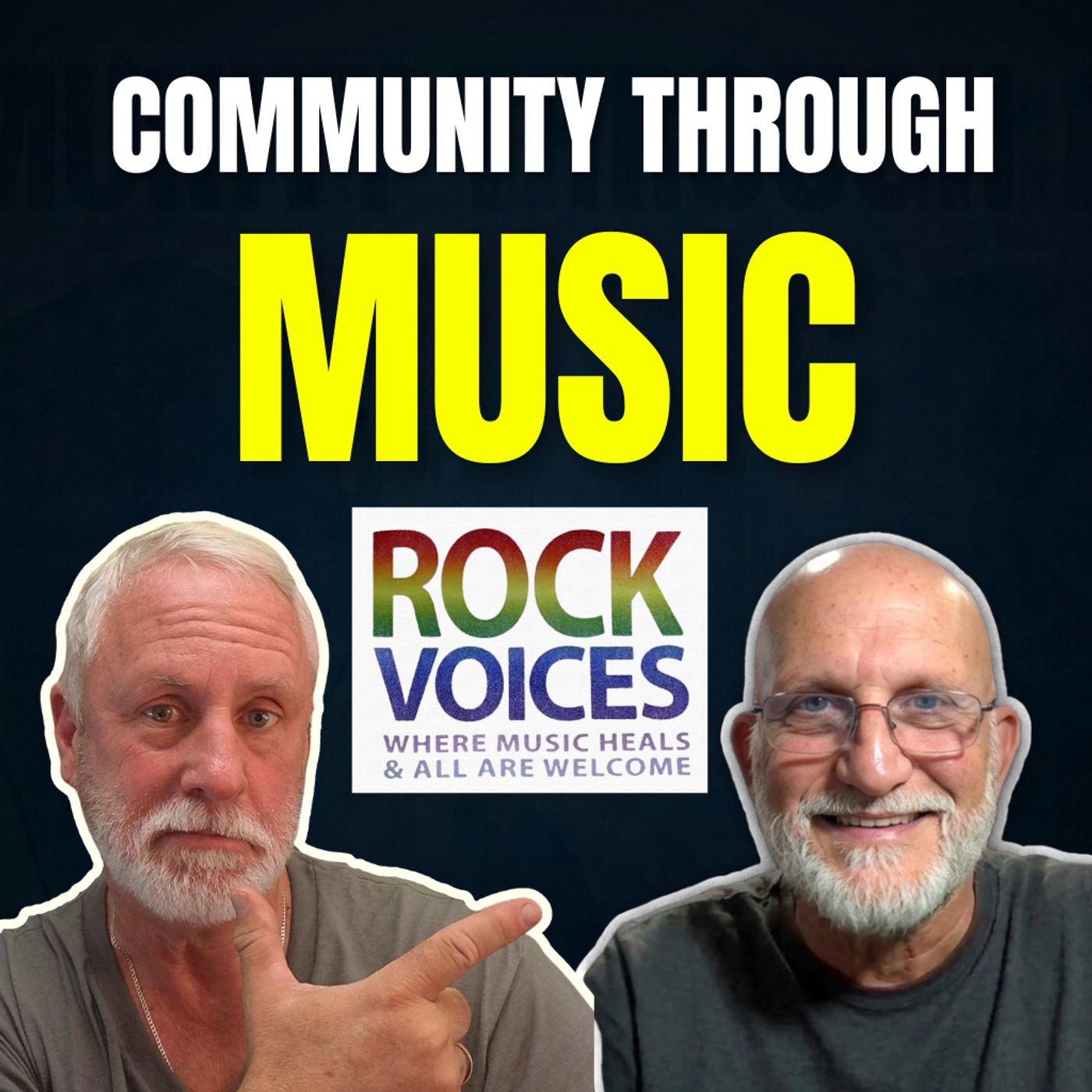
Why You Don't Need To Be A Pro To Join This Choir Meet Rock Voices, a choir of 200 Long Islanders performing rock hits without auditions or sheet music. Https://RockVoices.com We sit down to discuss the story behind Rock Voices, a unique group that brings together everyday people to perform classic rock and roll hits. Unlike a traditional choir, this ensemble focuses on inclusivity, requiring no auditions or formal music reading skills to join the stage. Timestamps: 00:00 — What Rock Voices is 00:39 — Meet Nick Ambrosino 02:15 — How Nick joined Rock Voices 03:37 — Making choir welcoming and relaxed 04:38 — Building a supportive community 06:31 — The magic of Tuesday-night rehearsals 07:57 — How Rock Voices works 09:22 — The three-week trial period 10:18 — Finding your vocal section 11:40 — Why you do not need to read music 13:08 — From beginner to concert-ready 14:31 — Familiar songs and community 16:37 — Auditioning for solos 17:34 — Why nerves can lead to growth 19:47 — Concert moments that move people 21:40 — Flexible commitment and rehearsals 23:08 — Supporting new singers 25:25 — Performing with a professional band 27:20 — Music as healing 29:31 — Advice for new members 30:29 — Challenging the “tone deaf” label 32:17 — Why singing is learnable 34:11 — How to join Rock Voices Long Island West 35:36 — Preparing for the next season 37:01 — Closing thoughts on music and joy Https://Rockvoices.com In this episode, Steve and Nick discuss how Rock Voices lowers the barrier to entry for adult singers, how newcomers are placed into parts, and why the group’s supportive atmosphere matters as much as the music. Nick also explains the teaching approach behind the choir, the seasonal format, and the impact the program has on confidence, friendship, and local charities. Why Rock Voices feels accessible to beginners and returning singers because it has no auditions and no requirement to read music How the choir builds confidence through a relaxed, supportive rehearsal culture where nervousness is treated as part of growth How singers are placed in the right section with a quick vocal check and a recommendation based on range and comfort Why learning happens by ear using part recordings, repetition, and weekly rehearsal until the group blends as a choir The power of community in a group that attracts adults looking for friendship, belonging, and a shared creative outlet🤔 Http://www.youtube.com/@thelongislandsoundpodcast?sub_confirmation=1 Welcome to The Long Island Sound, your go-to place where music, comedy, drama and entertainment discovery truly begins! Are you curious about the journeys, inspirations, and hidden gems within the world of artists, singer-songwriters, entertainers and musicians? We delve deep to bring you the backstories you won't hear anywhere else. Hit play and join the adventure! 👇 We do deep dives into the venues and events that bring you the best in entertainment, not just on Long Island and in New York City, but what's happening...
speaker-0: If you hear the word choir and picture stiff robes and 16th century hymns, think again, picture 200 everyday Long Islanders, teachers, accountants, retirees stepping onto a stage to belt out Queen, Stevie Wonder, Pat Benatar, packed by a full professional four-piece rock band. That's rock voices. Zero auditions, no sheet music required, just high-energy rock and roll harmony. Hey, welcome back to the Long Island Sound Podcast. I'm your host, Steve Yusko. And tonight we're doing a deeper dive into the power of community music with a veteran Long Island educator, pianist, and author who's been empowering musicians across Nassau and Suffolk counties since 1984. He's written acclaimed books on educational philosophy, like Coffee with Ray and Lessons with Matt, pioneered the Empower Music Teacher Coaching Model. And today, Directs Rock Voice's Long Island West chapter. Please welcome to the show, Nick Ambrosino. Nick, welcome to the podcast. speaker-1: Hey Steve, thanks for having me. That was an awesome introduction. I didn't realize they did all that. Nice. speaker-0: So so ⁓ for true transparency, I did a number of years ago interview Tony Lecter, the founder of ⁓ Rock Voices, which is just an interesting concept that we're gonna get into. And let me preference this, Nick. I after looking at what you guys do, I think you're the planet fitness of music. In in that let me if that makes sense. No speaker-1: I I understand it exactly why you're going there. Go ahead. speaker-0: Let me put it in you'll talk about your program, but basically it's adult singers who can go in a non audition trial period and sing with ⁓ you know, a four piece rock band. So when you think in choir and church choir and all that stuff, you know, which has its ⁓ pluses and minuses, this is a great way to to get out of the shower and sing in front of people. Yeah. You speaker-1: Yeah. speaker-0: Tell tell me about how you got involved. I mean, you got an amazing background, ⁓ you know, teaching music for years and and playing jazz, piano and how'd you get into this? speaker-1: So you gotta the Facebook's has its ups and downs and this happened to be one of the ups, you know. Right. ⁓ this is one of the pros of Facebook. I was just across my feed came in the summer of twenty four. Okay. They were looking for a a substitute director for their director ⁓ for the summer 'cause she was taking off and ⁓ I answered the I answered the ad and ⁓ I had auditioned in Brooklyn because their Brooklyn choir was was there. They ha they had their auditions fitted out my schedule that way. And ⁓ I was offered to take over the position in sub in in for the May through I guess May through August. So it was the summer of Queen. So how can you miss that? You know, all the music of Queen, it was just a great program to do. And I just loved the music. I loved the people I was working with. ⁓ I love the chance I got to use my forty years of educational experience and choir experience in a in a much more relaxed and ⁓ fun manner where I w you know, I worked in a public school system at the beginning of my career and it has its limitations and this didn't have limitations to me. I got to do what I wanted to do best, you know. So it's been really, really fun. speaker-0: I was in in my church choir here in in Babylon, you know, I because I sang too loud in mass and ⁓ you know, they got roped into it 'cause ⁓ they always needed guys, you know. And I gotta tell ya, I was intimidated. You know, I can read music a little bit, but man, when you're in front of ⁓ that lady who's conducting and it it was it was nerve wracking. Tell people how you guys approach this relaxed style and how do you get that ⁓ anxiety, ⁓ how do you get that to evaporate, so to speak? ⁓ I speaker-1: I have to be f I don't know what the other Rock Voices choirs are like. You know, ⁓ when I inherited this choir, we had about twenty-four, maybe no more than thirty people. Okay. And by the time that ⁓ we had our first concert, we had 60. And then a hundred. And our last concert, we had 134 people singing on that stage in less than just over two years, I think it's been now, right? Amazing. And I think a lot of it is just the The community of people. When I I I say this at all the concerts, Steve, the community of people that I get to conduct at this ⁓ in Rock Voices Long Island West, I don't know if the other Rock Voices choirs repr are represented the same way because they are the most my group happens to be one of the most compassionate, passionate and supportive group of human beings I have ever met in my whole career. And gosh. Yeah, they says a lot. Yeah, it du it it really does. And I I'm I remember just feeling like I came home from that first rehearsal and my wife's a professional singer. She sings with ⁓ Pink Floyd tribute band, then she also sings Allah Fitzgerald with the big band. So when I came back, she knew like, what was how was it? I'm like, babe, it's like a dream for me. It's the end of s I'm s I'm in the the twilight of my career. On the back end, right? ⁓ I should be coasting, but ⁓ it's it's exactly how I started my career. I started my career speaker-0: Right. speaker-1: building a choir. I was a public school teacher in Bayshore and I had forty seven kids in my choir when I inherited them from ninth to twelfth grade. And in a year we had a hundred and twenty seven. And you know, to your point, you're right. The men are always the hardest voices to find in the choir. And, you know, my dad has been such a huge influence in how I built my choirs because he was a choir director in North Babylon and I got to work under him for many, many years. And he he told me the best w you know, when I built the choir in Beishra, just to get off topic a minute, he said, Your best friends are your janitor and he goes, and your football and wrestling coaches. He goes, Because those are the guys that are gonna set your or your auditoriums up for you. But once you get the captain of the football team and the captain of the wrestling team, you got all your guys you need. And that's exact what they did. So to your point. ⁓ so with Rock Voices, we started with I think we had like five guys. And now I have ⁓ a tennis section of about twelve and I had a bass section of about fifteen, or vice versa. So our guys have joined. We have full, full choirs there. The music's awesome. I can't describe to you the accepting nature of that room. There is something very magical that goes on in that room on Tuesday nights. Like we all have a bit of withdrawal when we're between seasons because we just want to be back together making music together. And we work hard. I mean, one of the choir members, his name is Bob. He's so funny because we one of the first rehearsal places we had, the air conditioning was rather weak. And I would just, you know, a little follow challenge, right? I would just be dripping in sweat. So every week, he bring me a new set of towels. I have more towels of pianos on them and music notes I know what to do with. That's great. Because of the energy of the people, you know, there's one of me In front of the room, but now there's 130 of them. So that energy of 130 people loving what we're doing, working hard, having fun, comes to me, and I have to give you back what I'm receiving. So it's 130 times me. So I am at the end of a rehearsal spent. I'm just exhausted. But in you know, those good ways where you know, like, wow, this was a night that made a difference for everybody, including myself. speaker-0: great. Hey, let's let's peel back the onion a bit and talk about how this came about from what I can remember and you correct me. So Tony Lechner is up in Massachusetts. He's working five jobs or something like that. And and you know he gets this idea. And now I think there are over over 35 rock choirs, right? ⁓ around. And 35. Yeah. And then he also manages it in that each choir is singing the same thing at every trimester, right? You do three speaker-1: Thirty six, I don't know. Yeah, three a year, exactly. We have a we have a fall season which launches in late September and it goes until like the second week in January when we do our concert. And then we have a spring season that goes roughly from March until May. And then a summer or March until yeah, the beginning, yeah, March I'd be thirteen weeks, about May, I guess, or actually end of February till May. And then the summer session would start the end of May through August. speaker-0: right, so we've got a September ⁓ session coming up. By the way, I just wanna talk to the audience and say, Hey, if you've been involved with Rock Voices, let us know in the comments. I answer every comment, I'll pass them on ⁓ to N Nick as well. And look in the description. We're gonna have links where you can sign up and basically you can you can go in and check it out without ⁓ going into your pocket or your wallet, right? Yeah. And and and and do that. So ⁓ speaker-1: There's a three week yeah, there's a three week period at the beginning where you can test it out before making any type of financial commitment to it. Which is it it's been great and it actually has worked in our favor 'cause many people come to test it out being skeptical. And before you know it, they've brought three friends on the second second week. So because of the type of people and the accepting nature of this group of of human beings, I think, you know what, man, we can all use a little more positivity in our world, positivity in our world, right? And yeah, and and that's the dosage of it. That's what Tuesday nights is all about for people, you know. And because there's no audition, you know, it's we we my job, you know, I always say to the choir, says, Yes, I'm a musician, but I'm an educator first. So I approach everything from the fact that my job here is to grow the choir in terms of this sound, but you do that by impacting individuals. speaker-0: Okay, let me let me play devil's advocate if I might, Nick. All right. Okay, I know I can sing a little bit, but I can't read music. I don't know if I'm a tenor or a baritone or a soprano. you know, I'm afraid I'm gonna be walking into a a lot of ⁓ you know, room here that they're gonna be looking at me cross eyed and say, ⁓ you you know, you're in the wrong place. How do you handle that? speaker-1: So w many people don't most people who come in don't know if they're soprano, alto, tenor bass. So we do a we do a f a quick five minute I do a quick five minute sing at the front ⁓ front of the room, we check you out. I make my I make my recommendation and I say it's a recommendation because people have not learned yet to trust me when they first meet me. So they may be, hey, you know what, I was an alto when I was in in high school or I was a soprano, I'm not an alto now or wh vice versa, whatever. And I'm like, that's fine. Sit where you're comfortable for now. ⁓ and the fact of the matter is if you haven't sung in 35 years, it's like me asking you what's your maximum deadlift right now? I haven't lifted weights in 35 years. I don't know, my muscles are out of shape. Let's test you at the end of the season and really see, because now the muscles have worked a little bit and we can get a better a better feel for what you're about there. So that's the first thing. Second thing is is the fact of the matter is is that ⁓ reading music is not something you need to do. This I mean, how many of our greatest musicians don't read music, right? You need to be able to listen. That music is a listening art. It's not a reading art. The reading is only there so we can pass it on to posterity. That's it. Right. ⁓ you know, Tony makes it easy. He puts part recordings together. So in one ear you hear your your bass part, the other year you hear the choir, and you can pan it and turn the volume up in the bass part and lower it in the choir. So as long as you're using those part recordings, and we drill, drill, drill at the at the rehearsals. Usually, you know, it's interesting because The choir usually starts functioning as a choir around week number eight. Cause that's when we lear have learned all our parts. Up until then, I always kid around with them. Like, up until then, where four parts happen to be singing the same song at the same time. Right. And and that's not the work of a choir. The work of a choir is how do we blend? What are we trying to say with this song? You know, what are the dynamic changes we want to do? all all of that. How are we gonna How are we going to share this feeling with our audience? That's the work that happens. And that's the magic. And it's amazing because you look at, I mean, I think this next session we have like 15 tunes we're going to learn. And it looks like it's there, there's no way because they're all memorized. There's no music on stage with the choir. They're not holding. Yeah. And everyone's like, I'm never going to be able to memorize all the words. And I don't know how, but by week number nine and 10. All of a sudden we're off book. And then weeks eleven and twelve, it's just amazing. It's like a magic trick to me too. I sit here and look at the beginning, and I always say to them on the first rehearsal. I'm like, listen to what we sound like now. Because where we're gonna be 12 weeks from now is a whole nother universe. And I love watching my newbies who've never done this before with their jaws just dropped at the concert. And on a high they haven't felt their whole adult life. speaker-0: It's you know what I think is so amazing is and I mentioned this in the beginning, is the community building aspect of it. You know? Hey, we're in a world we're on social media today, and I always joke it's social media that makes us less social. ⁓ there are some of our younger ⁓ people have difficulty with the social skills that you and I grew up with. ⁓ and you know, that that's a challenge to them. And I think this sounds like a really great ⁓ way to one, join a community. Everybody loves most everybody loves music and you're s and you're not singing, you know, you're not singing classical or nothing against classical or or anything or anything else, but you're singing tunes that people know and now they're part of this ⁓ choir that does it in a different way, which I think is fantastic. speaker-1: Yeah, it's interesting because when I share this with people, what are you doing? I'm like, it's basically, and no n not a disparaging remark at all, but it's basically church choir minus the religion. You know, it's it's all the stuff we like, the community, the music, and then minus the we we have to sit through an hour mass or whatever it is that we don't like about that that experience. And it's singing music that we've grown up on. I mean, our next season, we're doing ⁓ songs with horns. So all yeah, so obviously Chicago, Earth, Wind, and Fire, Tower of Power. There's gonna be some Paul Simon in there, some Stevie Wonder, ⁓ Aretha Franklin. ⁓ we've got ⁓ of course we have to do Dolly, because I've passing gonna do nine to five. So yeah, so it's gonna be a lot of songs we know. And then always in the spring season, we look at maybe out of the 13, we know two. But that's a time for us to expand our horizons. And s expand our our vocabulary. And I have to dig in and I have to learn because Tony tends to pick stuff in that season that only Tony knows or or very few people know. And then we all look at each other and they always ask me, What do you think of the songs this season? And my feeling is like, you know what? Music is great because it brings people together. My my position isn't to judge the songs that someone's chosen for us to do. My position is to find out how we make these songs wonderful. and an incredible experience for those of us singing it and for our audience who will be listening to us. speaker-0: You know what ⁓ it's just popped into my mind and here on the Long Island Sound, and the reason why I have this podcast is about music discovery. And ⁓ you know, we tend to like the music we heard in high school, you know, Laurel Canyon for me, Neil Young and and James Taylor and all that great, great stuff. But if that's the only thing you're listening to, you're kind of cheating yourself. And now you're in a community now where you're learning or singing something you never would have sung before and then you get appreciation of How that song is put together and then how it's you know, the interpretation of the song. speaker-1: Yeah, we did a piece by Sting, ⁓ I think two two springs ago, spring of I guess it would be twenty-five, that ⁓ I had never heard. And it was in an odd time signature, which is difficult for pros to play in. And we had an amateur non-audition choir pull this piece off incredibly. And and the cool thing is, is that in week seven, you can audition for solos within the pieces. So many of the pieces have solos that I can you can you can make one soloist or several soloists have them and the choir's audition and it's a competition. I mean, people bring their A game at that. As much as we are a very close-knit family of music musical singers and musicians, it's a competition. And it's it's a fun thing to watch. And ⁓ for me, you know, one of my sayings in my in my home that we've raised our family is. When was the last time you did something for the first time? And I think as adults, we tend to get very comfortable in our comfort zones. And the really only growth we have as human beings is to expand those comfort zones a bit. And when the choir says to me, you know, I'm really nervous about ⁓ auditioning, I'm like, that's the right feeling. You should be nervous if you're doing something you've never done before. That's exactly the right feeling. It's it's stranger that you would expect yourself not to be nervous, you know. That's who you're supposed to be. You're supposed to be nervous. And you know what? Nerves is the setup for big wins. Because when you overcome that nervousness and you look back, what once looked bigger than you, you turn back and you look on it and you go, ⁓ no, I was bigger than it. And that's the feeling of growth. That's what for me what education has always been about, which is that the only things if you think about I see people come in and they're timid when they start with us. And I I always say to my choir, I say, think about something a second that You did that you felt contributed to your self-esteem. I don't mean you got married and your wife said she loved you or your husband. I don't mean that. I mean something you accomplished by your own power and your own effort. And in and I say invariably, when you started that project, it looked bigger than you. And when you ended it, you realized you were bigger than it. And that's the feeling of growth and self-esteem. speaker-0: Yeah, you know, I'm I'm think I'm thinking I'm thinking of an avatar of somebody who's listening to this who has an interest, right? Yeah. But but that little voice inside, you know, ⁓ I can't do this, ⁓ I can't do that. And you know what? You've got to adopt this is a great saying. I haven't done it yet. Okay, and if I haven't done it yet, you've just opened the door to the possibility of doing that. And I can I can imagine, you know, I'm sure ⁓ everyone in the choir invites their friends and family. I don't know how big how big the audience is, you'll tell me about that. But I'm sure they see a tremendous change in those who are are new to the program and and they go, I can't believe Billy just sang like that. Right? speaker-1: Yeah. Well how about daughters who have invited their parents who are in, you know, they were down south. They came up for a concert not knowing the daughter was going to be singing a solo. Ooh, cool. You know, those are awesome moments. They're just awesome moments to see people being moved to tears because of the joy they're experiencing with the people in their lives. You know, I think it it is just every time we do these concerts, it's like a revival and people just come together. It's just such an accepting, wonderful, wonderful thing. You know, you said about I haven't done it yet. You know, everyone, it's always funny to me because as an educator, you know, I still teach private piano lessons and my wife does private voice lessons. And it's always funny because, you know, the comment is when you're learning something new, ⁓ this is really hard. Yeah. Because you never did it before. And everything you ever did, from the moment you wal you tried to walk, required it, it was hard. And required you to fail a bunch before you've ultimately succeeded. And that's just the path. There's no way of getting around it. And to think it goes otherwise, ⁓ it's gonna be easy. No, maybe not. It's uncomfortable because it's new. And that's probably the sign you should be doing it. Is because it's hard and because you feel that, you know, that resistance to it. That's probably a good sign that this is my next thing I need to take off. speaker-0: Hey, I gotta ask you this, because you know, when I was in the church, and I always gonna compare this to the church choir, that's the only choir I knew in the choir in high school where there was only four boys and we had to carry we had to carry a lot of stuff, which really makes you nervous. But it's a question about commitment. Now we assume you have these trimesters, it's like you don't have to do every one. Hey, if you're there, if you're there for the fall, you're there for the fall. If you can do it in the summer and that's that's your time. So it takes that ⁓ okay, it's not a big commitment. For the season it is, you know, for that trimester, right? speaker-1: Yeah. I mean it's thirteen weeks, you know, thirteen rehearsals. Actually twelve rehearsals plus a one week of auditions for solos. So thirteen get togethers. ⁓ and you know what? We have members that have no desire to sing in the concert, but the energy they feel on Tuesday nights, they always cut they come to rehearsals. If that's what you want, if that's fine for you, that's okay. You know, I I mean I think that says also a lot about what's at that rehearsal. Right. speaker-0: Exactly. So so from ⁓ a a can you're the conductor, I guess we call you. Okay. So what's nice about it is you've got Tony who is structuring everything for you, handing it over, doing those recordings. So speaker-1: Yeah, I'm the conductor. Yeah. And the ra and he writes all the arrangements, Tony. He's the arranger. speaker-0: And the arrangements as well. ⁓ that take that takes a big load off for sure. Yeah, yeah. And then you have these recordings because, you know, ⁓ when I was learning guitar, the one thing that I learned was, hey, you're not just training your fingers, you're training your ears. Absolutely. And the ability to mimic and hear for me for me to see something, I could play it a little bit better. I'm more of a a visual learner. But now hearing it and now not only the practice you do on Tuesdays, but now I have this audio thing that I can play on my phone, I guess, right? And can kinda take it in and give myself another way to to practice when I'm not practicing with with the group. Is that right? speaker-1: Yeah, yeah. And I think the more that our choir does that, like the more you do the individual learning your parts on your own. And that's a skill set that many people who have never done it before have to learn. And we we teach it, you know, when we have thirty members, I have I ha I have a wonderful admin that does all the stuff I don't like to do, like check attendance and make sure all that stuff. I like to do all the music stuff and and and and when we had that, ⁓ it was easy to get to know the new people. Now when it's this big Sometimes we don't want people getting lost through the cracks. So we created an ambassador program. So one of our one of our women ⁓ has about, you know, ten people that have decided they want to be ambassadors to the new people. And they basically hand hold them through the first four or five weeks, answering all the questions they have and helping them get the par recordings and showing them how to mute how to follow the music, even though you're not really reading music, and more following where the words are. And ⁓ great support for that. So and to your point, yeah. You're listening. There's a lot of music is listen is l is a listening art, as I said early. It's not a reading art. You know, if you want a visual art, go look at Rembrandt's and Van Gogh's and stuff like that, right? Music's the listening art. and and the more you listen, the at you the more your ears become in tune and the better you're gonna be at singing. ⁓ so we know that we're approaching that critical mass point. When people wake up in the middle of the night to use the bathroom and they're singing their part as they walk to the bathroom. Now we know the earworm has finally hit and you are now saturated by that part. You know, I I do it at my house. I'll be sitting around and all of a sudden I'm hearing a someone's part. That's when we know we're working the pieces right. speaker-0: Gotta ask you this, and I'm gonna relate a little story to you. I was I sang for somebody, ⁓ it was their twenty-fifth anniversary, and I was singing a Bob Dylan song, and I had no idea that I should be singing in a particular key. And it took my lovely wife to yell up from the kitchen going, You don't sound like d don't try to be Dylan. So so you so you learn these things, right? ⁓ as you're going, Hey, tell me about the band, how that that plays a role ⁓ with them. speaker-1: So how cool is that is that so you have amateur singers for the most part, and they get to sing with a professional band. So I Tony originally found the band members, and then I try to use guys that I've worked with over my years. And if I can't, then Tony assists and finds other members to help me play with. But they get to play with a full it's drums, bass, piano, guitar, or in the spring season, it's drums, bass, and two guitars, because we tend to do more like Eagles and rock and roll stuff that requires dual guitars. ⁓ and it's legit. I mean, the parts are exactly like you'd hear them on the albums. So it's pretty cool. And it's always it's really cool at the rehearsal when the newbies hear the band for the first time. And you know, it's not karaoke, it's real musicians. yeah, it's it's quite it's quite it's quite a charge ⁓ to to have them do that. And it's funny, man, because As a musician of I'm I'm I'm 63. So what I'll be I've been playing since I'm seven, so 56 years, right? I take it for granted that energy is, you know, it's my world, right? And I don't understand and it's only since I've been working with the choir do I realize like how magical that is to people who are who aren't in my world. It's sort of like watching a doctor perform an operation. If you're not a doctor, it's amazing. If you're a doctor, you're okay, that's just, you know, it's what we do. And it's so cool. And it sort of renews my energy about what I do and have chosen my career as. ⁓ watching how excited and how much joy people get from doing what, for the most part, I've taken for granted. I grew up in a musical family. My wife's a musician. We've sang and played in bands together. My kids are, you know. Yeah, exactly. You know? And ⁓ and it made me sit back and go, Yeah, I guess what we do is pretty freaking cool, you know. speaker-0: Well, Remember talking to a good friend of mine and I asked him point blank when we spoke about Mike earlier. I said, Why do you do it? And he looks at me square in the eyes. And I thought it was a joke at first. He goes, he goes, My music heals the world. And I took that in, and then it does. It does heal people, you know, it brings them into community, it gives them a voice, it gives them camaraderie, it gives them it gives them some skin in the game, right? speaker-1: Yeah, and that's one of Tony's when he put this together, one of the missions to heal yourself and your community through music. And ⁓ and I think it does. It really does. I mean, you know what? I know for a fact, because I've had members who've come over to me who are having very, very difficult times in their lives, that for two hours on a Tuesday night, those times don't exist. That thought I mean, like I remember a member coming up to once at a rehearsal, and she said to me, She goes, ⁓ you have no idea. How this has saved my life. And I'm like, really? I'm like, it's a pretty powerful word. She goes, no, I'm not using it as a euphemism. I literally mean that. Like my Tuesday nights with all that's going on for me, which she didn't want to share, which is fine. I don't think of any of that. I am so surrounded by the energy of this room, the energy of the music, the energy of the people, that for two hours out of my week, I feel alive again. And I just I mean, I say that and it chokes me up because again, I take it for granted. Yeah, I do this, I go now, I'll go upstairs and play my piano after we finish tonight, you know? So speaker-0: It's you know it's amazing too, and I look this stat up, Rock Voices as a as a as a group of these thirty five locations has raised over a hundred and seventy thousand dollars for charities addressing ⁓ hunger, homelessness, and special needs. ⁓ I'm sure speaker-1: I think that was just on the last concert. Well or the last year. I know I know the number is a lot higher than that since its existence. W I I I'm I I'm not even gonna throw a number out 'cause I don't wanna ⁓ misspeak. But I think that was just for the past year we've done this. speaker-0: Really? Amazing stuff. So not only will it heal your soul, you're helping you're helping create community and heal your own community because you're giving back. I mean, what's what's better than that? Hey, Nick, I'm gonna put you on the spot. All right. You've got a new person coming in. What are, say, the three or more things that would be points of advice that you would say to somebody who who's a newbie and just walked into your room? What pointers do you have for them? speaker-1: ⁓ relax, you're safe. speaker-0: Here. Okay. speaker-1: I and it's all gonna work out. I know it looks confusing to you now, especially if you haven't sung since you're in eighth grade, as I hear so many times. And just trust the process, really, because you don't know what it looks like on the other side. We do many, many times over, you know. Years ago I had a singer and she was told that she couldn't sing by an elementary school teacher. And she held that truth for her whole life and didn't sing. And we worked together and in our first she was told that she She was on tune. She she was tone deaf, yada yada yada. All that what I consider nonsense. I consider it nonsense. Some teachers don't, I do. ⁓ and I'll address something about that in a minute for people who are naysayers about that. And in her first lesson, she was singing on pitch and she sang beautifully and she started crying. And I see that happening sort of in the group. And the reason the tears were coming out was because she had held a belief someone else gave to her. a limiting belief for her whole life. So she missed out on over fifty years of what could have been music making. And I feel like so much of this choir is about that, which is that and I and and everyone thinks it's they're unique when they come up to me and say, I haven't sung since I'm eighth grade. I don't know if I am an altar or soprano or I don't know if I can hold pitch and, you know, my range is yeah. That's exactly what everyone says. And none of that really matters to me because I am an educator before I'm a musician and that's my job here is to get you to start to feel comfortable with your own voice. You know, if I can just step on a little bit of preaching box a minute for you. speaker-0: Please, ⁓ I'll hand over the soapbox right now. speaker-1: Thank you. I appreciate that. You know, this thing that you're tone deaf that is just so prevalent in the world is I find it a problem. And I find it a problem for many reasons. One, for the reason we just said that is this you hold this belief that someone else gave you. Why would you want to do that? ⁓ but more importantly is this is if I put a saxophone in your hand and you never played a saxophone and you squeaked and squawked and sounded like geese flying south in the wintertime. Would I say you're tone deaf or would I say you don't know how to play the saxophone? Interesting. I would say you don't know how to play the saxophone. So why is it that when you squeak and squawk with your voice, we label you tone deaf? It's because it's a lot easier, I think, for a teacher to go your tone depth than to figure out how to get you to manipulate something that doesn't have buttons. That's in here. That's great. And and and for me, it's either an input problem or an output problem. What I mean by that is you're either hearing what I'm playing for you wrong, and then I just need to tune you up and let you understand what that feels like when it's right. Or you're hearing fine and you're reproducing wrong. In which case, either one of those problems are solvable. If you're tone deaf, you're deaf. It means you probably don't speak, you probably have sign language, and that's fine. That can we teach you to sing? No. Right? But to be labeled tone deaf If you can inflect i in inflect your language the way you and I are speaking right now, ⁓ you can be taught to sing. Are you gonna record an album? No, probably not, but that doesn't mean you can't experience the joy of making music with other people. speaker-0: You know what find so fascinating ⁓ about your group, you know, you've got it figured out. You've got a formula, it's a proven formula, you have the same people that are coming in so you're able to address their concerns. You're not so much can I'm I'm gonna make an assumption. You're not just trying to get to the goal line, okay, where another choir leader might be like, ⁓ just mouth the words, honey, because your your voice isn't really helping the group, right? But you're work you're working with people. And man, does that lift all boats, right? The rising tide of rock floor. It's just it's just great stuff. Hey, just ⁓ so tell us, when's ⁓ when's the next sign up? It's in September, right? speaker-1: Yeah, absolutely. So join us September twenty ninth. We are at Good Shepherd Lutheran Church at ninety-nine Cent ⁓ I think it's Central Park Road in Plainview. We start at seven. So you wanna be there at six thirty if you're a newbie, they register and all. Or you can go to rockvoices dot com and then choose Long Island West, because you have to choose your choir and ⁓ you'll get all the information you need from from there. Your music will be issued to you. You everyone gets a music book once they've decided on their payment plan. You get to take that home. That's yours to have and hold. And ⁓ you just start showing up and we'll drill your parts for you and tell you everything you need to do. We do vocal exercises at the beginning to help you try to experience some of the things you need to experience as a singer. I happen to be really fortunate in that ⁓ my wife comes in and she gives ⁓ small coachings to all the soloists. So when the soloists are chosen, great that relieves a little bit of pressure off of me and she works with them at the rehearsals just to help them sound better for their solos. She's been absolutely godsend my whole life, but especially for here. So yeah. speaker-0: So we won't mention it, but look I'm gonna encourage everybody to look in the description, you'll see what the plans are, what the inve you know, you're investing in yourself, what's the better thing to invest in and so you're gonna learn how to sing better, you're gonna be out in front of people, you're gonna do rock and roll music, and you're gonna be part of a community that sounds so loving and supportive, it's like, sign me up. speaker-1: It is, man. It's really I I can't wait to start. You know, I'm a week f out from tomorrow that we start. And I can already feel that, you know, Tony's gonna be sending out the charts to us to the directors in the very next couple of days so we can see what we want to start with and, you know, d determine how we wanna go about conducting and teaching these pieces. And that's exciting for me. It's a lot of work. I mean, I spend a lot of time outside the rehearsals making sure that my agendas are appropriate and that my choir knows what we're gonna be rehearsing the next week. I'm I'm fortunate to have an incredible team. I have a woman that runs the charities for us. So to your point, the way we raise money is we adopt the charity. You know, we did pause wars at the last one. And I think we raised about thirty seven hundred dollars of that charity through like a raffle giveaways at the at the back of the room. So yeah, I'm really proud I'm really proud of this group. I'm proud of the impact that we have on each other because of the type of human beings we are. And I am proud of the impact we have on our community. speaker-0: Hey Nick, I'm wondering if halfway through this next ⁓ tricester or whatever you call it, I'd love to have you check back in and tell me how things are progressing and then we'll help promote the concert when when that comes up. speaker-1: That would be my honor. I had such a great time speaking with you, man. What what a great what a great thing you're doing. You have such positive energy here on your on your YouTube channel. Really you're made you're made for this, man. You're made for speaker-0: Boom, head explode. All right, Nick. Thanks so much for being with us. Everybody, check out the description. You know, like, share, hype, hype it. You know, you know what the deal is if you've listened to podcasts before. And as I say, be generous with your joy, keep your spirits high, and let the music take you on a journey. We'll see you in the next one. Take care, everybody. speaker-1: Yeah.
More The Long Island Sound - Music and Entertainment Discovery Begins! episodes →