
The Long Island Sound - Music and Entertainment Discovery Begins! · Stephen Yusko, Host and Curosity Seeker
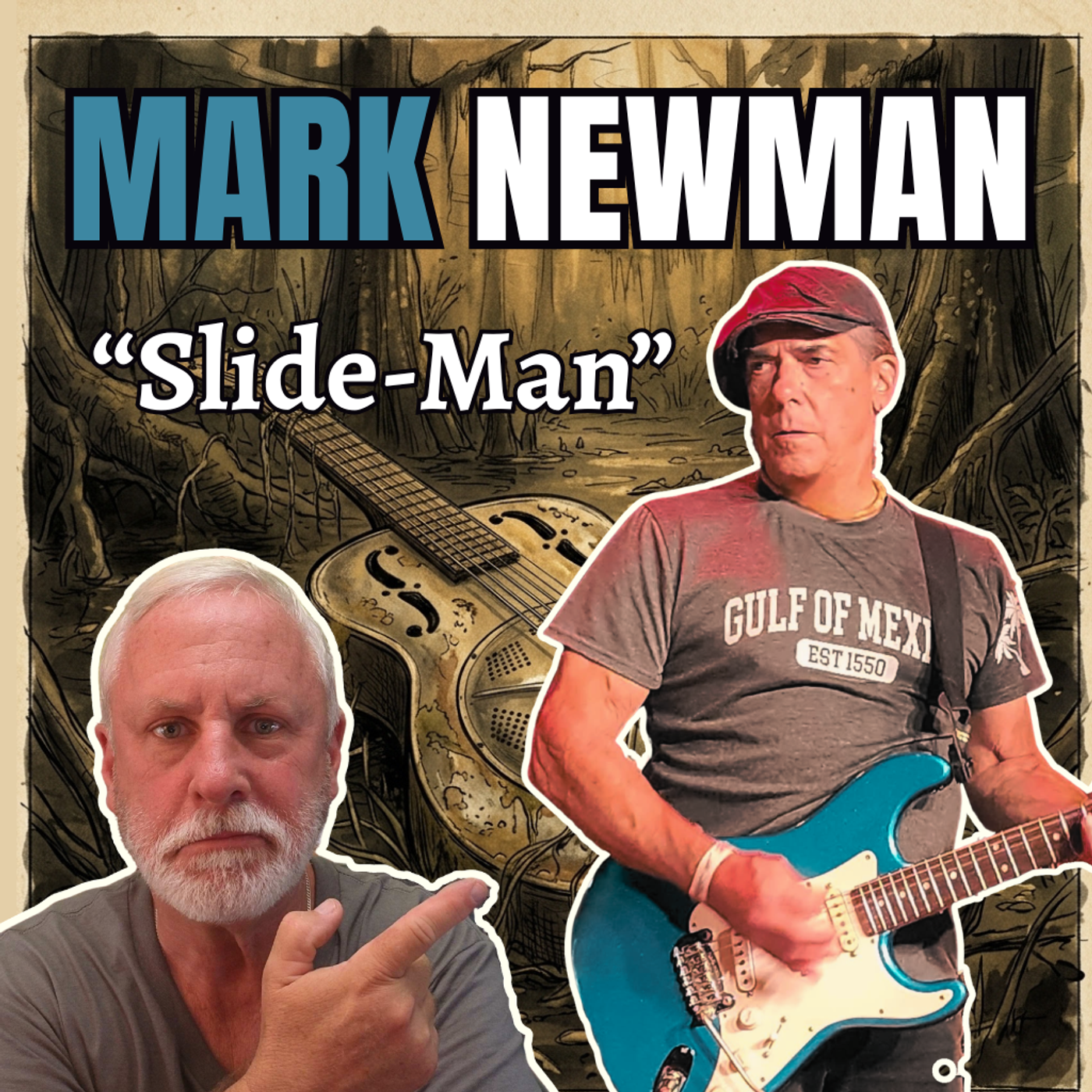
Mark Newman on Long Island roots, slide guitar, and songs with a conscience Steve Yusko reconnects with guitarist and songwriter Mark Newman for a wide-ranging conversation about his career, from Bleecker Street clubs and West Coast sessions to touring with The Blues Project and writing socially conscious songs like Tulsa and Ghosts. https://marknewman.us/ Mark also shares stories from the road with Sam the Sham, Willie DeVille, Bobby Whitlock, and John Oates, plus the gear, influences, and instincts that shaped his slide playing. The Dobro resonator guitar Mark uses for acoustic slide, how it’s set up in open D or open E, and how he mixes mic and pickup tones through amps like a Fender Twin or Deluxe. Playing with Sam the Sham, including the fast crash course in blues tradition Mark got from being handed Jimmy Reed and Muddy Waters records after trying to play too flashy on stage. Mark shares: Lessons from Willie DeVille and Bobby Whitlock about making the song his own while still respecting signature parts when necessary. In this episode: How he was chosen to open for the Doobie Brothers at the Paramount, plus how he pulled together a last-minute band from old collaborators. His songwriting process for topical songs, especially Tulsa, which addresses the 1921 Tulsa Race Massacre and the Greenwood district. Mark shares: Ghosts, a single co-written with Mike Mills, built around memory, regret, and the way the past keeps resurfacing. At the Border, written in response to the war in Ukraine and broader refugee and asylum issues, and how current events often drive his lyric ideas. Mark shares: The musicians he works with now, including Naomi Margolin, Sean Murray, John Cardone, Mike DeMayo, Kevin McKendry, and others across his various projects. Learn the story of Mark Newman, a master slide guitar and dobro player, in this exclusive interview about his music career. Mark Newman joins us on the podcast to discuss his journey as a musician and the collaborations that have defined his path in the industry. We explore his approach to playing the dobro and the unique techniques he uses to stand out on the slide guitar. This conversation offers listeners a look at the dedication required to build a lasting career as a professional artist. Subscribe for weekly interviews with talented musicians, and comment below with which artist you want to hear from next. Timestamps: 00:00 - Expectations on Mark Newman Interview 01:49 - Welcome to The Long Island Sound and Mark Newman’s return 04:06 - Joining The Blues Project and touring the West Coast 07:13 - Life on Bleecker Street in the 70s and 80s 09:58 - Early guitar history and the ukulele correction 12:14 - Playing with Delbert McClinton, Don Felder, and David Bromberg 12:50 - Opening for the Doobie Brothers at the Paramount 14:26 - Why Mark moved to Los Angeles from Atlanta 17:21 - Lowell George, Duane Allman, and slide-guitar influences 18:33 - The Dobro from Willy DeVille’s estate 21:25 - Little...
speaker-0: I gotta ask you this question. How do you know you're gonna be listening to a master entertainer, a great musician? It's not necessarily just the music that they play, but the people who request that they play with them. He's gotten to play with all his heroes. Just take a look at this list. Today we're visiting with Mark Newman. This is my second interview with Mark Newman. He's a fantastic guy. He's a great slide guitar, dobro player, guitar player. You mention it. He can do it and he's played with some really fantastic people. We had a great conversation. I know you're gonna really enjoy it. Come check it out. Hey everybody, welcome back to the Long Island Sound, where we explore the Mews and the music from the North Shore to the South Shore, from New York City all the way out to the Hamptons. We're navigating the absolute wellspring of original music from singer-songwriters and master musicians who call Long Island, New York their home. Now, if you caught the first session a few years ago, you know today's guest is a neighborhood legend who has been around the world several times as both a solo force. And a world-class sideman. He shared the stage with absolute giants, Sam Moore of Sam and Dave, John Oates, Jim McCarty of The Yardbirds, and the late Willie Deville, and Bobby Whitlock of Derek and the Dominoes. You know, but we barely scratched the service last time. Today we're doing part two of a deep dive. We're going from his Bronx Massapequa roots to the guitar theory workshops in Los Angeles through the high-stakes world of touring with legendary acts. Right into his recent work with the 60 year legacy of the blues project and his brand new single, Ghosts. Alright, grab a seat, grab a drink, let's get into it. Mark Newman, welcome back to the Long Island Sound. Good to see you, my friend. speaker-1: Likewise, didn't know I was supposed to bring a drink. Anyway. speaker-0: No, I'm good. I left mine downstairs. Yeah, I I'll I'll start slurring and double talking. So ⁓ just to give some reference, I met Mark years ago and I've seen you all around the place from playing alongside my good friend what the hell's his name? Yeah, him. speaker-1: Shame here. Mike Nugent. Yeah. Yeah, that guy. speaker-0: That guy. Boy, talk about brain farts. Anyway, and thank you by the way for connecting me with Roy Blumenfeld of the Blues Project. And you just came off a tour on the West Coast doing, I think, nine different locations with them. Why don't we start there? Tell me about how that came about and ⁓ how you got involved. speaker-1: First of all, I'm having a lot of fun playing with those guys. This started because Epi from my father's place, you're welcome, Epi, for the plug. Anyway, Epi asked me to open up for the ⁓ for the blues project. And it was still Steve Katz was still in the band. Roy ⁓ Roy Blumenfeld is the only the only member left in the band. So but he was still Steve Katz was still with the band. And I kind of hit it off with Roy. I gave him a C D and ⁓ He was telling me, Hey, if you ever get out to San Francisco, I run a jam every Monday in Sausalito. It's called the Cruising Club, in case you're out there. Anyway, so they did a new record and then Steve Katz didn't want to tour. So I had already sat in with Roy on the West Coast a few times. We did a couple of gigs together, and then he when Steve Katz didn't want to do the tour, he said he called me up. He said, Hey, you feel like doing a tour? And that was in twenty twenty three. So w we did, I don't know, maybe six dates on the East Coast, one of which was the Iridium. And he basically put together a new band. 'Cause like I said, he's the only original member. Mm-hmm. And then that lineup changed again for a tour in twenty four. We did two tours in twenty four on the West Coast. Then we came back to the East Coast to do a couple of gigs. We did we did the Bolton Center, ⁓ we did the Bitter Euly. And the Bearsville Theater. And the reason for the Bitter End was they basically came up on Bleaker Street. The Cafe Gogo was in that area and ⁓ they have that album live at the Cafe of Gogo. So most of the places are gone now. So we were talking and I said I said to Roy, why don't you play the Bitter End? Just for the nostalgia of it. And ⁓ and we did. It was great. So Nice. And I just came off nine dates with them on the West Coast where it was a hundred degrees. Yeah. But it was a dry heat. speaker-0: Right. Hey, you know, it's funny you you you bring up, you know, Bleecker Street and the bitter end, from what I've read, you said that's one of your favorite places to play. And I just want to position the question in in this mode. You know, a lot of the younger artists are reaching for Spotify and doing videos to try to get exposure out, but I think you're a real big fan of playing out in front of an audience and wanna tell us about the seventies and eighties and your time down in that part of the city. speaker-1: Well the seventies I was living in Los Angeles. speaker-0: All right, then forget that. speaker-1: Okay. Late seventies, late seventies, early eighties. Everybody was on Bleaker Street. I still have a lot of friends that I met on Bleecker Street, one of which is this guitar player Benny Lander, who has played with everybody. My friend Keith Lanton. I'm still I've met him on Bleaker Street. Lot a lot of good friends. Some of ⁓ have passed on, unfortunately, but I'm still in contact with a lot of them. And you could go to a a great jam session on Monday nights at Kenny's Castaways and Pat Kenny Rest his soul. Kept that thing going all through disco and you know, it was still a place you could go play blues, blues rock, rock and roll. You didn't have to be a new wave band to play there. speaker-0: Gotcha. speaker-1: In fact, knowing Pat, I would say he probably frowned on that in that venue. And there was that place there were a bunch of other clubs that opened up and then closed within a year. But mostly Kenny's Castaways and ⁓ and the Bitter End were the mainstays in that area. And then the Cat Club opened up. That was not on Bleaker. It was on Lafayette, I think, or Broadway, one or the other, and and like around sixteenth Street. So ⁓ we played there pretty often. So again, I would wind up Playing on the same stage with multiple multiple bands. Even even some of the dance clubs, like there was Dance Atteria and a few others. Now, I can't dance at all. However, they would have bands during the week and the acoustics were horrible. You'd go in there, you might start playing at like eleven o'clock at night, and by the time you stop off someplace to eat on the way home, the sun was coming up. But you know, they had sound systems in there, but they were really meant speaker-0: Right. speaker-1: for that four on the floor disco thing. And ⁓ you know, but they were giving it a shot. They had live music during the week. So it was great. speaker-0: Nice. Hey, I wanna turn the pages back to your early life in the Bronx. Ukulele your was that your first string instrument for the guitar? Or how how did that all come about for you? speaker-1: Well, the Mickey Mouse Club was on and Jimmy Dodd had this w what he referred to as a mouse guitar. It had Mickey Mouse's face on it with the ears. And ⁓ was it was his was probably a six string, but I'm not sure. But it was a real guitar. So ⁓ I don't know if it was Fisher Price or somebody made a a cheap knockoff, plastic knockoff of it. And ⁓ it was a ukulele. It wasn't a full fledged guitar. And his Might his might have been a tenor guitar, I'm not sure, which is ha just has four strings. But anyway, so I don't know how I figured out how to tune it, but I did and I started playing it lefty. And about two years after that, I went in for a guitar lesson and I'm holding the guitar lefty. The instructor looks at me and said, You'll thank me when you go to buy a real guitar and he flipped it over and from that day on I was playing guitar righty. I know. So my old bass player Tony Montalbo, who's a speaker-0: God. speaker-1: Brilliant bass player. He played with Buddy Rich when he was like twenty one. Yeah, yeah, that's most people's reaction. ⁓ my gosh. He plays cello, a little bit of cello. He also plays violin. ⁓ you know, he he's a real musician. So but no, I I started on a ukulele. speaker-0: Yeah. Gotcha. Gotcha. So you play ukulele, you play Dolbro, so I got that right. You're known as a slide guitar player. But correct me if I'm wrong, 'cause I I'm wrong a lot, right? No, no, no. Keep correcting me. Delbert McClinton, yes, played with him. speaker-1: We opened up for him twice two or three times. Opened up for Don Felder. Opened up for David Bromberg as well. speaker-0: How about Don Felder? David Bromberg? All right. And then there was a story about opening for the Doobie Brothers at the Paramount. Tell me. speaker-1: My publicist, Rick Everly, called me up and said, and I think I had opened up for a few bands acoustically before that, but they wanted an opening act for the Doobie Brothers, which was a full band, but it had to be a small band, because it had to fit in a space like this big. Okay. Because the Du Doobie Brothers have a lot of guys in the band and a lot of gear. So anyway, my bass player and and drummer weren't available. They already had gigs that night. And the drummer from my old band happened to be coming into New York from from Colorado. And Tony Montalbo was my old bass player. So I I told my old drummer, I said, I'll pick you up at LaGuardia. And we went right to a rehearsal at the bass player's house and ⁓ went to soundcheck that afternoon or maybe it was the next day. And wow, you know, and I had played with these guys for like 20 years. So it wasn't a problem. So so we opened up for the Doobie Brothers. And they were they were the nicest guys. They were really genuine people and you know, we hung out in the green room with them at the Paramount and super nice guys. speaker-0: Nice. Tell me about Los Angeles. You said in the seventies you were in Los Angeles. What made you go there? What you learned? speaker-1: I was living in Atlanta. Okay. ⁓ and ⁓ a friend of mine was was a side man for I think Oliver, the guy did Good Morning Starshine. Okay. Oliver was still out playing acoustic gigs and this bass player was with him. The bass player was in a band called Sweetwater. They played Woodstock. I know I'm making myself sound really old at the moment. So we were talking and he said, It's nice to hear a guy just you know, just playing acoustic and I said, Well I speaker-0: Okay. speaker-1: pretty much play electric most of the time and he said, If you ever get out to the West Coast, look me up because I'm looking to put put another band together. Sweetwater kinda fell apart when the lead singer got in a car accident. So I lived in Atlanta for a year and I called the guy up and I said, I'm thinking about coming out. Is the offer still good? And he said, Definitely. So I caught a ride with somebody out to California and I lived there for five years. And we rehearsed constantly at the bass player's house. And Warner Brothers was paying for all our recordings. And then I think sometime around seventy five or seventy-six, disco hit. And like ten minutes later, New Wave hit. So now now we kind of got pushed aside. Like we're we'd call the label and they, you know, it would take forever for them to get back to us. So anyway, after that, and I I'd played with a whole bunch of musicians out there. speaker-0: Yeah. speaker-1: guy named Joe Torano who was he sang backup on Ricky's Chucky's in Love by Ricky Lee Jones. Yeah. Anyway, I'm still in touch with him to this day. And I I met a lot of great musicians out there. And you know, a lot of people I that I knew from New York had moved out to the West Coast for the same reason. The whole music industry was there. speaker-0: Sure, yeah. That whole Laurel Canyon vibe going on out there and yeah, a lot of people moved out that way. speaker-1: Yeah. So i I'd be t I'd be on Sunset Boulevard or I'd be walking into Guitar Center and I'd run into somebody I went to high school with on the East Coast. Yeah. speaker-0: Wow. Amazing stuff. So you're known as a really great slide guitar player. ⁓ really? And I I've seen you several times. What would you say, you know, who are your influences when it comes to a slide guitar that you say, Hey, I really like his style and I try to emulate it? Well speaker-1: Thank you. As far as emulating it, I I would have to say Lowell George from Littlefeet. He's probably my favorite because he's different than everybody else. How's well, his choice of notes, whereas like Dwayne Ullman would play in an open open E tuning. So I actually pulled this out just in case. Let me see. So you got I I tune this down to an open D, but it's the same intervals. speaker-0: Yeah. How is it? Show me what kind of guitar it is. Is it it's steel? speaker-1: It's steel. This is made by the Dobro Company and the way I got it was very unfortunate. I played with Willie Deville in two thousand eight and nine. ⁓ two thousand seven and eight, excuse me. And ⁓ he passed in two thousand nine from pancreatic cancer. And I went to his apartment and I was hanging around, you know, just as the Jews say, paying a shiver call. So I should say as we Jews say. So I went to see his wife. And I said, Look, I you know, I don't know what kind of fin financial shape you guys are in. I'm hoping it's good. But it I'd be happy to buy one of the guitars or help you move them or whatever you want. And she basically said, Pick one. Really? I s yeah, well, I had every intention of buying it from her. And I I said, I'll bring the money over tomorrow. She said, No, you won't. Take the guitar, it's yours. And I was arguing with her and I'm going, Look, I can't do that. I said, I know what this thing's worth. And she said, What part of I'm giving you this guitar are you not getting? So and I use this a lot. If I produce a singer, songwriter, or on my own self as well. This is what I use for of like acoustic slide. Wow. So it's just got that, you know anyway. speaker-0: Sounds so so excuse my ignorance. It's metal through and through. speaker-1: The body is metal, the neck is is a wooden neck, it's probably mahogany. And it has this and there's a resonator, if you can see it against the glare, like right here. Okay. So and you can tune it to a standard tuning. I I tend to leave this in open E or open D, so for more traditional sounding slide. speaker-0: So that just gets mic. That's not like that doesn't plug into anything, I would assume, right? speaker-1: Well, I can plug it into an amp, 'cause I have a pickup on it that kind of blends in with the with the Dobro. Okay. If ⁓ it's right here. speaker-0: Okay. ⁓ I see it. Yeah, it looks like a humbucker, right? speaker-1: R well, I think it is, yeah. But it's made by ⁓ lace sensor. So but most of the time with that one I'll I'll mic it up. Sometimes I'll mic it up and I'll put it through like a a Fender twin or deluxe if I wanna get Tremlow at the same time and then I'll combine the sounds. speaker-0: Gotcha, gotcha. Now you brought up Lowell George. You also still play in ⁓ sailing shoes, right? A ⁓ Little Feet, which is one of my favorite bands. I I don't know if they're doing their final tour. Yeah, their final tour and it it I got introduced to them as a as a young man and they just blew me away. speaker-1: I think they are. speaker-0: You know, same here. Waiting for Columbus was was the first album I got from them. And then ⁓ then seeing videos of Lowell George, you know, the fat man in the bathtub as he called himself, I believe, right? speaker-1: Yeah. That's true. speaker-0: Hey, I want to talk about the songs of social justice that I know you write about. And I was happy to hear from Roy Blumenfeld that you shared ⁓ your song Tulsa on his latest album. Do you want to talk to me about that? speaker-1: Sure. I I think I sent him the recording whenever or I sent him the video and he liked the message, you know, just due to the fact that most most people never learned about it in history. It was kinda kept under wraps. In fact, I almost I almost broke out in tears. I was we were playing in I'm not sure if it was Carson City on this last tour or if it was Paradise, California, which that's the town that burned down. The only thing that was left was the was the place we played. I mean they rebuilt yeah, they rebuilt the town, pretty much. But anyway, we finished the set and a guy came over, a black man came over, and I say black instead of African American, 'cause I saw a video and Smokey Robinson said it's okay. So anyway, all right. In this video. He came over to me and he shook my hand and he said, I want to thank you for for writing this song. She was not enough people know about it. So I only found out about it maybe five years ago. speaker-0: You know, it there is that man, it's it's the erasing of history. We have to look at our history as Americans, both good and bad, so it doesn't repeat. And the trend, I'm getting on the soapbox a little bit, the trend to try to bed pun, whitewash it and and say it didn't exist or you know, we only did good things ⁓ and what we see going on today really brings some light. And I think writing music which resonates with people to say, Hey, what's he talking about? And maybe they'll do some research and find out what actually happened. speaker-1: Right. Yeah, actually when I introduced the song, I basically give them the date, you know, the audience, and say, ⁓ I mentioned the Greenwood section and that the song is about about a guy who grows up in the Greenwood section. The Greenwood section was I'll try to give you the cliff notes on this. A lot of World War One veterans that came back and settled in Tulsa and they were doing very well financially. In fact it was referred to as the Black Wall Street. So so this incident about a speaker-0: Right. Yep. speaker-1: A young guy, a young black guy walking into an elevator and a white girl who was the operator screamed. Now nobody knows exactly what happened, if they knew each other, if she was just startled. Nobody really knows. And this was used as as an excuse to just do away with the with the Greenwood section. They went in, they were bombing from the air with you know in primitive planes. speaker-0: Yeah. speaker-1: They went in there and just set fire the whole thing. And there there had been on the hundredth anniversary there were some specials, one on CNN, one on the History Channel. And anyway, it was never covered in history books. speaker-0: Right. Yeah, it was glossed over, right? speaker-1: Yeah, and Roy Roy Blumenfeld, he's kind of a radical himself, so in a good way. And ⁓ he picked up on that right away and he said, We should do this song and then he said, But you have to explain it to the crowd. You go, Thanks. But I I always tell them, look up Tulsa, Tulsa Massacre nineteen twenty one and then we hit you know, we start playing. speaker-0: Great. It's it's good it's good to give that connection, you know. So ⁓ hey, thanks for writing that song. It's ⁓ it's really good. Hey, tell me about the new song. I just got the video that you sent me ⁓ of ghosts. Is this a prelude to an album or is this ⁓ an EP or tell me about that? speaker-1: No. Thank you. Well, I released it as a single. I re I've released a few things as a single. Tulso being one of them. At the border being another. I covered a Janice Ian tune from like a nineteen seventy five album. So I've got maybe two or three more songs to go before I actually release it as a body of work. But I've been releasing them as singles so I can get them out. So yeah, this will be, you know, in an album format, but it it's out as a single. Boom. And Mike I wrote the song with Mike Mills, who's another singer songwriter from the island. And I knew he was he was starting to fool around with making videos. And then the subject got dropped for about a week and he called me up. He said, Hey, I'm off to a good start here and I went over there and it was just about finished, which which was great. He put pictures of me from high school in there and just, you know, various bands I was in, somewhere in the middle. Just 'cause it's about your memories. It's about like looking back and at the things you did. Some of which you regret. And for me the more important side of it was passing on like the things you didn't do that you regret not doing. So, you know, it's on both sides. speaker-0: Right. Yeah, and I like I like the way he put the video together because you're kinda like in shadow, if I recall right. Yeah. So we never actually see you. We know it's you. I assume it's you. And then and and just that's like the flashes of your memory, right? You know? Yeah. speaker-1: Yeah, I guess it's ⁓ I just wanted I just wanted a shadow instead of me playing guitar. That's all. And ⁓ you know, if you think of like a a ghost being like a shadow on the wall, but it's really something that lives inside your head. And the whole point of it is these things are gonna these things are gonna pop up through your whole life. Something's gonna trigger it. You watch a movie and all of a sudden that one scene relates to something that you did that maybe you regret or maybe you had a good time doing it. Or the person did this and you go, God, I should have done that. So we've all got them. Yeah. And so that's that's the reason for the shadow. speaker-0: That that's for sure. I got I gotta ask you this, Mark. You know, you've played with and I'm name dropping here, but you played with some really famous people. You know, Sam the Sham. We spoke about it the first time I interviewed you, but I wanna kinda let me know what you learned from these different acts that you played with. You know, you see you with Sam the Sham, you were with William Deville, Bobby w ⁓ Whitlock and and John Oates. Is there something you could pull of either a life lesson or an entertainment or music thing that you kinda picked up and said, Yeah, I really admired this from this guy and that's what I took from it. speaker-1: Yeah, especially believe it or not, I was I was very young when I played guitar for San the Sham and that happened because when I moved out to LA, the bass player from Sweetwater was online at the bank on Hollywood Boulevard, or maybe sunset, in back of San the Sham and they knew each other. So 'cause I think he had pl maybe backed Sam up, you know, af after the Pharaohs were done. And Sam was online and he said, You know, I'm looking for a slide guitar player So my friend called me up. He gave Sam my number. He called me up and he said, Sam the Sham's gonna call you. He's telling me the whole story about him being online at the bank. And so I'm thinking, Yeah, well, okay, whatever. So my phone rings like weeks later. Okay. The guy goes, Hey, Mark, ⁓ this is Sam the Sham. And I'm going, All right, Fred, cut it out, man. You know, it's and I hung up. And and Sam calls me back. And it was Sam the Sham. And he w you know. speaker-0: You hung up on ⁓ speaker-1: He had to do Wooly Bully on all the shows 'cause that's his most famous song. But he wrote some incredible blues songs. And what I learned from him well, first of all, you know, I was really young and ⁓ yeah, I played slide guitar, but I'd have to do a lot of regular guitar playing and I was trying to play as fast as I could. Okay. You know, trying to impress him or whoever. And he'd turn around to me and go, Cut it out on stage. Anyway, and then he'd send me home he'd send me home with albums, Jimmy Reed. Or, you know, muddy waters. So it was a pretty fast infusion right there. You sound like a white kid trying to play blues. It's not working. So anyway, and he was very patient with me and I'm still in touch with him to this day. He's eighty nine. I know. I just went down to see him in the spring. So Yeah. So speaker-0: God bless. Really? For those who don't know, you know, that's everybody knows Woolly Bully, right? And if you pull up Sam the Sham and the Farrells, you'll see like him in a turban, right? Yeah. In a black and white video, you know, is like a total caricature of a person. But he was a new he's a New Orleans guy, right? speaker-1: Well, he was born in Irving, Texas. And then he moved to Louisiana, where he was playing clubs a lot. And I think when they got signed, I th I don't remember if they had moved to Memphis first or yeah, I'm not sure. But Rufus Thomas helped them out a lot. And he was telling me the whole thing. They'd have to like buy like console T V sets for DJs and things, you know, payola kind but but not handing over cash. You know, just buying ⁓ this expensive T V set. speaker-0: Okay. ⁓ yeah. speaker-1: Not ru not to Rufus. Rufus actually helped him. But I I learned watching a guy who whose time had already, you know, like he didn't have any hits out at that time. And but he still went out there and gave it a hundred and fifty percent every show. And ⁓ and he was very, very entertaining, very you know, very engaging as a performer. speaker-0: A true entertainer, right? speaker-1: Yeah. And he was a great singer. I mean Yeah. I mean if he y you can even hear it on Wooly Bully. He was you know, he had a voice. And when he sang blues, it was incredible. In fact we were we were in Salt Lake City and I had this instrumental piece and I looked and I said, Sam, I'm I'm trying to write lyrics for this piece and I I said I'm a white Jewish guy from Long Island. I said, Help me out here. 'Cause he did come up in the Delta. speaker-0: Yeah. speaker-1: And the two of us sat there over breakfast and finished the lyrics, mostly him. And it's on my first solo C D. It's called Hard in the Rain. Anyway, we were going to Germany and ⁓ this is years later, a couple of years later, and I said, Hey, we're gonna stop somewhere. He goes, Where are we stopping? We were on our way to the airport. I went into the studio, I said, Sing the second verse on the chorus. He goes, Nah, man, you don't want me on ⁓ yes I do. And he wasn't happy with it. We went to Germany on the way back. Guess where I stopped? I stopped back at the studio. I said, This is your last chance. He nailed it. I mean it's a song called Hard in the Rain, like I said, and he sings the second verse in chorus. And from my money, I may as well not have sung at all. So speaker-0: That's great. Hey, you know what? I want to talk to the audience for a moment. Anything that we're talking about, you're gonna see a link for these videos in the description. And if you've seen any of these acts or Mark, hey, please comment. I answer every comment out there. And we'll have the links to ⁓ Mark's music and his website and all of that. All right, let's go to Willie Deville. Tell me about him. speaker-1: Again, again, a guy that ninety nine percent of the time gave it a hundred and fifty percent. Willie, I got hired because I played slide and he he was looking for a guy that played slide guitar. So a lot of times he would just lose his he was so into the music, he would just lose where he was and I'd be playing a slide guitar solo and all of a sudden I'd hear this while I'm playing. Like, you know, and I'm going, wait, I'm not doing that. What's all of a sudden, you know, the the light would go on in my head. Jump to rhythm guitar. So he did an amazing version of Heartbreak Hotel. It's on the video from Rock Palace in Bonn, Germany, in nine in two thousand eight. And ⁓ that show I thought was gonna since I was with him was probably one of his best shows. Really? Yeah. Not because I was with him. I'm just saying like I had I worked I did three tours with him, and for me that was his best show. And ⁓ people would scream out, you know, be screaming at him. Willy, Willie, play and he one time he's we were in Switzerland and he goes, Somebody shut that guy up before I break a chair over his head. So the people loved it. They saw cheering. If I said that, you know, they'd call the police. So speaker-0: He was being transparent, right? He was who he was. speaker-1: Yeah, exactly. But he was a true artist. I mean, wrote some great stuff. He did some great covers. And, you know, he said to me, as I I was really lucky in the fact that everybody I worked with pretty much said, you know, make it your own. And obviously you you have to you have to play the signature parts. Obviously, like when I worked with Sam Moore, I have to play, you know, dun dun dun on Soul Man. had but and originally I thought that's what the gig was gonna be, just playing rhythm guitar. But he had me soloing a lot. But every one of ⁓ just said, Make it your own and and that's what Willie did and gave me pretty much free reign. Unless I heard him playing slide when I was playing slide, like I said. Yeah. speaker-0: You that You know what you you you bring up a good point about making it your own, but I also saw a quote from you where, you know, you play to the song as well. Of course. You know, that that's for me, that's where I think an artist is really good. Not not a a flashy person, there's time for that. But those who play to an accent the song where, you know, you go, Man, they just put a lot you know, Mike Nugent's that way too, right? Just yeah, just speaker-1: Absolutely. Put some spike on the guitar blair. speaker-0: Just the right amount of spice, right? Without without going crazy. All right, Bobby Whitlock. speaker-1: Bobby Whitlock. I was in Colorado and ⁓ somebody one of my friends called me up and said, Go on go on Facebook right now. Bobby Whitlock's looking for a guitar player. And I said, Why would Bobby Whitlock be on Facebook advertising for a guitar player? Anyway, I went on his page and sure enough, what he was doing, his wife, Coco Carmel, who's a great artist in her own right, they had an acoustic duo that they were working with. And they had done a lot, you know, with a full band, but speaker-0: Right. speaker-1: They were doing an acoustic tour. They were both playing acoustic guitar. She played Alto Sacks on a few things. And ⁓ anyway, he was putting a different guitar player on every gig. They had maybe eight or nine dates. Well and and they wanted a different electric guitar player. ⁓ Ricky Bird did one or two gigs with him. He used to play with Joan Jett, a great guitar player. I forgot some of the other guys, but I sent him some links, told him who I had played with, and ⁓ he got back to me right away. He said, ⁓ can you do a gig with me? at Bull Run in in Massachusetts. So I got back to him immediately and said yes. And I never asked about the money. I never asked about anything. I was so psyched to play with right to play with Bobby Whitlock. That was one of those things where, you know, when I was young and I was listening to Derek and the Dominoes, his voice stood out to me as much as all the guitar work on that album. Wow. I mean, right away his voice caught me. And ⁓ Aga again, I never asked him about money. We did sound check and I said, Do you want me to address any of the Clapton's input, any Clapton input or from Layla? Or do you want me to address it? 'Cause I watched both. I watched their acoustic videos and I went back and listened to the album again. Mm-hmm. And he said to me, ⁓ just don't fuck up Layla. And so we're both laughing and he said and he said to me, Just make it your own. And I my girlfriend was with me and she She told me after the show, she said, I have never seen you smile that much. And I said, It was more fun than I had had in 20 years. And and I stayed in touch with him too. I mean, I anytime I was in Texas, I'd call him up and he said, You got a guitar with you? I Yeah. And he goes, Get your ass down to Austin right now. So I'd go down the next day and I wound up doing a couple of gigs with him. speaker-0: That's great. That's a that's amazing. So in in that story, was he auditioning different guitars or he just wanted to mix it up all the time? speaker-1: wanted to mix it up. He just wanted a a different guitar player on every gig, which can be kinda dangerous, but all the er I you know, I saw footage of some of the other guys, everybody really nailed it. And ⁓ you know, I went to the show where Ricky Byrd was playing and Ricky killed it and he was great. speaker-0: All right, John Oates. Now I he's been in the news a lot, him and his his former partner. Maybe they patched it together, but I believe when he started doing his solo work, he wanted to my assumption get away from the pop Philly feel and do something different. So tell me how that came about. speaker-1: Well, I think I mean I'm maybe I'm speaking out of turn, but he's been trying to reinvent himself. He's got a lot of albums out, a lot of C Ds out since maybe two thousand. You know, he's been he's been putting out product on as a soloist. And he's been trying to reinvent himself as ⁓ an Americana songwriter. So and you know, when I was with him, like we would do a tour and then he'd be out with with Daryl on a whole Holland Oat show. So what he was really trying to get, you know get his own career going, as was Daryl. And Daryl had Daryl's house and he had all these amazing people on it. And, you know, John was John just kept touring. We we toured all over the country. We we went to Europe. So great guy. Great guy to work for. speaker-0: You almost look at it as an actor being typecast, you know, you you're so well known as that duo that it's hard for people to see you as anything else but that, right? speaker-1: And also they they had a lot of hits. Yeah. I mean, so most people I would assume they want to hear, you know, they want to hear what the hits sound like and they're both singing on all the hits. Mostly Daryl, but you know, John's singing, especially on the first record, Abandoned Lunchonette. So, you know, Oz was a he was probably the more commercial of the of the two songwriters. Right. Like I think he wrote Sarah Smile. They helped each other out when they wrote, but ⁓ she's gone, you know, killer songs. I used to get chills every night playing that song with Oates. Really? Yeah. It's speaker-0: So cool to s for me, an audience member, to to see a show like you have done with him and know, you know, what's in your head of how it's done when it was first released and then seeing it live. And for me, seeing and you know, I get my soapbox about this, seeing somebody live is so much better because you have people like yourselves who are making it their own and playing to the song and and still playing the parts they need to play, but giving it a different dynamic, which I think's Is really what music is all about, you know. speaker-1: Yeah, it's funny. I opened up for somebody famous that shall remain nameless. I opened up acoustically and it was a guy from a very famous band and he played everything he covered all that material 'cause he really didn't have any product out on his own. Okay. And ⁓ he played every single solo almost note for note off the record. And I'm thinking, why would he do that? The guy's a phenomenal guitar player. So speaker-0: Okay. Was he just playing it safe? speaker-1: I don't know. And he had another guitar player in the band too who was great, but he did all the solos pretty much and ⁓ pretty much exactly like the record. So I w I was just kinda surprised. speaker-0: Yeah, I wanna t I wanna dive into a little bit about your process, you know, about some of the topical songwriting process, you know, because of Tulsa, because of Ghosts, one more song about the highway. How does the muse strike you and how do you develop it? And is it different every time? Is that fair? speaker-1: Yeah. I can't put my shoes on without turning on the news. So I wrote when I found out about Tulsa, the way that one came about, a friend of mine had seen footage of me playing playing the Dobro I just showed you, and he had a song that he wanted me to put well, he didn't have a song. He had a rhythm track. He sent me an electric guitar track and a bass track, and that was just to ⁓ a drum machine. And he said, Can you finish a song with this? And I'm listening to it. And I went, and the guy was a school teacher. He's a phenomenal guitar player. He's a New York guy, but he lived on the West Coast. His name is Walter Roberti. And he said, look, when you write the lyrics, he said, I'm still a school teacher, so make sure it's not too controversial. And the ⁓ the track that he gave me, I had just been thinking about about Tulsa. So I got back to him and I said, Tulsa Massacre. I explained it to him. I said, I want to write about a guy. Who left Tulsa when he was young to make his way in the world and he's coming back and he's greeted by all this devastation. He said, Okay, just no curse words. Anyway, so I went and finished the song, I put all the slide guitar on it over his track. And then I called him back and I said, We're trading solos at the end. He goes, What do you mean? I said, Exactly what I said. I'm gonna play for four measures and then you're gonna play for four measures and he goes, ⁓ I don't know. Anyway, he did an amazing job. So That's how that came about. At the border, that was when the ⁓ when Russia invaded the Ukraine. And the border was a big topic and women were allowed to leave, men weren't. And and then ten minutes later, they were back at the southern border in the United States. So now you've got at at least and and this is worldwide. I'm sure this goes goes on in, you know, look at China and Tibet. I mean, every that there's places where speaker-0: Okay. speaker-1: you know, people are looking to escape and you know, that's the controversial thing, like the border here. How many people are I assume that most of them are coming in for asylum. But then you've got other claims that well, I won't to I won't get into it too much because it becomes a big political issue. But this country was based on people looking for asylum. Right. I I always favor that side. So anyway, the song is about, you know, just fleeing from danger and just looking speaker-0: Right. speaker-1: looking for a place to go where ⁓ there's no threat of being killed or persecuted. Or it could be from a a natural disaster too. So but you know, the news was it was nonstop. It was Ukraine and then the southern border. And then Ukraine, the southern border. So it's all I was thinking about. And by the way, I just wanna give a shout out to the Panagakis family. This guy he went by the name of Georgie Wood. His name was George Panagakis. He did both videos for me for Tulsa. And for at the border and put a lot of work into it and he had some health issues and he just passed at fifty years old. Yeah. Just incredible musician. Really he had a lot of vision as far as like how to do video. So anyway speaker-0: I'm so sorry. Yeah, it's you know it's interesting about applying videos to songs, you know, the person who writes a song has this vision in their mind whether they're creating a character or a place. A lot of people start with a place, right? Or it's ruminating your head and now it's being interpreted by somebody else's visual. I think that's extremely challenging, you know. Am I gonna be true to the vision of the original songwriter, you know, to play it through? And then I just gotta tell you this just like popped into my head. as you talked about people looking for asylum and then ending up in in the crazy United States that we have now, which is an asylum to a certain degree of a lot of craziness. You should take that and run with that. I don't want credit. I loved for asylum and ended up in an asylum. speaker-1: Yeah, yeah. It it's it's getting really crazy. I just had again someone who who shall remain nameless. I questioned somebody on on their views about certain immigrants and the guy got back to me and started cursing at me, calling me a traitor, threatening me, saying, If you want to go, you name the place and I just said, I think you need to switch the decaf. So anyway Yeah, you know speaker-0: Cheese. It's Mark, it's volatile times, you know. speaker-1: I keep I keep going back to this. The other side, I'll name them, the MAGA Republicans. Let's go there. So they tend to take this position like like they're the Patriots and they own the flag. And I wish I I didn't always think this way. I th I I would have applauded you for putting the plague the flags upside down if I saw it. You know what I mean? But it's gotta I feel like it's gotta get to a point where No, you don't own the flag. No, you are not the only patriots. And take possession of the flag again and we're all under this same flag. It's gotta get to a point where no, you d you do not own this country. You know, your views are your views not you. Y your views are racist. They're you know, that that's not what this country should be about. Like we own the flag too. speaker-0: Right. Yeah. We have to ⁓ regain regain our humanity and recognize hey, we're all brothers and sisters when you get down to it, no matter what border we crossed, right? speaker-1: True. True. And you know, far as far as the border, I just my my son, you know, I raised my kids in Queens and they they had friends of every nationality, you know. speaker-0: Queens is the most diverse borough in New York. Yeah. speaker-1: Yeah. What's interesting about Queens is that a lot of the different cultures could be mixed in in the same neighborhood. Like Kew Garden Hills and South Flushing, you have a lot of Orthodox Jews. You have Indian families, Chinese families, whereas in Brooklyn you have more pockets. There's definitely an Italian section, there's definitely an Orthodox Jewish section, there's definitely an Arabic, you know. speaker-0: Almost by street, right? Yeah, I I saw that my dad grew up in Greenpoint and you know, you'd walk down ⁓ grandma walked down Green Point Avenue and and she spoke like three or four languages just to talk to the merchants to negotiate. For real. And little phrases, but you know, yeah. It's it's ⁓ that that's what I love about New York. It's a thousand neighborhoods, you know. speaker-1: Yeah, yeah, definitely. Definitely. Well let me give you a shout out to my band. Naomi Margoland, who's co written some of the stuff with me. She sings and plays guitar on my band. Sean Murray, drummer. Yes. Plays with everybody. John Cardone, who's playing been playing with me for about five years. And he's he and Naomi are are in ⁓ sailing shoes with me. And Sean Sub's in that band when Dave Diamond's not available. So speaker-0: Okay, please. speaker-1: And Mike DeMo is, you know, he plays on a lot of my stuff. He plays, you know, Hammond. Kevin McKendry, who's in Nashville, he's played Hammond on a lot of my stuff. And I'm sure I'm leaving somebody out. And, you know, all the people I work for, I mean, I I've been blessed, you know. Again, these were songs I played in bands growing up and then I'm on the stage with these people. I I still get chills from it every time. speaker-0: Yeah, heroes. Yeah. That's great. Well, honestly, Mark, it's it's an it it's a testament to what a fine master musician that you are. Everyone speaks very highly. I've heard you play and it's really sweet. So yeah. speaker-1: Now I'll give you a shameless plug. We're playing Still Partners on Saturday, ⁓ September 26th. And it's a real special gig for me because I've got like somebody in my ⁓ my drummer, Sean couldn't make it. So I've got the drummer and the other guitar player from the Almost Brothers, who also plays with me in Salem Shoes. And Mark Bonder, who plays with everybody. He plays in Wondrous Stories, but he's another guy that plays Sir Duke, Steel U FM. So They're all doing the gig with me, as well as Naomi and John Cardone. So we'll be doing my stuff, but you know, because I've got these guys from different tribute bands, we're gonna be doing a bunch of Allman brothers, we're gonna be doing a bunch of Steeley Dan. speaker-0: Great. speaker-1: Little feet. It's it's called Still Partners. Yeah. It's it's in ⁓ Seacliff, which if you don't know Seacliff, it's this little town that's tucked in like right next to Glen Cove. So I'm really looking forward to that gig 'cause it's gonna be a lot of fun for us. Excellent. So speaker-0: Well Mark, it was a pleasure reconnecting again and having this likewise extended conversation and we'll see ya out there. Everybody check out below in the description for Mark's links and ⁓ man, as I say, be generous with your joy, keep your spirits high. Let the music, let Mark's Mark Newman's music take you on a journey. All right. Be well everybody. speaker-1: Right. Take care everybody. All right, take care.
More The Long Island Sound - Music and Entertainment Discovery Begins! episodes →