
The Long Island Sound - Music and Entertainment Discovery Begins! · Stephen Yusko, Host and Curosity Seeker
Tom Rush on Club 47, No Regrets, and keeping folk music connected Steve Yusko welcomes legendary singer-songwriter Tom Rush, tracing his influence from Cambridge’s Club 47 to the modern stage. Rush talks about mentoring younger artists, the changing music business, and the stories behind songs like No Regrets and Child Song. Https://TomRush.com In this interview: Tom Rush reflects on being introduced as a key figure in modern acoustic music, with roots in the early 1960s Club 47 scene and a career that helped usher in the singer-songwriter era. Rush explains why he keeps bringing younger musicians into his shows and projects, from Harvard radio days to his current Rockport Sundays series and the planned Club 47 TV concept. He shares how the old music industry worked when record labels could drive radio, TV, and retail, and how today’s artists need to be multi-skilled across performance, video, and social platforms. Rush talks about Matt Nakoa, his current accompanist, praising him as a standout musician who plays piano, guitar, and writes for Broadway. He breaks down the meaning of folk music as an oral tradition, describing folk songs as living material that changes from singer to singer and generation to generation. The conversation digs into No Regrets, which Rush wrote after a weekend with Jill Lumpkin, and how the song grew into a standard recorded by many artists. Rush recalls Child Song and how Murray McLaughlin’s writing moved him настолько deeply that it took months before he could perform it without getting emotional. He discusses open tunings, his storytelling approach on stage, and how he showed Joni Mitchell open tunings early on. Rush reflects on connection over perfection, saying audiences want to feel involved in the story rather than hear a technically flawless performance. He looks back on opening for Gordon Lightfoot at Massey Hall in 2021, and the warmth and humor they shared onstage. Explore the roots of the singer-songwriter era with this rare interview featuring an architect of modern acoustic music. Learn how one artist shaped a generation of songwriting with the 1968 release of The Circle Game. Timestamps 00:00 - Technical setup, sound check, and introducing Tom Rush 03:25 - Why Rush’s career matters and the legacy of Club 47 05:23 - Matt Nakoa, accompaniment, and celebrating great sidemen 06:26 - How Rush has always helped younger artists get heard 07:53 - Rockport Sundays and the struggle for new musicians today 09:21 - The idea behind a Club 47 revival series 10:32 - What Club 47 felt like for blues legends and college audiences 12:50 - What folk music really means to Rush 14:09 - The emotional impact of Child Song 16:03 - Why some songs can’t be over-arranged 17:17 - Why Rush tells stories between songs 18:12 - Open tunings, Joni Mitchell, and musical cross-pollination 20:28 - How the music business changed after the record-label era 22:53 - Carly Simon on No Regrets 23:24 - The real-life story behind No...
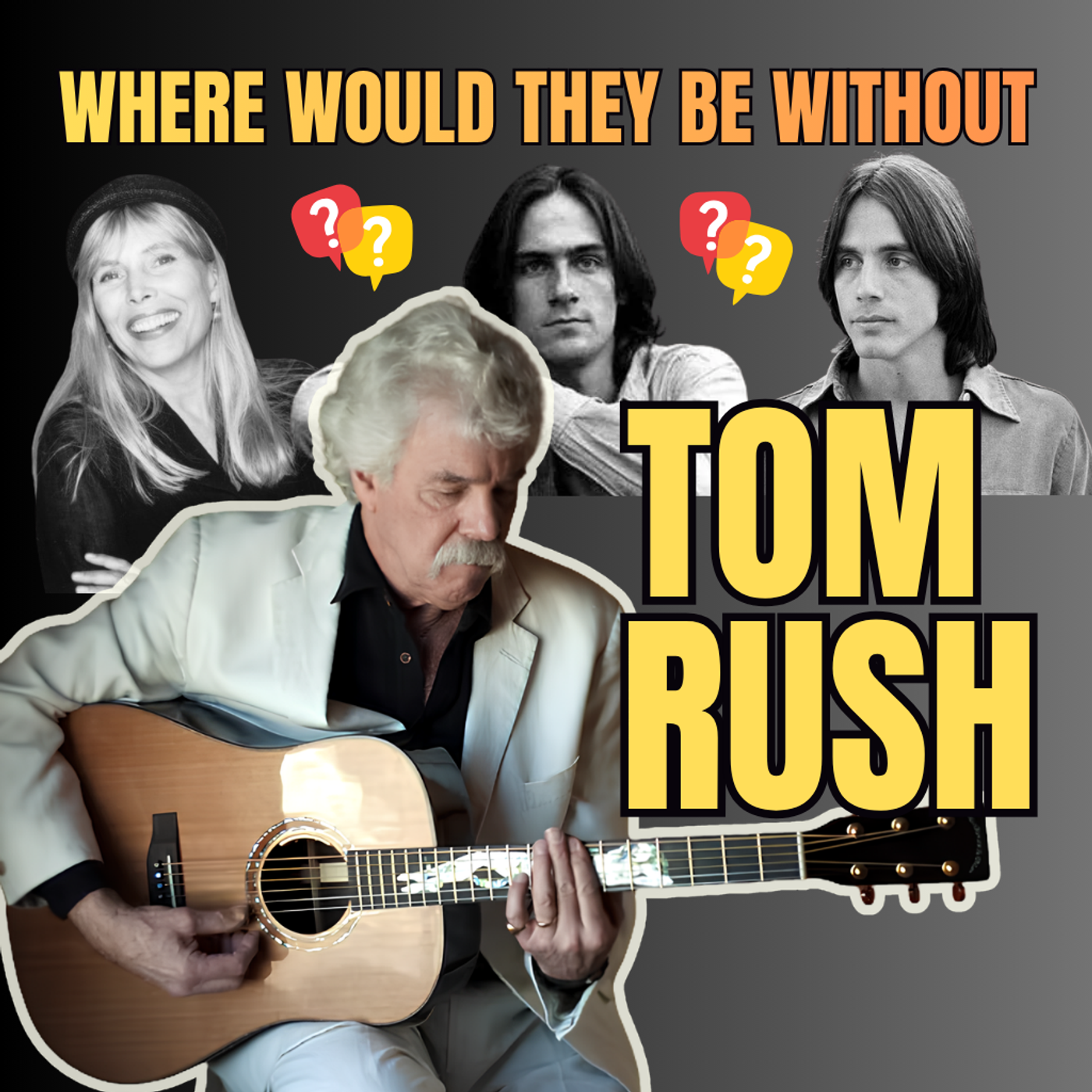
speaker-0: Welcome to the Long Island Sound. I'm Steve Yusko, and today we're in the presence of a true architect of modern acoustic music. Our guest began his journey in the early 1960s holding down a weekly spot at Cambridge's legendary Club 47. And Rolling Stone credits him with ushering in the singer-songwriter era with his 1968 landmark album, The Circle Game. He's the visionary who discovered and first recorded Then Unknowns, Joni Mitchell, James Taylor, and Jackson Brown, and wrote the global folk standard No Regrets. And Long Island, You Have a Date with History. This Friday, August 14th, he is bringing his brilliant finger picking, his raw humor, and signature storytelling to the legendary stage at my father's place in Roslyn. And he's joined by the phenomenal Matt Nakoa on piano. And we'll get into Matt as well. Hey, I wanna welcome to the show the legendary Tom Rush. Tom, welcome to the Long Island Sounds. speaker-1: It's a pleasure and an honor to be here. And I'm looking I'm looking forward to my father's place. I look I looked on AI and I asked when did I last play my father's place? And the answer AI came up with was December thirteenth, nineteen seventy four. Wow. Now I w I wasn't even born then, was I? speaker-0: Yeah, so you were in the you were in the original My Father's Place with Epi Epstein and ⁓ that has changed is an ⁓ it's an IT office now and ⁓ Epi opened it in the Roslyn Hotel and it's a really nice setting, nice stage, good sound system. I've seen ⁓ many shows there, so ⁓ it's it's it's gonna be a really nice appreciative audience, I'll say that. speaker-1: ⁓ and you mentioned Matt Nakoa. Yeah. I am very, very, very excited because last time I worked with Matt was back in December. Okay. Matt went Matt went off to Spain. He had a job writing songs for a Broadway play, and the boss man was living in Spain, so he went to Spain for some some months. And I haven't worked with him since December. And he is such a treat to work with. He's a not only a the best accompanist in the whole wide world, but he's a monster talent on his own. He will be doing some songs on his own during the show. And he will steal the show and I will pay him to do it. What is wrong with me? speaker-0: Well, I I gotta talk to that because you're known for bringing people together, whether it's, you know, famous people like yourself on stage and up and coming. And I think that's great and I think that's missing with ⁓ a a few artists out there today. I don't know if you'd like to speak to that ⁓ and how that came along and and why you do it. speaker-1: Well actually, now that you mention it, I guess it's something that that I've been doing all along. ⁓ I started out in Cambridge when I was going to Harvard. I they gave me a radio show on Harvard's FM station called Balladeers. Right. And I had to go I had to go recruit youngsters from the coffee houses. I'd I'd have to go to the the Hoot nannies, the open mics. And I discovered I actually I discovered you could get in for free if you had a guitar. And then I discovered for f you could get in for free if you had a guitar case. So I would put a six pack in the guitar case and head off to the hoot. And I got caught one night and ⁓ guys said, get on stage, kid. You got in for nothing. Anyway, ⁓ a lot of the my guests on the Balladier show were were newcomers, and this hopefully gave them a boost because it they were on the radio. And then there's the Joni Jackson James thing that you just mentioned. And more recently I've been doing since COVID shut down all the venues. I got I love to play for people and I miss playing for people. So I started this online series called Rockport Sundays. ⁓ it's video, video series. ⁓ it took me some adjusting. It took some adjusting, because you you know this, but I didn't. When you tell a joke to a video camera, it doesn't laugh. ⁓ but the Rockport Sundays Folks, go to TomRush dot com and check it out. ⁓ it's me and a guest, and some of the guests have been my contemporaries, but a lot of them a lot of them have been these youngsters who are really, really talented and having a hard time getting started. Right. it is really hard to get started these days. Back when I was getting started, if you had a record deal, the record company got you on the radio and they got you on TV and they got your records in all the stores. That doesn't work anymore. Right. It's all it's all online now. And at two thousand plays on Spotify will buy you a cup of coffee, maybe. S so how do you do this? The actually the accompanist that I've been using since Matt went to Spain is a young guy named Brendan Cleary. And he's wonderful. But I saw him playing in a bar in Boston and I thought this guy's too good to be playing in bars. I gotta get him get him off the out of the bars and onto stages. speaker-0: Maybe right. speaker-1: And he's been with me since Jan since January. And again, he's he's stealing the show. But he there's a lot of really, really talented kids out there that are having a really hard time getting started and I don't want them to give up. So Yeah, I'm actually the club you mentioned the Club forty seven. Right. And it was it was a very formative little eighty seat coffee house that hosted the legends. They also hosted the kids, myself included, but You could go in and listen to the Carter family and Flatten Scrugs and Bill Monroe and all the blues legends played there. And now I own the name and we're trying to get together a PBS series called Club Forty Seven. ⁓ that would be Where well known well known artists will introduce a youngster that they're excited about. speaker-0: Y you know, I've I've done that here on Long Island. There's a guy named Pete Mancini who I'm thinking about you should check out. And by the way, we're gonna put all your links in the description, including that documentary which is on YouTube, I think it was done in twenty twelve, which was just fantastic. I thought it was very well ⁓ put together. But I gotta ask you this. When I saw Club forty seven, I'm like, ⁓ my god, that could have a different connotation in today's ⁓ political world. But ⁓ speaker-1: That's right. There there is another forty seven. speaker-0: Yeah, we'll we'll avoid that for now. But I'm really curious what the mood was for these blues players in Club forty seven, like you know, the people like Doc Watson and Skip James, how did they react and vice versa, how did these young college students with neckties react to to their shows? speaker-1: Well, they they loved ⁓ The the kids the kids loved the performances. And I think, you know, Doc Watson being blind, of course, he didn't have to worry about the neckties. But I think the I think the white guys got along fine. The blues guys, on the other hand, I'm making this up, but these guys were were used to playing in the in the deep south in bars. Where they had chicken wire in front of the stage because people would throw beer bottles at them. Really? And here they are all of a sudden in a coffee house, no booze, no chicken wire, and a bunch of a bunch of college students sitting there in wrapped devote attention with neckties on. And it must have been kind of disorienting because it was so different from the environment that these guys were used to playing in. But they were very Very cool. And most of ⁓ were very approachable. You could go up to Sleepy John Estes and say, How do you do that thing you do? And he would show you. Yeah. Very cool. speaker-0: Really? What? So so there you are as a young guy. You get pulled into the music industry by mistake. And by the way, I gotta tell you, I told my wife the other day about you sneaking the beer in the guitar case and and she could relate 'cause she used to sneak the ⁓ beers into the bowling alley with an extra bowling peg. ⁓ well, 'cause she's a beer snob and there's certain beers that she has to have. So ⁓ good she likes what she likes, what can I tell ya? But you know, there you are. speaker-1: Good for speaker-0: And ⁓ you're getting mentored, right? And now you're paying it forward. You know, you're doing it with this Club forty seven and the potential. ⁓ it's it's really c amazing in approaching that. But I gotta ask you this. And I'm always curious about an artist, how they develop their voice or their sound. In my research on you, you don't like to get pinned down. ⁓ in fact you have a ⁓ a certain description about, you know, what a folk song is. So maybe you can get into that and then tell me how things developed for you and your stage presence. I mean, you're just kind of so relaxed. I feel like I'm in your living room when I'm watching you on stage. speaker-1: Well, it's it's funny. You mentioned folk and I do ⁓ got a little rant that I go into on stage about how the term folk doesn't really mean much anymore. Right. Maybe it means an acoustic guitar. ⁓ but as an academic I studied this stuff. ⁓ the folk s folk songs are the songs that come out of these illiterate populations. They can't write them down, so they have to remember them. Right. Every town has a different version of Barbie Allen, for instance. And maybe every family does. And you have to remember it. You have to remember what what your grandma taught you. And if you can't remember that third verse, you might have to make up your own third verse. Right. If it's good not if it's good enough, your kids might remember it. It's kind of musical Darwinism. speaker-0: It's just, yeah, it goes back to, you know, the oral tradition, how scripture was really passed down, right? ⁓ it was it was all oral and you know, playing telephone can have its changes with benefits and also ⁓ not so much, I guess. You know? Yeah. Yeah. Hey, I I know our time is short today, so I've been listening to your stuff on Spotify the past couple of days, getting really immersed into it. And ⁓ speaker-1: Exactly, exactly. Yeah. speaker-0: We have to talk about no regrets, which seems to be ⁓ covered by so many different people from Wailing Jannings to you too. But also the the child song. honestly, that brought me to tears. And in talking to you talking to people about you, those are the two songs I'm gonna say, you gotta listen to these songs. Tell me about them. speaker-1: Well, a child song brought me to tears also. Okay. I was playing in Toronto at a place called the Riverboat, and my guitar player, Trevor Veach, was a Canadian and he'd spent a lot of time in Toronto. And he said, I'm gonna get this guy, Murray McLaughlin, to come over and sing some songs for you. And Murray and I sat on the edge of the stage and he played me, I don't know, maybe eight or ten songs. Child's song was the one that That that is amazing. And it took me about six months to toughen up enough to get through it without bursting into tears. Yeah, I didn't write it. I wish I had, but I didn't. Murray McLaughlin did. ⁓ and it is it's amazing to me that it hasn't been recorded by more artists, but I think it's because it's very difficult to get it right. The recording the recording on my Columbia album, I think, was take ninety three. speaker-0: Really? speaker-1: And we'd we'd done it over and over and over and I just wasn't happy with the way it was sounding and feeling. And we finally got David Bromberg. ⁓ yes. You know, and an isolation booth to play along with me. And that elicited the performance I'd been after. We didn't use David's guitar part. He's we we left him out, but it it elicited the the performance that I'd been after. speaker-0: Wow, what so what was what was the difficulty? What were you dissatisfied with? speaker-1: ⁓ you know, I don't even remember. It just wasn't it's a song. It's a song. I'm trying to make you cry, basically. And it works. But it it wasn't working, it wasn't working, it wasn't working, and I wasn't feeling it. And when Bromberg played along with me, then I was feeling it and made a big difference. But I think the reason it hasn't been done by more artists is that it's very difficult. You can't you can't dress it up with a lot of screaming guitars and saxophone solos and stuff like that. It's it's a very simple sub story and it has to br has to be sung like a story. speaker-0: Well, you notice think that's of the different artists that I've spoken to, and the ones I really appreciate, are the ones that play to the song. And I'll tie that into how you sp you talk to the song i in your banter, I would say, between songs. You know, it's it's not it's not always about you. You know, it's about it's about the song. And and it I I think it but it leaves one, it gives the seeds to people to adopt it as their own and and make it their soundtrack ⁓ to what's happened in their life. Don't you think? speaker-1: Yeah. Yeah. It's a it's a funny thing. I tell I do tell stories between the songs and ramble on. That came about because when I started out I had one guitar and I'd just learned about open tunings. ⁓ and I was I was very excited about op but I had to tune the guitar between songs. And the audience would start looking at their watches and shuffling their feet. Right. And so to keep them engaged I would I would talk about something. And it's now become ⁓ now I've got four guitarists on stage. So I don't have to do all that tuning, but I still do the stories because people ask for them. Tell the one about the guy from New Hampshire. It blows my mind, but the stories are as much of a part of the show as the songs are. speaker-0: Yeah, I I agree. And and when I when I think open tunings or multiple tunings, I think Joni Mitchell right away. ⁓ because she really adopted that. speaker-1: showed Joni when I first met Joni, I showed her some open tunings. And she of course went to Mars with them. And I had to, when she sent me the tape of the circle game, I had to call her up and say, how do you make that cord? And she said, ⁓ you put your hand over the top of the neck. I said, ⁓ is that is that legal? And then David Crosby started telling people that that he taught Joni open tunings. But I I don't argue because Because I taught David Cros I taught David Crosby open tonings. speaker-0: That is that is so great. Yeah, Jo I you know, I'm so happy to see Joni back out and kudos to Brandy Carlisle to bring her up on stage and and ⁓ you know, that's that's a voice that ⁓ should not be silent, you know, that should should be out both of them. speaker-1: That's kind of the that's kind of the inverse of my trying to get the old folks to bring on the new kids. Brandy's a youngster bringing on the old folk. Yeah, and yeah. God and God bless her for that. speaker-0: Yeah, absolutely. I saw her at Forest Hill Stadium and I you know, I'm thinking about Club forty seven. I'm sixty five and I like the intimate settings, you know. ⁓ I like the open, you know, the ⁓ the open mics to go to and see different talent and ⁓ small places. It's just it's just nice, you know. And yeah and you you feel like they're seeing it only to you in in many cases, right? speaker-1: I just I guess my ⁓ my mission is to try to get the best of the best out of those small places and onto onto bigger stages and build build a build an audience. speaker-0: I agree. Hey, I'd love you too. So much has changed from the early coffee days. There's I think, you know, now there's the term Americana, which I think is a catch all. ⁓ tell me your feelings about the music industry now. I know you stepped away for a while to kind of regroup. ⁓ I'm is that proper? Yeah. ⁓ but tell give me give me your give me your lowdown on the music business and what do you think it takes and speaker-1: It has changed so so dramatically, as I was saying earlier, in the in the good old days, if you had a record deal, that was all you needed. And that does not work anymore. It's t a totally different ⁓ totally different scene. Yep. Which is why I've been doing the Club forty seven ⁓ trying to get the Club forty seven TV series up and running. And I've been doing the Rockport Sundays online series. It's a subscription series, folks, but it's cheap. And it's it's it's it's worth it. It's a lot of fun. ⁓ but it's such a different, such a different world. Like Matt Nakoa, the guy that's gonna be playing with me at my father's place on Friday, is one of the most talented people I've ever met. speaker-0: Berkeley guy, right? speaker-1: He's a Berkeley guy, but he studied voice. He didn't study piano. ⁓ okay. He's a monster piano player. And he didn't play guitar when we first met ten years ago. And now he's a monster guitar player. He plays left handed. And I remember him asking me, Well, should I learn it? Should I play a regular guitar left handed or should I restring it? Just to be left handed. And I No, no, no, play a regular guitar, because that way your your guitar playing will be different from everybody else's. And so he went that direction and he's he's absolute monster guitar player now. And but he's you know he's writing songs for Broadway Play and he's my accompanist and he should be playing stadiums. Yeah. But it's really it's really, really hard to to get from here to there. speaker-0: Yeah, I you know it is it's you have to be the jack if I look at the artists that I the younger artists, you have to be a jack of all trades, you have to be into video, you have to do this, you have to have social media. And ⁓ you know, some of my older friends who are phenomenal. ⁓ they're not social media, you know, mavens. You know. but ⁓ what resonated with me what you said is and I'm taking thinking this guy Mike Nugent, who's a friend of mine, who is, you know His cohorts say, you know, Mike needs to be on a theater stage, not playing in a bar, you know? Yeah. ⁓ and ⁓ anyway, that's my that's my wish for him. ⁓ as I'm name dropping here. So I'd love to get into ⁓ so Carly Simon saying backup, I think, on No Regrets, you wanna talk to that? speaker-1: Yes, she did. ⁓ she came in I remember she was pregnant. And had to keep had to keep taking breaks between between takes to head to the ladies' room. She was a a ⁓ dear friend of mine, still still is, although I haven't seen her for for quite a while. I'm hoping actually I'm going to the vineyard ⁓ next week and I'm hoping to get some time with her, but I'm not sure at all that that was is gonna happen. No regrets you asked me about the the ⁓ the psalm. speaker-0: Okay. speaker-1: I wrote that song. It's a song, folks, about the end of a long love affair, where the guy is saying, I don't want you back, we'd just cry again, we'd say goodbye again, it's it's over. ⁓ but he's clearly not he's got a tear in his eye. I wrote that song actually a girl Jill Lumpkin, she's the girl standing behind me on the on the circle game album cover. Okay Jill Lumpkin came up from New York to Cambridge and spent the weekend with me. And I'd never spent that much time with anybody before. Three days, three nights. And I took her back to Logan Airport Monday morning to fly home to New York. And it felt strange walking away alone. And I went back to my apartment and I wrote No Regrets, as though it was the end of a of a, you know, decades long relationship. Which then actually came it came to pass. We had a decades long relationship and broke up. Wow. But The song itself was written ⁓ about a weekend. speaker-0: Curious, when you wrote that song, did she know ⁓ it was about your relationship or did you share that or do you just yeah, you did. speaker-1: Yeah, she did. She did. I think the first person I ever played it for, now that you you got me thinking ⁓ good. I think the first person I played it for was Judy Collins. Okay. We were we were having tea in Judy's flat in New York. And I got out the guitar and I played her No Regrets. And there was a moment's silence and she asked me if I'd like another cup of tea. And I didn't do the song for anybody else for a couple of years after that. Yeah. speaker-0: Wow. It's amazing to me. I mean, it's such it's such it's a standard now, right? ⁓ and speaker-1: As you say, it's been recorded by a lot of a lot of people. speaker-0: Yeah, and it and yet it sat dormant for a number of years until I guess things were right, I guess, right? speaker-1: I guess, I don't know. It was on the it was on the circle game album. So it got you know, it got some exposure there. Emmy Lou Harris recorded it. I think Moylan Jennings got it from her. I don't know. I don't know where Shirley Bassey got it or Olivia Newton John. ⁓ wow. Harry Bellafatti did it. I just learned Harry Belafati did it. And then the Walker brothers in England w had a huge hit, put my first two kids through college, so it's my favorite version, of course. Of course. And off of that, there was a heavy metal version. Really? And a hip hop. And a hip-hop version that were both hits. And then this obscure band from Ireland, You You Something. Something like that. Yeah. Yeah, something like that. And I remember I remember seeing ⁓ an interview with Bono in a print magazine, and the interviewer said, So you guys recorded No Regrets? And Bono's response was, Yeah, that's Scott Walker. He's a genius. speaker-0: You three? speaker-1: And said, Excuse me, over here. And I met I actually met Bono backstage for a show in the Phoenix and he apologized and and I forgave him. speaker-0: Yeah, right. He's a good soul. He's a he is a good soul. He's one of the the good souls. so and I gotta tell you this the Long Island Sound for me is always about ⁓ music discovery, ⁓ appreciating those who developed the muse and would shed their craft. And ⁓ so I'm listening to you, and two people pop into my head because it's like, okay, he sounds like John Prine and Gordon Lightfoot. speaker-1: Yes he is. speaker-0: kind of jumped into my head. Then I then I and then I see in twenty twenty one Gordon Lightfoot asked you to open up for him. So you wanna to talk about that night? speaker-1: Doubly flattered. Yeah, Gordon there's a hall in s in Toronto called Massey Hall. It's like speaker-0: Neil Young played there, the v the famous ⁓ Massie Hall album. speaker-1: Yeah. It's Carnegie Hall. It's like Carnegie Hall but a thousand seats bigger. ⁓ And they'd been closed they'd been closed for two years for twenty jillion dollar renovation. And Gordon was the last to play there before they shut down, and they wanted him to be the first to play when they opened. And he had three nights sold out a year in advance, and he broke his wrist. And he thought he was going to have to cancel all three nights. But then he figured out with practice and a lot of physical therapy, he could do an hour show, but he couldn't do a ninety minute show. And he asked me to he asked me to come up and for some reason he was fond of me. He asked me to come up and do a 30 minute opener for him the first two nights, which was terrific. And we got some hang time and we were we were good buddies. ⁓ but he gave me this weird introduction both nights. Okay. Tom was the first to record Johnny Mitchell and James Taylor and Jackson Brown, but he never recorded any of my songs. So I I went out there and I said, Well, I got thirty minutes tonight, thirty minutes tomorrow. I could do the first half of Edmonds Fitzgerald tonight. ⁓ They like they like that. ⁓ the other the other line they liked was I said, Folks, I'm nervous. I'm kind of I'm a little scared being here. I'm just up from the States. I'm eighty. And that's that's ninety eight Canadian. speaker-0: Ha ha ha. speaker-1: They like they like that one. speaker-0: Love Canada, the Canadian people. I I studied up in Niagara University right on the border there. Toronto is just a the most the cleanest looking town I've ever been in. And ⁓ just a great just a great people, the Canadians up there. So are you still in the you still in the New England area? I know you spent some time out in the West, right? speaker-1: I'm living in southern Maine. I was out in Jackson Hole for a few years. Mm-hmm. California. I've lived all over the place. But right now I'm actually on the Piscataqua River looking at New Hampshire across the water. Okay. It's the it's the river that divides New Hampshire and and ⁓ Maine. And it's close enough, I'm close enough to the ocean that when the tide's coming in the river river runs backwards. It's kinda cool. Kind of cool. Yeah. speaker-0: That's neat. Coming from a guy who first started studied marine biology, right? When you went to school. speaker-1: I was gonna be a marine biologist. I was so excited in in at Groton School, ⁓ Krep School that I was sent to, the ⁓ biology teacher was just fabulous and he got me all excited about marine biology and I got to Harvard and signed up for the the introductory biology course and it was so bad. In fact, it was it was eliminated the following year, they dis discontinued it. But it would just killed my enthusiasm altogether. Yeah. And I asked ⁓ I was saying, What am I gonna do now? I'm c I'm not gonna major in biology. And a friend of mine, you know, Peter Coyote, the actor? ⁓ sure. Still is. ⁓ from the Martha's Vineyard when we s where we spent our summers. Anyway, his father said English Lit is a good background for almost anything you wanna do. So I signed up for English Lit and graduated with an English lit degree and realized pretty quickly nobody's lining up to pay me to read books. What am I gonna do? Sure. And I just people were paying me, not very much, but paying me a little bit to play music. So I figured, well I'll do this till I figure out what I'm gonna do when I grow up. And I'm basically still trying to figure out what I'm gonna do when I grow up. speaker-0: I'm right with you, brother. I would assume that that English lit course gave you the ear or the insight to to find the music that you found. Really, you know, from the circle game to No Regrets to your own writing. I always found ⁓ artists are you who write or develop the muse are great storytellers and you bring that to the stage as well. And ⁓ it's just I I find it interesting. Do you believe that? Do you think the the English lit really kind of shaped you a in a way? ⁓ speaker-1: It gave me a gave me a whole new horizon on what stories are about and and how to express ideas. Brilliant ⁓ professors there and were reading, you know, the books that have been written over the past hundred, two hundred years. ⁓ so it was definitely a good background. But I remember thinking over and over, I can't write like that. Right. And and I don't. You know, I I do my own thing, but ⁓ and fortunately people seem to seem to enjoy it, so speaker-0: Let me let me ask you about your own thing, if you want to ⁓ provide us some insight, because a lot of people develop the muse in different ways. You know, some people, you know, when it hits you, they sit down and they they knock it out, you know, because you're gonna be a different person the next day. How does what happens when the muse strikes you? Like do you sit down and purposefully write or how do you do it? speaker-1: Well, in the best of worlds, which don't doesn't seem to come around very often, ⁓ I would get up in the morning and before I'm really awake, I would start strumming on the guitar and just scribbling down ideas and ⁓ I c I can't I can't really sit down and write a song on purpose. I've done it a couple of times, but mostly the songs come from I don't know where they come from. But my job is to they float through the room and my job is to catch ⁓ before they float away. Right. I've s I just scribble ideas for an hour or so and then somewhere around eleven o'clock the editor shows up and I say, Okay, that idea sucks. But this one goes with this one goes with that one and I start ⁓ moving things off of the scribble pad onto the computer where I can move move them around see if I can get this to fit with that and I there's a book called And Then I Wrote. I think that's the tit I think that's the title. And it's interviews with people who've written big, big, big hit songs. And over and over these guys are saying and women are saying, Well this one just kind of happened. I wrote it in five minutes. You know. And in my experience, those are the best ones, the ones that just happen. Right. The ones that the ones that I work on, you know, over weeks or or years are good. They're good, but they don't grab you the way the the the the inspirations do. speaker-0: Right. You know what I was thinking as you're talking about that about the child the child song and when I've and this may sound pretentious, but when I've written something and I've like whether it's a sermon or whatever, and I get I I'll get choked up about my own writing, which sounds like totally pretentious, but that kind of that kind of tells me there's something there. You know, when you feel it in the throat, maybe somebody else is gonna feel it. The same thing. speaker-1: Yeah. Yeah. Well and I and I I approach songs as stories. Right. I narrate I narrate the songs as much as sing them. 'Cause I want you to I want you to get involved in the story. And so I'm I've come to realize and this is this this is my eighty sixth annual farewell tour. I'm still c I'm still starting to realize stuff. Year or so ago I I came to realize that the the audience doesn't want perfection. They want connection. Right. Which is good news for me because I'm no good at perfection at all. But connection I'm I'm getting better and better. ⁓ so I'm you know, again, I'm I'm s I'm narrating in my head, I'm telling you a story when I'm singing the song. And I'm and if you if I go back and listen to the recordings, I'm speaking as as much as I'm singing sometimes. speaker-0: Yeah. Hm. Interesting. And you know what? You bring up a good point about connection. ⁓ in and in this world has everything's changed, right? Social media, we're on social media right now. And it seems as though and my daughter's a teacher, she says, those who've been in quarantine and ⁓ you know, we talked about COVID and, you know, your urge to wanna perform and get out there, which led to other things. Some of the younger people are having such difficulty with connection, with ⁓ just regular social ⁓ Norms. You know, it's really different out there. So speaker-1: I've I've actually s I've seen two kids sitting opposite each other on the table at a table, texting each other rather than talking. Yes. speaker-0: Yes. So I think that I ⁓ music to me is is the big cure for many things and and I know I always feel better when I go and support and see live music and I'm in a community of people enjoying the same thing. it's it's a healing thing. So maybe that's the answer to to help to make more connections. speaker-1: Well come on by my father's place, folks. We'll we'll have some fun. I haven't been in this in this venue before. My father's place has, as you pointed out, has moved around. Right. ⁓ so this is a n this is a new one for me, but speaker-0: Yeah, they've they have a nice wide stage ⁓ with tables and all sorts of things ⁓ set up and a good sound system. And ⁓ you've got a lot of things going on. I'm gonna encourage people to go to TomRush dot com, look in the ⁓ description for the links. So I see you have Rosalind coming up on the fourteenth, you're at the ⁓ Pennsylvania Folk Festival on the fifteenth, Guthrie Center, ⁓ up in Great Barrington, you're there for a couple of nights towards the end of the month and then Maine, New Hampshire. ⁓ so we'll have a link for people to check that out. ⁓ I hope to be there on Friday, Tom, to see you and to see this grey haired guy in speaker-1: Come on by, we're gonna have some fun. speaker-0: Hey, I really appreciate your insights. I'd love to have you back on. There's just so much to talk about. I mean sixty years, you know, six decades is you've got a lot more stories I think to tell. And more more songs to write as well, right? speaker-1: I'll get to work. speaker-0: All right, everybody. Hey, we'll see you in the next one. As I say, be generous with your joy. Keep your spirits high. Let the music let Tom's music take you on a journey. Be well, everybody. speaker-1: Thank you for having me.
More The Long Island Sound - Music and Entertainment Discovery Begins! episodes →