
The Long Island Sound - Music and Entertainment Discovery Begins! · Stephen Yusko, Host and Curosity Seeker
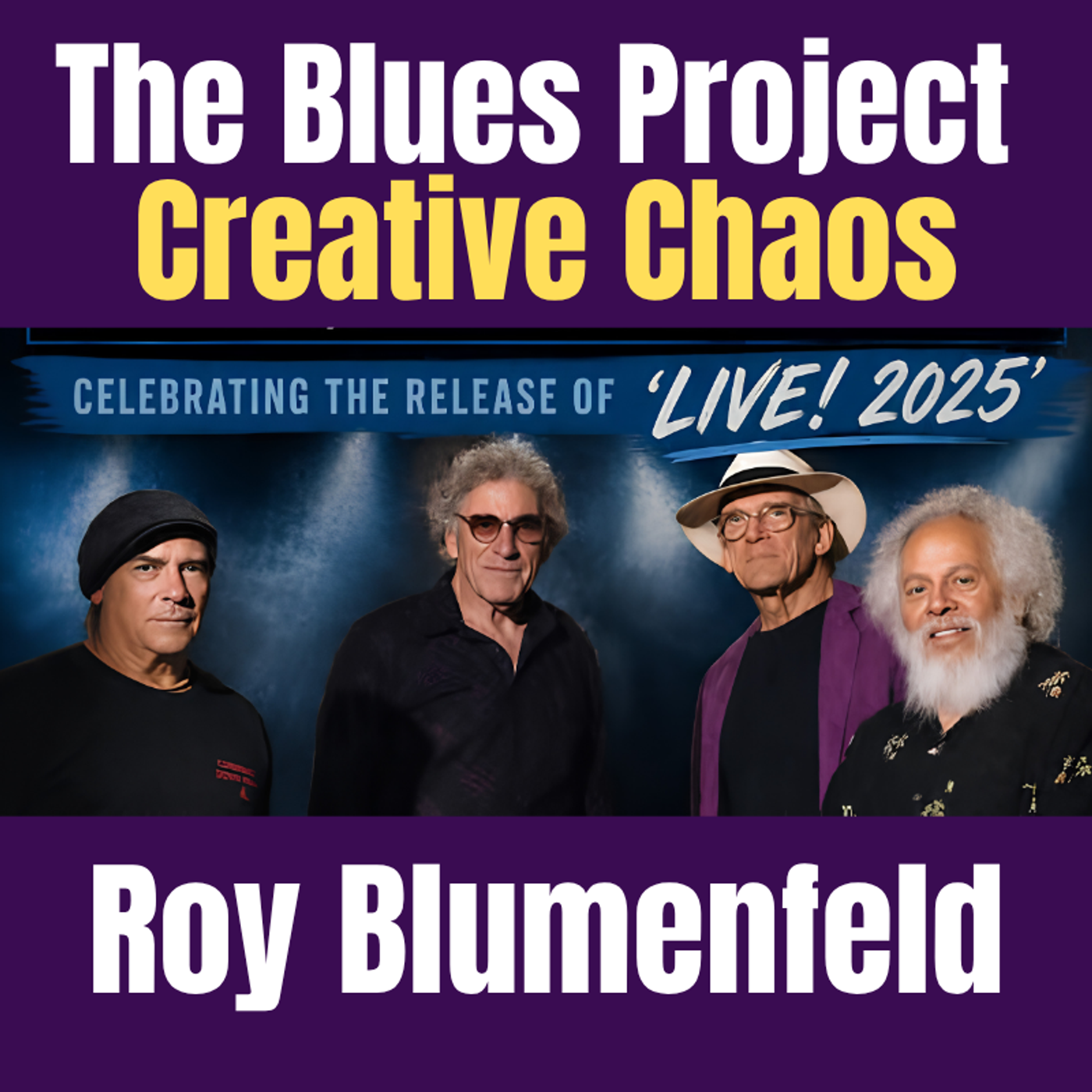
Roy Blumenfeld on The Blues Project, Evolution, and Live 2025 https://bluesproject.net/ Steve Yusko sits down with legendary drummer Roy Blumenfeld for a wide-ranging conversation about the origins, evolution, and ongoing life of The Blues Project. Roy traces the band from Greenwich Village in the mid-1960s to the new Live 2025 release, while also reflecting on musicianship, collaboration, and the larger cultural currents that shaped the music. He also shares stories about the players who cycled through the band, the role of timing and space in drumming, and how his background in community, storytelling, and spoken-word work fed into his approach to music. In this episode, Roy Blumenfeld walks through the early formation of The Blues Project, starting with late-night blues listening, impromptu jam sessions, and the transition from the Danny Kalb Quartet into a full band. He explains how the Cafe Au Go Go years helped define the group’s sound and identity, with a residency-like run that put blues, folk, psychedelia, and improvisation in the same room. Roy breaks down the making of the Evolution record, including the independent recording process in Scott Petito’s Catskill studio, the Kickstarter funding, and the album’s mix of contributions from different band members. He talks about the importance of sound itself, describing how tone can activate memory and how a drummer’s job is to shape the entire musical conversation, not just keep time. Roy shares how early influences such as Muddy Waters, Little Walter, Dave Van Ronk, Sonny Igoe, Sticks Evans, Art Blakey, and Elvin Jones helped form his musical vocabulary. He reflects on collaboration as a core principle of his career, noting how The Blues Project kept evolving through different lineups and new musical partners like Chris Morrison, Mark Newman, David Aguilar, Ken Clark, and others. He revisits the band’s later chapters, including C Train, the move to Colorado, and the eventual return to The Blues Project with new arrangements, new labels, and a more explicit live-band identity. Roy and Steve discuss the new Live 2025 album, how the current lineup came together, and why the band’s chemistry feels especially strong now. He also touches on promotion in the modern music business, including social media, voiceover clips, and radio PSAs as ways to help a working band connect with audiences. Timestamps 00:00 - Introduction to Roy Blumenfeld and The Blues Project legacy 02:43 - Revisiting Evolution and the band’s studio approach 07:08 - How independent recording changed the process 11:39 - Community, Yiddish culture, and early storytelling influences 13:40 - Timing, silence, and spoken-word technique 15:28 - Drumming as musical conversation, not just keeping time 17:15 - The first Danny Kalb quartet sessions and the Cafe Au Go Go era 22:20 - What Greenwich Village felt like in the summer of the 1960s 25:10 - Finding an authentic personal style as a musician 26:35 - Lessons from Sonny Igoe,...
speaker-0: Welcome back everybody to another Blockbuster episode of the Long Island Sound Podcast. I'm your host, Steve Yusko, and today we're taking a trip into the absolute stratosphere of American music history. If you love the sound of electric blues, if you love the spirit of the 1960s Greenwich Village counterculture, and if you love bands that refuse to play inside the neat little box, then you know our guest today is Absolute Royalty. Operating from behind his drum kit in the mid-1960s Electric Revolution, he was its physical heartbeat. He grew up in Mount Vernon, dropped out of NYU to play the drums, and in 1965 co-founded the legendary, genre-defined group, The Blues Project. Alongside his childhood friend, the late great Danny Calb. We're talking about the group that toured up the Cafe Ogogo. Conquered the West Coast from the stage of the historic Monterey Pop Festival and literally pioneered the album-oriented underground rock and jam band movement that we still celebrate today. But folks, this is not just a history lesson. The Blues Project is alive, well, and absolutely burning up the stage right now. They've just come off their phenomenal tour supporting their spectacular new album, Live 2025, released on Globe Records. And we've got a massive local hook for all of our Long Island listeners today. Joining the band's Stellar Touring lineup as lead guitarist and mandolin player is our very own hometown hero, a virtuoso who took a quantum leap forward with his award-winning 2018 album Empirical Truth, which took home best CD from the Long Island Blues Society. The incredible, talented Mark Newman. Between Mark's hearing strings, David Aguilar's Guitar Wizardry, Ken Clark's Burning Hammond Organ Runs, Tim Escheleman's Rock Solid Bass, and our guest's timeless melodic swing on the ride symbol, this band is proving that great music only gets sweeter and more potent with age. Joining us to talk about the new album, The Chemistry of the Current Lineup, and those wild 1966 session stories and over 60 years of keeping the beat. Please welcome to the Long Island Sound, the one, the only, the legendary Roy Blumenfeld. Welcome, Roy, to the podcast. speaker-1: Hi, Steve. Nice to see you too, especially in this format. It's kind of you're really very small, as I am. True. That was quite a send up the background. He's very nice of you. speaker-0: ⁓ thank you so much. I I wanna bring bring us back to the evolution album and your quartet, which was Roy, Chris Morrison, Ken Clark, and Scott Paquito, is that right? Scott. speaker-1: God Petito. The the evolution record. It Steve Katz and I, ⁓ Danny Caleb was not touring anymore. And Ste Steve Katz and myself decided to do a live record. Well not a live record, do do a studio record. And, you know, how do you follow up Projections? I mean, Projections was just a a wonderful record and an incredible album cover. Jim Marshall, the ⁓ famous ⁓ San Francisco rock photographer. speaker-0: Right. speaker-1: That was the cover. And you know, how do you follow that up? So well, I started to pick some tunes, like one song from Steve, one from song from Andy Kohlberg. There's a tune called Peru on the Evolution Record. ⁓ tune from myself I co wrote with Scott Bettito, the bass player and producer, engineer, mixer, and Chris Morrison. and ⁓ there was another tune ⁓ called K ⁓ Kettle of Fish on there. It's very interesting. I think he recorded that once with ⁓ Stefan Grossman. So we we we did a Kickstarter, we raised a little bit of money, and we went into Scott Petito's studio in Catskill, New York, next door to Woodstock. A wonderfully ⁓ equipped studio. It it housed the drums. He said many luminaries. His ⁓ he's like the zealog of ⁓ engineers. I mean, his his his hallway has photographs of him with Chick Korea, Jack Dejanet. Roy Haynes. Okay. He's got Steve Gaz drums there and some of Jack DeJanet's and some of Omar Hakim's drums, as well as other instruments, as well as ⁓ actually a baritone guitar that a friend of mine created, David Aguilar. He is a member of the Blues Project right now. And ⁓ and I wanted to use it on the Evolution Record. It was a little it looked like kind of gumby. It was a little heavy, it was very handmade, but had that great great Great baritone sound. And you know, sound is is such an a and powerful element in in life anyway. ⁓ it becomes quite often the soundtrack to ⁓ to your experiences and certainly to your memory, it really can activate memories. You know, people can think of tunes or songs that came and they're involved in some situation that i it it just brings them to that. So we recorded the I I'm leaving one guy out, and we put a t his tune on there too, All Over the Map, which is Ken Clark. Okay. A consummate, internationally known Hammond organ player. He can play foot pedals, he could do his hands. He has a trio without a bass player, obviously. And he's great, sings great. And ⁓ Chris Morrison was the guitar player. But I couldn't at that time I didn't have a Danny Kalp song. I really wanted to round out the whole record. With everybody contributing it to some extent. Next round we will. We'll find a Danny tune. Just a side note, ⁓ we played ⁓ Bearsville Theater recently, just outside Woodstock. And ⁓ a wonderful guitar player, songwriter John Berenzi had worked with Danny Caleb for about four years and he wanted to do Alberta. And if you've ever listened to Danny's version of Alberta, it's just absolutely gorgeous. And it's not that electric, wild and crazy high frequency. It's it's beautifully picked. Danny Caleb was a student of Dave Van Ronck. You know, and Dave Van Ronck would hold court at the kettle of fish, where luminaries like Dylan and Bobby Neworth and Desal from The Lovin' Spoonful and Eric Anderson, lots of folks would would go in there, you know, and hang. speaker-0: Right. speaker-1: And, you know, drink. And and ⁓ many many of us took lessons from Dave Van Rock. I became an okay finger picker. Steve Katz definitely got deeper into it. And that's one of the reasons why Danny wound up working with Steve later. So the the the record evolution, it's beautifully recorded, beautifully done. Scott did a great job. Then the band broke up. Well, that version, you know. I mean ⁓ if you we were to go through different versions, I could give you the the the chronology of that pretty quickly. speaker-0: How did you know working in in ⁓ Scott's Catskill studio differ from your earlier studio experience? speaker-1: Because it was it was an independent production. So we didn't have corporate people hammering on us. We didn't have somebody ⁓ you know, like on movies, there's somebody who looks at the script, ⁓ I forgot the what they're called, but they they're the insurance guys. Right. And they you know, you have to come in under a certain line and and ⁓ No, that that wasn't s an issue. And I know Scott worked very put in many hours mixing it later. So the post production probably was longer than the actual tracking. speaker-0: So you have this guy, a young singer from Connecticut, Chris Morrison. Tell me what it's like having a young singer bringing energy or a different energy to the band. Well speaker-1: It was he was into the blues and it seemed like the right guy to ha you know, hire Steve knew of his work and I took that Steve's suggestion, recommendation. And Chris is, you know, excellent, all around, solid, very, very clear singer. He sung evolution very well. I sing I sing it now, I sing it differently. But Chris was he he was somewhat he did go on tour with with Steve and myself. And Scott and Ken. And on bass at that time, well f before that was Jesse Williams. And Jesse Williams had played with Al Cooper for years. He also now plays with Jimmy Vivino and goes on a lot of blues cruises and teaches at ⁓ Berkeley School of Music. He's a Jesse Williams is an excellent, excellent upright and downright player. He's great. And then after that tour, I think COVID kind of crept into the scene. speaker-0: No. speaker-1: In terms of what was going on. And some of the guys didn't want to go on tour. And then finally Steve wrote me a note saying, Look, I you you just go with it. I'm I wanna s you know, do my ⁓ my solo shows, which he does and talks about his book, talks about his life and music and performs. A very nice show that he does. So he Steve's gone and evolution kind of sits in one of the drawers in my house. Yeah, that nowadays really speaker-0: Yeah. speaker-1: Musicians in a sense, to to make a living recording is very difficult. I mean when you your re residuals from a stream is point ⁓ three cents per stream. Right. Then really even Snoop Dogg had a problem according to Facebook. He had like a billion downloads and he had made forty seven thousand dollars. Something like that. You know, somebody's making some money somewhere. Right. Right, exactly. ⁓ so so that's speaker-0: Yeah, but not the artist. speaker-1: Interesting. On one of the shows we did at my father's place, you might have heard of that place. Rosalind Long Island. speaker-0: Yep. Yeah, Epy Epstein's place. speaker-1: My wife actually, Madeline Wilde, she actually worked there as a waitress many, many years ago. It was just intra yeah, the original. It was kind of interesting to go back to the newer version that Epi ⁓ decided to open. It seemed like more like ⁓ yeah. speaker-0: In the original. Like a dinner theater almost type of approach. Yeah. speaker-1: You then you're putting that nicely. Yeah. Dinner theater. Very speaker-0: Right. And appetizer theater. speaker-1: Yeah, it was good. Little lamps on the tables and that sort of thing. Where I met Mark Newman. ⁓ Mark Newman opened the show for us, warmed up, and then the blues project played. And then after that, I was in the dressing room with Mark and Naomi and who's a really good singer as well. Yep. And we just had a lot of laughs and it was interesting. And then Mark sent me some ⁓ empirical truth at C D assisting to that. I I called him up and and talked about, hey I've got another tour I gotta fulfill 'cause I was under contract, but I didn't have a band. So Jesse stepped to the up to the plate. He said he'd do it. And Ken was good because Ken is solid. Mm-hmm. Mark, you know, came in and ⁓ well, we had Chris Burgesson was the other guitar player. And he's another talented guy who teaches I think at Berklee School. Does some classes there. And and he fulfilled the Chris Morrison role. Okay. Mark Newman the Danny Cal role. You know, if I was looking to replace the roles of the different players, that was one way to I I looked at it. Ken Clark does the Al Cooper v vocalizing and or in all kinds of keyboards. speaker-0: In doing my research on you, I see a a thread of community and collaboration, always looking forward to the next lineup and and staying vibrant in the in this crazy stupid industry. And there was a story about your mother's school. And tell me about that about sitting in in that school and and listening to storytellers and Yiddish music and how that may have had an influence on you. speaker-1: We were members of the Shalom Alechem Folks Schule number thirty eight in my speaker-0: I'm glad you pronounced it because I was not gonna try it. speaker-1: ⁓ huh. Yeah. So and and and it really was about the culture, about the Jewish culture and the peop children, the people of Chelm, ⁓ the stories. And we did dances. We did the you know j Jewish dances. And one of the dance instructors there's a composer, last name is Lewis, and he and his wife worked at the ⁓ Schu Shula they called it. And ⁓ they ended up adopting the two Rosenberg kids. the Maripalts. Okay. The the crowd was a very ⁓ I I wanna say a red diaper baby crew crew, you know. Okay. ⁓ a lot of liberal, progressive folks. ⁓ and many of us went to, you know, summer camps that were that way. Bucks Rock, Camp Woodland, Camp Hurley. Inter interracial, interdenominational. ⁓ and very those were pretty informative years, being a camper, briefly, and then a counselor. I I got into waterfront swimming, teaching swimming. And so that was I got into the more of the hierarchy of gigs. speaker-0: Very nice. Very nice. I've always found artists one, artists ⁓ great songwriters are great storytellers as well. And that's something you learn, you know, it's ⁓ how to tell a story and how to continue other people's stories as well through music. speaker-1: I think ⁓ you know, and t look along with that is timing. Your timing, the pausing. Speaking of timing, my wife, who is a voiceover director and ⁓ has taught for many years and has a masters in voiceover teaching and reading and language ⁓ has a studio here in California. And ⁓ that's what she really talks about, how to speak with meaning, how to ⁓ how to express it in a way that speaker-0: Yeah. speaker-1: ha has some space, has some air when you need it and when you don't. It's a whole whole process. It's a that in it's in a spoken word is an art. ⁓ I agree. As as you know, when you d when you put out information to people that you you have to make sense of what you're talking about. But I will also say that what I learned a lot about was was good I was into comedy and of course Sid Caesar show of shows. I mean that was like Breakfast, lunch and dinner for me. And of course it moves on as you grow to there was Lenny Bruce and then George Carlin. Right. There's a great book out called Seriously Funny by ⁓ Gerald Nockman. That's a great book about the comedians from Mortsall on up through into the ⁓ seventies. Comedians. Yeah. Anyway. speaker-0: You you know what's so interesting to me is, you know, talking about speech, talking about silence and space and the communication that you as a drummer, not just as a rock and roll drummer, you have those jazz influences. You kinda have that ebb and tie to from what I'm reading and listening, to work with people and have that communication as opposed to just keeping time and I don't mean to b to be demeaning about that. Yeah. speaker-1: That's well, that's true. You're you're playing music. You're not playing alone. You're playing with other people. You're having a conversation, musical conversation. You also your guideline is the tune. Mm-hmm. The song. ⁓ if you have somebody singing, you certainly don't want to bury their vocals. You know, and and that's that's something everybody needs to be aware of when they're playing. I th I think prose really are. They'll cut back when somebody is singing their lines so you can hear where they'll augmented or or accent something that would read well within the s the story of the song. I like story songs myself, like Atlantic City is a good one. Drew Springsteen wrote it and it's it's an interesting story about gangsters and and life and ⁓ and hope in a way. The chorus is great 'cause it says everything dies, that's a fact. But maybe everything that dies someday comes back. Put your makeup on and fix your hair up pretty. Meet you tonight in Atlantic City. Yeah. Wow. And then there's the story about getting to that, you know. Anyway. speaker-0: Yeah, it really it brings the the character alive. And ⁓ yeah, that was ⁓ also covered by the band after Robbie Robertson left and Professor Louie got involved. speaker-1: Professor Louie is quite a quite a guy. John Berenzi records with him a lot. And that was the fella up in Woodstock who sung you know, Alberta, but that is the connection. speaker-0: I was fortunate enough to have Professor Louie on and the chromatics. They were they were really great. So Roy, bring me back to nineteen sixty five and the Danny Kalp quartet. Bring me back to that moment and becoming the band at ⁓ Cafe Ogogo and and the scene there. speaker-1: Yeah. It kind of goes like this. Danny and I were both listening to The Best of Muddy Waters, that record. I could still listen to that and get chills when I listen to ⁓ little Walter playing on I'm Ready doing his solo. Still get goosebumps. And Danny was having a New Year's Eve party. We we lived a few couple of blocks away from each other. And he had a set of drums there and ⁓ his his cousin was like a classical percussionist, Peter Cogan. Just played at the ⁓ Cleveland Symphony Orchestra, Chimpany. He's the guy who would have the patience to wait for like eight hundred fifty seven bars of music to hit a triangle once, you know. That's great. But I don't know if I could do that. But I probably exist. Sorry, Peter, if you're listening. But anyway, he had Danny had a set of drums and I can't be satisfied. He was playing it on his ⁓ Gibson ⁓ J two hundred guitar. And I sat in on drums with him. It felt really good. I tuned into the that kind of music. And then New Year's is is over and life carries on. New Year. And about three months later, I'm walking on Second Avenue and Danny's walking we're we meet up by chance. And he goes, Hey, are you doing anything next Saturday night? I've got a gig at a club on Long Island called El Toro. So I said, Yeah, I'll do it. I grabbed my little drum kit and I backed him up with guitar and drums on on some of the songs. And then I just so happened my roommate at the time was friends with a guy going to NYU and he was studying classical music and his name was Andy Kohlberg and he played upright bass. And I t Danny said, Let's just get a bass player. And he came up the next weekend and we had a trio going on. Artie Traum was in the folk circles there, you know, the folklore center, Izzy Young. I ran that. It was a real mecca for A lot of folk guitar players, right? A center, really a center. And ⁓ Artie Trout was playing w with Danny and me and Andy, that was the Danny Caleb quartet. And I think we played the Night Owl Cafe maybe a couple of times. Maybe the gaslight. And then Danny and ⁓ Artie went to to England. ⁓ Artie stayed there. Danny came back and d he was looking for a guitar player and he knew Steve through Dave Van Rock. And Steve started playing with Danny and Andy and myself. And around the same time there was a guy walking through Greenwich Village named Tommy Flanders. And Tommy was a singer, lead singer, in the Mick Jagger s style. Stand up, hold a mic, yep, gy gyrate, do it, get it going on. And so we were working with him and he wanted to do a tune called Violets of Dawn, written by Eric Anderson. ⁓ okay. Or producer at the time had been the producer on Like a Rolling Stone. And ⁓ he Al had obviously worked with him, ⁓ because Al ended up winding up playing organ on on Like a Rolling Stone. And you probably know that story a little bit about how you know Mike Bloomfield was the guitar player. Al was hired to be the guitar player. Tom Wilson was the producer. And Mike Bloomfield was in town with the Paul Butterfield band. They were doing ⁓ shows at the Cafe of Gogo and the series called Blues bag. And he opened up his guitar case, Mike Bloomfield started warming up and Al put his guitar back in the case. Sure. Because it it's just, you know. And he went into the control room and then he eventually found himself behind the organ and he'd he'd never worked in organ, ⁓ the slides on the Hammond, but he he would really great ears, ⁓ great musical ears, and he and he could hit the changes slightly delayed, and it sounded great. Dylan apparently really liked that. Right. Well, so Tom for this session that speaker-0: Right. speaker-1: I violates a dawn session, Tom Wilson brought in Al Cooper to be the keyboard player on it. With Danny, Andy, me, Steve. That was it. Yeah. And after the session, Al came back to a friend of Danny's house and he just sat at an upright piano and went through a whole bunch of different songs and styles. Cause Al was a songwriter. Okay. And he worked he worked in a building next door to the Brill Building where there were store floors of spin up pianos and floors with songwriters in them. And they'd be given assignments. And I guess they got a paycheck every week, but they were their job was to create tunes. Yeah, right. And ⁓ I think Allah wrote This Diamond Ring. I think he played guitar on who wear wears short shorts. And so for that bit was the genesis. That was the beginning of I think the band at Live at the Cafe O Gogo, nineteen sixty five. speaker-0: Belt them out, yeah. Yeah, so so there you are. What I can imagine, you know, it's it's the folk mecca, right? You guys are kinda you know, your your blues band, your fusion band, your psychedella, you know, what was the vi how how did people take it? speaker-1: Well, the audience ⁓ evolved over time. Would open up for us at the Cafe O'Gogo and we kind of held court there. It was like a yeah, w a residency almost. And it w it was great. We could rehearse in the day and then play most of the time, a lot of time. And as the weather became summer, things as you know, the village started to just get speaker-0: Well speaker-1: completely filled up with young people, tourists, et cetera. And there was a hotbed, the Cafe Wah, Finj Finjon Cafe, Gaslight, you know, the t Tin Angel, The Bitter End. And the Cafe O Gogo. And they didn't serve alcohol there. So people underage could go in. And there were a lot of young people who would break away from Long Island and get out it somewhere, find themselves a little joint to smoke and and then go into the club. You know, they were and Jimmy the cop, who was a cop in the in in the village, was always rounding the kids up at into a phone booth. Remember they had to actually telephone booths to walk in and you put a quarter in the thing. That's what you know, amazing. And ⁓ he would make them call their parents so the parents wouldn't worry or something. But he was quite a guy. I don't know what ever happened to him. Jimmy the cop, you know. And so when people have asked me about what what was it like? I mean, you know, to be there, you know, what would What would best describe it? The best sound design idea that I would say would be if you listen to the track by The Love and Spoonful called Summer in the City. Remember that song? Sure. That was like they had the sound effects of ⁓ jackhammers and streetcars and horns and c every people and and the tune was was great. It really really s told a little story there. But it was very much like that. I mean, it was wild. I mean, there were speaker-0: Yeah. Sure, sure did. speaker-1: t poets and characters walking around, people walking with capes and strange f outfits, the Summer of Love. I don't know if L S D it was starting to filter in to the area, you know. I think it seems like the West Coast Boy definitely got to the East Coast. I remember a buddy of mine who were roommates at ⁓ at school, ⁓ Bill Griffith, the ⁓ famous zippy the pinhead. Remember that that cartoon character? Are we having fun yet? You know. And ⁓ he had a studio over in Hoboken and we went over there and ⁓ he said, I have a little I have this little cube. It's a little cube with a funny little taint on it. He said, You wanna try it? And no, I didn't you know wanna try that. I don't know what it is. I wasn't really into drugs at all. I drinking a little bit ⁓ occasionally, but ⁓ I eventually did do that and ⁓ it was an interesting mind altering experience. Yeah, once, twice was enough for me. There are other people, yeah, they really really every day, you know. It's crazy. But the times, you know, as Bob Dylan said, times they were they're changing and and they really work because ⁓ our music was very eclectic, Steve. It was you know, when you you think about the influences, Al was doing you know, top forty or writing for you know, radio, writing for AM really. Danny was really deep in blues, be almost the purist of in a certain sense, but he wasn't playing like pure Chicago blues. Right. He was playing pure Danny Cal. Okay. And you know, his audio print, which if you can get to that place, this is to any musicians out there who are doing it, get your audio print, you know? Figure out who you are and play you. You know, you can imitate people, sure, that's fine. But dig through that and get to the essence. of who you are, how you feel and you know, ⁓ Steve Katz was more into finger picking and ballads. Andy Kohlberg was into classical music and playing the flute. And I was into listening to African drums and studying some jazz. I studied with Sonny Igo for a while. Woody Hermitt's drummer, then another guy named Sticks Evans, who put played with the the Temptations and James Brown. These guys had studios above Manny's music. Sure. speaker-0: Yeah. speaker-1: Right. So I'd go upstairs and ⁓ Sticks was great. I really wanted to learn to play funkier. I I love the Accord how could you not love Motown R and B stuff, you know, muscle shoals, R and B. I just you loved it. And and I briefly studied with Art Blakey's son, Sonny Blakey. And I remember one class he said before we got started, he said, Here, you watch listen to this and he put my head between two stereo speakers and he played a Love Supreme and he said speaker-0: Yeah. speaker-1: You think my father's great? Listen to this guy. And it was Elvin Jones. And and that was a a whole other thing to to listen to. That was pre Tony Williams. speaker-0: ⁓ wow. If there is one thing that you learn from sticks besides rudimentary things, who is the one takeaway that you'd say, This is what sticks taught me? speaker-1: He taught me to make the drum set sound very balanced so that the rhythm it's not just a snare drum you're hearing, it's not just a bass drum. It's part and parcel of the rhythm assigned to that particular song. Okay. An example I would say of that might be Steve Gad's a drum part on Fifty Ways to Leave Your Lover. Okay, sure. Right? It's kind of a marching drum beat with a s strong tom, floor tom on it. They gave it that really nice feel, you know, to it. And that somehow worked really well for Paul Simon. He loved that groove. And that was, you know, a musical choice by the drummer who figured it out. What what's gonna work with this? It's yeah, it's really it's not just a simple matter, as you say, of just hi keeping up with the metronome. A a lot of that has to do with quantizing and making it easier to edit and and bring with your adding instruments. So if the time is weird. And it's a lot more work for the engineer to kind of shift stuff around and digitally to make it be consistent. Yeah. speaker-0: Yeah. You know, all all the ⁓ accolades I hear musicians or artists give each other is, Hey, that guy plays to the song, you know. He's not a showboat. He plays to the song or she she plays to the song, which I think is really cool. speaker-1: That's true. That's true. I I was gonna just say we had one thing that's that's interesting. You know, I think you know, people say is it in the pocket? The guy's really in the pocket, you know? He's in the groove. But if you listen there are a lot of different pockets, you know. Like for example, you could listen to Jeff Bricaro's groove or Steve Gad or Steve Jordan, right? That's a whole other groove or James Gadson. Remember Bill Withers and James Gadson? ⁓ sure. ⁓ Stubblefield with James Brown. He has like one of the most sample speaker-0: Yeah. speaker-1: drum groove parts every drummer plays, you know? Grant amazing influence. And then Ziggaboo from the Beaters, Sissy Strut. I mean, these are iconic classic f for drum people and others. That's what I find interesting about so it's like drummers finding their groove, you know. That's what I meant about their voice. Yeah. speaker-0: Nice. Yeah, that's Yeah, just the fact that you could reel off those names and and a beat or or their pattern is so so much associated with them really says something about their art. Tell me about the formation of the Blues Project and going to C Train and ⁓ Man, there's so many so many ⁓ course corrections and changes, it's amazing to speaker-1: watch. There really were. Yeah, Monterey Pop Festival, Al Cooper left the band and he but although he was stage manager at Monterey Pop Festival. And ⁓ he got us in there. He convinced them to to get us to go to you know Al w was kinda looking after us, I think, a little bit. We we represented New York, a New York act, you know. And John McDuffie was the keyboard player who had replaced Al. And John John was his soul brother. He speaker-0: Okay. speaker-1: He was in the King Bees and that was the band backed up Carol King. Dandy Krutchmar Kutchmar who was the guitar player, I think. Anyway, ⁓ and interestingly enough, years later on the road, ⁓ I was in Ithaca College and and I met John Sean McDuffie out of the blue at this bar, and it turns out he was teaching soul music at Ithaca College. I thought it was yeah that's really great. But so So there's John John, there's the band, then the band finally, okay, we're we've we've gotta move. Andy Kobberg and I we both really loved ⁓ California. Really did. And ⁓ so we got a box truck, U-Hall box truck, filled up all the Blues Project equipment, our belongings, everything, furniture, whatnot. And a couple of vehicles we drove to the West Coast. We drove to Bill Valley and Andy Koberg read it A large house. It was ⁓ the head of the Peace Corps house that he rented out to us. Not that meant anything with but just that that was his his house. Under the guise of that it was a ⁓ it was Andy and his first wife, just then. And then eight of us ⁓ you know, descended on on the property and we all picked our little rooms. There was thirteen rooms. And at that location we ⁓ we got ⁓ Donnie Kratmar, John Gregory, Richard Green, Andy Klberg and myself and we had to one more committed record for MGM with the the blues project and it was called Pl they named it Planned Obsolescence. You know and we and we there's one tune on it's called Neas Hornpipe, which is C Train spelled backwards. And so C Train essentially produced that record and or created it and then we got a deal with A and ⁓ records and we did an actual C Train dedicated record. I I played on that. And it was in very interesting music and ⁓ Richard Green was a just a phenomenal virtuoso violinist. I mean, I think he played in old and in old and in the way. With Peter Rowan, Bill Monroe, John Conn, Richard Green. There might have been a fifth, I don't know, but David Grisman was in that. Yeah. ⁓ that was and ⁓ you know what? And Jerry Garcia was in that. Old old and in the way. speaker-0: Bluegrass guy? ⁓ why? speaker-1: I didn't get all the names right. But so Richard was was quite a guy, quite a player. I lasted for one one record with them and then I moved to Colorado. I felt like I I needed to get out of out of this umbrella of of business, the music business and find out about real life, what real people do. Yeah, rather than they call music, which I didn't understand then that music is a business. It really is a business. I sort of knew it as one, but When you take it seriously, then you really are careful about your songs and your ownership of material. Sure. And you know that. And but ⁓ I was determined to ⁓ you know, raise goats, do organic gardening and farming. I became a lumberjack out there. I learned how to stir my coffee with my thumb, you know. It's a great skill, you know, tough. You you gotta be tough. speaker-0: Amazing. Right, right. speaker-1: Tough tough as nails is a quote from Dick Gravenitis, you know, you gotta be tough as nails. Anyway, I did that and got buffed out and the snow started flying up in the mountains of Colorado and I I scurried back to New York City where I knew Danny was there and and family and others. And Danny was doing some kind of version, not a blues project, but he was playing I think the Danny Calb quartet or trio, and ⁓ he had an interesting guy who was a manager. John Simmons. And I was there and we we talked about getting it back together. Let's put this blues project back back on track. And we did. We got a double album deal with Capitol Records. And we the one album was ⁓ called Lazarus. And Danny did a long version of that. And ⁓ we did some other material on that. I think I had a couple of tunes on it. One Personal Mercy was a tune. And ⁓ Midnight Rain. But they weren't particularly great. I'll I'll say that. But that led to realizing that, you know, we we need to get a lead singer or somebody up front because we're we're in a in you know, in the field of we were opening up for Jay Giles, King Crimson, Black Sabbath, you know, on tour with bands like we opened up for Yes, you know and I and we opened up at one point for the Mahavishnu Orchestra. There was a big concert at Winterland. We opened. Then the Mother Eastern Orchestra with Billy Cobham on drums. And ⁓ and then ⁓ Emerson Lake and Palmer close the the shop. So there was a lot of amazing chops to look at and listen to. That's a Billy Cobb zone, you know, sixty-fourth note ⁓ rolls around the drums and just very powerful. And Danny ⁓ Danny was on that. And so we looked into re Rehooking up with Tommy Flanders and I knew a keyboard player friend David Bennett Cola, who was in Coachy Joe and the Fish. speaker-0: Yes, I know I know him. speaker-1: Yes, right. And he just had a birthday at the bitter end, I think. Yes. And ⁓ Will Willet Lussenden, who is a guitar player, kind of a ⁓ more of a rock player. So we had on bass a guy named Donnie Kretmar. And Donnie had been with the Lazarus album and and with and with part of the early C Train, but he didn't I don't think he stayed with that. But that band recorded with that the sound Sound Factory Dave Hassinger, who had recorded The Rolling Stones. And and he was he knew how to record blues, I think. And he re did a very good recording of Danny's playing on it's just it's a script that says the blues project as the cover and all all of the members of the band. And Tommy sung a couple of songs out that sounded you know, that we tried to make a commercial record and we tried to give the record label something they could really run with that might hit right hit hit something. It just it just wasn't really a c a congealed band. The band was not a band, really. Not enough rehearsal. The point of view was skewed a little bit, I would say. Gotcha. But and we were doing a variety of material, but really not as much. I was thinking back just the other day about how eclectic the blues project is now and was then ⁓ you know in sixty five. It was like, okay, here's a Heavy blues tune. Now wait wait, there's a flute here. What ⁓ that's another you know, a whole other feel. And then we got this like kind of a ballad tune and now that's kind of a you know, it it it was kinda neat. I maybe we were early A D H D. speaker-0: You before your time. The audience had to catch up to you, you know, when you think about it. Really? speaker-1: On the other hand, I mean, we didn't really have anything that s like I would say the Grateful Dead LSD somehow went hand in hand after Pig Pet passed away, right? The way they would travel on and embellish their music and however they jammed it out. We w i it wasn't even pot. It wasn't alcohol, it wasn't, you know, heavy drugs or anything. We just I don't know, I think we approached it from the point of view of let's We're making tunes, we're making music, you know, that's that's that that that was our drug, you know. speaker-0: Well, creativity. Let's just be creative, right? speaker-1: Yeah. And and we in many ways I've called it a we were a we were a trailblazing jam band from the sixties, nineteen sixties. But we did the trailblaze and I think other young bands who I've talked to players had come up to me and said, ⁓ man, when I heard you guys, you really influenced me in some way. We can make this mus we're gonna just stretch, you know. We're gonna have a point of view ⁓ and you know Dorot thing. Even though, you know, we never really had an AM hit. We did, although no time like the Ripe Time got on way up there high up on the ch some charts. And it was then in a compilation C called ⁓ Nuggets that ⁓ Legan Kay, I believe, put together. And that had a bunch of psychedelic bands, the flaming groovies and and others during that period of time. And they put that tune in there. So that was interesting. Yeah, I did a reunion in San Francisco recently where I was the only blues project guy out here and they were playing music tunes from the Nuggets record and one of them was No Time Like the Right Times. So the the house band learned the tune. They called me and I I came in and sat in on it and played the tune. I had to listen to it again actually to hear what the hell I played. But speaker-0: Nice. Hey, tell me I'm I'm so interested. I s I read this that ⁓ George Martin after the Beatles picked you guys, C train, to work with. How the heck did that happen? Well speaker-1: Well, I'm not it it may have been through management that they hooked them up. Paul McCartney had we had Linda McCartney, Linda Eastman was photographing the Blues Project. Okay. And her a publicist eventually hooked her up with Paul. That's I think they got together. And so there may have been some connection there. I, Steve, I was in Colorado at the time. I had left C train. So that might have been Not a good choice to do. Maybe not, maybe whatever. But but I didn't do that. They I didn't work with with George Martin. But but they they did and they released the C Train album with Peter Rowan and then and a couple a few more albums. I don't know if they had actually a real hit. I know that a real crowd pleaser was is Orange ⁓ Blossom Special. And that would s Richard Green would would really tear that up. Yeah. But that's that's that's my George Martin miss. That's all right. I can live I can live with it, you know. speaker-0: I'm sorry to bring it up. Yeah. So so it goes from the Blues Project to C Train. A couple different spellings of C Train. You're in Colorado. You're becoming masculine and strapping and stirring your coffee with your thumb. How how did how did the coming back to the Blues Project and was there any problem yeah, 'cause you've you've worked through a couple of different labels and stuff, was any problem with the you know, having the name, like did somebody else own it, you owned it or how did that work out? speaker-1: Right. I mean It just it really everybody believe you know felt Danny was the founder of the band, as I believe he was and is was. And everybody respected that. Everybody else had done other things and had greater successes. ⁓ Steve Katsk did very well with Blood, Sweat and Tears. Yeah. Al Cooper made a wonderful album, Child Is a Father to Man. And then ⁓ he he left ⁓ Blood, Sweat and Tears and went on to produce ⁓ work with Super sessions, right? With Stills and Bloomfield. And then and and and he produced some other people and started working on his own stuff. He Al lived in Nashville. He lived in Atlanta. I think while he was in Atlanta, he was listening to a band at a club called Richardson. And that club there was a band that he was following called Leonard Skinnard. And he listened to those guys. And I visited Al at one point. time. I lived in Louisville, Kentucky for about five years. And he said I went to a club with him. He said to me, I want you to hear these guys. And they went into their their their tune, Sweet Home Alabama. And ⁓ he kind of knocked hit hit well he he nudged me with his leg, he said, This is their hit. And he was very right. Three guitar players there he said these guys had worked out their parts to a T, the whole band. And he after I went back to Louisville, he gave me a call He said, Why don't you come down here and jam with these guys? I think you'd fit in with them really well. They're doing Call Me the Breeze. I mean that's and on the one hand I thought, let's see, they want the South to rise again. They don't like black people, and they ⁓ most certainly probably don't like Jews. So I passed on that. You know, you know, I don't want to go but I I was actually playing with a band in in Louisville called Leslie's Motel. It was a double drummer band doing sort of almond brothers stuff and and ⁓ I I had just come to town and their second drummer had left and and they said, Hey, do you wanna you know wanna play with us? And that was that was a lot of fun. Started my own band with three other guys after that group out of ⁓ Louisville called ⁓ Coco Morgan where we toured Buffalo and Rochester and Syracuse from you know, driving up from Louisville or Kentucky. Well that was a lot of fun. It was a whole different feel. speaker-0: Okay. speaker-1: in ⁓ Kentucky, Louisville. Definitely. From New York by faster, brisker. speaker-0: ⁓ talk about laid back, yeah. Right? speaker-1: Yeah. Lou yeah, Louvau was w laid back it was. But but it was interesting as my travels kind of following being in staying in touch with Al I did a lot over the years, just to check in and ⁓ I was in LA and I went I visited him down there and ⁓ he said, come with me, I gotta deliver this ⁓ record to MCA. See he had created a subsidiary label called Sounds of the South and he had I think three bands on that label. One was Leonard Skinner, another was The Booze Project and Mo's Jones, I think. I could can be getting this information wrong, but we drove up to the studio MCA, the president's office in a in in Al's X caliber. He was high high on the food chain at that point. ⁓ we go in there and he gives the guy a vinyl record and he says, Yeah, listen. So we sit there and listen to this tune and the thing goes on for six minutes. And the guy the president said, Ow. In there a little long and out goes, nah. The kids will love it. And it was a free bird. Huge, huge hit, you know. But it was and of course they got in a plane crash and that was an another sad thing that happened to those guys. speaker-0: Well She's wild. Let's talk about the live twenty twenty five that album. I've been listening to it most of the day. ⁓ very collectic. There's so many different genres I would say on this on this album. Tell me how that that came about. And I'm just gonna share what it looks like. There we go. And that's the Blues Project Live twenty five on the Evil Spotify. speaker-1: There it is. speaker-0: And I see that you got Mark Newman's tune on there, Tulsa? speaker-1: Yeah. ⁓ yeah. speaker-0: Yeah. So so give ⁓ give me the origin. How d how did this all come about? ⁓ you just finished a tour, right, on the west coast? speaker-1: ⁓ yeah, we just said nine nine dates. ⁓ yeah. It was a grueling tour. There was a lot of driving. We had a good turnout. It wasn't overflowing, but you know, it's we're playing in some new ⁓ areas before. So we're building a presence, the name, the band. It's not really blues. It's not like I mean, when people think about blues, a lot of the the older blues guys are are passing on, you know. So maybe younger people who think about blues if they haven't checked out Robert Johnson or Muddy Waters or Helen Wolf or the Span. They they're you know they think it it's like, you know Yeah, that, you know, John Joe Bonamasa, I mean, I think he's a wonderful player, but you know maybe rock blues, I suppose. So the band we put together a West Coast tour. It's amazing. David Aguilar, he's on the record. He plays with speaker-0: Clapton. speaker-1: Lester Chambers and sometimes ⁓ with Big Brother the Holding Company. He fills in for Sam Andrew who passed away. And we do the Aguilar Blumentheld project. We did a tour at Wales for about nine gigs. We did a put out a little record. Stanley Mouse did our cover. speaker-0: While you're looking at at that, I'm gonna tell the audience if you've experienced the blues project, tell me in the comments. I'd like to know ⁓ from those who've seen the blues project recently and their nine ⁓ stop tour, and tell me what you think and I answer every comment that comes up. All right, we're back to you, Roy. speaker-1: Here is the Aguilar Blumentfeld cover. Yeah, that's that. And before before the cover we we produced one the same record, but Stanley did the cover for the final release. And it was played well, so it was called Welsh Rare Bits. speaker-0: That's great. Yeah, very nice. Good plan, Lord. speaker-1: David Aguilar is ⁓ guitar, Mark Newman is on guitar, Tim Eshelman, bass player who has a Christmas drug band and is a very ⁓ prolific producer, bass player. Our record is out on his label, which is Globe Records. And ⁓ Tim sings, he sings Motify and on that record, as a matter of fact. It's a good good dance song. And then Ken Clark on keyboards does a lot of singing. He kind of was my Al Cooper guy, you know. I figure. Keyboards and you know, but Al didn't play Al didn't play Ewe, Ken does, which is the electronic wind instrument. That samples like a flute. That's that's on there. Flute thing is on that flu electric flute thing really. And ⁓ who have I left out? That's it. It's the five of us. Right. So we put together with an agent, we put together a a tour out here on the West Coast. And ⁓ we didn't tour as that speaker-0: ⁓ interesting. Mm. speaker-1: configuration on the East Coast at all. It was a good tour. We we we had enough gigs, good guarantees. We we played Yoshis. And I think thinking that was we played, if I'm right, we played Yoshis and recorded w live at Yoshis and on this same tour recorded live at Rancho Dicasio. So we had a couple of different versions of the tunes to pick and choose, which one proved a little better. Mean really we had one one day of actual getting together as a group up to and everybody knew the material we s from the evolution record. We were doing a lot of tunes from the evolution record and doing tunes we'd done before with with Ken and the the guys just needed to learn those. Inside information we learned that one. That was an Al Cooper tune. And ⁓ that was a good a good version of it. How we go east. For some reason I'm thinking we c we went to the East Coast, but I think the next stop was ⁓ I'm losing track, was probably on the West Coast again, you know. Right. We did another West Coast or and was i it was reflects how many people we could draw into a sh a show. Right. You know. And a lot of realization was that our our ⁓ social media was not really all together, right. I had a lot to learn myself and a lot of hats to wear on that. And I tried to have a publicist at one point with the release of the record and and giving it to to distributors, but it was a very tricky thing. A publicist is kinda like how do burn money up quickly You know. And and get nothing for it. speaker-0: Right. Right. Yeah, it it's it's funny you mention that 'cause I get publicists that reach out to me to you know, I'm I'm not I'm not charging anybody. You know, it's all good goodwill, you know. speaker-1: But Yeah. But the well the so, you know, Tim Eshelman who runs Globe has done more Facebook and that kind of stuff. So we got into targeting ⁓ you know, certain areas we're playing and I started doing voiceover. I would be coached ⁓ from my wife with her business, which is ⁓ Radiomagic dot com. Go there, check out her demos that we did you did for people over many years. And ⁓ but I was doing sixty second speaker-0: ⁓ okay. speaker-1: spots for venue. You know. Back in the mythic summer of love in nineteen sixty seven, the place to be was the Cafeo Gogo. speaker-0: You have a good baritone voice. Yeah. speaker-1: And then now, ⁓ you know, on August fifth, I was then nineteen two thousand twenty-six, the place to be is the bitter end. You know, I did one for them and but really ⁓ the use of it I thought would be good for if people with their email connections to every their friends and all, and they had a little NP three thing attached to a little note saying, I think you should listen to this. This is coming up and so instead of just in print on a poster, they're hearing you're getting this audio. speaker-0: Right, exactly. speaker-1: And that was a lot of fun to do. But there's that kind of stuff is really important. Also doing PSAs for radio stations is another thing. Because PSA you don't have to buy airti it's just one of you say, Hi, this is Roy Blumenfeld from The Blues Project and you're listening to the the volcano on W W K C ninety Wine, you know. And it's just cool. A lot of celebrity rock and rollers do it, you know? speaker-0: ⁓ cool. Sure. Hey, while while we're talking about it, can you do one for me right now and say, Hey, I'm I'm Roy and I listen to the Long Island Sound. That'd be cool. speaker-1: Hi everybody. This is Roy Blumentfeld from the Blues Project, and I'm listening to the Long Island Sound. speaker-0: Thank you. speaker-1: First one's free, man. No, no. speaker-0: Yeah, that's what they said in the sixties about everything, right? Yeah, just take this take this cube, yeah. The first one's free. speaker-1: And we've had fabulous hit records to make this flow, you know? It's amazing. However, right now the band as a band is really a band, Steve. It is live. It's like it was hot then. It's even hotter now. I mean, I'll we're talking about, okay, how do we keep the flame alive? Right. And that's we've you know, we really need to organize, you know, shorter tours. speaker-0: Right. speaker-1: 'Cause you can get into trouble if you're out on the road and you've gone through blown through a weekend and then there's like Monday, Tuesday, Wednesday, nothing to do. You're eating if you're staying in motels, it's forget it. You'll won't work. And depending on what you're making per gig, if you have that a built in following and you have email addresses a mile long and y they're arranged so they're in areas that are accessible, you know, that really works. ⁓ our next our next move, we're thinking about trying to do the ⁓ was it the South Bay Long Island? speaker-0: ⁓ yeah, the the South Bay No the Great South Bay Music Festival. James Fach is the promoter of that. speaker-1: Mark has a connection to him and so maybe maybe we'll get there. If you know, actually if you don't earn as much but you get in front of a lot of folks, they have a chance to hear you and either like you or not like you. speaker-0: Yep. Yep. They just had they just had government mule there. Yeah. speaker-1: Really? Yeah. Yeah. Was that the out there or speaker-0: Yeah, at the Great South Bay Music Festival a couple of weekends ago. Yeah. speaker-1: I like Government Mule. The the lead guitar guy's very good. Trucks is you know, a promoter who worked with Coco Morgan, the band from Louisville, Kentucky. Mm-hmm. We worked up at the Red Creek Inn in Rochester. And ⁓ Steve Gadd lived in Rochester and on a Sunday I caught one of him playing when he was playing jazz, doing jazz. And ⁓ the guy there, Jeff Springgut speaker-0: Yeah, Tedesky trucks. Okay. speaker-1: I think he runs Rochester Entertainment, which is a huge promoter festival. And he told me when I ran into him, he said, I'm doing a show opening up for Hot Tuna is the Wood Brothers and then Hot Tuna and then Tedesky Trucks. Big show. So I looked up the Wood Brothers, who I hadn't heard of, and I just I fell in love with the their music, their whole style. I mean they're wonderful players and really have they have a voice, all right. They really have. have a voice, you know. Yeah, they're great. Yeah. So I'm excited about this new band, this this solid new group of people. There's no curmudgeons, there are no complainers. There's it's just guys together trying to make it happen. And and doing a damn good job of it, you know. I'm ⁓ honored drum within that whole circle of players, quite frankly. speaker-0: Yeah. If there's anybody you could sniff out virtuosos in your sixty year career, you've got the ear for finding the right people, I believe. So I think it's I'm I'm really looking forward to your next tour. Hopefully you do something here on the East Coast. I'm really honored that ya you took the time to spend some time with me. I really appreciate it. speaker-1: I hope I took you on a s a reasonably understandable journey through these the mascinations of this thing. speaker-0: Now I have to do my homework and and figure out who all these people are. But it's speaker-1: Funny, I record spoken word books, right? At the radio at the Radio Magic studio. And if I don't let's say somebody's reading their book for ⁓ three hours and they can they don't get tired and have to pick it up if it's a four hundred page book, you know. I have to go back after that and go over three hours and more of listening to taking out any any things that didn't work, any slips, trips. speaker-0: Yeah. speaker-1: whatever sound, something that didn't work. I have to clean it up, get it somewhat timed and order, you know, the whole right. And it's just it's a long string of of ⁓ waveforms. ⁓ I had a real interest, still do, in spoken word stories with sound effects. So in other words a book when somebody reads it like a book, it's very really kind of flat. There's no ultra dramatic ups and downs. Right. It's Delivering information but in a way that's not y still has a sense of humanity in it. You know. But with what I like is more like almost a three dim four to three dimensional audio theater. If it's just audio with no visual, then you're you're telling a story with using you know, like if somebody's thinking in their head, you might have s reverb going in that inner inner dialogue, right? Interesting. I've been interested, you know. speaker-0: Right. Thanks. Mm. speaker-1: There was a technique in teaching voiceover that I think Madeline actually put together through the use of music and voice. So that, you know, if you're into if you're listening to say jazz, you you're your tone changes, right? You're into that rhythm of that, you know. But they become if you're a young voiceover talent wanting to learn that, you you ⁓ you need, you know, tra they're like training wheels. So if you can remember a tune. And the way it went. And it was a certain kind of tune. Maybe the the the copy has to do with a nightclub at a bar. And you have to get into that head, you know. Right. You could imagine all the times you've been in bars and done that and tap into your own life experience that way too. But also if there's you're hearing a tune, you're hearing something, right? Mm-hmm. It helps. Yeah, and your voice ⁓ you know, it's like when you speaker-0: Mm-hmm. That at that atmosphere. speaker-1: Without seeing a face, if you hear somebody talking and they're smiling, you can hear the smile, right? But yeah, so ⁓ speaker-0: Right. Right. Exactly. I'll put your wife's ⁓ links in the description of everything. Well Roy, thanks so much for giving me the time here. Really appreciate it. speaker-1: ⁓ yeah.
More The Long Island Sound - Music and Entertainment Discovery Begins! episodes →