
The Long Island Sound - Music and Entertainment Discovery Begins! · Stephen Yusko, Host and Curosity Seeker
Join us as we do a deep dive on Jesse Welles' lyrics to explore religious theology, and the intersection of music, faith with modern philosophy. We examine the work of singer-songwriter Jesse Welles, focusing on his unique perspective regarding biblical exegesis. This conversation bridges the gap between his artistic output and complex theological questions, offering a rare look at how he processes spiritual themes in his songwriting. Chapters: 0:00 The Troubadour as Theologian 1:08 Beyond the Arkansas Woods 2:13 Weaponized Faith and Civil Religion 5:15 The Kingdom Within: Rejecting Institutional Greed 7:06 Zen Philosophy and the Tao of Songwriting The discussion expands into Christology critiques and the role of Taoist philosophy in his worldview. Listeners will gain a clearer understanding of how these disparate ideas inform his creative process and shape his current outlook on life and society. Subscribe for weekly artist breakdowns, and comment below with which musician you would love to hear more about next.🤔 Welcome to The Long Island Sound, Are you curious about the journeys, inspirations, and hidden gems within the world of artists, singer-songwriters, entertainers and musicians? We delve deep to bring you the backstories you won't hear anywhere else. 🎶
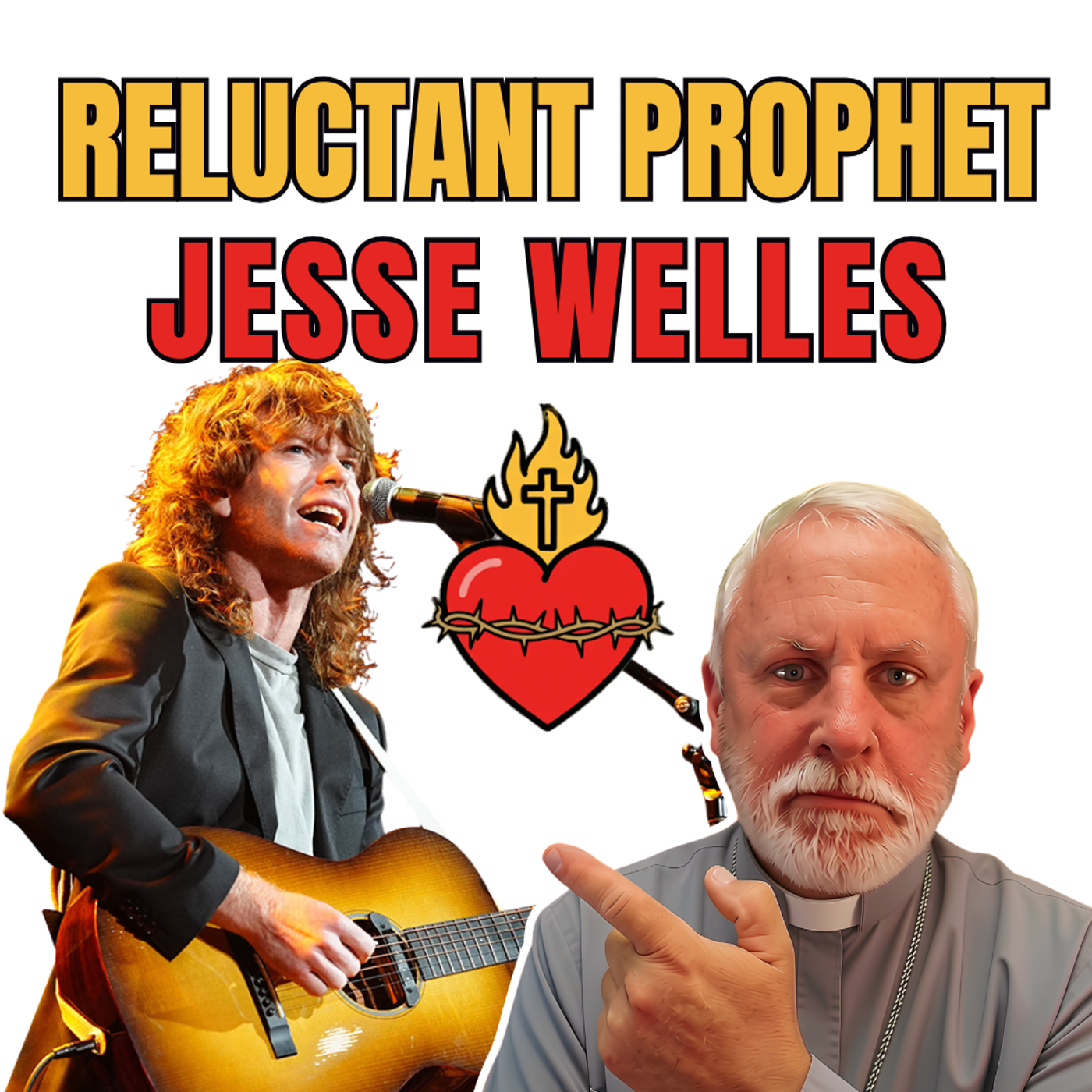
Jesse Welles Reluctant Prophet: What if the most radical religious commentary of our generation isn't coming from a church pulpit or from a kid singing under the Ozark power lines? Today on the Long Island Sound Podcast, we are cracking open Jesse Welles' lyrics, mapping out his hidden biblical exegesis, Christology critiques, Taoist non-duality, and Alan Watts parables across the next 20 packed minutes. By watching this episode to the very end, you'll discover why Jesse Welles isn't just singing the news, but operating as a master level comparative theologian. You'll walk away with this entire framework to decode the secret spiritual language hidden inside this modern roots music. I'm Steve Yusko, a former deacon in the Catholic Church, podcast producer, and a regular guy born into a blue-collar suburbia. Right here on Long Island, New York, in good old US and A. You know, most people stumble across Jesse Welles on TikTok or YouTube and see an unvarnished troubadour in the Arkansas woods strumming a three quarter size guitar and singing about health insurance, Boeing, and microplastics. Headline writers love to call him a fast folk singer or a modern Woody Guthrie. But when you examine his background, a fascinating secret really emerges. Jesse actually grew up attending church camps in Arkansas. and even attended a Christian university on a worship music scholarship. He knows Judeo Christian scripture inside and out, and rather than abandoning it, he uses that biblical literacy to perform a systematic exegesis on twenty first century American life. You know, Jesse isn't just dropping casual metaphors, he's actively pitting canonical scripture against state power, juxtaposing the historical Jesus against civil religion, and weaving in Eastern non duality. Let's start with an explosive critique of civil religion in the song The Great Caucasian God. On the surface, it sounds like a classical country blue strum, but look into how he opens the song. Quote Upon a missile rode the Lord, roaring justice is the sword. He was melting off the faces of the damned. Have you heard of Noah's flood? The tail will pale against the blood, pouring out a And boiling in uranium sands. Wills takes the Genesis flood narratives and conflates them with modern nuclear warfare, describing atomic weapons as God's celestial shower. He exposes how political systems co-opt monotheism to frame imperial violence as divine election. There are those he has chosen and those he has not. He maps out this deity across Texas sieges at Waco, Ruby Ridge. Prisons filled with holy visions, armed militias, and tactical gear. Then in a spoken word bridge, he delivers this devastating indictment of moral atrophy. Quote, there ain't a crueler trick than death has ever played on a man than to fool a man into thinking that while his soul was indeed dead on the inside, he was in fact alive on the outside. End quote. He carries this deconstruction into don't tread on me. Where he takes Jesus' Sermon on the Mount from the Gospel of Matthew and subverts it with modern political rhetoric. Quote, Jesus stood up at the Sermon on the Mount. He said, Blessed is the second FAFO. Fool around and find out. They said fool around, they could use another word there. He said, This cross is the creation of the last administration. You know, putting hyper individualistic grievance slogans directly into the mouth of Christ during the Beatitudes Welles satirizes how gospel pacifism gets distorted into self-righteous aggression. And in the song War is a God, he identifies global warfare as an autonomous idol. Quote, bloodshed and starvation, they both get the same damn god. They just don't know how to read. Maybe war is their god, end quote. You know, he points out that opposing factions often share identical monotheism foundations. yet remain trapped in violence due to dogmatic illiteracy. Fans will spot that War is a God is a direct nod to Cormac McCarthy's novel Blood Meridian. Now before we move into Eastern philosophy references, I want to jump into the comments with you. Drop a comment right now and tell me, have you ever noticed that modern culture twists sacred texts to justify political anger? And which one of these lyric breakdowns hit you the hardest? Let me know. Down below. So is Jesse an atheist throwing rocks at the church? Yeah, not at all. His spirituality is rooted in mystical eminence. In quote, in the song I ain't going to hell, he tackles institutional authority with his Southern humor. He opens by quoting Hank Hill from The King of the Hill. Quote Long ago in another country, Hank Hill uttered this holy verse You're not making Christianity better, you're making rock and roll worse. End quote. Alright, then he dismisses institutional extraction across history. Quote Call Jesus, Muhammad, Buddha, and Krishna. Tell them sorry, and I'll be right with you. Tell Joseph Smith and old El Ron that I politely decline what's ever going on. And his chorus states this I ain't going to hell, but I sure ain't going to church. He rejects altar calls, thin veiled rhetoric, and the weekly extraction of money, time, and And to feel free every Sunday isn't rejecting spiritual truth, he's rejecting the extractive commercial enterprise that's built around it. In the song The Kingdom is within you, he draws directly from Luke seventeen twenty one. Quote, Scream at the sky, no one can hear you. The kingdom is within you. When we've been here ten thousand years and nothing's ever seemed so clear. End quote. Welles redirects the spiritual search away from sky god hierarchies and towards internal self-awareness. He borrows from John Newton's line from the song Amazing Grace Ten Thousand Years, but decouples it from orthodox afterlife rewards, using it to emphasize the timeless nature of human consciousness. This is where Jesse's songwriting becomes really truly remarkable. He integrates Eastern non-duality, Taoism, and Zen philosophy. In his hit single, Horses, he sets up a philosophical dilemma between Western active morality and eastern quietism. Quote, I thought an awful lot about Jesus, a lot about Lao Tzu, and the way Tao is to do nothing. Then what the hell am I supposed to do? The harder you think, the more that you sink. End quote. Here he contrasts the Christology imperative of active moral intervention with Lao Tzu's Taoist principle of Wu Wee, effortless non striving. Trying to resolve this paradox through intellect alone leads directly to philosophical sinking. Really something to think about. And now that leads Jesse into a twentieth century philosopher, Alan Watts. In Wild Onions, Jesse writes, quote, Alan fifty watt amp subconscious in a limestone cave with a flashlight. Looking for a window end quote. This references Alan Watts' lectures on Lao Tzu regarding empty windows while poking fun at the absurdity of using a flashlight in a cave, which also references Plato's cave to look for the light. In the song Life is Good, Jesse adapts a fable towards Watts about a toad and a centipede. The toad asks the centipede, how the hell do you walk? Centipede asks the toad, how the hell can you talk? I can't float. I can't Zen. I don't make no sense. End quote. In Watts' lecture, the centipede gets paralyzed in a ditch after overthinking its leg movements. Jesse uses this to show how hyperrationality prevents organic living. And in the song Simple Gifts, he subverts Joseph Brackett's 1848 Shaker hymn, quote, When true simplicity is gained, how much then is lost? I invested in them feelings, I paid dearly for them thoughts. End quote. He examines the simplicity to the Taoist concept of P'u, the uncarved block, asking if stripping away complex emotions in pursuit of stillness erodes what makes us human. He expresses envy for nature. Quote, how can I envy all them stones? They don't never say a word, end quote. While acknowledging the steep emotional cost of human self-awareness. Alright, I want to pause right here because this is a massive philosophical question. Are you more like Jesus or Feeling the drive to actively fix the world or more like Lao Tzu, practicing non action and letting things just flow? Drop your stance in the comments right now. I'd like to know, and let's share this with the community. Let's start the discussion right here. Or you can sit back and let it flow. When facing physical mortality, Jesse dissolves domatic boundaries entirely. In the song That Can't Be Right, written about medical trauma, he sings, quote, lying on a table with the whole world reaching in you, hope to Jesus, Buddha, Bob that they washed their heads. Grouping Jesus, Buddha, and Bob into an informal prayer shows that human vulnerability is where all traditions meet. He pairs this with the exodus imagery of a pillar. In the desert, all alit with flames. Jesse also draws on literature like Hermann Hess's Siddhathra, quote, The River is laughing and we're only passing through. And Frank Herbert's Dune, Fear is the Mind Killer. You know, Jesse Welles resonates really across generations because he addresses modern chaos using the deepest spiritual and philosophical tools in human history. He deconstructs weaponized civil religion. Rejects institutional greed, and redirects us towards the kingdom within, and challenges us to love our neighbors. So tell me this. Which scriptural or philosophical reference in Jesse's music surprised you the most today? Was it the great Caucasian god, his Alan Watts references, or his Taoist lyrics in horses? Share your thoughts and perspectives in the comments section below. I want to read where you stand. Alright, that's about it for this expose on this deep dive on Jesse Welles lyrics and scripture and philosophy. don't forget to hit that like button, subscribe to Long Island Sound. If you like what we're doing here, hey, please tell a friend. As I say, be generous with your joy, keep your spirits high, and let the music, philosophy, and maybe a dose of scripture, take you on a journey. Be well, everybody. Hey, and check out this next video. I'm supposed to tell you that. Alright, take care. Be well.
More The Long Island Sound - Music and Entertainment Discovery Begins! episodes →