
The Long Island Sound - Music and Entertainment Discovery Begins! · Stephen Yusko, Host and Curosity Seeker
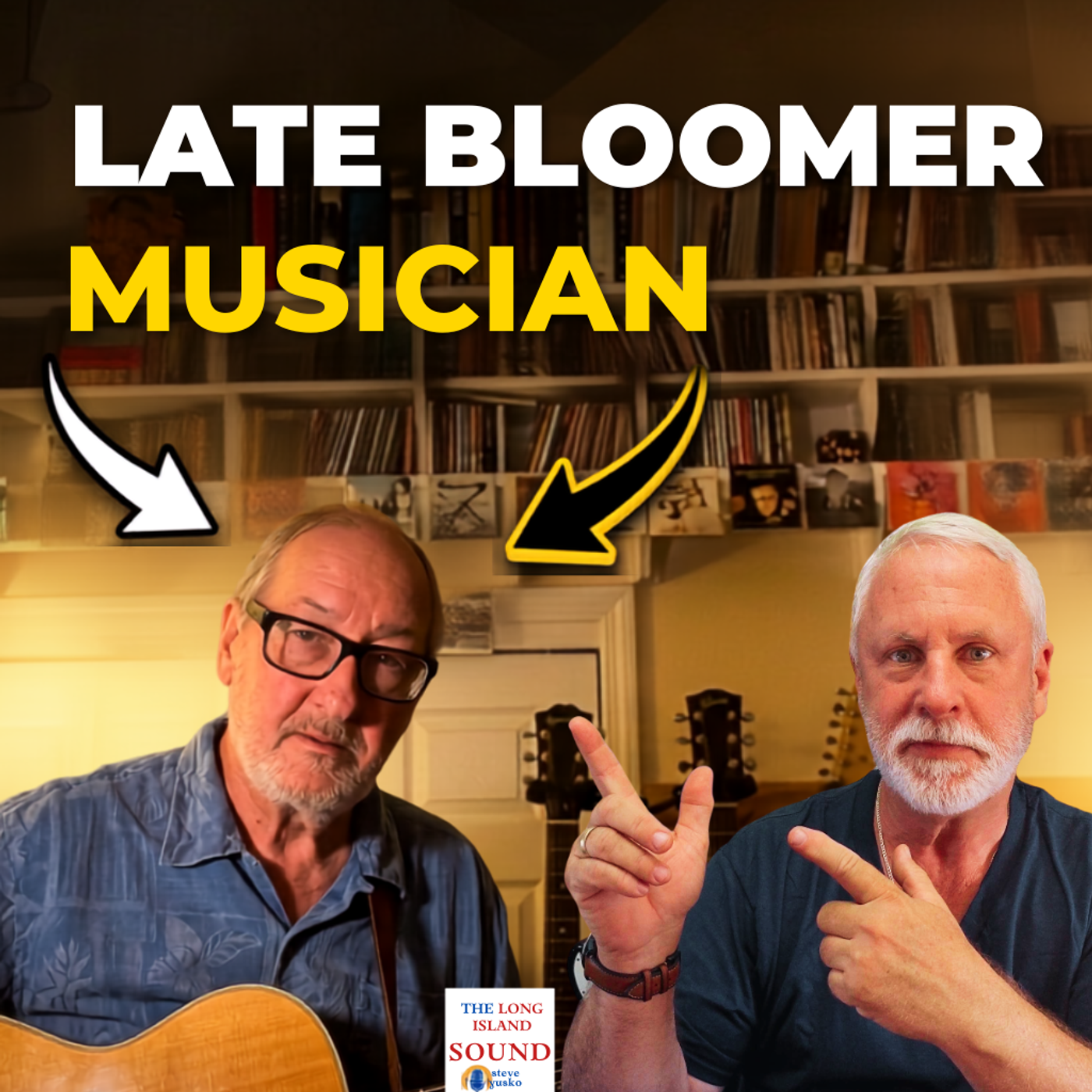
Hank Stone on late-blooming, folk protest music, and finding your voice. HankStone.music Steve Yusko talks with Patchogue-based singer-songwriter Hank Stone about his path from Queens rock bands to a decades-long break from performing, then a return through Long Island open mics, recordings, and community collaboration. The conversation centers on the resurgence of folk and protest music, how songwriting evolves over a lifetime, and why live music and local scenes still matter. Hank traces his early guitar education in Queens, from school lunch-break lessons to studying Spanish guitar with Don Felice Alfino. Hank talks about the community-driven recording process behind his albums, including Tony Di Stepano, Bill Herman, Bill Ayas, and a long list of guest players and backing vocalists. He breaks down how a partial capo opened up new instrumental ideas and became part of his signature fingerstyle approach. He shares how his songwriting can start with lyrics, a groove, a character, or a melodic idea, with no single formula. Timestamps: 00:00 - Steve frames the episode around the resurgence of folk and protest music 01:24 - Hank Stone’s Queens roots and the late-bloomer arc 03:19 - Early guitar lessons, Spanish guitar training, and the Beatles-era band years 05:38 - Why he stepped away from the stage for decades but never stopped writing 06:35 - Returning in 2001 through open mics, benefits, and first recording opportunities 07:40 - How Long Island’s collaborative music scene shaped his albums 08:38 - Tribute records, Christmas songs, and the making of Pie for Breakfast 10:59 - Writing from memory, story, and character-driven perspectives 12:27 - Alternate tunings, early experiments, and discovering the partial capo 14:52 - Fingerstyle playing, quiet late-night practice, and his no-pick technique 16:04 - Lyrics first, melody first, or both at once 17:29 - What it felt like to return to open mics after years away 18:28 - The trio Rough Folk and the band version of the project 19:25 - Running an open mic and coaching newer performers through stage nerves 21:48 - How harmonica fits into his sound without becoming a blues or Dylan imitation 22:19 - Reimagining “I Pity the Poor Immigrant” for the Dylan tribute project 24:19 - Why folk still matters in the era of protest songs and social witnessing 24:48 - The writing and emotional toll behind “Once Again” 26:09 - “This Is My Country,” immigration, and the power of collaboration 29:12 - Scott Cook, hopeful protest writing, and songs that point toward action 30:53 - Hosting Down Home Country on WUSB and learning classic country on the fly 34:08 - The Hucksters, neglected covers, and new live gigs 36:18 - Video presence, live clips, and how musicians get discovered now 38:11 - Pandemic Zoom songwriting prompts with Ben Diamond 39:23 - Becoming more open to collaboration after years of writing mostly alone 39:46 - Pie for Breakfast and the hopeful imagery in “The Sun Rose Right Out of the Sea” 41:16...
speaker-0: Welcome back to the Long Island Sound, the podcast for dreamers, the storytellers, and tonight for true blue folkies. Today we're going to talk about a powerful force in our culture, the massive resurgence of folk and protest music. In a world of fast-paced digital burnout, people are turning back to the simple raw power of a guitar and a voice as a form of social witnessing. And our guest tonight is a Master of the Craft. He's a patchog-based Singer songwriter, humanitarian iconoclast, with a classic Dylan esque tilt, and what the regional press has called a classic late bloomer. I can relate to that. Born and raised in Queens, New York, tucked right between the roaring engines of Idlewile Airport, also known as JFK, and the Aqueduct Racetrack, he picked up the guitar before the Beatles even landed here in America. But after playing in a late sixties rock band, He did something radical. He walked away from the public stage for three decades to raise his family. Yet in those quiet years at home he never stopped writing. He was quietly building a massive catalog of deeply literal, introspective songs. In two thousand one as an empty nester, he stepped back into the light of the Long Island open mic and folk scenes. He didn't return as an amateur, he arrived as a fully realized musical force, blending the finger style wizardry, Of partial capos with the lyrical weight of Paul Simon, Donovan, and Jackson Brown. Whether he is singing his stark, devastating anti-gun violence theme once again, orchestrating cross-cultural collaborative anthems like This Is My Country, or co-hosting Down Home Country on W USB 90.1 FM in Stony Brook, or sharing a slice of life from his paradiddle's record release Pie for Breakfast. Hank Stone uses words and six strings to alter our universe. And with that, the Long Island Sound welcomes Hank Stone. Hank, welcome to the podcast. speaker-1: Hi, Steve. Thank you for inviting me. speaker-0: Might my pleasure. I've seen you play around. I've seen you at Open Mics and ⁓ it was so great to see you at the Blues Festival right here at Tanner Park. Yeah, that that was great. That was just ⁓ I really got deeper into bluegrass than ever been before and had a great time. Hey, let's turn the pages back. Tell me about when you picked up the guitar, about that time in Queens, and then how did things change for you? speaker-1: Blue grass, whatever. Yeah. Yeah. Well I picked up ⁓ it was d during school, grade school, you know, they had a teacher come in on the lunch break once a week and I think she taught like accordion, clarinet and guitar all, you know, in about ten minutes for to each each student and then I would come back and I guess I took to it enough that ⁓ my parents decided to get me a real teacher and there was this old ⁓ Italian ⁓ American guy, ⁓ Don Felice Alfino, Doctor Felice Alfino, and he taught I don't like twenty three instruments or something, but so I took Spanish guitar style for a couple of years with him and by that point that point the Beatles had hit and everybody was into g well, we gotta get a guitar, we gotta do what they're doing, get the girls and all that. So we started bands and we were doing Beatles and Doors and Rascals. Moved on to the Stones, the Jefferson Airplane, Crosby Stills and Ash, and every other year there'd be like another batch of a new style coming out. We'd try to play it all. And I just went from one band to another but it we had a lot of fun. That was it. And I started writing songs at that point too. ⁓ and after a while I I know when New Wave came along and Elvis Costello and the the Clash and Talking Heads, we were trying to do that kind of stuff. Yeah. So I kind of moved every style it came out. I loved ⁓ the progressive rock, ⁓ yes, and ⁓ Amherst Lake Palmer. King Crimson, you know Very difficult to play that stuff. So we kinda you know just kinda appreciate it for what it was. But speaker-0: So I assume you you progressed, you know, you stuck with the ⁓ acoustic, but you also must have done electric at that time, right? speaker-1: I was doing electric mostly at that point, yeah. But ⁓ we would use the acoustic to write on, you know, we'd take it with us wherever we went and so after a while though, I started ⁓ raising a family and I got too much to try to keep to go with the music. I put it aside as far as playing out, but ⁓ never stopped playing and writing. So Okay. I kept my little notebooks and ⁓ if I was on the subway going to work, maybe get an idea, right? Come things down. I still have all those little notebooks, which is amazing to me 'cause I don't haven't kept a lot of real stuff from the old days except I have all the writing, so that's important. Eventually with the like you say, Empty Nester and 2001 I came back out and started hitting the open mics and ⁓ a couple people said, ⁓ I like what you're doing. Once you play this show, doing a a benefit for something or a a showcase, played some libraries and somebody said, Hey, you I hear you want to record Who you working with? I Nobody yet. And he said, Well, I like your stuff. Unless my friend Tony Di Stepano, who has now moved out to Ohio, but he worked on my first two albums and we just I would come in, play ⁓ the basic rhythm track and sing a a scratch vocal. I'd come back in a week later he'd have a wonderful bass line on it, over dub piano, flute and whatever we needed. And he so we built those things up and by the second album we had a lot of guest people come in to doing title steel or fiddle or whatever and Every song was different, you know, but ⁓ we had a lot of fun. speaker-0: You know what's amazing and I found out on Long Island. Catch on I use is the wellspring of talent. And there is such a diverse amount of talent and great talent out there. And I find them thought to be very generous. Hey, you wanna you wanna play on you know, boom, people like pop in and you d I think you did an album with ⁓ Paradidal Records, right? speaker-1: Yeah, that was my most recent one. Bill Herman. I had worked with him at Pyrodiddle for a couple of things. He did a ⁓ he was doing they were doing a ⁓ a tribute to ⁓ covered Bob Dylan, Bob Dylan Uncovered. And I was like, ⁓ I wanna get on ⁓ if they ever do another one so I managed to get on volume two and I worked with him on that and ⁓ but before that actually we did he did a a tribute to Ray Davies and the Kinks. Kinks Uncovered and I was on that and ⁓ did a speaker-0: Right. Yep. speaker-1: That was a lot of fun. He also helped me make a Christmas record 'cause I I had done I re a lot of holiday songs and ⁓ over the years, ⁓ Tom Kavanaugh who's another local great ⁓ he he does recurrently he's doing a Johnny Cash tribute. And he's got young a woman who's doing the June Carter thing and they go a really good job on that. But he was doing all kinds he had rock bands, he was I think he plays a sitar, he does ⁓ all kinds of other stuff. But he was doing a Christmas album every year. with Bent Pussycat records. So I managed to get three songs on those over the years. And then you know, it just everything just keeps snowballing. You find another opportunity. So I've got a couple of Christmas alb ⁓ singles out there. I may get a whole album together eventually. And but eventually just a couple of years ago, then ⁓ talking to Bill Herman he said, Would you like to make a record at Paradidalist, ⁓ great, I would love to. So I sat in the studio and I think I ran through like thirty five songs. And just and he just recorded it all quick, you know, and took notes and I gave him all the lyrics and the everything. And he came back, he said, Well, I like these eighteen, it's about half of them. I said, Let's record those and we'll put out an album with twelve songs. And ⁓ ended up we ended up we couldn't cut it down that bad, we ended up with fifteen. And but it was like the same kind of thing with the first two what when I worked with Tony, ⁓ he'd get people to come in. He would have ⁓ Pete Mancini come in on guitar, Mark Mancini ⁓ on g piano. Keys, yeah. ⁓ and I had two other songwriters that are very friendly with ⁓ Martha Trackenberg and Marion Masterilli. They did some backing vocals for me. And ⁓ I had Toby Walker come in and play guitar and ⁓ lead guitar on a couple of tracks. And my good friend Larry did bass on about half of the record. So you know it was it's a community thing. ⁓ P people pitch in, you know. speaker-0: Yeah, just to give a plug to those who've heard the paradiddle name, which unfortunately is just retired now after twenty, twenty-five years. But Bill Herman ⁓ put together all these great cover albums where you got local talent here from Long Island. I think they did Bob Dylan One, Two, Three, and Four, The Kinks, Willie Nile. Yeah, it was Hank Williams double C and Warren Zevon, yeah, and that great, great show. speaker-1: Hank Hank Williams. I did ⁓ most recently Warren's Yvonne. speaker-0: So let me ask you this, in how is your voice as far as your songwriting voice and that changed over that hiatus period of being with your family? Did you see a big change in what you did or was it just hey you got into the writing really well? speaker-1: I just got into the writing really well. I I have a if you say voice I'm trying to think ⁓ I have a lot of different voices in the Okay. I'll use stuff directly from my heart expressing my own story. I have a couple of st song ⁓ songs drawing on my childhood experiences and things and just my memories. But other times I'll just make it I'll be ⁓ a story about someone else, you know. And ⁓ kind of I find it helpful sometimes to name a character, you know, and then it makes like you're actually when I I used to tell people, other songwriters, you know, they say, I can't do that. I say yes you can. Look what the Beatles did. They've got Eleanor Rigby, you know. They've got JoJo was a man who thought he was a loner. They got names for you. Michelle, you know. These weren't real people they knew. They were just you know, and you make it up. And ⁓ you can tell a story and and kind of imagine yourself into the story. How would you react if this person was in this situation? speaker-0: Hey, let's talk about in two thousand five you did a solo album called Rough Folk, and it has a certain edge to it. I I would say a spontaneous feel. You play harmonica on it as well. And then you do some work with some unique capo styling. How'd you get into that and why did you get into it? And why did it affect a particular song? If that makes sense. speaker-1: Okay. Well, over the years, you know, in w my lean years when I wasn't out playing, you you just keep playing and try different things. And you hear about alternate tunings. That was you know, people call dad gag where you tune a D A D, G A D. And I tried different things and I had a particular one. I wrote a couple of like a trilogy of three songs and I used to play that all the time. But it's a pain in the neck to keep changing the tuning if you want to go back to normal tune. speaker-0: So we're talking about capo and and ⁓ alternate. speaker-1: I started going to a folk conference where you get a whole bunch of people, mostly f folk musicians, singer songwriters, and they all get together, try to promote themselves and learn from each other, network and everything. And by chance there was a guy demonstrating a partial capo, which when you put it on, it doesn't cover all the strings. It kind of bridges over and it just covers three of the strings. There's different versions. And I looked at it and I said, This is weird. I don't know if I could do anything. But I bought one and then over the next couple of weeks and months I started making these instrumental pieces that were melodic and unique and very different. And the the advantage is I didn't have to keep retunning the guitar, just put the cape on different fret. Eventually I hope to make ⁓ some kind of instrumental album with all that stuff. speaker-0: just I just interviewed Tom Rush and ⁓ we talked about open tunings and you know, you can't talk about Johnny Mitchell without talking about weird open tunings and all different stuff and and what shocked me during the interview 'cause yeah, I again David Crosby took credit for teaching her that but I taught David Crosby and I taught her opening tunings, which I thought speaker-1: Yeah, I could see that was the that's the kind of thing David Crosby would would say. When I wasn't performing out, I would be working. I worked all kinds of odd shifts. I'd be home g get off work at one in the morning and I'd be wired up, you want to play, you feel creative and well, I I'd keep the guitar in the trunk and I would ⁓ stop off somewhere in the park and just play so I wouldn't disturb anybody or play quiet quietly in the house and ⁓ I developed a thing where I didn't use a pick, just use my fingers, my thumb. speaker-0: He would take credit for speaker-1: And it kind of stroking it very quietly and ⁓ it that developed a whole style where I don't I hardly ever use a pick anymore. And that's just become my signature style now and ⁓ I don't know if it affects the writing too, but ⁓ you start playing a certain style and ⁓ that might ⁓ suggest a certain lyric or something. speaker-0: So so the famous question is lyrics or or melody first or combination of both for you over the years? speaker-1: It's either way. I it's it's sometimes I'll get some lines in my head and I just write ⁓ down and say, I don't know where I'm going with this musically and then I'll look at it later and try to come up with something different. Other times I'll just playing and I get like a rhythmic thing going, some unusual chords and get a groove going. Okay, where am I gonna go with this? And it might s I might just through compose a whole bunch of things, all right. Where's the next change gonna go, you know? And I get a shape to that and then that might suggest a mood or a story and I'll try to fit in some words into that. So it it's there's no one way that I do it. Sometimes the whole thing comes together. I'll start singing words. speaker-0: The things that I've picked up from artists who you know, getting new onto the scene, going out playing, is doing open mics. And I can tell you numerous artists I spoke to saying, Yeah, go out and do open mics and and watch other people and and get your courage up. But I'm gonna ask you this question. How was it okay, the empty nest is here and you decide I'm gonna go out and play? How was it for you? speaker-1: First was kind of nerve wracking 'cause I didn't know what to expect. And I assumed it would be competitive, you know, everybody's out to like b out dig out show, you know, I'm better than you and and a few people were like that, but mostly it was very supportive, you know. Somebody would go, ⁓ I like that. That's cool. What chord are you using there? And we talk about different things, kind of guitar and whatever, and I got to be friendly with people. ⁓ when I started going out to open mics, I ran into people like Roger Silverberg. But peop people I met way back, like I'm saying twenty five years ago that were very supportive. Yeah. And like I said, my friend ⁓ Tony Di Sopano who recorded my first stuff. ⁓ and I ran into ⁓ Mike and Susan Christian, who I've been working with a long time. ⁓ Mike has been playing bass in my ⁓ s my band. I after the album Rough Bulk, I got together with a trio called Rough Bulk. And ⁓ that was Mike Christian on bass and Todd Evans on guitar. And ⁓ that developed into the Hank Stone band and I we ⁓ missed my third album we didn't talk about yet. I worked that with ⁓ Bill Ayas up in ⁓ Sonybrook ⁓ Setarket area. He has a nice studio too. And that was the easiest album to do because we've been playing a lot of those songs for about two years with the band. So we had our arrangements down. And we just went in and put the rhythm section down and then a few overdubs, and it was a lot easier to get done. And ⁓ I think it has a nice sound on that. That's cool. That's the one called ⁓ Painting tomorrow's skies blue. ⁓ Nice. Some nice band stuff. And some of those songs were written with the partial capo that we were talking about. So they have an interesting harmonic ⁓ coloring to it. But open mics, another thing about open mics, I was running my own for a while. Okay. When they opened a a new coffee house in ⁓ Patch Rock called Roast and ⁓ has closed since then. But for a couple of years I I talked to the owner, I said, ⁓ speaker-0: Yeah. speaker-1: You want to have music here? It says, Yeah, but I don't know how to do it. I says, I can do it. So every Tuesday I opened up, we just set up a PA and people came in and that ran for about five or six six or seven years. And ⁓ I started doing a monthly show inviting people to come in on a Saturday. And ⁓ it was ⁓ a lot of fun for a while. But I would see from the other side I was nervous when first opened my 'cause I would see younger people coming in now the same way. Maybe a couple comes in and they They're happy, they know what they're doing in their living room. And they come in and on stage it's a different experience and they'll screw up, they'll mess up the words. And I see they're s sneaking out with their tail between their legs up. And I would tell them, come back, come back every week, because as many hours as you put in in your living room, you've got to do that on stage. Absolutely. You're doing good. You're doing good. You know, you think you messed up, but everybody else enjoyed it, you know. speaker-0: Right, right. Yeah. Analyze your own stuff. I mean, that happened with me. I I picked up the guitar in my twenties, played the three famous chords. It was too hard. I put it down. Yeah. Caught a lot of dust and and then for me, YouTube helped. If I'm a visual guy, guitar tabs helped as well. That got things along. But all you know, talk about screwing up, I had a friend who invited me over to play with some guys and I I w I f I felt horrible. But I felt motivated to get better. You know, playing with other b it's like tennis, you're right. You gotta play b with somebody who's better. And I I think it's key of of those people who are your cheerleaders and ⁓ say, Hey yeah, you can do this, you know, you can get up there. When you when you played on that dill ⁓ the ⁓ Paradiddles ⁓ Dylan Uncovered, which it was probably Dylan Uncovered too, recall what song it was and how did you make it your own? How did you approach it? speaker-1: Well it was I Pity the Poor Immigrant from one of my favorite albums is John Wesley Harding. And ⁓ speaking of harmonicas, that's the only Dylan album where he played harmonica on every track. A little a little trivia note there. But ⁓ to make it my own, what I did it's i it's in three quarter time. And ⁓ Judy Collins did a version, really nice version in three quarter time too. I changed it around to four quarter, didn't took it away and just I emphasized the words in a different way. J just felt my way into it, you know. 'Cause ⁓ as a as they say, as an interpretation. That's the way I interpreted it. It was just me and the guitar and ⁓ I didn't know what to do and Bill Herman added a couple of people on their piano and organ and stuff and it it sounded it sounded ⁓ pretty nice. I liked it. speaker-0: Yeah, that's that's what I love about the Paradiddles and covered albums. One, it's all it's all Long Island people and it's all diverse. And yeah, they put their own signature on that song, which I think is great, you know. One of the big disappointments for me is to going to a concert and hearing exactly the way it was on the album. I want it I want you know, mix it up a little bit, you know. speaker-1: Well that was it. Back in the day we listened to the radio, you'd hear a couple of different versions of the same song, like Wooden Ships, Crosby Stills and Nash and Young, and then ⁓ Jefferson Airplane, because they wrote it together, so they had different concepts of how it should sound. So to me it was like there is no one way to do something, you know. And we had Yes covered a a ⁓ Richie Haven song early on. And yeah, and then they did the Beatles early on too. They did a Beatles song, Every Little Thing. And there was all that kind of stuff going on where cross cross countries from, you know, rock and folk, even the jazz people of course will cover any melody just about speaker-0: Yeah, th this is true. Hey, I gotta ask you this, 'cause I wanna talk about I don't know if you're familiar with Jesse Wells, I'm a big fan. speaker-1: I have seen a lot of his videos, yes. speaker-0: He's a phenom, just amazing. But I wanna talk about your song Once Again that you wrote I think over ten years ago. Why'd you tell me about that? How that resonates today. So we still speaker-1: Right, the mass shootings that go on. Kind of thing that preys on your mind for a while. You should I should address that issue because there are quite a few other songs out there. And I just said once again, you know, once again this happens and I just came up with the ⁓ the turn the phrasing once again I can't forget. I don't want to have to say once again, never again, you know. ⁓ just a way to say we're not just saying it once again it happened, but why does it have to keep happening? Why do we have to keep responding to it? Why doesn't something change, you know? speaker-0: Tell me about that song. speaker-1: And then at the end of it I just started list listing all the the towns and the cities where things had happened. And ⁓ my thought was that eventually there'd be a lot more and there are a lot more. So I I don't even like to play it anymore 'cause it's just too raw, I think, you know. But I'm glad it's out there on speaker-0: Yeah, it's a it's a shame. You also did a song called This Is My Country. Yeah. About immigration. Man, is that poignant today, right? Tell me about that, how that came about. speaker-1: Well, twenty early twenty seventeen when we had the first administration of this current person, people were saying, You gonna write a song about him? You're gonna you know and I said, Well, I really don't want to, you know, I don't wanna glorify him even in the negative and there's a lot of people doing that. So I said, What's what's the issue that's most important? And of course, you know, there had been the Muslim ban and all that and stuff going on. I said, That needs to be addressed, you know. So I I kind of found my way into that by ha trying to take the voice of of an immigrant or and ⁓ a refugee, different people. And ⁓ I'm very happy the way that turned out because people responded to it right away and everybody said, You're gonna record that? I hope you're gonna record that and I worked it out with my friend Bob Westcott and it said, Yeah, we gotta do this. So we got together at Mike Nugent's studio. Mike is a really good producer and ⁓ guitarist and everything. speaker-0: Mike's a great friend, yes, of speaker-1: Uhhuh. And ⁓ so we got in the studio with ⁓ Bob on the bass, Sean Murray on the drums and just me. Yeah, Sean's great. And I said, All right, we'll see why I give my scratch vocal. And what are we gonna do with this? Well, I came back and ⁓ I said, I gotta get some s ⁓ people to sing on here. So what we ended up doing was like We Are the World. We had eight ⁓ singer songwriters from Long Island come in, Martha Trackenberg and ⁓ Linda Sussman, ⁓ Suzanne Ernst, who's a wonderful singer, Patricia Shee. And some of these people were from, you know, different ethnic cities. Toby Tobias was on there, is originally from South Africa and then lived in Israel. So he's a double immigrant in a way. And ⁓ we ended up getting people singing the whole song and then we chose a different phrase for each one to sing, you know, and ⁓ and then Mike overdub some nice electric guitar work and ⁓ I'm just so happy the way it came out. Actually while we were in there recording Martha, I think The other three women were out in the backyard and I said, What are they doing? I went out and they were working up the background vocals right on the spot as we were recording. And well you have to put that into the song. So so it it was just a r my favorite idea of collaboration. You know, there were so many people working together to make it even better than it was and speaker-0: That's the name name of the game. And what I find so interesting, and this term kind of jumped out of me as far as a lot of people used to think that folk music died in the sixties as genres changed over time. And now there's this, in my opinion, there's this resurgence, there's an awareness and you know, f everyone from Springsteen writing about Minneapolis to Jesse Wells who we spoke about to a lot of different artists. And I think when you have a collaboration of people who say, Yeah, we have to say something and we have to do it in a way that is gonna permeate ⁓ the world. Yeah, it's ⁓ it can become a really beautiful thing, you know? speaker-1: Yeah. I want to add another name to that list of people that are doing it. When I go out to these festivals and ⁓ con ⁓ conferences and stuff, I run into a lot of really good writers and they're out there playing house concerts in the you know the Unitarian churches and all that, wherever they can get it. Traveling across the country. And ⁓ there's w one in particular, Scott Cook, he's a phenomenal writer and he's addressed a lot of the issues like we're talking about in a very positive way too to get people to be hopeful, you know. speaker-0: Yeah. speaker-1: One thing is list all the complaints we have and to commiserate with each other, y this shouldn't happen, this is terrible thing. But what can we do about it? And let's, you know speaker-0: Yeah, like the call to action, right? Yeah. Yeah. In fact I joined up this spring with I've been to a few protests with the singing resistance, which which ⁓ was in Huntington and it was an anti ICE type of thing, going into areas where immigrants used to day laborers used to be out there to gain work in Huntington Station. And it actually it started out in ⁓ Eastern Europe as a way to combat authoritarianism. speaker-1: Exactly. speaker-0: by singing to the soldiers and the cops who try to convert them. And ⁓ that was a really a great experience and and continues on. So ⁓ but I want to talk to the audience just real quick for a minute, Hank, is hey, I'd love for you to comment if there's an I don't care where you're from, you don't have to be from Long Island, if there's an open mic that you say, hey, this is where there's some great talent, tell me about it in the comments. I respond to everybody. ⁓ I think it's such fertile ground for discovery of new music and encouragement of new music. Another aspect of you that I found out is that you're a DJ at W US USB every other Sunday. Tell me about and I know Gene Casey jumped in, Mary Lamont handled Sundays. speaker-1: Yeah, Mary Lamont was doing it for a while. Yeah, Down Home Country. ⁓ it was originally Deb DeWalthoff, who I knew for years. She I just ran into her recently too. She ⁓ she had started it in the nineties or whatever and it was running for a long time when she had I that's enough. I can't do this anymore. She passed it on to Mary Lamont and some other people. I'm not sure of the whole thing, but ⁓ Don and Susan Search did it for a while, Jean Casey, a couple of other people. So now it was down to speaker-0: Queen Home Country. Long Island country, yeah. speaker-1: Mary was doing it one month and ⁓ one week and ⁓ Ray Lambier would do the other week. Sure. speaker-0: I have to read Lambier Son the program. speaker-1: Mhm. And then Mary had to drop out beginning of this year. Her husband had developed Alzheimer's and she was taking care of him and he just passed away a few months ago. But ⁓ so she passed it on to me and she said, Hank, would you like to do this? And I said, I'm not a big country fan. I know some stuff, but I don't know the the deep stuff. And I said, Well wait a minute, my friend Susan does know classic country. She's a big fan of all that stuff, you know, the Patsy Klein and the and the speaker-0: Yeah, sure. speaker-1: you know, even up to read and magatari, all that stuff. So I said, Well, would she want to do it? So ⁓ she said, Sure, let's do it. So we've been doing it now every two weeks. We have a little hour so we can do about fourteen, fifteen songs. We'll each choose about half of ⁓ and try to work it into sets that make sense. And it's it's fun to you know, I don't consider myself a DG but but it's a lot of fun and we've gotten a little bit of feedback, you know, people at at the ⁓ Bluegrass Festival a couple people came up to me and said, ⁓ Hank, ⁓ I I was listening. I said, Well, you're one of the six or seven people that are listening speaker-0: It's it's such a rarity in radio today. Algorithms seem to run the world ⁓ whether it's the music that I get suggested on Spotify or what I you know, hey if you're gonna like this you're gonna like that. And sometimes it works for me, other times it's like, Hey, I wanna pick my own stuff and to have humans at the control is is almost like a novelty, but I I think it's good that that you do that, you know. speaker-1: I've really enjoyed being part of the Stony Burke radio community. I've interacted with them of course of having appeared on the radio a couple of times over the years and ⁓ got to know some of the people that are involved with it. And they're really so dedicated and they're volunteers, you know. So it's all done for the love. speaker-0: Yeah, for th for the love of the art, right? For ⁓ absolutely. So now yeah, had the Hank Stone band and then I saw a card that was gonna be called the Hucksters. You still part of them? speaker-1: Yeah, that's we're just starting that up. We've been together a couple coup well, just a l just about a year now. We we did a T V show out east and ⁓ we've got a couple of gigs coming up. And ⁓ you know, we're trying to do we do a few of my songs and a few of other songs that we covers that we like that we think are have been neglected, you know. Instead of doing the ones that everybody does, you know, ⁓ we just try to find stuff that fits our voices and our guitar styles and whatever and Susan actually play Susan who I do the radio with, she's in the band with me and her husband Mike on bass and Greg Smith, ⁓ the other singer with a big voice. We're doing some nice harmony work. But Susan does banjo, flute and ⁓ guitar and accordion. So she's like the quadruple threat. I just do the guitar harmonica and ⁓ Mike's got the bass covered really well. So we're looking forward to like getting out on the scene. We got a a couple of we did a library show in ⁓ Shirley a couple of months ago and we got some more coming up. So ⁓ we'll be hearing I'll give a link to all that stuff too. speaker-0: That'd be that'd be great. Now when you did the show, was it at by chance at L T V out in East Hampton or Yeah, they've got a great public public radio, public television type of really cool setup. I w I went out there. It's a bit of a hike for me from Babylon, but ⁓ yeah, good good people out there. speaker-1: Yes, it was, yes. speaker-0: Yeah, in f in the it's a public access station, so it gets supported by our cable vision fees, I guess. And, you know, actually a lot of big acts will secretly practice there ⁓ on on their stage. You know, they you find out about it after the fact. But ⁓ Yeah. Yeah, it's it's pretty cool. So you got you got a lot of things going in the ⁓ the ⁓ back nine of your life here, Hank. speaker-1: Mm-hmm. Yeah, yeah. I I never would have expected this. You know, like twenty five years after I s went out to those first open mics and I I got something, I got four albums out of I actually d I did some other nice video presences. ⁓ John Platt from WFUV asked me to do his on your radar show. Really? That back in January or February. Yeah. And ⁓ so that was go in it on stage at the bitter end. And so Wow. That was nice. And then it was featured at the North Shore original open mic in Huntington. That's rotating thing, we got a lot of people get onto that. But it has some nice video from all those things. So it's 'cause as much as it's fun to have a nice album so people can listen to your to your stuff that way, people aren't buying albums anymore and they're not gonna Right. So I think ⁓ it's a lot more visual stuff. So if I have a video good videos, y you can get more people to say, Well what do you do? Especially if you're looking to play someplace. Here, here's a video, here's a show I did recently, see if you like that. That's what I'll be doing, you know, something like that. So speaker-0: Yeah, absolutely. I mean, and there are I think there are more places taking a risk on on doing original music. You got Mike Del Judas, has got ⁓ Live on the Porch you just opened up, you've got People's Pub in Bayport that does it. You've got I'm just going off the top of my head, US Bruce in Centerport is a nice little place. There's the ⁓ the Twisted Cow distillery in East North. speaker-1: Uh-huh. I haven't checked that out yet, but speaker-0: ⁓ John John the owner is a great guy and they got a really nice nice setup there and they draw a really good crowd, so they're open at after four PM in the afternoon. And they just still vodkin to kill and all that heavy stuff. speaker-1: The other thing I'm you know, you I'm sure you've got more questions, but ⁓ I'll volunteer some s ⁓ my friend Ben Diamond, who's songwriter from Nassau County, he's ⁓ a while back w during the ⁓ pandemic actually when everybody was at home, you couldn't do any sh live shows, he started up a a Zoom ⁓ meeting. He said, Songwriters, gets let's get together do a online songwriter thing. He would put a prompt out and say, Write a song about this and then every couple of weeks we'd get together on a Sunday evening. Everybody zooming in and playing the song. And at this point we've got over two thousand songs from after five years of this. And the idea was twenty one songs in the year, ⁓ 'cause it started in twenty one. And ⁓ so I had a lot of songs from that that wouldn't have come out ⁓ from just sitting around, should I write a song today? All right, maybe, you know, I got a lot of songs, I don't need a song. But now if I had to do it, you know, so speaker-0: Yeah, those those ⁓ guitars in the round, cer you know, that sort of thing where they say, Okay, we're gonna write about a window or whatever. ⁓ interesting stuff. But let's and yeah, I was remiss. Let's speaker-1: One more thing about that. I just want to say at one point he said, This is a ⁓ a collabor ⁓ a required collaboration. You have to work with somebody else. And I had never really done that. So I said, Well, all right, okay. Since then I've had dozens of songs work with other people and especially a a lot with Ben and I think they're really good, you know, and ⁓ wouldn't have come out just like that. It so I'm really getting more and more into collaboration. speaker-0: So you got out of your comfort zone of of thirty plus years incubating your own stuff to finally being a team player. Good for you. speaker-1: Mm-hmm. Ha ha ha. speaker-0: Hey, let's talk about that fifteen song album Pie for Breakfast, which came out in twenty twenty five. And one of the tracks that I heard was the sun rose right out of the sea. And you know, we're here on Long Island, for those who are listening around the world, we're blessed with the Long Island Sound to the north, to the Great South Bay, to the Atlantic Ocean. How did that how did that play into you writing the song, the geography that we we all love and enjoy here? speaker-1: Well I didn't literally see the sun coming out of the sea. That that's not what it's it was more like, you know, the the metaphorical idea. And ⁓ yeah, I don't remember so many songs some of them I don't remember exactly how they came about, but there was I was trying to write something ⁓ positive and uplifting, which I have a few like songs like Anything Is Possible and just to without without making it sound clawing or s what's the word I'm thinking? You know, like a greeting card. Yeah, cliche and what so but to ⁓ to try to get some real feelings into that and say, Yeah, there is a reason to be hopeful, you know, and and ⁓ the sun's gonna come up, you know. And it's a very short song. And ⁓ there was something else I was gonna say about it, but ⁓ ask me another question, I might I might come back. speaker-0: So we'll have to have people ⁓ kind of ⁓ really look for that. Is there a p would you characterize yourself in a particular genre or what's your go to genre? ⁓ whether it's ⁓ you know, the blues, folk and I hate I hate to classify anybody, I like people ⁓ I like when you can't nail somebody down. But if I had you know, I put a gun to your head and said, Okay, what's your favorite genre? What would you say? speaker-1: ⁓ boy, ⁓ boy. That's I don't have a favorite genre 'cause I I'll listen to folk, I'll listen to rock, I'll listen to you know, prog rock and jazz rock and you know, soul, yeah. I mean who are my favorite artists, you know? Yeah. Van Morrison and ⁓ the Beatles, course, Beatles, Stones and Dylan, ⁓ Paul Simon. speaker-0: Tell me. Right. speaker-1: you know I but then I'll go off into stuff that I don't play or sound like at all, like Mahovish New Orchestra or King Crimson, you know. ⁓ things that just make me take me out of my comfort zone, you know, and that's still good. And classical stuff. I love ⁓ the Brandenburg concertos by Johann Sebastian Bach and a lot of other classical stuff. But you know, I don't listen to a lot of it anymore, but it's still there like, you know, and once in a while if if I happen to be turning a radio dial like in the old days, you know, ⁓ that sounds good. Look Wonder what that is. speaker-0: Right, right. You know, I I I found this Fank, I found the same thing. You know, I'm sixty five as I started getting older. I found myself and I and this kind of ties into fact Mike Nugent coined this for me, says it's the it's the years of the tribute band and there's a certain way of reminiscing and you know, God bless people who can play the music z exactly like the Alman brothers in that. But to me, here I'm getting on my soapbox, it gets you kinda kind of a rut. I don't want to be the guy always reminiscent about the past. I wonder what's coming out today. You know, people like Pete Mancini, who's who's got really really great stuff. I love singing his praises. It's just stuff his American Equator album is just f fantastic. People should check. speaker-1: It's good to see him get some good guidance. I mean he's hooked up with ⁓ Jimmy Webb now, you know. Now we've seen him we saw Jimmy Webb twice recently and it's it's a joy to have Pete come out here. We know that guy, you know. speaker-0: Yeah. I I remember seeing Pete at Stony Brook. They had a forty fifth anniversary at ⁓ show. ⁓ Carrie Corney was there, a bunch of people and I didn't know anybody. And I saw this guy and he seemed very timid, met him behind. He was kind of a quiet guy. And then over the past four or five years he's just been ⁓ he's doing very well. You know, like you said, he was like the right hand guy for Jimmy Webb. I think he went on tour with John Pernice and ⁓ has some opportunities there. And ⁓ yeah, a lot of good stuff going on. So one of one of the things that I wanna focus on, which I think is great, and I just started getting into is these little house concerts. You know, there's ⁓ one in Patch Ark, I think it's down by the creek or something like that. You got Bradstock coming up this weekend, which is is a great charity event and and music everywhere. And you're a Patch Ark guy now, right? speaker-1: Yeah. Michael Williams. speaker-0: So you've you've c y Patrick's like a whole new city over the past ten years. Lots of music going on there as well. Where d where do you see the next few years going for you, Hank? What what do you hope for? What are your wishes? What would you like to do? speaker-1: Hm. Well, I'd like to just have the opportunity to record a lot more of my stuff 'cause I got these songs and they're I'm the only one who's heard all of ⁓ you know. And the family and c close friends have heard a lot more. I this may be a controversial thing to say, but I have been experimenting with AI. There's that site called ⁓ Suno, an app, and you can just s sing into it and it creates a whole production. So I've I I have all on my phone I've got all little demos I make of the song and it's well I think it should go this way, chunk and it might be out of tune, it might be off tempo a little bit. You put it into the app and it corrects all that and puts a a good voice. I can put my own voice into it. It's it I don't h hard to do all this but ⁓ I'm working with it and sometimes it just blows my mind. It makes this amazing piece of work that you would think was in a studio, you know. And it'll do old styles. I've got the s a song I said make it nineteen twenties style and blew my mind. It's got like a clarinet and everything on it. You know, all for me n so it's scary how good it is. Now I I'm reluctant to put this out as, you know, make a C D. This is Hank Stone's new C D, but it's not me and it's not you know it's all computer generated. So I'm not gonna do that. But why I think I can use it is as a demo so I won't be able to record all these songs myself, but if I can get get ⁓ out to other performers, you know, as a A band that I enjoy on Long Island. ⁓ they have good songs, but hey man, you wanna hear this song? You know, and they'll pass out here's a demo of how you might attract it. speaker-0: Yeah, I I agree with you. I look at it as a tool. I use it in editing and everything. It cut down my work ⁓ by two thirds. And I'll tell you a funny story. And early with this podcast, I used to have people play their songs and then all of a sudden it's the artist playing, so I have their permission. I would get a copyright strike. And then I just said, Well, I guess I can't have them play, you know. ⁓ Rick Beato just did this whole thing where he's got an attorney fighting it, you know? So I'm I'm a tiny guy that speaker-1: It's kind of speaker-0: don't want to pay for attorneys, like attorneys when they're working for you. But I used I've used Google Flow music to create some instrumentals to use his undercurrent pinnings and go with that. But I I do understand the artist position of hey, you got a computer where you you can get a live person doing it. So he needs go and he he needs guardrails, right? speaker-1: Mm-hmm. I hate Yeah. Like I'll I'll listen go when you're on there now it's like a social media thing to follow this person, this person follow you. And all the stuff I listen to it's almost all like this modern stuff, you know, with and I listen ⁓ so and so has a new song and I'll listen and I I can't take more than twenty seconds 'cause it's there's you know, lyrically it's just pffff, you know, ⁓ there's nothing to it. It's it's they're imitating. It's just imitating, you know. These people just push buttons, they don't even have any creative input themselves. I think it's just let the machine do the whole thing. You know, they kind of described the song in it. Yeah. I think there was some talk recently about there's gotta be a big backlash against AI because people are I want to tell there's there's a one guy, I I will say one more thing. ⁓ he has a YouTube channel. I won't say his name, but he's ⁓ uploaded like five or six country albums in the last year. And he's got the videos up on YouTube, the songs, there's no artist name is him doing it or whatever. It's all AI. And it sounds Plausibly like if something was produced in Nashville and it you know, it's got the kind of words you'd expect in a country song. But it's just so bland and I'm thinking, Okay, I want to tell this guy, all right, I like this song. Can you come out to the open mic and sing it? You know, and play. No. See that's what people want. They want live interaction where you can, you know speaker-0: Yeah maybe maybe that's that's the silver lining. I'm always a big proponent of hearing things live because that's the only way you can support ⁓ original artists is by seeing them live, you know. Hey, you see somebody out playing, there's no tip jar, go to the bar and grab grab a pint glass or a pitcher and put it up in front of ⁓ and tip ⁓ you know? Because ⁓ you know, it's not an easy life. It's speaker-1: I've been out on the streets busking in Port Jefferson and I do farmers markets and places and ⁓ I can't sell the CDs anymore. I mean, even if I'm given permission, ⁓ people will go, I don't have a player. I've g try to give them away, I don't have a player. You know. Yeah, so I say, Well, I have my QR code, and I say, take a picture, you know, go online, find myself. Or sometimes I've told people take a C D, even though you can't play it, it'll remind you to look me up. speaker-0: The CDs, yeah. speaker-1: You it's like a business card. Look pay up online and then give it to somebody that has a s player, you know, so it g it gets out there. I I mean at this point I know I'm not gonna get you know, any kind of a gold record for you know, s million sales or anything. speaker-0: Yeah, but it's all it's all getting exposure out and getting ears on your music, right? That's that's the key. You know? If I gotta ask you this, to kind of wrap things up here. If you had somebody who says, I'm a late bloomer, I know a little bit guitar, what advice what would your points of advice be to them? speaker-1: My first thing would be well keep playing. Pick up a guitar every day and you know, especially is some people s if they're a late bloomer they're probably retired so they have time. But even if they're later in life, forties or fifties, they're still working. And I say I don't have time. Well, make a half hour and play and if you really enjoy it and it's working for you, you'll that half hour will go by. You'll go into another hour, you know, and s and you'll and something will come, you'll learn because the only way you get better is by doing it. And if you really want to get better, do it. You know, just pick it up, play. Go online, look at what other people are doing. Try to do it your way, you know. That's that would be my advice. I don't know if it's worth it. Yeah, once once you feel comfortable with you know, and you want to get more comfortable, go out there. You know. People will be supportive. speaker-0: And go to open mics, I'll add to that. Cool. Hey Hank, it was real pleasure getting your insights on music. I invite everyone. You're gonna see links in the ⁓ description below to get Hank's music and see where he's playing next. And I look forward to seeing you out there again, Hank. Thanks so much for being here. speaker-1: Yeah. Well thank you. It's been a lot of fun talking. I said things I didn't even know I was gonna say myself, but y you pulled it out. speaker-0: Good. All right, everybody. As I say, be generous with your joy, keep your spirits high, and let the music take you on a journey. Be well, everybody.
More The Long Island Sound - Music and Entertainment Discovery Begins! episodes →