
The Long Island Sound - Music and Entertainment Discovery Begins! · Stephen Yusko, Host and Curosity Seeker
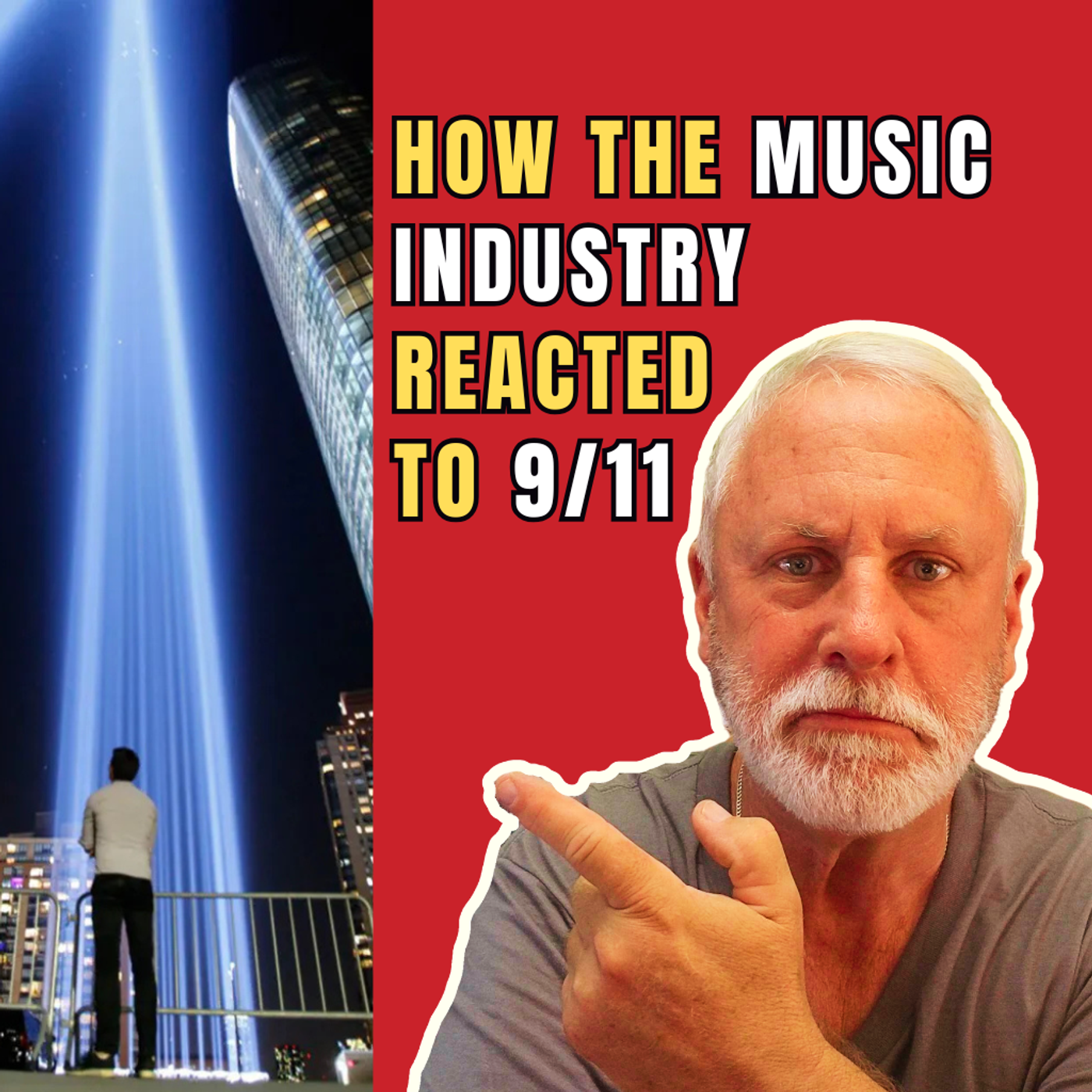
Join host Steve Yusko for a special episode on 9/11 remembrance, reflecting on the power of community resilience. Every September, the crisp air on Long Island brings back quiet, personal memories of 2001. This conversation honors those stories of loss and strength, looking at how we hold onto our history while finding meaningful ways to move forward. We explore how individuals and organizations continue to build legacies of hope in the aftermath of the tragedy. This episode explores how the music community responded to the 9/11 tragedy, highlighting songs, performances, and initiatives that fostered healing, unity, and remembrance. 🤔 Http://www.youtube.com/@thelongislandsoundpodcast?sub_confirmation=1 Family & Survivor Support Organizations Tuesday’s Children Provides long-term healing, youth mentoring, mental health support, and community engagement for families impacted by 9/11 and subsequent military service. Website: tuesdayschildren.orgPhone: (516) 569-3009 (https://911memorial.org/about/our-partners), VOICES Center for Resilience (formerly Voices of September 11th)Focus: Offers long-term mental health care, wellness resources, and support navigating healthcare systems for victims' families, responders, and survivors.Website: voicescenter.org Phone: (866) 505-3911 (https://www.911memorial.org/connect/blog/charities-borne-911-attacks-give-hope-during-holiday-season), (https://voicescenter.org/), (https://www.nyc.gov/html/doh/wtc/downloads/pdf/wtc/wtc-resource.pdf) Where to Turn Provides crisis services, information, and project-based community referrals for those affected by the tragedy.Website: where-to-turn.orgPhone: (718) 966-6531 (https://www.nyc.gov/html/doh/wtc/downloads/pdf/wtc/wtc-resource.pdf) First Responder & Housing Charities Tunnel to Towers Foundation Honors the sacrifice of firefighter Stephen Siller by providing mortgage-free smart homes to catastrophically injured first responders and veterans, as well as Gold Star and fallen first responder families.Website: t2t.orgPhone: (718) 987-1931 (https://t2t.org/) HEART 9/11 A disaster response organization formed by 9/11 first responders that utilizes the skills of volunteer emergency workers and building trades to rebuild communities affected by natural and man-made disasters globally. Website: heart911.orgPhone: (212) 376-7870 (https://www.911memorial.org/connect/blog/charities-borne-911-attacks-give-hope-during-holiday-season)
Steve Yusko: Welcome back to the Long Island Sound. I'm your host, Steve Yusko. And every year, when September rolls around and the summer air on Long Island turns crisp, my mind takes a quiet walk back to 2001. You know, being a lifelong New Yorker, living right here on Long Island this season is personal. As it's personal for me, I know it's personal for so many of you listening in your cars, on your train commute, or sitting in your backyard today. We all remember the people, the family members who gave a kiss goodbye at dawn. The friends from down the block, the acquaintances who caught the Long Island Railroad into the city that morning, and those working or living around the Twin Towers. And of course, those heroic men and women in uniform, our FDNY firefighters, our NYPD officers, Port Authority police, EMS crews, and everyday civilians who ran toward the danger when everyone else was running away. We carry their names, their laughter. And their memories every single day. Let me tell you what you're not gonna see in this episode. No planes crashing into the towers, no bodies falling from the sky. These images are really seared into our memories. You know, when unimaginable tragedy strikes, you know, words often fail us. The noise of the world really becomes deafening. Yet we are left in silent shock. In those darkest hours, human beings have always turned to one universal language to find a pulse. When ours feels so faint. Music. In today's episode, we're taking a journey through how the global music community responded to the 9-11 tragedy, from raw, grief-stricken basement demos to historic multi-million dollar telethons that really united the world. We'll look at how artists across rock, country pop, and punk channeled trauma into healing, raised hundreds of millions of dollars for relief funds, and built a musical moment to ensure that we never forget. Before we dive into the songs, I want to open up the floor to you right now. Take a moment right now to comment below. Where were you when the world stopped turning on September 11th? And what was the very first song or piece of music that gave you comfort or helped you process that overwhelming grief? I want to read your stories in my next episode. In the immediate hours and days following September 11th, the artistic world didn't react with commercial strategy. It reacted with visceral instinct. Alright. Take a 24-year-old animator and artist named Gerald Way. On the morning of September 11th, Gerald was in Manhattan on a Hudson River ferry, heading to pitch the cartoon concept. Standing on the deck, he witnessed the cataclysmic collapse of the World Trade Center towers. He later described it as looking at the end of the world. The experience threw him into a deep existential crisis. He realized that making cartoons really felt hollow. He needed to do something that made a real difference in the world. He returned to his parents' basement in New Jersey, picked up an old guitar, and poured his horror and confusion onto the page. The very first song he ever wrote was titled Skylines and Turnstiles, with lyrics describing quote, steel corpses stretch out towards an ending sun, and asking, after seeing what we saw, can we still reclaim our innocence? That raw post hardcore track laid the foundation for what would become one of the biggest rock bands of the twenty first century. My chemical romance. Out of a literal ash of ground zero, a new creative moment was born to give a voice to a traumatized generation. You know, my daughter Faith was seven years old at the time, and what ran through my mind is, my God, we're at war. How is this gonna affect my young daughter? You know, other artists captured the intimate, terrifying perspective of that morning. Tori Amos on her monumental 2002 concept album, Scarlet's Walk. Penn the track I Can't See New York. The song takes on a haunting perspective of an airline passenger on September 11th, circling over a smoke shrouded Manhattan, unable to see the towers below. It captured the disassociation and silent terror felt by so many in the air and on the ground that day. Now down in Nashville, country icon Alan Jackson was struggling to process the flood of emotions. On October 28th, 2001, Jackson woke up in the middle of the night at 2 a.m. With a melody ringing in his head, he got up, walked to his kitchen table and his underwear, and wrote down what would become Where Were You When the World Stopped Turning. And you know, Jackson didn't write a political anthem. He wrote a humble, vulnerable series of questions reflecting everyday human reactions, shock, fear, weeping, praying, and just watching I Love Lucy Reruns to escape the reality. Refusing to preach or point fingers, the chorus anchored itself on the timeless words. Of first Corinthians thirteen. Quote, Faith, hope, and love are some good things he gave us, and the greatest is love. When Jackson debuted the song live at the CMA Awards in November of 2001, backed by a fifteen piece orchestra, it sent chills across the nation. It went straight to number one and won the Grammy Award for Best Country Song, praised across the board for its pure empathy and apolitical warmth. And who can forget Rock Legend Neil Young? Like millions of American, Neil was transfixed by the story of United Flight 93 when passengers selflessly stormed the cockpit to stop hijackers from reaching Washington, D.C. Inspired by the final recorded words of passenger Todd Beamer, Neil penned, Let's Roll. Neil remarked that what those passengers did was the ultimate act of heroism, acting with no promise of martyrdom or reward, just doing the right thing. True to his spirit, Neil Young donated all the royalties from Let It Roll directly to the Todd and Beamer Foundation to support children who were left behind. You know, as the initial shock turned into collective resolve, the music industry pulled off something truly unprecedented. Artists didn't just write songs, they mobilized the entire planet to raise funds for victims, families, and first responders. Just ten days after the towers fell on September twenty-first, two thousand one. Four major broadcast networks and thirty cable channels joined forces to America a tribute to heroes. Produced by Joe Gallen and organized by George Clooney, it was staged on dark Kennelett studio stages across Los Angeles, New York, and London without a live audience or commercial interruptions. Hollywood A listers sat on phone banks taking donation pledges right alongside rock stars Neil Young and Eddie Vetter. Bruce Springsteen opened the broadcast with an acoustic, prayerful rendition of My City in Ruins. Meal delivered a breathtaking performance of John Lennon's Imagine at a piano surrounded by candles. Celine Dion sang God Bless America, and Willie Nelson led an all-star finale of America the Beautiful. That single night raised an astounding $200 million for the United Way's September 11th Telethon Fund. It stood as the largest single fundraising broadcast. In broadcast history. Then came October 20th, 2001, the concert for New York City at Madison Square Garden. Sir Paul McCartney had been sitting on a plane grounded on a tarmac at JFK Airport on the morning of September 11th, watching the Twin Towers smoke in the distance. Moved to tears and action, McCartney helped organize a five-hour rock and roll marathon at the garden. It wasn't a quiet telethon, it was a roaring celebration of New York's resilience. The floor of Madison Square Garden was filled with 6,000 special guests in uniform, FDNY firefighters, NYPD officers, Port Authority personnel, and rescue workers. David Bowie opened the show sitting cross legged on stage, singing Paul Simon's America before launching into Heroes. The Who blew off the roof of the arena with Who Are You and Baba O'Reilly? Our own Billy Joel sang Miami 2017 and New York State of Mine, and Paul McCartney debuted his brand new anthem, Freedom, alongside Eric Clapton, with proceeds going directly to the Robin Hood Relief Fund to help emergency workers and victims family. By the way, you'll find links to these funds in the description below. Let's keep the memory alive and never forget and support those who were left behind. And finally, Who can forget FDN firefighter Mike Moran from Ladder Three, who lost his brother and twelve crew members that day, standing at the microphone in full uniform and giving a defiant battle cry on behalf of New York that brought 20,000 people to their feet cheering? That concert raised over thirty-five million for the Robin Hood Relief Fund. Across the entire industry, money poured in, Whitney Houston re-released her iconic nineteen ninety-one Super Bowl performance of the Star Spangled Banner. Donating all the proceeds to the New York Firefighters Disaster Relief Fund. Country star Aaron Tippen recorded We're the Stars and Stripes and Eagle Fly, raising over $250,000 for the American Red Cross. Hip hop icon Dr. Dre personally donated $1 million to relief efforts, while Eddie Money directed proceeds from his music to the intrepid Fallen Heroes Fund. All right, I need your comments as well. Looking back at the legendary benefit shows from Springsteen's My City and Rudens, The Tribute to Heroes, to The Who and Paul McCartney at Madison Square Garden, I want to ask you, which performance or anthem gave you the most strength during that time? Drop a comment below. Let me know which moment still gives you goosebumps. After the months turned into years, music transitioned from acute grieving into long-term healing and honoring our heroes. In July, 2002, Bruce Springsteen released his landmark album, The Rising, reuniting with the E Street band to deliver a masterpiece that crossed every political and cultural boundary. The title track, The Rising, tells the spiritual story of an FDNY firefighter climbing the smoky staircase inside the World Trade Center, carrying a cross of sacrifice into the light. On tracks like You're Missing, Springsteen gently stepped inside the living rooms of families adjusting. To an empty chair at the dinner table. The rising didn't preach vengeance. It offered a bridge of common humanity and hope. Bands paid tribute to the bravery of first responders. Yellow Car recorded the uplifting track Believe, incorporating an actual audio clip of emergency radio calls from 9-11. They then dedicated the song to the firefighters and police officers who really gave everything. Celtic punk band Black 47 wrote, Michael. To honor Father Michael Judge, the beloved FDNY chaplain who lost his life at ground zero while ministering to firefighters. That image of Father Michael Judge's body being placed on the altar is is really still seared in my head. Here on Long Island, the commitment to honor our first responders really never waned. One organization that holds an extraordinary place in my heart and in the hearts of all New Yorkers is the Tunnel to Towers Foundation. By Frank Siller in honor of his FDNY firefighter Steven Stiller, who strapped 60 pounds of gear and ran through the Brooklyn Battery Tunnel on foot straight to the Twin Towers. For two decades, Tunnel to Towers has built mortgage-free homes for catastrophically injured veterans and first responders, paid off mortgages to Gold Star families and families of fallen responders with young children, and made sure America fulfills its promise. To never forget. On the 20th anniversary of 9-11 in August 2021, Tunnel to Towers hosted the massive Never Forget concert right here on Long Island at the Northwell Health at Jones Beach Theater. Rock legends like Journey, John Fogerty, and Wilson of Hart and the Stephen Miller band took the stage. And you know what really made it truly special? Tunnel to Towers donated thousands of complimentary tickets directly to first responders, active duty, military personnel, and gold star families. You know, when we reflect on nine eleven, we talk a lot about statistics and music history, but at its core, the story is about human resilience. It's about how ordinary people find extraordinary strength when their world falls apart. That resilience is something I recently had the privilege of exploring in depth. As many of you know, in addition to hosting the Long Island Sound Podcast, I produce another show called We Move Forward Together. In partnership with the wonderful Dominican sisters of Ammonyville. On a recent episode of We Move Forward Together, I had the profound honor of interviewing retired NYPD chief Terry Tobin. Terry Tobin's story is nothing short of miraculous. On September 11th, as a high-ranking officer in NYPD, she was at ground zero when the towers collapsed. She was severely injured, suffering a fractured skull, Kevlar embedded in her back, and traumatic injuries, yet Yet despite her injuries, she refused to back down, continuing to lead, serve, and help others escape. Her journey of physical recovery, spiritual strength, and dedication to public service is one of the most inspiring stories of survival you'll ever hear. She just recently retired from the NYPD after 41 years of service, and she continues that service, supporting the children and families left behind. So if you want to understand what true New York grit, Faith and grace look like under fire, I strongly encourage you to check out the interview on We Move Forward Together. Chief Tobin's story will lift your spirit and remind you of the incredible power of the human heart to heal and move forward. As we bring today's episode of Long Island Sound to a close, I want to remind everyone that honoring our 9-11 community isn't something we just do once a year on an anniversary. It's an everyday commitment. Please consider supporting valued organizations that do vital work for our heroes and their families, whether it's Tunnel to Towers Foundation, the Robin Hood Relief Fund, the Intrepid Fallen Heroes Fund, the Fisher House Foundation, or your local Long Island Volunteer Fire Departments and PBA funds. Before I go, I have one final ask for the Long Island Sound community. Leave a comment below telling us how did you, your family, or your local community actively support first responders? And keep the promise to never forget throughout the year. Let's share ideas and inspire each other. Music gave us a voice when we were speechless. It gave us comfort when we were broken. Twenty-five years later, it stands as a living proof that love, unity, and resilience will always overcome tragedy. Hey, thanks for spending some time with me today on the Long Island Sound. Keep supporting local music, keep supporting our first responders, and above all, let's take care of each other. I'm Steve Yusko. Until next time, never forget and keep moving forward together. I'll see you in the next one.
More The Long Island Sound - Music and Entertainment Discovery Begins! episodes →