
The Long Island Sound - Music and Entertainment Discovery Begins! · Stephen Yusko, Host and Curosity Seeker
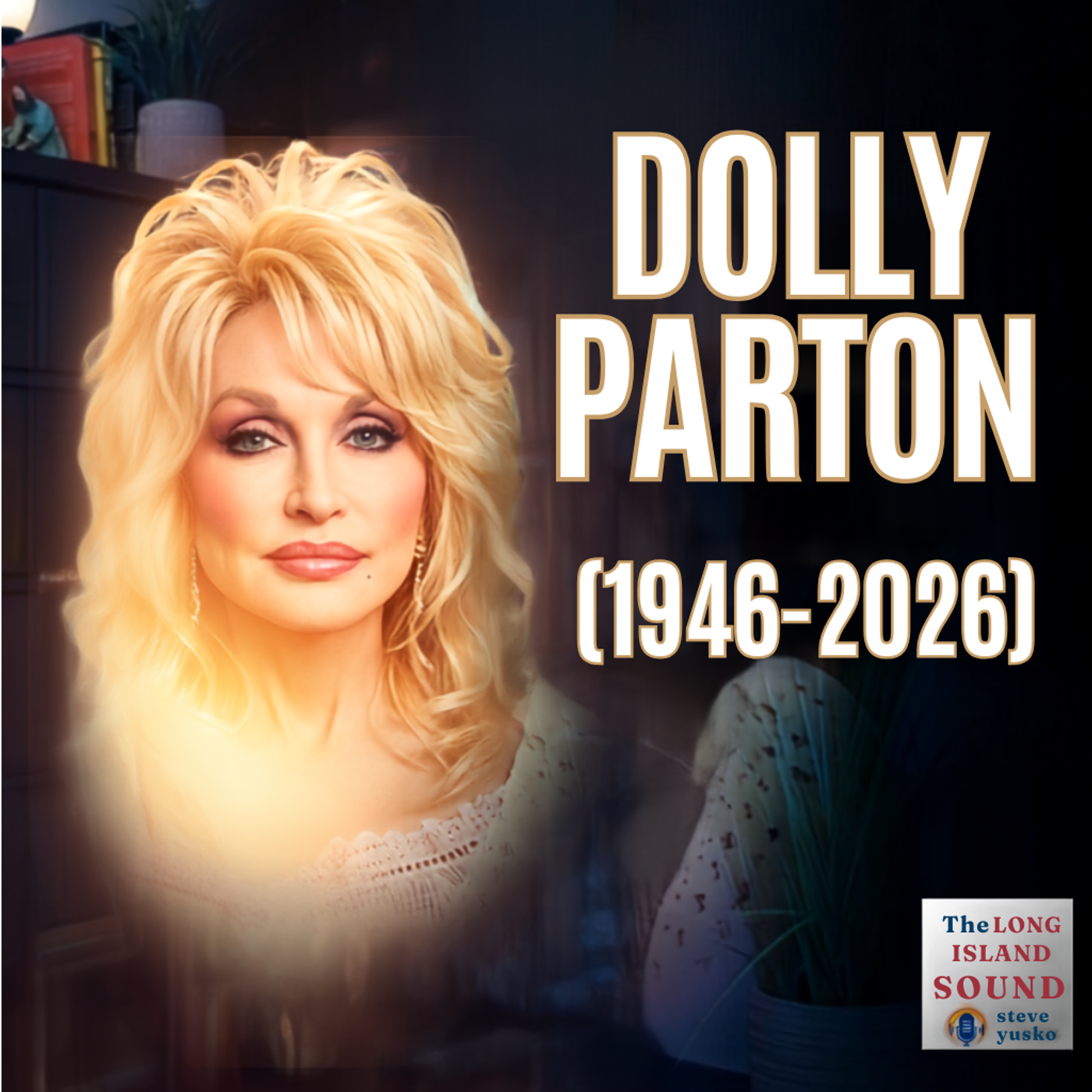
Dolly Parton: Celebrating a Life Built on Song, Wit, and Radical Generosity Steve Yusko reflects on the life and legacy of Dolly Parton, focusing on why she mattered far beyond country music. The episode covers her songwriting, business instincts, iconic self-presentation, and the philanthropy that turned her success into lasting public good. In this solo episode, Steve remembers Dolly as an artist, entrepreneur, and cultural force whose influence reached music lovers, readers, and families around the world. The episode is both a tribute and a set of takeaways about optimism, autonomy, and staying true to your voice.
Steve Yusko: Hey everybody, welcome back to the Long Island Sound. I'm Steve Yusko, your host, and today's a tough day. I had to throw out what I was gonna record today because as I'm sure many of you have heard, the world lost absolutely one of its brightest lights. This morning, August 25th, 2026, Dolly Rebecca Parton passed away in Nashville at the age of eighty. Her nephew and longtime head of security, Brian Siever, shared the news this morning, leaving an entire global community of music lovers. Book readers and dreamers in deep collective mourning. For eighty years, Dolly didn't just live, she radiated, fighting off vertigo, digestive issues, and kidney stone infections. But even as her doctors at Vanderbilt University Medical Center urge her to postpone her Las Vegas residency and cancel public appearances, she never lost that legendary spark. She jokingly referred to her eighty-year-old body as an old classic car. Needing a new transmission, an oil pan. She told us, Lord you know, I can't lose my spark. And she didn't. She kept working from home, editing her upcoming Broadway musical, Dolly, a true original musical, and preparing for her hotel slash museum opening up in Nashville. That was Dolly, relentless, joyful, and grounded. So today, while we feel the weight of this somber moment, I refuse to let us stay in the dark. We're gonna celebrate her life. Her music, her business brilliance, and the radical kindness of the Queen of Country. The caricature and the songs. Now you can't talk about Dolly Parton without talking about the look. The towering Buffont wigs, the skin-tight rhinestone outfits, the five-inch heels, and that famous unapologetic silhouette. To the snobs and cynics, she looked like a joke. They called her cheap, they called her trash. But Dolly was always ten steps ahead. of everybody else. She famously modeled her look after the town tramp from her childhood hills in Sevier County, Tennessee. As a little girl, she saw that woman and thought, that is exactly what glamour looks like. She knew exactly what she was doing. It was a deliberate, highly strategic caricature that Dolly used to disarm the male-dominated music industry by joking, you know it costs a lot of money to look this cheap. She knew that if she controlled her visual brand, She could subvert expectations. When critics tried to write her off, she hit them with her first major country hit in 1967, Curly Putman's Dumb Blonde. She grinned and reminded the world, I'm not offended by the Dumb Blonde jokes because I know I'm not dumb. I also know I'm not blonde. But behind the wigs and the makeup was the thing she cherished most, her songwriting. Dolly was a songwriter first and foremost. She started writing songs seriously at the age of seven, penning over 3,000 compositions in her life. She wrote something every single day, whether it was a melody or a lyric. To Dolly, her songs were her children, her legacy, and her truth. Let's think about the sheer genius of her creative output. In 1974, she had three solo number one country hits Jolene, Love is Like a Butterfly, and I Will Always Love You. And get this. She later discovered an old cassette tape and realized she had written both Jolene and I always will love you in the exact same songwriting session. She told a reporter, Buddy, that was a good night. Can you even imagine? Writing the two of the most enduring anthems in human history just before going to bed. Five traits of an icon. As we reflect on how Dolly carried herself through eight decades of life, poverty, super stardom, and her late career health struggles. I want us to focus on the five key positive traits that made her who she was. These are the lessons Dolly leaves behind for all of us. And these are just five. There are a lot more to check out. First, unshakable optimism and relentless drive. Dolly grew up really dirt poor in rural East Tennessee, the fourth of twelve children sharing a one-room cabin with no electricity on the banks of the Little Pigeon River. Her father Robert paid the missionary doctor. Who delivered her with nothing but a sack of cornmeal. Yet she never let poverty sour her spirit. She carried that little engine that could drive her entire life. When she faced painful medical treatments in her final years, she chose joy. She told us, and I quote, they say a happy heart is like good medicine. And she lived by those words every single day. Second, intellectual and creative autonomy. Dolly wasn't just an artist, she was a business powerhouse. At just 20 years old, she displayed incredible business acumen by co-founding her own publishing company with her uncle Bill Owens, keeping a controlling interest. That autonomy was famously tested in 1974 when Elvis Presley wanted to record I Will Always Love You. His legendary manager, Colonel Tom Parker, demanded that Dolly sign over half of her publishing rights. That was standard procedure for Elvis. Dolly was tempted, but her gut told her no. She refused. That single act of creative autonomy secured her financial empire, eventually generating tens of millions of royalties when Whitney Houston covered it in 1992. And get this. Dolly took those millions and invested them in a black neighborhood in Nashville because, as she said, this is the house that Whitney built. Okay, number three, radical strategic wit and self-awareness. Dolly knew how the world viewed her and she used it. To her absolute advantage. Her appearance was a shield and a spotlight. By leaning into camp and owning her plastic surgeries, she famously said, If I see something saggin', baggin' a dragon, I'm gonna get it nipped, tucked, or sucked. She made sure she was always the one in on the joke. Get this. She even entered a Dolly Parton drag queen lookalike contest once and lost. She had this brilliant self aware humor that allowed her to cross genres. From country to pop to rock to Broadway without losing her core authenticity. Number four, deep grounded humility. Despite building a $650 million empire, Dolly never forgot where she came from. She was deeply devoted to her East Tennessee roots and her family heritage. She bought back her family's old locust ridge cabin and had her brother Bobby restore it. Just two years ago in November 2024, she released her final album. Smoky Mountain DNA, Family, Faith, and Fables. It was a massive 37-track collaborative project produced by her cousin Richie Owens, featuring five generations of Owens and Parton families. They blended the recordings of deceased relatives and her living nieces, nephews, and siblings. She stayed Aunt Granny and Uncle Peapah to her whole family, always keeping her feet planted firmly in the mountain dirt. Number five, impactful. Legacy driven philanthropy. Dolly didn't just give money away, she built institutional change. She created the Dollywood Foundation in 1988 and launched the Imagination Library in 1995 to honor her father, Robert, who never learned to read or write. Today that program mails over three million free, high-quality books monthly to children worldwide, gifting over 285 million books to date. But her generosity just didn't stop there. In 2020, she donated $1 million to Vanderbilt University's Medical Center in honor of her friend Dr. Najee Abou Mrad, which directly funded the critical early development of the Moderna COVID-19 vaccine. She later gave another million for pediatric infectious disease research and funded Vanderbilt's pediatric cancer program after her niece, Hannah Dennison, successfully beat leukemia there. Number four. The Heart of a Songwriter. You know, just a week before she passed, Dolly accepted an honor at the Academy of Country Music Honors via pre-recorded video message. In that message, she shares something that I think is the perfect thesis statement for her entire 80 years on this earth. She said, and I quote, every dream I have ever had and all the dreams I've ever been able to see come true in life, well, they all started with a song. Hey, I want to share my personal condolences. Out to the extended apartment family during this time of grief and this time to celebrate her life. As I say in most of my videos, be generous with your joy, like Dolly. Keep your spirits high and let the music take you on a journey. Be well everyone.
More The Long Island Sound - Music and Entertainment Discovery Begins! episodes →