
The Long Island Sound - Music and Entertainment Discovery Begins! · Stephen Yusko, Host and Curosity Seeker
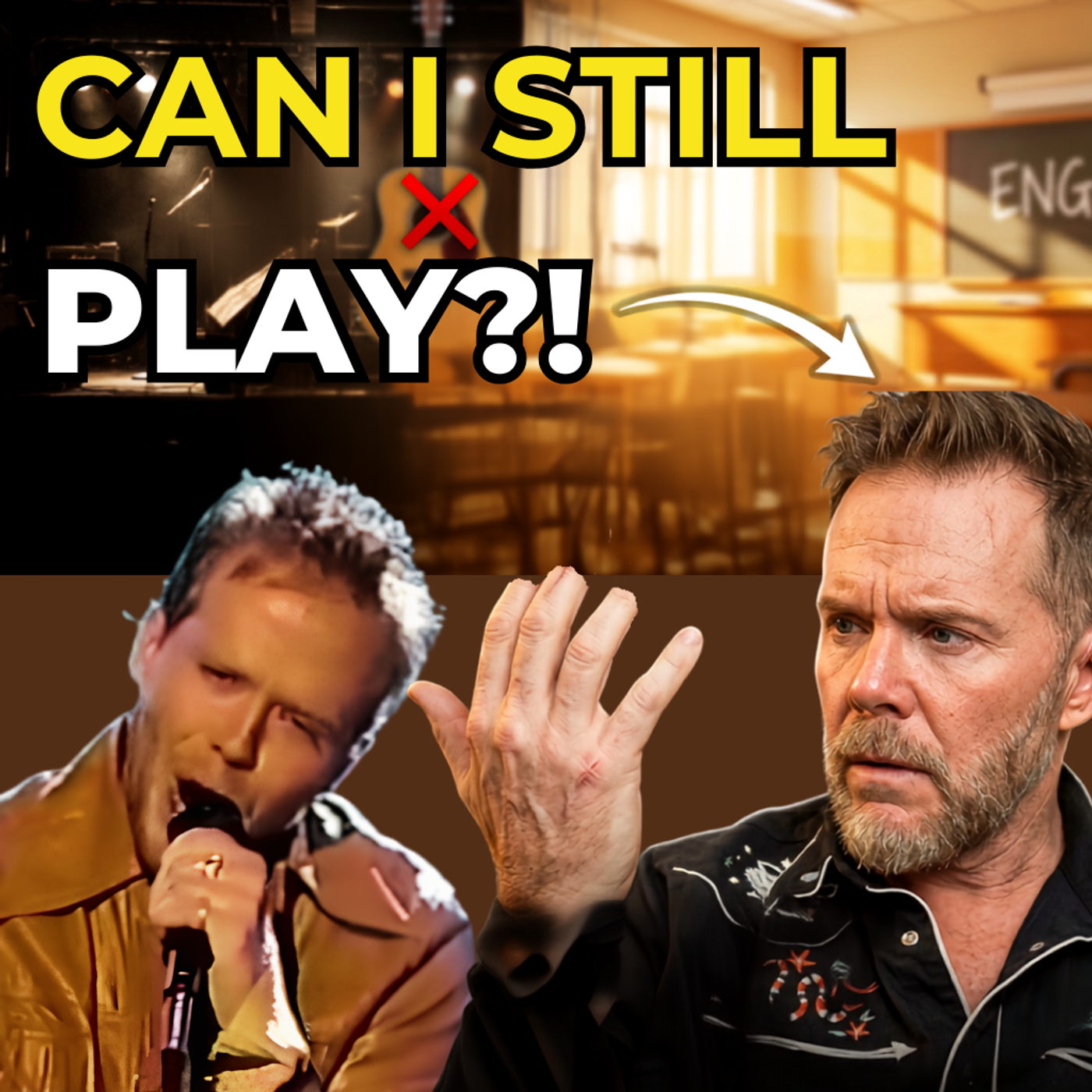
A musician's car accident & survivor shares his story of resilience and how he reclaimed his life as a guitar player. He recounts the terrifying moment his vehicle flipped and the life-altering injuries that followed, including the loss of fingers and a severe ear injury requiring reattachment. This conversation explores the emotional and physical reality of managing a major injury recovery while facing the uncertainty of a career in the arts. Timestamps 00:00 - Life-threatening car crash and devastating injuries 00:57 - Steve introduces John Borland and Sons of Elvis 02:37 - Rockaway Beach roots and the Fordham University connection 06:24 - Dave Hill’s obsession with the business side of the band 09:17 - Why studio time, demos, and promotion were so expensive 10:11 - Teaching at Saint Bridget’s while chasing a record deal 11:18 - The buzz, showcases, and Joe Grillo’s interest 12:44 - American Empire Records and the first real deal 14:12 - Recording in Hoboken with Doug Olson 15:37 - Tightening songs for radio-friendly lengths 16:29 - The label collapse and the move to Priority Records 17:13 - Naming Glodeen and meeting Barry White 18:29 - Making the music video and being pushed by Priority 20:22 - Touring with Bush and old-school radio promotion 21:47 - Higher Learning and hearing the song in a movie theater 23:30 - The John Stewart show and the Coyote Ugly connection 26:09 - What makes a frontman and how Borland approached it 29:16 - Pressure from the label on album two 31:22 - Cleveland radio support, big shows, and touring economics 32:45 - Hearing Sons of Elvis on WDRE and calling the station 35:10 - Back to New York, backyard gigs, and the Johnny Irish identity 36:01 - The Ocean Parkway rollover and the severity of the injuries 37:24 - The priest, the roadside rescue, and the surreal aftermath 38:53 - Choosing teaching, marriage, and stability 42:39 - What frontman skills brought into the classroom 44:35 - Music, meditation, and keeping the guitar in the classroom Despite the devastating setback to his strumming hand, he explains why he never stopped seeing himself as a guitar player and a dedicated singer songwriter. His story serves as a testament to the persistent need to create, even when the body demands a different path forward.John Borland on Sons of Elvis, the 90s rock grind, and finding a second act in teaching John Borland shares the full arc of his life in music, from fronting Sons of Elvis and chasing a record deal in the pre internet era to becoming a high school English language arts teacher on Long Island. It is a story about craft, luck, business, resilience, and how performance skills can translate far beyond the stage. We discuss the rise and fall of a 90s alternative rock band, the realities of recording and promoting without digital tools, and how a major life accident changed the course of his career and personal life. Steve Yusko also brings in his own background as a musician and interviewer, making this both...
speaker-0: The car flipped like six times. I went out the window of the car. I I lost my fingers. See that hand? speaker-1: ⁓ my god. ⁓ my god, that's your strum in hand, right? speaker-0: That's my that's my strummy hand, so you won't hear me any finger picking I do is like I crushed this hand. My ear was ripped off. Wow. My ears and my hands, Steve. What what is a musician? Yeah. A guitar player and a singer. My ear had to be sewn back on. ⁓ I was in my parents didn't recognize me when they came to the hospital. Like my head shit was broke every blood vessel and both my eyeballs were my eyes were black. speaker-1: ⁓ my god. It's amazing you're alive. speaker-0: Yeah, I I speaker-1: All right, everybody, if you were watching MTV in nineteen ninety four or if you had the soundtrack to John Singleton's movie Higher Learning on Repeat, you'll know today's guest, John Borland's voice to find Formaldehyde, the uniquely funky, high energy alternative rock anthem that almost almost took over the world. Sons of Elvis signed a major deal, had John Stewart hanging out in their dressing room, and stood on the precipice of stardom. But when their label's Rock Division crumbled, John traded the tour bus for the classroom, and I honor him for that. Today he joins us to talk about the wild ride of the nineties grunge, his transition to teaching English language arts, and how he repurposed his frontman skills to command a high school classroom. Hey, John Borland, also known as Johnny Irish. Welcome to the Long Island Sound. Good to see you, John. speaker-0: Thanks for having me, Steve. speaker-1: How's that for an intro? speaker-0: It's amazing. That's amazing. I haven't heard a lot about stuff in a long time. speaker-1: Well, we're gonna do a little bit of reminiscing. As I was telling you off camera, I am so enamored. Every time I see s one I love ⁓ by the way, for those who don't know, John sometimes gigs four times a week during the summer. And I'm being sincere, one of the best acoustic guys with a broad range of music that he plays and he keeps everybody engaged. Saw him at Mary Carroll's a couple of times and There'll be links so you can ⁓ you can get John to play at your place. Anyway, I'm talking too much, my apologies. speaker-0: Okay. No, I appreciate it. speaker-1: So John, I you know, I know the band Sons of Velvis was a Cleveland band. Are you were you a Cleveland guy? speaker-0: No, Steve, we all met at Fordham University. So I ended up I I went I grew up in Rockaway Beach and I went to ⁓ a Catholic family singing Irish songs ⁓ around the big stereo. Remember the stereos that were pieces of Yeah, like a wooden this one was like a wooden speaker-1: Controls, right? Some of them have bars in the speaker-0: family parties. Yeah. Yep. And then I went to high school in Manhattan. I went to Xavier, a Jesuit school. And ⁓ Marymount was my I think a sister school. Yes. I I went to some dances with girls from I know your your daughter goes to Marymount. And then I from Xavier I went to Fordham. And the Jesuit school that it is, it attracts guys from ⁓ Buffalo. There's a ⁓ Jesuit high school there and Cleveland. So these guys from Cleveland were ⁓ kinda already rolling with Sons of Elvis as a band and ⁓ we met at Fordham. They didn't have a singer and ⁓ we used to used to have this sort of little jam. It was called like a coffee house and we'd do it in the the lounges of the dorm back in the day. And ⁓ they heard me singing some with an acoustic guitar and they were making loud music with a rock band and ⁓ that's kind of where we met and started out, you know. speaker-1: I love I love the fact that you brought up the Jesuits. ⁓ I'm a cradle Catholic myself. I first met my real Jesuits when my daughter went to Scranton University. And let me tell ya, it was I d only child, right? I had no problem handing her over to the Jesuits 'cause I knew she would be in great hands. And the one thing about Jesuits, they're always exploring, asking questions and speaker-0: ⁓ yeah, yeah, sure. ⁓ Yeah. Great Yeah, they're the rock stars of the ⁓ clergy. speaker-1: Yeah, you know what? You're right. They are. speaker-0: Yeah. You know, they're on the edge, you know, a bit always were. speaker-1: So we're we're starting on fertile ground, ⁓ very well together. Yeah. So all right, so you meet these knuckleheads from ⁓ from from ⁓ Cleveland. All right, you get together, you're the front man for it. T take it from there. How do you get on this wild ride after Fordham? speaker-0: You know, I have to ⁓ it's a totally different world, Steve. You know, it was ⁓ there was no internet, you know, this is something that kids ⁓ and y younger people don't understand. There was no internet, music production was vastly expensive. And getting a record deal, you know, there it was there was gatekeep you know, the the the record industry it was a locked business, you know. You really had to ⁓ pry your way in or speaker-1: Right. speaker-0: And at the time we were trying ⁓ there was indie record labels and things like that. I never I I loved singing. You know, I dreamed of being on the radio, being in a rock band. I s I spent more time with my head against the speaker than I did studying and doing the work. And I loved all music from the time I was little very little, you know. The first song I think I ever sang was ⁓ an Irish soldier boy at like two or three years old. Every party had to know a song and so I Wow. sing I'd sing these rebel songs, you know, from my my grandparents. But at Fordham, you know, these guys these guys were serious about playing. They were going into the city and playing at C BGB's and getting gigs. Dave Hill, who's still a very big ⁓ he's actually a comedian and a musician. I don't know ⁓ Dave wrote the song that's at the beginning of the John Stewart show. That's his music playing in the background and he's touring he's op he's opening up for as a comedy act. He does comedy with the guitar and he's opening up for a Sammy Hagar in his whole residency out in in Vegas. Yeah. So Dave was the bass player in in Sons of Elvis and I have to credit him with sort of the movement of the band. I just loved singing and wanted to be a rock star, but Dave was the one who was obsessed with doing the w the legwork and the business end of it. Sure. You know, he would book the practice spots and he would ⁓ you know, make tapes and give them tapes to me and I would write the lyrics. When I first joined the band, they had songs but no singer. And they gave me ⁓ tapes of s of the songs and I wrote lyrics and melodies to those and we'd save up money and go into the studio and do a demo. We did that probably two or three times. We'd make borrow and beg money and ⁓ make copies. And Dave was the guy who would I mean again, before the internet, he'd get these books out ⁓ you know, at the library that had the addresses and the names of all the studio execs. And he'd package and we'd package these tapes, cassettes of four songs, demos, and ⁓ a bio and a cheesy picture w some girl took, you know, of us in a doorway in the Bronx and ⁓ he'd handle it for some of them. He'd call the the record companies, he'd make friends with the secretaries. And ⁓ you know, we didn't have an agent. We didn't have anybody. And we'd have we'd booked gigs in the city and ⁓ we'd we'd have to take the amps and the drum kit on the subway. We'd even have a a a a ride in sometimes, you know. So we were ⁓ we were taking the subway with our equipment in and playing places like there was a bar called Nightingales ⁓ that speaker-1: ⁓ man. speaker-0: a band called Blues Traveler used to play at. We used to open up for Blues Traveler and ⁓ and kids would come in from from Fordham. But we play at C V GB's maybe once ⁓ every two months if we could get in. And they liked us there 'cause we bring in college kids and they drink. Sure. Some of them underage, but it didn't matter. And yeah, it was a bit of a a slog, you know, it took a while. But we liked doing it, you know, and it was fun. But Dave is the one that kinda really drove the band and and did that business end of it. And that's something I realize after the fact. Somebody has to be kind of obsessed, you know, with ⁓ with it and sort of push it forward. Even if you have the talent, even if you have ⁓ you know, great songs, if someone isn't really, at least back then, kind of obsessed with the business end of it and really pushing things, you know, you don't get the chances. People weren't gonna listen to you. speaker-1: Yeah. I'd like to give some context to the younger people listening to this is you you know, what we have today, you have the internet, so boom, it can go out everywhere potentially. You can record in your own home. There's home studios and stuff like that. You didn't have that back then. You had you had to get and you didn't have GoFundMe, right? So that's where the big borrowing and stealing comes in to get studio time from whenever you can, and then go from that. So when speaker-0: It it was a lot of money. Like studio time was expensive, you know, ⁓ and to try to find somebody 'cause, you know, these big board you had to have people that were really knowledgeable and ⁓ trained, you know, kind of thing and ⁓ so ⁓ yeah, yeah, it was it was it was a lot. But we you know, we did that through through college and I guess it wasn't until I was I had graduated college and taken a job in the city. Uhhuh. I didn't really know what I wanted to do, but I thought teaching might be a good idea, so I got I started taking some education classes and then I just walked in to a school in the Lower East Side called ⁓ Saint Bridget's and I got a job ⁓ it was a crazy time in the East Village, Rock and Roll Central, but anarchy, you know. And I had hair down of here, you know, I was playing in the band at night places like C D G's, waking up barely making it into school and teaching these kids from the projects. ⁓ at St. B ⁓ it was ⁓ it was kind of a crazy time, you know. I was still trying you know, trying to get signed, trying trying to get that ⁓ that record deal. And we started, you know, getting some interest. ⁓ I was doing both things, you know. I ⁓ and I discovered it I discovered I like both. I really loved teaching. I like the kids. You know, I like feeling like I was making a difference. So it was it was a good time. You know, it was a good time in my life. speaker-1: So tell me about bring me to that point when it was, ⁓ my God, this is real. What was the big break, I guess, into the music crazy business? speaker-0: We s like record company guys were coming. You know, there was showcases, right? ⁓ and there was a little bit of a buzz going around. You know, you you had to create that buzz. And ⁓ you'd get word that somebody was coming, so you'd set up a show with CBGBs and ⁓ and again, a lot of it had to do with rubbing elbows with the right people and Dave tried to do that. We had some other friends that were playing in the speaker-1: Showcases or something like that. speaker-0: some punk bands, local New York City punk bands that newer people and this and that. ⁓ and I guess our big break, there was a guy, Joe Grillo. He he had worked at Atlantic Records and he was I think an A and R guy in the rock branch of of Atlantic. And we were kinda a rock band. Alternative was what was hot at the time. Right. But the guys from Cleveland were kind of really you know, into rock and roll ⁓ heavier rock and roll and and metal when they were young. A little different from what I grew up with. I was more into the southern rock kind of thing and a little folk rock kind of thing. But this was the ship I was on and it was moving. So I was like, you know, whatever. I I wrote to fit it ⁓ the music right, right. And so Joe Grillo started his own label and ⁓ he wanted us. So we had major label interest but speaker-1: The genre, yeah. speaker-0: I think Joe also had some friends in the major labels and he was starting this new and it was gonna be a rock label, a small rock label, and he wanted us. And so ⁓ he took us and I think maybe three other bands and he started what was called American Empire Records. So came down on Great Great Jones Street, he had an office and ⁓ we you know, he had the money to put us into a studio and it was it was happening. I was teaching like I'd been teaching for two years at this point. ⁓ you know, it i it looked like somebody was gonna shell out the thousands or tens of thousands more of ⁓ dollars to for us to make a make an album, you know, to to make a full record. He had distribution, he had everything, you know. So we were we were due to go into the studio in in Hoboken in ⁓ the summer. And then the album was gonna come out and we were talking about touring and all That's when I knew, you know, this this is real, you know, this is gonna you know, I actually I I think I might have been three years that I had been teaching, so I might have been three years out of college and ⁓ I I told the principal, you know, I I think I'm gonna I'm ⁓ I'm gonna have to quit, you know. Right. And the kids the kids all knew about the band and they you know, they they were super excited, you know, the teacher was gonna be famous and you know, it it was completely you know We we went into Hoboken. It was a studio called Water Music and the board ⁓ that we recorded on. Van Helen I think recorded Diver Down on this same console. There was a few other famous ⁓ bands that had recorded on this, you know, twenty four track console. We had a stud we had ⁓ our producer was this guy Doug Olson. Mr. Colson. And Doug, he had worked as a an engineer under Butch Vig. ⁓ he was working on Nevermind he worked on Nevermind by Nirvana. ⁓ wow. He did stuff with smashing pumpkins. So he he agreed to produce our record and he you know, again, stuff that people don't I don't know if anyone does anymore, but he knew how to cut tape and you know, all all the editing skills that ⁓ you know I've been lost, I think. Yeah. But ⁓ and so yeah, we we we moved into an apartment that they had for the bands and we had yeah, we had over the years accumulated a bunch of songs. We had to send those to Doug and he was listened and you know, you weaned things down. It was funny. You'll appreciate this as a musician, w writing our own songs and playing live. We really never had any idea. We never really timed our songs. And so we we we had songs that we had not recorded but we just played for ⁓ and he was like, you know, that's like a six minute song. You know, y that's not gonna get played on the radio, you know. So we had to like change some things and and be like, ⁓ yeah, maybe it doesn't need that many repetitions of that riff or, you know, we're gonna pull that part out and ⁓ you know, small things like that. But ⁓ it was Tremendously exciting, you know. speaker-1: What's so interesting is you're curating these songs out live, you know, so you so you're building that up and then it makes my my opinion is probably makes it easier to go into the studio. Now in looking up what happened, it seemed like a lot of bad juju going on as far as the record label I think went belly up. Yeah, fill me in. speaker-0: Well he But at the same yeah, so so at the same time he I think some of the people he had financially backing him might have been ⁓ nefarious characters. No. speaker-1: In the music business? speaker-0: So we we but luckily a label out in LA, the label that Snoop Dogg was on decided to throw their hat into the alternative rock arena and they wanted some rock bands. They were a rap label, Priority Records. Right. And they decided that they wanted us. So it ended up being a big plus. We got bought by priority and they had they had money. speaker-1: Right. speaker-0: They had a big back catalog of Parliament and Funkadelic, Barry White, they Ice Ice Ice Cube. And funny enough, they put out the old Barry White records. We named our album Glodine as a nod to Barry White. His wife, the guys in the band had an old eight track in their in their first car, and that's all they had. And they had all these old Barry White eight tracks. And on the back of every Barry White eight track it says speaker-1: Cube, right? speaker-0: And thank you to the beautiful Glow Dean. That was his wife's name. So we named our album Glodeen. Okay. And we ended up on the same label as Barry White. And ⁓ ac we actually got to meet him one time. Great guy. Big man. Larger than money. speaker-1: That was all that's all like bedroom sex music, you know? speaker-0: Barry White. Good music though. Good stuff. You know, Barry White and the Love Unlimited Orchestra. But anyway, we ended up on Priority Records and they flew us out to to California. They wanted to pick the video. They flew us out to LA, made a video. You know, we we got the whole treatment. We we got to pick out of directors. Funny, the the guy who directed our music video was Fred Stir. He was kinda big up and coming guy 'cause he directed I don't know if you remember those Tool. Remember the band Tool? A heavy rock band? They had some really big videos of like stop motion things and we got the guy who directed those videos to make our video. And it's ⁓ this crazy stop motion ⁓ animated video. ⁓ yeah, we we were doing the whole thing. We were out in LA, made the video. They were pushing us to stay they were gonna They repackaged the album. They were promoting it. ⁓ they didn't really know how to handle a rock band though. They were used to rap and ⁓ it was it we we noticed almost as soon as we started to go on tour that some things weren't really working out. They places weren't getting the posters and they they're their publicists and their team, I guess, had a different approach, you know. I assume speaker-1: In the rap business they're dealing with club owners getting getting the spin, getting the excitement out that way and and hear you guys ⁓ speaker-0: Street, a lot of street, you know, just putting up flyers on the street and things like that. It's a it's a very different market and a different approach. So and we we were small. We had a we had a a lawyer, ⁓ we didn't really have a manager, but you know, the video made it on ⁓ T V. It was on ⁓ alternative nation. ⁓ things were happening. You know, we were getting ⁓ we were starting to get some radio play and ⁓ it you know the the the rock and roll lifestyle seemed within reach, you know. It was pretty ⁓ it happened fast, but it was also pretty ⁓ it was one of those things where it was like it was everything I ever wanted as a kid, you know, I I just wanted to be on the radio. And then all of a sudden you're in it and it doesn't seem nearly as glamorous as as you imagined speaker-1: Yeah, it must be really surreal, right? speaker-0: It was just kinda like, yeah, this it is surreal. It is. ⁓ we we I remember I think one of the first shows we played after we filmed the video out there in LA, we flew out to Tempe, Arizona. And we we were playing with Bush and ⁓ they had this big tour bus. We had like a Ford one fifty van. Yeah. We had two we did have a tour guy, you know, two guys, a guitar tech and a guy who did our sound and drove the bus, but we weren't pushed. We didn't have what they had, you know. Out in our in our they came up to my hotel room and hung out with us and ⁓ you know, they were nice guys. But it was it was pretty cool. And priority pushed us. We this was still in the days where ⁓ I don't want to say it was Payola, but they would take out ads on a radio station and they were in LA, so they had a influence. And they would actually you know, back in those days, the pr programmers who programmed decided what was going to be played on the station were the guys you handed the record to to listen to. So they they dressed a little kid up in as an Elvis impersonator and sent him to the radio stations to deliver our disc, you know Sons of Elvis and the little kid dressed like Elvis would hand the disc to the the head programmer and, you know They like that kind of stuff. They like gimmicks like that. And we got added to I think probably like thirty or forty stations across the country and we were getting airplay. Things were kind of taking off, you know? And then like you mentioned in that intro, Priority Records did the soundtrack for John Singleton's movie. Ice Cube was in the movie, ⁓ and they needed a song to be playing in the frat house in the scene. They ne they wanted a rock song for the for the jukebox in the Frad House and the movie was coming out and they didn't even have that yet. So you know that that got thrown into the mix. I have to say for me, one of the greatest thrills of of that whole what what came of all that was sitting in this movie theater in Cleveland. And it was like in a almost all African American community. Right. And we were there because the movie came out first there. And John Singleton was a famous black director, you know And the movie had a lot of racial undertones to it. And but we had to go see it and we were sitting in this theater and our song comes on and I just kind of stupid I was yelling and screaming in this theater, you know. And everybody's turning and looking at me like, What's this crazy kid doing? I'm I'm telling that's me, that's my song. They were like, All right, very good, you know? And then to see your name come up in the credits, you know, for ⁓ for me that was a big thrill on a in a movie theater to see your name come up like this big in the credits of a of a movie. That was great, you know. It really was. I'll still get a royalty check if that every time that's movie that movie's on I probably make twenty five cents or something. It's not much of a of a royalty check I get. Couple hundred bucks, yeah. speaker-1: It's better it's better than calling. Tell me about the John Stewart show and 'cause I saw that video, I thought it was great. speaker-0: Great. Again, there was some ⁓ T V connections. We did an interview for ⁓ T V that I don't think I ever aired. Down in New Orleans, PJ Harvey I think went right before us. There was some big music festival down in New Orleans and we played at that. We played down at Tipatina's in New Orleans. ⁓ no We had some MTV connection and ⁓ that show, John Stewart show, was an ⁓ T V produced show. Right. Even though it was a national It was on national T V. John Stewart, I think he had done a show called ⁓ You Wrote It, You Watch It. And I I actually he dated girl. I I used to I hung out and even worked at a bar called Coyote Ugly, kind of famous place in East Village. ⁓ the owner was a good friend of mine and I lived right down the block. And ⁓ I bartended there for a little while when I was off. I was one of the only guys to ever bartender. and John Stewart dated one of the bartenders there long before he was famous. He wasn't famous at all. But I met him one time, we chatted and stuff, and now it's like maybe two, three years later, and he's gotten bigger and he has his own nighttime shows. You know, this ⁓ Yeah. So we're we're in the dressing room and ⁓ they come and they check on you and everything and I said, Hey, listen, I said, John Stuart does not doesn't know this. I said, But tell him I know him from Coyote Ugly that he used to date this girl at Coyote and ⁓ we met one time and speaker-1: He's great, I love him. speaker-0: We talked there and I named the the the girl, I named the bartender. The next thing I know, there's a knock on the door and he Okay I open the door and he's he's not a big guy, he's a little guy. ⁓ really? Yeah, he's very small. And I'm not a big guy, but I open the door and he's standing, he's like, I remember you and he goes, I never visit the guests in the room, but I remember you. That girl. She was beautiful, right? I was like, Yeah, he's like, I don't know what I did. I messed it up, I lost it. So, you know. We ended up knowing each other. It's a small world and ⁓ Wow. That was a that was another big highlight, you know, being on national T V and ⁓ people seeing that around the country. It was ⁓ a little nerve wracking. But ⁓ it was a it was a awesome I I thought. They they really focused on the bands. The bands were yeah, you know, they treated you really well, they let you sound check, they filmed it, the filming was really ⁓ well done. They had guys running around and edited live and ⁓ it was it was an awesome experience, you know, it was a really cool experience. speaker-1: I gotta ask this left field question and it's about being a front man, okay? I assume you didn't have any experience before Sons of Elvis of being a front man. How do you approach that role in a band as far as the connection with the audience? speaker-0: it you know, it ⁓ definitely was a new experience for me. I I always loved singing and performing. Did I did some theater at Fordham. Funny enough, I did like one musical theater thing when I was ⁓ in high school and I didn't really love that. I liked acting. I liked ⁓ drama more than I like doing musical theater. I I like I don't know why. I like music. I love music on its own. But I didn't like the show tunes thing. I wasn't a big dancer, like following choreography as it is. Yeah. I wasn't me. So and I think part of the front man thing is being a little bit of an actor. You know, there's a lot of posturing that goes on or focus ⁓ that goes on. And I have to say too, with Sons of Elvis, we were a loud, like high energy rock band. And, you know, I I I kind of channeled more of a a Robert Plant thing than I did a ⁓ David Lee Raw. Not that I did anything like Robert Plant. But there's a lot of physical it was a lot of physical to sing over a band that loud and heavy and hard. There's it there's a lot of physicality to it, you know. It wasn't night after night. I mean there were times that I couldn't hear myself over the drummer, you know? Well and you have to keep going. And, you know, it was ⁓ and moving around it it's sweaty and it It's like a lot of high energy. So ⁓ it was focus, you know, like you had to focus on the songs 'cause ⁓ they especially at first, you know, new songs, they're not songs you practiced a ton. I remember like just breathing through those things. Like, you know, where do you catch your breath? You know, you jump it up and down and move it around and ⁓ so there was like a lot of physicality to it, I remember. ⁓ and I wasn't I wasn't comfortable like doing dance you know, we don't do I'm not doing dance. routines up there, you know. But I don't have the guitar. It's a little it's like, what do I do with myself, right? You know? speaker-1: Yeah. Well the old the old joke is that you were half grunge, half rock, right? Is all you had to do is jump up and down and stare at your feet and look displaced like you're in another world and speaker-0: And that's the other thing, you know, I'm not gonna say it was just all natural, but I also didn't wanna you know, I worked pretty hard at not being like overly pretentious, you know. You don't wanna be ⁓ I didn't wanna be Eddie Vetter or I didn't wanna like try that to see that I was looking like this guy or that guy. You know, yeah and the music had a lot to do with it, you know. ⁓ it's the same as now. I'm not gonna lie. Like when I play it doesn't matter if I'm playing in a bar two ⁓ speaker-1: Let yourself come through. speaker-0: five people. I I put all every I put all everything into it, you know. I I I just feel like that's I get the most out of it if I do that, you know. And I did that with with Sons of Elvis too. I sang hard and loud and, you know, well that's just I I kinda only have that switch, the on switch, you know? Yep. And I there's a part of that story that I don't tell that often, not for any reason except I it's you know, I don't think people care that much. But ⁓ there is the the the label got new A and R people. They w they let some of the other they realized they weren't doing the best with their rock people. Right. They dropped a couple of those bands. They didn't drop us. They they liked us. They liked me. They ⁓ you know they they were like we see a lot of you know potential in you, but we had another album to make. You know? So they wanted us to make another album. ⁓ and you know there's a old industry joke. You have your whole life to make the first album and you have like ten months to make the second one. Yeah. Right. And it's true. You know, y the first album was, you know, only ten songs, but those were ten songs we picked out of thirty that we wrote over the years. And now you have to write new stuff. And now there's other people involved. There's ⁓ an A and R guy and you're writing songs and he's saying, I don't know about this one. You know, and Think about what that does to your and sometimes it was like pointed at members, you know, like I think you guys should maybe play less of this and make more room for the vocals kind of thing, which, you know, it doesn't doesn't sit well. It it actually doesn't sit well with any of us. Even if I agreed or if somebody agreed with them, you know that that's not gonna, you know, put the keep the band together. speaker-1: My god, yeah. speaker-0: Right. So we were kind of struggling. We we did write and and actually recorded on our own a bunch of new songs that were that were really good. I thought they were really good. But the record company was shuffling their feet and it wasn't looking good for us, you know. But something happened that that that kinda for me kind of made the decision for me. Like we I would say we were teetering on the edge there. There was our manager maybe wasn't making the best decisions for us. The Rest of the guys were out in Cleveland 'cause I have to say, Cleveland really supported us. They were from Cleveland originally and when we started getting when we recorded that album, Cleveland Radio picked it up and we were on the radio in Cleveland all the time. You couldn't turn the stations w without hearing some of the velvets. And they supported us and we we opened up for Slash out there and ⁓ wow. Open played in front of ten thousand people at ⁓ ⁓ the Blossom Music Center and a a bunch of places out there and supporting big bands. I played with Alanis Morissette. We played with Sublimes. ⁓ wow and I think I was in DC. We had a lot of great ⁓ you know support and and and got in with like a lot of good people. But Cleveland especially was was awesome to us and the people of Cleveland were great because they were you know a local it was a local band. Yep. But it wasn't it wasn't looking the best with the radio and The other guys wanted to stay out there in Cleveland. But when you're touring, you know, as glamorous as it might seem, you know, all your money's going back into touring. We had sold probably I think supposedly about sixty thousand records, which today is a it's a good amount of records, you know. Yeah, sure. A hundred thousand is a gold record and ⁓ some of them might have been given away in as promos and ⁓ or sold cheap here on Long Island. I I I remember we were on L I R. We we actually performed live in in the studios at ⁓ it was D R. E. at the time if you remember. speaker-1: ⁓ yeah, sure when they transitioned. Yep. speaker-0: And th that was just to go back a little bit. I I remember I was in New York coming off tour and ⁓ was in my apartment in the city and I picked up D R E and I hear the guy, one of the DJs, and this was like a dream come true for me, 'cause I listened to that station growing up. I hear him say, Hey, we got a new song coming on in a couple of minutes from a band called Sons of Velvet I'm listening to my the station I grew up listening to. And they're gonna play my song. I immediately got on the phone and I called the station and I said, I just have to tell you guys, man. I said, I'm the lead singer of this band Sons of Elvis and I just heard the guy say he's gonna play my song and I just wanted to just had to let you know how happy I am. They're like, Hold on one second. So they put me on hold and ⁓ then all of a sudden the T Jake comes on the phone. I have the radio on, so it's a commercial. Right. He comes on, he's like he's like, Is this really the lead singer, Sons of Elvis? I'm like, Yeah. He's like speaker-1: Right. speaker-0: Hey John. He's like he starts to ask me questions and I'm eating popcorn. Because we're just trying I think we're just chatting. Right. He goes, This is great, man. He's like, and congratulations. I'm so glad to hear you're a fan of WDRE and ⁓ we're hoping for the best for you guys and all this stuff. So I hang up the phone, I'm really happy. All of a sudden I hear on the radio he recorded everything we just said. And he's playing it. I'm like, ⁓ my God, I sound like an idiot. Eating popcorn and Yeah, yeah, chewing. speaker-1: Chewing. speaker-0: I got the phone was ringing off the hook. Everybody I knew in New York was listening to me on the radio. But that that was a good moment. But sorry. So it was really it was really on the fence and ⁓ the guys wanted to stay in Cleveland. There was no money coming in. When you're touring you get twenty five bucks a day. You know, you sold sixty thousand records. Well, the more you take off from tour support the more you owe. speaker-1: No. speaker-0: You're paying back you're paying back a half a million dollars or a hundred thousand dollars on fifty cents a record. That's you that's what you're getting from each record that sells. So to pay back a hundred thousand dollars even fifty cents a record, you'd have to sell, you know. So we didn't have anything, you know, we didn't have any money. And I was kinda like living in basements in Cleveland, living in the in the recording place. So I was like, you know, I'm gonna go back out back to you know where I have family and go to New York and I'll come back for shows. So I was back and forth from New York to Cleveland and ⁓ my girlfriend was living in Oak Beach here in Long Island. Sure. She she and her friends and used to work in Fire Island and I went over there and would play guitar in the backyards at backyard parties and people that had my album, you know, were like, You're the guy from Sons of Elvis You know, and you know I I this is that's actually where I started doing what I do now. I w I was just strumming in backyards and and the bar owners ha asked me to play at the schooner. That's where I got the name Johnny Irish. I'll I'll come back to that. Yeah, yeah, yeah. But anyway, we we were at a we were at a ⁓ an in between ⁓ an in between moment, you know. And I was actually leaving my girlfriend's house in Oak Beach and I was heading to Rockaway to visit my parents and I flipped my car ⁓ on the ocean parkway. I swerved to not hit a goose. And I was probably doing eighty. And the car flipped like six times. I went out the window of the car and I I lost my fingers. See that hand? speaker-1: God. speaker-0: Any finger picking I do is like crushed I crushed this hand. ⁓ god My ear was ripped off. Wow. My ears and my hands, Steve. What what is a musician? Yeah. A guitar player and a singer, my ear had to be sewn back on. I was in I my parents didn't recognize me when they came to the hospital. ⁓ yeah. My head was broke every blood vessel and both my eyeballs were black. speaker-1: ⁓ my God. It's amazing you're alive. Amazing you survive it. speaker-0: Yeah, I it Yeah. I came to on the side of the road I couldn't see 'cause my head was already swollen and I was amid prayer. I was saying hell no I heard my own voice saying these prayers and a priest was driving. A priest was going one way and a cop was coming the other way and that's that's who found me. speaker-1: No way. Do you remember the priest do you remember the priest's name? speaker-0: I do. It was Father Bryan. He wasn't one of your funny Catholic ⁓ He wasn't saying the Hail Mary. I as messed up as I am. I go he says he tells me, I'm Father Brian, I found you here. And that the first thing out of my mouth was, Are you Catholic? 'Cause you're not saying the Hail Mary And he's like he goes he goes, No, John, I I'm not. But that doesn't I no, no, it's okay. I should I just I just had to ask 'cause speaker-1: Yeah. Yeah, throw it in ya. speaker-0: I noticed you weren't saying the Hail Mary with me. He's like, No, I'm a Protestant. I was I think he was at an Oak Beach church, you know. And I pried my eye open because I couldn't you know, I couldn't open. And I saw he had a collar on and it it was it was crazy. It was I'll tell you what what it was. As the car was flipping, Steve I I was the car flipped forward. I was holding the steering wheel and I watched the grass come up. speaker-1: ⁓ my god. Yeah. speaker-0: Like I I was watching the like they tell you like your your life slows down kind of thing. Yeah. ⁓ speaker-1: Your adrenaline's running. speaker-0: And the last thing that went through my mind, I was like, I can't believe I'm I'm dying. I'm gonna die. Yeah. And I never got I never got married. I never had kids. I never married the girl I love and I never had kids and I never saw ki my ch kids grow up. That's all I thought about. I didn't think I never made it. I didn't think speaker-1: ⁓ it's all bullshit, right? The rest is nothing. Yeah. speaker-0: You know? Yeah. So and so when I when I woke up alive and realized I didn't hurt anybody else, I ⁓ I kind of was like a decision kinda was made for me and I I like I kinda that that was it. Like I was kinda like, you know what? I I think I'm gonna I I think I'm gonna go back to teaching. I think I'm gonna get married. I I asked my girlfriend whose house I had just left I saved up mu I I got a job bartending in schooners in Fire Island. I and I saved up money in the next year or so and ⁓ I asked her to marry me. You know. What no hard feelings, but it it was so up in the air with the band and they it things seemed so kind of not mismanaged by us, but you're at the whim of of of record execs and things like that and it was one of those moments of clarity where what's important speaker-1: Well you know you know what? speaker-0: Becomes clear, you know. speaker-1: You know what's amazing. I've I've heard variations of this story, but in a different way. Yours is extremely dramatic. And you get to the crossroads and do I do the family life or do I do the nightlife, right? When I started this episode with you, I told you that I'm always wondering what's their story and you blow me away. It show me the fingers again. Show me fingers again. 'Cause that's the speaker-0: Yeah. Yeah, and this hand too, you know, I really I crushed the knuckles in this hand. ⁓ you know, I I'm not I'm not the greatest playing, you know the whole performance, you know. ⁓ I think it's an energy thing too. And ⁓ I kinda had a realization that what I got out of music and I still what I still get out of music, it wasn't about fame, you know, it wasn't it's for me it's it's really not, you know. There's so much to get out of speaker-1: I d I disagree. speaker-0: performing, even if it's not your song. I mean I still write songs that I don't even finish. You know? And it's the process sometimes that it's emotive. It it it does something for me, you know? ⁓ and it's not always about even playing it for somebody. You know, sometimes I just like coming up with the the chord progressions and ⁓ coming up with a little melody and sometimes I'll record it, sometimes I won't. But even playing other people's song and sitting down and figuring out what sounds good with open chords or Bar chords and sounds good with your voice and the mic and you know. Yeah. ⁓ and then and then people enjoying it. Like you listening to it and enjoying it. One or two people coming up and saying, I really love that. That that's enough for me, you know? Yeah. So speaker-1: That's great. So let's let's transition again. So you teach high school, right? In Cold Spring Barber. That's no secret. God bless you. I I can't imagine teaching high school students. And my daughter does. She teaches 10th and 11th graders and she it's called girl school. She loves it. And ⁓ thank you know, by the way, ⁓ a ⁓ a profession that needs to be paid more and and honored because you prepare the future, right? So I gotta ask you this question to kind of sum things up. By the way. Just want to talk to the audience real quick. You're gonna look up Johnny Irish. You're gonna want him playing at your parties, at your bar, and because you will and this is from me, this is a testimonial from Long Island Sound. You will not be disappointed. So by the way, comment, let me know if you've made the connection, if you've seen John Borland play around. I I answer every comment. And ⁓ anyway, so my question is now I'm back to you, John. What skills as a frontman did you bring in into the classroom to entertain and teach? speaker-0: I've realized I've always I've always enjoyed connection, you know, connecting with people. I still do. I'm not always the best at maintaining, you know, relationships, but just one-on-one, like meeting people in the street, meeting people after a show, ⁓ and just connecting with other human beings, you know. I think it's one of the main things that life is about, you know. And I think what I enjoyed about being a front man and what I enjoy about being a teacher is that connection. It's a performative connection, but it's still a connection. It's a it's really important for me as a teacher. You know, I'm standing up there, but I mean I have some authority, but I don't treat it like an authority figure. I I want to meet them where they are. Right and look, I've been doing this for a long time. Over thirty years teaching. 'Cause I taught before I went with the band and left and came back. That was in Catholic school. I've been in public school now for twenty something twenty eight years and I still enjoy it every day. And there's speaker-1: It's great. speaker-0: Great is you know, it's still something that brings me joy. ⁓ and that that isn't that doesn't happen if there's not a reciprocal relationship, you know. ⁓ the kids that are I get a lot from them. They feed something in me and I I I think the feeling's pretty mutual. The kids seem to enjoy it, my class, you know. ⁓ maybe not at first, but they grow to. speaker-1: Well now you're heading now you're heading back to the classroom, so I'm glad yeah I didn't find you fully in depression mode. But you know what it is? You know, it's a pull from scripture, you can't keep your life under a bus your light under a bushel. And when I when you see an entertainer, I still remember all all the teachers that I had a connection with, Father Krieg, you know, back in my first year of high school. Yeah, I still remember this guy who taught Latin and and who was so engaging. speaker-0: No, no, no. ⁓ speaker-1: and was present to me and vice versa. You know, ⁓ he had my he had my attention, you know. speaker-0: Yeah. And I have like just like the guitar back there, I have a guitar hanging behind my desk in school and I'll pull it out when it's appropriate and play ⁓ a song, a poetry lesson, or even in between classes, I I use it it's my meditation, you know. I I'm always playing. Kids come in the room, ⁓ and play and I'll play at some school functions sometimes. ⁓ it's something I bring into it, you know. speaker-1: That's great. Hey John, I'm telling you, what a pleasure. ⁓ I'm so glad we got to spend ⁓ this time and you being present to me. I'm still I'm still I'm still blown away ⁓ by your story. Keep doing keep doing what you're doing, 'cause Yeah. Thank you. I ⁓ I really enjoyed our our time of getting together and and you're you're exactly what I say at the end of most of my episodes is be generous with your joy. speaker-0: Deep thanks so much. speaker-1: got that. Keep your spirits high, truly evident, and let the music take you on a journey. Be well everybody. We'll see you in the next one. Take care. speaker-0: Thank you, Steve. Yeah.
More The Long Island Sound - Music and Entertainment Discovery Begins! episodes →