
The Long Island Sound - Music and Entertainment Discovery Begins! · Stephen Yusko, Host and Curosity Seeker
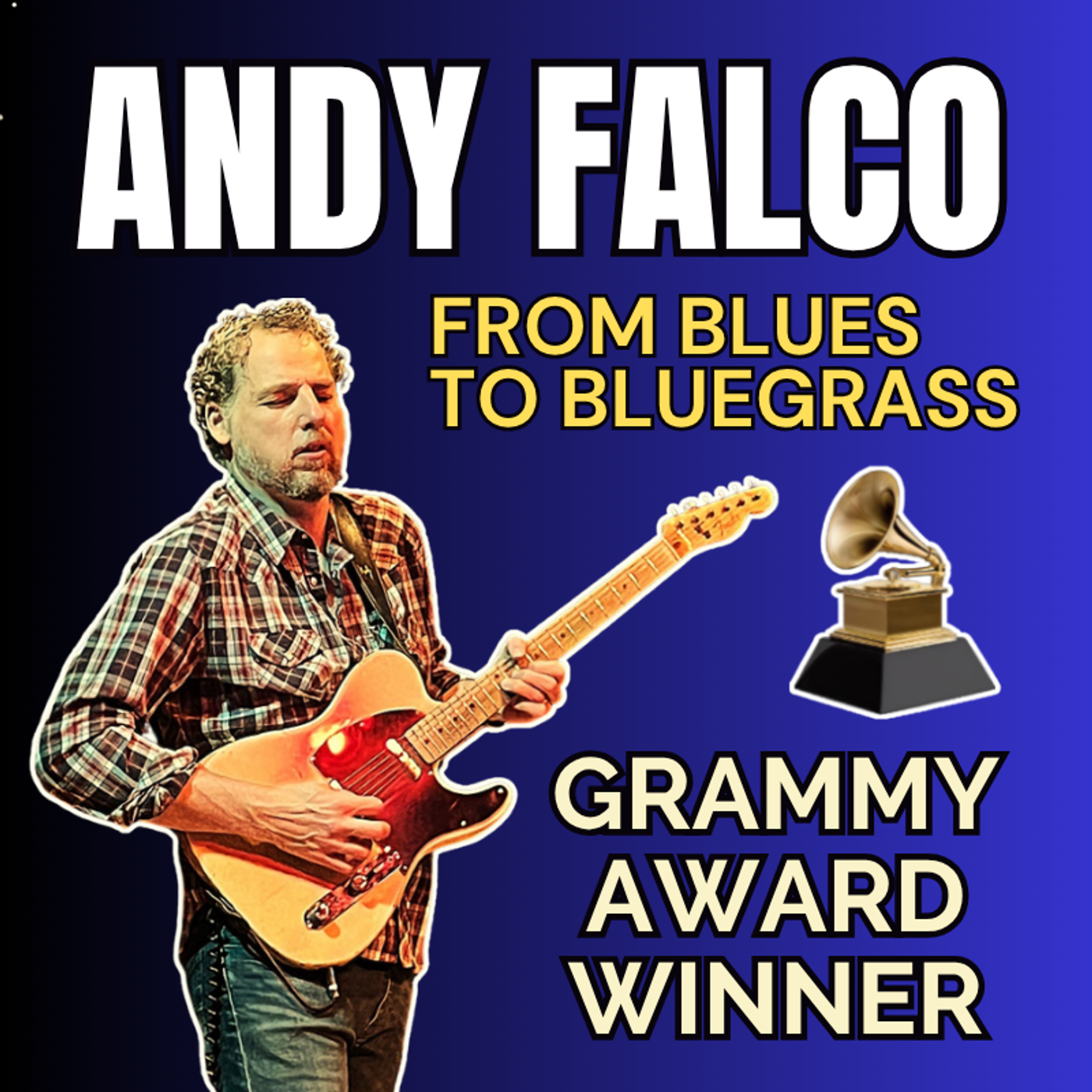
Discover how a Grammy-winning bluegrass guitarist seamlessly blends blues, folk, and Americana influences into his unique sound. Andy Falco shares insights into his musical journey, the importance of authenticity, and how community and tradition shape modern bluegrass. 🤔 Http://www.youtube.com/@thelongislandsoundpodcast?sub_confirmation=1 Andy Falco’s transition from blues and funk to bluegrass and why embracing your musical DNA is vital How the Bluegrass community and festivals like Winterhawk and Gray Fox foster creativity and collaboration The approach of the Stringdusters to stage performance, stage dynamics, and stage presence evolution The story behind the enormous 50-song pool for their double album and the relaxed, creative recording process The influence of Jerry Garcia and the unique experience of Falcon and Book playing Garcia's music acoustically How authenticity in music and honoring tradition while allowing evolution keeps bluegrass vibrant and relevant
speaker-0: Hey, I'm very excited to bring you this interview. What a fantastic guy. He moved from the blues to bluegrass and is a Grammy Award winner. And I'm talking about Andy Falco of the infamous String Dusters, a native Long Islander who spent time in Nashville, tours all around the country, and we got to spend some time together. Check it out. Hey, we're celebrating a massive homegrown hero. Joining us is a Grammy-winning guitarist, a songwriter, a producer who represents really the best of Long Island in Suffolk County. And before he became a giant of the progressive bluegrass scene, he spent the 90s cutting his teeth with gritty blues, funk, and RB clubs of New York with the Walter Street Blues Band. He then made a legendary transition into acoustic music. Flat picking at lightning speed with Buddy Miriam and Back Rose before joining forces with the Powerhouse Quintet of Infamous String Dusters in 2007. Since then, he's taken home a Grammy for the best bluegrass album, toured the world, and launched highly popular side projects like his intimate acoustic duo, Falco and Book played Jerry Garcia. And I'm so excited, I'm a big dead fan. You know, he always returns right here to the South Shore and ⁓ they're fresh off the release of their string dusters milestone double album twenty twenty. And I really wanna welcome Andy Falco to the Long Island Sound. Welcome Andy, how's that for any? speaker-1: Steve, that's great. Thanks. Is it you know, we ⁓ yeah the Water Street blues band goes back some some time, you know, but ⁓ it's it's it's that's kinda like where, you know, the the the real you know a lot of playing around Long Island really started, you know. speaker-0: Yeah. Yeah, I I remember that in the clubs that I used to go to and and it's great the ebb and tide of where the blues has been. Well I got this question for you. How is it and we want to talk about you're playing in Tanner Park at this bluegrass festival in August. Yeah. And we'll put the information and by the way, just to the audience of love, please comment. I answer every comment, I'll pass them on to Andy, all the nice ones, okay? What what what's it like for you after doing all this touring to come back to the South Shore and play in front of a home hometown crowd? How is it different for speaker-1: You know, it's really special to to to come back and ⁓ and play at home, you know, it always is. You know, you you just there's something about ⁓ you know, the especially on the South Shore here on Long Island. I mean, there's just such a great community of music lovers and musicians. There's there's very, very talented musicians that that are on Long Island in in the area and ⁓ playing around here and there's you know, great venues like like the People's Pub, for example, in Bayport where I live. that that are that are really, you know, putting out letting musicians do whatever they want, you know, to really, you know, be able to be able to be artists. And ⁓ so it's always special, you know, to come back and and and be home and ⁓ and and play for ⁓ for for the local audiences, you know, and ⁓ and oftentimes with my brothers, which is always extra special, you know, and ⁓ so, you know, I love it. speaker-0: Yeah. You know, you mentioned People's Pub. ⁓ kudos out to Linda Ringhouse for ⁓ you know, there are few and far between, in my opinion, places that allow, you know, ⁓ independent artists, original music to be played. Everyone does covers to a certain extent. And, you know, it's it's risky, right? and the the People's Pub has really come a long way. I consider them like the C B Gebes or the Steven Talkhouse of the South Shore and ⁓ I'm ex speaker-1: Absolutely. I mean, you know, and she's and she's bringing in a lot of national touring attic acts that are coming through now and really putting it on the map. And it's, you know, Linda Ringhouse, you know, and ⁓ is ⁓ Pete Cotter is is is involved there too and it's just ⁓ the two of them have really ⁓ created ⁓ you know the people's pub for for the people, you know, and it's ⁓ it's a great I mean it's really a world cla becoming a world class intimate venue, you know. speaker-0: Yeah, let me ask you this. Let's talk about I'm really fascinated ⁓ where you moved from the electric blues to ⁓ flat picking bluegrass and how you've morphed this thing together. You know, you cut your teeth in the clubs. How did how did that come about? I mean, was it something in your mind or was just the happen happenstance? speaker-1: Well, you know, yeah, big part of it is, you know, my the influence from, you know, my big brother Tom, you know, who is always kind of at the ⁓ at the front edge of music and and and turning us on to stuff and including early on, you know, The Grateful Dead, you know. ⁓ Grateful Dead, you know, is basically like, you know, they're kind of like a their own thing, but they also introduced us to a lot of Americana music and and you know and covers that they do and and stuff and where they're coming from musically. I mean Garcia was a was a bluegrass musician. He was getting you know and And so it was kind of getting into the Grateful Dead, getting into a little bit of old in the way and stuff like that. It just one thing led to another. And it really with blues it was even that way for me. I mean it was, you know, Grateful Dead and then realizing that some of these songs came from earlier blues artists or, you know, country artists or blu or bluegrass or whatever. And ⁓ going back and and seeing where that stuff came from. And I think that was kind of like how you did the aha moment when we were young, you know, like, ⁓ yeah, like there's this sort of lineage to this other music and and going kind of deeper into the Americana ⁓ genre, you know, what you I guess what you would call Americana now. But I mean you when you think of guys like David Bromberg, for example, who were who were David was was I don't think peop enough people talk about David Bromberg, honestly. I mean, and and what he was doing at that time. I mean, 'cause he was really kind of bridging, you know, everything from Chicago blues to Delta blues to bluegrass to old time music and all this sort of mixture of American music and doing it all like on his show, you know. Right with his big band. And and I had a friend ⁓ in college that heard me listening to a BB King record and she was like, ⁓ do you you like B.B. King? That's cool. ⁓ Have you ever heard of David Bromberg? You know? I said, I I never heard. And so she gave me the Bromberg record. So I came into that record, you know, from the blues angle. At that point, you know, I was kind of getting into blues and and and that's w maybe when I first, you know, was hearing the other tracks and these records and hearing sort of like a, you know, flat picking guitar and fiddles and mandolins and stuff. And after college and I kind of moved back to Long Island, we were playing blues and stuff, and then having some friends turning you know, some older musicians, ⁓ ⁓ and and local guys like ⁓ Donnie Silenza who's a great guitar player on Long Island and ⁓ this guy Mark Latito is a friend of mine that I met in those years who those guys were turning me on to Mike Bloomfield. So I'm you know so I'm getting into like blues and Bloomfield and all that kind of thing and and but like Bromberg I think you know also had this sort of acoustic side, this sort of bluegrassy side to him and ⁓ and even you know even Mike Bloomfield had an acoustic side to him. speaker-0: Okay. speaker-1: He did a record called Aniline that that was like kind of like almost all acoustic instruments, you know. But ⁓ all this at the same time, you know, my older brother who was always kind of trying to sniff out all of like cool music, you know, he was getting into bluegrass and ⁓ we were kind of getting into it a little bit and my we were playing blues. I remember the Water Street Blues band, we were playing at a thing called like Blues and Brews, I think it was called, and it was at the ⁓ The Farmingville Bald Hill The Amphitheater. ⁓ shit. That was on a Wednesday night in this in the summertime. It was just you know about this time of year. And ⁓ my brother was going up that weekend to a bluegrass festival called at that time the Winter Hawk Bluegrass Festival, which which is now called Gray Fox Bluegrass Festival. But ⁓ he was going up to this bluegrass festival and after that gig on I think on Friday night I had a we had the Wall Street Blues band had a gig I think maybe in New Paul's or Albany or something or you know, up that way on Friday night. So my brother was like, Why don't you come up and, you know, hang out and check out this bluegrass festival. I never seen a bluegrass festival. I didn't really So I went up there after the gig on Wednesday night. I drove upstate and I stayed at a buddy's place in in Albany and then drove over to the festival in the morning and camped there for the night and ⁓ got to hang out and it was the first time I ever seen a bluegrass festival. Connected with my brothers. On the next morning I got up early and ⁓ because I s I stayed there. We camped and ⁓ there was a a guitar workshop there and ⁓ I went to check it out. It was a guy named Jack Lawrence doing a a guitar workshop who I didn't know who he was at the time. Right. So I went to go to the guitar work workshop just to see what it was all about and it was just like a little tent. And I noticed as they were getting ready for it that there was this guy there and he was he was blind and he was and he was kinda getting ready to he had a guitar too and and I realized that it was Doc Watson. Wow. And I only knew Doc Watson because ⁓ our father had a Doc Wa you know, a Doc Watson record and there was a picture of him on the cover. But ⁓ I was like, That's that guy from that album cover, you know. And ⁓ okay, d ⁓ you know, started putting it together, like Jack Lawrence was The guy who kind of took over for Merle Watson after he passed away and was like kind of Doc's musical partner. They would do duo stuff, you know, or trio stuff, I guess, with ⁓ Tom with ⁓ the bass player. But so there they were, you know, and here was Doc Watson. I mean, I could practically, you know, reach his guitar. And they're ripping, you know, and I was like, ⁓ my God, I want to do this, you know. So I I that's like kind of what I want to do, you know. I don't even I don't think I owned an acoustic guitar at the time. Wow. Now at at the same time, my brother was kind of Turning us on to some bluegrass stuff and we were the Water Street Blues band, but Linda Ringhouse, who owned at that time a place called the Dog and Duck. My brother Tom used to sit in with the Water Street Blues band. At that time he wasn't in the band and he used to just sit in occasionally. He would do like some Taj stuff or whatever. And we we he kinda got the nickname Reverend Tom, you know. And ⁓ she was like, ⁓ you know, and Linda was always this way, you know, she's still this way now, always look looking for some interesting speaker-0: Okay. speaker-1: Collaborations or interesting gigs and we're putting something together that's just kinda different than everything, you know, something different, you know. So she was like, Hey, you know, like why not maybe you guys should do like a gig, ⁓ an a like an acoustic gig, like acoustic Water Street with with Tom, with Reverend Tom, you know, and and do some like acoustic stuff. And we're like, Yeah, that's a great idea. So we started doing that every other Sunday night at the Dog and Duck in Saville. What? And ⁓ and it was a Water Street blues band with with my brother Tom and And we would play, you know, acoustic stuff. I played a little bit of mandolin and some dobro and acoustic guitars, you and we're kind of getting into bluegrass and and ⁓ there was this guy named Gordon Li Gordon, ⁓ who was a ⁓ Gordon Healy, who was a ⁓ DJ at W USB that used to come see us play. And he kind of talked like this, you know. And ⁓ speaker-0: All right. speaker-1: And he and he was like this really kind of far out cat, you know, and he would come see us play all the time. He had this crazy dance he would always be doing, you know. And ⁓ but he was a he was a DJ on W USB and and ⁓ really heady kind of cat. And ⁓ he was like, ⁓ there's a ⁓ mandolin, do you know Buddy Miriam, you know? Like, no, no. He's like, he's a mandolin player, I'll bring him down, you know. Okay, whatever, man, you know. So whatever. The next gig sh sure enough, you know, we're playing and I see Gordon walk in with this guy with a mandolin case and You know, we take a set break and ⁓ after a little while and he introduces us to Buddy Miriam and Hey, you wanna sit in? Sure, you know. So Buddy gets up and he plays and yeah, here's a real mandolin player and a real bluegrass musician playing with us and it was like, Wow, you know. And obviously we became fast friends. We asked him that night, Hey, what are you doing every other Sunday night? You wanna join us? So he started playing in that acoustic Water Street thing. So it was like Water Street Blues band with Buddy Miriam. Wow. And and Reverend Tom, my brother, and We started doing this this gig and it was like kinda bluegrassy, but also kinda like it was almost kinda like what maybe like jam grass was happening at those days in out in Colorado in a way. It was kind of like this melding of of like kind of jammy b grateful dead influence, you know, classic rock influence, acoustic music with bluegrass, you know. Right, right. You know, we were doing our some of our own songs, but also trying to like kinda get it tapping into the bluegrass thing a little bit. And of course Buddy became our friend and was really giving us ⁓ music to listen to and we were started getting really turned on to bluegrass at that time and and then when Water Street Blues band ended, ⁓ joined Buddy Miriam's band band, you know, and I played in his band for a while and and really, you know, got an education in ⁓ in playing bluegrass through Buddy and and the other guys in the band, Ronnie Feinberg and you know, my brothers were all involved in that band and my cousin Chris, you know, all sometimes together, sometimes at different times. But ⁓ You know, we were really cutting our teeth and getting getting and got deep into bluegrass at that time and and I think that's sort of sort of a zoomed out version of sort of how everything kind of came together there. speaker-0: Yeah. What I'm hearing, what I find so interesting is one, the influence of albums, whether it's your dad's albums or, you know, get him coming out of college, the influence of albums, also the influence of albums of how you listen, and I know you're a fan of this, listening to and and pulling things out. And then going to festivals. I'm going to a festival this weekend. I'm really kind of psyched upstate New York, you know. I'm sixty five, but I'm gonna go hang out with some young people and ⁓ have some fun. And ⁓ that's where the collaborations start to kind of meld and move. speaker-1: Well I was gonna say, ⁓ you know, and that was like one of the things that really turned me on to bluegrass at the beginning of it was like, you know, coming growing up playing a kind of I mean, you know, when we were growing up and my brother was like showing me some chores and guitars, we were jamming, you know. We had acoustic guitars and we were kind of just jamming, you know, E jam or whatever and then and then jamming some dead tunes or jamming some all of my brothers tunes or Simon Garfunkel tunes or whatever, you know. There's a a a guy a great, you know, musician on Long Island named Jack La Citra, I'm not sure. ⁓ sure, Jack, of course, I I figure you would be, but ⁓ You know, Jack and I met in ⁓ in middle school. Okay. ⁓ we grew up in Garden City, and ⁓ you know, I was playing some guitar and Jack kind of like, you know, was sitting, I don't know, I think it was like Mr. Hale in his English class or something, and like he was like, Hey, I hear you play guitar, you know. I'm like, Yeah, I play a little. He's like, Yeah, well, we should start a band, you know. I was like, you Yeah. And then so me and him got together and he played keys and I played guitar and we jammed some Rolling Stones. I think the first song we played, if I remember correctly, is Under my thumb by the Rolling Stones. Wow. We had like so like a sheet music for it. Not that we read music, but they had the chords on it. But ⁓ you know, and we were like, all right, this is cool. We need a drummer. So ⁓ we approached Luca Lucano at the bike rack, who was like a soccer. He was on the soccer team. He was kind of more of like in that crowd, you know, the sporty crowd. But we heard he played drums and he had a jean jacket with rush painted on the back. So we're like, he's gotta be good. Right, you know, so ⁓ Jack I think approached him at the bike rack and was Hey, we got a band, you wanna come? And he's like, All right, so you know, as fast forward a few years, he had long hair and was following the Grateful Dead. But ⁓ anyway, so we had the and we didn't have a bass player, so Jack started playing bass. So we had this like trio. ⁓ so when we were in ⁓ like middle school into high school, you know, almost every day we were going. Jack lived a few blocks from the middle school. We would walk over there, we had a setup in his basement with a little drum riser, and we would just jam ⁓ you know, and play, you know. original music, you know, we were writing some music and especially Jack was writing a lot of music and at then and like when we were playing original tunes, but also Grateful Dead, classic rock, you know, whatever, ⁓ Wild Thing, whatever it is, you know, and then we started doing gigs, you know, Sweet Sixteens or something from our classmates and stuff, you know. That was like the connection to Jack. It was always from that point on, you know, when you had a jam, you needed to get a PA. You needed to have a place to be able to play loud. You needed amps, you needed electricity. And I think one of the things that I really attracted me to one of the things that attracted me to bluegrass music at the beginning was like, wow, we could just like have just a guitar and a man like we could just play acoustically anywhere. We don't need to be tethered to any electricity or any kind of we could just make this music together without anything but the instruments and ourselves. And that was like very interesting to me. It was like, wow, this is so cool. You know, so you'd be up on a in a campground, you know, like at the bluegrass festival and we'd pick all night. I mean, I I we started going to Winterhawk. Every year, you know, and Buddy was there on the campsite and we would just my brothers, my cousin, a bunch of friends. That's where I kind of would kind of met, you know, Andy Hall in a in the in the string dusters, a Dobra player. I mean, cause he lived ⁓ I guess at that point, I think he lived in Boston at that point, but we'd only kind of see him for the first few years, only there. Right. And we'd like, ⁓ I wonder if that guy with the Dobra is gonna come by to jam. And we jam and it was like late night, you know, we had an Italian flag. That's how you could find us. It was the Italian flag. And my brother would hang, and that's how you could find and then our our jams were like that some of those nights were just legendary jam sessions and people would gather around. There'd be hundreds of people sometimes gathered around 'cause we'd be playing all night long and just, you know, not sleeping, you know, playing till the sun rose. I mean and literally, you know, and then seeing real bluegrass during the day and it was a place for us this culture of like jamming and like the community of surrounded, you know, which is not unlike I it's like The community is everything, right? It's like Grateful Dead. It's like a big part of Grateful Dead. It's the community. Yep. You know, going to dead shows in the community. It was it was amazing. And it's like that with Bluegrass. Bluegrass has its community too. And and it's just a very cool thing that I just was really very attracted to all of that. And ⁓ and so yeah, that's what we just got deeper and deeper into it until and I played in Buddy's band right up until I moved to Nashville in in like around two thousand two. Yeah. speaker-0: Let's talk about Nashville 'cause I'm interested I'm one, I'm interested in your progression and I agree with you on the community aspect of things. And as I get older, you know what? I like the intimate settings where ⁓ the original unplugs, right? ⁓ T V unplug sessions. Yes it really bec it really begin begins at festivals. So you become like a a ⁓ side guy, side musician, a session musician, right, in Nashville. Tell me about those times and then ⁓ you know, I think it was two thousand seven when the ⁓ Infamous string dusters situation happened. speaker-1: So I moved to Nashville, ⁓ really, you know, through playing with Buddy, where with Buddy we would we would go down, we would play kind of a lot regionally, but also we would do some traveling into other bluegrass festivals, meeting, you know, musicians who were bluegrass musicians who were touring from all over the place, you know, and and then we would go down to ⁓ IBM A in ⁓ which was just like the the the International Bluegrass Music Association's like Annual. They have like a big convention and an award show where there's like the IBM Awards. And and that was like in Louisville, Kentucky in those days. And and you know, we'd go down with Buddy. And back in those days, it was it was it was like a formal organization, but there was also this informal thing that happened in the hotel where like in the hotel, i I think there were several years I went down there where I didn't even buy like a convention pass. I didn't even go into the convention at all because a lot of what was happening was like, you know how they say like a lot of business happens on the golf course. speaker-0: Yeah. speaker-1: Right. A lot of that was happening in the hallways and late at night. And that's kind of where I got to meet the McCurries, 'cause everybody was there and hanging out and you know, getting to meet people and hang out and become friends. And, you know, I have friends like Josh Williams, Cody Kilby, that these are great bluegrass musicians that were like the you know, real deal Josh and Cody were like prodigy musicians in bluegrass and and getting to know them and becoming friends with them and you know, and and then like for me, Cody kind of gave me the encouragement to move to Nashville. I I was thinking about moving. I was thinking about making a change just because I started to feel that I was, you know stifled. Kind of I yeah, I felt a little bit like I was kind of, you know, ⁓ like a little bit of groundhog day year after year. And I kind of wanted to sort of just shake it up and see what see what was possible out there. And ⁓ I talked to Cody and he was like encouraging me to move to Nashville, you know, when I would ask him, but I think at one point I was like, Lee, man, I I'm not my feelings aren't gonna be hurt, but I'm you know, I'm just trying to d and he like, dude, you should definitely come down here. It's it I think it'll be good for you. ⁓ so I moved to Nashville and ⁓ when I moved down there I got a gig. I got an ⁓ an audition. I got a gig from because I knew Ronnie McCurry. He I let him know I was moving down. He somebody was looking for a guitar player, he kinda gave my name. I got an audition. I got ⁓ a few auditions and ⁓ and ⁓ yeah, I got a touring gig I with ⁓ a band called the Alicia Nugent Band, ⁓ an artist down there, but the the and and there was this band called the Green Cards I was playing with and I started, you know, getting out there and and that was great too because playing with all those bands, we s you know, now I'm like in Nashville and we're we're hitting all these bluegrass festivals and I'm starting to meet a lot of other bluegrass musicians and getting tied into that scene ⁓ on a more sort of national level, you know, and ⁓ Nashville at that time was a very Amazing place. I mean, it still is a great place. I mean, it's changed quite a bit. But back then it was really kind of like accessible, you know, as far as the scene was very accessible. And it was like if you were, I kind of felt like if you were like a somewhat competent musician and and it may still be like that now. I'm not I don't know, but back then at least, if you were a somewhat competent musician and you were reliable and you did your homework and you showed up prepared and you were easy to get along with. You can get a gig like touring or, you know. Yep. And and it like that was kind of the thing, you know. I mean I and so, you know, I just I I don't think I played as well as a lot of people that came to town, but I think that, you know, I always made sure I was prepared. I always did the work and showed up on time and and you know, like you know, like And and I think that goes a long way, you know. And even when people can play rings around you sometimes, you're you're able to get the gig because because of all these other factors that are involved. So I was kinda then now just sort of deep into that and you know, now I had known Pandolphi before I moved to Nashville. I knew Chris Pandolphy, I knew Andy Hall, I knew Jeremy Garrett. And ⁓ you know, moving to Nashville then those guys we were all friends and they were speaker-0: Okay. speaker-1: picking parties all the time and we're all hanging and stuff and we're all now they had this started the string dusters. Right. You know. And then about a year after they they got going, Chris Eldridge, the original guitar player who I knew right very well, ⁓ you know, he was leaving to play with ⁓ Chris Steeley and do Punch Brothers, you know. And so ⁓ they were they needed a new guitar player and, you know, make a long story short, you know, they were auditioning people, but they I was one of the people they asked if I would audition and and if I'd be interested in doing it and and of course I was. These were like friends of mine. I was like, see yeah, I'd be I'd I'd love to not be just a side guy, but be in a band, especially with my friends. Yeah. Right. Who'd who would say no to that. And I got the gig and that was in two thousand seven, September was my first show with them in Colorado. And that was ⁓ and then and and I've been doing that ever since. speaker-0: Wonderful. Hey, I'd like to so I'm new to bluegrass, right? I just gotta tell you a quick story. I inter I interviewed the Gibson brothers. Yeah. Right. Didn't know really didn't do my homework. Okay. And I remember talking and nicest guys that live way upstate New York on the border of Canada, the farmers. Just great guys, right? And I remember talking to somebody like, You interviewed the Gibson brother? I'm like, Yeah. You know, they're the shit. I'm like, Cool, that's stuff. But I I have this question for you 'cause you're speaker-1: Great guys. speaker-0: The infamous string dusters are infamous in that they approach the stage differently with bluegrass. And I want to run these ideas by and if it if it makes sense to you from and I'm curious about there's always traditionalists in any group, right? You know, when ⁓ Dylan was a folks player or he went to England, he started playing electric, people freaked in Boudemous stage, right? Mm-hmm. Okay. But ⁓ you know, I learned things about bluegrass. Basics, hey, there's no percussion really per se. You know, there's no drummer. Okay. ⁓ It's standard, it's acoustic and there's a a picking dynamic to it, finger picking, okay. You're different in that from what I understand, correct me if I'm wrong, you've blended in the blue style into your finger picking to a certain degree. Is that correct? Or speaker-1: Well, it's like f it's well, it's like flat picking would be probably more associated with bluegrass. And ⁓ yeah, I mean for me, yeah, like when I was in Nashville and then when I was moving to Nashville, I really was making an effort to shed these rock and roll influences. Interesting. And try to sound like bluegrass players, like real bluegrass players. And and and that's like a fool's errand, it turns out, because I'm I didn't grow up speaker-0: Okay. speaker-1: Playing bluegrass music. I didn't grow up hearing bluegrass music from a young age. And so after a while I sort of started to realize that my the best thing I can do as an artist and as a musician is to embrace my musical DNA and not try that, you know, obviously I have a huge influence in bluegrass and spent time, you know, learning and listening to a lot of bluegrass and all the greats of bluegrass, you know, Tony Rice on guitar, Clarence White, on and on, you know, ⁓ Doc Watson and and and not to mention, ⁓ you know, the this all the people that came, you know, there's tons of great players and I've I've listened to a lot of that stuff. But I'm never really gonna I'm gonna have my sound, right? That's that's the thing, is I right what's important is for me to have my sound. And I I felt like after a certain Amount of time I realize that I'm just not going to be able to sound this certain way that I'm that I think I need to sound like. I have to let myself shine through, whatever that is, for better or for worse, you know? And so what and I call that like your musical DNA, you know, like your musical DNA is like everything you've listened to and all your influences, allowing that to come out is what makes you uniquely you. Right. And makes you sound like you. And and that act extends to a band too. Like everybody has their own unique musical DNA, but the string dusters. As a band, then everybody's sort of influences, own influences, and then as a band, our influences, that's that's that's what makes the string dusters sound like the string dusters and not like Bill Monroe, you know? Mm-hmm. But the same thing goes for everyone, including Bill Monroe, had his influences and his musical DNA, which made which made bluegrass. He's the father of bluegrass, you know. You know, so I think like, yeah, there comes a certain point where you start to go, yeah, like it's okay to let these other things come in and and and I think that's when you feel really liberated as a musician when you kind of realize you don't really have to sound like anybody else. Right. You know. Now now people may like it, people may not. But I mean all you can do, your best chance of people liking what you do is to be genuine. And if you're being genuine, then you're allowing all of your musical influences to come out. And that's what's gonna make you uniquely you and and hopefully enough people like it that you can, you know, not get Tomatoes thrown at you. What a show. speaker-0: Right. That's that that's the risk at a festival. There's vegetables around, so you know. speaker-1: You never know. Now I like you what you're talking about is like, you know, traditionalists and yeah, I mean traditionalists have a lot to say in bluegrass just like in jazz or anything. It's like when you have like a traditional what we would label as a traditional sort of genre of music, ⁓ yeah, there's people that feel it should be a certain way. And and I have my limits of what I would consider bluegrass. And that's different for everybody, you know, and everybody has a has has a different sort of take on that. I mean, I think my take and I I would say the string dusters take on on that is we love bluegrass. Our the common denominator for everybody in the string dusters is bluegrass, but we all have different influences that come into the music. And that's our bluegrass. That's that's our evolution of bluegrass. That's our version of it. And, you know, and to some people we sound as bluegrassy as Bill Monroe. And to some people we sound nothing like bluegrass. You know what I mean? So it's like, you know speaker-0: That's all good. That's all good. ⁓ speaker-1: Okay, right. It's like you just go do your thing and like you can like it, you cannot like it. I mean, you know, it's like i it's just music, you know. That's what it's sometimes when people really get sort of, you know. Right. It's like, hey man, it's just music. You could if you don't like it, you could you could you could not listen to it, you know? Or or you can, you know, but like the the notion that that there needs to be some conformity to music is kind of silly when you think about it because speaker-0: Their panties and a twist? speaker-1: The music is gonna evolve. And what if Bill Monroe conformed to everything he had heard before? There would be no bluegrass music. What if, you know, the Beatles conformed to only, you know, what they were listening to and just sounded like, you know, Elvis or, you know, Chuck Berry, whatever they were listening to at that time, right? Sure. There would be no evolution. And and and it's interesting, like with these music with with with these genres of music, sometimes it's like they're they don't do that with like rock. Like when you say rock and roll, well, what kind of rock and roll do you like? Do you like Elvis Presley, Chuck Berry? Do you like the Beatles? Do you like Rush? Kiss? Do you like Rush? Do you like, you know, like what kind of rock? Right? It's it's all very different stuff because there was an evolution that was sort of allowed to happen. Right. But ⁓ but I think when you try to stop the evolution, I think there's some sort of people want to hold it close to the chest for some reason. They wanna it's like this this thing and it's and it's and it's silly because there's always gonna be bands that are gonna embrace the traditional to traditionalist view of these music of this music, right? And they're always gonna be there to play that and there'll always be a place for that. And there's people that are are gonna do something that's like very far out. And there's a place for that. And, you know, and then there's gonna be everybody in the middle. Right. You know, and that's that's that's a that's a sign to me of a very, very healthy genre of music that will last a long time. speaker-0: Yeah. So one of the things that we focus on here at the podcast is really music discovery. And my my short story is, you know, I was I was stuck in Laurel Canyon, so to speak. And I'm like, you know what? I I tuned into WFUV and I'm hearing stuff that's great that I never knew existed. And, you know, it's the time of the tribute band. There's a place for that, right? I'm very pro live music and independent original music artists. And so what so what I did in looking at And from string dusters and what you do and how it's different, you guys kind of redefined the stage experience. I just want to hit on one thing. ⁓ and it's it's not a them versus us, but it's you know, a traditional stage presence for a bluegrass band is stationary, single mic sharing, that approach to it. You pace the stage and you you have more vitality to it. How is that how do people take that? You know, does this was it planned? speaker-1: Like it, right? You well it you know, it kinda happened naturally, like when we first started when the string does just first started, even before I was in the band, it was kind of like everybody sang on one mic. Okay and maybe there were a couple other satellite mics for the instruments, but everything was kinda like that. And then that was kind of like so then they started separate mics, you know. And like when I joined the band, we were like playing instruments on individual, you know, vocal mic and a and an instrument mic. And we were doing it that way and and you know, in that case you're kind of like in a line and you're you can't move from the mic, because if you move from the mic, you know, you're not coming out of the speakers, right? So and then we started plugging our instruments in, which is, you know, to some traditionalists a no no. I would argue that if you really are a traditionalist, you shouldn't be on a microphone at all because none of these instruments are designed to be amplified at all. You know, a g a a guitar on a microphone speaker-0: Right. speaker-1: doesn't I in a live setting doesn't necessarily sound natural like a guitar in a room, you know. Yeah, agree. It has a sound, but you know, but I would I but we can go back and forth about that all you want, but it doesn't really matter. But like the point is we plugged it we decided we would start plugging in and because mainly it it is sort of, you know, is easier to when you're when you're doing shows and you're starting to play these venues and You know, you you're sick of fighting with feedback from microphones and and and all this stuff. You you kinda plug in and just, you know, you wanna you 'cause at the end of the day, like what are we talking about? We're talking about getting music out. Is is the music being understood? You know, is it is it is it being you know, is it are you communicating, you know? And so we started plugging in and and that sort of naturally happened. We started plugging in then because like when you jam, you're not standing in a straight line facing this way. That's like unnatural almost. So like If someone's taking the soul, we just started naturally just sort of what we call podding up. You'd pod up. Like you'd get like behind the guy and you'd all be kind of, you know, playing, you know. And that was kind of like just something that we were able to do now because we have we we didn't have to be we weren't we weren't s you know tied to the microphones. Yeah. Right. So yeah. So, you know, we that's kind of just happened naturally and and people were kind of like, ⁓ that's cool that you guys that. And like, ⁓ it it wasn't like choreographed, it was just sort of like speaker-0: They were tethered. speaker-1: You know, thought ⁓ now it's become sort of a thing where you almost honestly, like when I'm on stage with the string dusters, it's like there is like a there is a little bit of a dance that happens. Just like if you watch like a band, like a one mic band, like ⁓ like Del McCurry band, you know, there's a there's a choreography that happens to work that microphone. You gotta be you get good that you get good at it, you know. Like they're the they're the best at it and they know how to kind of move around and not bump into each other. And we and we kinda have our version of that with the way that we pot up where it's like, you know, we'll sort of always sometimes we'll pot up and it'll be random and then sometimes there's like a formation that sort of happens and there's like a there's like a you know, it it starts to become like where you're you're when you're going to pot up, you kinda naturally want to kind of make it ⁓ you know, sort of like it's like there's like a symmetry to it that you wanna have, you know. Sometimes. I don't know. Maybe that's just because I'm O C D a little bit, but like you know, but it's it's become like its own sort of thing and it's and it's great. And now we're on wireless. So like when we first started doing it, we were on we had wires and you know, so you get tangled up sometimes with people because one guy walked this way and then you walked the other way, now you got like, you know, that's knots going on the stage. So, ⁓ you know, the wireless thing was sort of like an effort to sort of ⁓ give us that more freedom on stage and ⁓ you know, and and so that's kind of yeah, that's sort of how that all happened, you know. Right sort of Naturally, you know, kind of speaker-0: came about. Hey, I would I would be remiss if we didn't talk about, I think came out in February, the twenty twenty double album. And from what I've read and sometimes what you read online isn't always true, but you had I I believe you had like fifty songs contending to be on the album and you whittled it down to to twenty. And then you also ⁓ you also had your own timeline with this. Yeah. Right? You didn't have like, okay, ⁓ you weren't being dictated by the label or anything else to say, hey, you gotta get this out, you gotta do this, this and that. You you now, you know, you guys are how did that come about? Tell me about that. speaker-1: So, you know, every record is you do is there's I feel like with the Dusters we're always we're all we're on like a long term journey, you know. And and so we're always just trying to evolve as a band and as and and every record sort of we have kind of like our baseline process, but like every record has its own thing. But this record, yeah, the idea here was that we've made a a bunch of studio records as well as live records as well as, you know, some tribute records and stuff. So we were like for this one, you know, because typically what would happen would be, ⁓ you know, you gotta tell your team, you know, if you're gonna make a record, and this is sort of like the business part of it, is you gotta let your team know, well, we're recording around this time, and because they wanna know because they need some leeway to be able to make sure they can get it out to everybody, get it to the radio, get it to all the you know, talk to all the the the provider music, Spotify, Apple music, you know, they have to they have to do their thing in order to get it out there. Right to do like a to do the proper release, get it out to the press. They need time to to do that. Then then you want the tour to be planned around that so that like, you know, you're sort of coordinating when a big tour is gonna happen around the record and all this stuff, you know, and calling it the whatever, you know, the record name tour is, you know, and You know, and that takes a lot of time and so they wanna know all this stuff naturally. And so, you know, typically that's how it would go. So you go, Yeah, we're gonna be recording around this time. This is the date we have, so okay, so when will the record be done? Well, it should be able to record then and then it's gotta be mixed, gotta be mastered around around here is when we'll deliver the record. Okay, great. And then they work with that timeline. So now you have a deadline because now they're doing all this stuff. They've lined up all this stuff. So you gotta kinda have that record ready, you know. speaker-0: Deliver, yeah. speaker-1: And this record, we're like, you know what, forget about all that for this one. Let's just like let's just like take our time and like see what happens. See it, see, see if we just like we want to write the best songs we could possibly write, you know. Well, and we wanna s we wanna we don't wanna have any deadlines. We just wanna s we just wanna like make the record and then as we start making the record, we'll let the timeline sort of reveal itself. And so ⁓ we started, you know, pre-production, which is like, you know, getting together, show and tell of songs and ⁓ Starting to kind of like work through stuff. And the idea had come out, ⁓ it's our twentieth year. We should do ⁓ you know, twenty we should see if we do twenty songs, twenty new original songs. But we didn't want any twenty songs. We wanted them to be twenty of our best songs. We wanted them to be twenty songs that were good enough to be on a on a on a string dusters record. Right? And all new. And so we're No, no, no. Yeah. And and so we weren't really sure, like will we have twenty good enough that we feel are strong enough? speaker-0: And all new, right? Stuff collect. speaker-1: I don't know that's maybe we can, you know. So everyone started writing and we're writing and we're writing and we're all coming together and now we're working on tunes. Like, that's a cool tune. Well, that's a cool tune. And before you knew it, after a bunch of pre production, we yeah, we had I think close to to fifty songs. Wow. Forty or fifty songs that were that were all I would say of that eighty or ninety percent of them were good enough to be on a d on the stream dusters record. And so it like, wow, you know, like ⁓ That's pretty cool. But now we're gonna have this other problem because normally we would ⁓ we would end up with about, you know, fifteen or eighteen songs that were whittling down to like twelve or thirteen for the album. This was a little bit more challenging because well now we have like we have like, you know, th at least forty songs that we all like. So like how are we gonna, you know, but ⁓ yeah, that's how that kinda went down. And so we we we had enough songs and then we were even able to kinda like as we were working and we had a few we had three different recording sessions. So we did the first session, it was like, Okay, and we started things start to take shape. We're like, Okay, we recorded these, that's cool. So, ⁓ wow, you know, we we kinda need like something that's more like this. Okay, so now we're going home, now we're all writing. Trying to beat the stuff that we already have. And we're coming back with new songs, you know. Well, you know what? I got I wanted to have like another bug bluegrassy or traditional sound songs. So here's this one. And so now we're kind of we had the time to be able to do this, you know, and be able to really, you know, at the end of the day. And then things started getting close where we could tell our team, you know what? We're there. We got sure. You know, we're gonna be done. We're happy where we're at, and then they can do their thing. And it worked out really great. It gave it gave just gave us that freedom to ⁓ to go home, write some more, you know, rewrite stuff and and fix things or or, you know, add things that we felt were lacking and ⁓ and so that's how we approached this record and it was really, really fun to do. And yeah, we got twenty songs, you know. speaker-0: I wanna I wanna focus in on one song and it it harkens back to when you're talking about being a responsible musician showing up doing your homework, you know, working it, right? Really working it. And you have a tribute song you to your wife Jasmine. ⁓ 'cause she's a hardworking woman, just like my wife. Just like a a workaholic. Tell me about how how did that muse strike you? And ⁓ tell me about speaker-1: Yeah, I think, you know, we're we're we're raising two children. We have we have now they're four four thank you, fourteen and four. There's ten years between ⁓ you know. Yeah, right. ⁓ you know, and I'm on the road a lot and you know, that leaves my wife, you know, solo, raising two kids, you know, for for big blocks of time. And then when I'm home, it's not even like I can just stop working. I'm I'm kind of always working because then I I've I've always had prep and I'm, you know. speaker-0: Well that's 'cause you're on the road too much. speaker-1: And so, you know, we obviously I try to spend as much time as my family as I can because that's what's most important in the world. But like, but you know, but she obviously has to take on the lion's share of of of everything as as as do a lot of, you know, ⁓ people in that situation when when there's like one parent that's working, one parent that's that's home with the kids. And so that was kind of like it. It was just sort of like, you know. I guess that was sort of the the inspiration for dry spot in the rain, which was just, you know, sometimes you just need a minute to sort of just to find that dry spot in the rain, you know, just to kinda to k kinda get out of the chaos for a second and feel just a minute of rest to jump back into it all, you know. And I think that's that's you know, just just just seeing being inspired by by her perseverance and and and everything that she, you know, that w has to has to power through, you know. Yeah. There's no there's you don't you don't get a day off when you're when you're when you're a mom like that, you know. speaker-0: Moms don't get sick and there's no speaker-1: It's twenty four seven, you know, every day and when I'm away there's there's there's there's very, very little relief, you know, to for that. So ⁓ you know, that I think that's where that came from, you know. No. speaker-0: Mind if ask you a personal question? When you when you wrote the song, did you say, Hey, I wrote this for you? Or did you play it first? Okay. I'm curious. Yeah. Because I can imagine the spouse going, he's writing about me. And he's not writing about me. speaker-1: Yeah, I yeah. Yeah, you know, I usually don't, you know, I I usually let her listen to it and then and then, you know, and then maybe we talk about it after and I and I explain it to her. But I I think she's she's she's shy, so she doesn't, you know, she'll ⁓ you know, but yeah, it's like, you know, when you write ⁓ something about your kids or anything, you know, you gotta write about what you know, you know, and what you're going through. And I think, you know I I think sometimes, you know, you you you Sometimes you write things that are sort of inspired by these things in your life and then it kinda kinda morphs into its own story. speaker-0: Yeah, and then also f also for the audience, y you know, I never generally ask somebody what's that song about, you know, an artist, you know. 'Cause people take it on this is what it means to me and this is what you're writing about and let them take that interpretation and ⁓ and make it their own song their own songbook, right? speaker-1: I think that's true. And you you'd be surprised. You know, I have a song. I remember one time there was a song I wrote on a string duster's album while back called ⁓ Like I Dude. And ⁓ the engineer co-producer that we were working with, Billy Hume, who's incredible, he was like when we were doing that record, he we were talking late one night in the studio, he's like, Man, I I love that song so much, you know, it's like really takes me back to like, you know, my relationship with my father. And well, everything that I was, you know, and he's like really this heartfelt thing that he's telling me about how this song connected. And he's like, Was that sort of about you and your dad? I'm like, no, man, it's it's about Sarah Palin, actually. It's a political song, actually. ⁓ wow. What ⁓ and he was like, What? I'm like, Yeah, like, you know, and and he was like, ⁓ my god, I ⁓ you know, I said that's I said I kind of love that because I don't want necessarily people to listen to a song like that and think about that. That's what I was thinking about when I wrote it. Right. But I love that somebody can take a song and they can find their own meaning in it. And I think that's that's what's great. I mean, it's like I it's like that with Beatles songs for me. So not that I'm comparing myself to my songs to the Beatles, but like for me, when I listen to some Beatles songs, I know what they mean for me. speaker-0: The beauty of it. speaker-1: You know, some of those songs. I don't know exactly maybe what Lennon or McCartney were thinking about when they wrote it sometimes, but I know what it means for me. It paints a picture for me. And I think that's to me, that's like the biggest compliment somebody can say is I got this out of your song, especially when it's not exactly what lined up with what I was thinking of. To me, I'm like, okay, good. Because I don't you know, I mean I write about political stuff, but like I you know, I have several songs that are about sort of are are are are inspired by by politics. and but I don't always want them to be identified speaker-0: Only as that, right. Yep. Good point. speaker-1: You know what I mean? I I don't you know, I have my views, my political views and and but I'd I I happy to talk about them with anybody who asks. But ⁓ when it comes to the music, I I hope when I write that stuff that's not really alienating anybody. I think I hope that people could just get it from whatever they they want out of it and ⁓ and that's that. speaker-0: Cool. Hey, let's talk about I believe this started from you gu you warming up and jamming. Let's talk about Falco and Book play Jerry Garcia. Tell me about how that came about and ⁓ it sounds very interesting. speaker-1: Yeah. So oftentimes when we would be like backstage hanging out, waiting around, you know, mm to you know, have between sound check and show or whatever, sometimes you're just kind of jamming around. A lot of times, you know, playing like Jerry tunes, you ⁓ let's play some Jerry, you It's kinda like when me and me and my brother Tom or or you whatever, we'd be like jamming when we were kids, like, ⁓ let's play some let's play this. Let's play Eyes of the World. Let's play, you know, so like we would like have fun with that stuff sometimes. And like, so I was we were at Tell you ride Bluegrass Festival, and there's like a ⁓ workshop stage called the Elts Park Stage, which is like right in town there. It's like an outdoor, it's not not a huge stage, it's like a very small little platform of a stage with like a easy up over it, basically. But it's like a like a like a little creates like a little the little park there. It's like a little natural amphitheater, like a lawn. And they do their workshops there. So I was asked to do a guitar workshop, but I was like, man, ⁓ I don't really think like do I they do a guitar workshop? I don't I don't know man. It'd be more fun just to like play. some stuff. I don't people don't want to hear me talking about like guitar. Right, right. ⁓ and so ⁓ I was like, ⁓ maybe it was maybe just gonna be fun? Like let's go play some Jerry So I was like I asked Travis, I said, Hey man, you wanna come just workshop with me? And like, I don't know, it's it's not it's a workshop stage, but like I don't know you want to go play Jerry. It's like he's like sure, that sounds great. You know so Right. So he's like, Yeah, it sounds awesome, you know. So ⁓ and then and I and then we also brought in at that for that particular day, we brought in ⁓ Jacob Jolloff was play with there with Yonder he was playing with Yonder Mountain String Band at the time. Like, hey Jacob, you wanna wanna come play G you He's Yeah, great. So we did it as a trio that one. But ⁓ but it was like we we went and it and they had put it on the schedule as you know, as you know, like Andy Falco and Travis Book of the Infamous Stream Dusters play Jerry Garcia or something with you know with Jacob Jolliffe or something and so People knew about it and it was like, you know, there's just like a the the whole place was a jam pack of people. Wow. And ⁓ we're doing these these tunes and ⁓ and I'm kinda like just feeling this amazing a connection, you know. Yeah. In a different way than like when you play your own music and you're doing your own show. That that has its own special connection. But this was like something different where it was like it was like we weren't and I and I often say this at the shows where it's like, we're not here. To celebrate Jerry Garcia's music for you. We're here to celebrate it with you. You know, and that was kind of the the vibe where it's like we're not all just kind of like looking up at J you know, thinking about Jerry and and and what he contributed to this world. And so many people have such a connection to that music, including us. And so it was just this really different but amazing. speaker-0: Good s speaker-1: sort of experience to to do. And so yeah, we just kind of like occasionally then started doing shows like Falcon Book play Garcia and we would just do do these duo shows and and go out. And it's also like a unique, you know, we don't we play as an acoustic duo, but we don't just play like the acoustic stuff he did. We play all kind we play everything that from the Grateful Dead material to, you know, we do some Garcia Gris and stuff as well and the acoustic stuff as well. But you know, Garcia Band, you know, Grateful Dead, any of that stuff, you know, ⁓ is fair game. And it's just like a to me it's like a unique interpretation just with acoustic guitar and upright bass and two voices and ⁓ wow. And it's it's like a a an approach that is really fun to ⁓ to to play and I love Travis and I love playing music with Travis and ⁓ you know and and we have tie dyed suits that we wear and and that that's like a and that's like a very deliberate, disarming kind of Yeah. Sure. I mean that we want speaker-0: I should Yeah, we're celebrating we're doing this together. speaker-1: So you know, and and and so with that kind of became that was Travis's mother's idea. She was like, Hey, you guys should wear tie-dye suits and we're like, That's the dumbest idea I've ever heard. And then ⁓ we started thinking about it and we were like, you know, ⁓ maybe maybe it's like actually kind of cool. Actually, I don't know. No, maybe it's silly. And then I I I said something to my wife, she's like, That's a great idea. So we had these ⁓ these these tie-dyed suits that we ordered online or whatever, and we were wearing that and actually my my my wife is an incredible tie dye artist and So she couldn't take it anymore. So just just recently we debuted, you know, we have custom tie dyed suits now that she made for us. Beautiful. Yeah, and and so it's just this opportunity to get to it influenced us in so many different ways, Garcia's music. And and you know, along with Garcia, I know it's called Falcon but play Garcia, but you you gotta you gotta shout out to Robert Hunter, who we wrote a lot of the songs with and right. And everybody in The Grateful Dead who who contributed to that stuff or or David Grisman. But like it's sort of like this we can We can go out and play that music unapologetically in our own way, you know. Right. Sure. And sort of focus on, you know, highlight the just the incredible songs that that that he sort of tapped into. Not only the music he wrote along with the other people and himself, but also like the covers that he chose and and and how that sort of connects to, you know, our the trajectory of our career as bluegrass musicians, you know, coming from sort of this ⁓ you know, maybe Grateful Dead kind of background, you know. speaker-0: Yeah, you you you sort of bring it full circle 'cause, you know, Jerry was, like you said, a bluegrass banjo player, right? And you bring it back full circle. Bring it back. speaker-1: Did a show at Yeah, and we did a show at ⁓ the the Bluegrass Hall of Fame is in Owensboro, Kentucky, and they were do they they just finished an exhibit. It was a Jerry Garcia exhibit that they did the big exhibit they had there and they did some shows and they asked me and Travis to come play at one of these like weekends of shows, you know, for the for the exhibit and and they have like a venue in there. And so we got to see the exhibit and in the exhibit there was this great picture. It's like it's a it's a picture of Robert Hunter playing upright bass. And Jerry I think is playing guitar and they're like playing like a duo gig, just like that. And we're like, ⁓ that's cool. That's kinda like, you know that's kinda like what we do, you know. But but we're not playing bluegrass, we're playing their you know, what you know, their music. So it's like it was kind of kind of fun and ⁓ but you know, it's just a great you know, it's a great way to you know, when I'm not doing string dusters, which obviously that's where we're we're we're we're artists and we're doing our thing. We're we're we're you know making our music, we're writing, we're making up songs and we're we're performing them. We're producing our records. We're doing that whole thing. This is sort of an opportunity to get out and ⁓ pay homage to one of our biggest heroes. Unapologetically play a whole night of Garcia stuff. And and share that in in a room full of people that also sh you know that speaker-0: Nice. Appreciate it. Yeah. Thanks so much for your time. I definitely will see you at Tanner Park, God dwelling. And ⁓ we'll help promote that with so I got contacted through the Babylon Arts Council. I know Iris from I don't know where. So speaker-1: So Yeah, I'm looking forward to that festival. It's gonna be a really fun ⁓ fun bluegrass festival. You know, they they do a great thing over there and it should be it should be a really good time. speaker-0: Yeah, I'm right in Babylon, so it's like a stone's throw away. Hey Andy, I really want to thank you. Really looking forward to the Tanner Park, the Bluegrass Festival there and someday I'll see the infamous string dusters. You're all over the place and I wish you I wish you all the best and thank you for sharing all these great secrets and your approach and your history and ⁓ I appreciate your time. speaker-1: Yeah. I appreciate your time, Steve. Thank you so much for having me. speaker-0: All right, brother, be well. speaker-1: Me too.
More The Long Island Sound - Music and Entertainment Discovery Begins! episodes →