
The LO Down Mortgage Podcast · Connor Bartley
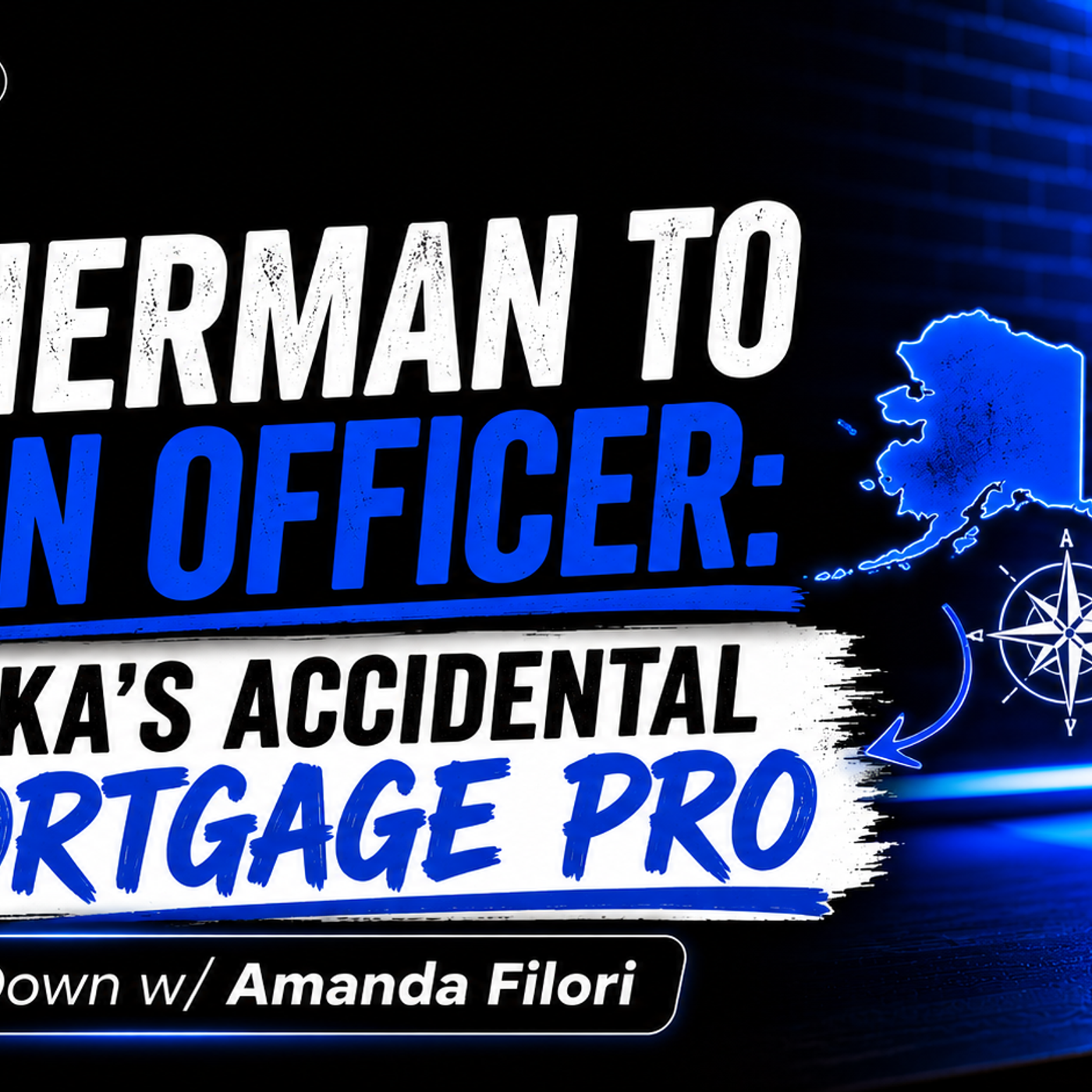
She was a fisherman, a lighting tech, a bartender, a drafter, a teaching artist, and an escrow officer — before she ever closed a mortgage. And somehow, that's exactly what made Amanda Filori dangerous. In 2023, she went commission only. No salary. No safety net. No guarantees. Just a roadmap, a mentor who believed in her, and the willingness to be, as she puts it, "dumb enough not to quit." For six months — nothing. Then it compounded. Then it paid off. Here's what Amanda figured out that most new LOs take years to learn: You are a marketing officer first. Not a loan officer. Not a technician. A connector. Someone people look up before they ever call. If you're waiting to go on camera until you're polished, you've already lost. Video builds the bond before the first meeting. By the time they sit down with you, they've already decided. You connect people to opportunities — not just loans. Amanda's brand isn't "mortgage stuff." It's "Amanda has a guy." Whether someone needs a rental, a job connection, or just an opinion — she's the first call. That's not a marketing strategy. That's identity. And identity is the most durable business development tool in existence. The gym analogy is real. You won't see results for months. Most people quit there. The ones who don't? They build something. The scoreboard catches up — but only if you keep doing the reps. And when her internet cut out mid-flight and her team handled everything without her? Terrifying. Then freeing. That's when she knew she was building something real. If you're a newer LO grinding without results, or a top producer still stuck in technician mode — this one's for you.
Connor Bartley: Welcome to the Low Down Mortgage Podcast, the show where we dive deep into the topics that directly impact the mortgage architects that are building design into their business to unlock, scale, and achieve freedom. I'm your host, Connor Bartley. Bam! And joining me today is someone who accidentally found her way into mortgage, bet on herself by going commission only, and has built a thriving business by learning how to stop being the technician. and start becoming the CEO. She's built a business in the unique Alaskan market while figuring out delegation leadership and how to buy back her time. Amanda Falori, welcome to the lowdown. Amanda Filori: ⁓ hi Connor, thanks for having me. Connor Bartley: Yeah, absolutely. So, first guest from Alaska on the show. I'm sure there's several, you know, states that I haven't yet to cover yet through the lowdown, but but I just think it's such a unique state to about and some of the different challenges you might run into originating in a market like that. so I'm excited to dive into all of this because to be quite frank, like I've known you for a little over a year. We talked a while back and then just reconnected about the podcast. And I just remember being really impressed by of your renaissance background and all the things that you've done and how well rounded it it is. And and just this get it done kind of attitude. we haven't about this, but I there was a Amanda Filori: Yeah. Connor Bartley: Do you remember what's the quote that your grandpa used to tell you all the time? Because that was one thing that I remember stood out. You know it. What is it? Amanda Filori: So it was like my grandpa always had three pieces of advice like you know trying to make sure I was uh You know gonna be okay growing up. Maybe the more alive skills you have the less you go hungry Save 20 % basically always invest in yourself and don't trust boys Yeah, I always tell people I learned the first one you know that one I think was natural I like to learn new things Connor Bartley: Love that. Love that. Amanda Filori: if I'm bored or if I feel I've learned a skill, I wanna go learn something else and just keep compounding on that. Curious. 20%, yeah, you gotta invest in yourself. know, boys, I'm still trying to figure it out. Connor Bartley: Yeah. I I love that advice, really all ⁓ bits of it. ⁓ ⁓ I think that but first piece, like have enough skills so that you don't go hungry is great. And you had a lot of different, you know, experiences and jobs. ⁓ before you got into mortgage, ⁓ you were, you know, in escrow accounting, you were a cook. I think you've been in the theater quite a bit. Like what Amanda Filori: I hope. Mm-hmm. I mean, everything. I mean, I've done it as a fisherman. My background is theater. So I was a lighting technician for a very long time, since I was a teenager in high school. Fishing got me out of Ketchikan, a small island community. Like, bye, see ya, I'm just gonna be gone for the summer. But then you have to learn. Be on the water, work on a boat. And then traveling around with doing theater stuff, cooking, just trying to figure out stuff, like college. You know, I just wasn't sure, you know, because I feel, I felt like for me, I didn't have the means necessarily. Um, and I wanted to go, if I was going to learn something from it, that actually gave me a skill to make money basically. And, um, so that's kind of how I looked at it. So trying to figure it out and then, yeah. And then I had my kid when I was 22. So I was like, Hmm, I better really learn about money now. Okay. And then I worked for attorneys after that learning how to. document, argue, advocate. And then I was an escrow officer. But then in between that, I was also a bartender, know, events person, theater person, teaching artist, substitute teacher. You know, I worked for an engineering firm too as a drafter. Most of the time it's just that there's opportunities and it's interesting and it makes sense, right? And then, you know, now basically I'm a mortgage lender and I realize what I tell people what I do all the time is I connect people to opportunities. I think that if you are considering like this industry or you know, like if the audience is like we're all leveling up, that's how we like get more people to, you know, be a part of the industry or want to grow into it or understand it is because we're connecting people to opportunities. And like if we work as a team and connect each other to the opportunities that help us grow. Anyway, I kind of was thinking about that earlier today, but that in a nutshell, yes, I have a diverse background, but it all makes sense when you put it together. Connor Bartley: Yeah. Yeah. Yeah. Well, I think that's great. I mean, exposure to different experiences make you, ⁓ know, interesting, right? Like when you kind of expose yourself to different things, you get a better understanding of the world and how it operates and what it means to be a fisherman or what it means to be, you know, a drafter in an architectural sort of engineering world. So you really do get a better perspective on things, but A lot of those jobs that you mentioned, I would imagine were like hourly wage or salaried positions and lending is commission only. And I know we talked about it, like that was a little terrifying to go into that. ⁓ what was the moment where you thought about, you know, getting into a commission only position? Like I'm either gonna figure this out or I'm gonna fall on my face and it's just gonna be embarrassing. Like, was that moment for you? Amanda Filori: Okay. I mean, think I was just offered an opportunity to switch from being escrow officer to going to mortgage, which I was like, okay. But that position was kind of lateral. There was still a salary and it as much commission, right? It was a little bit safer, you know, at a bank. I got a call. Someone connected me to an opportunity. know, Nancy Hudson, I took over for her at Cornerstone Home Lending. She was gonna retire. I think I told you this, but she believed in me and I was like, she's like the best. I respect her so much. you know, maybe I need to believe in myself too. Right. And then you have to like ask yourself like, well, yeah, I guess I do have value that I can bring because that's you're doing. And that's like what you have to realize what the job is going to be. And it was scary, you know, but you have to like be dumb enough not to quit. And you're willing to be broke for six months, maybe a year. But I knew that if I was gonna do it and what really made sense to me and I was like, okay, I will do it is because I was like, okay, there's a roadmap. If there's just like the things, the checklists I'm supposed to do and figure all that out and you know, there's a lot of successful people that have already done it. So if it made sense to me, I was like, okay, I'm gonna do it. But it was scary because you just never know because salesmen like you feel like you're sleazy, right? Like you don't wanna be a sleazy salesman. And that's why I think that the mindset is, You know, we're connecting people with opportunities I really tried hard to not like sell myself in that way. I just tried to be myself. Does that make sense? ⁓ Connor Bartley: Sure. Yeah, totally. And I mean, I know a lot of people struggle with that early on. They we've talked about it a number of times ⁓ the lowdown where, you know, in the beginning the the of being a salesperson almost made people off on the job as a whole. Like they just they really yeah, they had all it was kind of cringy, a little icky, right? And and so Amanda Filori: You Connor Bartley: But there was this moment where, you know, they realized actually I'm not a salesperson. I'm this. And so I love the way you phrase it about connecting people with other opportunities. Can you expand on that a little bit more? Like what do you mean by other opportunities? What are some of the things that you're referring to with that? Amanda Filori: Well, I mean, I think that if you re- So here's how I put it. want to be known or if you are somebody that's known as like, Hey, you know, I need a guy. ⁓ Amanda has a guy. Hey, yeah, I got a guy. Right? Are you that person? I that person. Right? Because people reach out to me all the time. Are you a realtor? Are you in real estate? Like I need a rental. I need this. Or do you just know something weird? Right? Like, I mean, I must get asked all kinds of questions. related to opportunities, housing stuff, land stuff, or just life, opinions, who can I somebody to? And I think just always been that person. And that's really what we're doing, because sometimes you sit with people and you're an advisor, and you're like, hey, know this opportunity, or maybe this isn't for right now. now that you say that. Like, talk to that person, right? It's just natural. And if I think, if put that in your mindset of that's what you're doing to me, the sleazy salesman goes away, right? You know, it's like, I'm talking to you right now. It's like, ⁓ yeah, like, okay, that makes sense. And you know, if you're again, putting that advisor hat on, thinking about how I'm setting that person up for success if you're wearing your loan officer hat. Connor Bartley: Mm-hmm. Amanda Filori: But sometimes you're just a homie, like Connor is like, hey, I'm in, do you know somebody else in Alaska that would like to talk to somebody? Yeah, okay, because we're one connection now another. And, you know, then maybe like we find each other's like, you know, hobbies that we like, like food or fishing and then, oh, I know that he really likes that he may know. Oh, did you know that person's a butcher and get you a moose? You know, that person really likes to give away fish at Christmas time. That girl bakes bread and then does a little side business. You see what I mean? It's layers and layers of connection and being involved in your community. That's what I mean more than anything. Connor Bartley: Yeah, I love that. And so but that didn't come natural initially, right? So like what what were some of the mistakes that you feel like you were making early on that a while to kind of get to this place? Amanda Filori: I I think that... I I don't know if it took me a while. I think it more of just. That was the first thing I did was thinking about like connecting to all the people I know. I, you know, I went, I really went to resources of like loan officer podcast, us to know. And like, I get coaching and you know, it's like, would you, who are the 200 people or a hundred people or 50 people that you'd invite to your wedding? Right. You know, or hearing stories like, you know, if your cousin, you know, bought a house or basically bought a product that you're selling or whatever, and they didn't know that you did the same thing. And then you're like, hey, I do that too. ⁓ I had no idea. And you're not doing your job. Right? You know, you're not like, okay. ⁓ Amanda, just go be part of my community and just let everybody know that I got this cool thing. Like, you know, but do it in a way where, you know, it's natural conversation. Like, hey, Connor, I haven't seen you in a while. What you up to? ⁓ hey, I just got a new job doing this. I'm, you know, I work in finance. Okay. Do you know anybody? Or, you know, just it like, when you hear that it's really just that simple. you know, I just try to do that out of the gate. mean, it ⁓ 2023 when I started, so was slower, but it took six months, you know, eight months of compounding in my second half of the first year. Like it paid off. Like it was a lot of just doing the work without results. It's like going to the gym, right? Like you don't think you see the results and then afterwards you see it. it's just, you have to be in your disciplined era and you got, I mean, it was ⁓ hard. Connor Bartley: Yeah. Well I think that's I think that's a great Amanda Filori: But my, like even now, just, I just want to be a part of my community. And if I'm that person, I can go to the store with people wanting to talk about loans. I'm like, hey, I'm just trying to go to Costco. Please don't talk to me today. Connor Bartley: Yeah. Well I think it's a great call out. but I love what you said about like the, you know, the first six months, eight months of doing the work without the result. Because what I see a lot of people do and what happens a lot is there's a frustration that happens during that period of time, which then leads someone to start looking for shortcuts. ⁓ And try to do things a different way instead of just kind of sticking to the discipline, the you know, being in their disciplined era as you put it. Amanda Filori: Perfect. Mm-hmm. Connor Bartley: And they start looking for these shortcuts, which in turn means they're not doing the disciplined work, which would pay off later if they had stuck with it. But now they're getting into this cycle of sort of short cycling they're going for with instant success to try and get, you know, somewhere faster. And a lot of times that ends up kind of putting them at a deficit because they're not putting in the you know, laying the foundation. So I love that you called that out. Something else that we talked about previously was that know, this difference between being a loan officer versus being like a marketing officer, someone who's really, you know, doing a good job of kind of getting the word out about what they do and you being that connector. When you kind of arrived at that realization, like what would you say changed in your business when you kind of fully embrace the marketing mindset? Amanda Filori: What changed is my business grew. But when I just realized that's it was, think it stopped, helped me. Maybe if people are watching this and thinking about content, that's a huge thing. I think when I first started, thought I had to, here's the mortgage one, two, three. Here's these tips. I don't know, you just are so in your head about it. But when I realized that My job is to get a lead a day. If I get 30 leads in a month, I can convert, let's say, maybe just 30 or 40 % in the beginning. Maybe 10 deals. All the things. It's conversion. It's numbers. It's the more no's to get yourself to a yes. It's to be top of mind, all of that stuff. And so it's like, OK, I'm betting on myself. I've been broke for six months. And maybe I didn't plan that I'd be broke for six months. And now I'm like, you know. didn't pay my bills, I'm behind, I'm freaking out, then that desperation oozes out of you when you're trying to do sales and that's the worst thing that you can do, right? So I wanted to prevent that, I wanted to fight it, I wanted to fight that stuff, right? Marketing officer first means everybody needs to know who I am. If people don't know who I am in my community, then I'm not doing my job. I would just put myself out there and I would do sometimes silly videos. I would just share stuff or I would, you know, but I just was consistent about doing it. Right. I may not did like a million videos every day, but I posted something every day. And then when you make it a habit, you realize that that's what it really is. Like you're a marketing officer first because people are going to, you know, look at you before they want to talk to you. Right. But if they feel like they get to know you, Then when they see you on video and you're talking, because video is the most important thing to share if you want to make a connection with somebody because you hear how they talk, the mannerisms, like, you you just feel like, I know that person. I'm comfortable. So if I've done that virtually by the time they meet with me and it matches, we are now already bonded. Like they've already picked me. Right. And so I'm a marketing officer first. Just get to know me. Be like, and And I say that with the title, but really it's share yourself. You have to share yourself first. And then the loan officer and the lending and what we do professionally, that is second. And if you don't know everything perfectly, programs or anything, there should be teams that you can go to. Hey, help me figure this out. Because the peers in this room were all doing well in our production. So we're trying to level up. So it's like. trying to rely on those teams to help you realize that you don't have to sit in it and work on it because our job is to get people to want to know us more and spend time with us and engage basically the value that we want to give them. That's why I longed an answer, but I wanted to make sure that it's like all of that. Connor Bartley: Yeah. Well You you covered it all and I love that. And and something that for anyone who's listening and if you wanted to go follow Amanda or just check out the content that she's referring to, something that I really appreciate that I see on your feed is you know, local like going a local coffee shop or a bookstore and sort of highlighting these businesses in the area. ⁓ have you always done that or was that something you just recently started and ⁓ like what's the feedback? Amanda Filori: Mm-hmm. That's for full recent, Connor Bartley: What's been the feedback from some of those businesses? Like are they really appreciative of the the call out or like how's it been going? Amanda Filori: I think you're very appreciative and I have a marketing person. I invested in myself and delegated that so she kind of me, learned about me and ⁓ do all of those things. So it was kind of natural. And then to combine and just support and advertise those businesses as well. So the feedback has been good. The one I did of some of the businesses, I had businesses go, hey Amanda, where's my video? And then I went to the record store because there's just things that I do. I I think that we all have our day in the life. And so that was just like a natural way of something that I do that didn't make me feel that I was being a sleazy salesman. I'm just like that is kind of my day. So I'm glad that you saw that. Connor Bartley: Right. Yeah. Well you created demand. Well, I think that's wonderful. Yeah. So going to switch gears a little bit and get to kind of tactical, like running operation business, so to speak. You you have an assistant on your team, they handle pre-qualifications, your processor handles a lot of the file work, and you're working hard as your business has grown to stay out of the weeds. What has been the part of the business or of the process for you to let go of? Amanda Filori: I just handling the pipeline like all the way, like, you know, just trusting that it's being overseen. think that's hard for all of us to not just be like, you just, you know, I think right before this call, you were like, I was on a pipeline meeting, right? I think it is hard and also borrower and client communications. That's hard because most people want to talk to me, right? So I want to make sure that, you know, the team is giving them the same feel and vibe and care. I think that that's like the hardest. Connor Bartley: Yeah. Well, and you shared something with me that you were for listeners, and maybe you could explain this a little bit. you take frequent flights from one to within Alaska, and you had a moment on the airplane once where the email wasn't working, you couldn't work in the air. It was always kind of a good like laptop time for you while you're going from one place to the next. But the team handled everything without, you know, you having to jump in. Amanda Filori: Mm-hmm. Connor Bartley: Was that a freeing feeling or did that feel slightly terrifying? Like maybe they don't need me? what was that what was that feeling? Amanda Filori: was terrifying. It was just like, know, oh yeah, like something end of the world if I don't actually do the thing. And if somebody doesn't do it exactly the way that I do, but it still gets done and the goal is accomplished, people are happy, you know, can let it go. I think it's just really hard because you're really nervous when you first start. And at the end of the day, no one's going to make sure your work gets done, but you. I mean, you mean, everybody wants accountability, hold my hand, but really you to be accountable to yourself. So when you can trust a team, like, ⁓ they got it. You know, and there's days like where you're still like, you you might have to be in it, but, you know, it's nice to know that, you know, you don't have to do everything by yourself. Connor Bartley: Yeah. Well, and at the end of the day, the scoreboard is the ultimate accountability partner. You know, if you're not putting in the work, you won't have points on the board. And know, if you're not putting boin points on the board, well, you know, what else can you do? You gotta I mean you you know you got work to do. So, I like to ask this question to a lot of guests 'cause I think it's I think it's a fun question. and and always to me sometimes, Amanda Filori: you Yeah. Connor Bartley: How difficult it is for people to answer, but I'm curious. if yeah, I mean, if you've seen the show Shark Tank, you know what I'm, you know, what the concept is. People bring their business to the show, they present it to a group of investors in an attempt to get an investment in exchange for some, you know, percentage of their business and whatnot. you were to take Team Falore, you production business to Amanda Filori: ⁓ goodness. and then Connor Bartley: Shark Tank and receive an investment. Doesn't matter how much, right? Let's just let's just say someone says, You got it, you let's make a deal. How are you reinvesting that back into your business? What are some of the things that would be valuable to you to take from one, you one level to a next if you were to receive some sort of an ⁓ investment? Amanda Filori: I would put it, I would invest it into coaching team members. I would training in like high level education. Like an example would be if I brought on a new assistant, first thing, you've never been in the mortgage industry. We're to go to Zenex. We're going to do these things. You're going to go over to the loan officer podcast. Like you're going to watch all of these things. Like it's going to, like that would be a mandatory training. Like you need to understand the path that you're going to walk and then it's going to be. 12 calls a day for 12 weeks when you become a loan officer. newer people, they should be really good technicians so that they feel comfortable about what they're talking about. So that way if you can give people the opportunity to really have that good training. And then if I'm a junior loan officer, the same thing, like higher level coaching, not just fancy things like AI. I'm talking about you have to read a book. You have to turn in a tracker. you know, pass or fail kind of a thing and be accountable. And you have to learn the systems by a certain, you know, day, like whatever the system is that we're following. These are milestones that you need to hit. So invest, I would invest right back in and I would invest it in my community. I would find ways to go, how can I take money and invest it my community in a way that educates people about this, but also supports things without, you know, just trying to push an agenda. I mean, because I think that you have to give back maybe like scholarships and things like that. So in my own team, and then, know, again, I'm coaching probably in myself and my community and how can I further educate? Connor Bartley: Right. Well, and is one of your goals to a a team, are you looking to kind of step into that role somewhere in the future? Amanda Filori: ⁓ If you have any I would love that. I would love to not have to be the technician sometimes still. Because when you're building a team, it doesn't mean that you can do a hands off. You can't just not work. So you still have a lot of work to do. Anybody that's ever been a manager of anything, oh, this is going be great, sweet. I'm going have everybody else do my work for me. I'm going to work on a salary. I might get bonuses still. But what do we all realize immediately? That is our job. That is our life, we consume it. You wake up early and you go to bed and it's like a repeat. And I've worked in so many different industries where are working and that's pretty much all you're doing because you are managing but it's your business, it's ⁓ your life so you have to do it. So to build a team knowing that I built people that are doing the same thing that I wanna do and I can pass on the skills. ⁓ because the more skills you have, right? Maybe they can teach me new ones about how to be a better leader and teacher. Yeah, because I don't want to do it forever. Nobody does. But also, you know, I think teaching people is rewarding. Connor Bartley: Yeah. Well, I think a lot of loan officers at some point reach a place in their career where, know, they've achieved a lot. ⁓ I know you're newer to mortgage, but not necessarily workforce. And but they achieve you've got a lot of achievement ahead of you. but then they reach this place where they want to do you know, build legacy. and pass it down. you know, that starts to become really important. And interesting to have those conversations because I get the, you know, I've got the the benefit of being able to talk to people at different places in their career in a different moment and really get sort of those nuanced conversations. And it's it's really revealing when you start to have, you know, you see the different seasonality of this business and of what being a a high producer to evolve into over time. It's an impact over income sort of mindset that seems to take over for most people that are producing at a high level where, you know, the impact comes first because the income will always follow. And you start to you start to hear more conversation around the community and giving back and bringing other people along with you. And so it's a really cool like evolution of things that takes place. But you know, Amanda, I don't know if you are aware of this, but people speak highly of you behind closed doors. Like you were recommended to me by Dustin Owen, who you referred to earlier from T Lop ⁓ someone that was, you know, like the future of mortgage, right? Someone who's really impressed impressed upon him. I've heard your name in other circles before. And so you've got the respect of a lot of people in the industry. What's something that you've learned Amanda Filori: Awesome. Connor Bartley: Early in, you know, your journey in mortgage, so you got in in two thousand twenty three. something that you've learned that you think maybe high performers tend to learn too late? Amanda Filori: Ooh, I don't know because it's hard because I get these accolades and I love it and I have a hard time being like, yes, I'm good, right? It's hard to celebrate your own self. just feels so, I feel honored when people think I value. And Justin's told me before that I'm coachable, which I mean, I think that that's a compliment. But something that's the for top producers, today is not your worst I just think, remember that. is not your worst day. I have days where I'm just like, ⁓ my God, can I handle it? You know, we have our bad days, are we doing it? And maybe we don't, maybe aren't our best that day. But was it our worst day? No. That means we're gonna get over it and we're gonna be okay. And I that, I don't have any like magic trick, but I think attitude and mindset. Just remember that today is not your worst day, that the team needs to hear you we need to, you reward in affirmations and words sometimes because we're all in like remote and online. And no how much money you make, it's still the same. You still feel, you know, rejection when someone says a no or when you lose, but you love celebrating the wins and that's okay. because I remember watching Nancy, you know, 30 years or something in the industry, right? And I got to work with her like kind of side by side for six months to a year, but she pretty much was like, I mean, you got to figure it out, you're good. She was a sounding board, all kinds of things, but at the of the day, you just got to do it. But she was 30 years in and she would have the same things, the same struggles that I had the first year. you know, losing people, like clients, you know, shopping, you you, or just being disrespectful. Like any of the little things that we go through as loan officers, mostly rejection, right? It's rejection and, know, not winning. I guess we'll get the most upset about. And so it's going to be the same, okay, all right, I'm going to win more than I lose and today's not my worst day. So even if we're top producers, we all just need that reminder because I see people, like I said, she was 30 years in and she was still getting upset. But then have a nice day. Connor Bartley: Yeah. Well that what a great call out. you know, I love I that because you're you're seeing that it's not just you that's dealing with the rejection. You're seeing someone who's 30 years your senior in the business, you know, still ⁓ getting down and having the same challenges and realizing, okay, if it's if it's gonna happen to them, it's certainly gonna happen to me and it's gonna continue happening for the rest of my career. So I might as well just get used to it now. Amanda Filori: Mm-hmm. Connor Bartley: And accept that it's part of the gig and it's not personal and those things happen. also you like I tell my kids this all the time. You know, the best thing about bad days is they always end. ⁓ and I think that's great advice. Just that it's not your worst day. This is not, you know, things will get better and ⁓ you'll have tomorrow. Maybe not always, but you know, tomorrow's coming and Amanda Filori: Mm-hmm. Mm-hmm. Connor Bartley: And it's ⁓ it's a good reminder that bad days happen, but they're they're over. And then you start over and move forward. So ⁓ Amanda Filori: Don't mind about it. Just take care of business, learn, and remember that we are just vendors for a lot of people. Once we're not a lender anymore, we don't matter in a lot of different things. So just remember that relationships at the end of the day are the most important thing, and how you make people feel, and what you love. I know that sounds easy. I'm probably repeating all these speakers I've heard in my life, but that kind of stuff works. It matters. Connor Bartley: Yeah. Yeah. That's great. No, but it's great advice. I mean, truth of the matter is, I like that perspective people will remember how you made them feel versus what you did. ⁓ I mean, such great advice that I think, you know, sometimes gets thrown out there or dismissed as cliche. But when you really, you know, think about the words ⁓ there and about how they apply to any of your own personal experiences in life, it's Amanda Filori: Mm-hmm. Connor Bartley: Really true. Like, know, the what you'll remember is someone made you feel. You don't necessarily remember what they did to you, but if they made you feel bad, you remember them that they made you feel bad. It's kind of like my kid just graduated high school. And and you we're reflecting a lot on our own my wife and I on our own high school experiences and all this, and just kind of like reminiscing. And sometimes you get it caught up in this. Amanda Filori: Bye! Connor Bartley: mindset of like, I can't remember what happened exactly, but I remember I didn't like it, or I remember really liking that person, but I don't remember exactly why. But they were great. They always made me laugh. They were funny, you know. And you might not have a specific memory the individual that you could recall a story on just like that. But you'll always remember how that person, like impression they left with you and how they made you feel. So I think it's great advice. And Amanda, I just thank you for being on the low down and joining the show and kind of sharing your perspective and story. And ⁓ you know, clearly you're doing a lot of great things out there in in the market and in the industry. And so I just hope, you know, things keep going well for you and wish you nothing but the best. Amanda Filori: Thank you. ⁓ Thank you so much, Connor. It was a great time. I appreciate it.