
The Line Podcast · Line Editor
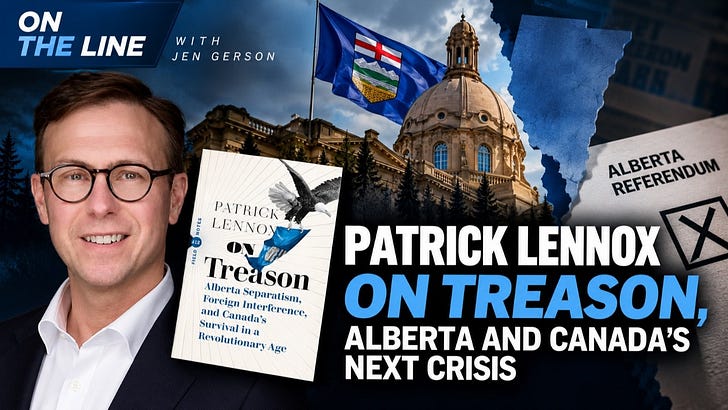
In this episode of On The Line, host Jen Gerson speaks with Patrick Lennox, author of On Treason, a new book examining the moral and political consequences of betraying one’s own country. Their conversation focuses on Alberta’s separatist movement, its reported efforts to secure American recognition for a future independent state, and why Lennox believes the movement represents something more troubling than ordinary regional grievance politics. This episode is brought to you by BioCanRx. We’ve been partnering with federally-funded Canadian not-for-profit BioCanRx to learn how made-in-Canada immunotherapies offer new ways to beat cancer. This month we’re addressing common questions, like: is Canada behind on immunotherapy? Canadian researchers continue to be global leaders at discovery research. Where Canada lags behind is in bringing these discoveries from the lab to the patient. While many immunotherapies come to Canada for clinical trial or market authorization, few are based on Canadian research or developed in Canada, meaning we access them when their international sponsors choose, at whatever prices they want to charge –– provided Health Canada approves and the provinces decide to pay. Developing more Canadian discoveries into approved therapies in Canada would help reduce Canada’s dependence on other countries, enable our health systems to learn what it takes to deliver these novel therapies while collecting data to assess their value via early stage clinical trials, and provide patients with much-needed access to advanced therapies. A win-win-win scenario. BioCanRx continues to work with researchers and policymakers to deliver on this mission. Thanks to them for continuing to partner with The Line to share this information and visit BioCanRx.com to learn more. Lennox traces the political developments that brought Alberta to the brink of a separatist referendum, including Bill 54 and changes to the province’s citizens’ initiative rules. They discuss lower signature thresholds, corporate financing, and the role these changes have played in opening a path to a referendum. Lennox argues that the process reflects deliberate political engineering rather than a spontaneous expression of popular discontent. This episode is also brought to you by the Forest Products Association of Canada. Budget season in Ottawa is filled with asks for new programs, new tax measures and new investment. But for Canada’s forest products sector, the biggest opportunity for growth doesn’t require new spending — it requires smarter rules. Regulatory inefficiencies are costing the average Canadian mill an estimated one million dollars a year each. That’s money that could be reinvested in workers, communities, and modernization instead. The Forest Sector Transformation Task Force gave Ottawa a clear playbook. As the federal budget takes shape, the fastest way to unlock private investment is to remove the made-in-Canada barriers standing in the way. Learn more at...
0:00SPEAKER_02Hello, ladies and gentlemen of On The Line.
0:02SPEAKER_02I'm your host, Jen Gerson, today.
0:03SPEAKER_02And today we have with us Patrick Lennox,
0:05SPEAKER_02the author of the recent book On Treason,
0:08SPEAKER_02Alberta's Separatism,
0:09SPEAKER_02Foreign Interference, and Canada's Survival in a Revolutionary Age.
0:13SPEAKER_02Obviously,
0:13SPEAKER_02we're recording this on So we won't know the results by
0:17SPEAKER_02the time you hear this particular recording.
0:19SPEAKER_02We're presuming that it is going to be a stay vote.
0:21SPEAKER_02Regardless,
0:23SPEAKER_02this referendum raised a lot of questions about democratic legitimacy,
0:27SPEAKER_02about whether or not our definitions of treason are too narrow,
0:30SPEAKER_02and whether or not the Alberta separatists have committed a kind of moral crime
0:33SPEAKER_02against the nation, even if they didn't commit a criminal one.