
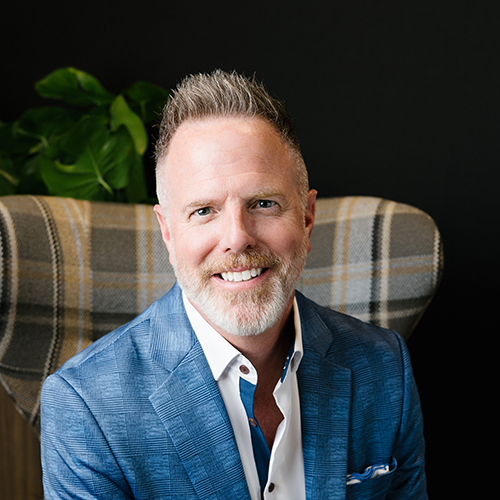
The Leadership Window · Dr. Patrick Jinks
What is the case for getting your employees back in the office? How does remote work compare in productivity? Patrick chats with workplace designer Tim Carroll about the importance of physical presence at work.
0:06Speaker AWelcome to the Leadership window podcast with Dr. Patrick Jenks. Each week through a social sector lens, Patrick interviews leaders and experts and puts us in touch with trends and tips for leading effectively. Patrick is a board certified executive coach, a member of the Forbes Coaches Council, a best selling author, award winning photographer and a professional speaker. And now, here's Dr. Patrick Jenks.
0:31Speaker BHappy fall everyone. I hope everyone is doing great here in Columbia, South Carolina. Famously hot Columbia, South Carolina. I think the temperature is actually finally broken for the fall. We're down into the like high 50s at night now or over early morning. So loving that. Hope you're doing well. We are on an episode today that is, I would say near and dear to my heart, but that sounds so weird for this topic. It's close to an area of passion for me. And if you've been a part of any of my trainings or part of my coaching or you've heard any of my work, you know that I'm a stickler for emotional intelligence, relationship organizational culture, and how important it is to be present with people. Fully present, not on a screen like Tim and I are today. Even though you can't see us, we can see each other. But really where I could, you know, put my hand on your shoulder, I can look you in the eye, I can shake your hand, I can. You can read body language, we can be fully present in a room. We're going to talk a lot about these kinds of things and even deeper, we're going to talk about the aesthetic value, aesthetic, not just visual, but the form and the harmony and the ambiance and the environment created when you're a leader and what the physical workplace has to do with that. Tim Carroll is my guest today. He's a Nashville, Tennessee native. He's an author, he is a business leader. Fun fact. He's a former Broadway actor and singer. He led in shows like Grease and Smokey Joe's Cafe. We'll learn a little bit more about the journey from there to the corporate world. Today, he's the founder and CEO of Lyric Workplace. It's a company he built on the belief that when every element of the workplace works in harmony, organizations perform at higher levels. Tim spent his career at the intersection of workplace design, leadership and organizational culture. Those are not mutually exclusive concepts. They are very intersecting. And through his years in the commercial interiors industry, he saw firsthand how the physical workplace shapes collaboration, talent, development, culture, and also how few companies actually understand that and treat it as the strategic asset that it is. And that insight led him to found his company Lyric Workplace. And it's a firm designed not around product distribution, not around furniture and things, but around outcomes. He's not selling nails, he's selling holes. Right? And it's around the belief that when design and technology and culture and experience, all those things work together, the workplace becomes much more than a building. It's more than a facility. It becomes literally a competitive advantage. He's the author of Workplace Reclaiming In Person Work in a Remote, Obsessed World. Does that ring a bell with anybody? The book examines how the physical environments influence all these things. Leadership, culture, organizational performance. Even his own podcast, Harmony at Work, can be found on Apple, Spotify, YouTube, and on his [email protected] and boy, I could go on, but you should. We should have piqued your interest by now. So get some. Get. Get a pen, get ready to take some notes. Or better yet, just sit back and listen. This is just going to be a good conversation about life at work and how we can influence it. Tim, welcome to the show. So glad you're here. What did I miss?
4:29Speaker CThank you so much. I don't think I can live up to that introduction. But I will also say it's not weird to say it's near and dear to your heart. I believe this is very near and dear to my heart, and I believe it should be to everybody's, but I'm excited about having this conversation.
4:44Speaker BIt's pretty clear that it's near and dear to you. Hart. I mean, you've really dug into this thing. And I, you know, I will just say this just kind of on the side. You know, obviously we have a lot of guests on the show. They're from all over the place. They all do different things. We've had coaches and nonprofit practitioners and authors and, you know, data scientists and everything else. I will say this. Either you are the real deal in living out a real clear mission, or your branders are fantastic geniuses. Seriously. Because you. You put yourself out there very clearly about who you are and why you're doing it. Folks, if you go to the website. Lyric, Lyric. Which, by the way, spell that. It's. It's a. Isn't it an odds. It's L. Spell it.
5:34Speaker CNo, it's L, Y, R, I, c.lyric workplace.com.
5:37Speaker Bi don't know why. I thought it was a Q. Lyric. Yeah, like the lyric of a song. Lyricworkplace.com you. You will see that this is not just. This is not your typical interior design, office supply furniture kind of place. This is very different. A Very different level, a much deeper level, and it's just inspiring. So, again, thanks for coming. Maybe we start with a little bit of the story on how you got here, because I mentioned the fun fact at the beginning about your life on Broadway. What's led you from that stage to this one?
6:15Speaker CWell, I mean, it's a question that I get asked frequently because it's a weird path to take. And it's not as if I went directly from the stage, walked off and got into furniture. There was a lot of steps in between, and mainly it was I just was looking for more. I enjoyed my time performing, but I just thought, there's more out there for me. And so when I came back to Nashville, I started trying to decide what this next chapter was going to be. And I realized a very interesting point, because I started looking at sales jobs, and I was like, oh, I don't want to be in sales. I'm not a salesperson. And then it hit me. First of all, everybody's in sales every day, all day long. You're selling an idea, you're selling a something.
7:12Speaker BAbsolutely.
7:12Speaker CAnd I realized I had been selling for years up in New York a product that, quite frankly, was a hard sell, and somehow I. I found myself able to do it, and that was me. And so I realized that a lot of what I learned through the trying to get jobs, which you are constantly job hunting in. In performing and in acting and singing. So I just translated that to. To corporate America, started moving my way up in larger companies, and then found my way into this industry of commercial interiors, which is a crazy industry. The minute I got in it, everybody said, you're not leaving. It's gotcha. No one leaves once they get in. But really, I built my career on a desire to add value to people's lives in a leadership way. And so leadership's really been my guiding star. And so everything I do, I do in honor of that, knowing that, as John Maxwell says, everything rises and falls on leadership. And so everything that any success I've ever had is because I focused on providing value to everyone in the organization. And then a rising tide will lift all ships.
8:42Speaker BAll right, well, there you have it, ladies and gentlemen. That's our episode for today. I mean, that's just super, really, really good. I. You know, I'd love to learn more about how your. What your leadership philosophy is at work, but let's talk about the work here for a minute. I'll set this up a little bit. I'll try not to talk too much, but People who have been around me, know me, listen to this show, have heard me say so so many times how much I despise. I mean, I hate a bore. What are all the words? I loathe this virtual stuff. Zoom meetings. Hate them. Just hate them. The idea of remote work and people calling in for staff meetings and, you know, trying to figure out communication tools and hate it. Just hate it. Now, all that being said, I won't go into all of why. Because I've done that enough. I also get it. We're on Zoom right now. Thank God for it. Thank God for it. During COVID the technology that allowed us to do things we wouldn't have otherwise been able to do is here. It's awesome. I love technology. I can do Zoom. I'm pretty good at it. I've learned new facilitation tricks and tools and ways to keep people engaged. And I coach remote teams all the time. Maybe most of the teams I coach are at least in part remote coaching a team of medical science liaisons in a pharmaceutical company. Fifteen of them all live in different places from New York to Long beach, you know, so I got it, I get it. And people can perform at high levels. They. People are doing it, but I think they're the exception. And I think that so much is being lost in personal connection. I'm a huge believer in emotional intelligence. I think it's a leader's number one competency they need to have. And it is very difficult to exercise it, nourish it, use it in the virtual world. Not impossible, but absolutely diminished. So I say all that to say where it truly is necessary and or uniquely of value. Great. But I think Covid in particular, created. I've been calling it a cop out for some. It spoiled us to the point of, oh, well, we'll just use this, save money, do whatever, whatever. Now it's not necessary, but it's preferred and everybody expects it and feels entitled to it. And I think generally it's hurting us. I experience. I've not done the research on it like you have. Can't wait to hear some of that, but that's my take. So when. When. For our listeners, when Tim reached out and we connected and I learned what he was doing and why, you could see why this rang true. It said, yeah, let's do an episode on this. Finally, somebody, somebody on my side who gets this. And I'm not trying to criticize anybody, you know, to criticize you. A lot of our listeners are doing it and using it and disagree with me that's fine, but, boy, it is really. And I'll tell you the worst ones, Tim, for me are the hybrid meetings. You know, I do board retreats, for example, where we're doing strategic planning or board engagement. And, well, there's a couple people, or maybe even one person, maybe three people have to zoom in. The rest of us will be in the room. Well, for the activities that we do, which are highly engaging and interactive, man, that's just a killer distraction for the people on Zoom and for the people in the room. So there's just, there's all these things I'm already going off on my soapbox, but I'm just gonna let you kind of take it from. Give us your perspective. And I understand it might not exactly be mine, but give us your perspective and how your work today is addressing this very dynamic.
12:52Speaker CWell, I mean, honestly, you've said just about everything that I would would say, so I, I could not underscore everything that you said enough. But, and, and I need to preface by saying if you, if you read my book, and I hope that you do, you will see that I'm not advocating for everybody back five days a week. You got to do it, everybody. It would seem disingenuous for me to do that as somebody that, that needs people back in the office because I need to. To sell some furniture to them. It would just seem disingenuous. I'm not saying that I do. I am saying work from home can work in certain instances. As you have said, flexibility is probably key. We know we can do it, but that needs to be the icing on the cake. It cannot be the cake we just went through recently. 2020, 2021, 22. The largest workplace experiment the world has ever known. And, and school. Yeah, that's right. Well, we'll talk about that a little bit as well. But the, the experiment showed it can be done. It didn't necessarily say it should be done. And, and, you know, the interesting piece is the technology you've mentioned, Zoom, which we're on now, Microsoft with teams and all that. You know, the Zoom CEO came out right before COVID and said, we are 15 to 20 years away from having the infrastructure to fully support, to support a fully remote work environment. Zoom CEO right before COVID And Microsoft did a huge study during COVID about how siloed everybody was at their company and how many more emails people were getting. So I would say when the, when the people with the technology that we are claiming is the reason why work from home can work, they're telling us it doesn't, we should listen to them. But I will, I will, I will answer your question in this way. I think there's an employee perspective and an employer perspective that I think is really important and that I address in the, in the book and in a lot of ways. But I'm just going to give you two that I have found are very difficult to argue against. And the employer perspective is I have yet to find anybody, and this is just one, in one instance, one area that I believe work from work from home is not appropriate for any, anybody long term because mentorship. I've yet to find anybody that can tell me a way that you can mentor someone virtually more is caught than taught. And what's happening with that younger employee that comes on board and is trying to learn what the culture is about the organization, who that organization is, and by the way, listening to people and how they deal with frustrated clients or how they handle an issue internally within their organization. That's how people learn. They listen, they, they see what to do, what not to do, sometimes even more. So. Mentorship is something that is, we're seeing a deficit in that and we are going to see issues where people are saying, hey, why is that person getting promoted over me? Well, that person comes into the office and they just get it. They just get it. And you know, there's a million statistics out there about how people are out of sight, out of mind. Remote. Workers are 31% less likely to get promoted than their in office counterparts. So I also bring up the idea of groupthink. You mentioned how you hate the zoom meetings and people get on and there's, you know, you've got all the issues right home. Internet is not the same as Internet that you have in an office. It just is not business Internet, the redundancies, all the stuff we, that's why we constantly have the, you know, I'm frozen. You cut out there all that stuff, it disrupts. But the interesting part is this Nature magazine came out with a study that said 15 to 20%, you get 15 to 20% more ideas, better ideas, more creative ideas when we're together. And why is that? Because it's that thing called groupthink. People get on a zoom call and they want to go along to get along and they say, oh yeah, that's a good idea. It happens all the time. And now that you have heard that, pay attention to zoom meetings because you're going to notice people just say, yep, that sounds good. Just to move on with the meeting.
18:12Speaker BI'm guessing there's a fair amount of denial on the other end of the show right now. Oh, no, not our meetings. We, you know, and again, you might be the exception, but I totally agree with you. It's more. It's more difficult. There's a definition of leadership that a friend of mine, Dave Parker, shared with me, and I don't know where he got it. Maybe he made it up, but I don't think so. I just don't remember where he said he got it. The definition of leadership that he gave me was choreographing constructive conflict. And that is much harder to do on Zoom. That's right, the constructive conflict. Because again, it's, it's emotional intelligence. There is energy that radiates from us in a room and we can't put our finger on it. And it's more than just body language. It is an energy in the room that doesn't go over. I don't care if you have fiber optics. Internet energy is different than bandwidth. And I totally agree with you. Again, companies are doing it. I've facilitated some meetings on Zoom where there was good disagreement, but it's harder to do and it's shortened because you have to kind of stay on a. You have to organize the meeting differently.
19:29Speaker CAnd, and I will also say, you know, first of all, you know, 80 of our communication is non verbal, so you know it.
19:35Speaker AYeah.
19:36Speaker CYou're losing stuff when you're seeing people from the shoulder up, I truly believe. But we're also. You're missing out on what happens when you shut down the meeting and everybody gets up from the.