
The Leadership Window · Dr. Patrick Jinks
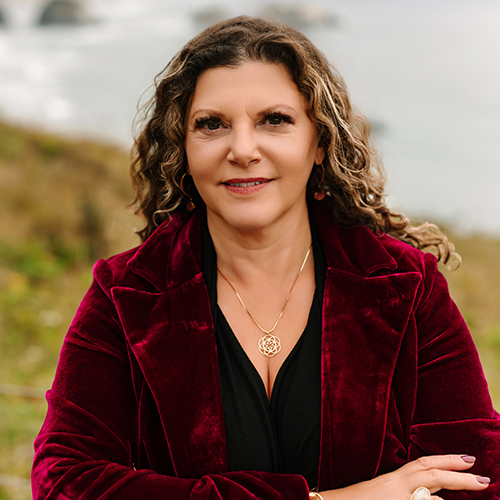
Patrick visits with Jeanine Becker to talk about systems change, personal callings, and more. Jeanine works with purpose-led leaders, particularly in the nonprofit and philanthropy space, helping them think more strategically and systemically rather than transactionally.
0:06Speaker A: Welcome to the Leadership window podcast with Dr. Patrick Jenks. Each week through a social sector lens, Patrick interviews leaders and experts and puts us in touch with trends and tips for leading effectively. Patrick is a board certified executive coach, a member of the Forbes Coaches Council, a best selling author, award winning photographer and a professional speaker. And now here's Dr. Patrick Jenks.
0:32Speaker BHello everyone. It's episode 156 of the Leadership Window. Thanks for coming along. The year is more than half over now. 2026 is leaving us quickly. How's it going for you? What's left? What are you gonna do to in the second half to make the second half better than the first half? I don't know. I just thought of that just now and as I asked myself that question, it's pretty challenging question. I need to pause with that one. Thanks for joining us. We have a great conversation today. This one's going to be pretty, pretty unscripted. I came in contact with our guest Janine Becker not too long ago and we had a brief offline conversation about the work that she is doing to help organizational founders, funders really any, anyone in the the space of creating social impact, be it be it corporate social enterprise or be it a conventional, more traditional nonprofit, be it a philanthropic foundation. And she is helping organizations think more deeply. She works with what she calls purpose led leaders. And we're going to talk about that purpose piece at some point as well because Janine has got a number of different tracks in her work that she's delivering to the world and offering in value and it's just all so fascinating. But she does work particularly in the nonprofit and philanthropic space, helping them to think more strategically, more systemically. We're going to talk about that word probably a lot today rather than transactionally. And so I'm, I'm really interested in this conversation, Janine. I'll say it up front and I'll say it in the end. The website to go to and the link is on our podcast page, but it's on purposetogether.com that is Janine's organization on purposetogether.com and we'll talk about the various resources and things that she's doing. She's coming to us from Portland, Oregon. She's out on the West Coast. And Janine, thank you first of all for the outreach and the connection and for carving out time to have a fun conversation with us today.
3:03Speaker CYeah, I'm so grateful to be here. Thank you so much for inviting me on and having me here today.
3:08Speaker BWell, what did I Miss in my intro, what's the real important thing that people need to know that I didn't cover in the traditional sort of bio that I gave?
3:21Speaker CI would say I think it's the mix of I've learned and studied the pieces of the work and what we're going to talk about academically. And then you'll also hear stories of how I've come to them for my own personal growth alongside my clients over the last 15 years. So you'll hear some more of the personal journey there too.
3:41Speaker BMan, I love that you said that because I experienced that too in, you know, studying organizational leadership in academia is one thing. You learn theory and case studies and all these things, but there's no case study or theory that can inform and educate the way just getting in and experiencing something and not everything can be covered by an academic framework. So I appreciate that you said that. I can relate.
4:10Speaker CYeah, I think that's where I mean, I had taught, I taught negotiation and collaboration at Stanford for a decade. So I knew the theory. I had trained hundreds of students in the process of negotiation and what it takes to collaborate the skills. But then I was a solo parent and had to actually ask for help and lean on, support and collaborate, not because it was nice or because I had so much to offer, but because I also had needs. And that, that taught me different skills, skills that I didn't actually ever bring to the classroom, that I now bring to my clients. The vulnerability and the edge and the gift of that alongside kind of years of study and theory and practice. Right. So the pairing of the two gives me a richer perspective from which to hold space.
5:08Speaker BNow, I'm interested in what you taught at Stanford. You said negotiation and collaboration. Who, who were these? Student negotiation and what? And collab. How do those two go together? Can you give me just a little sense of what's that class about?
5:24Speaker CYeah, I mean it was a full term class. I frame it as around collaboration. The work that I did as an attorney previously was around deals. I was bringing different organizations together to make agreements. And so it was taught in the law school. It was some of the basics of the theory and your kind of classic bargaining for advantage text and win win negotiation. And how do you prepare, how do you open, how do you frame, how do you package options? Right, like that. But to me it was more life skills in some ways of what do you do when you have leverage, how do you relate to risk? I think there was something powerful for students seeing 15 other adults like them, young adults have the same Set of facts and do you always feel like you have more power or less? What do you do when the stakes are high and do you know how you relate to difference? So I often still bring into my coaching work the different ways of engaging with difference. Do you compete, do you compromise, do you accommodate or do you collect? Collaborate. And so I talk about it as negotiation and collaboration because most of what those students are going to do going forward is not formal settlement agreements that are just strictly negotiate, zero sum game. Most of what we're doing in life is crafting ways to understand other people's perspectives and needs and see how we can relate with those in a way that ours also get met and collaborate. Well, I just find it interesting that
7:08Speaker Bthose two are together. You know, when I think negotiation and not being formally trained in it at all, we think about negotiation as win, lose or compromise. But compromise isn't the word you've used here. You've used collaborate. And I think that's really interesting. I mean there's negotiating again, negotiating to win, right? Yeah, I want to get, I want to come out on top of this deal and leverage my power and my influence and all that. You're talking about negotiating to collaborate, like collaboration being a part of the negotiating objective.
7:43Speaker CAbsolutely. Right. I think, I mean it's different if I'm going to just buy a car. There's one deal point, there's one price point. It's good or bad wherever it's at. Right. But, but longer term, even organizational deals or partnerships or strategic alliances, a, you know, nonprofit leader might be making or a relationship with a funder, it isn't just about the amount of money you're building a relationship, you're scaling it over time. You're. There's more factors than just one that kind of is coming in higher, low.
8:14Speaker BSo how has that work led you into what you're doing now? And by the way, what are you doing now? Like what's the, what is the, what are you doing in the world that brings you meaning and bring. Brings others value?
8:28Speaker CI appreciate the framing that way. I think what I'm doing now is partnering with purpose led leaders to really think about how grow their impact in a way that leverages both their internal team and the relationships there, as well as kind of a broader ecosystem or a broader network. I'm helping leaders look at not just putting their organization at the center of the work they're doing, but think about the bigger systems they want to shift, the bigger impact they want to have and how is their organization and how are they personally contributing to that and who else is in needed at the table? So to me I talk about my work as that place where personal growth meets strategy. Like yes, you want to have a bigger impact and who do you need to be as a leader to be the catalyst to be cultivating the conditions for that to be possible?
9:24Speaker BYeah, you, you, you also got my attention and some, I don't remember where I found it but your, your work in your study in vertical development and that's been a field that we've focused on a lot. The work of Bill Torbert and Action Inquiry and the vertical development stages being our, our sort of capacity, not our competencies. And, and I, that's a great way to connect, that is connecting organizational strategy to our, the stage we are in our worldview and our, our, our vertical development, how we bring personal development into, into leading strategy work.
10:08Speaker CYeah, absolutely. I mean I think right. I, I studied with cultivating leadership in some of Jennifer Garvey Berger's work. So I was a student there for, for two years and, and kind of went deep in that, in that direction. But for me, I think when I see with my clients right now so many, if we're focusing on purpose, on making a difference, there's a level of complexity right now. There's multiple perspectives. There's your organization, whatever it is, however big it is, cannot solve this by itself. So that shift in personal and kind of development to be able to hold multiple perspectives, to be able to see the value of your contribution and to know that it's partial, I think to do that kind of systems level work require, it's an invitation for growth. It's hard to do without actually having shifting the meaning that you make about your contribution and the role that you