
The Leadership Window · Dr. Patrick Jinks
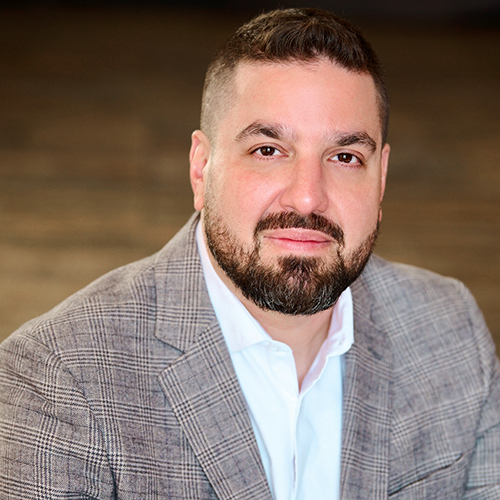
Today, Patrick chats with Jon Rosemberg about what it looks like to move from surviving to thriving. Jon empowers leaders and organizations to break free from survival mode and step boldly into thriving. With over two decades coaching Fortune 500 executives and global teams through deep transformations, Jon draws on his belief that positive change begins by reclaiming our agency. Born in Venezuela and now based in Toronto, he holds advanced degrees from Cornell and the University of Pennsylvania and has served in senior roles at Walmart, Procter & Gamble, Indigo, and GoBolt. Jon is currently CEO of Strongpoint Group […]
0:06Speaker AWelcome to the Leadership window podcast with Dr. Patrick Jenks. Each week through a social sector lens, Patrick interviews leaders and experts and puts us in touch with trends and tips for leading effectively. Patrick is a board certified executive coach, a member of the Forbes Coaches Council, a best selling author, award winning photographer and a professional speaker. And now, here's Dr. Patrick Jenks.
0:31Speaker BHello everyone. Hello everyone. Welcome to episode 149 of the Leadership Window. We're going to kind of shift gears this week. The last two episodes have been focused on some of the technical aspects of work, particularly in the nonprofit sector around marketing, digital marketing, digital fundraising, storytelling with data, all those good things. Today we're going to kind of get back to the human, we're going to get back to sort of personhood. And I this will certainly relate to organizational culture and leadership as well, no doubt about it. Because turns out organizations are people, they're made up of people. So we're gonna get personal here a little bit and make some connection that hopefully really resonates with everyone. And I am just really thrilled about our guest today. Our guest is John Rosenberg. And John, best way to describe him is that he is an empowering coach and consultant and he empowers leaders and organizations to move from survival mode to thriving mode. And he talks about that being some bold steps. He's got over two decades of coaching Fortune 500 companies, global teams. He coaches them through transformations and he draws on his personal belief that positive change starts when you reclaim your agency. So we're going to talk about that. The control we have over ourselves. John was born in Venezuela and he's now based in Toronto. He's got advanced degrees from Cornell as well as the University of Pennsylvania. And he has served in senior roles at some of the big players in the corporate sector. Walmart, Procter and Gamble, Indigo, GoBolt. He is currently CEO of Strongpoint Group and the founding partner of Anther. And that's a firm dedicated to helping people thrive. We were introduced virtually through a mutual friend coaching friend out in California named Elena Rodezero. And I immediately picked up John's book, which we'll talk about today. But I want to really, you know, I don't recommend books lightly. So this, this is, I'm going to do this probably multiple times. I'm not finished with it. I'm about halfway through and. But the book is called A Guide to Thriving. And I will tell you, the book just, I got intrigued right off the bat when I started reading the endorsements and the forwards and things you will not believe. The list of people that are holding this up, but their names include people like Dr. Marshall Goldsmith and Seth Godin. And this book is the real deal. And I just. We're going to talk about it a little bit. John's going to share some with us. But John, I want to thank you for connecting with me. This is so relevant for the listeners of this program. And we don't have to just talk about the book. I like to have a conversation with you about the work you're doing and how you're helping people. And what is this? How do we get out of survival mode and move into thrive? So we got a lot to talk about, but I want to thank you for coming on, first of all. And I think I'll turn it to you and say, what did I miss in my introduction?
4:05Speaker AFirst of all, Patrick, that was awesome. Can you just please keep going for a couple more minutes? No, that was great. Thank you so much for the kind introduction and for opening the space. And thank you to your listeners for dedicating their time to listening to the ideas that we're going to be sharing during today's podcast.
4:23Speaker BWell, other than the book, which is a tremendous contribution, I always think of people's work product as are they contributing value and are they making a difference? And I can tell you absolutely, this book is. Tell us about your work, though. How are you helping people thrive? You know, we have. When we think about the various consultants and coaches that are out there, it's hard for us to imagine sometimes. Yeah, but what do you actually do? What is it with the clients that you're doing that's helping them move from survival to thriving? So maybe you just tell us a little bit about your work and how you got here and what you're doing with folks.
5:04Speaker AYeah, so I, I spend two and a half decades in the corporate world, climbing through the corporate ladder as you do, and using my elbows all the way up, you know, to, to make sure that I, I got to that first top spot. And, and that was an interesting time. At the height of my career in corporate, I was recruited by a startup and I decided to sh. Was we were in the midst or as I joined, we started our series B fund raising and we ended up raising $115 million in a series B round. And I said, I've made it. I got the title that I wanted. The team. I was running a team. It was about 1200 people at the time. I'm a shareholder. I have stock options. I. This was my dream job. Of course, I was working 16 hour days, seven days a week. It was a really intense time. And after we finished the race, I went to Los Angeles to California to buy some facilities for our expansion. And as I flew back to Toronto, I came down with COVID And I was on a call with a technical team, talking about technical stuff, as you do on technical calls. And the call got heated really, really quickly, and I realized I was completely overwhelmed. So I. I shot off my laptop, turned off my phone, and I was right here in my home office where I'm talking to you today, Patrick. And I heard my two kids playing in the basement. So I went downstairs and they were sitting on the floor playing with Legos, and. And I just sat on the floor. No phone, no anything. I just sat on the floor and started building stuff with them. A unique moment for me. In that moment, I felt present. And what I realized is that I hadn't been present with them for the past eight months, ten months. I just. I was there at, you know, at breakfast or at dinner, but I was just like a zombie, like a shell of a human walking around. My head was always thinking about the next email, the next meeting, the next deal that we had to close or whatever that was. So that night we put the kids to bed, and I'm sitting in my favorite chair, and Adriana, my wife, walks in and she's like, are you okay? She saw that something was clearly wrong. So I put my. My hands in my face and I said, I think I'm done. And over the next two weeks, I untangled myself from the company. It's a brilliant company. They're still doing great. And I started my consulting. My consulting business, went back to school to study psychology, and that ended up ultimately leading me to publish book. And one of the big realizations for me now this story is nice and neat, and it's clean to tell it in a podcast. The fact is that this was years in the making. And there were lots of really small cumulative moments that led me to that specific epiphany. It wasn't as clean, you know, nice. It's nice when you tell the story, but it wasn't as clean cut as it sounds. And one of the things that I realized is that I had spent most of my life in survival mode, in this state of survival mode. And what I wanted to do, what I discovered in that moment with my kids, or when I cooked dinner for my families on Friday nights, or is that there are moments of thriving that we can have in our lives. And so I saw this binary of Survival mode and thriving. And I wanted to better understand how you move from one to the other. What is it that you can do to move from one to the other? And that's what drove me to write and publish the book. And I'm very, very grateful to Wiley for picking it up and putting it out there in the world, man.
9:01Speaker BI mean, I love a good story that is really a great origin story. And yes, like I was imagining, as you were saying, and I was thinking, you know, John's probably told this story thousands of times, if not tens of thousands of times, and you do have it down. And, and it's, I can tell you've made it concise, but you can't listen to that story and not imagine that there were a lot of moving parts particularly that led up to that. And I'll tell you what it made me think of is, in fact, I kind of, I kind of would like for you to go back and give us a few more of these, the, the signals, the thing like you touched on really lightly. But if you could go back just a second. We had, I had a guest, Dr. Kim Hires, was on the show a few years ago and talking about burnout, and she was talking about the symptoms like the signals. How do you know when you move from stress to burnout? Because those are two different things. And it sounds like you were, I mean, what you were describing sounded like burnout. Is that, is that a word you would use for what you were describing and just go back maybe and say again what some of those signs were? Yeah, that was powerful.
10:22Speaker AOne of the reasons why I like the world, the words survival mode, and I talk a little bit about this in the book, is because it's a non pathologizing way to look at a reaction that we have or a way in which we have to navigate the world. And I think survival mode is something that many of us spend a lot of time in. And by the way, survival mode can be really helpful. Patrick I grew up in Caracas, Venezuela. It was a very dangerous place to grow up. The year Adriana and I left Caracas, by some estimates, there were 52,000 violent murders in the country. It's worse than a war zone. So I was being in survival mode while I was growing up in Caracas was really, really helpful. Had I not been in that state of survival mode, that state of alertness where you feel, you know, you're hyper focused, you're narrowing your options, you, you're in this kind of fight or flight kind of stayed, was really helpful because he told Me, don't go down that road, go on the other side, or don't go out at night, or don't, don't, you know, don't do things that will put your life at risk. So survival mode can be really helpful. Now, what we're experiencing today and one of the. There are many reasons for this, and I'm not gonna, I'm not gonna sit here and say that I have a comprehensive list of them, but one of the important ones is what evolutionary psychologists called, called evolutionary mismatch. And one of the things that's happening is that technology and the way the world is advancing is much faster. It's evolving much faster than we can as humans. So there's a mismatch between. So we have access to all of this information on our phones, and we're exposed to all these news and videos and our calendars are basically running our lives. For many of us, we're just going from one meeting to the next. So even though our physical well being may not necessarily be at risk, for many of us, we interpret that as if it is. We interpret the world around us as if our life was about to be ended. And that puts us in this state of survival mode. Now, when that becomes chronic, when, when it's not just, you know, a spike of survival mode because you went on a roller coaster or because you, you got mugged in the street, but you get stuck in that mode, and a lot of us feel like we're stuck in that mode, then it becomes a real concern.
13:02Speaker BAnd again, you realized that, though, in your story. So what were the specific things again, that made you go, hey, wait a minute. This is like, we get into these places, we don't realize we're there. What made you realize you were there?
13:24Speaker AYeah, I guess hindsight's 2020 in the moment. This is not the way I would have described it, but now, after having done the research and having learned what happened, what I would argue is that play is one of the ways in which we tend to feel safe humans. And that's exactly what I was doing with my kids. I was playing, and I was engaging the creative part of my br. And the three of us were sitting there in the carpet just playing with the Legos. We were engaging our creativity. We were connecting as humans. We were playing. I felt safe, they felt safe. And in that moment of safety, what happens is that instead of being in your amygdala, you get to engage the prefrontal cortex of your brain, the executive functioning center of the brain, and you start to see options where you might have not seen any before. Sorry. So I think that's one of the keys to agency, which is one of the big themes in the book. This idea that one of the ways in which we can go from survival mode to thriving is using our agency and developing our agency, which is a skill. So the way that reflected in that moment is for the longest time I believe I had no choice. I could not leave that job. I had to keep climbing and keep doing better and keep producing. I had no choice because the moment I stopped doing that, in my mind, within two weeks I would lose my house and be living under a bridge. That's what my mind told me. And I believed it. I believed it to the bottom of, you know, like, like visually believe that what happened in that moment is I saw another choice. I said, well, I can leave and I can just figure it out. And, and that was it. So I would say that would be an increase in agen now full on agency would have been saying, huh, what is actually happening here? And analyzing and saying maybe I could reduce the number of hours that I'm working and set some boundaries. Maybe I could hire more of a team so I don't have to take so much of the weight. Maybe I could delegate more. Maybe, you know, or if I left, maybe it wasn't just starting my business, maybe I could rest for six months instead of going right back into it and doing all of these things. So what I would argue is that the more we develop agency, the more options we see, the more choices. And the more choices we see, the more we're running our lives as opposed to just defaulting to all of our reactions. And I think that's an important thread in the book.
16:02Speaker BThere's a very funny scene in the old movie Dick and Jane with Jim Carrey where I think. Was it Dick and Jane? I think that's the one where he and his wife start burglarizing because he loses his job in the big corporate thing and there's a place where he's just, just, you know, he's at his wits end and he jumps up on the table in the middle of a country club or a bar or something and he's, he's acting, he's physically acting out like he's a marionette or a puppet and he says I'm a corporate puppet. And. But the, the way that movie is portrayed. And I'm thinking of this because when you talk about agency, that's the opposite of being a puppet. And you weren't Saying you were a corporate puppet, but the fact that you believed I have to follow this system that I'm in or it's going to be bad for me. And so the lack of agency as you describe it, and I say all that to ask you what is your definition of agency? Use that term a lot. We think about, I don't know, maybe autonomy or thing. But how, when you say increase our agency, define that for our listeners who might not be familiar with that term.
17:22Speaker AYeah. So agency, the way I define it, it's a skill, it's something that can be learned and it's the capacity to make intentional choices and the belief that those choices actually matter and have an impact on the world. So, so there's a lot to unpack there. Right. What do we mean by intentionality? It means that it's in order for you to make an intentional choice, you have to consider other ch. So when you are in a job and you say this is the only choice I have, I have nothing else to do. And by the way, Patrick, I want to do a quick parenthesis here because there are people living paycheck to paycheck and working two or three jobs in order to survive. There are systemic constraints to our agency. That's a very real thing. I'm talking to the folks who may already have their basic needs covered and they feel trapped. Those are the folks that I'm talking to, to the folks that are in survivors survival mode because the system has put them in that place and because they are systemically constrained, then the more we thrive, the more we can help those folks.
18:30Speaker BRight.
18:31Speaker ASo, so, so but this idea that we can make an intentional choice that in that moment I said, okay. I went from I don't have a choice but to stay in this job forever or until there's a liquidity event or whatever that looks like. Now I have a choice to leave and my wife will support me, my kids will support me, my family will support me. So, so that was an increase in agency that gave me a choice where I had seen none before. And the more, most, most importantly, I actually believe that making a different choice would have an impact in my life and in my world. And some of that impact might have been negative because there was fear there. There was a lot of fear there, but some of the impact was positive. There was optimism, there was hope, there was a notion of this might make my life better, hence why I'm making this choice. So, so I think that's really important, that's really good.
19:27Speaker BAnd, and yes, people have different degrees of being in that place of agency. And I appreciate you calling out that. Imagine some people would listen to this and say, well, it's real easy, John, for you to say that I can choose, you know, but you don't understand where I'm at. You don't understand what I'm going through. And I think even then there are some choices we just don't realize we can't see them when we're in that place. There's a model we use in our coaching, and you've probably heard this, but that we call CIA and trying to help people understand. If those were columns C, I and A, what are the things let's say about a particular situation or event or scenario? What are the things you control? That's the C. I completely control it. My hands are on the knobs and levers. I get to choose and decide. I don't know how much exercise I get in a week. That's totally. I get to decide that. What are the things in the middle column that I can't fully control, but I might be able to influence them CI with some effort and with some belief. What's some influence I can bear on it even if I can't unilaterally change something. And then the A and the A, we used to say, is the column where you put things that you have to accept I can't change these. These, these are the things that are outside of my sphere of control or influence. We've since come to use the word adapt either at least along with except meaning there are some things I can't control or influence them, but I have to adapt to them. I'm the one that has to do some changing around the environment. Environment. And so what we tell leaders is it's a mistake to try to control or influence something that you can't beat your head against a wall that is outside your circle of influence, of ability to change. But it's also a mistake to accept things that you could have controlled or influenced and didn't know it, didn't try, didn't believe in it. And that's kind of one of the ways we describe agency. I would love your feedback on that model, your thought on that model, good, bad or otherwise, because this is an area that you've studied deeply. But is that what we're talking about?
21:45Speaker AI think there's a lot of overlap there and I like how you've simplified it. What I would say with regards to control is that it depends how you define control. So let me maybe ask You. Patrick, what do you mean by control in the model here?