
The iGaming Leader · Leo Judkins, Founder - iGaming Leader Mastermind
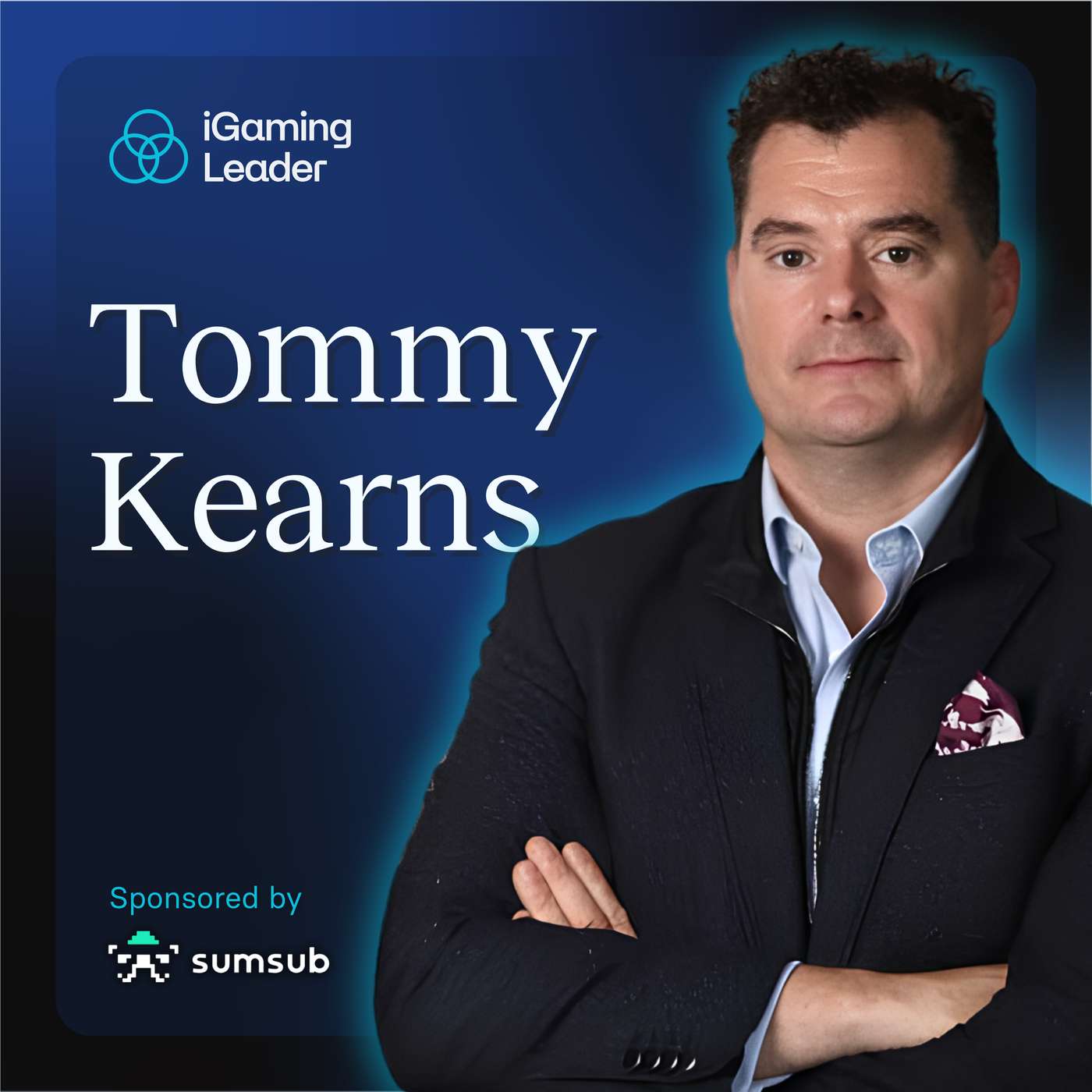
In this episode, Leo talks with Tommy Kearns about how rugby shaped the way he runs a company: trust, loyalty, accountability, direct feedback and a role for everyone. He is clear about what he does not want around him. "I don't want yes men around me." Everything gets challenged until the team reaches alignment, and then everyone commits. He also covers the harder parts of the story. Tommy lost his money in the property crash after selling his Mexico business. Xtremepush was bootstrapped and profitable within 13 to 14 months. It then took growth capital in 2021 and went negative for nearly 24 months. He also talks about the 2023 Thunderbite acquisition, why Xtremepush put CRM, gamification and loyalty into one platform, and why he thinks trust matters more in the AI era. ABOUT THE GUEST Tommy Kearns is CEO and Co-Founder of Xtremepush, a leading company now serving 230 iGaming brands around the world, including more than half of the EGR top 50. He is a technology entrepreneur with a track record in the global internet and mobile industry. He builds businesses that solve large customer problems for large enterprises, with technology and automation where relevant. His core skills include customer analytics and engagement, digital strategy, mobile and system application development, innovation, business planning, market entry analysis and deployment, and building commercial partnerships. IN THIS EPISODE 00:00:00 Introducing Tommy 00:03:00 Rugby career at Connacht and the lessons that carried into business 00:08:00 Challenge and commit: no yes men and the leadership team 00:12:00 Why toxicity is viral, Leaders for Leaders and hiring for urgency 00:19:00 Lean culture: single-digit churn, pod systems and Keep Driving Hard (KDH) 00:22:00 Career path: the Caribbean, Mexico, the 2009 property crash and the origin of Xtremepush 00:28:00 Bootstrapping, growth capital in 2021 and the first acquisition 00:32:00 One platform for CRM, gamification and loyalty, 24 months in the red and the Thunderbite acquisition 00:38:00 Expert OS, agentic AI, trust and the power of saying no QUOTES FROM TOMMY "I don't want yes men around me. I want people to challenge my thoughts. My thoughts are directionally very good, but specifically not always correct." "Toxicity is viral. It needs to be rooted out." "You can't learn urgency. You either have it or you don't, and you have to test for it." "You have to have felt failure. You have to feel it. You have to really feel it, not just see it." "Success is not permanent, but neither is failure." "Trust is going to become more important, relationships are gonna become more important." IMPORTANT LINKS Connect with Tommy Kearns on LinkedIn: https://www.linkedin.com/in/tommykearns/ Connect with Leo Judkins on LinkedIn: https://www.linkedin.com/in/leo-judkins/ Get the iGaming Leader newsletter: https://www.igamingleader.com/signup Join the iGaming Leader Mastermind: https://www.igamingleader.com/ This episode is brought to you...
Tommy Kearns: [00:00:00] I don't want yes men around me. I, I want people to challenge my thoughts. My thoughts are trajectually very good, or directionally very good, but specifically not always correct. You need people around you going, "I understand what you're saying, but you're totally off the mark there, Tommy." I've played rugby since I was a young lad, all the way up. I did a full year of professional rugby. I learned a lot of lessons, actually. You have each other's backs. There's trust. There's loyalty. You had certain jobs to do, and if you didn't do them, you were accountable for them. You get called out by your teammates, and in a very constructive but very direct manner. "Don't do that again." Everything gets challenged until we get alignment. I don't really care if the founder's in the room. The founder needs to be told sometimes, "You're incorrect." Toxicity is viral. It needs to be rooted out. You cannot have toxicity in your business with that type of a mission, because it permeates everything, as well as a good culture. A bad culture can permeate it as well. I went out of the room and says, "Hire that lad," because he didn't tell us what we wanted to hear. He had a [00:01:00] very specific view of the world. There was a couple of questions he got asked. I can go that way or I can go my way. He went his way. He got hired. Leo (2): Hey, welcome to the iGaming Leader Podcast I'm your host, Leo Judkins, founder of iGaming Leader Mastermind. And on this show, I sit down with some of the most inspirational and forward thinking leaders in our industry diving into the real challenges, high stakes decisions and lessons. That shape our industry If you are a VP Director or an Executive in iGaming this podcast is built for you. Before we dive in, a quick thank you to our sponsor Sum Sub, the full cycle verification platform. Trusted by top iGaming operators worldwide, sum sub helps onboard players quickly stay compliant and prevent fraud all without slowing growth. More information in the description. . Leo Judkins: Hey everybody, welcome to the iGaming Leader Podcast. Today, I am here with Tommy Kearns, the founder CEO of Extreme Push, here to talk about, uh, his background in rugby, of course, if any of you know him. But we're [00:02:00] especially gonna talk about his career, the challenges he faced, the lessons that he learned, and, uh, yeah, some of the things that, that he can share that might help you along the way. Tommy, great to have you on the podcast. Tommy Kearns: Thanks very much for having me, Leo. it's a pleasure to be here. Thank you. Leo Judkins: Tommy, I wanted to start with, rugby, if that's all right. You, uh, retired from, professional rugby 2002, moved straight into, into mobile marketing. can you tell us a little bit more about your rugby career, about how that's, kinda how that started and why you moved straight into mobile marketing after that, as, you know, of all things that you could choose? Tommy Kearns: retirement is a, is a strong word, Leo. I, I'd say it was forced, forced I'd say it was forced retirement for just not being good enough to that, uh, l- level at the end. But yeah, look at... I, I've, I've, I've played rugby since I was a young lad, all the way up. so played in, in school, played, in kind of first division clubs, and then I got an opportunity to... I actually, I, I actually, I worked, would you believe? I, I did my thesis on mobile telephony. That's how far back it goes. That's a long time ago. And, then I went in and I started a business, a very small [00:03:00] one-man band business, and, feeding myself at the time, being able to feed myself. And then I got an opportunity. I was playing rugby at a high level, and I got an opportunity to become a professional rugby player with Connacht, which is one of the four provinces, in Ireland. and so I lived in Galway. My, my late father was from Galway, so, Clifton, Connemara. So it was great. It was a brilliant... I had a brilliant year. I did a full year of professional rugby. learned a lot of lessons actually there about team, et cetera. And, yeah, it was, it was a phenomenal time. It was at the f- It was probably two or three years into the professional game. you could still do a little bit of rucking. for anybody, those who understand rugby, you could still do a little bit of proper rucking all right. But the, but, I do, I do, I am glad I'm not playing at this, at that level now because the hits are very, very different, and the collisions and the speed is different, a different gravy. Leo Judkins: Unbelievable Tommy Kearns: so I did a year there, and, couple of guys came in, who were much better. A guy called Gerry Flannery. Gerry Flannery came in after me, took my spot, and then he [00:04:00] went on to Ireland, the Lions, et cetera. and then I went straight back into, into my career, which is really important. But, like, the lessons, the team lessons. Rugby is a great game because, I, I'm not, like, I, I like soccer, but I'm not... Like, rugby was my game. But what it had then was it had a role for everybody. So if you were short and fast, if you were big and huge, if you were very tall, kind of tall timber, if you were really speedy and you kind of had very athletic, you know, wingers, kind of fullbacks, it had a role for everyone. And, and I always talk about this, that the, the transition from that type of sport, role-driven sport at the highest level, absolutely converts to business because of y- if you think about the different roles everyone plays in business. So I straightaway went back into, mobile marketing, mobile media, what I would call the first wave of personalization. Leo Judkins: that's the thing with rugby, isn't it? It's, it is, a sport of all sizes, but it's also, it's a gentleman's sport played by hooligans, right? And, I also think that bonds you so much more, [00:05:00] I'd imagine, than any other sport, right? Because of the violence, because of the camaraderie, because of, you know, sitting on the bus the long away, you know, the far away game, all that stuff, right? So do you feel the same? Tommy Kearns: Yeah, I- I think, you know, if you think about it, it, it's the culture of that team. All right? Leo Judkins: yeah Tommy Kearns: you have each other's backs. There's trust, there's loyalty, there's, you know, you're accountable to do this job. I used to be a hooker, but I also used to be a prop before that. Not big enough to be a prop, not fast enough to be a hooker. But, but the fact of the matter is you had certain jobs to do, and if you didn't do them, you were accountable for them. You get balled out by your, your teammate Leo Judkins: Yep Tommy Kearns: a very constructive but very direct manner, "Don't do that again." You know, I used to lift in the line out. You drop a guy in the line out, that's a very serious, you know, there's a serious repercussions there. So you had direct accountability, you had each other's backs, you had a trust, you had the camaraderie because you were out in the field together. You were having a beer or a, or a soft drink together. [00:06:00] A- and you were s- and you were in each other's ears and hearts and minds all the time because you were training, you know, twice a day in the professional area. In the, in the amateur area, you were still probably training twice a day if the truth be known. so I, I think what I would 100% agree with you, and I think, , the, the nuance of that culture within team sports, I can only really speak to, to rugby, but I know the different roles and stuff like that. I think that nuance converts into high-performing businesses, high-performing culture, high-performing businesses. You know, in sports, you'd have an ambition or an objective at the start of the year. You'd write it down. You'd be like literally in a classroom writing it down. What do you want, personally want to get out of it? What does the team, what's, you know, what's the ambition of the team? We do the same thing in Extreme Push every day of the week. You know what I mean? We have our offsites, we have our monthlies, we have our weeklies just to keep us on track. Are we consistently moving, progressing, with that high performance culture? Leo Judkins: What you were saying about accountability really speaks to me as well. I, like, I remember when I, when [00:07:00] I got f- when I played for the first time for Gibraltar, it was actually, we had to travel to Bermuda. there as well. Got selected to play away against Jamaica for the second my God. and you know what they said? They said... I thought, "Oh great, come to Jamaica." And they said, "It's in Birmingham." Oh my God. But anyway, the Bermuda one was my first one. It was great. Fantastic, fantastic camp. And I remember the game, and I'm on the inside of the nine, and the nine, you know, off, off obviously off the breakdown inside of the nine, and the nine goes, "Where are you, Leo? Where are you, Leo?" And it's just that level of accountability, right? You pushing... Like, being pushed higher. So I wanna talk a little bit about that, on how that translates into business. Because a CEO, you're at the top. You're at the top, right? You're at the top of the business. You know the business best. isn't there a risk of, like, being like, not having that nine next to you, right? The, the example I just gave. The, like, having your own ceiling. But who's pushing you? Tommy Kearns: I think that's a great question and, and it i- there is an analogy there to sport 100%, all right? You know The best performances you'll ever do as a player in any sport. My son , swims and, he always swims better when [00:08:00] there's somebody better in the pool. All right? Leo Judkins: exactly Tommy Kearns: Because just the mentality, the mindset, right? Same goes, you know, I, I've been lucky enough to have a great co-founder, all right? A technical co-founder. I'm the kind of commercial and kind of, co-founder. and so he pushes me, you know, it enables me, you know... He, he, like, we have, you know, we talked about culture. We have this high-performance challenging culture. We, we have a leadership code, but we'll talk about that maybe later. But basically, you know, it's, it's, you know, challenge and then commit. So no, no conversation gets, a free pass, including myself. Or I was in a room yesterday with the full leadership team, and we had a session, and it was a strategic session or whatever. And, literally, you know, I was listening and then I was saying, and nobody's, nobody's conversation was getting a free pass. It doesn't allow you to be lazy. So for me, you know, how do it not become a ceiling? You know, for me, it's about getting the right people around you in the business that are, have the capabilities and experience, obviously, but also have the culture of [00:09:00] I don't want yes men around me. I, I want people to challenge my thoughts. My thoughts are, you know, trajectorily very good, all right? Or directionally very good, but specifically not always correct. So you need people, you need people around you going, " I understand what you're saying, but you're totally off the mark there, Tommy," and blah, blah, blah. And I have a really good leadership team, like, you know, Rob Price, the CRO. Obviously, Kevin Collins is the, he's the COO now. He started as the CTO, he's now the C-COO. So these people, that's the first part. I think the second part is, is having, like we have, you know, we, we have executive coaches in the business now. We're at a size of 170 people in the business, and I believe wholeheartedly in that. All right? Whether sometimes you might have some bad, you might have some bad executive coaches or bad sessions, but in general, they need to be had because they, they, they enable a better quality of thinking. Both mentors and coaches, they, they, they challenge you. So that's another. And then advisors, like we have a good board that work with us. [00:10:00] They, they challenge us, but back us, you know. So if you think about challenge and then, challenge and then commit, that's one... And we, we call it alignment, but it's challenge and then commit. But everything gets challenged until we get alignment and then we go, "Okay, Tommy, your thought is not the best one in the room. It doesn't really matter. What is the best thought for the business?" And that is the kind of cultural mindset we're trying to set, the high performance like... there's a thin line there sometimes because the, the, you know, conversations get heated and you can say, "Well, the founder's in the room." I don't really care if the founder's in the room. The founder needs to be told sometimes, "You're incorrect," And you must trust the people, and that only comes, like we talked about in sports, that only comes over time. we're in this business now 11 or 12 years. Rob is with me seven or eight years. Kevin's with me from the beginning. You know, Adam, the CFO, is with us nearly three years now. A- AP, product guy is four. All right? Like, these are long-serving, leadership, guys, and you want them in the room both challenging and backing you. Because [00:11:00] there is the other side of that where you, you, you just keep challenging for the sake of challenging. We're not like that. We wanna get to a place where that is definitely directionally right, and specifically we also think it's right. Okay, let's get behind that. All right? It's not yours, Tommy. It's not yours, Adam. It's, doesn't really matter whose it is. Let's get behind it and let's go. Leo Judkins: I just wanna, wanted to follow up on that because, both in rugby and, and, and in, and in people's careers, like rugby have a lot, right, as professional sports, politics, right? The politics of, like, trying to, trying to get ahead of the other guy in the same position, the same shirt. in, like in business, the problem is salaries and careers are involved, right? And so it always brings... I've always found that really interesting, how you can kind of bring this of high performance to a commercial environment where people you know, they're paid and, and, and whatever they say, how they come across to you, Tommy, right, is gonna affect, materially affect their trajectory in their, in their career. So how... just curious, how do you... what, what do you- how do you think about that, and how do you do, how do you deal with that? Is it, [00:12:00] because if inevitably some toxic stuff will come up now, however well you've tried to hire, right? Tommy Kearns: I would 100% agree with you, and it's not an easy answer, so I'll try to tease through it. Leo Judkins: know. Yeah Tommy Kearns: I, I think, I think firstly, toxic You know, could be a bad hire, could be, sorry, could be a wrong hire at the wrong part of your cycle. We done it. If we were further on, a certain person might be unbelievable for you there. But where you are in your cycle, all right? You know, we've 170 people, we haven't got 1,000 people. Okay? So when we've 1,000 people, we'll need different types of people, doing different types of roles. That doesn't mean the people that are with you today should move on. It means they evolve. And this ties into your kind of your question I think you're asking is, people need to be, in an organization, your teams need to be able, they need to understand the ambition. They need to have systems around them to understand that there is a growth trajectory there. Leo Judkins: Mm. Tommy Kearns: right? And you need to have that structure and, and, and systems in place to do that. All [00:13:00] right? That doesn't happen at, a team of 40, but it happens when you get over about 60, 70, 80 because people start asking questions, right? You also need to have honesty. The honest conversation, Leo, as in like, you know, to your point, do, you know, it's easy to tell the, to tell the boss what he wants to hear or what she wants to hear. But actually, that comes back to culture. What are you feeling? And, and, and culture used to be top-down at the start because you have to give a foundation of what you're trying to build. Now it has to come from the bottom up, and it has to go through the tiers, and it has to, you know, literally permeate everything. So how, how we do that is we have different types of programs where we, you know, we put, like we've a Leaders for Leaders program with a leadership code with kind of eight, eight kind of principles within it. And all we're, all we're trying to do is get a, this is the standards we're expecting. This is our expectations. You're leaders or you're becoming leaders in the business. It's your job to [00:14:00] live and breathe this, but it's also your, you know, accountability to bring the next, people through. All right? And give them the set of beliefs, behaviors, rituals, standards that you have been given or that we are trying to set here. So, you know, we put those type of guardrails and, and systems and structures in it. Do we get it right all the time? No, we don't. But we have them in there. And I think the toxic piece, guy, I'll answer that piece last Toxicity is viral. It needs to be rooted out. All right? Out. All right? We're on a mission, all right? We're, we're a category leader in iGaming now. We're a challenger. We've been a challenger brand, the Irish challenger brand all the way through. We're now the leader. We have 230 iGaming brands around the world. We have more than half of the EGR top 50. You cannot have toxicity in your business with that type of a mission because it c- it, it permeates everything as well as a good culture. A bad culture can permeate it as well. So, You know, toxicity, you just can't have it in a business Leo Judkins: And you know, like, [00:15:00] that's the other thing, right? I think, I think, that's actually good that it can't be liked by everybody You've gotta be polarizing somehow, right? You attract the people, the, not only the clients, but also the employees that you want, and you, and you push away the people that you don't. Tommy Kearns: That's really what, anyway, in my head, culture stands for. but you have to write that down. You know, if you ask me, "How did you hire five years ago?" It's very, very different than we hire today. All right? And it's, and it's what are the set of attributes we want to see? Urgency, that constructive paranoia. Capabilities, you can actually... You know, you need a certain capability to, to be at a, a kind of a leadership level or a, a, an industry level. But my point is you can actually learn a lot of that. You can't learn urgency. You either have it or you don't, and you have to test for it. So I've been asked plenty of times, "How do you test for that?" You can see it like that. You can see it how you turn up on the screen. You can see it how, how you shake a lad's hand. You can see it how you look into, you know, a team's eyes. What type of conversation are you having? We [00:16:00] did an interview a week and a half ago, with a salesperson that we were trying to, to... And I went out of the room and says, " Hire that lad." And we had done four or five interviews with other people. "Hire that lad." Because he didn't tell us what we wanted to hear. He had a very specific view of the world. It, yeah, it leaned into how we had a view of the world, There was a couple of questions he got asked and he went, "Mm, I can, I can go that way or I can go my way." He went his way, he got hired Leo Judkins: That's the interesting part about salespeople, I think always hiring, right? They're great at sales and including selling themselves, so it's difficult hire sometimes. A- are you actually, are you in all the interviews, Tommy, or not? Or how, how do you, how do you deal with that? Tommy Kearns: I'm not in all the interviews. No, no., Yeah, at the, at the senior level, Leo Judkins: Yeah Tommy Kearns: kind of director level and any LT and even some manager level, I do it as well. But I do either a first or second interview, as in they've been screened, all right? And I'm kind of just looking to see, is this person a cultural fit? I'm not gonna ask a, a senior engineer who, you know, could be really good in the business anything-- Like, I'll get lost in the technicality [00:17:00] of it. I'm just looking to see for certain attributes to see actually, you know, when the going gets tough. ' Cause we're, you know, our culture is a lean in culture. You know, why do we win this type of business? Very deep capabilities, experts in the room, and then that lean in, that urgency that, you know, go above and beyond to make that customer happy, that customer for life, as we talk about. So I'm, I'm not really, I'm not, I'm not interviewing for capability most of the time. Some-- At leadership levels I am, right? But at, at, at other levels I'm not. But I definitely, I am in a lot of interviews. I won't say too many interviews, but I will say I'm in a lot of interviews. And I think that's important still, , it means I care. It mean, you know, the founder, the co-founder of the business is actually going, "Actually, this lad is heavily involved. He's not sitting up in his ivory tower, kind of, you know, stroking his beard." All right? I'm actually in the day-to-day here. All right? And I wanna make sure every hire is at the top of its game, his or her game all the time. That's kind of how we think about things Leo Judkins: , th-that's why it's [00:18:00] important to be in those senior hiring conversations because that culture, fil- yeah,... it gets determined by how a department is run, right? So I, I, I, I agree with that. I wanna talk a little bit about that urgency, if you don't mind, because I think it's one of the hardest things in business. I think very often as the founder or as the CEO, have far more urgency than rest of the business usually, because, you know, the things that could go wrong because you kind of have considered it already. And, and we often with, with our members in the mastermind, we often talk about, you know, if somebody says, "Oh, I, I'm gonna deliver it next week," this thing that's really important, the questions to ask are something like, "Okay, but what's happening between now and next week that is more important than this thing?" And they go, "Oh, well, nothing." "Okay, so why don't you do it, like, today?" think sometimes you, you kind of almost need that, you know, that, that push. how do you, how, how do you ensure, like, that, that you keep that urgency, that you don't end up in, like, one of these businesses that ends up doing meetings for meetings? And you know what I mean? Tommy Kearns: I have never seen technology move at the pace that it's moving [00:19:00] now. All right? So urgency is the number one attribute, you know, when they've screened and all that stuff. That's the number one attribute because our customer means everything to us. We've got single digit churn. Our NDR is off the charts, like net dollar retention. So our customers are ... You know, one thing is revenue, but the other thing is actually, are your customers buying more product off you on a yearly basis? The answer is yes with us. Why? It's not just the technology, to be clear. It's because we care. We pick up the phone. We're proactive. Do we get it wrong? Absolutely we get it wrong. We make mistakes. Our technology sometimes, breaks or whatever, but it's how you get up from those breaks, how you, how you get up and actually lean into, " This is fixed. It won't happen again," et cetera, et cetera, et cetera. And I think, I think that is the-- it's a mindset again. You know, there's a lot of the stuff that we talk about, you talk about both sports and business, there's a lot of stuff you can't touch. You put systems and processes around it, but you ca- how do you train [00:20:00] urgency? Leo Judkins: Yeah. And, and the other thing is also you gotta live it, right? Like so many businesses, they put some shit up on the wall and they think that that's their, you know, their value, you know, you gotta live it, Tommy Kearns: I tell you what we also do, we have pod systems, all right? And so we have, you know, experience with less experience. and, and we also, we have shadow- shadowing. so, and you, and you want to put, you want to put, more junior people with much senior people and put them on calls. They might be mute on the call, and they're, you know, they're introduced as that, right? This is to learn, blah, blah, blah. But that's how you start to understand your . Here's a person who has brilliant attributes, all right? Brilliant values, all right? Learn from her. Leo Judkins: Yep. Tommy Kearns: from her. Do you know what I mean? And we have, we have some really top people who just, to your point, live those values every day and every night. Leo Judkins: Well, this is why you hire for it, right? This is why you sat in interviews That's why I also like the, the whole idea of this polarizing and pushing away the people that don't live those and, you know, attract the people that do, that [00:21:00] do wanna be in such an environment. So where did that whole keep driving hard thing come from for you, Tommy? , Tommy Kearns: over the years of, of both, you know, whistle stop tour. Did a bit of rugby, went into, into, mobile or personalization. Which was ringtones, logos, instant gratification w- was, there was the time, right? we weren't solving, you know, world hunger, to be clear, but, but it was, it was, it was a, it was a good business. Very good business. Did that in the Caribbean, then had my own business in Mexico. Sold that into my biggest customer. Came back to Ireland, all right? and went wallop in a property crash in 2009. I tell you what, that humbles, that humbles the best of people, and it definitely humbled me. But it, but it gave me a An even bigger or kind of insatiable appetite to, to be successful in what I was gonna do next. All right? It also taught me to stay in your own lane. I went into... I came back from Mexico thinking I was all that, and, you know, put a heap of money into, into property, went wallop, lost it all. So didn't know anything about property, if the [00:22:00] truth be known. All right? should have left that to the, to the actual people who did know about it. Now, it wasn't that, it was the market went, the whole market with the property crash of, of 2009 and eight, and all of that, the financial and the, and the property market. But from there you learn a lot. All right? So you have to get up and start again. and then I met Kevin a couple of years later, and, we had this vision of, of, you know, app development was the next, phase of personalization, which, which we were in. We'd started a business together, and myself and my brother-in-law, and then Kevin came on. We, we... They couldn't communicate to the end, customer on the apps. So we had... So there, there were, there were loads of people going like, "Yeah, we're after buying an app off you here for 50,000. You know, like, now we can't even communicate to them. So you've done all this." And then lo and behold, all the, the, the, the, the Googles and the iOS opened up their gateways, and that spawned Extreme Push. But it was all driven by data, which, which I loved, because I'd come from a, an SMS days, which wasn't data-driven. It was just like spray and pray. So [00:23:00] this data meant you could actually understand the behavior, all right, of your, you know, player, your customer, your, you know, c- your user, and understand, and then place stuff, you know, place stuff in front of them that was relevant for them. All right? And so from a K- you know, how did KDH come about? All of that kind of learnings, when we started, Extreme Push, that fabric of keep driving hard, it's a, it's a mindset. It's a, it's a standard. you know, it's a set of rituals. It's all of that. And, and we, and we've put a name on it to ensure that nobody forgets it, and that I don't forget it. There's a saying in Irel- in Ireland, you know, in Gaelic football, right? You're only as good as your last game. All right? And it's said all the way around the country We're, you know, you know, success is not permanent, but neither is failure. And you have to kind of go through a trough to drive it on, and basically that's what we did. And, you know, my- I'm from the country, so I came up with, keep driving hard. And, you know, and it's not banging your head against the wall. It's not doing silly hours, even though a lot of our people in the [00:24:00] business are, are doing silly hours even today. it's that mindset of, you know, customer first, how do we solve your problems? We have great technology. We have the best technology in the world, but technology doesn't always just cut it. It's what do you put with the technology, and that's why we... And, and, and that cultural aspect is what gets us the, the winning formula, Leo Judkins: One of my best mates is Irish as well, and he always talks about how people are batteries and Hoovers, and we- some people are Hoovers and you just wanna get rid of the Hoovers, and we all just want more batteries around you, right? It's that same idea because, again, that sets the culture. I wanted to ask you about the, kind of this, , humbling experience. do you, do you think, Tommy, that we need those, in general, right? Do you think we need those kind of lowest of lows to be the fuel for the change that we wanna create? do you think that we can just kind of evolve or, you know, super successful without those failures? Tommy Kearns: I think evidence would tell you yes. , Some of the best entrepreneurs in the world have like, you [00:25:00] know, been on their knees, failed, and lost everything. you know, I, I'm part of a, an EOY, um, entrepreneur of, finalist this year, right? Which I'm humbled to be in and being picked for. And like when I get in the room with these guys and girls, or I call everyone guys, right? When I get in, get in the room, like you're, you're humbled straight away because, oh, I've got a good business, and then you meet the next lad who is, who's doing, you know, , kind of electrical, heating stuff. Been at it 30 years, and he's just like, you're in awe of what he's built, And it's, you know, and you're, and you're another person who's like massive business around London, around Europe, and he's a massive business. And I'm like, " I'm in software thinking I'm all that." Right? You know what I mean? You know, and you're just... You- you're, you're both humbled, but you then you hear their personal stories, all right? And you start to go, "Yeah, there's a thread in here where ambition, where hunger, all right, where urgency comes from." You have to have felt failure, You have to feel it. You have to really feel it, not, not just see it, to get [00:26:00] yourself to the other side of it. How successful you become then becomes your own, you know, kind of what's your trajectory, what's your path? And everybody's different, and success is different for everybody, all right? Success, you know, s- we, like we have people in our business who never want to be entrepreneurs, and they're so successful. You know, you don't have to be an entrepreneur to be successful, like some of our top engineers or our, you know, you know, they're feeling, you know, like real failures and going, "How do I get out of this?" Like that's feeling it. It really must touch you. Leo Judkins: I love that, Tommy, because I think it's one of the key failings in management that, that many people kind of fall for without realising it. It's like when you've got kids, you wanna put them into, you know, into bubble wrap and, so that they don't fall and they don't hurt themselves. But they've got to hurt themselves, otherwise they're never gonna learn to walk, right? And it's kind of the same thing happens in management, I think, very often When you're managing a team or you're managing a department, because it, it's your name when the work's shit that you get from someone, you kind of, you, you take it over and you do it yourself and, and, and [00:27:00] you're happy to present that. But in doing so, you become their crutch, and you're never allowing them for the failure that we were just talking about, they're never gonna step up to their potential either. And I think so- sometimes that's a bit, you know, maybe it comes from fear of failure or maybe it comes from always wanting to look good or something. But there is a real tension between those two things, you see, for most people in businesses, where they wanna look good, but they also need to let their team kind of fail for them to step up to their potential. So it's a, yeah, it's a, it's a hard tension, I think, for most. Tommy Kearns: And I think there's a line in there in leadership and management is honesty. If you're authentically honest with somebody, whether you're in a bad mood or a good mood, but you're just, you know... If you're, if you're honest about the situation, then, you know, there's a much higher chance of that situation getting better with your, you know, with your employee, with, you know, with your subordinate, with your manager, with your director. If there's an honesty in the conversation, there's a great level- a leveler to making it right Leo Judkins: Yeah. makes a [00:28:00] lot of sense. I wanna talk about being bootstrapped, Tommy. How, how has that helped you? Or, and, and also h- where has that potentially, potentially kinda slowed you down, you feel? How has that changed your decision-making? Tommy Kearns: Yeah, look, we bootstrapped the company, early on. we were profitable very quickly, so that was very helpful because we could reinvest, and then we were able to reinvest into grow the team, grow the product, et cetera, et cetera. I think it gives us a discipline, I think a discipline that, you know, we're not going after a funding round for the sake of hiring more people when we haven't proven the product or the traction or the industry, et cetera, for the customers. What problem are you solving? So we were solving the problem very quickly. we were profitable relatively quickly within 13, 14 months. So I think the discipline-- we've been a very capital efficient business all the way through, all right, for the last 11 years. We never took money on... We took growth capital on in 2021, all right? We were, we were doing probably 7 or 8 million at the time. just under that, actually. so we had proven the [00:29:00] product, we'd proven the traction, and the funding became the accelerator. And we had the team. You know, we had, we had, we had, we had hired, Rob Price, our CRO. He had kind of put manners on the sales and marketing function from a kind of a two-man team that myself and Kevin were with the, you know, kind of trying to, hybrid everything and put, wear about 20 hats. We-- that was a big, very big hire for us. and, you know, once that happened and we got some structure and pace and momentum into the, into the sales and marketing engine, then it took off. and then, what did it teach us? Teach us discipline, prudence. What, what actually means a P&L? You have to have those guardrails on. You know, I heard something over the last couple of years basically, we have to think about every dollar we spend and where we spend it. Whereas if you're, if you've got 20 million of funding as a CD and you've got, you know, 1 or 2 million of revenue, right? It can alleviate the discipline you need to go to the next level. We did our first acquisition, with debt, not equity. And the reason we were, we were able to do [00:30:00] that is because we were profitable and highly profitable, so we were able-- fund it with debt. That feeds more into the governance, the discipline, because, equity providers, brilliant, all right? But they're, they're not as governance heavy as a debt provider. All right? You get your debt wrong, they take the keys to the kingdom with them. All right? Whereas equity will, you know, will the next time you need to raise money, you know, we, we not that we get you in the long grass, but there'll be a different valuation here. Okay? So with the debt, it's you have to be very clear on what the outcomes you want and how you... So that has really shaped us as a business and how we, how we run the business. Like, so we run, you know, we run the business. I'm not gonna overegg it and say like a PLC, but we have the governance of a PLC, all right? so which i- which is, which is very helpful as you get bigger and bigger and bigger Leo Judkins: I was talking to Ebbe Groes a while back founder of EveryMatrix, and, I was asking him about being bootstrapped, and he's, he's only take- took- taken one round of funding very early on. I think it was like four million or something. It was [00:31:00] tiny in comparison to what they were doing. he said, "Yeah, the reason for it is because when you take money, you trade your crown for a fuel tank." How do, how do you feel about that? Tommy Kearns: we have minority, shareholders, all right? we never did a majority stake, I would say it's horses for courses, okay? if we didn't take on the e- equity we took on in 2021, we wouldn't have accelerated at the pace we needed to accelerate. In our particular business, the rate of change, like we've helped shape some of the gaming industry in how engagement happens. We were the first to b- put engagement and gamification together in a unified product. We are the first in the whole market, and also globally across the horizontal, to put CRM, gamification, and loyalty within a unified platform. Nobody else has that in, like, in a unified platform where they have CDP, CRM, decisioning, all the channels which we own, all the gamification, and all the loyalty in one [00:32:00] hub unified. So I, I say that, that we wouldn't have been able to build it as fast. It's just a function of the traction you're getting on a, on a weekly, monthly basis in sales, 'cause that's what's funding your growth. So we had to take that. We didn't have to, but the decision was to take on that funding, at a good valuation and basically go down into it. So we also did that trough, I think it's called that valley of death trough. So we, we went from being very profitable to being very negative for nearly 24 months. And th- that, as an entrepreneur, is probably one of the hardest things you'll ever do because you've gone from being profitable where you have, you know, to Ebbe's, you know, the crown to the fuel tank. Yeah, that's great. But you also, When you go from profitability to negative, you have to be damn sure of your path, your plan to get back out because you now have, an equity partner with you who has a very significant interest in how that comes out, and they have to believe it. Now, lucky enough, you know, we had a [00:33:00] solid plan, we have a solid plan and we're, and we've done it. but- I think it is horses for courses, and everyone will have a different answer to that. There's no, there's no, there's no definitive answer there. We're very happy we took that decision. I don't think we would be where we are today without it. we also, we, we did another acquisition in 2023. We acquired a company called Thunderbite, really good free-to-play games company, and we unified that into the product. We could have done that with debt or equity at the time, so that'll tell you a little bit about our, our kind of P&L. And, we took equity because we wanted, we didn't like to go too heavy into the debt. We didn't want it over-leveraged, firstly. But secondly, we had a good partner in the States who was interested in putting equity in, and we liked the, as we would say, as they would say about us, and we would say about them, they liked the cut of our jib, we liked the cut of their jib. They've been very helpful throughout, on the way through. So, you know, I think maybe what Ebbe might be referring to, maybe not, is it's whose money are you taking? All right? Because it's the, it's [00:34:00] the type of money you take that's important. Because cash is easy to get, it's h- have you got people who can help you on your cycle? Leo Judkins: it makes a lot of sense as well because it really depends on the business. Like when they bought FSB, for example, there was so much cash in the business. That was super important for them, right? With Africa and the sports betting platform, all of that, the horse racing. I remember the time when you're, what you're talking about when, the time when there was no unified platform. I was so, like I was running CRM as well as an operator, and I was so frustrated. I looked at Silverpop, ExactTarget, I looked at all of the guys, right? And it was all crap. Like none of them were able to provide this, like this, this is the time you're talking about, right? And there, and there's such a first mover advantage i- at that time because, yes, you can have all of these guys were doing acquisitions, M&As, and then you have a single login for all of the channels, but it doesn't, as an operator, as a person that actually needs to use it, there's no unified screen that you write your message in and you do your segmentation. So you're not, never gonna think omni-channel as a CRM person. That's the time you're talking about, [00:35:00] right? Tommy Kearns: That's exactly right. That's exactly right. And w- you know, we would talk about it, you know, some of the monolithic stacks who claim to be unified, and the only place they're, the only place they're unified is on a PowerPoint presentation. All right? People talk about us, all right, and, and it, this talks to our culture actually, rather than, just our technology. But, you know, we don't have a 15 million euro budget. I might have said that before, but look, we don't. We are very capital efficient. But when you peel back the onion of Xtreme Push, we get better. We get better. Oh my God, I didn't know there was this. Oh no, there's more, there's more. So we need, we, we obviously need to get better at telling our story. But actually when you start peeling back, that is the, the kind of mask of a really good company that actually when you start drilling in, they get better not worse. And we don't do the slide, you know, these kind of slideware stuff. All right? We're like, "Come and show you. We'll give you a demo. Get into the weeds with us. we- we'll prove it to you." And I think that that has really, I think that has really landed well in the industry, and it's helped us win a lot of business at [00:36:00] the highest level Leo Judkins: Yeah, I love it. I'd love to talk about this, what we were talking about off-camera, about, what you do around these happy hours and CEO dinners, right? Because that ties directly into that, having like the truth from perhaps your customers or your ex-customers cross-pollinate. So tell, tell us a little bit more about why you've done that and how that's working out for you. Tommy Kearns: So if you think about happy hours and exec dinners, right? it's not a new concept, to be clear. our head office, we're an Irish-born company. We're now a global company, but our, our traditions, our cultures stems from the Irish, I would hope. All right? So we like to be, friendly. We like to build relationships, real relationships, not transactional. We're not transactional as a business. All right? So we, we put on happy hours. We don't have the biggest stands in the industry, but we have, probably one of the best, if I do say, sell myself, happy hours, where we get like-minded CEOs, CMOs, managers, CRMs, all of the people in the industry together. We're literally only facilitating it, and we're having a few conversations around it. You know, the, the, you know, [00:37:00] even internally, we say the one thing that is off target in a happy hour or exec dinner is talk shop, as in talk shop about the industry, but don't be selling. We don't sell at those things. What we do is we build relationships because, and I think I might have said this to you before, Leo, but basically, when you go into a boardroom and you're pitching, there's a certain type of, you can never get behind what that person is. You'll get behind what that personality is, that trust barrier, when you have a beer with them or have a soft drink with them, or have a coffee with them, or have lunch with them, or have dinner with them. Because you have to spend... Or have-- or play golf in some cases, all right? Because you're spending time with that person, you're gonna get to know them, good, bad or indifferent. And you'll know very quickly is the first, do I, do I trust this person enough to actually bring this further from, to, to do something with them? So, so we do that for happy hours, and we also put top executives together where they get to talk to each other. And yes, it-- does it spill over into conversations? I have no doubt about Extreme [00:38:00] Push. Are they any good? Would you, would you trust them or would you not trust them? Of course it does. But, like, that's not, that's not purposely made. That just becomes part of the conversation. Okay? and we do that. We, we, like, we have people at our exec dinners who have never bought off us, ever. But we want them there because we, we like their mentality, we like the way they think, we like the way they behave, and, like, whether they buy of us now or if they don't buy with us, we still want them in the conversation because they're industry leaders. So, so that's how we think about that. And, it kind of spills into one other thing, all right? It flows into AI and agentic. So we are on the curve of agentic, kind of operating system. We brought out this new operating system called Expert OS, all right, which is an operating system to orchestrate, identify, govern, and scale your CRM and also your marketing function. and, and I say that because in an AI world, trust is going to become more important, relationships are gonna become more [00:39:00] important because no matter what happens, when the agent within governed guardrails, right, if something goes down or goes wrong, all right, or I can't explain this and I can't explain that, it- you have to be able to pick up the phone to your relationships that you have with your partner or your service provider and make sure that that is robust. So I believe in this era, you know, so you talk about exec dinners and you talk about happy hours, it's around building earnest long-term relationships based on trust, all right? And I think that that is gonna become numero uno in the age of agentic AI Leo Judkins: because every headline is gonna look super, super slick. It's not gonna be about, you know, the creative or the, or the copy Yeah, maybe the exposure. But look, in, even in a B2B business like yours, it's, in the end, you're person to person, right? There's a person on the other side of that decision that's got to have to know, like, and trust you to b- because it's their, reputation on the line as well. And the easiest thing to [00:40:00] do is to stay with their old provider or with the, you know, and not make a change. Uh, last question, Tommy, you said that, you struggle every day with, with seeing through the noise, every, every integration, every sh- shiny thing a sales guy brings back from a conference. think this is true for almost every founder and every CEO, because you see opportunities everywhere, right? It's exciting new stuff, and obviously people wanna do the exciting stuff and not necessarily boring stuff. do you go about managing And what I mean with focus is knowing what not to do. Tommy Kearns: I think that's a great question. I, I think it's easier for us now, we have, you know, 200 and whatever, iGaming customers. So we use our customers, and our ad- customer advisory board to talk to us about different types of products, what's new in the industry. Should we really be looking into this? How important is it for every customer, not just one customer? Because, in enterprise, software, your customers, like to be clear, every customer, [00:41:00] doesn't matter how much they're paying you, wants something customized. All right? So It's probably one of the biggest challenges we h- would have as a business, to keep our customers happy, knowing n- what to say yes to and what to say no to. And then, and when you say no, you have to have a good reason to say no, okay? So prioritization becomes hugely important, and prioritization and communication becomes even more important because, you know, you'll if you, if you think about it yourself, you've been in this industry, how many times the service provider says, "I'll do that for you"? But like four months later, y- they didn't even come back to you to say, and you're like, "Here, tell me where this is." So we're getting ... Are we the all-seeing eye in this, Leo? We're not, right? But we are getting way better at saying, " No, we can't do that because it doesn't fit where our product is going." So we have a very good vision. I probably should've started with that. We have a very good vision where the industry's going, what they're gonna need. But we also use our, you know, enterprise customers, in our QBRs, in our, you know, customer advisory board [00:42:00] to, to kind of lean in and say, "Well, what are you seeing? And challenge this." And we put stuff into them. Like w- you know, we had a customer advisory board two years ago where we, where we brought Expert OS into the room. It was a, it was a concept. It was nothing else. It was a concept. And we thought everyone was gonna poo poo it. And we had three CEOs in the room going, " when will you have it? I'll buy it." Yeah, but like, you know, we have to get the go- governance right. Yeah, yeah, yeah, but like the governance, yes, you have to have the governance right, but we would love that automated. That would be a very big problem you'd be resolving in our business. so we do lean into that and, and we say, we definitely say no more than we said, before. But we probably don't say no enough if the truth be known still you know, our culture is still kind of how can we make the customer's objectives, be real? To get them outcomes from them, and sometimes there's hard conversations to be had about that. So I don't think there's a hard and fast, answer to that. Everyone is different, but I think if you have a very good vision of your product and your business for an industry, and you then use your [00:43:00] customers, if you have enough scale, to make sure you validate a lot of that, you can, you can be both specifically and directionally correct Leo Judkins: Love it. Tommy, thank you so much for, uh, for your time and, the conversation. Really, really loved talking to you today. Thank you Tommy Kearns: Th- thank you very much, Leo. I wish you well, with everything. Thank you. Leo Judkins: Thank you for listening to the iGaming Leader Podcast. If you are a vp, a director, founder, or an executive in iGaming making the biggest decisions alone, that's exactly what I've built. The iGaming Leader Mastermind for Small inner circles of vetted senior executives weekly hot seats. And accountability from people who understand the effects of the decisions that you need to make. Find out more and [email protected]. And a final thanks to our sponsor, sum Sub, the full cycle verification platform for iGaming operators player onboarding a ML fraud prevention all in one place. More at sum sub.com/gambling. See you [00:44:00] next week.