
The iGaming Leader · Leo Judkins, Founder - iGaming Leader Mastermind
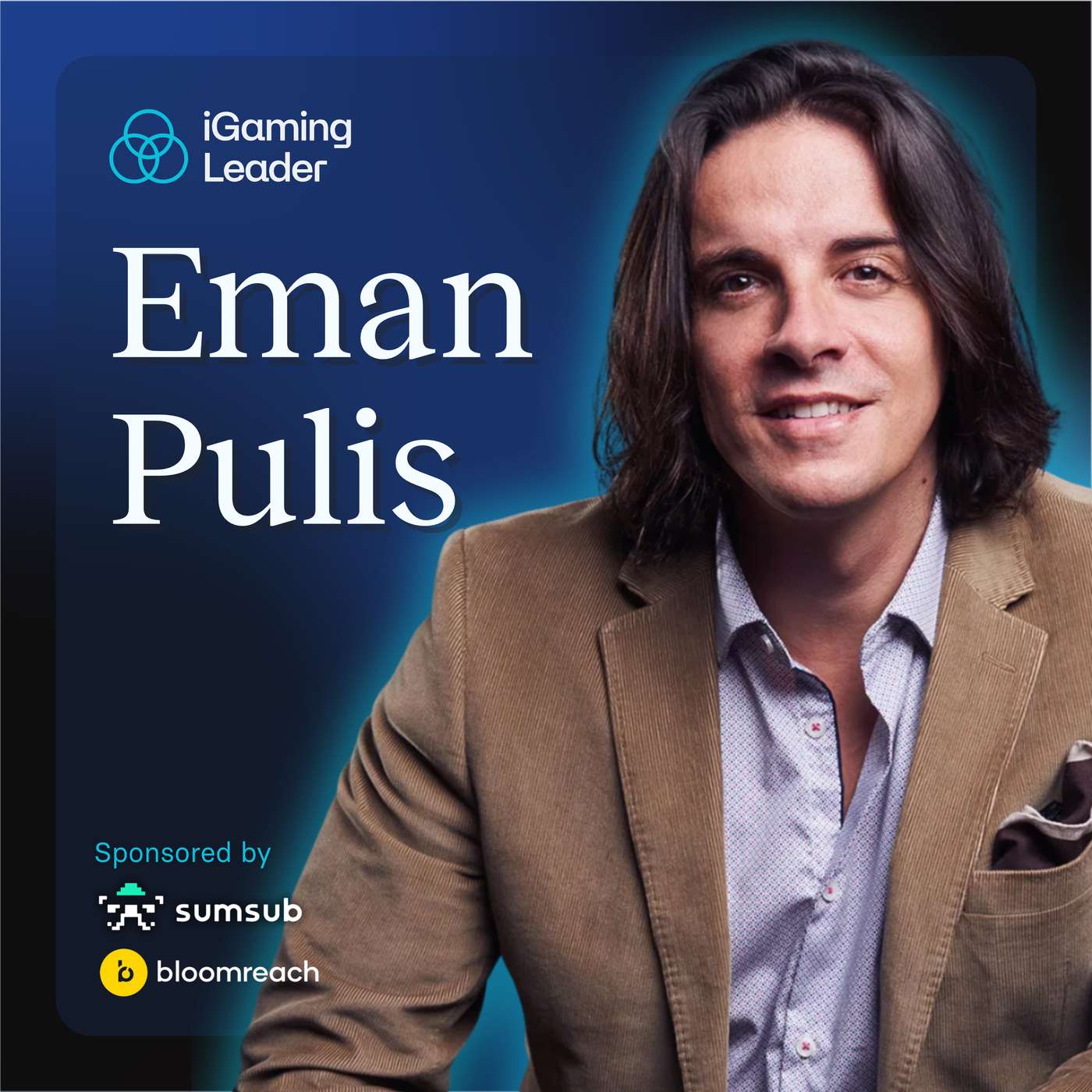
Before SiGMA, Eman Pulis had a failed business, €16,000 in bank debt and no source of revenue. The bank kept calling. His way out was to return to what he knew best: events. SiGMA grew from that low point. But Eman kept the old company name, Viking PC Health, on the invoices. He wanted a constant reminder of where he came from. In this episode of the iGaming Leader podcast, Leo Judkins speaks with SiGMA founder Eman Pulis about the setbacks behind the business, an acquisition that fell through during COVID, and why he now sees that failed exit as a silver lining. Eman also shares how he leads a global team without expecting everyone to think like a founder, why he prepares for life after an exit, and the question he keeps returning to: how much more time should go into building the business, and how much into the foundation? ABOUT THE GUEST Eman Pulis is the founder of SiGMA Group, a global iGaming events and media business that began with a summit in Malta. Alongside SiGMA, he launched Ikigai Ventures and the SiGMA Foundation. His work spans international events, investment in founders and philanthropic initiatives. IN THIS EPISODE 00:00 Highlights and introduction 03:00 Founder ambition and exit planning 06:00 Growing SiGMA beyond Malta 12:00 The €16,000 failure before SiGMA 16:00 Leading a global team 21:00 A failed exit and crisis leadership 26:00 Calculated risk and reputation 30:00 Business, philanthropy and family 33:00 Finding mentors as a founder QUOTES FROM EMAN “The idea of SiGMA came out of that rock bottom moment.” “I wouldn't want to take away any of the stress, any of the life lessons that came along with the pain.” “If I look after my team, they look after my business.” “Focus on the bigger picture, focus on the long term.” “Looking back, do I want to be in a position where I say, ‘Man, I could have impacted a million more person. Instead, I focus on generating another million euros.’” IMPORTANT LINKS Connect with Eman Pulis on LinkedIn: https://www.linkedin.com/in/emanpulis/ Connect with Leo Judkins on LinkedIn: https://www.linkedin.com/in/leo-judkins/ Sign up for the iGaming Leader newsletter: https://www.igamingleader.com/signup Join the iGaming Leader Mastermind: https://www.igamingleader.com/ This episode was brought to you by: Sumsub: the full-cycle verification platform helping iGaming operators onboard players, meet compliance requirements and prevent fraud. Learn more at: https://sumsub.link/8gu Bloomreach: the AI-powered marketing automation platform helping iGaming operators turn real-time player data into personalised engagement that supports retention and loyalty. Learn more at: https://www.bloomreach.com/en/industries/igaming
eman: [00:00:00] Probably the biggest conundrum that I have now is whether I'm giving too much time to the business versus more time to the foundation. Looking back, do I want to be in a position where I say, "Man, I could have impacted a million more person. Instead, I focus on generating another million euros." I didn't do my homework. I didn't do my due diligence on this partner who later on ended up really, really badly. Left me with debt with the bank and doesn't seem much today for me, but back then it was world crushing. I received this email that the acquisition, despite being on the last stage, it was prudent to pull back. We were about to sell a business at X. Today it's worth 5X. If there's one thing I've learned from all these experiences is when shit hits the fan, just zoom out. Focus on the bigger picture. Focus on the long term. My kids are five and eight, and whenever I hear them calling me Papa, like immediately, right? What comes to mind is what I would pay 30 years from now to listen to that same voice reaching out to me. What would I [00:01:00] pay? They're not gonna call me again that way. They're not gonna come to me the same way they come now. So whenever they come to me and either I'm working, I'm on my phone, I'm speaking to my wife, whoop, drop everything and it's just them Hey, eman: welcome to The iGaming Leader Podcast. I'm your host, Leo Judkins, founder of the iGaming Leader Mastermind, and on this show, I sit down with some of the most inspirational leaders in our industry, diving into real challenges, high-stakes decisions, and lessons that shape our industry. If you're a VP, director, or C-level executive in iGaming, Speaker: this podcast is built for you. before we dive in, a quick thank you to our sponsors, Sumsub Bloomreach. Sumsub is the full-cycle verification platform trusted by top iGaming operators worldwide. Sumsub helps operators onboard players quickly, stay compliant, and prevent fraud, all without slowing growth. And Bloomreach is the AI platform for marketing automation used by leading iGaming operators, turning player data into real-time engagement that strengthens [00:02:00] retention and loyalty. More information on both in the show notes and in the description. Let's dive in. Quick note before we, start this video. The recording with Eman was amazing, had such great answers, but for some reason the video parts on my side didn't work very well. There's stuttering in this video because I've got a new camera and I clearly hadn't set it up correctly. I didn't wanna rerecord because his answers were amazing. So I'm gonna leave it hopefully you can see through it. Of course, you can just listen to the podcast. It's also available on, Apple or on Spotify. So if you prefer to listen to it there, you can, or if you can see through the stuttering of the video feed, please do so. So without further ado, welcome to the IGA Leader Podcast. Enjoy, eman. Leofa: Hey, everybody. Welcome to the iGaming Leader Podcast. I am here with Eman Pulis, from SiGMA. Eman, really great to have you here on the podcast. How have you been? eman: I've been great. There's never a dull moment, right, in this industry. you've seen what's going on in Brazil, in Curaçao, and the rest of the world. so never a dull [00:03:00] moment Leofa: it hasdefinitely been the topic over the last few weeks for everybody. And, uh, A while back I had Alex Tomic as an expert speaker in our podcast, and he says, "Man, Eman travels even more than I do. You know, he's even busier than I am." Would you agree with that? eman: I think so, and I love it. I love my job. I am eternally grateful for the life that I'm living, quite honestly. Yeah, I'm genuinely so happy with the life that I have. and I look back 10 years ago, 12 years ago now, how much I was willing to sacrifice to be here where I am today, right? When I used to go to the first conferences, knocking on 50 doors, and I'm lucky if one of them gives me the time of day, to listen to my pitch, right? And today, people are happy to listen to me, to talk to me. People want to talk to me even. So I never forget,, the beginnings, how tough they were. And for me to want to stay home, not traveling now, when I've worked so hard to be at this point, you know, where, , people want to meet me, people want to have meetings with me, [00:04:00] uh, it would be foolish Leofa: It's exactly that, right? Every successful founder and CEO that you speak to just like yourself talks about the same thing. It's hard work and it requires dedication, and there is no shortcuts eman: I honestly rarely understood why people, once they've made it, they decide to take a backseat and not travel anymore. I think it's so much more fun to travel when people recognize you, when people want to talk to you. I still have some fire in me, and I don't plan on slowing down Leofa: maybe it's different after a potential exit, Um, Like you see so many founders who then really, you know, with an exit, you see some sort of existential problem. Like what is my purpose now as a founder, and where does all this time go? I think it's a really difficult question that you almost have to answer before you actually go through the whole exit and earn-out. eman: Look, when you come up with an idea, when you launch a business, when you scale a business, and when you exit a business, very few people are ready for any of these four stages, right? And, probably the only [00:05:00] difference is that when you're exiting a business, you have better acumen of what you should be doing. So my biggest advice would be to always prepare yourself for what comes after, way before, right? And I think it's something which I try to practice, not just by preaching, but by actually planning. Leofa: Yep eman: so we have a very clear plan of where we want to take Sigma, beyond twenty thirty. That's already, seven years ahead of our time when we came up with this, plan. But it's also on a more personal level, it's very important to identify what's going to make me happy post-acquisition. And I think I do have a plan, For that if and when the time comes Leofa: that is the ultimate question, right? It's never about cash, it's always about happiness. If we need meaning in life, that is the meaning in life. I remember the first time I reached out to you, Eman, like I'd seen a video of you talking to bringing a bunch of Maltese ministers around, the Sigma floor and showing them, and I saying to you, "Look, we,we really [00:06:00] miss that in Gibraltar. You know, we've got all these big PLCs here, but we don't really... There's nobody really doing what you've done for Malta." And one of the things that you said, a while back in an interview is, " Sigma's made Malta, Malta's made Sigma." Since then you've moved, the flagship to Rome, of course, and you moved off to Ireland yourself as well. yeah, So my question really is what does Malta still get from Eman Pulis? eman: I am eternally grateful to Malta. I am where I am today because Malta had the foresight to regulate iGaming before many others back in 2001. I am where I am today because Malta created a robust financial services network for the industry to move here and, find a safe space in Malta. Malta created the ecosystem that made me who I am today. So I am eternally grateful. And, we're not leaving Malta. SiGMA will never, leave Malta. Even if I have to leave to build the business and make sure it remains, uh, robust, and I've done this plenty of [00:07:00] times. I did it as a student to, get the best knowledge I could get. I did it as a young entrepreneur when I moved to the United States, to learn from the land of opportunity. I did it when I moved to the Philippines later in life to set up a gaming hub for SiGMA And I did it now more recently in Limassol, so we can, be active, in the heart where the Slavic industry, the community is, and where the Israeli, the Jewish community is also, number one, why, we have such heavy presence in, , Limassol. But let's not forget, we have big offices in Malta. We employ over 100 people in Malta. We have a conference happening in Malta, , this coming May, and we have zero plans on moving, , the show in Malta. I think people still see that SiGMA's very much tied to the island. , Even our DNA has a lot in common, with, Malta. So we look forward to be in [00:08:00] Malta every year. Uh, , We look forward to keep strengthening our office in Malta., So what do I have to give Malta? I think, , there's a lot of, , fuel left in the tank for Malta. Leofa: No, man, I think you've made such a difference to the country, and, you're an example to so many there as well. you know, I think anybody that goes beyond the borders, right, is an inspiration to so many young entrepreneurs as well because sometimes when you are in a place, you can feel stuck and you can think, "Oh my God, I'm never gonna leave this place," right? And I think that's beautiful eman: 100%. I feel I can give so much more to the local business community, to young entrepreneurs who need someone, , to look up to, which I didn't have, right? I didn't have a lot of Maltese entrepreneurs, , who I could look up to and emulate. And being able to be abroad, being able to also communicate with, and wave the Malta flag wherever I am abroad, bring with us as many Maltese entrepreneurs to expand their business. If you come to Rome, you're going to see hundreds of [00:09:00] Maltese, doing their thing, whether it's booth buildup, sound, electricity, catering, entertainment, music. Hundreds of Maltese young entrepreneurs whom are given the opportunity to expand beyond their comfort zone in Malta. So if you ask me, I think I have a lot more to provide, , to Malta by doing my thing abroad. , The world is a global village and, we have presence outside of our comfort zone in Europe than being in Malta. Leofa: I love it. I wanna talk a little bit about Emily. She's been CEO since 2023, and, you've said something like, "The show can easily run without me, and a business that can't run without you is essentially a hobby." I completely agree with you. But you don't really have an office. You sit in a chair in an open plan, and you're on a plane more than Alex, like we were talking about before. So what is it for you? Is it still running inside the business? Is it more being the face of the company? How do you see that now with, , your involvement in Sigma itself? eman: I will always remain the founder who loves, , his, business, and I am still [00:10:00] involved as a voice for the project. As I told you, I still love traveling. I love people. I still love meeting people. , So I have more of that role, rather than, more executive. Um, , But there's other stuff that keeps me entertained in my entrepreneurial journey. It's a VC fund which I launched four years ago, and I'm very proud to have some of the brightest minds as LPs in, , this fund. And, , something that gives me even more satisfaction, , than the fund or the events is the Sigma Foundation. It's something which I also launched in the midst of COVID, something which, looking back, I'm really happy that I did. So rather than focusing on just trying to keep a sinking ship afloat, because remember, there were no events happening, During COVID, that is the time when we took the initiative to launch the Sigma Foundation. , We had a bit more time on our hands, and the idea of thinking about others, , focusing on positive impact, and building something which has long-lasting effect, uh, , it fulfills me more than, any other project. Leofa: With the [00:11:00] fund, , Eman, it's Ikigai Ventures, right? If I've got it right. uh, It's like the Japanese overlap between like purpose, what you can get paid for, what people, what the world needs, and the last one I forget. But is that why you named it that? eman: Correct. One, I'm a big sucker of Japanese culture. I think they got it right many, many times, and we should, , look outward sometimes for answers. And yes, Ikigai, , hits four things, right? And if you hit those four, you have found your Ikigai. If you're good at something, if it pays you well, if you love doing it, and if it's great for society, if you're doing something good for the world. And we want to invest in founders that have found their Ikigai. So whenever we have a project coming to us, we filter it through this metric, and, , we have been able to secure some really nice projects with that, , mindset Leofa: So I wanna, go into that because I love how you do these things with business names, right? So I, like company in the industry that,, works with you guys gets invoiced by - Viking PC Health limited uh, uh, for me [00:12:00] it was the other way around. I got paid by it, uh, , when we did some work together. eman: You did feel it's a weird name, right? Leofa: It was super weird. And, , it's the business that nearly finished you, and you said you'll never change the name until you actually exit, right? what does it do to you to see that every day? Can you tell the backstory to it a bit? Is it a reminder to see that all the time how does that work? eman: Bit of a rewind. I was desperate to see a business flourish. You know, I had just returned from the States where a business failed. I was on my second, third failure already. And a guy approaches me, we launch this,, affiliate company to sell a white label antivirus software called Viking PC Health. So we had this company which we launched together, Viking PC Health Limited. I didn't do my homework. I didn't do my due diligence on,, this partner, , who later on ended up, , really, really badly. Left me with, uh, , many problems, left me with debt with the bank and, maybe sixteen thousand euros of debt, um, , doesn't seem much today, , for me, but, , back then [00:13:00] it was, , world-crushing, Cause you have no sources of revenue. The bank calls you every other day. And when that is your first experience, it hits you hard. So I remember, uh,, thinking, "Listen, I can't be doing this if I'm not an expert affiliate, if I don't know how to run an antivirus software. Let me go back to the basics, to what I do best, which is events." And I remember going to the bank. The idea of SiGMA, came out of that, rock bottom moment. And I remember telling the bank, "Listen, I know there's this debt, there's, , a few months late payments. , Let me turn things around. I plan on launching this summit, the summit of iGaming in Malta, that's why the acronym SiGMA." And, , the rest was history. , The event was successful from year one, and I said, "Okay, the worst nightmare of my life is over. Do I want to bury it?" I said, "No, it can remain a constant reminder of, , where I'm coming from." So that's why I decided to keep the name. And, , now a multi-million, , nine-digit figure business, , is invoiced by [00:14:00] Viking PC Health. Leofa: It's funny how those,the things that you look back on now, they're tiny but they just feel just as painful, right? probably more painful even Do you think if you would transport yourself back in time now to that moment, that you would've dealt with it the same way? also from a stress perspective and how to kind of get out of that situation, how to deal with the bank, would you deal with it the same way given that you, had the same resources as then, but maybe the mindset that you have today? eman: You know what? I love this question, right? But I would just tell a younger me, " Just keep, just keep going. You have the right mindset, just keep going. Just trust the process." I wouldn't want to take away any of the stress, any of the life lessons that came along with the pain, because I'll tell you one thing, I have yet to see a successful man who can stand on his own two feet who hasn't gone through hell Leofa: Yeah, 100%. eman: So would I want to take away any of those lessons which kept me awake at night? I don't think so Leofa: As a father, I think about it a lot as well because obviously we want the best for our kids, [00:15:00] We also know that those moments of deep, profound stress and shame and, you know, all of that, they are the fuel to create the person that we wanna become. So do you balance that as a dad? eman: Biggest conundrum. And, , those are the conversations maybe over a cigar I enjoy having the most with men, , older than me who have kids that are older than me. I see their kids and I see how, i-incredibly bright they are, and I tell them, "But they lacked nothing, right? How did you manage, to give them everything and, , raise them so capable at the same time? How? How?" And I,I love asking these questions and listening to what they have to say. Those are the conversations I enjoy having the most, Leofa: Well,let me know when you find out the answer. I'd love to know as well. eman: Yeah Leofa: Hey, Eman, you, um, you put a sales dashboard in every office so that when Dennis in Cyprus will close a deal, Manila knows it in real time. Obviously my business is way smaller than you, but we all know as founders and as owners that, nobody's gonna be as driven as you. And that's, that you said it as well. You've gotta [00:16:00] give up on that fallacy when you're an owner. what are some of the difficulties and perhaps also some of the successes that you've had with handing over the company to people that you believe, are basically never gonna care as much as you will? , How do you do that? What's some of the challenges and some of the successes you've had with that? eman: let's start from the screens. Yes. We,probably the only, truly global gaming events and media business, right? Because we have, a summit every six weeks, more or less, and we try to cover the globe. We have a summit in Africa, number one summit in Africa, number one summit in Brazil, Number one show in GCC, number one show in Asia, number one show in South Asia. And, we have offices, actual boots on the ground in all those, regions. We have an office in Manila, an office in São Paulo, an office in Belgrade, an office in Yerevan. And how do you keep all this workforce, different cultures that, come with it, the different customs, and we try to implement these little, features that help to [00:17:00] bring, the offices, closer together, right? one of those features is if a sale is happening in Manila, I want the rest of the team to celebrate that. If a sale is happening in Brazil, I want the rest of the team to celebrate. So we have live action going on on, each of those screens in all, the offices. And truly, I see having such a big diverse team, we're close to five hundred people now at Sigma. I see that having such a diverse team is a very important ingredient, to become truly global. you can't have an office in Malta and expect to have successful shows, all around the world. You need local people, to understand the way business is done in each of these, localities. so it wasn't easy. we learnt a lot, by doing, but we did take the best foot forward. And, I remember when everyone is focused on going to the US, for instance, when there was this big craze of the US market is opening up and more shows started showing up in, USA, we said, "Listen, there's great [00:18:00] events happening in the US. I don't think we're going to provide extra benefits by trying to compete with that and opening a new show in the US. Let's go to the rest of the world." And we launched a show in Brazil, in Dubai, in Africa, in Manila. but we did it, the way it should be, I think before many others. Leofa: and then the second part of that question, Eman, what, do you find hardest and what have you tried to kind of get people, care as much as you do I don't mean that. But, you know, have the same level of urgency and importance. as a founder, I think as founders we all recognize that that's something that is impossible to achieve. Of course, we have people that are high performers and high achievers, and people that really care, but there is always a gap, right? So what are some of the things that you've tried and some of the things that have worked for you to get people to, get more involved and be more passionate? eman: two things come to mind. one, I like to be in the trenches with the team. So rather than-- There's this caricature that always keeps coming to mind. Rather than being on a platform, pointing fingers and telling what needs to be done, I like to be in the trenches and actually doing it myself, you know? And I [00:19:00] use always this silly example. If I'm at the expo at SiGMA, uh, walking on one of thecorridors, and I see a piece of paper, I pick it up, right? And when my team sees me doing that, they're gonna feel, like, " Okay, if he's-- I should be doing it," right? without excuses. so I love to be in the trenches, with the team and get my hands dirty. The other thing, I love people, right? So to me, the team is not a team that I see nine to five, and that's it. I invite the team into my space at home. I love to understand what's going on, with their lives, if there's any troubles that I can help them with. If I look after my team, they look after my business, right? So whereas I cannot expect them to have the same founder mindset, um, because they chose the route not to be founders, right? They chose the route, to help me build my business But the more attention I show, the more care I show to the team I find that the more comes back at you in ways that I [00:20:00] cannot explain. Leofa: it's the same discussion that you would have with any sort of B2B provider, right? it's never about the headlines and the marketing It's always about the person to person. That's how we do business, and leadership is exactly the same thing. It's person to person, right? It's not boss to employee. eman: I'm a strong believer of, that. Not just with my team, but even with the industry. business is not done between the brands, but business is done between, uh,people. and I think that's something which we take pride in, With SiGMA, we try to create this environment. In fact, I hear it from a lot of people. they tell us that SiGMA does feel more like a place where friendship first, business will follow automatically. and I think SiGMA encapsulates this, embodies this, more than anything Leofa: Yeah. Makes a lot of sense. Uh, I wanna actually take you back to your wedding, So December 2019, uh, in Phuket, right? You've got 20 guests at your wedding, and, an exit in advanced stages, you know, kinda hanging on due dilligence But two weeks later it's gone. eman: Correct Leofa: take me back to that moment. when you [00:21:00] look back at it now, is that relief or grief for you? eman: I think it's the greatest silver lining ever, now looking back, right? But I do remember December 2019, I just gotten, gotten married, right? And I'm sitting on this porch in front of a beach in, northern Phuket, and I'm looking at this perfect moment, right? Just got married. My family and her family is around me. And I'm thinking, "But it's just too perfect. There's something's gonna happen. It can't be. Something's gonna hap- It can't be this perfect." And, COVID was already brewing in Asia. but us in Europe, we, we didn't... We thought, "Okay, that's, it's, it's just another news in Asia. It's, it's not gonna..." Right? December was that period, and, a couple months later, it started hitting the wave in, Europe and all businesses started contracting fast. And before you know it, I receive, this email that, the, acquisition, despite being on the last stage, it was prudent to, pull back, which I obviously agreed with because I didn't [00:22:00] want my earn-out of, three years to be plagued by COVID, so yeah, March, April, May, wasn't pleasant time until, Until we figured out how to navigate, the way forward. those were two heavy months. but looking back, we were about to sell a business at X. Today it's worth five X, right? So, Leofa: But it must have been horrible in that moment, you know? It's, um,let's go back to previous discussion that we just had about that actually, Eamon, where, you know, when we're talking about the 16K situation that really formed you and defined you. Like, how that situation around your wedding and kind of that falling apart around due diligence, what changes has that caused in you, if any? Is that,did that give you a new sense of, turbocharge? Or what did it do? Did it give you point to prove? what was it? eman: if there's one thing I've learned from all these experiences is when shit hits the fan, just zoom out. It's not that bad. Just zoom out. Focus on the bigger picture, focus on the long term. You know, when the whole world collapses on you, which happens to everyone, it's how prepared you [00:23:00] are for those rainy days and how consistent you are in, "Okay, I'm at my lowest point in my life. How do I execute small wins?" And looking back six months of clocking in small wins, you look back and you'll be like, "Okay, I was in a much worse position six months ago. I just need to hold on, keep going at, uh,this pace." So I've learned this the hard way, right? I've learned this when, my partner betrayed me. I've learned this the hard way when, COVID had other plans in mind. I've learned it through other experiences. Now, when I'm faced with the same situation where I feel, shit is about to hit the fan, I just zoom out. And I,find it extremely helpful to manage stress, to sleep well at night, to keep my team sane. and you can only get that from experience. no textbook is gonna give you that Leofa: it's kind of the founder's curse, I often think. You know, we don't really celebrate the wins. The wins, they're very quick and over in a second. And the problem is hit so hard, right? They're so [00:24:00] painful. it's like disproportionate almost, right? There's a disproportionate seesaw I think for most of us. then over time you seem to get a little bit numb, I suppose, to the challenges because you have to deal with them every single day. the worst ones hit you because you're top of the tree eman: Correct. It can get lonely up there, if not managed well. But, I think it's one of the greatest blessings, to be a founder who's running a successful business, whose lives of others, quite literally, in our case with the foundation, depends on, uh,the decisions that you make. And there's another thing which I would probably love to highlight. coming from very humble beginnings, right? Coming from literally a poor family, it gives you incredible joy, to wake up every morning and know that, your loved ones, are enjoying a better life, um, because you were the one, who went the extra mile, who burned the midnight oil, to get, his family out of poverty. Um, so, that is an accolade which cannot be measured, by any means, but it's one that, I [00:25:00] cherish, and I wake up every morning, feeling blessed and thankful, uh, for that opportunity Leofa: I love that, Eman, because you are also the crazy one, Just like every founder. The one that believes for long enough in the thing that everybody else tells you is not gonna work. You know, and, think that's the crazy piece. You know, in the end, of course, now looking back, you're right, but you could've been wrong and you know, they could've been right. It's just that you bite through long enough and, you said something about, loved ones starting to doubt you at 32, 32. literally the thing that founders, every single founder goes through. And I personally believe successful ones, successful founder ones are always the ones that are crazy enough to believe in their vision for longer than anybody else. in that journey, who were the kind of the loudest, in believing and disbelieving in you? and have you ever told them, the ones that were doubting you, that they were wrong afterwards? Or is it just from these quiet ones that you've forgotten and left to the past? eman: no, those who doubted, are still very much a big part of the inner circle, because I know their doubts were coming from a good place. [00:26:00] So, absolutely no grudges there. Quite the opposite. those who believed in me until the very end, Have told me at one point whether I should get a full-time job. so even there I had, people who started doubting because you can't blame them, right? I'm in my early 30s. I never had a proper job. chasing my dream now for 15 years, so it's, it's-- you can't blame them, but not all of these people are still very active in, my inner circle. and the fact that it took so long, I think makes it even more beautiful, you know? Leofa: you said that, the one thing that costs you sleep is reputational risk. I was in the,in the tank with Alex Tomic on Thursday, I think, in Lisbon, we were talking about that. He's, he was like all of us, well, like we all know it takes forever to build a good reputation, and it takes just a moment for it all to break down. like how is that for you? So, so for example, you've taken some massive, massive bets on where to put conferences, where to go in the industry. You know, the industry follows you, but sometimes it turns out to [00:27:00] be the wrong decision, right? how do you deal with that? And do you feel that that's a reputational risk, or is that just a business decision that's gone wrong? how does that feel for you? eman: look, there's a difference, right? I'm a big fan of taking calculated risk, not risk for the sake of risking, 'cause that becomes gambling. But I am a big fan of, taking calculated risks, and it doesn't matter if you lose battles. What matters is that you win the war ultimately, right? So yes, we might have gotten, some, projects wrong. We might have. but there's always lessons to be taken from that. There's always wins that you can take from that which you can pivot for the bigger goal, right? And today, SiGMA has a clear mandate. We're not here just to organize events for the sake of networking. We're here to advance regulated gaming worldwide. We're strong believers that regulation is, the way to go, and I think there's still a lot to be done in emerging markets, to push this mantra, whether it's in LATAM, whether it's in Brazil, whether it's in the GCC, [00:28:00] in Africa, in Asia, in South Asia, and that's why you find us in those markets. So the mission is crystal clear, right? Now whether, if we go to Mexico and, people tell us, "No, you should go there instead of there," it's, it's, it's insignificant. you were talking about reputation and, damage. And, I think it's, that's a much bigger issue than merely, you know, taking the wrong turn, on one of thousands of business decisions that you have to take daily. it's, yeah, not having the moral compass, to do the right thing, not being guided by values. I think that And letting down that inner circle which I was talking about, would be devastating, Leofa: I get that the reputational risk keeps you up at night, right? That's the thing that we all worry about because that's all we have really, when it comes to business. you are guided by your values, right? You are a family man. You will not let your inner circle down. So see, like, there's a tension between those two things. Like, if that's the thing that's gonna cause you reputational risk, but it's also the [00:29:00] thing you know, you are guided by a moral compass. Why is that tension there, you feel? eman: very often I feel that time is on our side, but it really isn't, I see people my age who stayed a bit more comfortable in their teens or in their twenties or in their thirties, and they missed the boat, right? The ship has long sailed. And this can happen at every stage in life. Whether you're young and you could have become an Olympian, but you didn't put the hours of training, now you're in your twenties and that opportunity is lost forever. You can't reclaim it. Whether, you could have studied a bit better and had a better career, now you're in your forties and that ship has sailed. Whether you could have started a family earlier on, but you preferred to stay partying, doing drugs, chasing women, now that ship has sailed, you know? you're in your,um, late forties, and you feel it's too late to start a family. So you see we--time is extremely important, and unless you do the right [00:30:00] decisions at the right time you end up living with regrets. Yeah, I,I do see my life in this, zoom out, way, right? And I,I wonder whether I'm gonna look back and regret, not doing, stuff which becomes too late. I'll give you a silly example. my dream is to catch a big, marlin. It's one of my dreams. And I need to do it before I in my 70s, in my 80s, where I become too frail to pull that marlin out, right? So I don't want to become too frail for the dream just to, be gone. I still want to do everything that I set out to do. And probably the biggest conundrum that I have now is whether I'm giving too much time to the business versus more time to the foundation. looking back, do I want to be in a position where I say, " Man, I could have impacted a million more, person. Instead, I focus on, generating another million euros rather than impacting million person positively." Um, you know, so it's these kind of, um,questions which, keep me entertained when I'm smoking a cigar Leofa: Yeah, I love it. There's a [00:31:00] great book, right? That's all about deathbed regrets, where they interview people, about the, regrets they have as they are unfortunately dying of you know, of being old. but I think that's really inspiring. There's this other one, I think it's called "4,000 Weeks." It's all about, like, how long life is, and two books that you might be interested in. eman: Look, I do it all the time. I'll give you another example. Every parent will understand what I mean. My kids are five and eight, right? And whenever I hear them calling me, Papa, immediately, right? What comes to mind is what I would pay thirty years from now to listen to that same voice reaching out to me. What would I pay? thirty years from now. I'm in my seventies, they're in their thirties. They're not gonna call me again, that way. They're not gonna come to me the same way they come now. They're not gonna want to hold my hand the same way they want it now, where I'm their role model, their hero. or I hope they will. But what would I pay thirty years from now to listen to that voice again and to give them my time? So whenever they come to me, and either I'm working, I'm on my phone, I'm, speaking to my wife, whoop, drop everything, and [00:32:00] it's just them. Because this thought of what I would pay thirty years from now, is just a constant reminder to also live the present Leofa: Beautiful, Eman. I love that. I saw that you also told your daughters on camera, hope I will not embarrass you, disappoint you, or let you down." I think that's beautiful. eman: the kids do help you to, stay the lane, if that makes sense. Yeah, and everything you do has a lot more meaning, is a lot more meaningful because you're not doing it just for yourself, but you're doing it, for them as well. Yeah. Leofa: and it shows you that time is actually quick, right? Like as we're in our 30s and 40s, you don't realise how quick time actually goes. But then you've got kids, and all of a sudden they're walking, and then they're talking, and then they're in university. And you know, all you did was blink. eman: and time doesn't wait for anyone. it's-- I, I love talking about kids. But they're babies for a year, toddlers for three years. They're a kid for seven, eight. They're teenagers for five. All four stages are incredibly beautiful, and they all give you something unique. So as a parent, [00:33:00] you have no time to miss the previous phase because now you're busy loving the next phase. You don't have time to miss them being babies. You don't have time to miss them being toddlers. You don't have time to miss them being kids. But at the age of seventeen, eighteen, when they leave the house, it all hits you at once. Leofa: Ver-very last question for you, Eman. as a founder at 35, 200 people, you were making every big decision alone. You said you wish you'd begged for mentors. eman: Mm-hmm. Leofa: other founders in your position, you know, who are maybe in that same situation of scaling a business, who should they call and,and what should they ask? they're making every decision alone? You were saying earlier it can feel eman: Yes Leofa: how, how should founders go about eman: Yeah. Look, I come from a different era, right? When I was a teenager, we didn't have the social media that we have today. we weren't as connected as we are today. so to any teenager, they're dreaming big. what I can tell them is don't shy away from, uh, reaching out, uh, with [00:34:00] whatever means to someone you look up to. if it's a business, there are plenty of extremely successful, business people out there who are, within reach, on social media, on LinkedIn. do take the plunge because there are many founders out there who understand that. And, founders that are successful, that have made it, that, understand the importance of giving back, giving others the opportunity, to shine. the startup pitch is one of the items that I, cherish the most at Sigma, um, because it gives me an opportunity to, see young founders who, are trying, to build something. and yeah, that's what I would say. Take the plunge. Don't shy away. the world is better connected than ever before. And, there are many role models out there you can emulate. Leofa: Eman, thank you so much for your time. This has been absolutely brilliant. thank you for sharing your stories eman: It's been a pleasure, and I look forward to welcome you with arms wide open in Rome, Leofa: Rome, here we go. See you soon Thank you for listening to the iGaming Leader Podcast. If you're a VP, a director, a founder, [00:35:00] or a C-level executive in iGaming and you're making the biggest decisions all alone, you might wanna check out the iGaming Leader Mastermind. a program I've built with small inner circles of vetted senior executives where we run weekly hot seats and you get accountability from people who understand the effect of the decisions that you need to make. Find out more and apply at igamingleader.com. And then A final thank you to our sponsors Sumsub and Bloomreach. Sumsub is the full cycle verification platform for iGaming operators covering player onboarding, AML, and fraud prevention all in one place. Bloomreach helps operators turn real-time player insights into more personalized engagement that builds long-term loyalty. More at sumsub.com/gambling and bloomreach.com. See you next time.